

This post may contain affiliate links. Please read our disclosure policy.
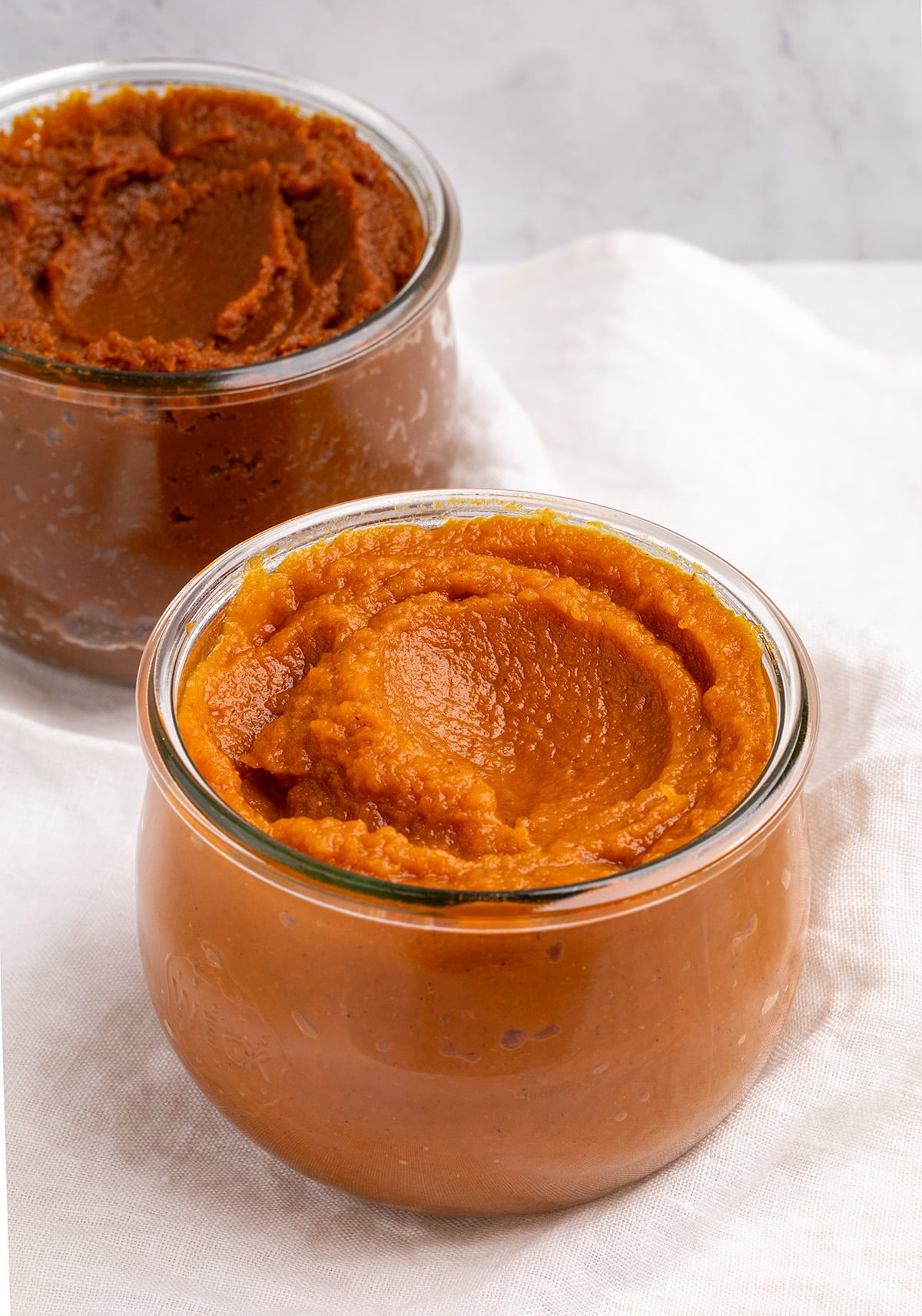
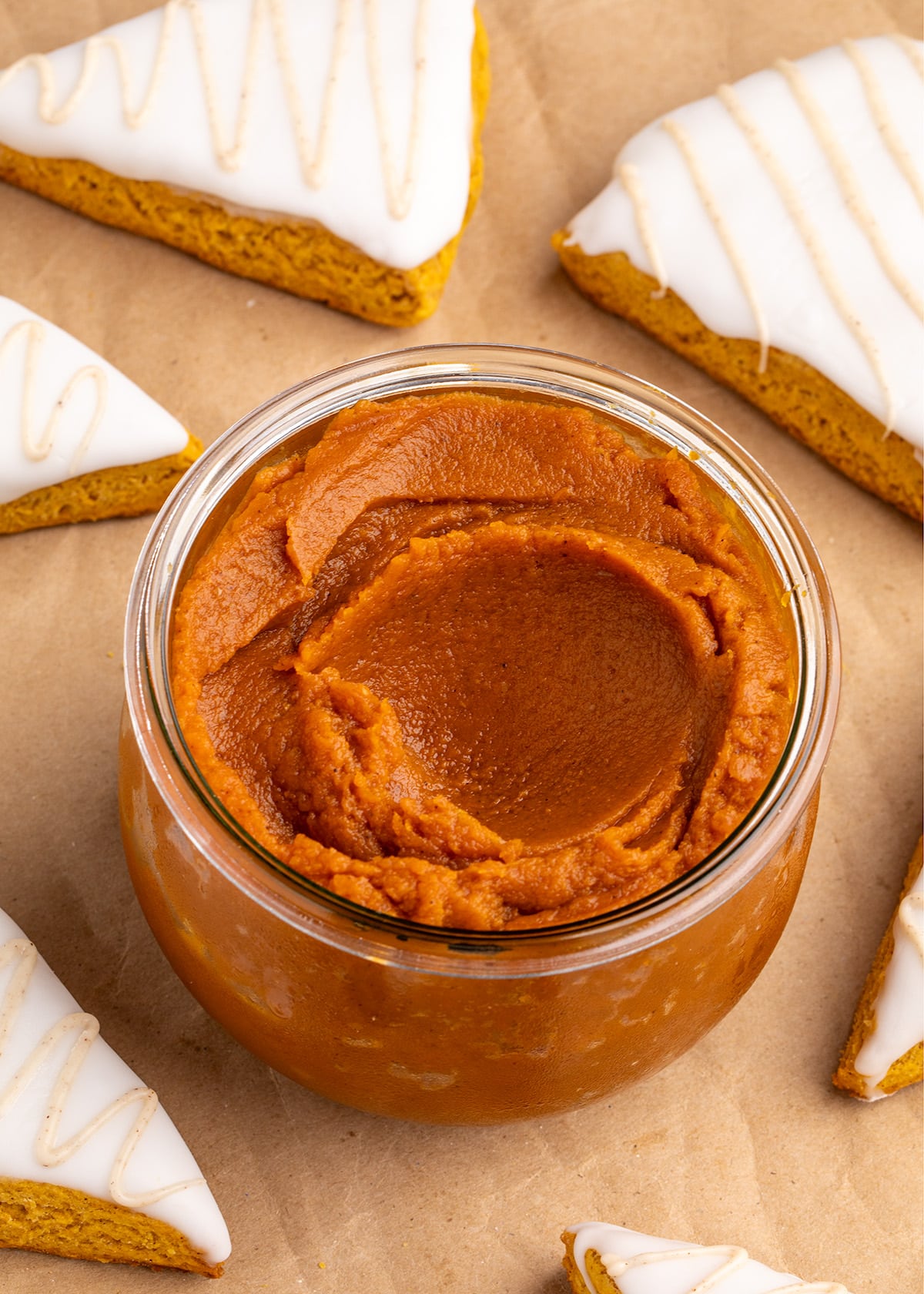
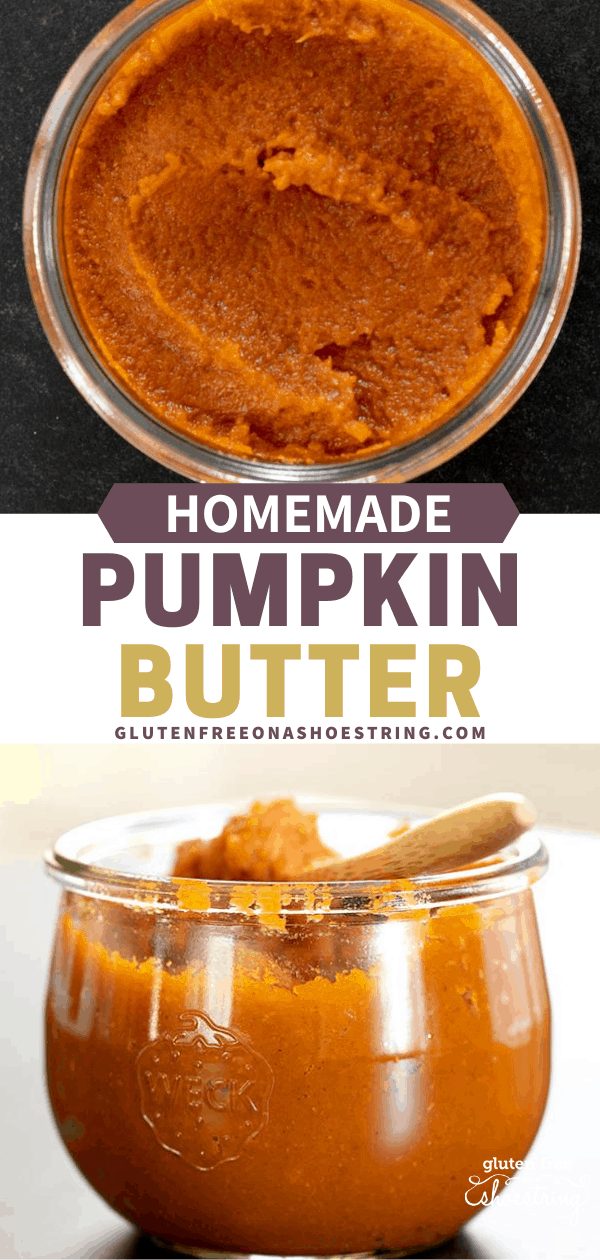
This pumpkin butter recipe concentrates pumpkin puree into a smooth, richly spiced spread with deeper pumpkin flavor and much less moisture.
Cook it until thick and spreadable for toast and pancakes, or reduce it further for baking for plenty of pumpkin flavor without making baked goods overly soft or cakey.
Why this recipe works
Cooking pumpkin puree with apple cider, maple syrup, and warm spices concentrates its sweet, earthy flavor and aroma. As excess liquid evaporates, the mixture becomes thicker, darker, and more deeply flavored.
You can tailor the texture to how you plan to use it. Stop cooking while it still has some moisture for a smooth, spreadable pumpkin butter, or keep going until it’s more concentrated for baking purposes.
That extra reduction is especially useful in baked goods. Plain pumpkin puree adds a lot of moisture without much extra flavor, which can make recipes softer and puffier than intended; pumpkin butter gives you stronger pumpkin flavor without the effects of all that extra moisture.
Recipe ingredients
Here’s what you need to make this recipe, including the role of each ingredient in a successful end result:
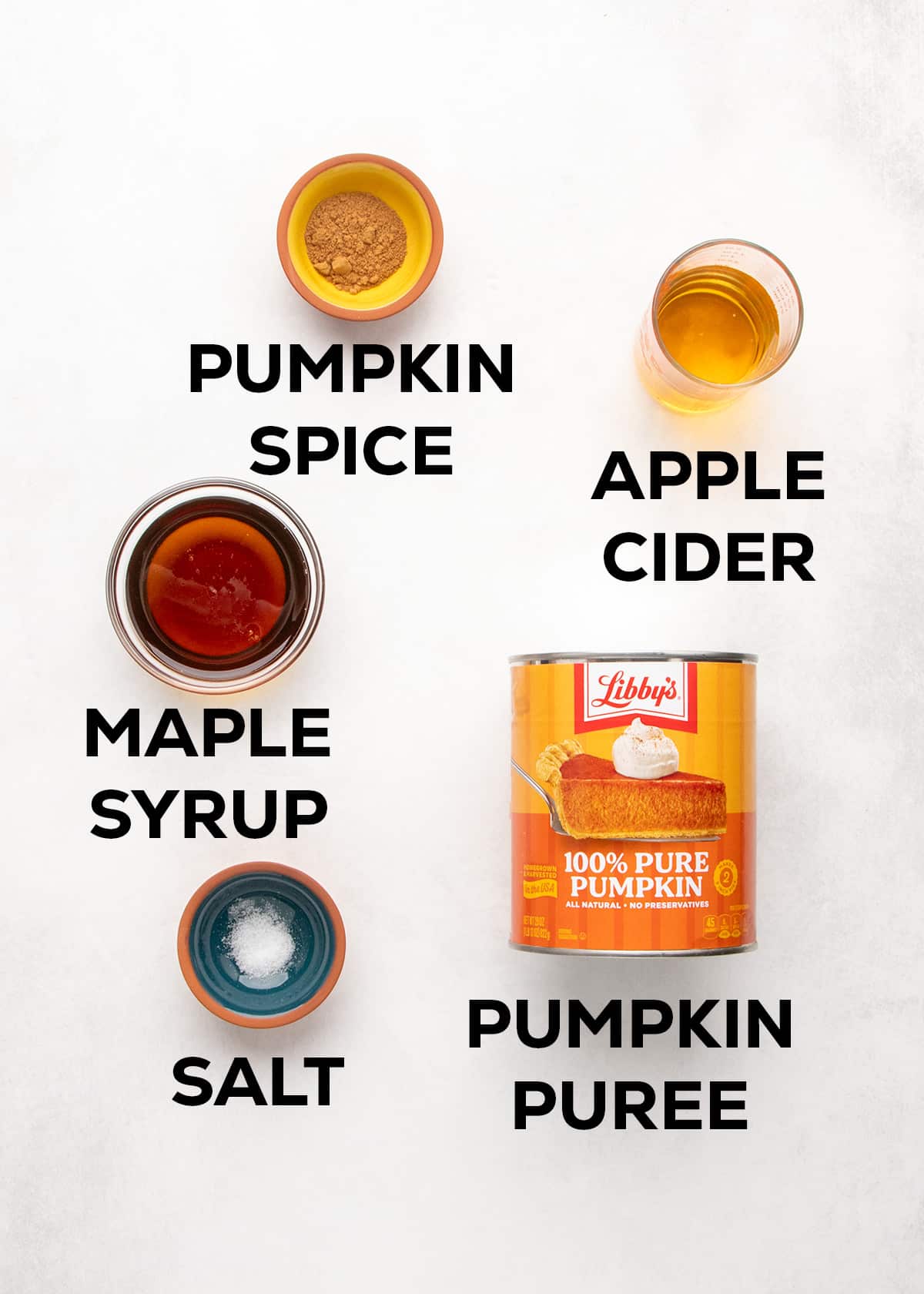
- Plain pumpkin puree: Provides the base of the butter’s structure and texture, plus much of its color. Typically orange in color and thick, canned puree varies in consistency from more watery to less and darker to lighter in color. Libby’s pure pumpkin is typically darker in color, a bit more fragrant, and less watery than store brands. But since we are cooking much of the moisture out of the pumpkin, it matters less. In our recipe for gluten free pumpkin pie, though, the quality of the pumpkin puree matters more. You can also use up the leftover pumpkin puree in my amazing gluten free pumpkin muffins.
- Pure maple syrup: Adds sweetness and a rich caramel flavor and earthiness that naturally complements pumpkin flavor from the puree and the spices. Also melts smoothly into the pumpkin puree.
- Apple cider: Apple cider has a richer, thicker, more complex flavor than apple juice, so it makes a more complex pumpkin butter when cooked down with the other ingredients. But you can use apple juice, or even pineapple juice, here. Some recipes use water, but that’s a missed opportunity to add flavor and aroma.
- Pumpkin pie spice: A rich-tasting blend of warm fall spices cinnamon, ginger, allspice, cloves, and nutmeg (heavy on the cinnamon), this is what provides much of the pumpkin flavor and aroma we love. To make your own homemade pumpkin pie spice, combine 1/2 teaspoon ground cinnamon, 1/4 teaspoon ground ginger, 1/8 teaspoon ground allspice, 1/8 teaspoon ground cloves, and a scant 1/8 teaspoon ground nutmeg.
- Salt: Enhances and balances the other flavors.
- Brown sugar: For some more sweetness, an extra layer of flavor and to help lock in moisture that won’t cook off, add some brown sugar. It’s optional.
How to make this pumpkin butter recipe (step by step photos)
Step 1: Mix most ingredients
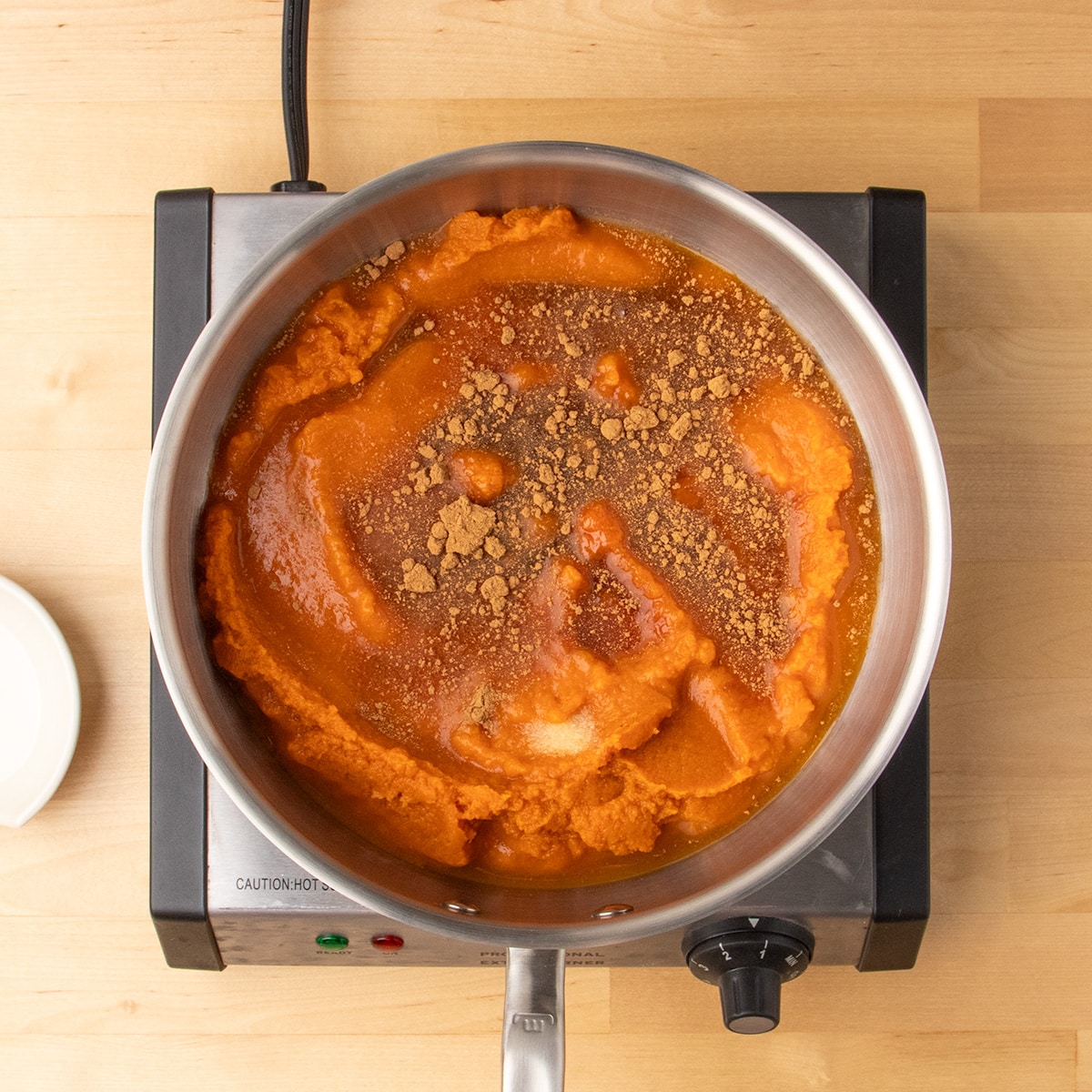
Place the pumpkin puree, maple syrup, apple cider or juice, pumpkin spice and salt in a large, heavy-bottom pan. Stir to combine well so the mixture cooks evenly for consistent taste and texture throughout. This is how you’ll avoid any bitter pockets of concentrated spice and tasteless portions.
Step 2: Begin to cook
Cook the mixture over medium-low heat while stirring frequently for 15 minutes. This reduction will begin to cook off about half of the moisture we intend to remove, and begin to marry and concentrate the flavors. Be sure to use a large enough pot, and stir frequently, to minimize the bubbling and spurting that can burn you.
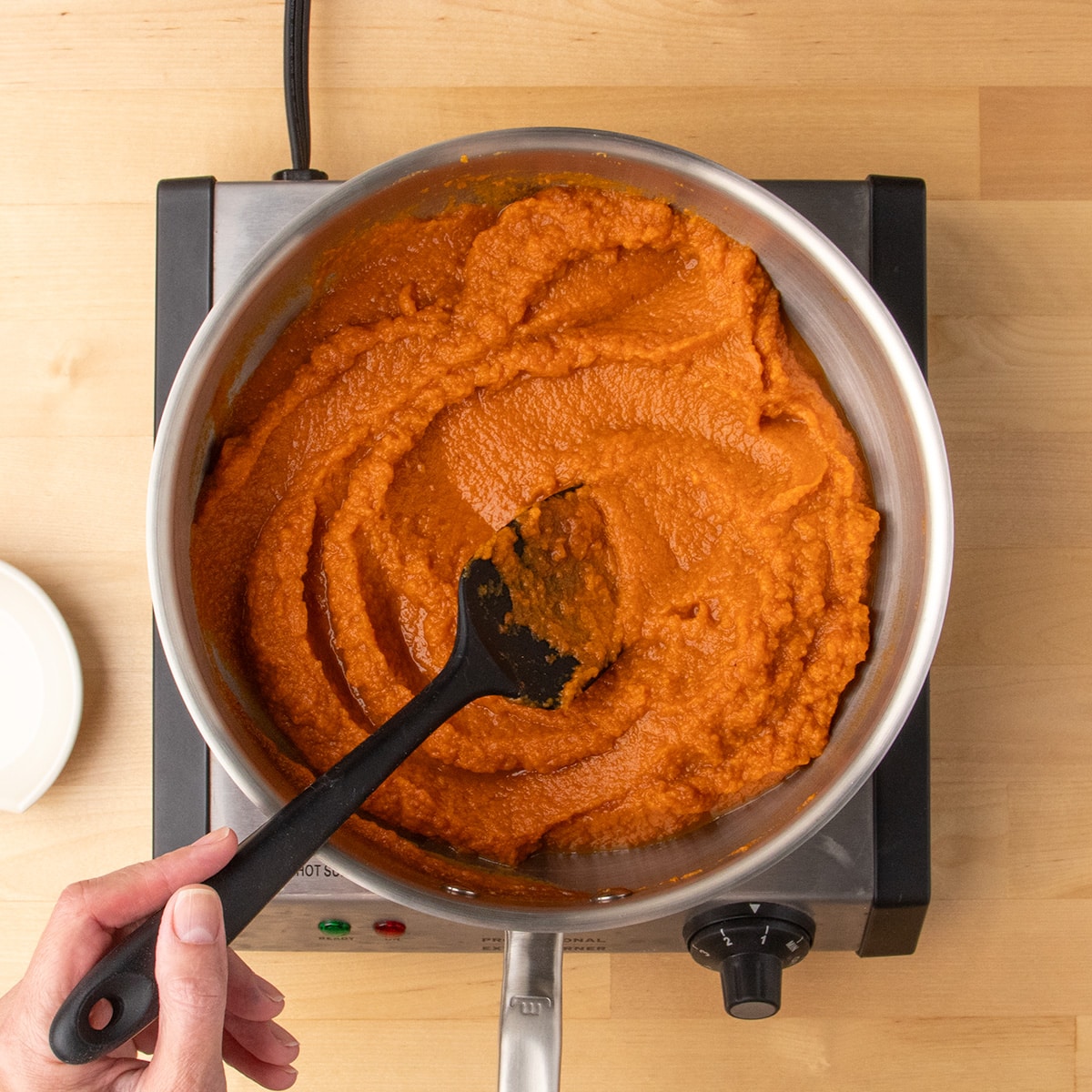
Steps 3-4: Add (optional) brown sugar and cook
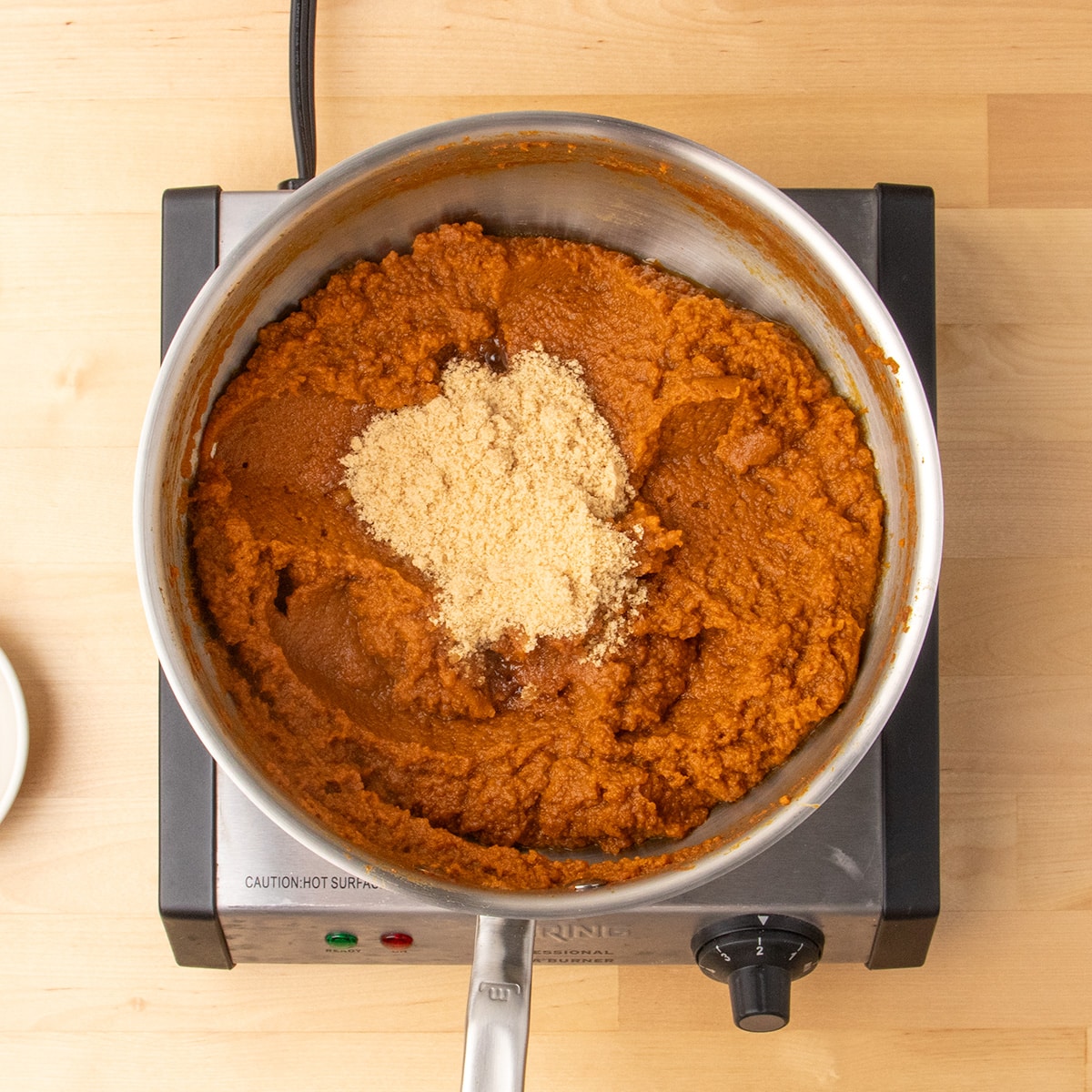
To increase the sweetness and add another layer of flavor, add brown sugar here, and stir until you reach your desired thickness, between 5 and 15 minutes more. Adding brown sugar after much of the cooking prevents much of the issues with burning the mixture is prone to.
The longer you cook, the more moisture from the pumpkin and cider or juice will evaporate. Continue to stir to avoid any burning, and gauge how much moisture remains in the pan, adapting your cooking time accordingly. You can also lower the temperature to slow things down.
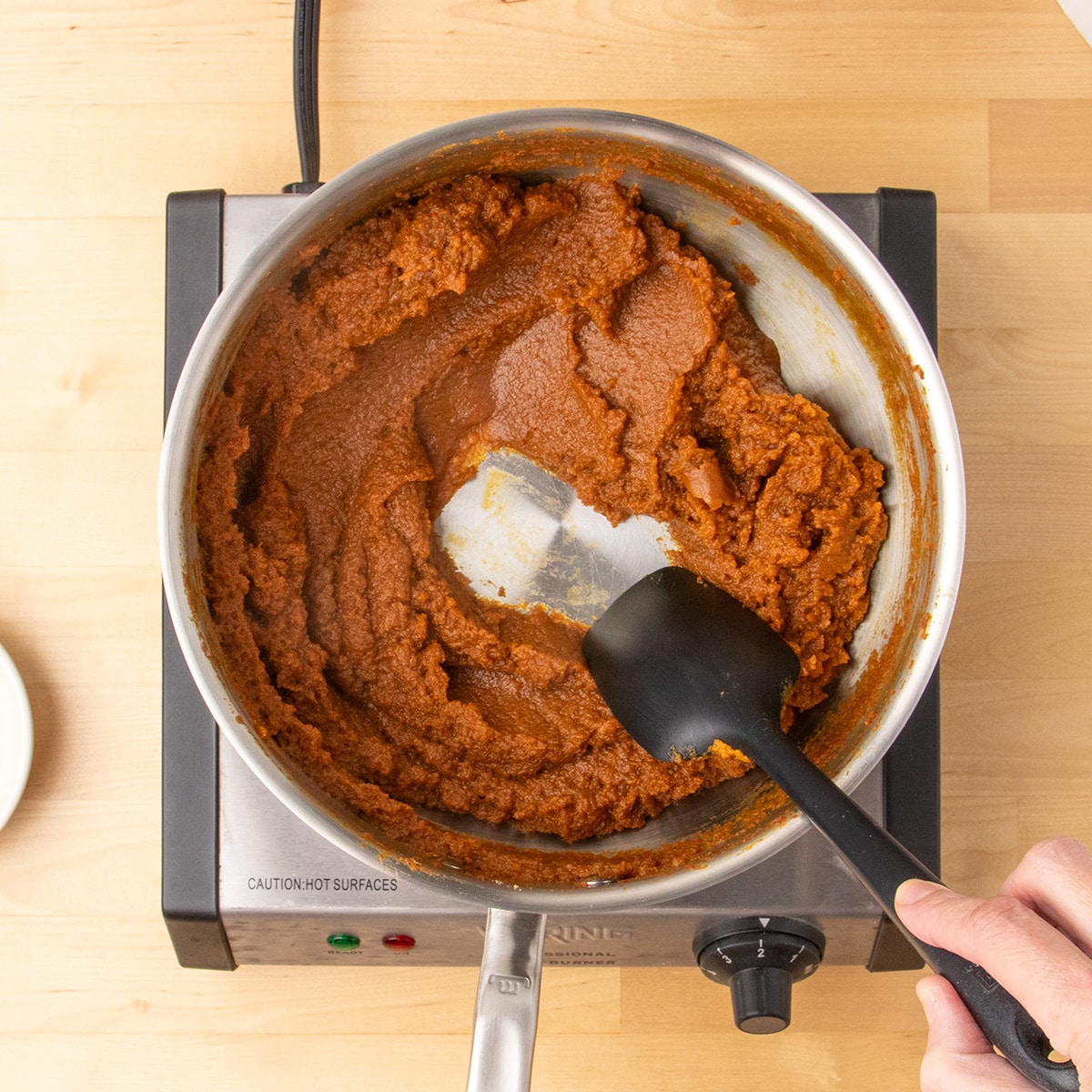
Steps 5: Cook for eating
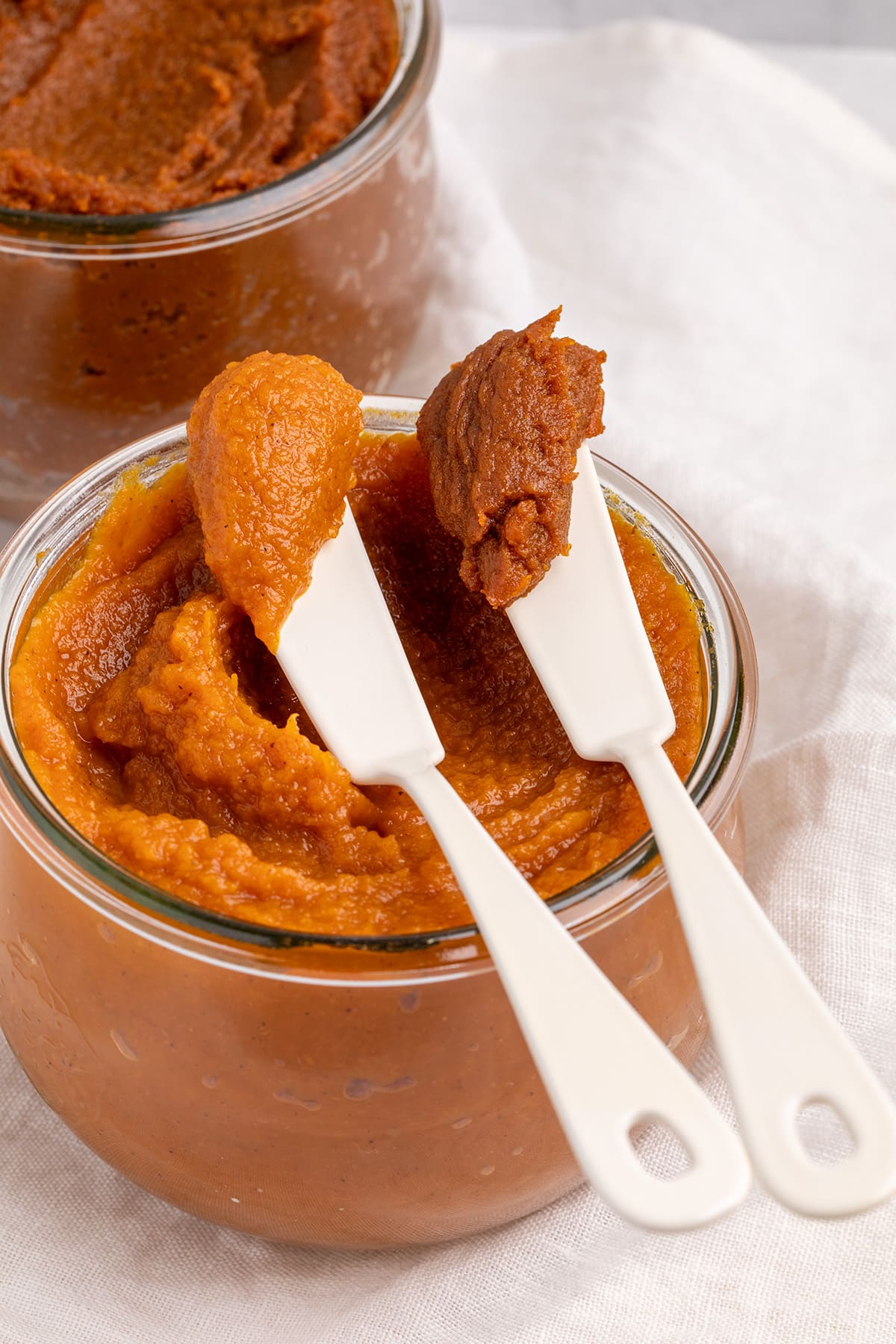
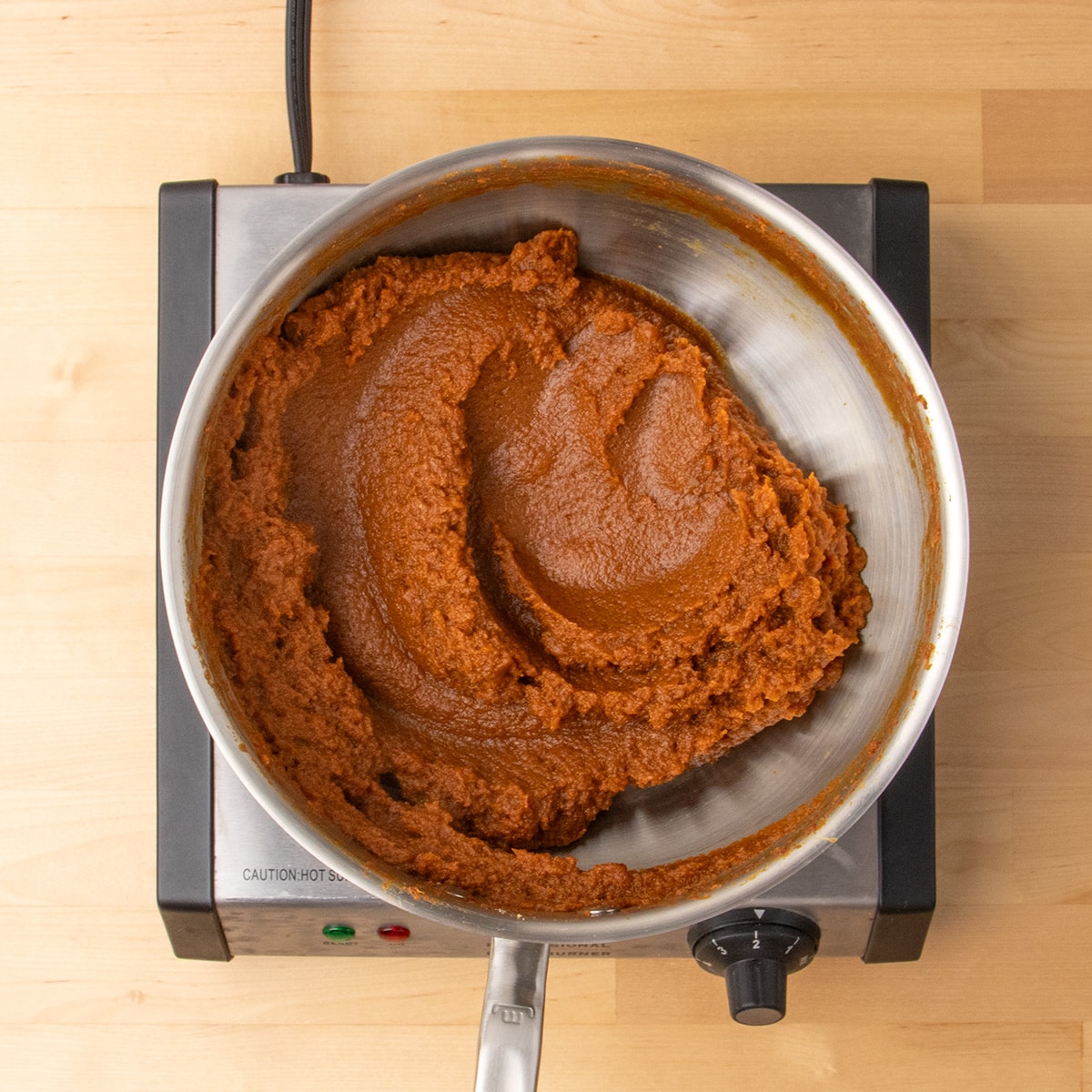
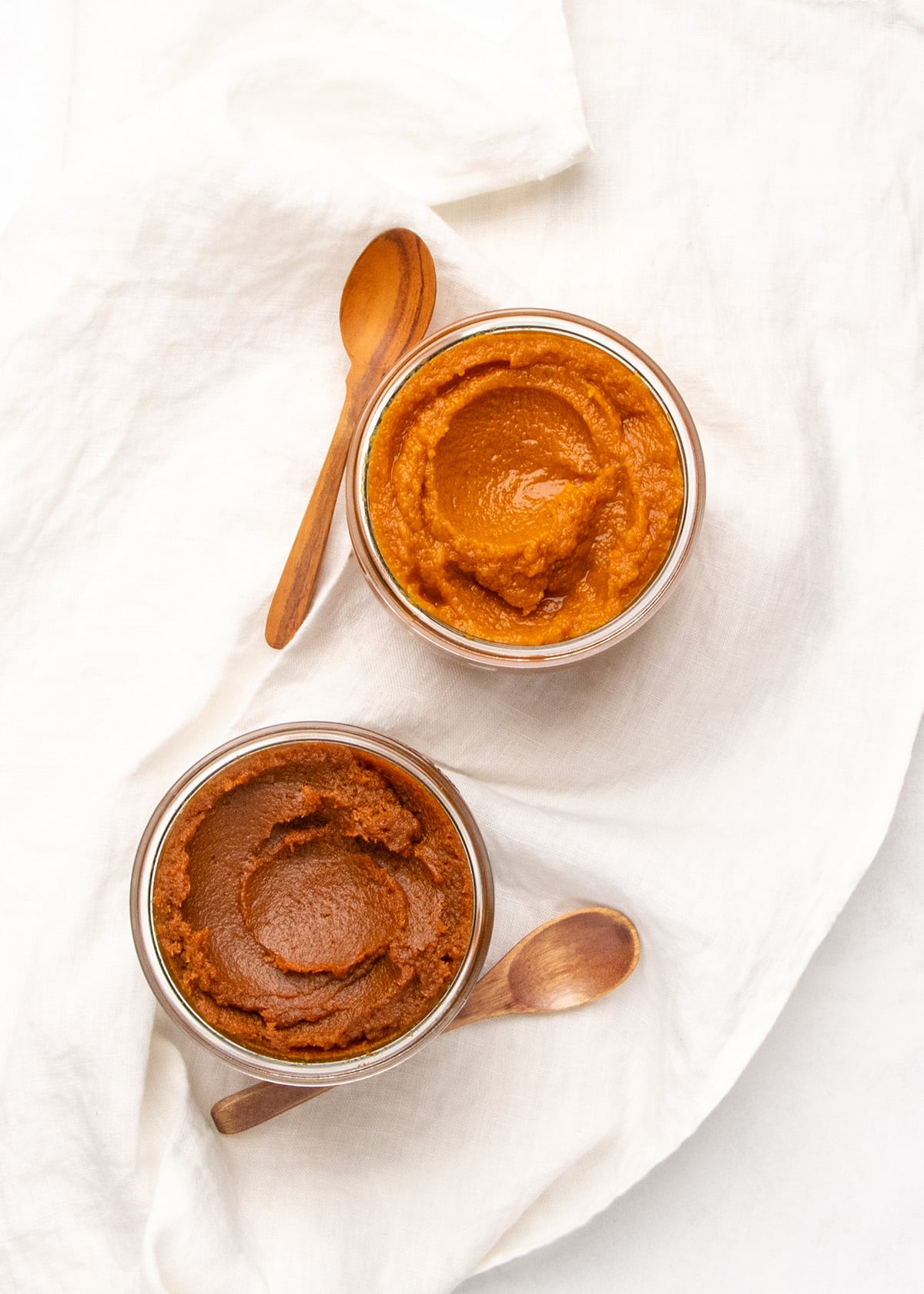
If you’d like to serve the pumpkin butter as a condiment for spread, dipping or topping, cook it down less, like you see in Step 5. The mixture will still glisten with moisture, and will seem smoother and spreadable. Be sure to taste it, and if it’s too concentrated or even bitter, mix in more apple cider or juice slowly to restore it.
Step 6: Cook for baking
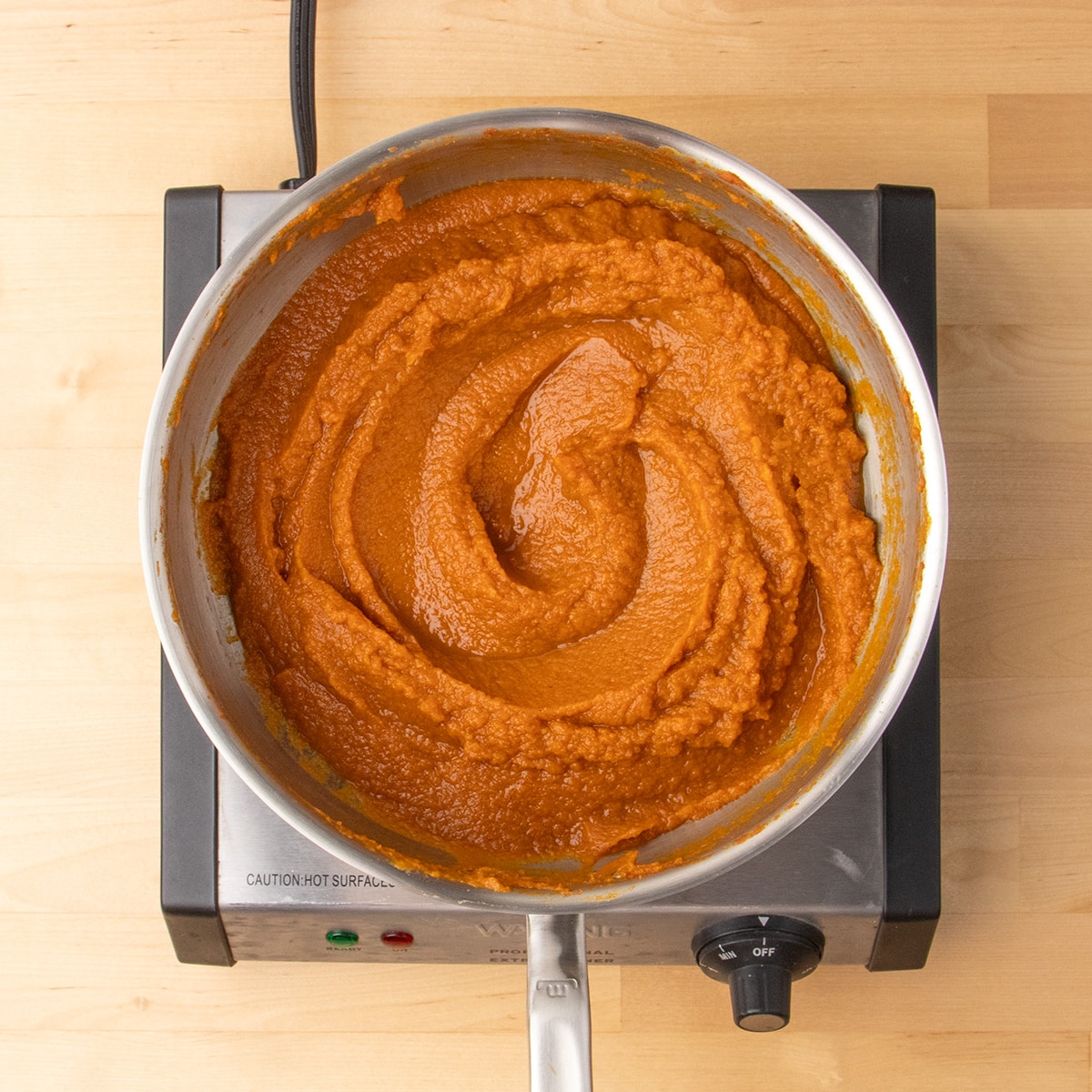
If you plan to bake with the butter, continue to cook off more moisture until the mixture has no more visible moisture and is a darker orange-brown color. Pumpkin puree alone has more moisture and less flavor than we would generally like in baking, making baked goods too cakey and puffy.
To begin with a whole pumpkin
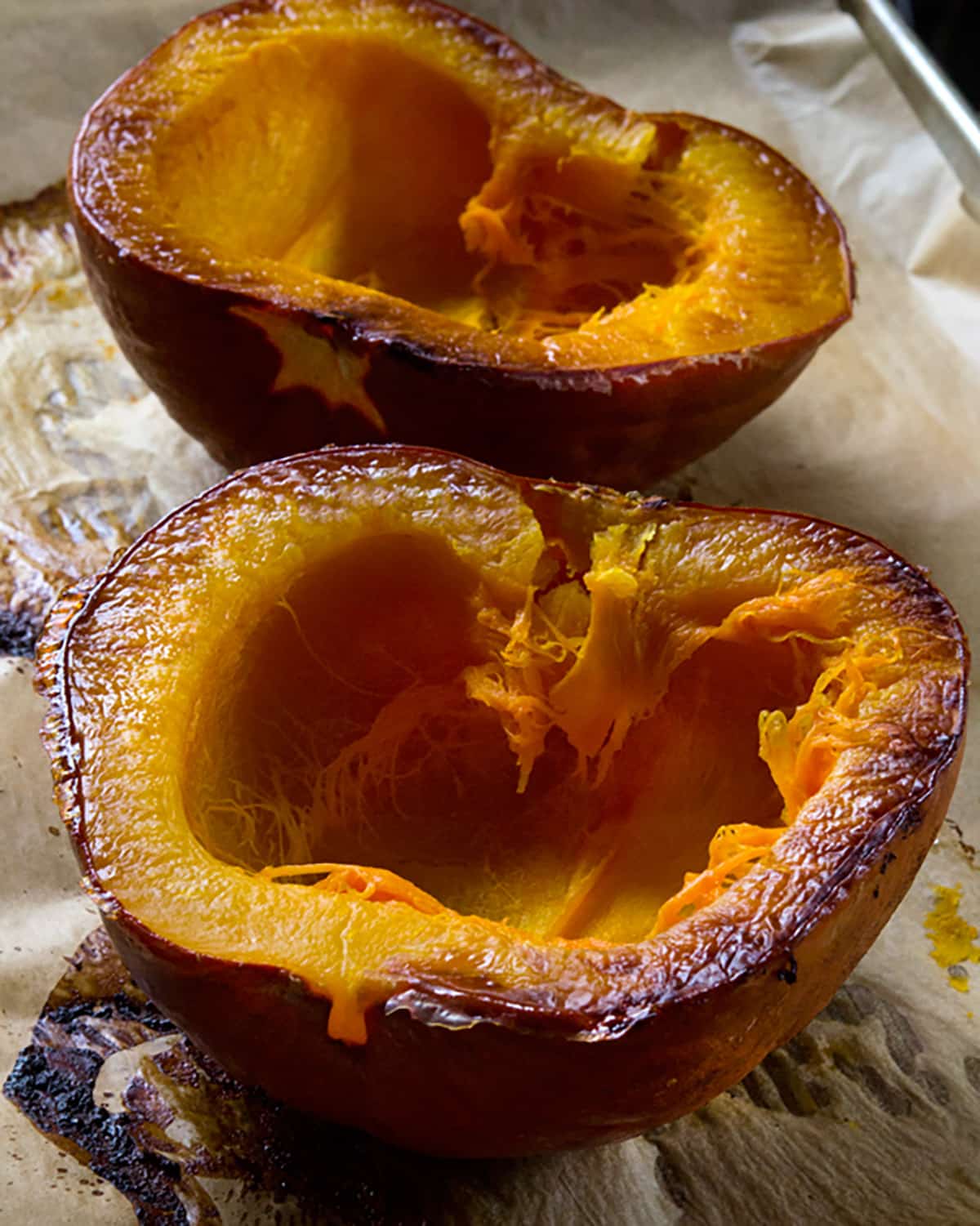
You can begin by roasting a whole pumpkin rather than opening a can of pumpkin puree to make this recipe. Small sugar pumpkins are inexpensive during the fall baking season are easy to cut in half, pierce the skin, then roast each half, cut side down so they don’t dry out, until tender. Scoop the flesh out and puree it in a food processor or blender.
Make the most of your pumpkin, then, and rinse, dry, sprinkle and toast those pumpkin seeds (instructions below in the recipe). They’re ridiculously good for you, and my kids loved them even when they were small and extra picky.
Ingredient substitutions
Pumpkin puree
Most pure packed pumpkin is made with another winter squash, not pumpkin. Butternut squash works well, but its baked and pureed flesh will be less orange than had you used a sugar pumpkin.
You will need a starchy winter squash, though, that has flesh that is similar in texture to pumpkin, and ideally something with some flavor, which is why I don’t recommend trying acorn squash (not enough flavor) or spaghetti squash (wrong texture). Even kabocha squash should work as a substitute for pumpkin, as it’s similar in texture but even a bit sweeter and more fragrant than pumpkin.
Maple syrup
If you don’t have maple syrup, you can try using honey, but honey is much thicker and more viscous with a heavier and distinctive flavor. Try using 3 tablespoons instead of 1/4 cup honey, and add a bit more apple cider or juice.
You can also try using granulated coconut palm sugar, and add more cider to compensate for the lack of moisture. You’re reducing the moisture by cooking the mixture, but you want to be able to cook the pumpkin puree for long enough to concentrate it without burning it.
Apple cider/apple juice
If you can’t have apple cider or apple juice, you can try using pineapple juice in its place. Pineapple juice is slightly more acidic than apple juice, but it adds really nice complexity to the pumpkin butter. If you hate the taste of pineapple, though, try white grape juice instead.
How to use pumpkin butter in baking
Once you make your own pumpkin butter or buy a jar of it, you’ll want to find as many ways as possible to use it. Here are some of the best recipes on the blog that make really good use of all the delicious, flavorful pumpkin butter:
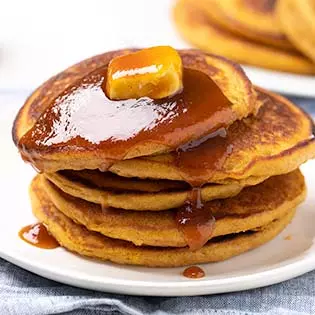
Gluten free pumpkin pancakes

Gluten free pumpkin cornbread
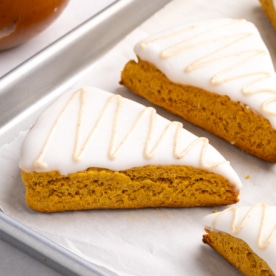
Iced gluten free pumpkin scones
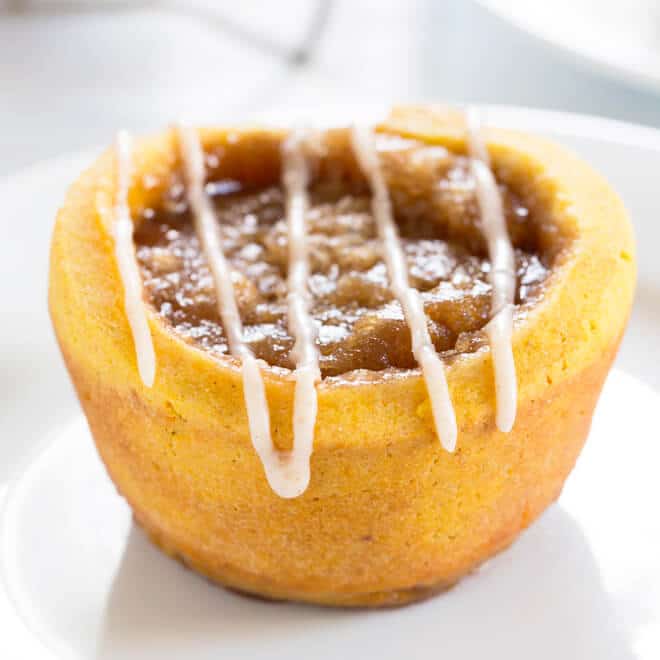
Gluten free pumpkin cinnamon rolls
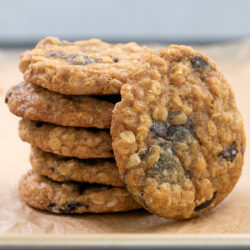
Gluten free pumpkin oatmeal cookies
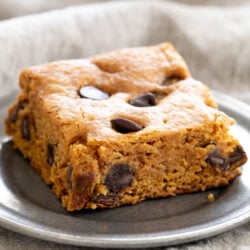
Gluten free pumpkin chocolate chip squares
Can I buy pumpkin butter?
Yes! Trader Joe’s markets usually sell a jar of lovely pumpkin butter during the fall and holiday seasons. Green Jay Gourmet brand also makes gluten free pumpkin butter. Stonewall Kitchen Maple Pumpkin Butter is also gluten free, and really delicious. Be sure you’re not buying pumpkin flavored nut butter; this is a fruit butter, not a nut butter.
Storage instructions
Due to the relatively low moisture content and high sugar content, stored in a sealed glass container, the pumpkin butter will keep in the refrigerator for about 2 weeks. For longer storage, I recommend freezing it in an ice cube tray, then in a sealed freezer-safe bag so you can defrost only what you intend to use.
Do not can this recipe
This recipe is not properly formulated to be canned in a shelf-stable way. In fact, homemade pumpkin butter cannot be canned safely at home since it is not acidic enough.
Pumpkin Butter Recipe
Tell Google you trust GFOAS!
Ingredients
- 1 28-ounce can plain packed pumpkin puree, (or 1 (1 1/2 to 2 pound) sugar/baking pumpkin)
- ¼ cup (84 g) pure maple syrup
- ½ cup (4 fluid ounces) apple cider, or apple juice, plus more as needed
- 1 ½ teaspoons pumpkin pie spice, (See Recipe Notes)
- ¼ teaspoon kosher salt
- ½ cup (109 g) packed light brown sugar, optional
Instructions
To roast a fresh pumpkin
- If using a regular sugar/baking pumpkin, preheat your oven to 375°F. Line a rimmed baking sheet with parchment paper and set it aside.
- Remove the stem and, with a large, sharp knife, cut the pumpkin in half through the middle. Scoop out all the seeds (see Recipe Notes for toasting the seeds).
- Place the pumpkin halves, cut side down, on the prepared baking sheet. Place in the center of the preheated oven and bake until the pumpkin halves are fork-tender and the flesh has begun to shrink away from the skin (about 45 minutes).
- Remove from the oven and allow to cool before scooping out the flesh and pureeing in a blender or food processor until smooth.
To make the pumpkin butter
- In a large heavy-bottom stockpot, combine the pumpkin puree with the maple syrup, apple cider (or juice), pumpkin pie spice, and salt.
- Mix to combine well and then simmer over medium-low heat, stirring frequently, for 15 minutes. Add the optional brown sugar, and stir to combine.
- Continue to cook until done. The additional cooking time will vary based on how you plan to use it, and the initial moisture content of your puree.
- Stirring will keep the mixture for splattering, as will cooking in a large pot.
For eating
- If you plan to eat the puree as is, rather than baking with it, continue to cook for about another 5 minutes or until it reaches its desired consistency and taste. It should glisten in the light. If it's thickened too much or tastes too strong, mix in more apple cider or juice to restore the consistency and taste.
For baking
- If you plan to bake with the butter, continue to cook until the mixture is reduced by about half and darkened in color, about another 15 minutes.
- Allow the pumpkin butter to cool completely before baking with it. Store in an airtight glass container in the refrigerator until ready to serve or use.
Video
Notes
Nutrition
Nutrition information is automatically calculated, so should only be used as an approximation.










I made this pumpkin butter as a spread and it was excellent. The flavors have warm notes for fall baking. I made my own pumpkin spice mix from the information in the notes, increasing the cinnamon by about 1/2 tsp after tasting it. I added about 1/3 cup of brown sugar at the end to give it a bit of sweetness.
I added it to my morning oatmeal with walnuts. It made an excellent breakfast!
I appreciate the information on freezing it and how long it will stay good in the fridge.
So glad you loved the pumpkin butter, Judith! Thank you so much for sharing your experience.
This recipe is easy and flavorful. I used silicone egg bite and popsicle cups (about 2 ounces each) to freeze portions, but also have a pint jar in the refrigerator.
My question: how long does this last in the refrigerator? I will be baking with it in the next few weeks, and didn’t want to freeze the pint jar portion if possible. Thanks for all the time and effort you put into making these great recipes!
Hi, Kelly, so glad you enjoyed the pumpkin butter, and I love how you chose to freeze portions. I feel like I should say that it will stay fresh for a week in the refrigerator, but honestly, I’ve kept it refrigerated in a sealed container for up to 2 weeks without a problem. If it has gone bad, you’ll know!
We have an abundance of butternut squash so used that. DIVINE! Made your gluten free corn bread, also used it as spread on waffles, seed bread, etc AND made a pumpkin {squash ;-) } spice latte! YUM!
Oooh the pumpkin spice latte is genius, Charlene!
I love your pumpkin butter – and make it every year. Tell me, can it be frozen in pouches enough for a recipe?
Hi, Abby, you can definitely freeze the pumpkin butter. I think freezing it in pouches in portions is a smart idea!
It’s been to years since I’ve made them but I used to use a recipe online for mini pumpkin donuts that used this pumpkin butter, can you direct me to where to find it. I can’t find it anymore.
I’m afraid that that recipe is no longer published on the site for various reasons for the time being, Brenda. If you’d like to make a record of it so you can still use it before it’s been redone and republished, you can find just the recipe itself in a printer-friendly version here.
For the pumpkin butter- I am not a fan of maple syrup or honey. Can I use Karo syrup? Thank you!
B.
Hi, Brenda, that would work just like honey, since it has a similar consistency. You could also try Lyle’s Golden Syrup, which I personally prefer to honey. It has a mild flavor that you might like, and it can be used anywhere honey is called for.
Thanks!!