

This post may contain affiliate links. Please read our disclosure policy.
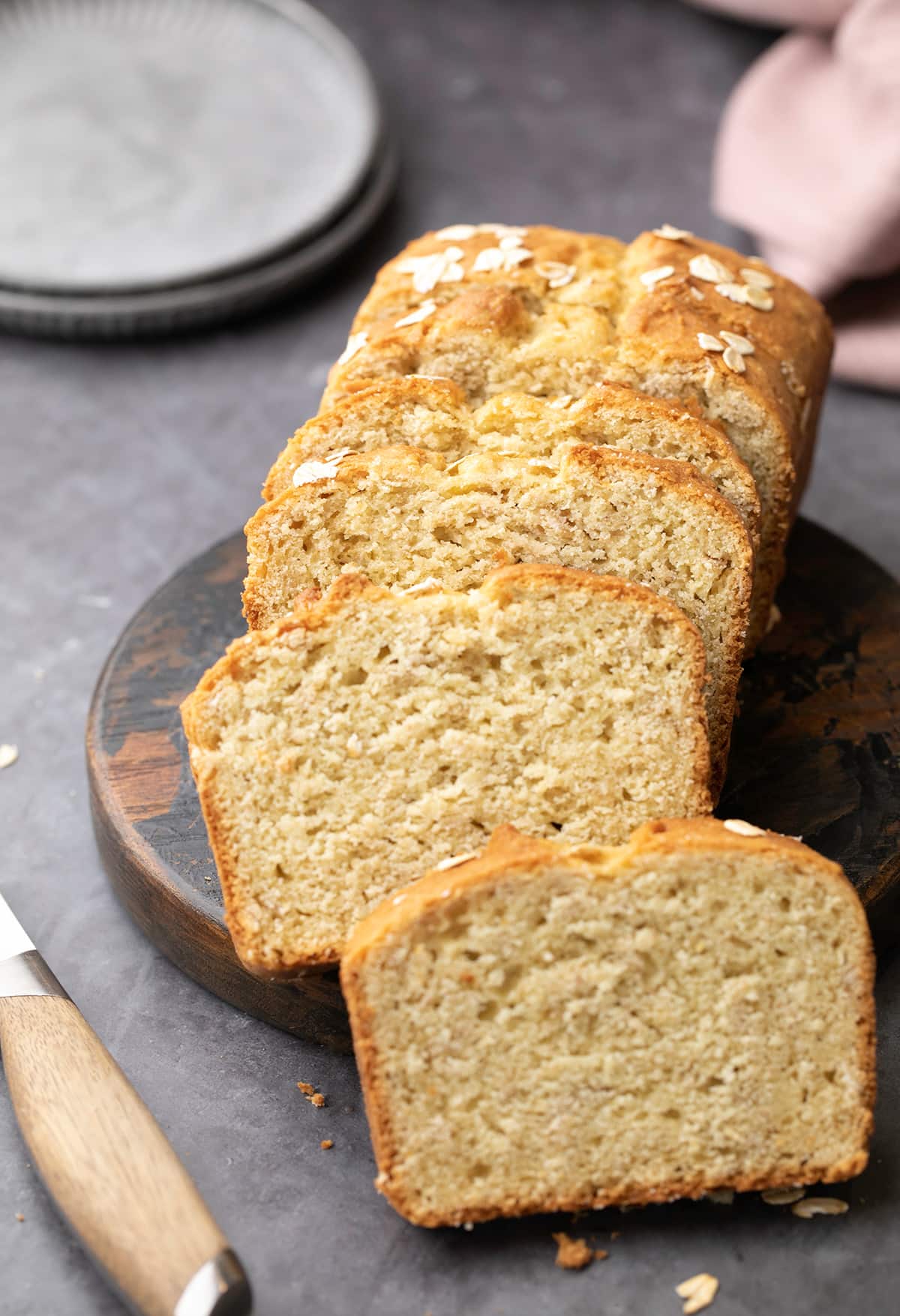
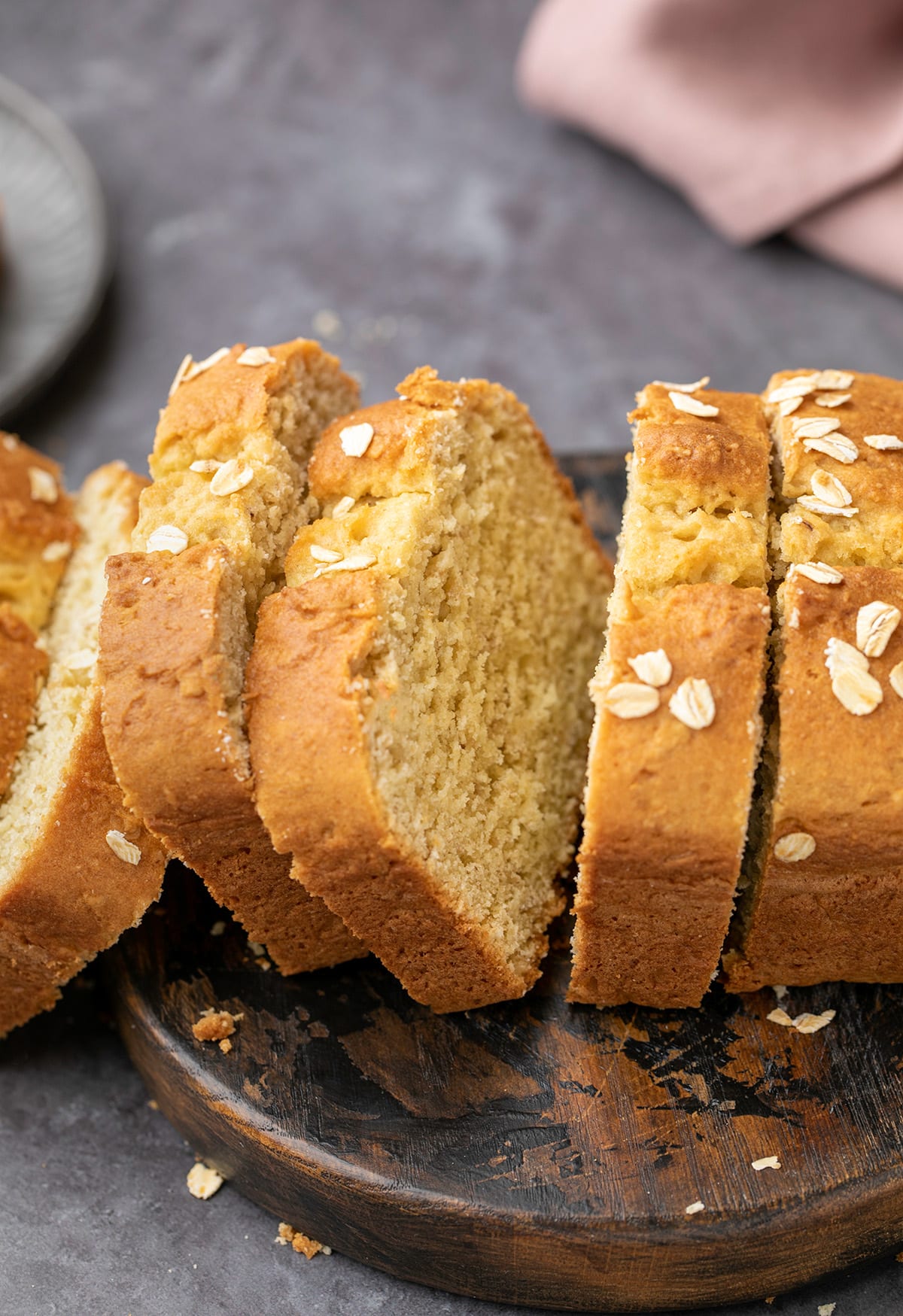
Gluten free oat bread is a delicious and nutritious alternative to conventional wheat bread. This hearty quick bread has a fluffy, tender texture and satisfying flavor that's great for breakfast, brunch, or a snack.
Why this recipe works
This gluten free oat bread recipe is made with simple ingredients that you likely already have in your pantry. It's also low-allergen and can easily be made dairy free as well.
The combination of all-purpose gluten free flour blend and certified gluten free oat flour gives the bread a unique texture that is both light and fluffy but still hearty enough to keep you satisfied between meals.
And, it's a quick bread, so it's more like muffins baked into a loaf. The rise comes from eggs, baking soda, and baking powder, instead of yeast.
But, like traditional bread, you bake these quick breads in a loaf pan. And you'll slice them in lovely thick slabs to serve with plenty of butter and your favorite jam.
Just remember that it's not ideal for sandwiches, as it's a tender quick bread. If you want a sandwich loaf, I strongly recommend my classic gluten free bread recipe. It's the most popular of all my gluten free bread recipes for those looking for something as close as possible to a conventional loaf. If you'd prefer something without traditional yeast, try our gluten free sourdough bread.
Expert tips
Making gluten free oat bread doesn't have to be intimidating. And my gluten free quick bread is a nice, simple recipe, so it turns out well, even if you're a beginner. Here are some tips for getting the perfect loaf every time:
Make your own oat flour
Making your own oat flour at home is easy and cost effective! Certified gluten free oat flour is unnecessarily expensive. I refuse to buy it when it's so simple to make, particularly for a recipe like this where you don't need super-finely ground oat flour.
Simply grind old fashioned gluten free rolled oats in a food processor until they reach a fine consistency. You can, of course, buy certified gluten free oat flour if you don't want to make your own.
And do remember to only use certified gluten free oats if you need to eat gluten free due to the high risk of cross contamination.
Slash the bread down the middle
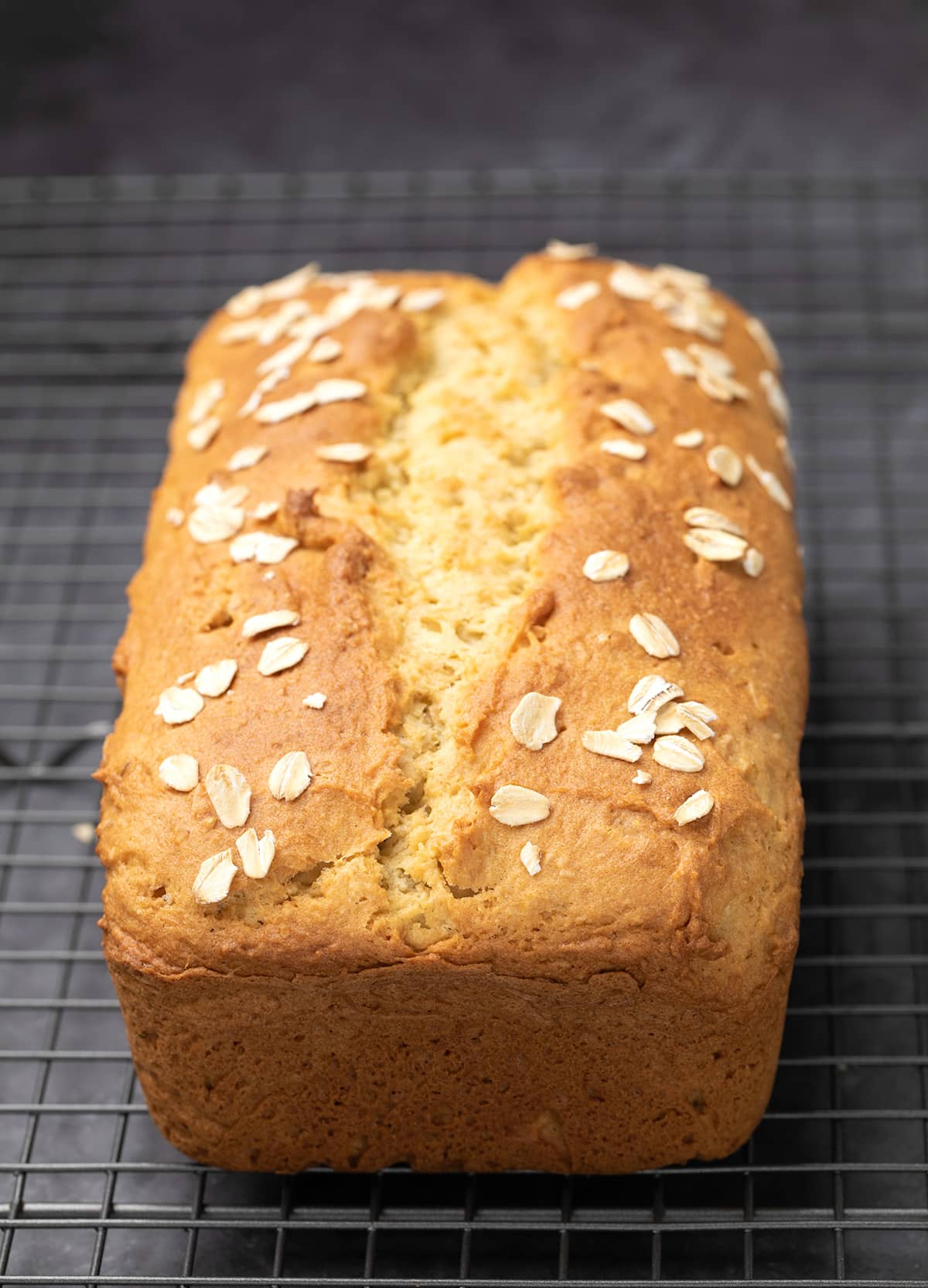
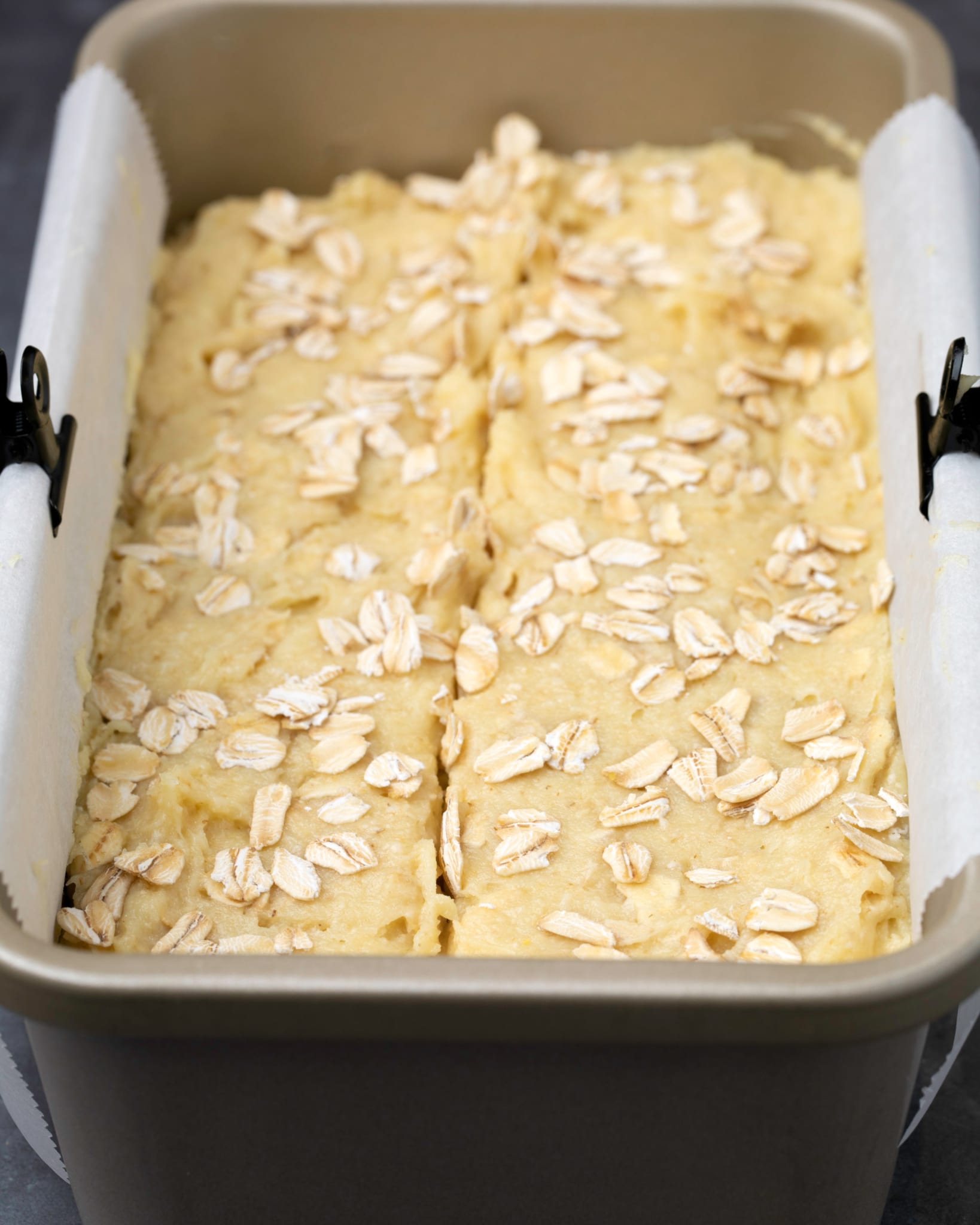
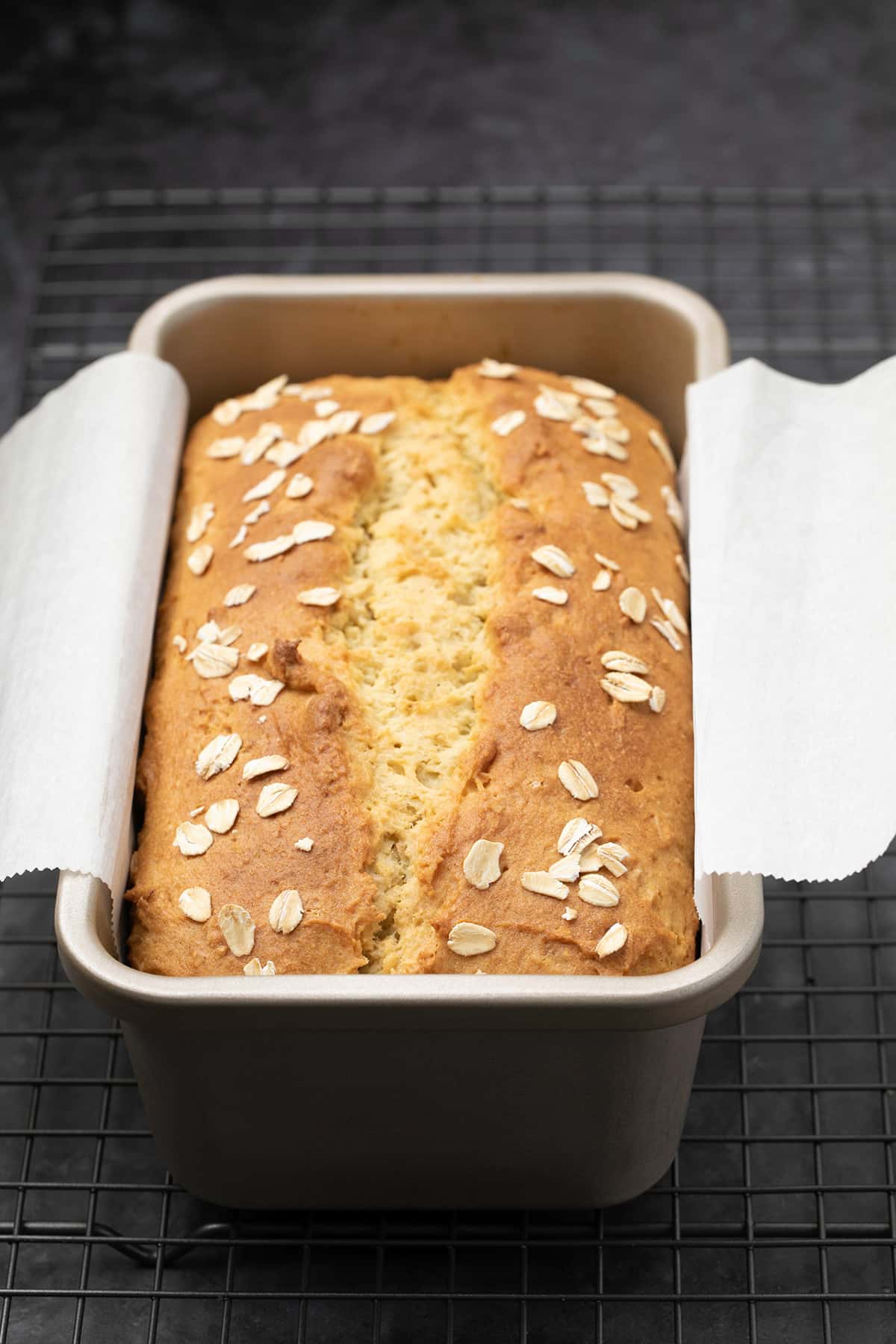
Before baking, use a knife or a small, metal offset spatula to slash down the middle of the loaf while it's sitting in the bread pan. This will help ensure an even split as the loaf rises during the bake. It's not essential – your loaf will still split during the rise, it just won't look quite as nice, neat, and even.
Turn down the oven
Although this gluten free bread is fairly forgiving and is not prone to overbaking on the bottom, unlike other quick breads, you still want to avoid having the oven set too high for too long.
The recipe calls for the bread to bake at 375°F for 10 minutes to encourage the loaf to rise fully, much like we do with our gluten free applesauce muffins. Then, for the remaining 45 to 50 minutes, you need to drop the temperature to 350°F to avoid overbaking and excessively drying out your loaf. Remember, it's already pretty tender, so drying it out with overbaking makes it even more fragile and ruins the taste and texture, too.
So don't forget to turn down the oven after 10 minutes for a nice, even bake.
Choosing the best pan
For the best results with this oat flour bread, use a slightly smaller 8.5 x 4.5-inch cast aluminum bread pan. A standard 9 x 5-inch bread pan works too, but the loaf won't be quite as tall.
Cast iron pans tend to get too hot for long bakes like this one, so you'd end up with burned or overbaked sides and bottom. And I don't recommend a silicone bread pan either, since they don't conduct heat very well, so your baked goods just don't tend to brown in the oven.
What gluten free flour is best?
For this, as with many other gluten free recipes, I recommend using an all-purpose gluten free flour blend such as Better Batter's classic blend or Cup4Cup's all purpose gluten free flour blend. I used Better Batter, here. But you can also make your own mock Better Batter classic blend easily.
There are a few other options, too, but I'd avoid anything with a grainy texture or an inconsistent blend. I don't use King Arthur or Bob's Red Mill, for example, but please see our all purpose gluten free flour blend page here on the blog for full and complete information on what blends to use, which ones to avoid.
Storage instructions
This delicious bread stores well in in an airtight container on the countertop for a few days. It freezes very well, too.
You can store it in the refrigerator, but I find that the refrigerator tends to dry out baked goods. If you can't leave it on the counter or freeze it, try wrapping each slice tightly in plastic wrap or store in an airtight container in the refrigerator. If it has dried out at all, try sprinkling each slice with a few drops of water, and toasting it before serving.
For longer storage, try freezing it. Wrap each slice tightly in plastic wrap then place inside a freezer bag or airtight container before freezing for up to 3 months. Thaw overnight on the kitchen counter before serving or reheating, or defrost once slice at a time (if that's how you froze it) in the toaster oven or microwave for a few moments.
Serving suggestions
Gluten free oat bread pairs perfectly with nut butters for an even more filling snack. It works as a sweet treat, too, with spreads like jam or honey butter. It's only lightly sweet, so it makes great toast topped with avocado slices and a sprinkling of salt.
Ingredient substitutions
Dairy free
Substitute block-style vegan butter instead of regular melted butter. I like Miyoko's Kitchen and Melt brands best. You'll also have to switch out the buttermilk for a dairy free substitute. As a general rule, for every cup of buttermilk in a recipe, replace it with 1/2 cup of unsweetened dairy free yogurt and 1/4 cup of unsweetened non dairy milk, like almond milk or oat milk.
Egg free
Try replacing each egg with a “chia egg”. To make a single chia egg, place 1 tablespoon ground white chia seeds in a small bowl with 2 tablespoons lukewarm water, mix, and allow to gel. You can also try Bob's Red Mill egg replacer or JustEgg liquid egg alternative.
Oat free
Believe it or not, you might be able to make this oat bread without oats at all. If you'd like that hearty taste, but you're sensitive to oats and can't eat them, try using some of our oat substitution suggestions. Here, for the oat flour, I'd try quinoa flakes; for the whole oats, try beaten rice, or even an equal amount, by weight, chopped tender raw nuts like pecans or walnuts.
Hearty, Fluffy Gluten Free Oat Bread Recipe
Ingredients
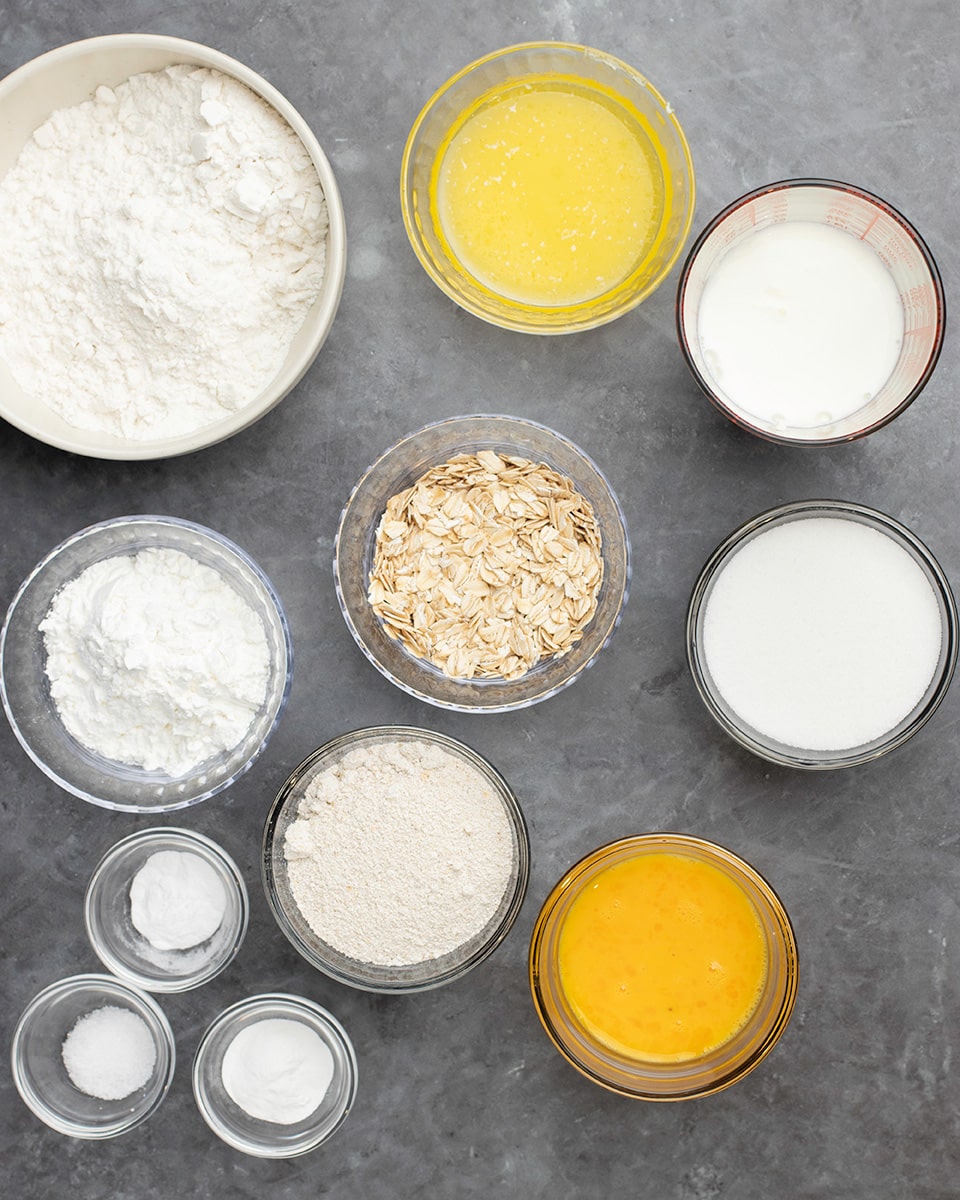
- 1 ⅜ cups (193 g) all purpose gluten free flour blend, (I used Better Batter; please click thru for full info on appropriate blends)
- ¾ teaspoon xanthan gum, (omit if your blend already contains it)
- ⅜ cup (54 g) cornstarch
- ⅝ cup (75 g) certified gluten free oat flour, (See Recipe Notes)
- 2 teaspoons baking powder
- ¾ teaspoon baking soda
- ½ teaspoon kosher salt
- ¾ cup (150 g) granulated sugar
- ½ cup (50 g) certified gluten free old fashioned rolled oats
- 1 cup (8 fluid ounces) buttermilk, at room temperature
- 6 tablespoons (84 g) unsalted butter, melted and cooled
- 2 (100 g (weighed out of shell)) eggs, at room temperature, beaten
Instructions
- Preheat your oven to 375°F. Grease well an 8.5-inch x 4.5-inch loaf pan, then line it with some parchment paper, hanging off the sides. You can also use a standard 9-inch by 5-inch loaf pan. Set it aside.
- In a large bowl, place the flour blend, xanthan gum, cornstarch, oat flour, baking powder, baking soda, salt and sugar, and whisk to combine well.
- Add almost all the rolled oats, reserving about 1 tablespoon to sprinkle on top of the raw batter in the loaf pan. Whisk to evenly distribute the oats in the dry ingredients.
- Create a well in the center of the dry ingredients, and add the buttermilk, butter, and eggs.
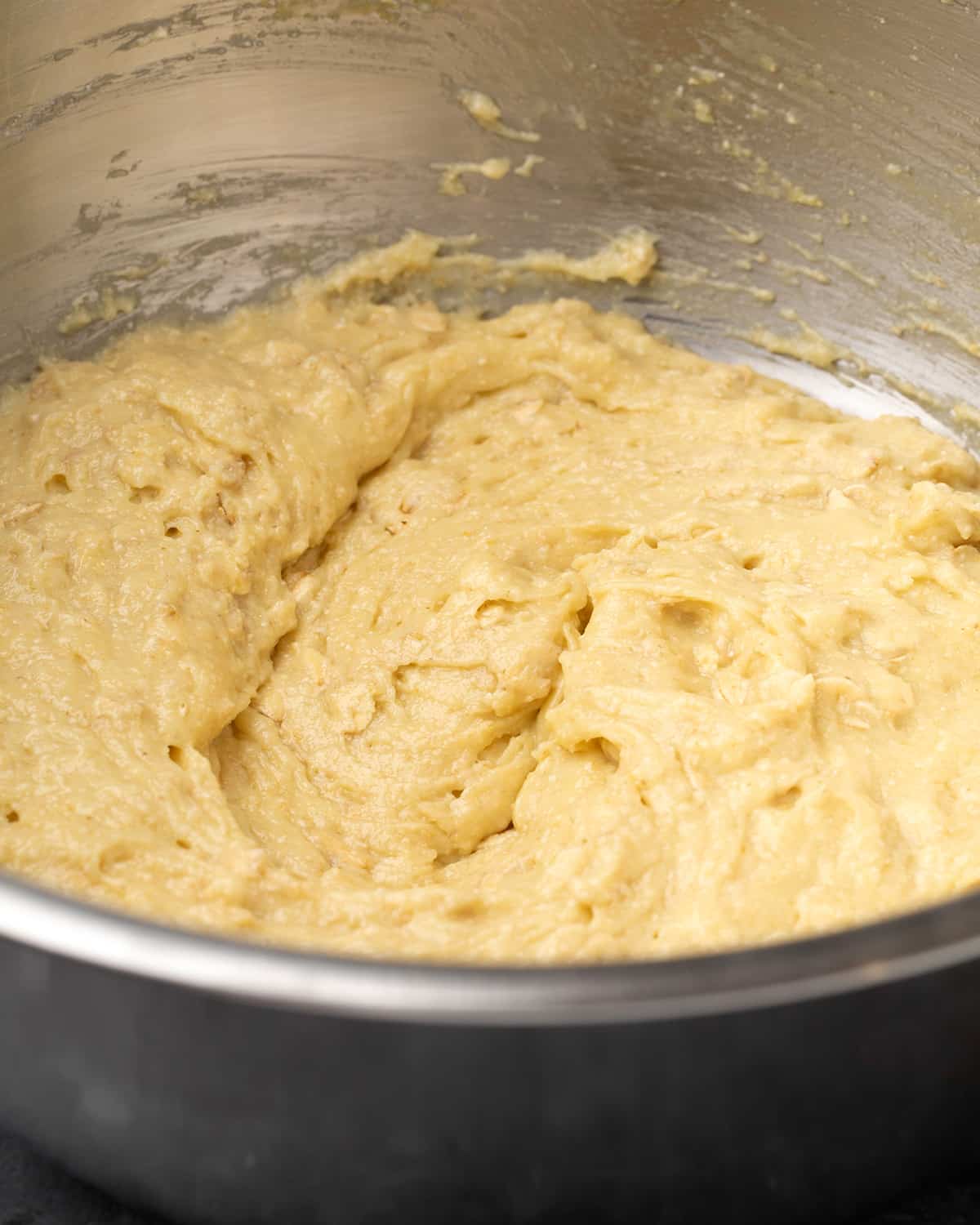
- Mix to combine fully, but do not overmix. The batter will be thick but should not be stiff.
- Scrape the batter into the prepared baking pan and, with a wet spatula, smooth the top.
- For a more uniform split down the center as the bread rises in the oven, slash down the center of the loaf with a knife or small metal offset spatula, about 1/4-inch deep.
- Sprinkle the reserved rolled oats evenly on top of the batter in the loaf pan. Bang the pan on the counter a couple times to help the loose oats adhere to the batter.
- Place the pan in the center of the preheated oven and bake for 10 minutes.
- Reduce the oven temperature to 350°F, and continue to bake for another 45 to 50 minutes, or until the top of the loaf springs back when pressed lightly and a toothpick inserted in the center comes out with, at most, a few moist crumbs attached.
- Remove from the oven and allow to cool in the loaf pan for 15 minutes before transferring to a wire rack to cool completely. Slice once cool and serve.
Video
Notes
Nutrition
Nutrition information is automatically calculated, so should only be used as an approximation.










Can I use egg substitute in this? Am allergic to eggs thanks
Please see the text of the post under the heading “Ingredient substitutions,” Lysette, for my suggestions.
will try it
Came out very good. Can’t even tell that its GF.
So happy to hear it, Alina. Thank you so much for sharing your experience!
Amazing. My first real baked loaf – and it feels behaves like a real bread. I am in awe – thank you!
You’re very welcome, Susan. So glad you enjoyed the oat bread!
Nicole could you post your gluten free flour blend again. Many thanks. Diane
It’s linked in the recipe card, in the navigation bar, and you can find it by searching on the blog.
Love your recipes Nicole. I usually add some healthy seeds when making my oat bread and wondered if doing so with this bread, will it have an effect?
Hi, Jacquie, I haven’t tried adding any mix-ins to this recipe, and it might work okay, but keep in mind that adding dry mix-ins, even just a few ounces, will lower the overall moisture of the raw dough and may affect the end product.
Can I make this in the bread machine?
Hi, Adrian, I’ve never used a bread machine to make a quickbread, so I’m afraid I really can’t offer any advice about that.
Thank you ! I am allergic to gluten and dairy. It turned out amazing !
I subbed the butter for half beef tallow and half flax oil.
Instead of the flour blend I did sorghum.
I did maple syrup instead of sugar and oat milk with vinegar in place of butter milk. It turned out so good thank you !!
Made the bread and it is beautiful! But was wondering if sugar can be substituted? 150 g per loaf is quite a lot considering we want to have that bread on a daily basis!
Thank you!
Hi, Daniela, I’m afraid I really don’t recommend reducing the sugar. This is a sweet quickbread, not a savory bread, and the sugar doesn’t only sweeten but also provides bulk and tenderizes the crumb.
When I made this, it didn’t rise at all. Typical for me, still learning. What did I do wrong? Ideas?
should this have some apple cider vinegar in it? Wondering.
If it’s typical for you that bread with chemical leaveners like baking powder doesn’t rise for you, Dale, maybe your baking powder isn’t fresh? The recipe is correct as written, though, no apple cider vinegar needed.