

This post may contain affiliate links. Please read our disclosure policy.
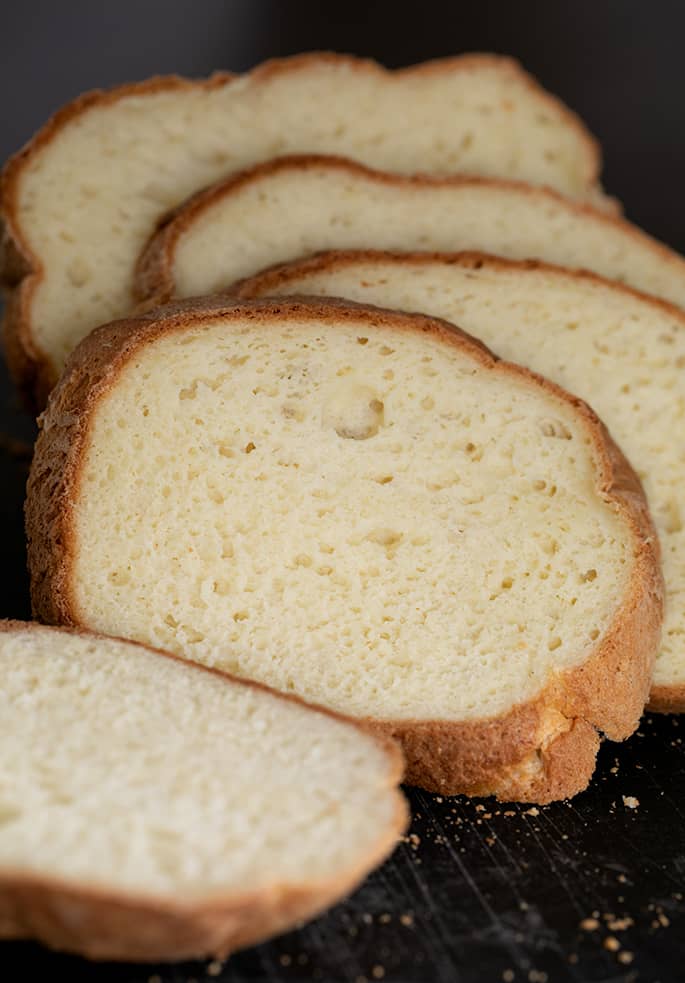
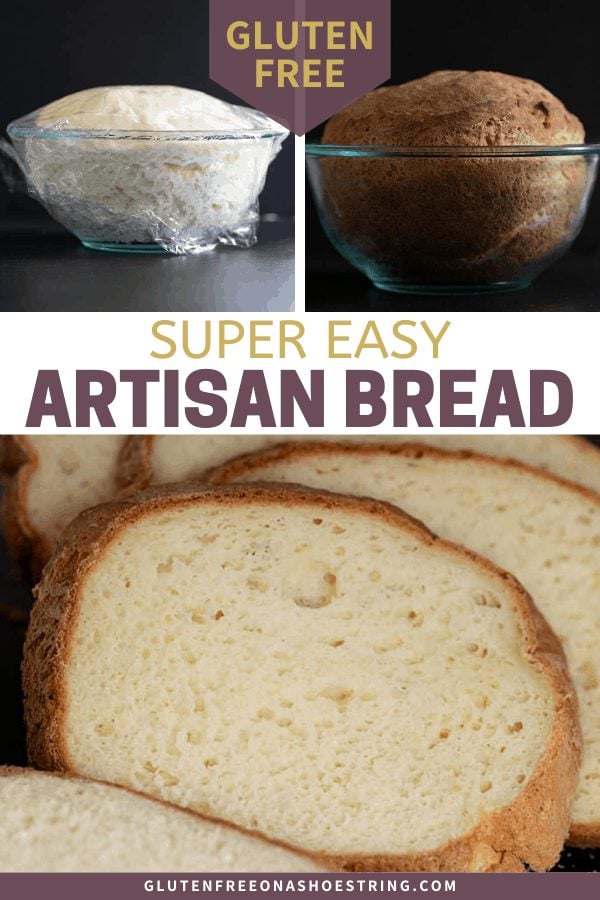
This easy gluten free artisan bread has an open crumb, a crisp crust, and comes together in one bowl—no stand mixer required.
It rises and bakes quickly, making just enough for a family dinner table. It’s the kind of bread that makes a gluten free meal feel like a night out.
My take
How this bread gets a crisp crust and soft center
This loaf is made with just flour, yeast, sugar, salt, milk, and eggs—no stand mixer needed. It’s easier than my classic gluten free sandwich bread and less involved than my gluten free sourdough.
Think of it as an everyday boule: crusty on the outside, soft and airy inside because of the wet dough that rises high, fast. Perfect for tearing, dipping, sandwiching—or turning into homemade bread crumbs.
It bakes in a small glass bowl, then gets flipped near the end for a crisp, golden crust all the way around.

what’s in it
Recipe ingredients
- Gluten free flour blend – Use a high-quality all purpose blend that includes xanthan gum. It should support a good rise and create a tender crumb.
- Tapioca starch/flour – Adds stretch and height. Even though your flour blend probably includes some, this extra amount makes a big difference.
- Yeast – Instant yeast is easiest. If using active dry, increase the amount slightly (7.5–8g) and activate it in some of the milk first.
- Sugar – Just a bit to feed the yeast and help it rise.
- Baking soda – Promotes browning in the oven.
- Salt – Enhances flavor. I use kosher salt because it’s harder to overmeasure than fine salt.
- Milk – Warm milk activates the yeast and adds richness.
- Egg – Binds the dough, improves rise, and adds color and flavor.
How to make gluten free artisan bread
1. Grease your bowl or pan.
Use a 1 to 1½ quart oven-safe glass bowl for the classic round shape. If you’re using something else, check the FAQs for tips.
2. Mix the dough.
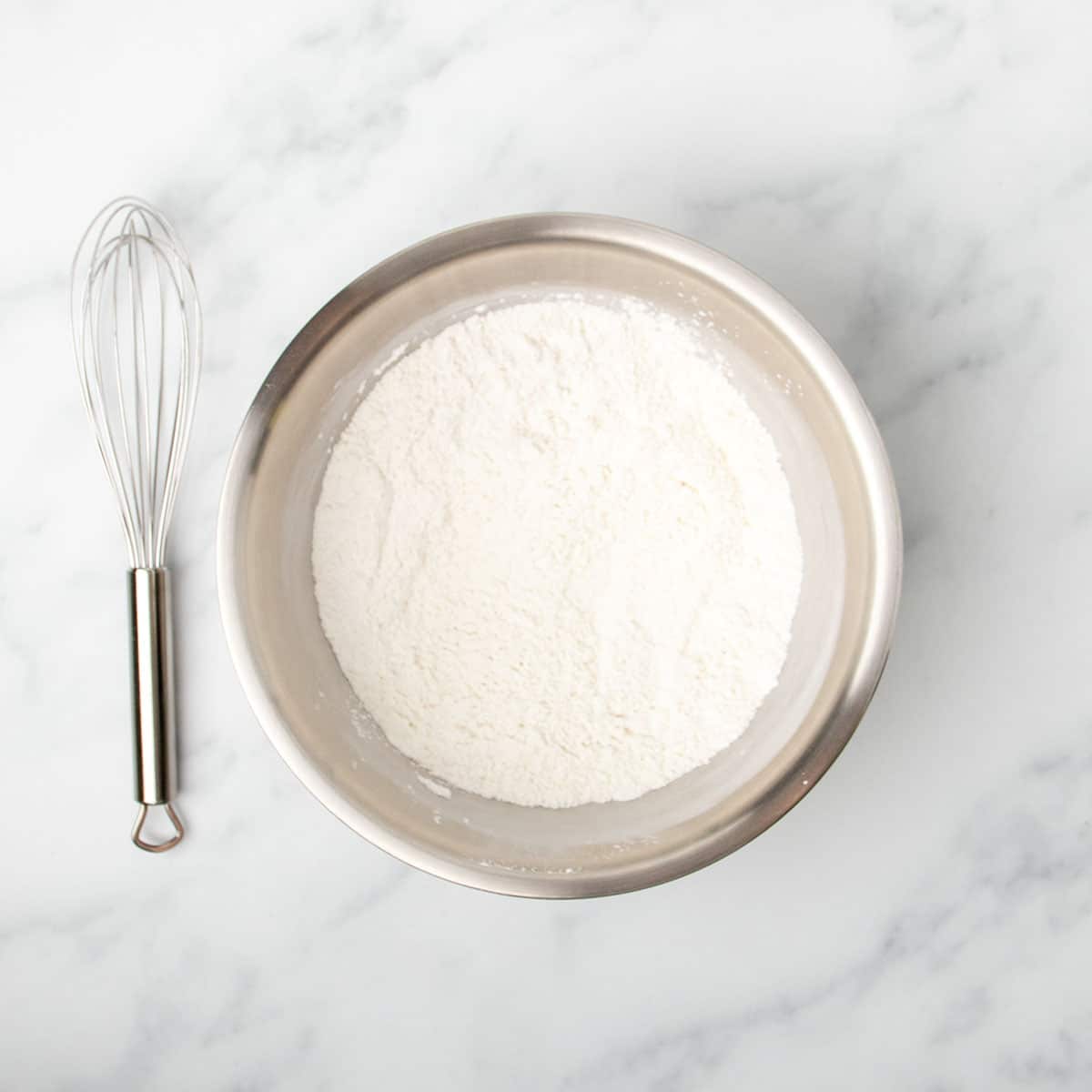
In a large bowl, whisk together the flour blend, tapioca starch, sugar, yeast, baking soda, and salt. Add the warm milk, beaten egg, and oil, and mix vigorously until a sticky, pale dough forms.



3. Let it rise.
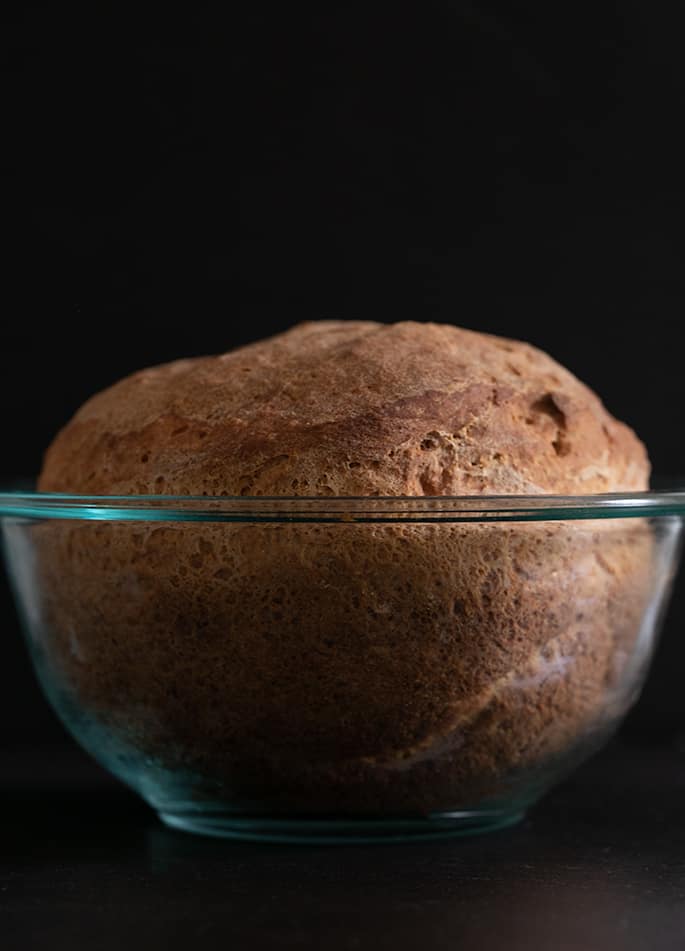
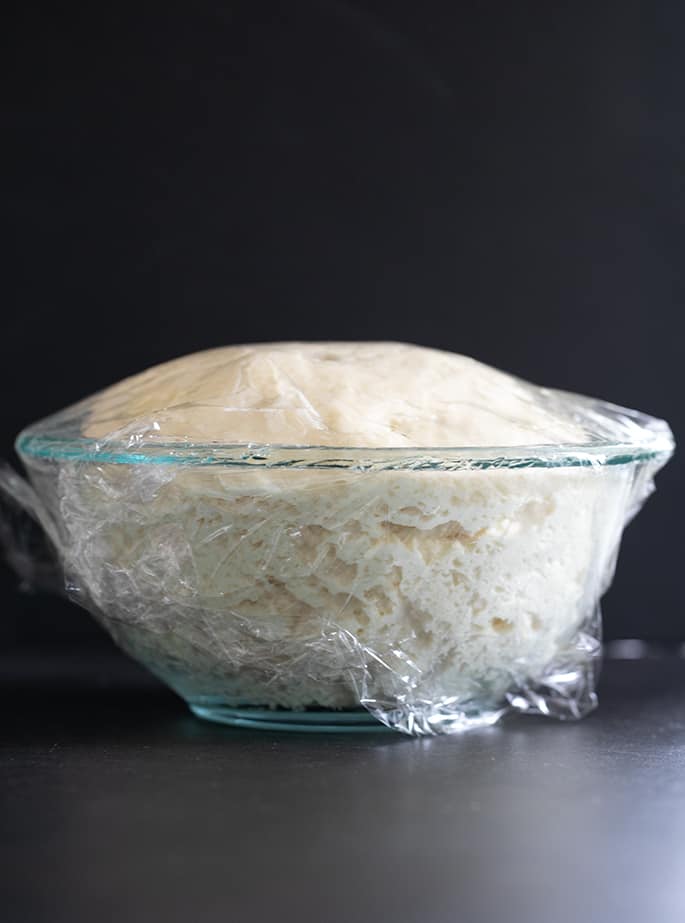
Transfer the dough to the prepared bowl. Smooth the top with wet or oiled hands. Cover lightly with greased plastic wrap and let rise until it’s about 1.5 times its original size—taller, not quite doubled.


4. Bake in two stages.
Bake at 375°F for 30 minutes. Then carefully flip the loaf in the bowl (bottom side up) and return it to the oven. Bake for another 15 minutes, until evenly golden and the internal temperature reaches about 195°F.


5. Cool before slicing.
Turn the bread out onto a wire rack and let it cool completely before slicing—cutting too soon can compress the crumb.
My Pro Tip
Expert tips
No mixer required.
This is one of the few yeast bread recipes on the blog that you can mix entirely by hand—just a bowl, whisk, and spoon.
Expect a wet dough.
It should look sticky and feel loose. Resist the urge to add more flour or your loaf will turn out dense and heavy.
Let it cool fully before slicing.
The bread finishes baking from residual heat as it cools. Cutting too soon compresses the crumb and ruins that airy texture.
Use a serrated knife.
Even cooled bread can squish if you press too hard. Saw gently with a serrated knife instead.
Try a Dutch oven.
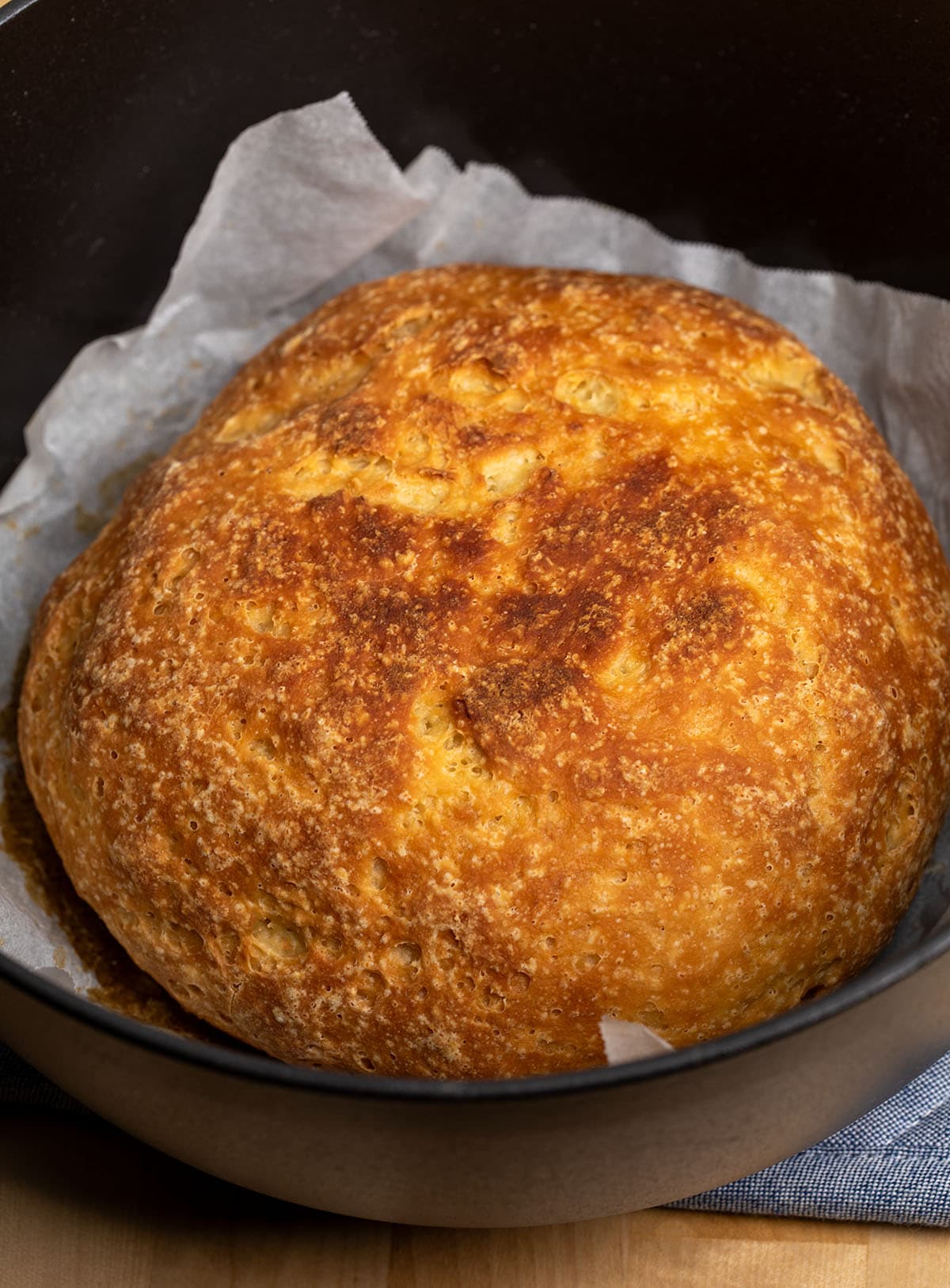
For a round loaf with a slightly different texture, you can bake this bread in a 3- or 5-quart Dutch oven. For the larger size, increase the recipe yield from 10 to 15 slices. Shape the dough on parchment into a round about as tall as it is wide, let it rise as usual, and bake uncovered at 375°F. Start checking at 40 minutes for a 3-quart, 55–60 minutes for a 5-quart.
substitutions
Ingredient substitutions
To make it dairy free:
Use unsweetened, unflavored plant-based milk like almond milk. Avoid canned coconut milk or oat milk—they’re too low in moisture.
To make it egg free:
Swap the egg for a “chia egg” (1 tablespoon ground white chia + 1 tablespoon warm water, mixed and gelled). Two egg whites (50 g) also work, but result in a slightly denser loaf, so aquafaba as an egg white replacement should work similarly.
If you don’t have tapioca starch:
You can substitute more all purpose gluten free flour. The bread will rise a bit less and have a tighter crumb, but it still works.
If using active dry yeast:
Increase the amount from 6 g to about 7.5 g (just use a little more than 7 grams). Be sure to activate it in some of the warm milk until foamy before mixing.
If you need to avoid yeast:
Try my yeast free gluten free bread. It’s a different style but a good alternative.
If you need to skip added tapioca starch:
It may be tempting to leave it out if your flour blend already includes it, but don’t. This recipe depends on the extra tapioca for stretch and rise. Without it, your loaf won’t be as tall or airy.

Gluten Free Artisan Bread Recipe
Tell Google you trust GFOAS!
Ingredients
- 1 ⅝ cups (227 g) all purpose gluten free flour blend, (See Recipe Notes)
- 1 ⅝ teaspoons xanthan gum, omit if your blend already contains it
- ⅜ cup (54 g) tapioca starch/flour
- 2 teaspoons (8 g) granulated sugar
- 2 teaspoons (6 g) instant yeast
- ¼ teaspoon baking soda
- 1 teaspoon (6 g) kosher salt
- 1 cup (8 fluid ounces) warm milk, (about 95°F)
- 1 (50 g (weighed out of shell)) egg, at room temperature, beaten
- 1 tablespoon (14 g) extra virgin olive oil
Instructions
- Grease a 1 or 1 1/2 quart glass oven safe bowl and set it aside. If you don’t have a glass bowl, you can use a small round pan or cast iron skillet with high sides. If using an aluminum pan that isn’t dark in color, raise the oven temperature to 400°F (as written and described below, the oven temperature is 375°F).
- In a large bowl, place the flour, xanthan gum, tapioca starch/flour, sugar, and yeast, and baking soda, and whisk to combine well. Add the salt, and whisk again to combine well.
- Create a well in the center of the dry ingredients and add the milk, egg, and oil, and mix vigorously. The bread dough/batter should come together and lighten a bit in color as you mix.
- Transfer the dough/batter to the prepared baking bowl, skillet, or pan, and smooth the top with clean, wet hands or a moistened spatula. Do not compress the dough at all.
- If you aren't using a bowl or pan with high sides, using a light touch and wet or oiled fingers, try to shape the dough so that it's about as tall as it is wide, to mimic the shape in the photos of the dough in the bowl. Your dough will definitely spread more during baking, though, and may take less time to bake.
- Cover the dough completely with an oiled piece of plastic wrap. Be careful not to compress the dough, but cover the bowl securely.
- Place it in a warm, moist place to rise for about 45 minutes, or until the dough has increased to about 150% of its original size. In cool, dry weather, the dough may take longer to rise; in warm, moist weather, it may take less time to rise.
- When the dough is nearing the end of its rise, preheat your oven to 375°F.
- After the dough has risen, remove the plastic wrap. Place the bowl in the center of the preheated oven and bake for 30 minutes, or until the bread is lightly golden brown all around.
- Remove the bread from the oven and rotate the loaf in the bowl, so it’s upside down. Return the bread to the oven and bake until the crust has darkened slightly all around, and the bread sounds hollow when thumped anywhere, on the bottom or top, about another 15 minutes.
- The internal temperature of the bread should reach about 195°F on an instant-read thermometer.
- Turn the bread out onto a wire rack to cool completely before slicing and serving.
Video
Notes
Nutrition
Nutrition information is automatically calculated, so should only be used as an approximation.
make ahead/leftovers
How to store and refresh this bread
Room temperature:
Store your loaf in an airtight container at room temp for up to 2 days. A zip-top bag or plastic storage box works well.
To refresh a dried loaf:
Run the whole loaf quickly under lukewarm tap water, then bake at 300°F for 10 to 12 minutes. For individual slices, drizzle with water and toast.
Freezer storage:
Let the loaf cool completely, then freeze in a zip-top bag with as much air removed as possible. It will keep well for up to 3 months.
To defrost:
Leave the bread on the counter overnight. Refresh as above before serving, if needed.
Troubleshooting & FAQs
Most often, it’s from adding too much flour or using too little liquid. Make sure the dough looks wet and sticky—that’s what gives you a light crumb. Using the wrong flour blend or skipping xanthan gum can also lead to dense bread.
Yeast dough needs time and the right conditions. Make sure your yeast is active, your milk is warm (but not hot), and your kitchen isn’t too cold or dry. Be patient—it may take longer than 45 minutes.
Use a small round pan or cast iron skillet with high sides. Try to shape the dough so it’s as tall as it is wide. If your pan is aluminum and light in color, raise the oven temp to 400°F for a better crust.
Maybe! This dough is wet enough to work in some machines. If yours makes a larger loaf, scale up the recipe yield to 15 or 20 slices. Make sure it only uses one rise cycle. You can also use my gluten free bread recipe for a bread machine for the perfect loaf in a bread maker.
You can try it, but the dough will spread. Bake at 400°F to help the crust form quickly. Shape the dough into a round on parchment and bake uncovered.
What to serve with this bread
This crusty loaf is perfect for dipping, dunking, and tearing into pieces at the table. Here are a few ways to turn it into a full meal:
- Gluten Free Meatballs – Slice, toast, and rub with garlic for easy homemade gluten free garlic bread.
- Creamy Gluten Free Broccoli Cheddar Soup – Nothing soaks up soup like a warm hunk of this bread.
- Gluten Free Cream of Mushroom Soup – Classic comfort food pairing
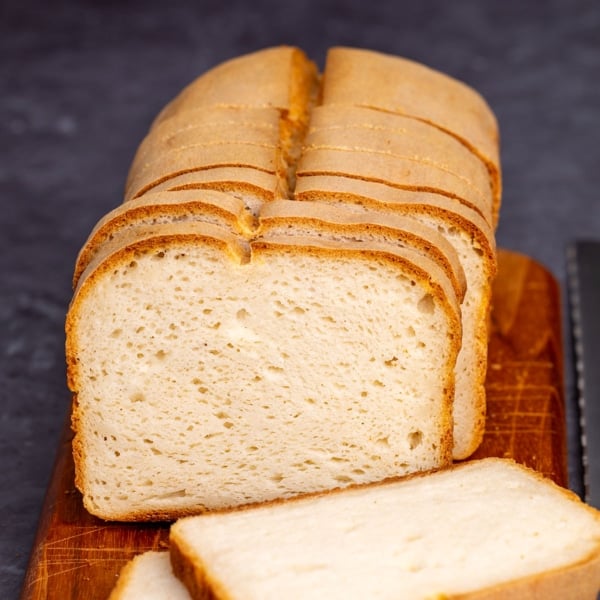
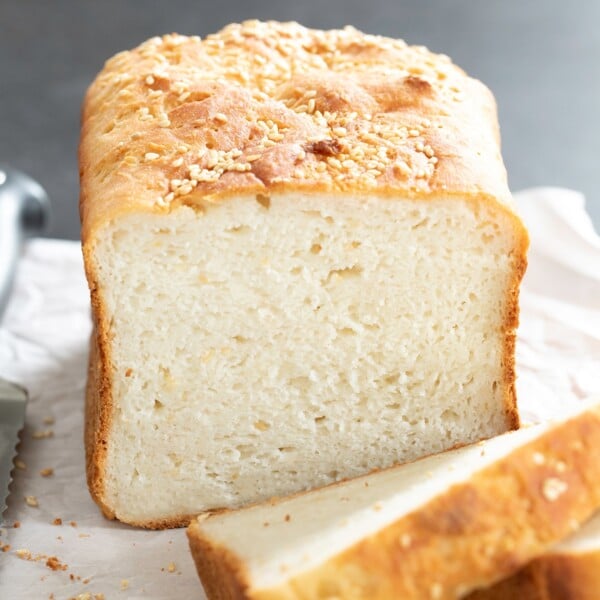
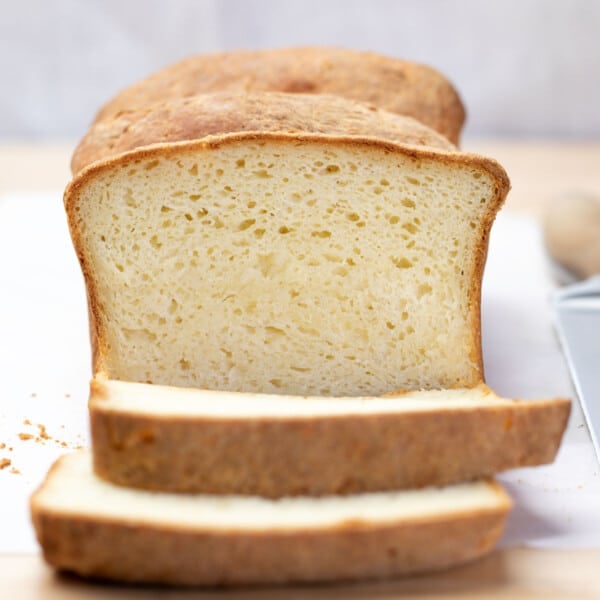










I have been looking at this recipe since it came into my email back in March. For years, I’ve been looking at many of your bread recipes. I kept putting it off because bread has always scared me. Give me cake, cookies, casseroles, or complicated entrees, but tell me to buy yeast and I’m out. Not gonna happen. Until today.
This was easy and absolutely delicious. I did take it out of the oven a little too soon though. It was a golden brown instead of the rye coloring in your pictures. It sounded hollow and was at the right temperature. I just know it’ll be better next time!
My stepmom has been GF for years and I have an allergy so I try to stay away from it. Bread is still my weakness and I always rely on Mrs. Baird when I really have a craving. I’d like to keep this on hand. Has it ever lasted long enough to see what the shelf life is? Does freezing ruin it (toasting isn’t for everyone)?
Thank you for sharing so much!
Hi, Amanda, Congratulations! I wish I had the option to add some virtual confetti to this response. You deserve it. If you’d like to freeze it, just slice it first, then place it in a freezer-safe bag or wrapping, eliminating as much air as possible (air causes freezer burn). Then, defrost a slice at a time in the toaster. So glad you went for it!
This bread has changed my life
Hi Nicole,
Instead of instant yeast in this recipe, can you use sourdough starter? I know you have a sourdough bread recipe but I’m keen to try a slightly different recipe for the starter as I’ve used that recipe a couple of times now. Just wanting to try something a bit different is all ?
I’m afraid not, Michelle. You can’t use a sourdough starter and commercial yeast interchangeably.
I read your recipie .
I am from Canada and the only all purpose flour GF where I leave is Robin hood all purpose GF.
Will that work for that recipie
In your opinion
Thanks
MARTHA
Hi, Martha, I’m afraid I don’t like that blend, but you can make your own all purpose gluten free blend using one of the recipes on my all purpose gluten free flour blend page.
I’ve made this twice now. Both times I used bob’s red mill 1:1 gluten free flour mix, a flax egg for the egg, and ripple for the milk. I only have active dry yeast and the first time I didn’t realize I needed to soak the yeast. The flavor was good but the bread had a yummy texture. The second time I slashed the yeast and the texture was spot on, but it sun didn’t rise very much. I was hoping for a take load and this was only a few inches. I know that rose times vary but do you have a general idea for how long? I let it rise for two hours the second time and it still hang quite doubled in size. Maybe I’m not letting it rise long enough? I usually put dough to rise in the oven on the low warm setting (about 150F). Is that too hot?
Hi, Deb, Bob’s Red Mill flour blends are not proper all purpose gluten free flour blends. They won’t work in my recipes. They aren’t properly balanced, and use gritty rice flour. Please follow the link to the all purpose gluten free flour blends page that is linked every time a recipe calls for an all purpose gluten free flour.
Thanks Nicole. I will keep trying :) still tasted good, even if it’s a bit oddly shaped. Lol.
Hi Nicole
Just made this bread and it’s so delish! My batter wasn’t easy to smooth down though, as it was quite stiff. Am I meant to beat the mix until it’s fluffy, before transferring into the bowl to rise? I’ve used all the ingredients exactly as written, included your Mock Better Batter blend :) would love your advice :)
PS the Chocolate birthday cake was amazing! No one could tell it was GF. Wish I could send you a pic :) thanks again!
I can only recommend that you watch the video for the consistency of the dough, Priya. I can’t really explain it any further. And be sure you’re measuring everything by weight. If you didn’t use tapioca starch, the dough will not be as light, as I explain in the post.
I can’t get Better Batter flour here. Is it your Mock Better Batter that I can use to substitute?
Yes, Anne. You can use my mock Better Batter anywhere you would use Better Batter itself. I created that recipe for just that circumstance. :)
This is the recipe I’ve been waiting for! It makes a wonderful loaf of bread, and we devoured the first one directly after baking. I’m in my kitchen again today making another loaf. I’m using a mix of Cup4Cup and 1/3 of the total flour Cup4Cup Wholesome. This is the answer to our GF bread prayers! Thank you!
I’m so glad, Leslie! I’ve never tried the Cup4Cup “wholesome” blend, but I’ve been curious. So glad you’re making good use of it.
Thank you so much for this recipe! Every loaf of gluten-free bread I’ve made recently came out dense and/or with a gummy layer at the bottom, but not this one. The texture and flavor was perfect with a flaxmeal egg. I will be making it often. I’m curious, do you think it would work to double the recipe and make it in a larger bowl?
Hi, Leah, so glad you love the bread and that it worked great with your “flax egg.” As I explained below to Jen (it seems I really should put this info in the post itself!), I really don’t recommend scaling it. But it is very easy to make two loaves at a time by measuring each ingredient into a separate bowl, then having them rise alongside each other and bake together. ?♀️