

This post may contain affiliate links. Please read our disclosure policy.
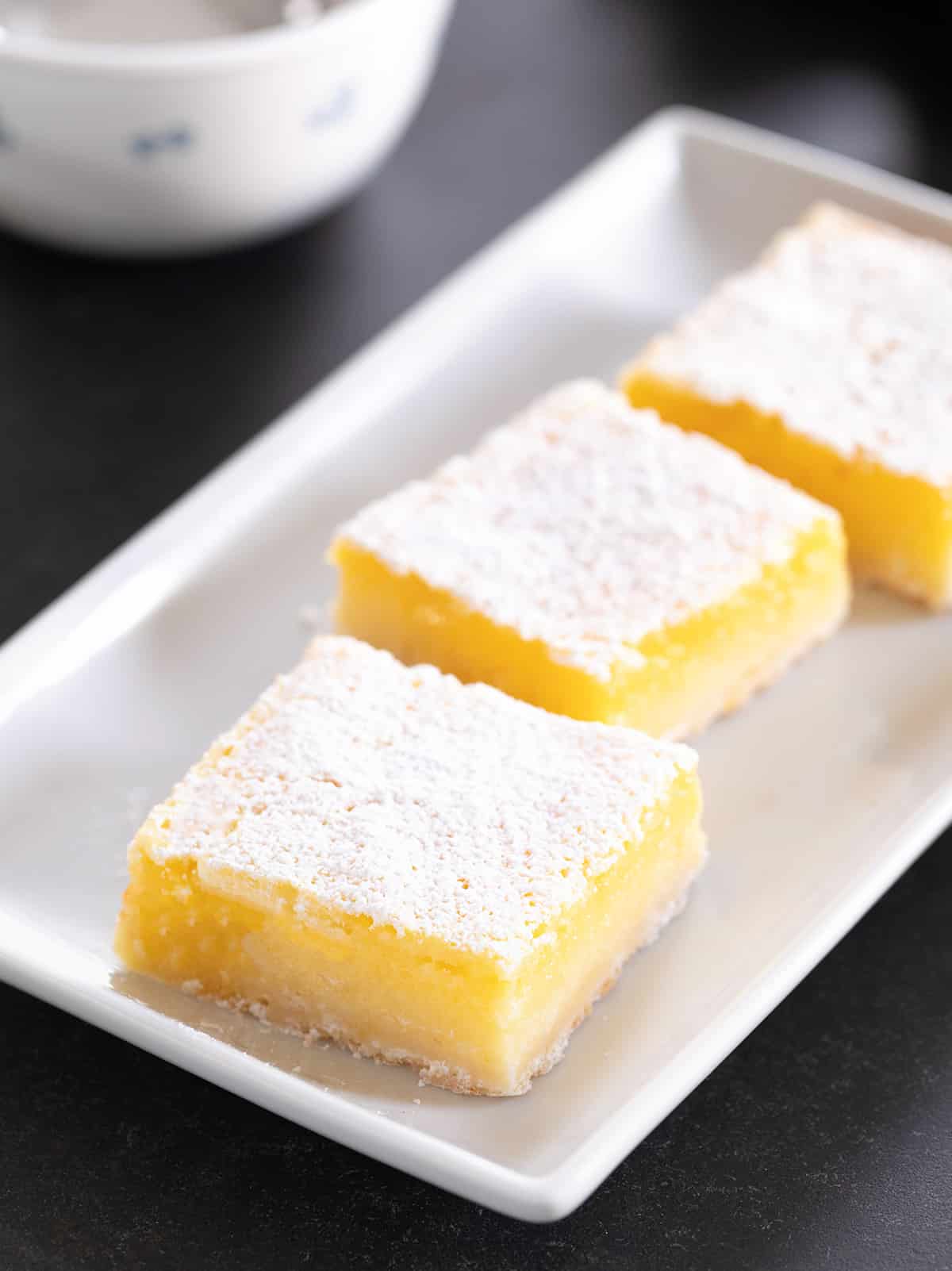
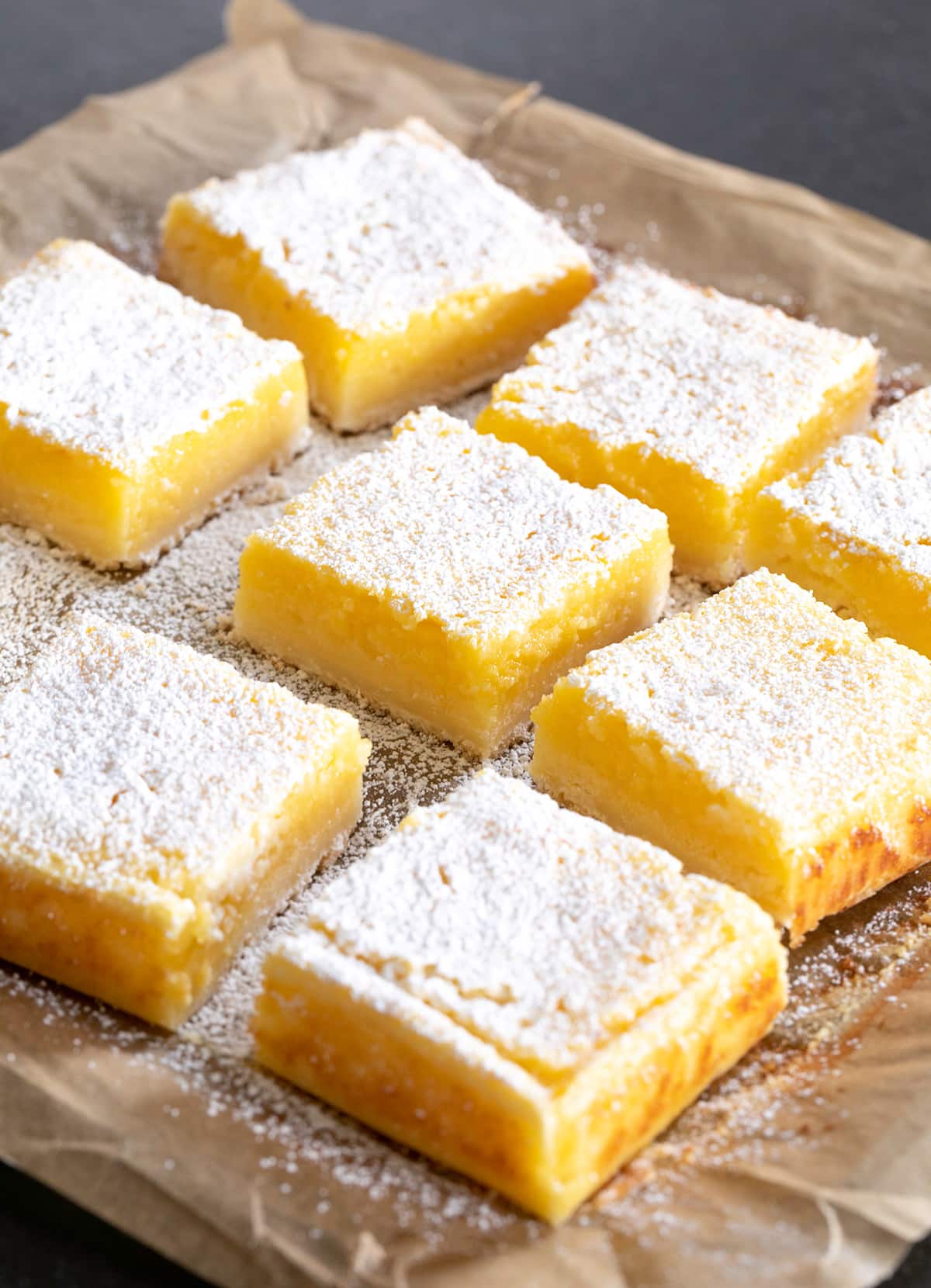
These gluten free lemon bars have a crisp, buttery shortbread crust and a smooth, bright lemon custard filling that sets just right every time. They’re simple to make, slice neatly, and deliver that classic balance of sweet and tart without any guesswork.
Why this recipe works
The texture is exactly what you want from classic lemon bars, and is even better without gluten. The crust bakes up tender but sturdy, with just enough chew to hold its shape under the filling without turning soft or greasy.
The filling is smooth, creamy, and full of real lemon flavor. Fresh lemon zest flavors the crust, not just the custard, so every bite tastes balanced and bright instead of flat or overly sweet.
The filling sets properly because you’re not guessing when it’s done. Since ovens vary, I give you multiple doneness cues so you can use your best judgment and pull it at just the right moment. That’s how you avoid a filling that’s underbaked or firm and rubbery.
“I’m the only gf person in the room but everyone loved it! Custard is so lemony and delicious.” Shannon
“I have made it many times and am making it again to bring to my 101 year-old grandpa who loves lemon bars.” Jennifer
Recipe ingredients
Here’s a bit about the ingredients you’ll need to make these bars, how to select the best of each, and what they do to contribute to the best result:
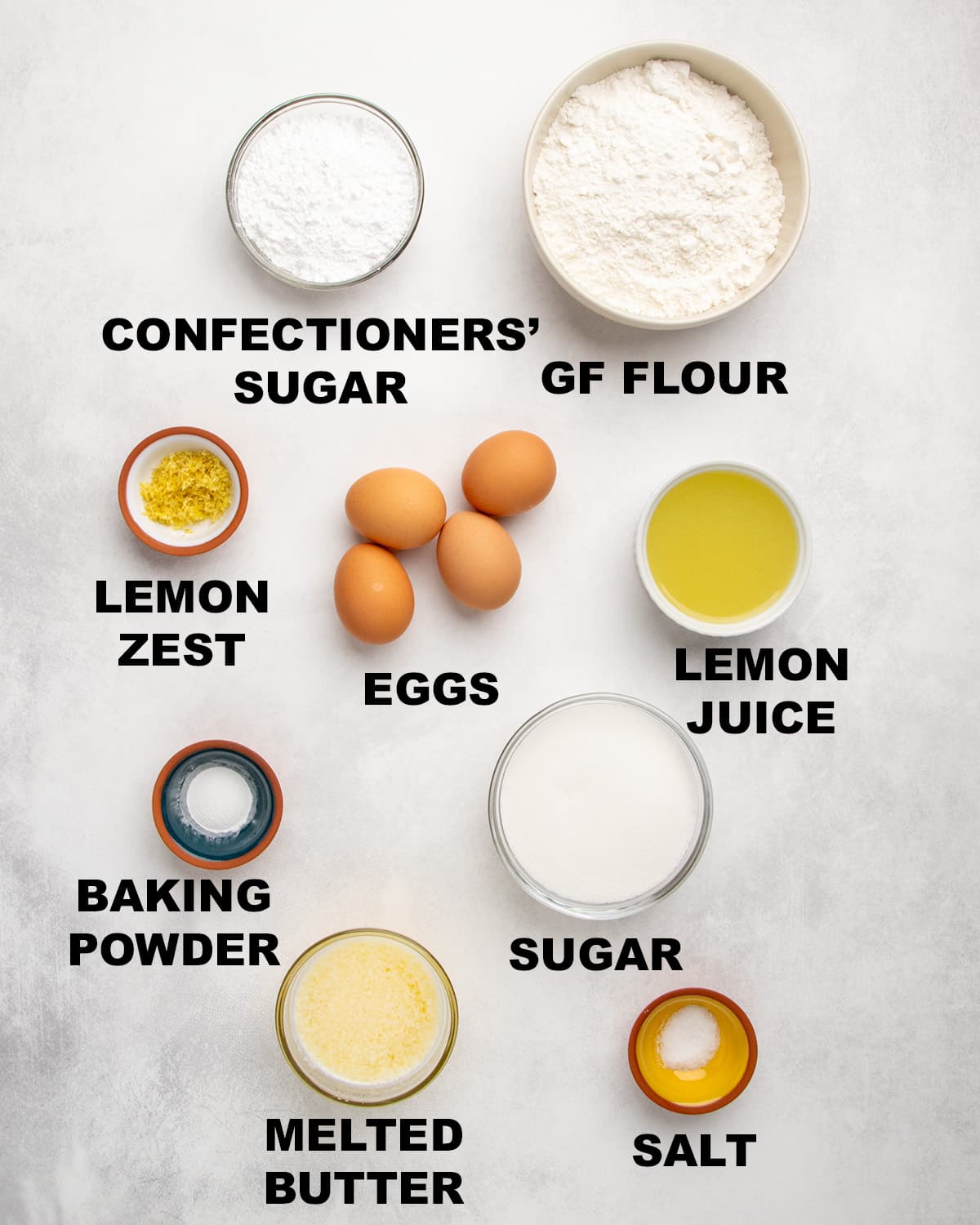
- Gluten free flour blend: Both the shortbread-style crust and the filling require a gluten free flour blend with superfinely ground rice flour as a base, without any xanthan gum. I’ve found that adding a binder like that makes the crust more chewy and the filling gummy, not smooth. The flour blend adds structure to both components of the bars. You can use my 3-ingredient blend or Nicole’s Best. If you choose to use King Arthur Flour’s gf blend without xanthan gum, I highly recommend sifting it multiple times before you measure to ensure there’s no grittiness.
- Confectioners’ sugar: In the crust, it adds sweetness and helps create a lightly crispy crumb that melts in your mouth. We dust more on top for extra sweetness and because it looks pretty (and covers any imperfections in the top of the bars).
- Granulated sugar: In the filling, it balances out the tartness of the lemon and ensures that the filling is smooth since the sugar dissolves in the lemon juice.
- Lemon juice: We use a lot to add tons of fresh lemon flavor. As it bakes, the taste intensifies, so avoid bottled juice in favor of freshly-squeezed. And strain out the pulp and seeds before measuring, to make sure you have enough.
- Lemon zest: Adds extra lemon flavor since it contains all of the essential lemon oils. Be sure not to grate down all the way to the bitter white pith.
- Butter: Brings the shortbread crust together, provides buttery flavor and richness, and makes the crust crisp on the outside.
- Eggs: Thicken and bind the custard filling, setting into a creamy structure that holds as the bars cool.
- Salt: Balances the sweetness and brightens the other flavors.
- Baking powder: Gives the filling a bit more rise for a slightly lighter-textured custard.
How to make gluten free lemon bars (step by step photos)
To make these bars, you have to place the pan in the oven twice. This visual guide includes an explanation of the reason behind each step in the recipe. For full ingredient amounts, see the recipe card below.
For the crust: whisk dry ingredients
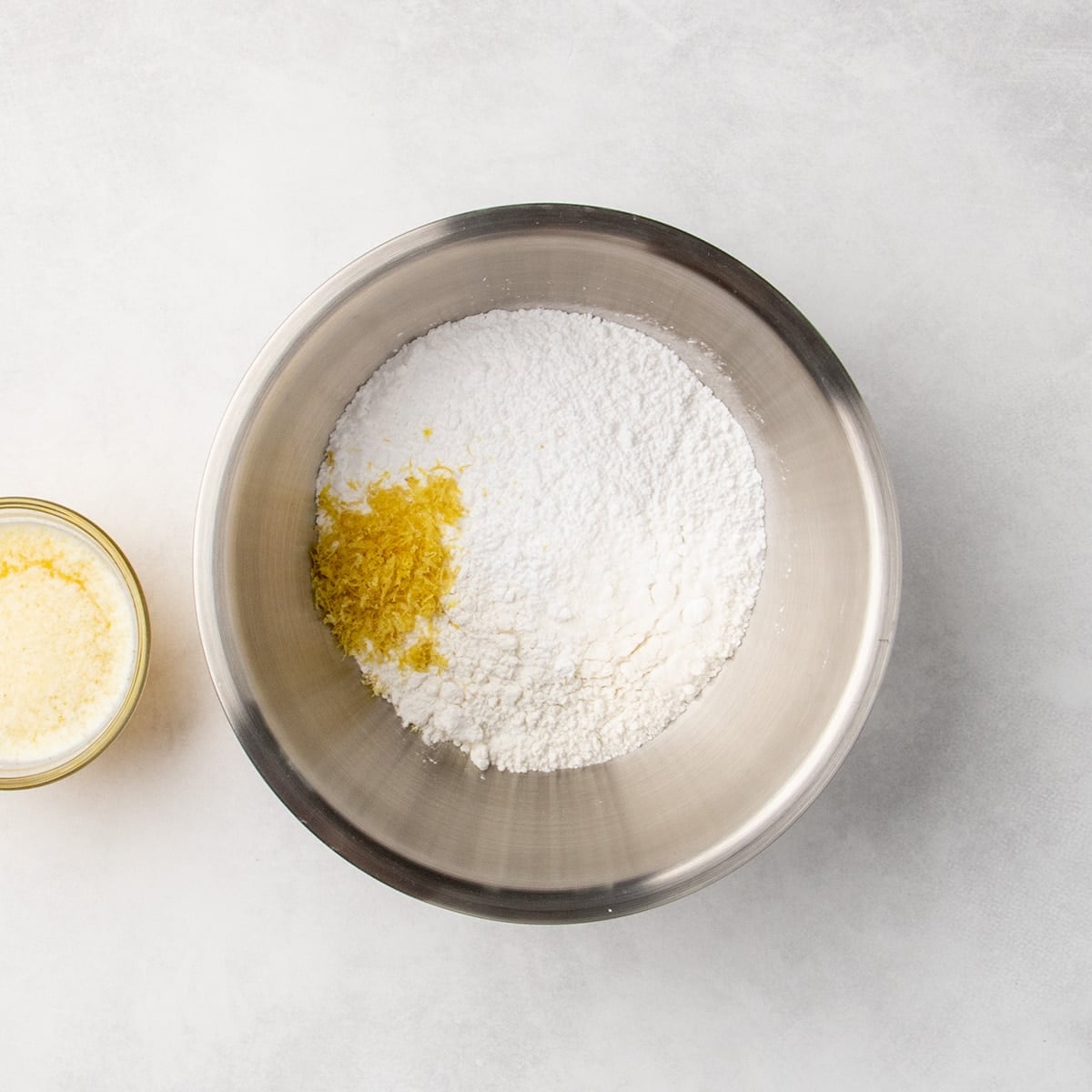
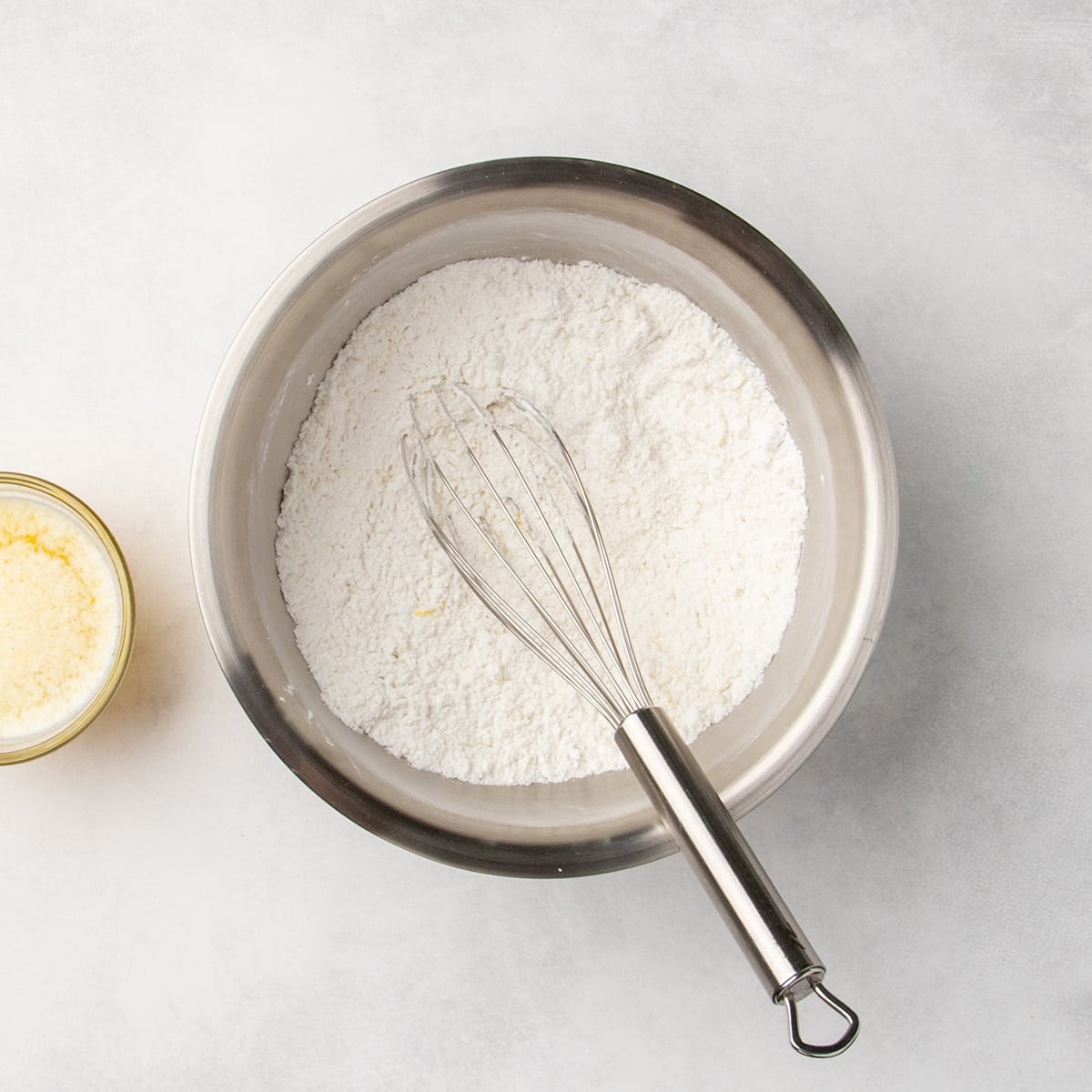
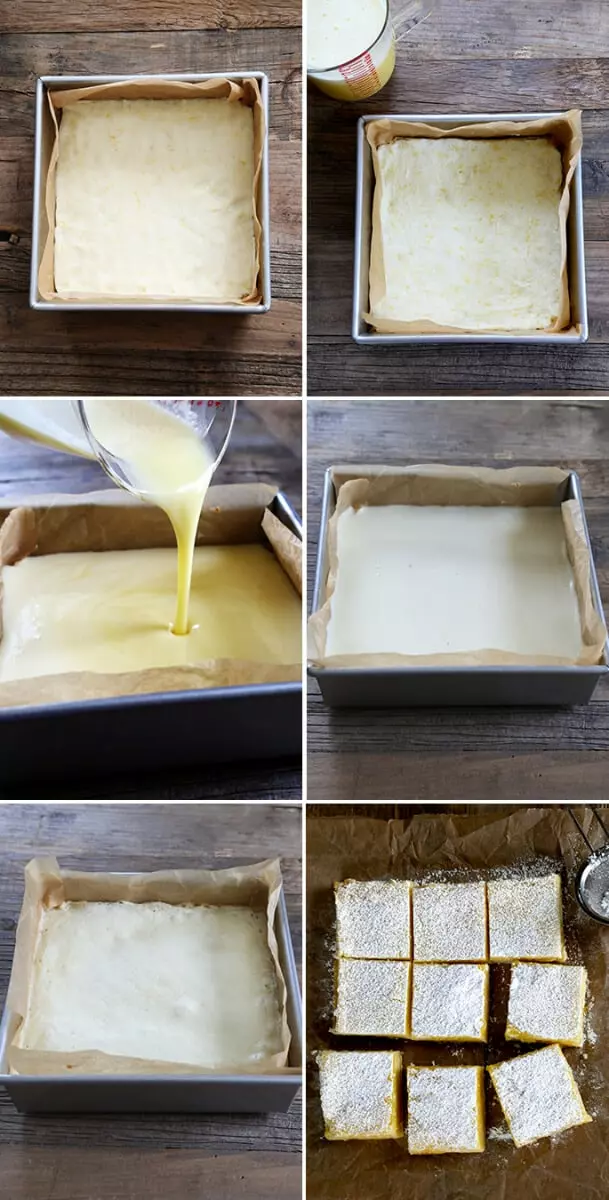
Whisk together all of the dry ingredients to make the shortbread-style cookie crust of these bars, including the flour blend, confectioners’ sugar, salt, and lemon zest. The lemon zest will stick to itself, so keep whisking until everything is fully combined, with no clumps.
Add melted butter
The only remaining ingredient to bring the crust together is 9 tablespoons of melted unsalted butter. I melt the butter in the microwave on medium power, stopping just before it’s fully liquid, as the residual heat will melt the rest and it cools more quickly and doesn’t cook, losing moisture.
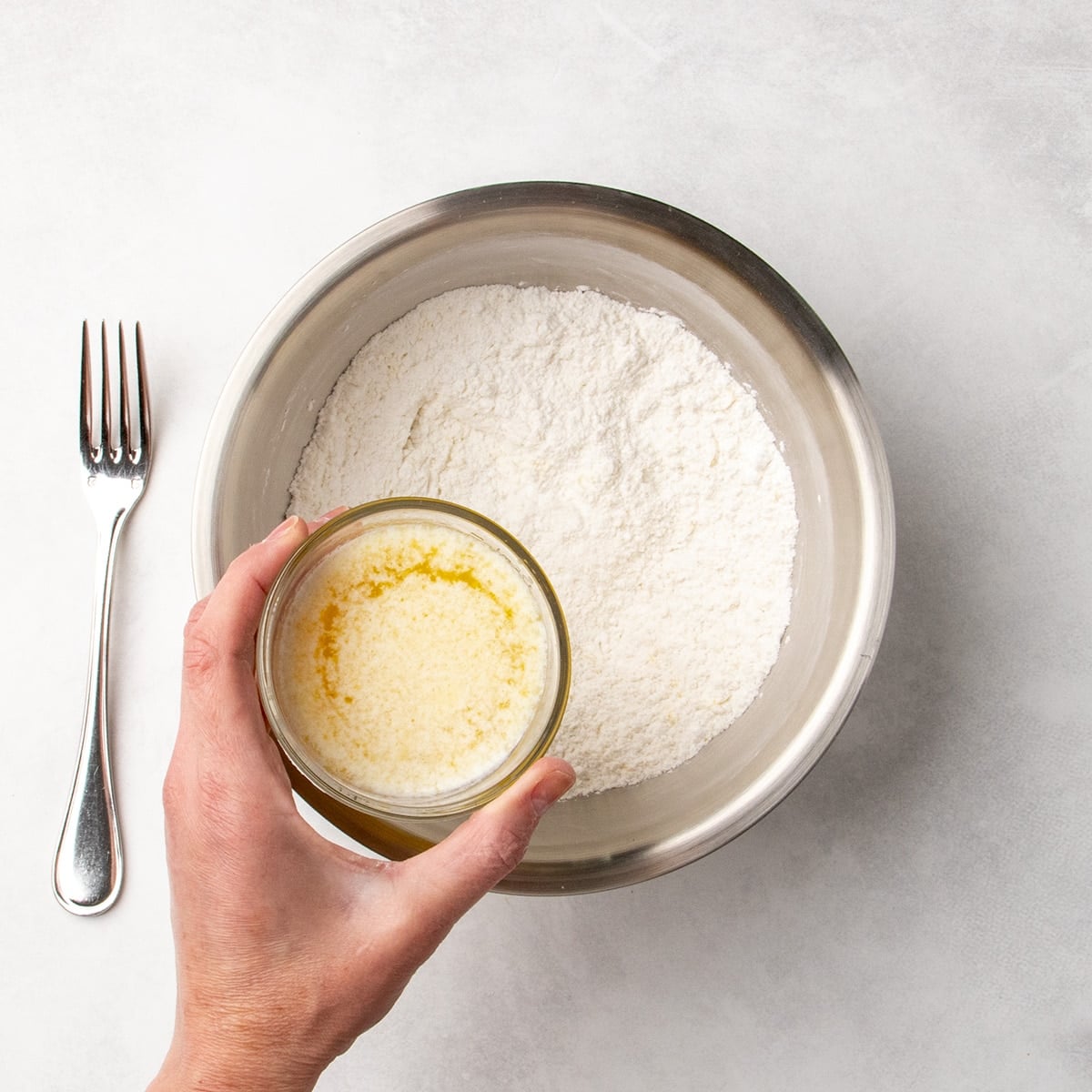
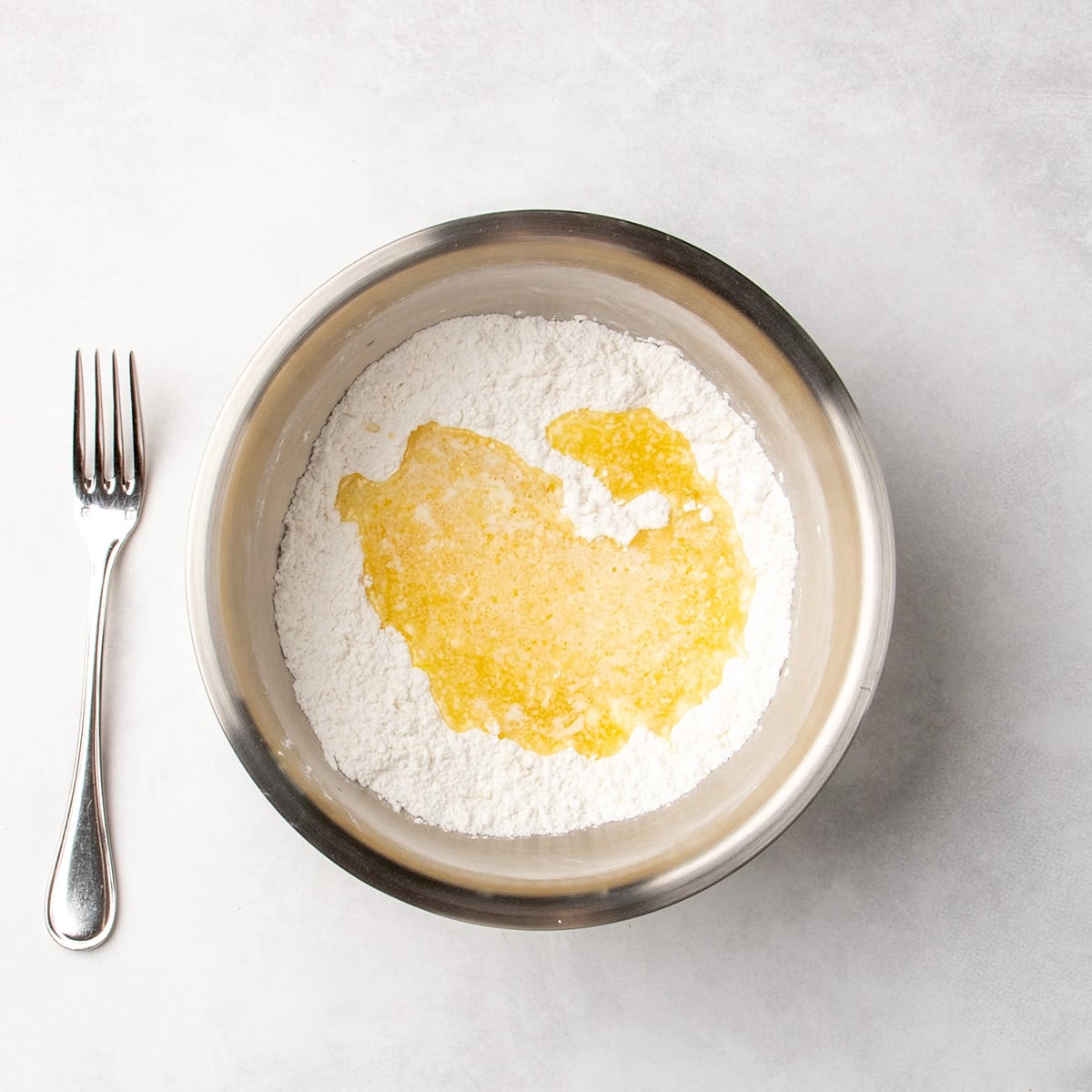
Mix into clumps
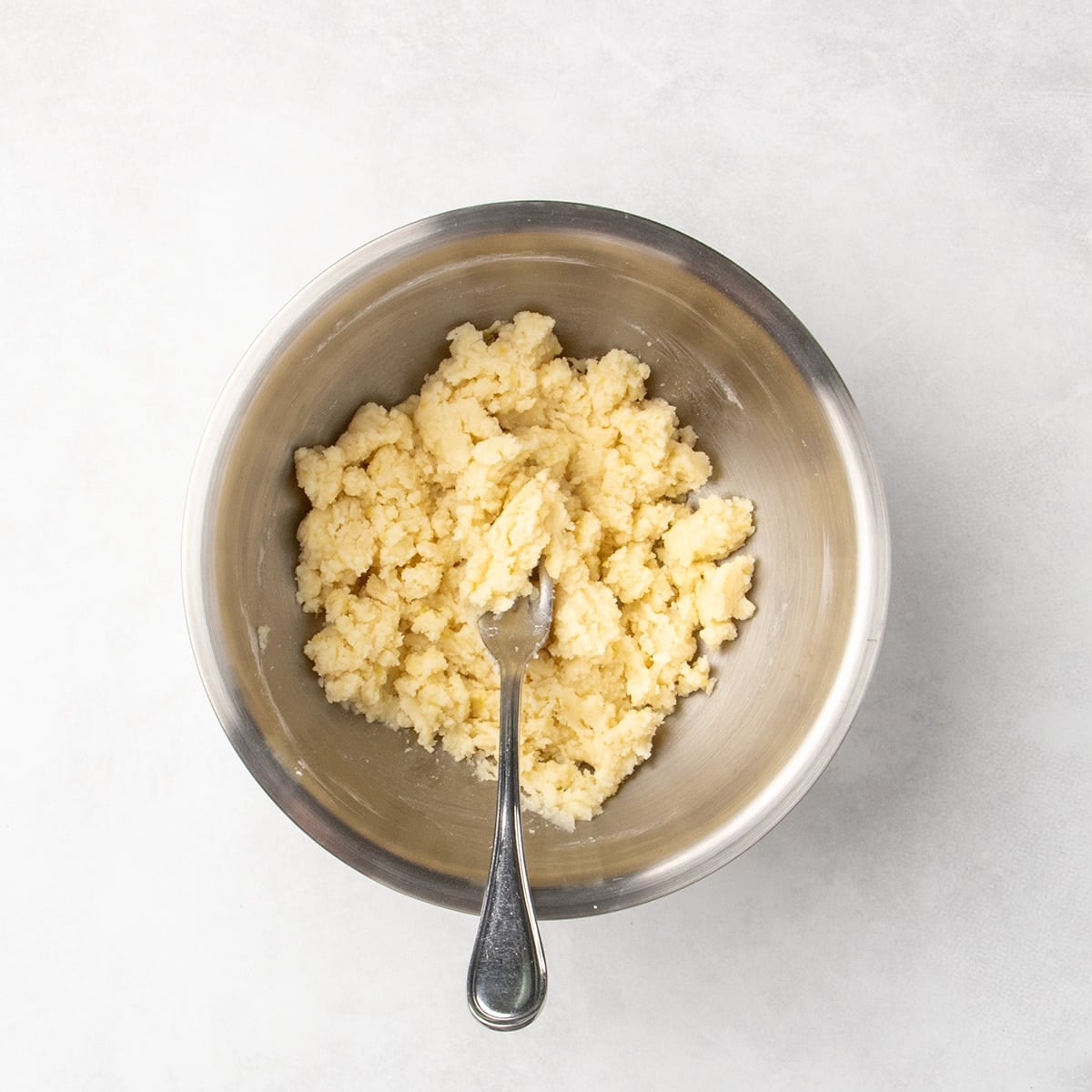
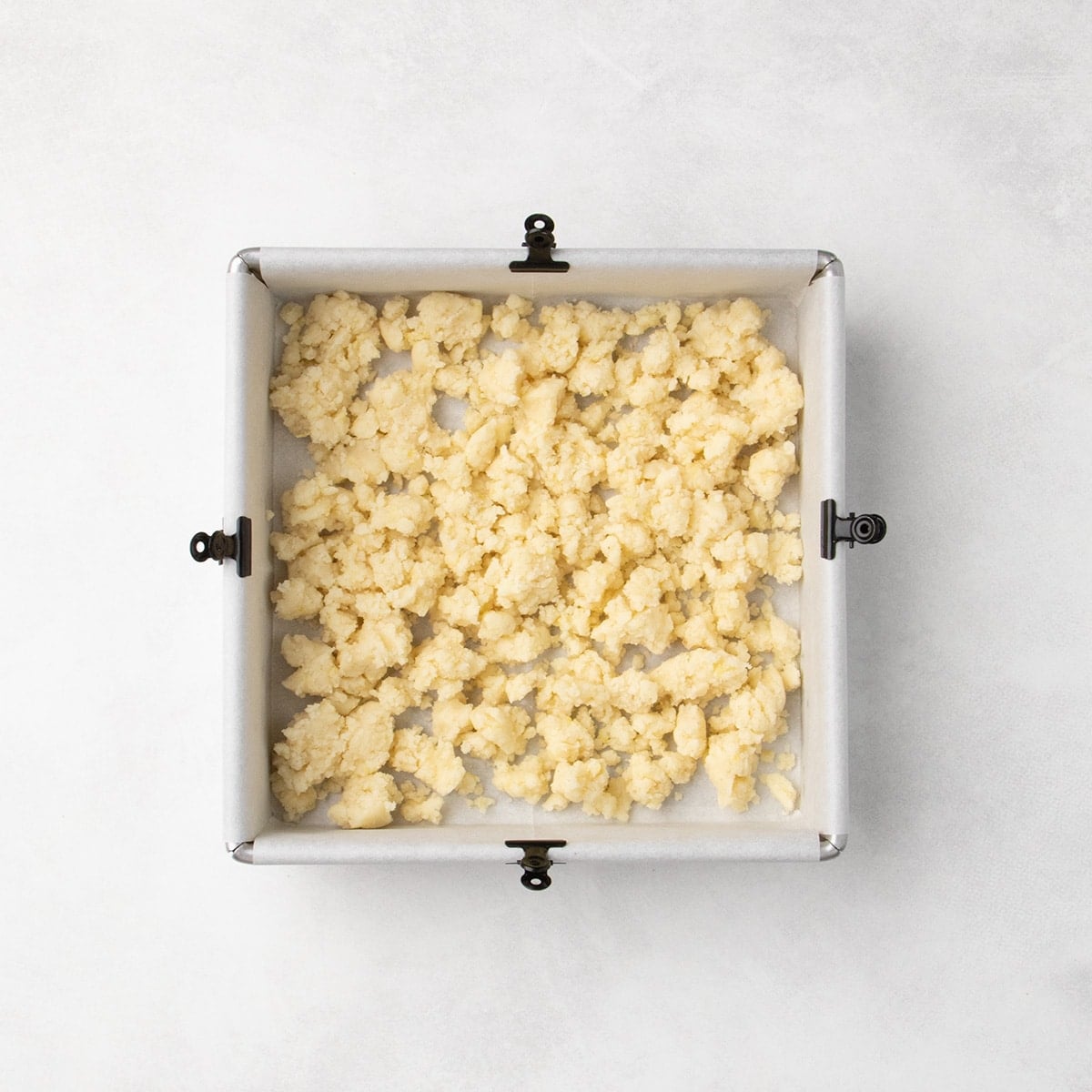
I prefer to mix the butter into the dry ingredients with a fork to create large, fully incorporated clumps that are easy to scatter evenly in a fully lined and greased pan. To keep the parchment paper in place during baking, you can clip all 4 sides with small binder clips.
Smooth the crust
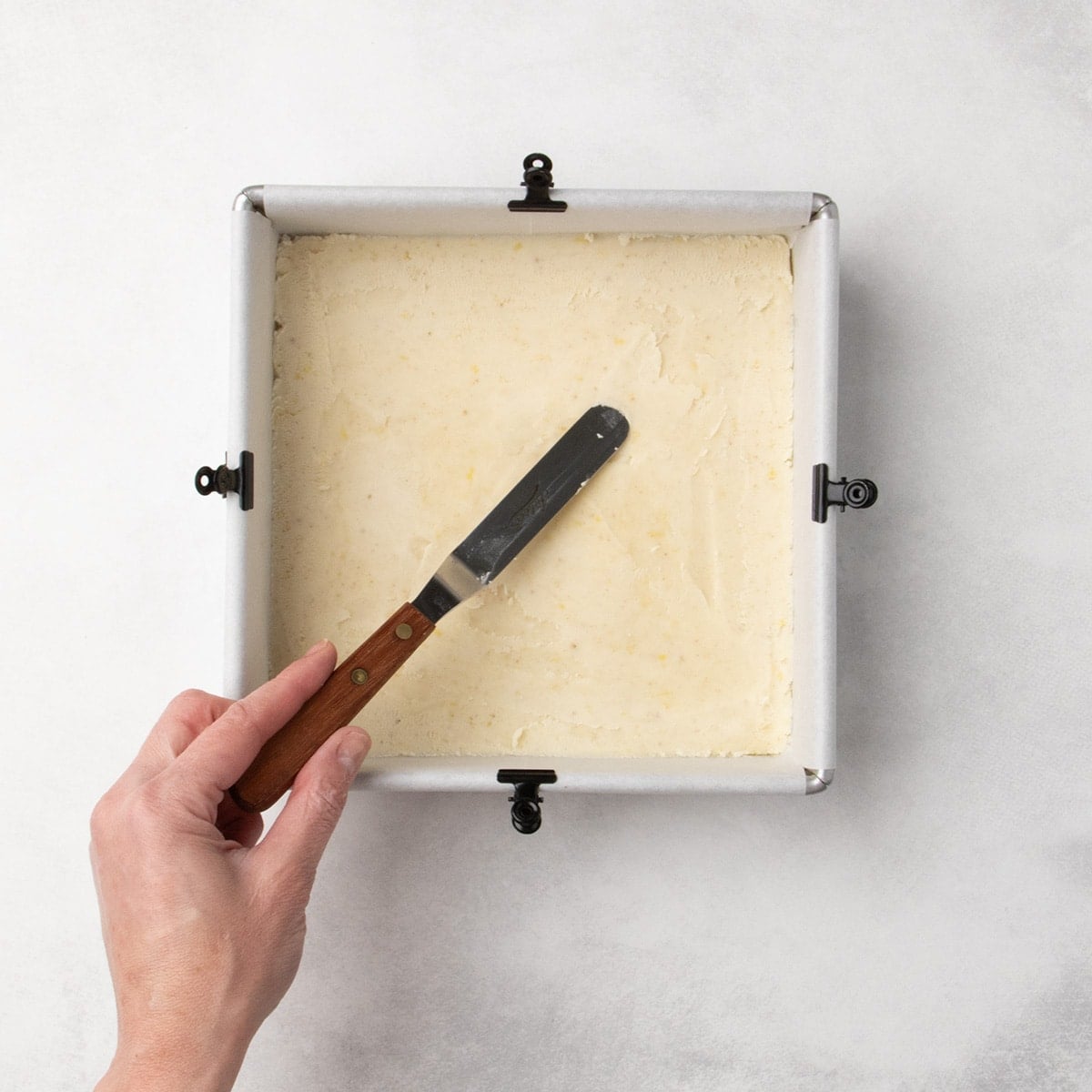
Use a small offset spatula or butter knife to press down on the cookie clumps, smoothing them into an even layer on the bottom of the prepared pan. Don’t press down too hard or you’ll compress the crust and it won’t bake as evenly.
Parbake it
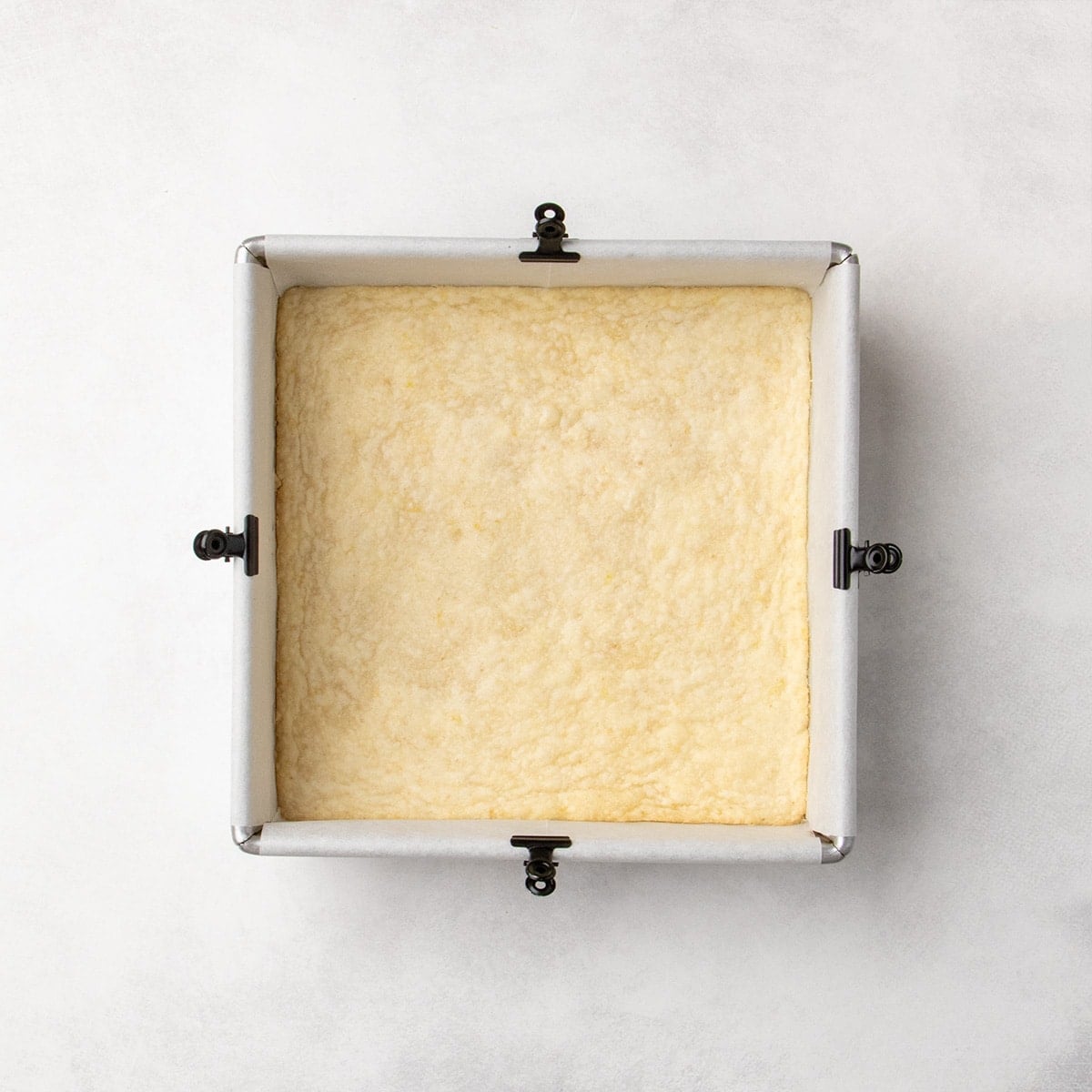
To seal the crust and ensure it doesn’t get soggy once you add the liquid filling, partially bake it first at 325°F for about 15 minutes. As it parbakes, the crust will turn shiny as the ingredients melt, then lose its shine and the crust will turn very pale and matte. Let it cool briefly while you make the filling mixture. This also prevents you from having to overbake the filling just to get the crust firm enough to hold it.
For the filling: whisk dry, then wet ingredients
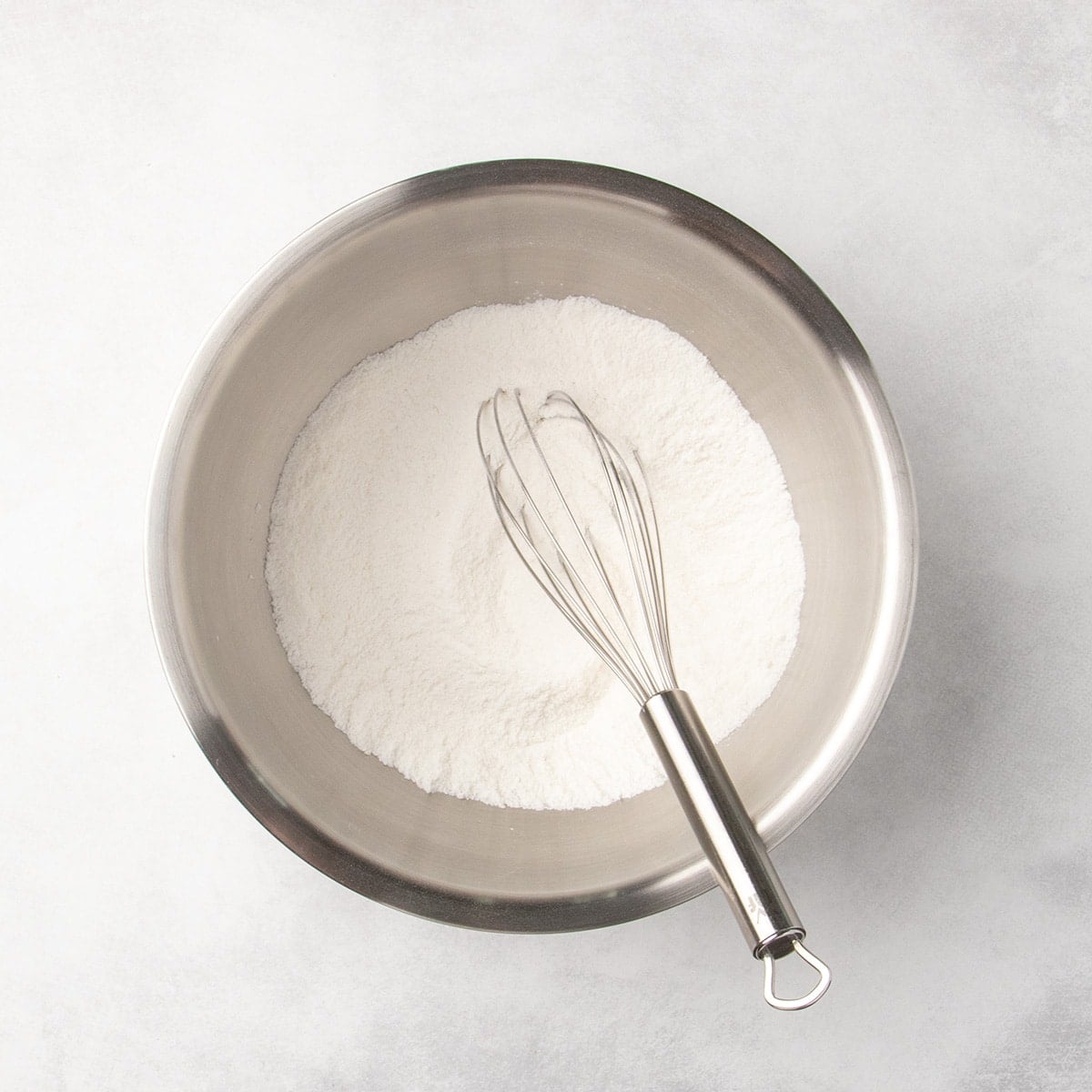
In a separate mixing bowl, whisk together the remaining 2/3 cup of the flour blend, granulated sugar and a bit of baking powder. Whisk fully to avoid any pockets of leavening which will cause uneven baking and can taste off.
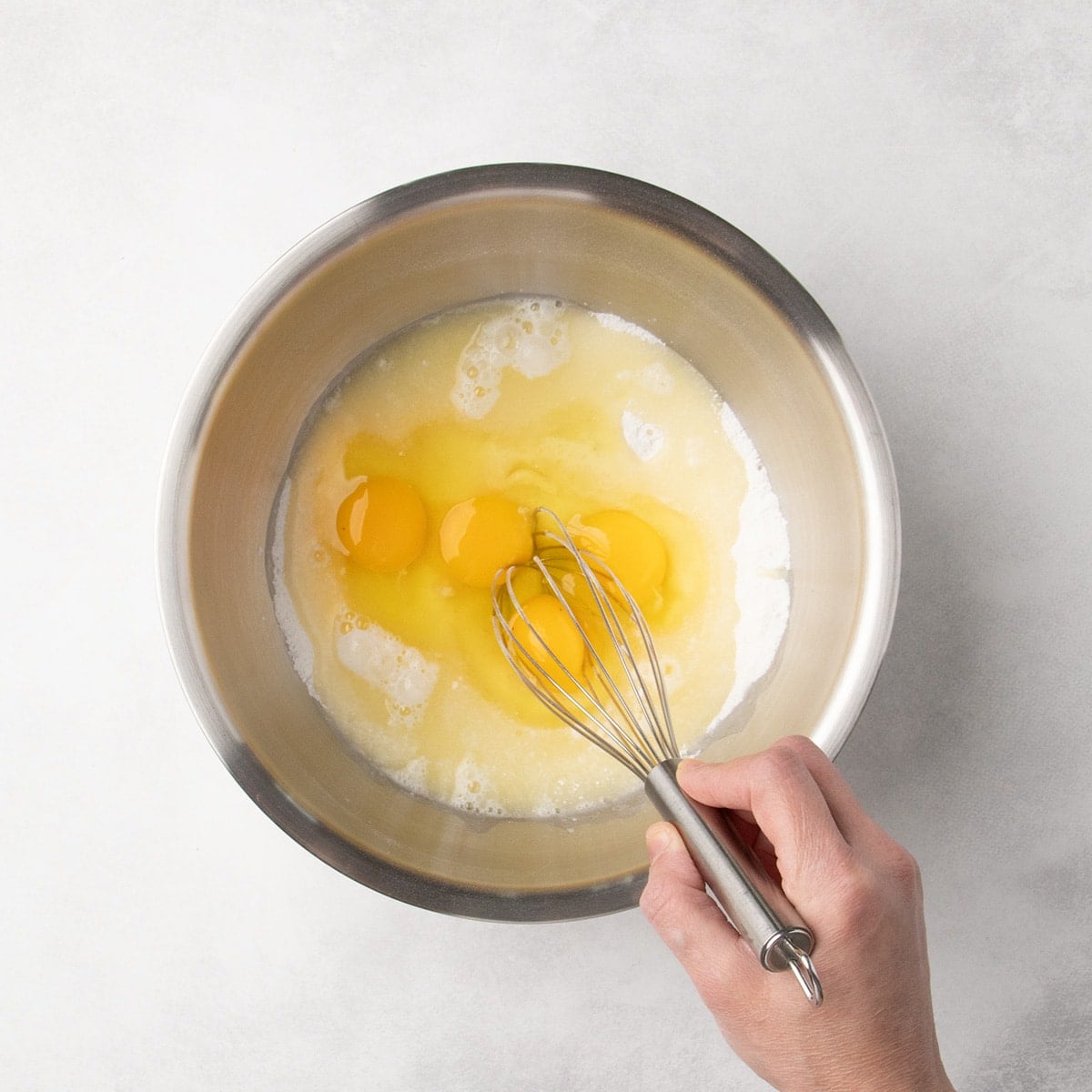
Add 2/3 cup of fresh-squeezed and strained lemon juice and 4 eggs to the mixing bowl, and whisk to combine. Whisk fully to ensure that everything is smooth and fully combined, and the eggs well-beaten, but not so roughly that introduce too many air bubbles.
Combine crust and filling
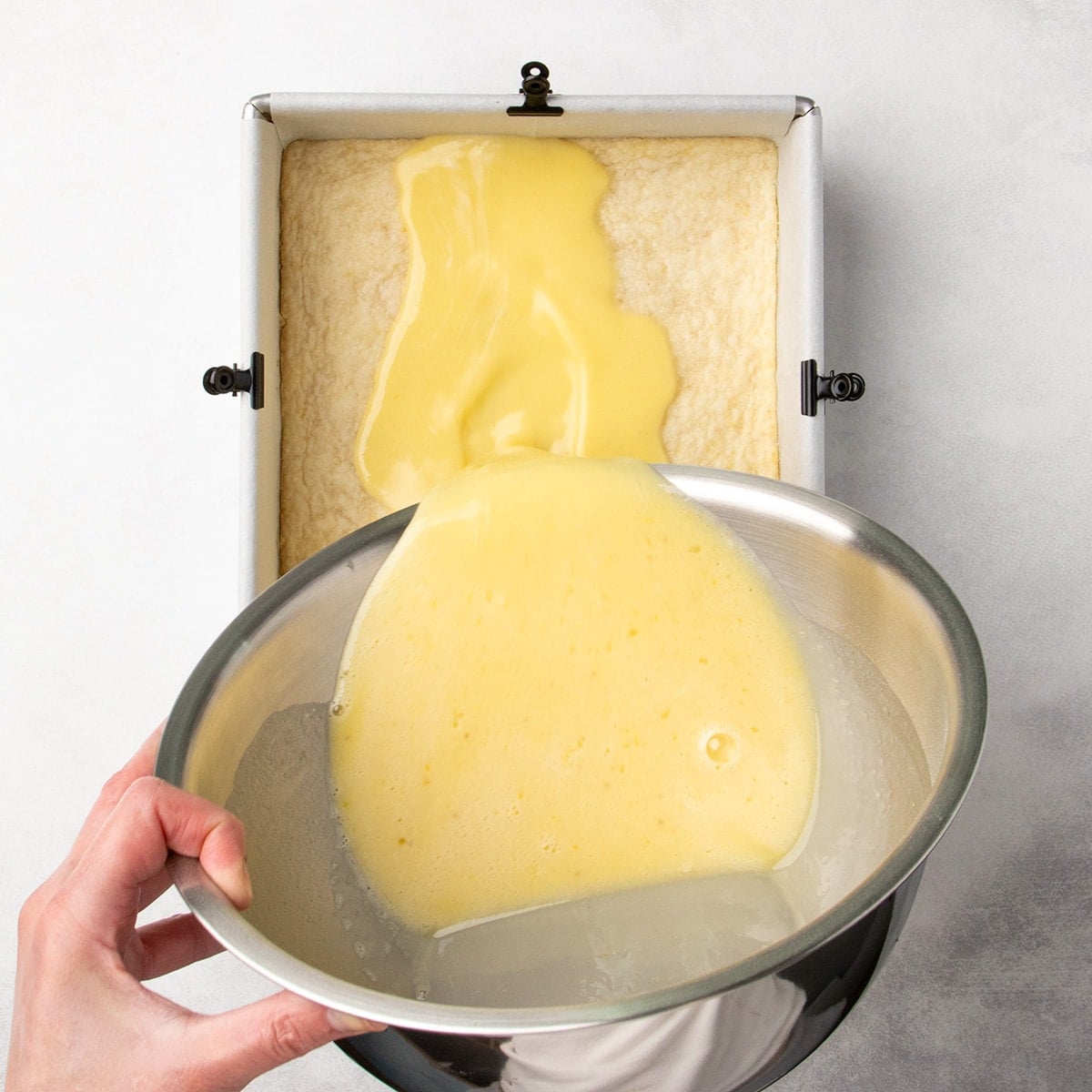
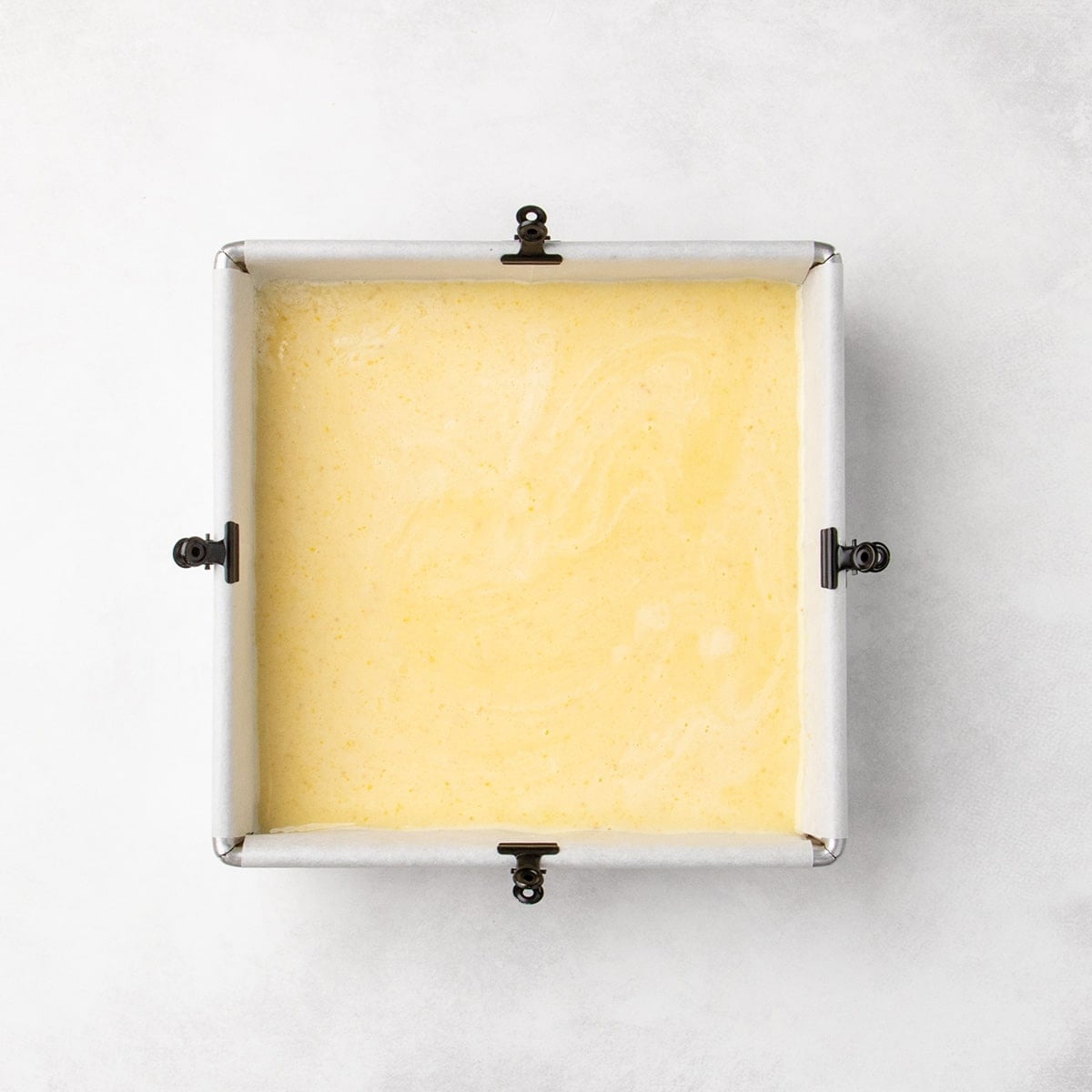
Pour the smooth filling into the partially baked crust. It will be thin enough to smooth itself into an even layer. Tap the bottom of the pan a few times on the counter to help break as many air bubbles as possible for a filling that bakes as smoothly as possible.
Finish baking the bars
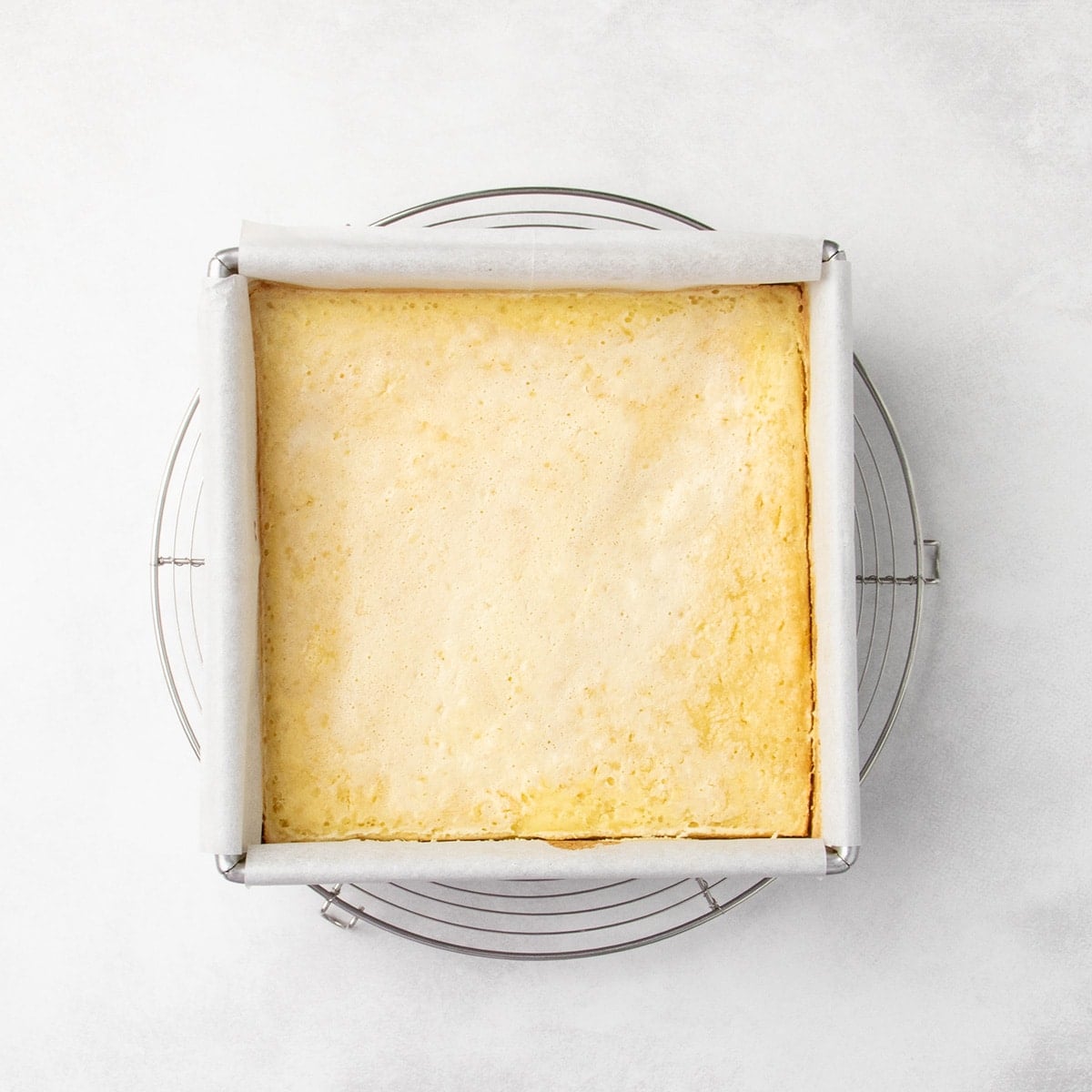
Bake the crust and filling together for about 25 minutes. The filling may seem like it’s going to remain liquid for the first 18 to 20 minutes, until it finally appears set. When it’s done baking, the filling will have begun to pull away from the sides of the pan, will look uniformly risen across the top, and will only jiggle a bit in the center when you shake the pan gently back and forth, much like gluten free cheesecake.
Chill and slice
Remove the baked bars from the oven, place them on a wire rack, and let them cool in the pan for at least 20 minutes. This allows the pan to release any residual hot air from the oven so you don’t trap condensed steam, making the bars soggy. Refrigerate the bars for at least 2 hours to allow the egg custard to set enough to allow you to slice it.
Expert tips
Use fresh lemon juice
Like in our gluten free lemon pie, bottled lemon juice tends to taste bitter, and the heat of baking intensifies flavors. If the flavor isn’t great at the start, it will be worse after baking. Conventional lemons are available year-round, and there are even seedless ones that have more juice per lemon. Be sure to strain any pulp and seeds away before you measure the 2/3 cup of juice you need.
Whisk the filling fully, but gently
The filling mixture is quite thin, since it starts out as mostly liquid, then thickens in the oven as the eggs set with some stability added by the added flour. If you whisk the filling too vigorously, you’ll create more air bubbles in the mixture which will break through the surface during baking.
If you’ve created too many bubbles, just let the filling sit for a while to allow the bubbles to break through, tapping the filling flat on the counter to help them burst. You can’t eliminate every bubble though, so don’t stress.
Allow for setting time
The lemon filling slices cleanly on top of the shortbread crust, but only if you allow it enough time to set in the refrigerator. Chilling allows the egg-based filling to set so that it’s firm enough to slice.
Ingredient substitutions
Here are my suggestions for how you might be able to avoid some of the ingredients in these bars, and where you can’t:
Dairy free
For the butter in the crust, I recommend using half Spectrum brand nonhydrogenated vegetable shortening and half block-style vegan butter to mimic the flavor profile and moisture content of dairy butter. For vegan butter, I like Melt or Miyoko’s brand.
Egg free
There are 4 eggs in this recipe. I don’t believe that you can replace all 4 of them with an egg substitute and achieve anything like the texture of these smooth, creamy custardy bars.
Lemon alternatives
In place of freshly squeezed lemon juice, try lime juice or orange juice, along with the corresponding zest.
Storage suggestions
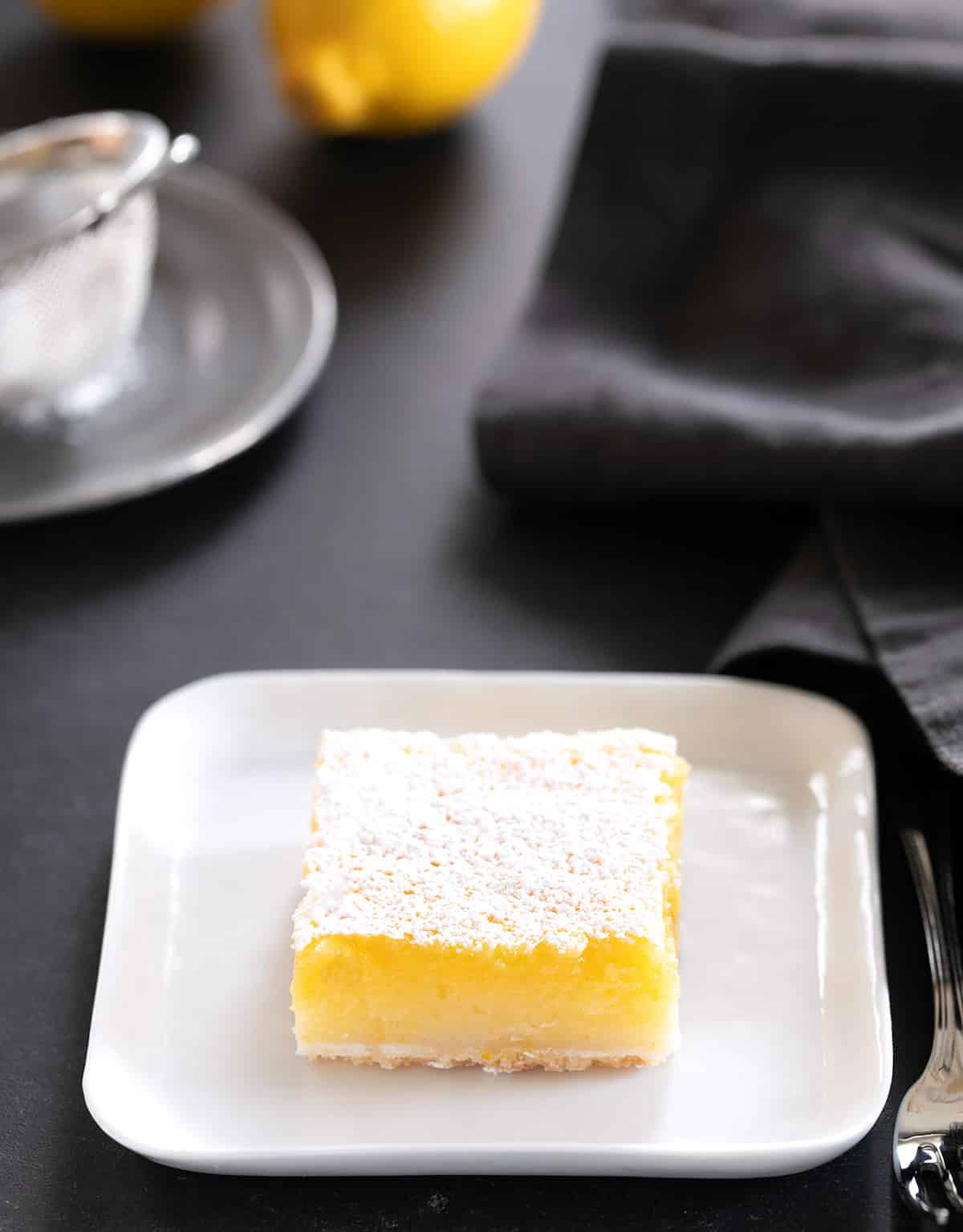
These bars can be stored in a sealed container in the refrigerator for 3 to 5 days. If you’ve already dusted them with confectioners’ sugar, it will likely absorb into the bars so you’ll have to dust them again before serving.
For longer storage, freeze the bars uncovered just until firm (about 1 hour), then wrap each bar individually with plastic wrap for up to 3 months. They won’t freeze solid, so they’ll defrost quickly even in the refrigerator. Before serving, dust with confectioners’ sugar.
Gluten Free Lemon Bars Recipe
Ingredients
For the crust
- 1 cup (140 g) gum-free gluten free flour blend, (See Recipe Notes)
- ½ cup (58 g) confectioners’ sugar, plus more for dusting
- ½ teaspoon kosher salt
- 1 tablespoon finely grated lemon zest, from 1 large lemon
- 9 tablespoons (126 g) unsalted butter, melted and cooled
For the filling
- ⅔ cup (93 g) gum-free gluten free flour blend, (See Recipe Notes)
- 1 cup (200 g) granulated sugar
- ¾ teaspoon baking powder
- ⅔ cup (5.33 fluid ounces) freshly squeezed lemon juice, juice of 4 to 5 medium lemons, strained of seeds and pulp
- 4 (200 g out of shell) eggs, at room temperature
Instructions
- Preheat your oven to 325°F. Grease an 8-inch square baking pan, line with criss-crossed pieces of parchment paper that overhang the sides, and grease the parchment paper. Set the pan aside.
Make the crust
- In a medium-sized bowl, combine 1 cup (140 g) of the flour blend, confectioners’ sugar, salt and lemon zest and whisk to combine, breaking up any clumps of lemon zest.
- Add the melted butter and mix with a fork until well-combined. The mixture will be clumpy.
- Scatter the clumps evenly across the bottom of the prepared baking dish. Then use a small offset spatula or knife to press the mixture into a smooth, even layer on the bottom of the dish.
- Place the baking dish in the center of the preheated oven and bake for about 15 minutes or until no longer shiny. When it's done, it will have a matte look to it and be very pale in color.
- Allow the crust to cool briefly while you make the filling.
Make the filling
- In a separate large mixing bowl, place the remaining 2/3 cup (93 g) flour blend, granulated sugar, and baking powder, and whisk to combine.
- Add the lemon juice and the eggs, and whisk until smooth. The mixture will be very thin. Make sure there are no dry patches and the eggs are fully combined.
- Pour the filling into the baked crust.
Bake
- Return the pan to the center of the oven. Bake until just set (25 to 30 minutes).
- The filling is set when it does not jiggle more than a tiny bit in the center when the pan is shaken gently back and forth. It will also likely have begun to pulled away from the sides of the pan and should look uniform across the top.
- Remove the pan from the oven. Place the pan on a wire rack and allow the bars to cool, still in the pan, for about 20 minutes.
Chill the bars
- Cover the top of the pan with plastic wrap, and chill in the refrigerator until firm (at least 2 hours).
- Remove the bars from the pan by running a butter knife or thin spatula around the perimeter of the baking dish, then lifting the bars out of the pan by the overhung pieces of parchment paper.
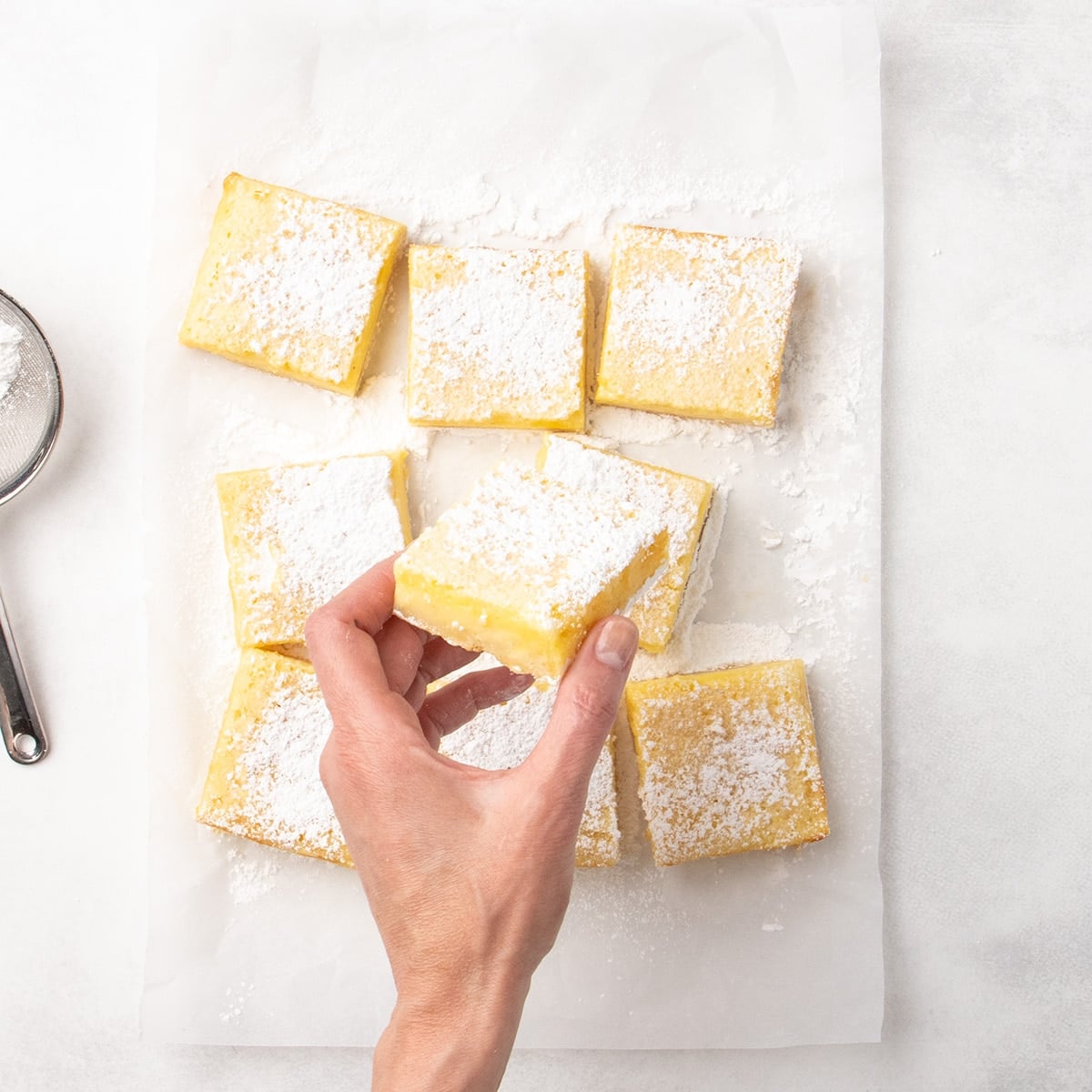
- Pull the paper away from the sides of the baked bars to expose the sides. Use a very sharp knife to slice into 9 equal squares. Separate the bars from one another.
- Dust the top of the cut bars with confectioners sugar. Serve chilled.
Video
Tell Google you trust GFOAS!
Notes
Nutrition
Nutrition information is automatically calculated, so should only be used as an approximation.
FAQs
One average-sized fresh lemon, when squeezed, will produce about 3 tablespoons of fresh lemon juice. This recipe requires 2/3 cup of juice (or just over 10 tablespoons), so you’ll need about 4 lemons to get enough juice.
I don’t recommend using bottled lemon juice, as it tends to be bitter, and baking with it will only intensify its bitterness. There are some bottled lemon juice brands, like Best Select, that people swear taste like fresh-squeezed. If you have a brand of bottled lemon juice that has juice you love the taste of, then use it!
Yes, you can make these lemon squares with a graham cracker crust if you’d like. Just follow my gluten free graham cracker crust recipe, which uses my homemade graham crackers.
More lemon dessert recipes
Here are a few more of my favorite gluten free lemon dessert recipes.
- Gluten Free Lemon Cookies – Buttery-rich and light, these delightful lemon cookies melt in your mouth, and call for only 15 minutes of prep time.
- Gluten Free Lemon Brownies – The chewy consistency of a brownie with the bright flavor of citrus.
- Gluten Free Lemon Cake – If you’ve ever had the lemon cake at Olive Garden, try this tender, lemon-rich copycat recipe.










Oh my, I am making these ASAP! I haven’t had a lemon square in years which is too many, so thank you for updating what I’m sure was already a great recipe :)
My husband is diabetic. Can you substitute the granulated sugar for sucrolose? Thanks.
Thank you, Victoria!
How can I make this recipe with regular flour?
How much to substitute?
Thanks!!!
I’m afraid I really don’t know, Chelsea. I recommend you find another recipe, as gluten free recipes really are different. Sorry!
I just made this recipe with regular flour (plain) and it worked brilliantly and I didn’t change any measurements. It is a delicious slice and I will definitely make it again
Would it work to double this and make in a 9×13? Or should I just do 2 smaller ones? Going to a block party and want to share this party with everyone!
I think you could double everything and make it in a 9-inch x 13-inch pan, Victoria. You’ll just have to increase baking times. And make sure you don’t bake it in glass!
:( Sad that I cannot partake in this lovely lemony gluten free goodness! How about a Paleo version?
I know, Mare! A Paleo version is a good idea for the to-do list!
Omg you’re killing me! Love!
I LOVE lemon bars, and they sound like a refreshing treat during our grossly hot weather. Doubling the filling is a great idea, since the filling is the best part. Lemon season is over here (they are a winter thing) but limes are in season, so I think I will defrost some of my frozen lemon juice from last winter, and mix it with fresh lime juice for lemon-lime bars. Thank you!
p.s. it’s so sad that you have to explain to people that cookies have *gasp* sugar. Some people are such sanctimonious food scolds. Maybe they need some sugar to sweeten up their personalities…
And I was unclear on the doubling the filling part. You mentioned that the reworked recipe makes more filling than the old one. I am going to make the recipe just as you wrote it- I just think that was a good change!
Nope, Michelle. I understood what you meant. :)
Nicole,
Yesterday was my cranky day, as you could probably tell. Today is better, ordered some BB flour, baked your Cornmeal bread, just for me. Then I made semi-homemade Beans and Franks for my son. Remember I told you I would try anything. I hope this batch turns out better than the first, if not the dogs will have beans added to the regular meal AGAIN. I am not a big blog reader, I read exactly two. Have you on speed dial (RSS feed) on my front page.
Do not change your style, ANY. So refreshing, informative, friendly, and to the point.
Susan I.
p.s. I can count on 0 fingers how many ex-classmates I keep in touch with. So there, something in common.
Hi, Susan,
I’m so glad you’re feeling better. That cornmeal bread was a good choice as you wait for Better Batter to arrive, since it’s all cornmeal, no flour.
I’m honored to be one of the two blogs you read. Generally, I find it’s best to stay away from most blog-reading. Most bloggers annoy the living daylights out of me. ;)
Thank you for the kind words & encouragement. They really mean a lot to me.
xoxo Nicole
Hello. I live in Australia and have been a devotee of your wonderful recipes/gluten free deliciousness for a couple of months now. you mention the Better Batter flour mix you use a lot (we can’t get it down under) so what types of flour’s are used in this mix ? Thanks so much. Can’t wait to make the new lemon biscuits – so yum!
Hi, Cathy-Lee,
Do drains in Australia really swirl counter-clockwise? Sorry. Dying to know.
Now back to you. Better Batter has a proprietary blend of these flours: Rice and Brown Rice Flour, Tapioca Starch, Potato Starch, Potato Flour, Lemon-Derived Pectin, Xanthan Gum. Unfortunately, since it is proprietary, I don’t know the proportions of the different flours at all, so I can’t tell you how to recreate it. Is there an all-purpose gluten-free flour blend sold in Australia that you like? Any good cup-for-cup replacement flour will work in my recipes. We’ll figure it out. Not to worry…
xoxo Nicole
hahaha – yes, the drains in Australia do go ‘backwards’ apparently – tho it’s not backwards for us – only for you guys!
thanks for the types of flours used in the Better Batter. I have used two we have readily available here but I find that esp one has potato flour as the top ingredient and it can have a weird taste. So I may just blend my own till I get a lovely taste and texture. Cheers and thanks again for your wonderful recipes and the very entertaining blog!
I also live down under, I make my own flour from Nicole’s basic flour blend and use that for almost everything, works great.