

This post may contain affiliate links. Please read our disclosure policy.
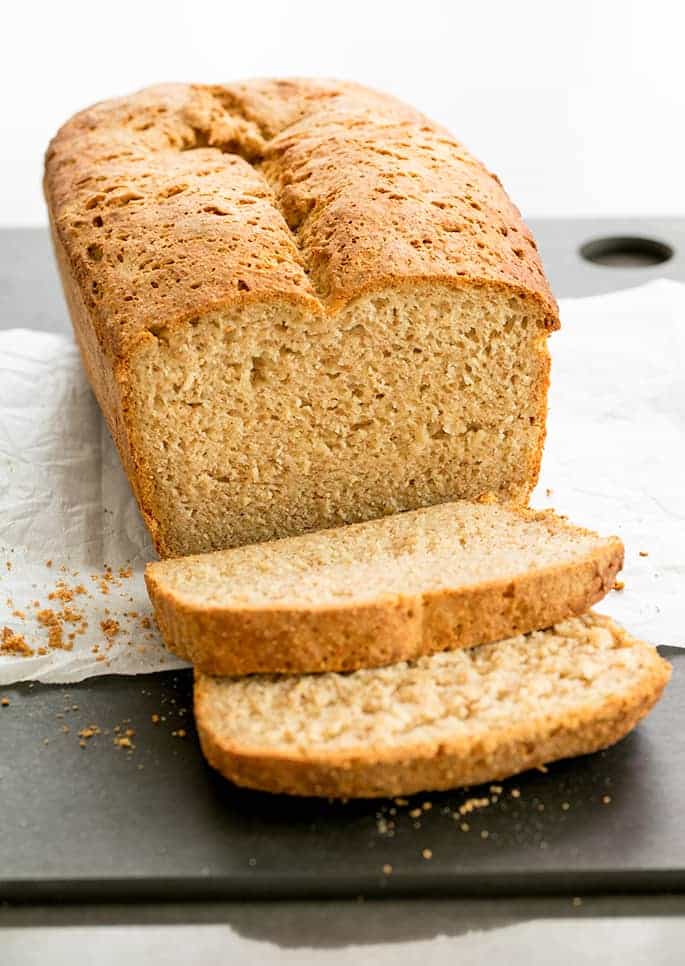
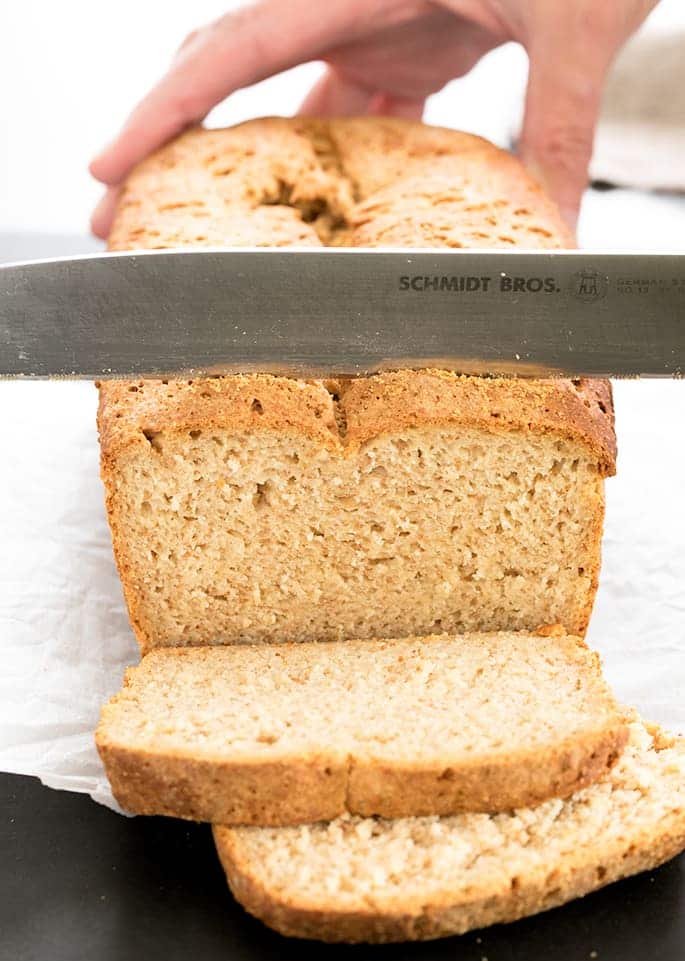
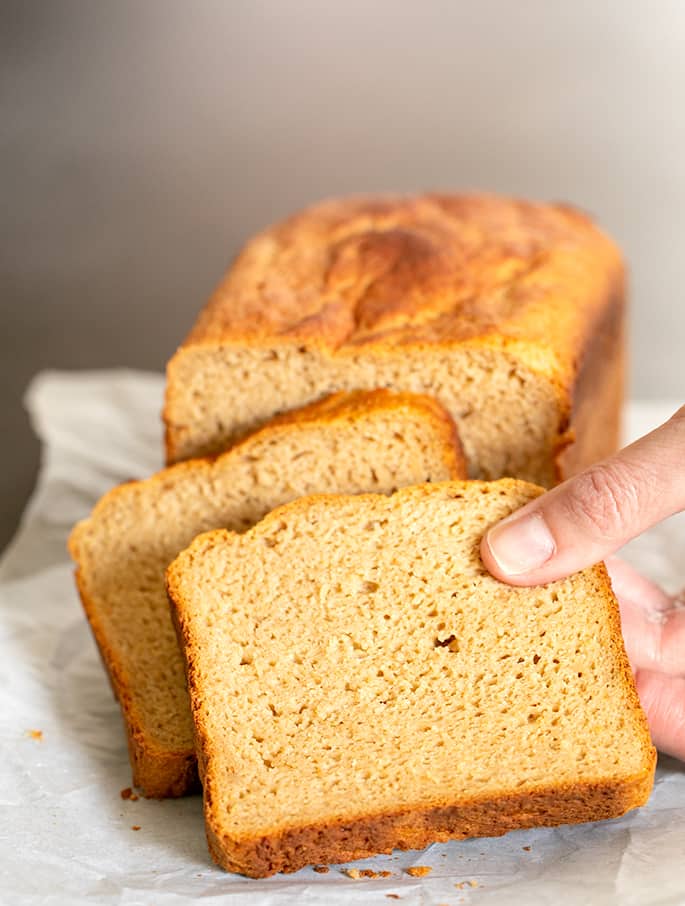
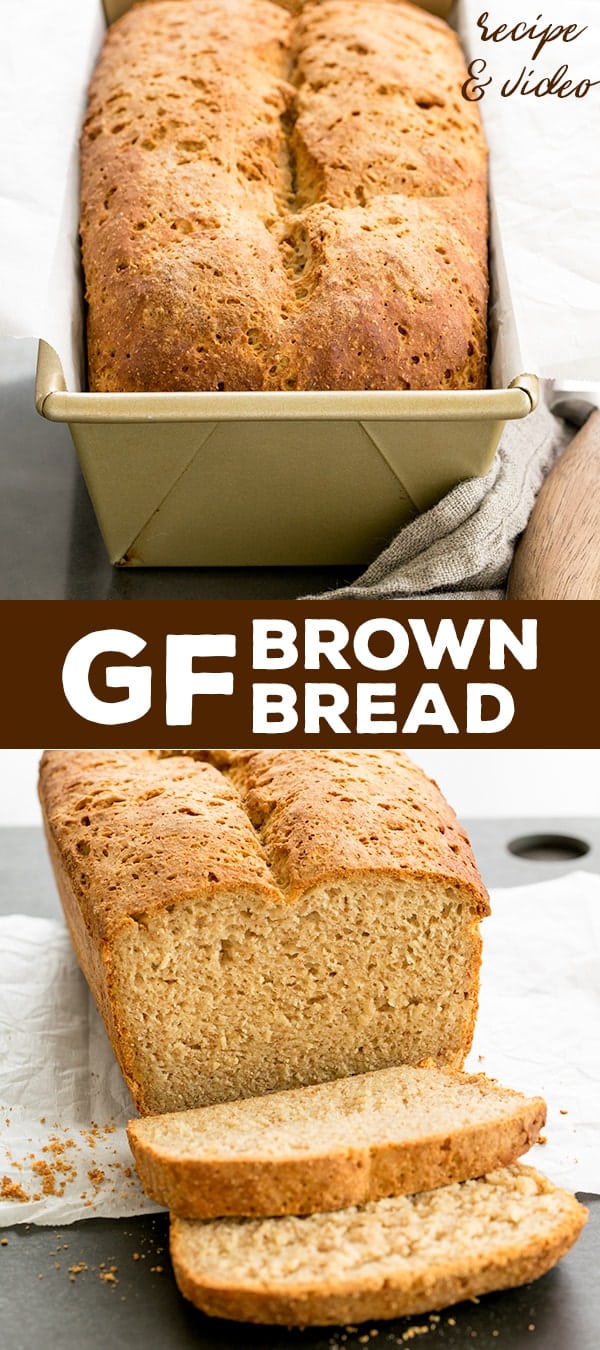
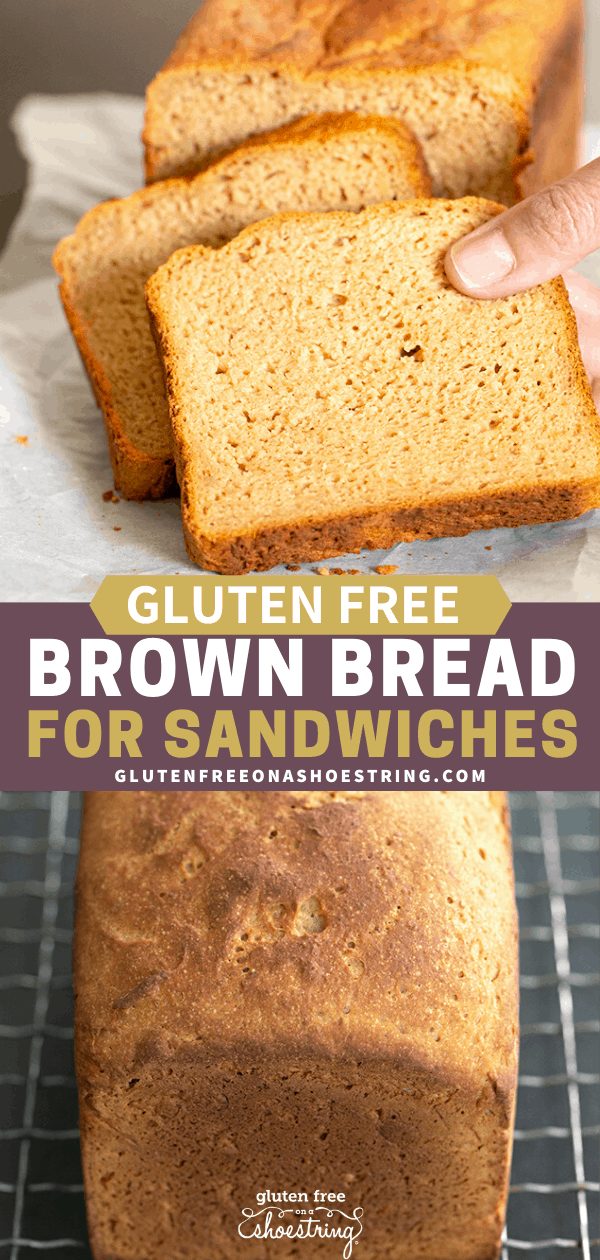
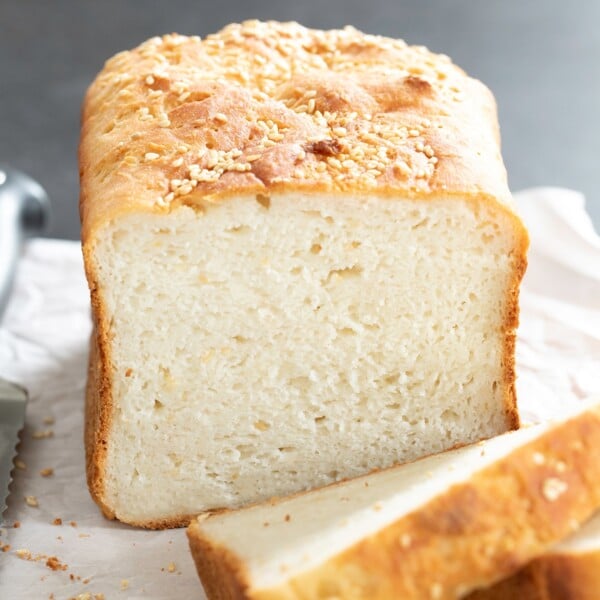
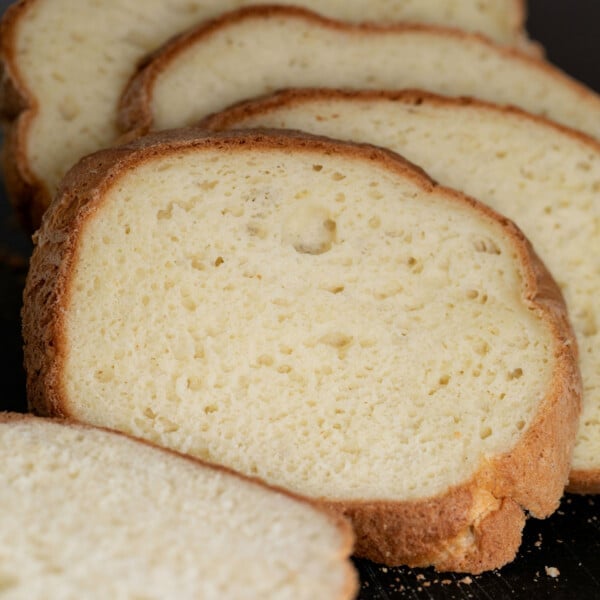
“Wheaty” tasting, this gluten free brown bread has added whole grains and lots of depth of flavor. This versatile, wheatless loaf of gluten free whole grain bread keeps you full and satisfied, and makes the best hearty sandwiches.
My take
Nicole’s Recipe Notes
This recipe will satisfy that craving for a thick slice of whole wheat bread. Like way back when the waitress used to ask what sort of bread you’d like (white? wheat? sourdough?) and you’d order wheat.
This good, hearty gluten free whole grain bread has a thick but tender, bakery-style crust that will satisfy that craving for the wheat bread you’re missing. If you’ve ever wondered if you can “add some gluten free whole grains” to our other gluten free bread recipes, this is your moment! It’s as if you could make gluten free wheat bread.
Hearty and wheaty-tasting, with just the right amount whole grain teff and oats and a touch of molasses, this recipe was developed to incorporate those whole grains, unlike our classic white gluten free bread, or even our gluten free sourdough bread.
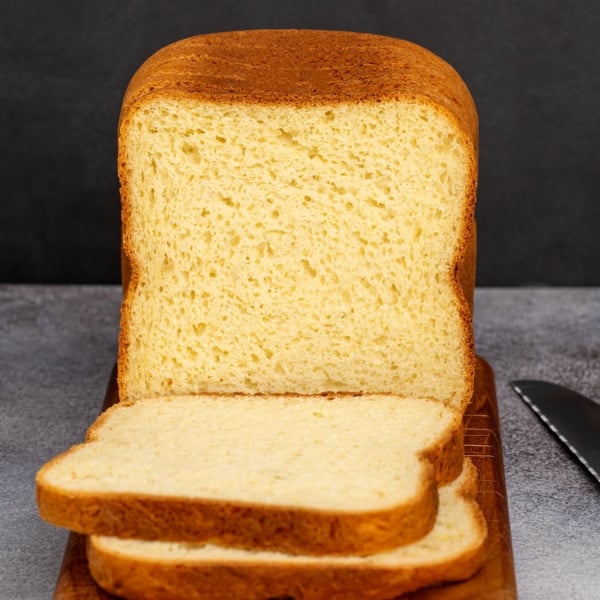
If you have a machine check out my gluten free bread recipe for machine.
A good starter recipe
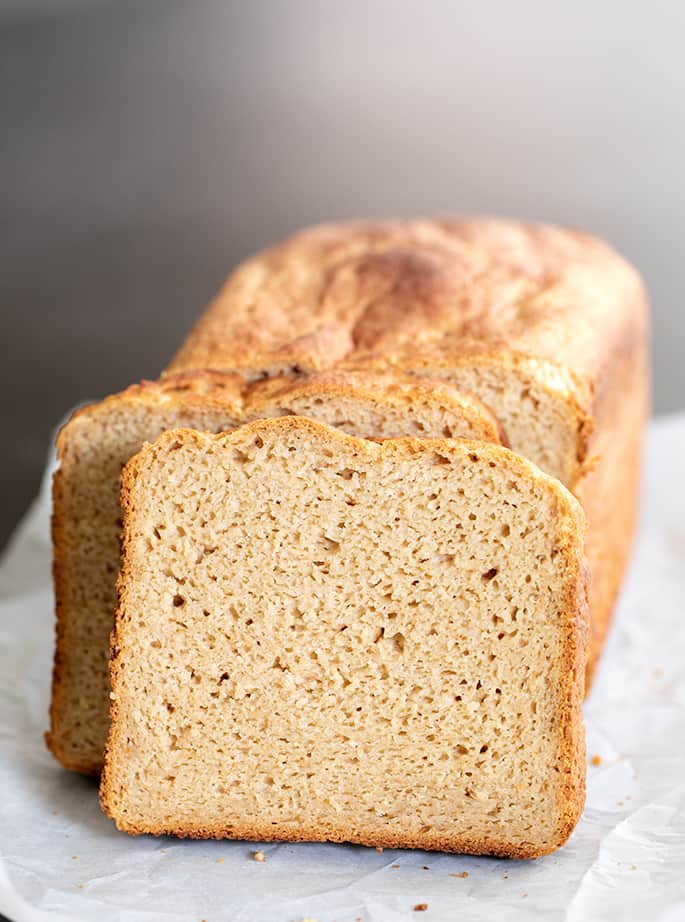
If you’re new to making gluten free bread, or to making bread in general, it’s best to begin with a batter-style bread like this wheat free but wheaty-tasting brown bread.
Batter-style gluten free bread recipes have only one rise, and they tend to rise quickly because the dough is super wet. High hydration means that yeast grows readily.
In fact, most recipes for gluten free bread that you’ll find elsewhere on the Internet (and in cookbooks that aren’t, well, mine), are in this style. I hadn’t made one of these recipes in years—and then I started working on the second edition of my very first cookbook.
They don’t have the yeasty taste that you get from a slow refrigerator rise, and they don’t have the same chew. But they make a lovely sandwich. And they’re a great starting place if you’re hesitant to make yeast bread (gluten free or otherwise).
Expert Tips
This multigrain gluten free bread recipe even has some real depth of flavor because of the addition of oat flour, whole grain teff and molasses.
Mix the dough until smooth
This recipe, like all of our batter-style gf bread recipes, calls for mixing in a stand mixer with the paddle attachment. If you don’t have a stand mixer, I don’t recommend a handheld mixer, which just doesn’t offer the right style of attachment. Instead, try a food processor fitted with the steel blade.
Try a pullman pan
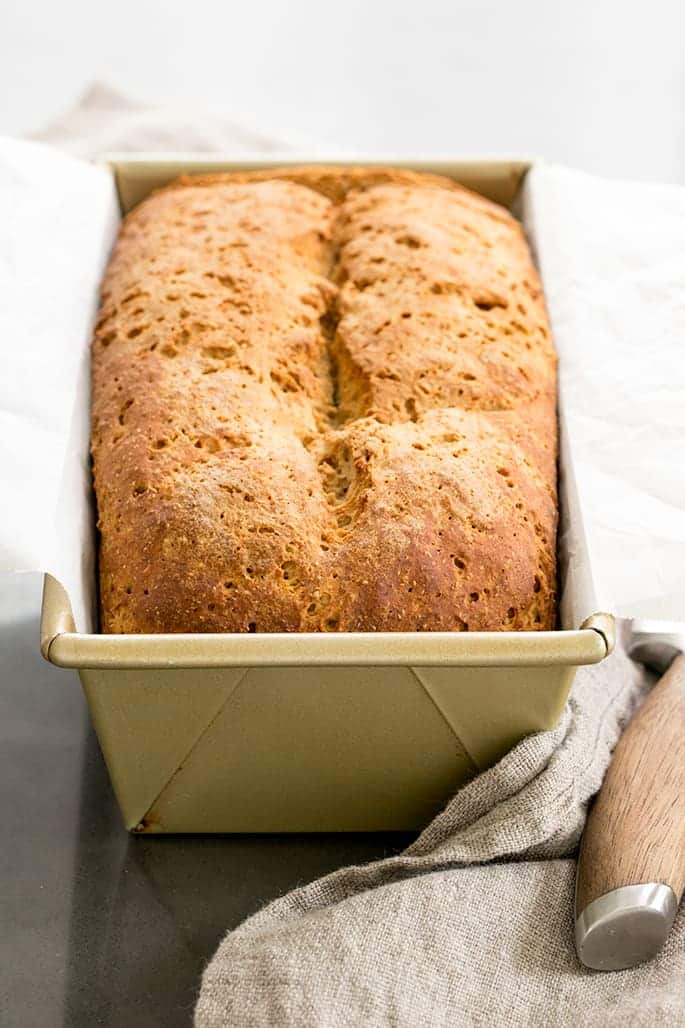
My favorite loaf pans for baking bread, lately, are 1.5 pound Pullman-style loaf pans. You begin baking the bread with the Pullman cover in place to prevent the loaf from rising into a dome, then remove the cover for the remainder of the baking time so the loaf can cook through and brown properly.
Be patient during rising
Yeast bread will rise at a large temperature range, including anything that might be considered room temperature (from warm to cool room temperature), just more slowly at lower temperatures. In warmer temperatures, this loaf may rise fully in 45 minutes; in cooler, drier temperatures it may take much longer. Please be patient!
Bake in a hot oven
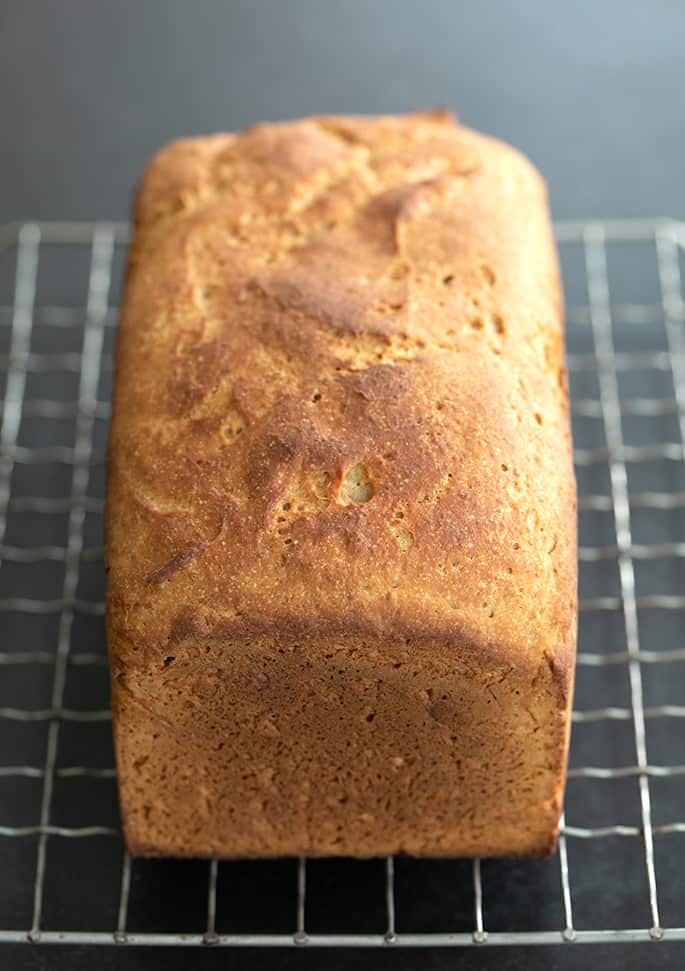
This bread bakes at 375°F, a slightly higher temperature than you would bake a cake, to encourage “oven spring,” which is the initial rise of yeast bread in the oven, and to help the loaf bake through and brown fully.
Ingredient substitutions
Dairy-free
It’s easy to make this recipe dairy free. Just replace the butter in the recipe with either Miyoko’s Creamy brand vegan butter or Earth Balance buttery sticks. And use any unflavored, unsweetened nondairy milk (as long as it isn’t nonfat).
Egg free
There are two egg whites in this recipe, but I’ve also successfully made it with one whole egg. I think 1 chia egg (1 tablespoon chia flour mixed with 1 tablespoon lukewarm water and allowed to sit until it gels), 1 flax egg, or 50 grams of aquafaba (the brine in an unsalted can of chickpeas) should work.
Oat free
You can replace the oat flour in this recipe with quinoa flakes or cream of buckwheat. And I now have a full discussion of replacing oats in gluten free baking.
Gluten free flours
I always prefer a base of Better Batter classic blend gluten free flour as a base for my gluten free yeast bread. In this recipe, we’re adding gluten free whole grains with teff (or teff flour) and oat flour. You can try replacing the oat flour with a variety of other whole grain, gluten free flours. Here are a few suggestions:
Replacing oat flour
I think that buckwheat flour would work well in place of oat flour, as would sweet white sorghum flour. Make sure your sorghum flour is fresh, though, as it spoils more quickly than other flours.
I wouldn’t suggest using quinoa flour in place of oat flour here, as quinoa flour tends to be bitter. Brown rice flour doesn’t have the same “chew” as oat flour, so I don’t recommend it, either.
Whole grain teff vs teff flour
This recipe calls for whole grain teff, not teff flour. I have wondered whether it would work with teff flour, though. And whether whole grain teff could be replaced with, say, chia seeds. I bet it could!
If you enjoyed making this recipe, here’s my amazing gluten free focaccia recipe if you are interested in making more options.
Gluten Free Brown Bread Recipe
Tell Google you trust GFOAS!
Equipment
- Stand mixer with paddle attachment
Ingredients
- 2 ½ cups (350 g) all purpose gluten free flour blend, (I used Better Batter; click thru for full info on appropriate blends)
- 2 ½ teaspoons xanthan gum, omit if your blend already contains it
- 3 tablespoons (38 g) whole grain teff, whole or ground into a flour
- 9 tablespoons (68 g) certified gluten free oat flour, (I just grind old fashioned gluten free rolled oats into a powder)
- ¼ teaspoon cream of tartar
- ¼ teaspoon baking soda
- 2 tablespoons (25 g) granulated sugar
- 1 tablespoon (9 g) instant yeast, (See Recipe Notes)
- 1 ½ teaspoons (9 g) kosher salt
- 5 tablespoons (70 g) unsalted butter, at room temperature
- 1 teaspoon apple cider vinegar
- 1 tablespoon (21 g) unsulphured molasses
- 2 (50 g) egg whites, at room temperature
- 1 ½ cups (12 fluid ounces) warm milk, (about 95°F)
Instructions
- Grease and line a standard 9-inch x 5-inch loaf pan or a 1 1/2-pound Pullman loaf pan and set it aside.
- In the bowl of your stand mixer fitted with the paddle attachment, place the flour, xanthan gum, teff, oat flour, cream of tartar, baking soda, sugar and yeast.
- Whisk with a separate handheld whisk to combine well. Add the salt and whisk again to combine.
- Add the butter, vinegar, molasses, egg whites and milk, and mix on low speed with the paddle attachment until the dough starts to come together, then mix on high for about 5 minutes.
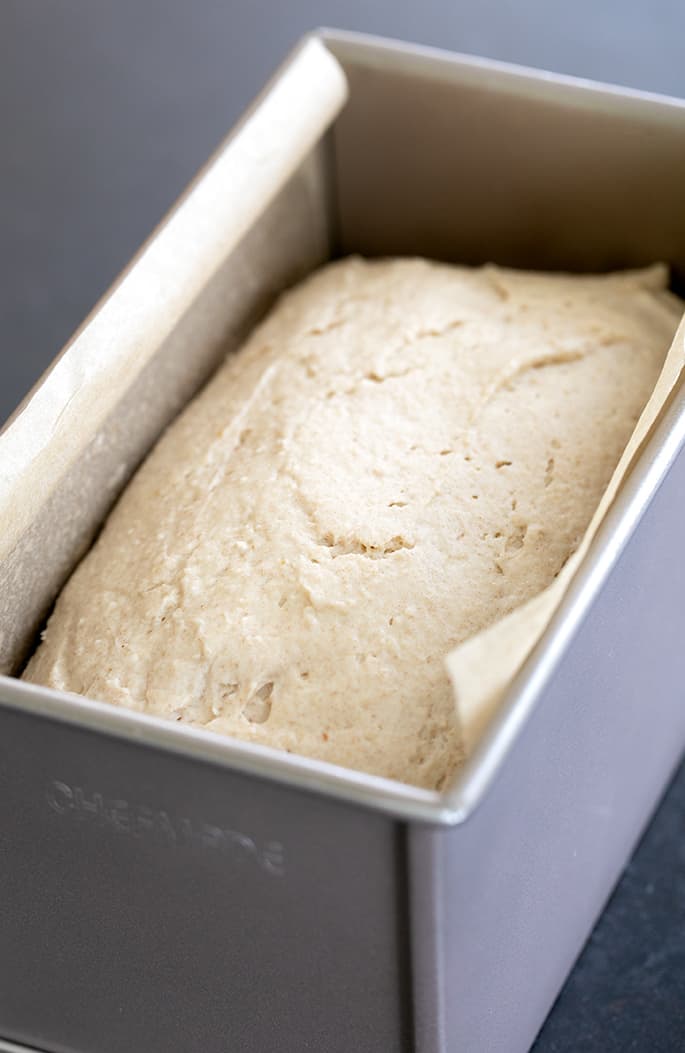
- Transfer the dough to the prepared loaf pan and smooth the top with a wet spatula. Cover the dough with oiled with plastic wrap or the top of the Pullman pan.
- Place the covered pan in a warm, draft-free area to rise until the dough is about 150% of its original volume.
- When the dough is nearly finished rising, preheat your oven to 375°F.
- Remove the plastic wrap and place the loaf pan in the center of the preheated oven. Remove the plastic wrap. If using a Pullman pan, keep the cover in place.
- If using a standard loaf pan, bake for about 30 minutes or until the loaf is firm enough to take out of the pan.
- If using a Pullman pan, bake for 40 minutes before removing the pan cover.
- In both cases, remove the bread from the loaf pan and place it on a rimmed baking sheet. Return the bread on the pan to the oven, and bake for another 15 to 20 minutes, or until the top is nicely browned, and the loaf sounds hollow when tapped.
- Remove from the oven, allow to cool on the baking sheet for 10 minutes. Transfer to a wire rack to cool completely before slicing and serving.
Video
Notes
If you’d prefer to use active dry yeast in place of instant yeast, you’ll need 25% more, by weight, and to hydrate it before mixing the yeast into the bread mixture. Here, that would mean 125% of 9 grams of instant yeast, or just over 11 grams active dry yeast. Mix the active dry yeast with a couple tablespoons of the warm milk, and let it activate, then add it with the rest of the milk when the recipe calls for it. Nutrition information is per slice assuming a whole loaf sliced into 10 pieces and is approximate and not to be relied upon.
Nutrition
Nutrition information is automatically calculated, so should only be used as an approximation.
FAQs
No! Anything with the word “wheat” in the title will contain gluten, one of the 3 main sources of gluten.
Only this recipe for brown bread is gluten free. Other brown breads that aren’t specifically developed to be gluten free will contain gluten.
This bread has whole grains added to our regular all purpose gluten free flour blend that lend a wheaty chew and a beautiful brown color.
Your bread is done baking when it sounds hollow if you thump it on the side somewhat forcefully with your fingertips, and the internal temperature reads about 190°F on an instant read thermometer.
It’s underbaked! Many ovens run hot or cold, so you should always gauge oven temperature by virtue of a simple, inexpensive, freestanding oven thermometer that you replace often. If your oven runs cold, it may take an exceedingly long time to bake, and won’t bread as well.
If your oven runs hot, as many do, it will bake the outside too quickly and give the loaf the appearance of being baked through even though the inside doesn’t have the structure to support the outside as the bread cools. Always test your bread for doneness as described above before removing it from the oven entirely.
Storage instructions
Never store gluten free bread in the refrigerator, as it tends to be drying. This bread will stay fresh covered tightly on the kitchen counter at room temperature for a day, but I wouldn’t risk more than that. You know what they say about day old bread!
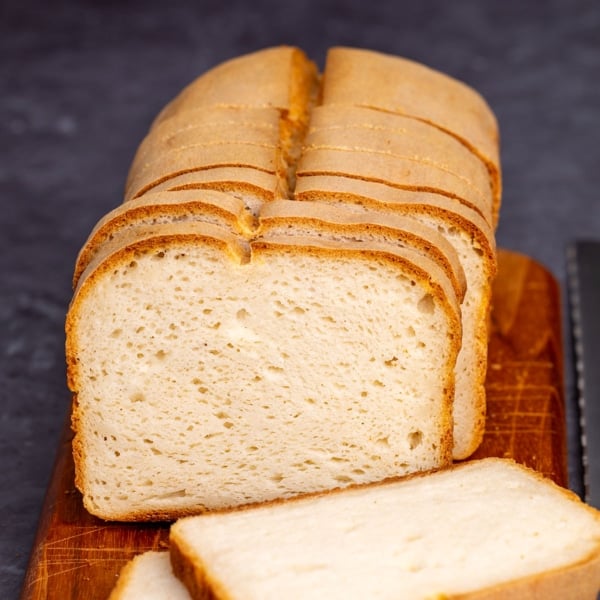
For longer storage, I recommend slicing this loaf of gf brown bread when fresh, and fully cooled. Then wrap it tightly in freezer-safe wrap and freeze it for up to 2 months—longer if your storage wrap removes all air from contacting the bread.










Can this recipe be used for a bread maker?
I don’t use or recommend use of a bread machine, Pam, since the instructions are significantly different from brand to brand so if I were to have one set of instructions, it wouldn’t work for a different machine. If you’d like to use your bread machine, I’m afraid you’ll just have to experiment!
Five stars are not enough.
My mom used to bake whole wheat bread every week when I was a child, and I carried on that tradition with my own family until I had to give up wheat 10 years ago. WOW! The memories this bread brought back! I wouldn’t have believed it was GF if I hadn’t made it myself. I’ve tried many GF bread recipes over the years, and had very nearly given up. Thank you, thank you, thank you.
That’s really so great to hear, Kirsten! I never want anyone to struggle with bad ingredients and bad recipes, but I am always happy to hear that someone was brought back from the brink of giving up. That’s why my recipes are so specific. They’re for those of us for whom “good, for gluten free” simply isn’t good enough, and excellent results require precision in method and ingredients. I’m so glad you are able to honor your memories with this bread!
This is really the best gluten free bread I’ve made in my search for a hearty gluten free bread! I use a pullman pan (does not have a lid though). And I have followed the recipe as written but then sometimes I substitute the 68 grams of oat flour with a mix of other dry ingredients (68 grams) – such as buckwheat flour, psyllium husks, flax seed, chia seed. It’s been fun to experiment and it always tastes great. I make this every other week. It makes great sandwiches and toast. I recommend this to everyone!
Hi Nicole
Thank you for the recipe
I’m from the UK, and this bread tastes very sweet. Not sure if it’s the amount sugar or the molasses.
Is it possible to reduce the sweetness of the bread?
Sugar isn’t just a sweetener, Brandon. It’s also a tenderizer, so if you reduce it or leave it out, your bread will be tougher
Calories per slice? Love the bread just need to track my calories
I added approximate nutrition information, Barb, but it is just that, approximate, and I caution anyone not to rely on it for any health or other important concerns.
Is there a recon you dont use your gluten greed bread flour for this recipe?
That blend must only be used in recipes developed specifically for it. The bread flour is not an all purpose gluten free flour, which is what this recipe calls for. For a complete discussion on the distinction, please see the bread flour post.
Thanks for the explanation making today in a bread maker (no stand mixer)
I purchased ingredients to make this but wasn’t paying close attention! I bought teff flour instead of whole grain teff. Can I use that? If so, how much? Thanks!!
No problem, Kara. You can use it. Just measure by weight. I discuss that in the text of the post under the heading “Using whole grain teff vs teff flour.”
I’m interested in trying this recipe, but I’m wondering: is it possible to use a bit more oat flour and eliminate the teff? Thanks.
Hi, Cheri, I strongly recommend purchasing and using teff, as it really gives it a wheaty taste, along with sorghum. I don’t know if you can replace teff with anything else because I’ve never tried and these things are very hard to predict. For other info on individual flours, please see the text of the post under the heading “The best gluten free flours for this gf bread”
Nicole, I wanted to tell you how excited my husband is about this recipe. Since we recently found all the food sensitivities he has (and hopefully will go away), making anything that resembles American food (eggs and toast)? has been a challenge. I’ve made bread for many years but gluten free and with his sensitivities has been a challenge. Cue up the brown bread. For the oat flour, I used buckwheat. Eggs, I used Just Eggs. Milk, I used Ripple dairy free milk. While baking in the oven, it smelled “just like” bread. My husband is SO excited that he’s already planned his breakfast
That’s so great to hear, Sandra! I’ve never baked with Just Eggs, so I’m really glad to hear that it worked so well. I might have to try using it in some other recipes, since I’ve never found an egg substitute to recommend that I truly love and works everywhere. Thanks for sharing that!
I’ve made this once and husband loved it. This time I made a few substitutions that worked well. Substituted coarse ground cornmeal for ground teff, used half buckwheat flour and blackstrap molasses. It is delicious. Thank you for these recipes. Quick question for your recipes overall. When you list weights of eggs, what should be done when the measurement is off. Just use small amount of another egg? Also are substitutions more serious a topic with yeast rising breads versus your other gluten free baked recipes? For example I’ve used apple sauce instead of butter in your muffin recipes and they seemed fine. Thanks again for your knowledge.
If the measurement for eggs is only about 5 grams off, then it’s fine. If it’s more than that, yes, beat another egg and add just enough to make the proper measurement. Substitutions are always recommended against, Erin. A recipe is a formula, and the product of hours of recipe development based on past experience and tons of trial and error. Every time you change even a single ingredient, you change the formula. I started offering substitution suggestions many years ago only because I get a steady stream of these questions, but each substitution is a step away from the recipe that should be avoided. I don’t share a lot of information about baking science since it’s so hard to explain and no one is really that interested in it (which is fine! that’s my job!). Using applesauce in place of butter, for example, does not produce the same result at all. You may not mind the difference, but applesauce provides moisture and a little bit of pectin (although most pectin is in the skin, which you don’t use in applesauce). It isn’t fat, and fat is a tenderizer and a flavor delivery system. Using it in place of butter makes a tougher, less tender crumb. It simply doesn’t produce the same result. When people insist that it does, it’s because they don’t mind the difference. But my job is to show how to make the recipe in its best possible form, or I’d get (appropriate) complaints about texture. Gluten free baking has enough of a bad reputation, and my whole purpose is to elevate expectations. That’s why I don’t do dairy free, sugar free, etc., all of which change texture and taste. I only do gluten free, so everything tastes just how it does with conventional recipes. There are other bloggers who do other things, and I’m sure they’re very good at what they do. I encourage everyone to explore those blogs to find what they’re looking for, since no one blogger is all things to all people!