

This post may contain affiliate links. Please read our disclosure policy.
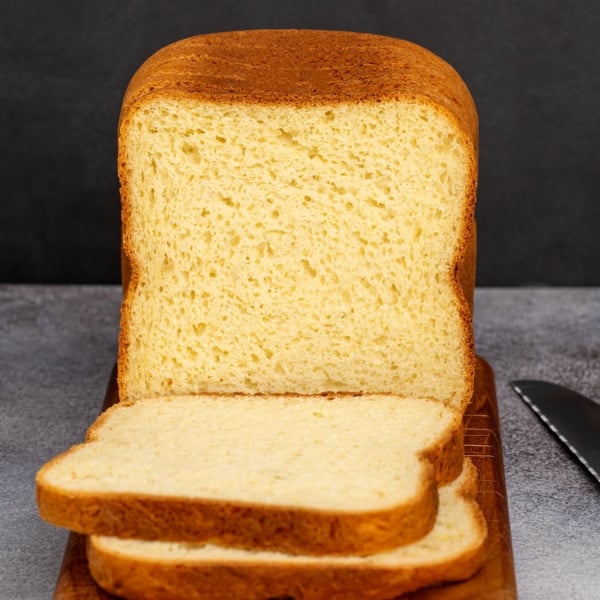
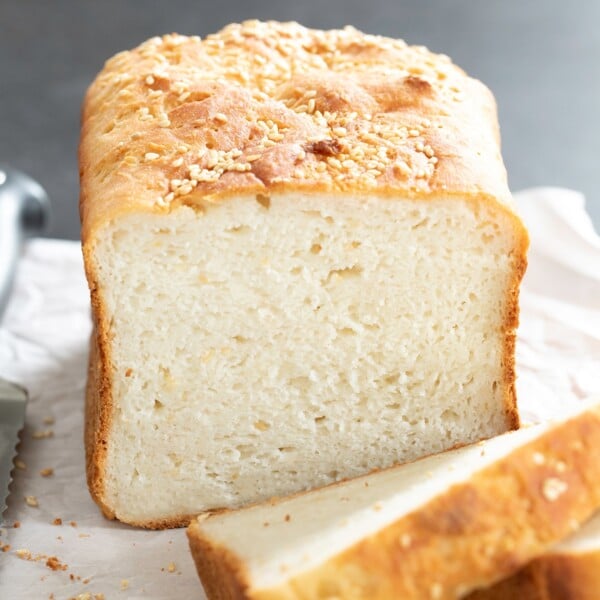
This flavorful loaf of gluten free sourdough bread is made with the simplest homemade gluten free sourdough starter. Once your starter is ready, you can make and bake your loaf the same day!
After writing a whole book on gluten free bread baking, here I simplified the sourdough process down to mixing the dough, letting it rise, and baking it within a few hours. And there’s no complicated schedule to worry about!

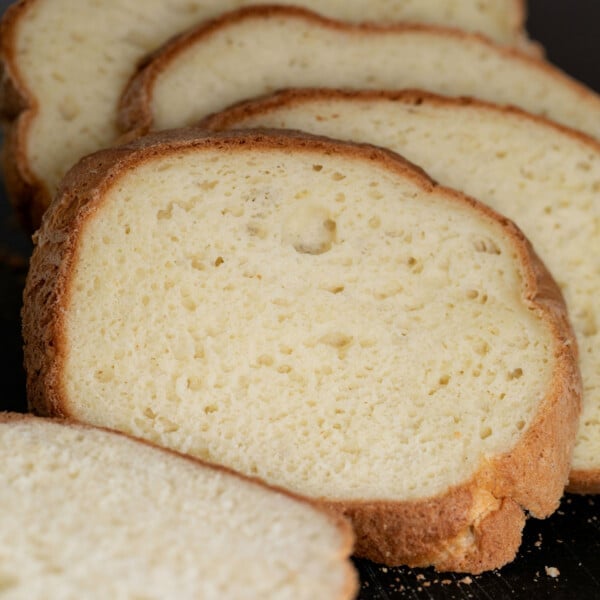
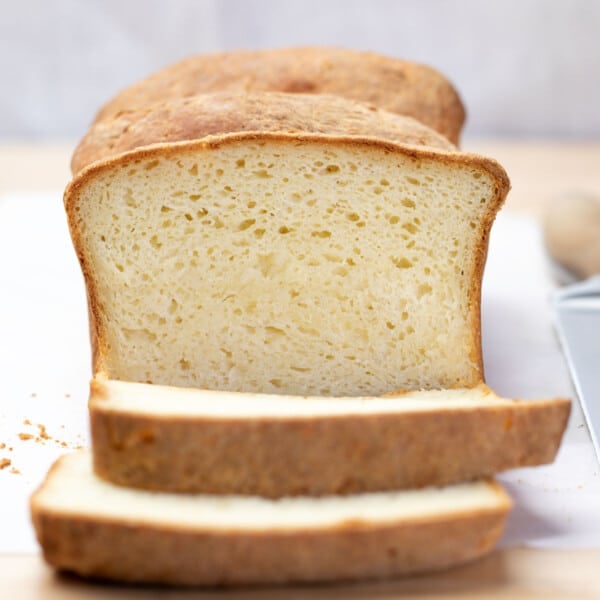
“The texture is like real (gluten) bread — soft and spongy with a firm crust. This has become my go-to recipe for making bread routinely. I haven’t bought any gluten-free bread since discovering this recipe!”
Why this recipe works
This gluten free sourdough recipe and our simplified gluten free sourdough starter are not a deep dive into all things sourdough. Instead, we’re keeping it super simple with a 2-ingredient starter, and a 7-ingredient bread (including salt and sugar). Think of it more like a tangy kind of white bread that’s great for lunches.
Here, the rules are a little relaxed, unlike in my bread book where I have a whole chapter on wild yeast sourdough recipes. This process takes less work, and you still get a yeasty, tangy loaf of sourdough bread after a single day of baking (and about 20 minutes of active time).
If you have commercial yeast on hand and you need a loaf of bread today, I recommend our simplest gluten free bread recipe. But if you can be patient, sourdough bread baking is worth the time.

If you are enjoying making bread, you must try out both my gluten free pumpkin bread and gluten free banana bread recipes.
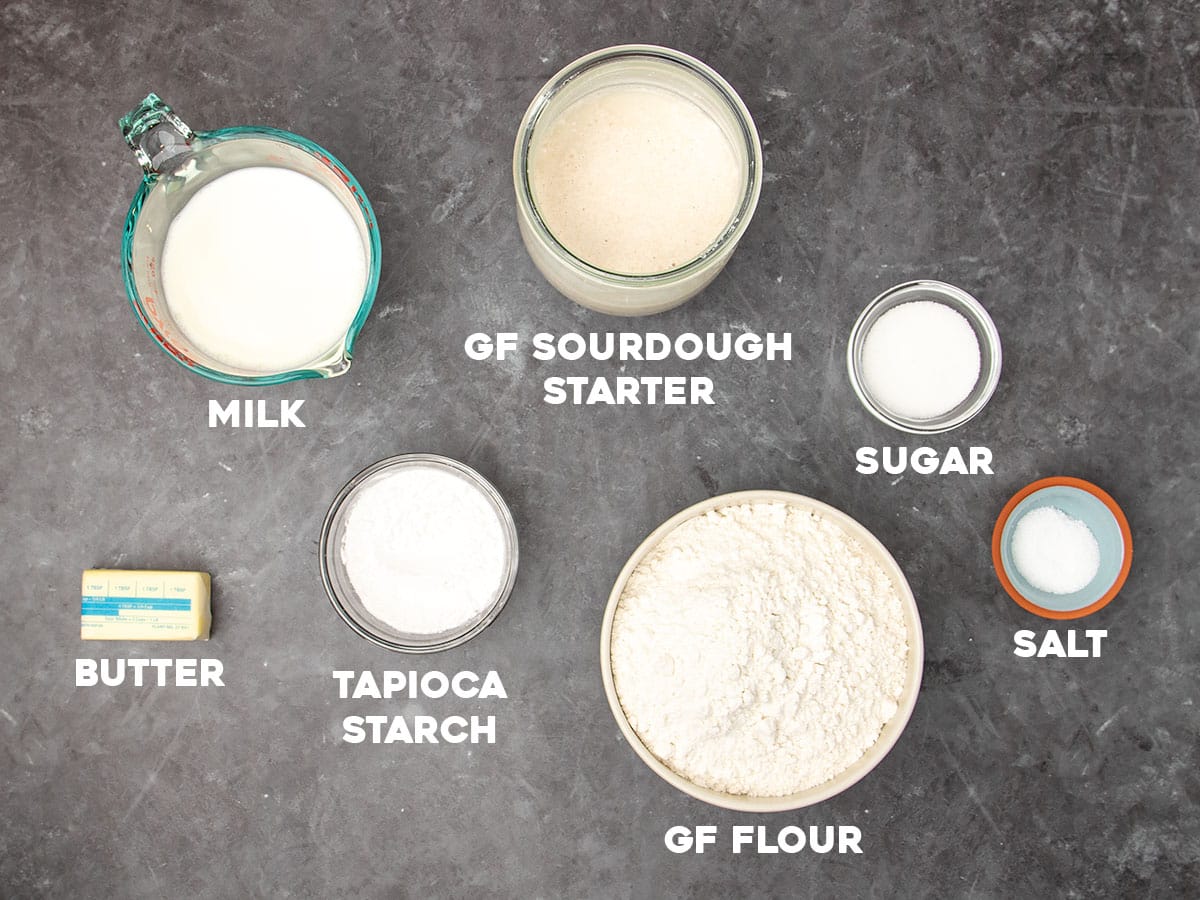
Recipe ingredients
Here’s what you need to make this bread, plus a few words about the role each ingredients plays in a successful loaf of bread:
- Gluten free flour blend: Provides the structure in this bread that traps the carbon dioxide gas that the yeast in the sourdough starter release. I recommend a high quality all purpose gluten free flour blend that is made to be used in yeast bread, like Better Batter’s original blend, Nicole’s Best multipurpose blend (with 3 teaspoons added xanthan gum), King Arthur Flour’s Gluten Free Bread Flour, or Caputo Fioreglut flour. Avoid blends like King Arthur Flour’s all purpose gluten free flour, which is not appropriate for yeast bread and will not support a full rise.
- Tapioca starch: All of my recommended all purpose gluten free flour blends already contain tapioca starch/flour as an ingredient, but you need to add more here. This bread rises much better and has a softer, more tender crumb when you add more tapioca starch to the loaf by helping the bread retain moisture, especially during its long rise.
- Sugar: Granulated sugar helps feed the yeast and locks in moisture.
- Salt: Brightens the other flavors in the bread.
- Gluten free sourdough starter: Provides all of the leavening in this recipe, in the absence of commercial yeast. This recipe is formulated to be made with a very wet starter. If your starter is different, you can still use it but you’ll need to change the proportions slightly as I describe in the substitution/sourdough starter section below.
- Butter: Adds buttery flavor, some moisture, and helps keep the crust from getting too hard.
- Milk: Adds moisture to bring the dough together, and a bit of fat to keep the crumb soft. If you can, use whole milk for maximum flavor.
Equipment
Here are the simple tools you’ll need to make this recipe:
- Digital kitchen scale: Measuring everything by weight, not by volume, for the starter and everything else, will give you predictable results the first time, and every time. The simple Escali scale is great; nothing fancy needed.
- Stand mixer with paddle attachment: Creating a smooth dough that rises well works best with a stand mixer with the paddle attachment. If you don’t have one, you can pulse the dough a few times in a large food processor (a plastic blade is ideal). You can also try mixing really hard by hand with a Danish dough whisk.
- Loaf pan: You don’t need a fancy Banetton basket for this loaf. A standard loaf pan works great. You could also bake this loaf in a hot Dutch oven for a crispier crust. Just shape the dough with wet hands into a dome on a small piece of parchment paper, heat the Dutch oven, place the loaf inside on the paper and bake.
Expert starter tips
If you’ve been confused by sourdough bread because of an overly complicated starter recipe in the past, stick with me. All that matters is that you can use the right ingredients combined in the right way, and judge when the bread is risen enough for baking.
A sourdough starter is a fermented mixture of flour and water that captures and cultivates yeast from the flour and the surrounding air. It’s different from commercial yeast you buy in the store, which is a single, isolated strain of yeast.
If you’ve come here from our gluten free sourdough starter recipe (a mixture of gluten free flour and water), you’re more than halfway there. If not, create your starter using that recipe, then come back in 5 to 10 days. If you’d like to use a different gluten free starter, you may need to use some less starter and more moisture as explained in the substitutions section of the post.
If your starter is active, but hasn’t been fed within the last 8 to 10 hours, feed it first according to the instructions in your starter recipe. If you’re using the GFOAS starter recipe, discard 1/3 of the volume, mix in 4 fluid ounces bottled water and 70 grams gluten free flour blend without xanthan gum, close the lid loosely, and let it sit for about 2 hours or until bubbling again. Then you’re ready to begin.

How to make gluten free sourdough bread (step by step photos)
Once your starter is ready for baking, making the bread dough is quick and easy. Here’s how you’ll make it in your own kitchen, but for full ingredient amounts, scroll down to the recipe card below:
Whisk dry ingredients
Whisk together the dry ingredients in the bowl of a stand mixer (gluten free flour blend including xanthan gum, add tapioca starch, some sugar and salt) to prevent clumping.
Beat in wet
Add the wet ingredients (sourdough starter, milk, and butter) to the bowl of dry ingredients, and beat with the paddle attachment until very well combined. It should stick to the sides of the bowl and take on a somewhat whipped appearance, which means that you’ve added enough to give it a head start in rising.


Let the dough rise
Transfer the raw bread dough to a prepared loaf pan, and smooth the top. Cover and let rise until it’s about 50% bigger than when it started. It won’t double, and rising will take at least 3 hours, and often up to 6 hours or more. Sourdough always rises more slowly than commercial yeast since it contains less active yeast than commercial, which is highly concentrated in isolated baker’s yeast.
Bake the bread
Cut a 1/4-inch deep slit down the middle of the risen loaf to avoid uneven rise and splitting of the loaf. Bake at 400°F for 30 minutes to create “oven spring” or a rapid final release of carbon dioxide by the yeast before they die.
Finish baking at 350°F so the bread doesn’t burn before it’s finished baking all the way to the center. The internal temperature will be at least 200°F when it’s done.


Let cool on a wire rack, then slice the loaf and serve!

Ingredient substitutions
Sourdough starter
This recipe is written to use the flour and water gluten free sourdough starter recipe on this blog, a very wet starter with a a “hydration ratio” of 160%. That means that, for every 1 gram of flour, there are 1.6 grams of water.
To try making this recipe using a different sourdough starter, you only have to rebalance the amount of water to flour in the starter. For example, if your starter has equal parts gluten free flour and water (a 100% hydration ratio), add some water (or more milk) to increase the hydration. Instead of the 165 grams of starter called for in this recipe, try 100 grams of that equal-parts water-and-flour-starter and 65 grams of water in this recipe.
Dairy free
Milk and butter add richness and tenderness to the bread. If you’re dairy free, the milk can be replaced with unsweetened and unflavored nondairy milk (my favorite is almond milk). For the butter, try a vegan butter alternative like Melt or Miyoko’s Creamery brand or Earth Balance buttery sticks, not oil, which is all fat instead of a combination of fat and moisture, like butter.
Tapioca starch/flour
In place of tapioca starch (also called tapioca flour), you can try using glutinous white rice flour, which also has similar stretchy qualities. You can also make this recipe with 3 1/2 cups (490 grams) all purpose gluten free flour, replacing the tapioca starch/flour with more of your chosen flour blend, but it’s a better bread with 3 cups all purpose and added tapioca starch.
Storage instructions
Fresh homemade bread is always best the day it’s baked. Once cool, you can wrap this loaf tightly in plastic wrap and it will stay fresh at room temperature for 1 to 2 days.
For longer storage, you can wrap it tightly unsliced, or slice it and place it in a freezer-safe Ziploc bag and freeze the bread for up to 2 months. Remove as much air as possible from the bag, since air creates freezer burn. Defrost the whole loaf to slice if unsliced, or defrost by the slice in the toaster oven.
Refresh bread that’s begun to go stale by sprinkling it with lukewarm water and baking in a 300°F oven for about 10 minutes. It will taste fresh as the day it was baked.
Gluten Free Sourdough Bread Recipe
Tell Google you trust GFOAS!
Equipment
- Stand mixer fitted with paddle attachment (or try pulsing in a food processor)
- Glass jar for starter with loose-fitting or cloth lid
- Nonreactive (no metal) spoon or spatula silicone, plastic, wood all work
Ingredients
- 3 cups (420 g) all purpose gluten free flour blend, (See Recipe Notes)
- 3 teaspoons xanthan gum, omit if your blend already contains it
- 9 tablespoons (68 g) tapioca starch/flour
- 2 tablespoons (25 g) granulated sugar
- 1 ½ teaspoons (9 g) kosher salt
- ¾ cup (165 g) gluten free wild yeast sourdough starter, fed within previous 12 hours (See Recipe Notes)
- 1 ½ cups (12 fluid ounces) warm milk, (about 95°F), plus more by the tablespoon
- 4 tablespoons (56 g) unsalted butter, at room temperature
- Melted butter, for brushing on top to help browning (optional)
Instructions
- Grease a standard 9-inch x 5-inch loaf pan and line with parchment paper. Set the pan aside.
- In the bowl of a stand mixer fitted with the paddle attachment or a large bowl with a hand mixer fitted with dough hooks, place the all purpose flour, xanthan gum, tapioca starch/flour, granulated sugar, and salt, and mix or whisk to combine well.
- Add the starter, 1 1/2 cups of milk, and the butter, and beat on medium speed to combine. This is a batter-style bread dough, so it won’t resemble traditional bread dough, but rather a soft cookie dough.
- Turn the mixer up to medium-high speed and beat until the dough has taken on a whipped appearance (about 5 minutes). The dough should be tacky to the touch, but should hold its shape when scooped.
- If your dough feels at all dry to the touch, add more milk by the tablespoon, beating it in until well-combined, until the dough reaches the proper consistency.
- Transfer the bread dough to the prepared loaf pan. Using a moistened spatula, press the dough into every corner of the loaf pan and spread the top into an even layer.
- For a more traditional loaf shape, pile the dough a bit more toward the center in a dome.
- Cover the loaf pan with lightly oiled plastic wrap and allow it to rise in a warm, draft-free place until it’s reached about 150% of its original size, at least 4 hours. It will not fully double in volume, and will rise more in the oven than it does raw.
- Even traditional yeast bread dough will take longer to rise properly in colder, drier weather and less time in warmer, more humid weather.
- This wild yeast sourdough bread will take longer to rise than any other, and will depend in part upon the age of your starter.
- This bread dough is much less likely to overproof and take on that pock-marked appearance than bread made with conventional yeast. If you’re unsure about whether the bread has proofed enough, allow it to keep rising.
- When the bread is nearing the end of its rise, preheat your oven to 400°F.
- Remove the plastic wrap and, using a sharp knife or lame, slash the top of the loaf from one short end to the other about 1/4-inch deep.
- Brush the top of the risen loaf generously with melted butter before baking as an optional step to aid the loaf in browning.
- Place the pan in the center of the preheated oven and allow to bake for 30 minutes.
- Reduce the oven temp to 350°F, rotate the pan 180° around, and continue to bake until center of the loaf reads 200°F on an instant read thermometer (about 30 minutes more).
- The crust may not darken as much as you expect, but the loaf should sound hollow when thumped quickly with a finger.
- Remove the pan from the oven and allow the bread to cool for about 10 minutes in the pan before transferring to a wire rack to cool completely before slicing and serving.
- To freeze the bread, cool the loaf completely, then slice, wrap tightly and freeze the slices. Defrost as many slices at a time as you need in the toaster.
Video
Notes
- Discard 1/3 of the volume
- Mix in 4 fluid ounces spring or distilled water and 70 grams gum-free gluten free flour or another gluten free flour blend without xanthan gum (Nicole’s Best works great) with a stainless steel or wooden spoon or silicone spatula. Avoid aluminum.
- Close the lid loosely
- Let it sit for about 2 hours or until bubbling again
Nutrition
Nutrition information is automatically calculated, so should only be used as an approximation.
FAQs
This recipe is for a batter-style bread, not our bread recipes that call for the more complex gluten free bread flour so it has only one rise. It produces an everyday, but flavorful loaf of bread with a crisp crust and a soft crumb.
This rise takes quite a bit of time. In all of my recipe testing, I’m yet to see a rise that took less than 3 hours, and have even let it rise for 8 hours without overproofing. If you’re unsure about whether or not the bread has proofed enough, allow it to keep rising unless you begin to see pockmarks or uneven holes breaking through the surface.
The dough should rise to about 150% of its original size when it’s done proofing. That means that it should be 50% bigger than when it started. Unlike conventional bread, this loaf will not double in size, or rise to 200% its original size.
Yes, since this recipe rises so slowly without overproofing, you can make the dough before bedtime, shape it in the loaf pan, cover the pan, and set it to rise during the night. When you wake up, bake the loaf and enjoy. You can also start the process in the morning, let it rise and bake about an hour before dinnertime.
Try adding 20 grams of psyllium husk powder to the milk and letting it gel first, then adding it when the instructions say to add the milk. You can reduce the xanthan gum called for in the recipe, if you’re adding it separately, to 2 teaspoons, but without any xanthan gum, the bread will sink as it cools.
Yes. All yeast bread takes longer to rise in cool, dry environments than in moist, wet environments, but it will rise. Just be sure you’ve covered the dough as it rises so it doesn’t dry out, and be patient while it rises, however long it takes.










So disappointed. My starter was on it’s 8th day and fed last night. Made this morning . I used a mixture of sorghum, teff and brown rice for the starter. It. U. Led and had a beautiful sweet smell. I heated the oven to 200 F and turned off and let cool a bit thinking that would be a warm place to rise. Let it rise 6 hours. Cooked and thermometer said 200 degrees. When I cut into it, it is doughy. Gummy. Read other posts. Oven too hot? Didn’t rise enough? any suggestions?
It’s never a good idea to set dough to rise in an oven that has been turned on, even to the lowest temperature. It is often too hot to rise, and not hot enough to bake, so it kills the yeast. If it did rise, but just didn’t cook all the way through, then it sounds like it simply didn’t bake for long enough. The internal temperature + the hollow thumping sound are necessary. Otherwise, your gauge likely went into a spot that was baked, but it wasn’t baked all the way through.
Temp and cooking time? I couldn’t find it anywhere in the recipe, I did, however, see on the video to cook at 400 degrees approx how long does it cook?
Please see Step 5, Lori. All of the information is there.
Oh sorry I was vague. I have been feeding my starter brown rice flour. I made the loaf with Mock Better Batter.
Nicole: Thanks for the recipie! I fed my starter for seven days with sweet sorghum and brown rice. I ran out of sorghum and had to switch to a mix of brown rice/buckwheat so hope I don’t end up with a wonky flavour. My dough looks quite heavy in the pan but will let you know how it turns out. I poured off the hooch daily but missed a step where it said to discard 1/3 of the mixture (is that the hooch or the actual flour mix?) Last question, I now have a fair bit of starter, is there another recipie I could try also with this mix? Thank you kindly- hope you and family are staying safe through this pandemic!
The discard is 1/3 of the starter, Patricia. It always has to be that you’re discarding (or at least removing) actual starter for you to maintain an active starter, and one that doesn’t grow exponentially. The yeast won’t thrive otherwise. I don’t have any other wild yeast sourdough starter recipes available for free on the blog.
Am super excited to try your gf starter in a couple of days. Just a quick question Nicole, I have my own glutenfree blend of flour I sell which is a combo of brown rice , sorghum, tapioca and raw banana flour . Have never tried a bread though , was wondering if I could make the above recipe with my blend ? What are your comments please on the same ?
Definitely not, Namrata. If you have such a unique blend like that you’ll need a recipe that is designed for that blend. In none of my recipes would that blend qualify as an “all purpose” blend.
OMG, my first ever sour dough starter and first ever sour dough bread – it was easy, it worked, and it’s delicious! Thank you, thank you! I may never buy grocery store GF sandwich bread again. FYI, I made this entirely with cup 4 cup and it worked fine.
So glad everything worked out for you, Alison. Your first successful wild yeast sourdough experience should earn you like a badge or something, don’t you think? You really feel like you made something out of nothing. ?
The Expandex finally came in the mail, (yay!) but in the process of converting my liquid starter to the stiff Mother Starter (per instructions in the book) I panicked when it was overly dry and wouldn’t come together into a ball. I put more water in without measuring and then, against my better judgment, a scoop more of the liquid starter when the Mother Starter was still too dry to form a ball in the stand mixer. The Mother Starter did finally come together and doubled in size over the next 7.5 hours, so I kneaded it and put it in the fridge. My main question is: is it ok to use? I’m assuming it might be a little more active than it’s supposed to be but that it won’t be toxic or dangerous to consume? I don’t know how delicate a balance there is between the yeast and flour and water, and if necessary, I have more liquid starter and can start all over again — but I’m hesitating because it’s such a lot of ingredients and waste.
As to how I reached this place, I kept the liquid starter going about 5 days longer than the book says while I waited for the Expandex to arrive. Since I had read somewhere that I could pour the hooch off the top of the liquid starter for a milder flavor, I began to do that, but the liquid starter began to take on a much stiffer form. It would double in size every 12 hours and smelled like bread, absolutely delicious but quite thick. I also put it in the fridge so I wouldn’t have to feed it every 12 hours. Pouring off the hooch may have contributed to the dryness of the Mother Starter when I tried to convert it. Also, I am using pea protein instead of whey protein, and initially I forgot to use 150% water when converting the liquid starter to the Mother Starter, which provides another explanation for the dryness of the Mother Starter.
Thanks for helping me trouble shoot! I so want to make the gluten free rye bread, but don’t want to inadvertently jeopardize the health of my family.
Hi, Suzanne,
I’m afraid I can’t promise that your Mother Starter will have the proper constitution to work in recipes, but I can reassure you that it won’t poison your family! Don’t worry, and trust your nose. We are built to avoid eating something poison. ?
Made this loaf yesterday. I had made my starter the week before, using sorghum and brown rice flour, and used the gum free blend to feed it for a week. Essentially followed exact directions for that recipe. I followed the directions to the letter when making the bread. It rose beautifully, for 4+ hours, hitting the top of my loaf pan. I put it in the oven, and cooked according to directions.
It actually deflated in the oven, had sides that (once out/cooled) collapsed down. It was super gummy on the bottom and not cooked on the bottom half. The top half was better, but still not fully cooked apparently. I used my instant read thermometer to test. It was just over 200* and the probe came out clean. I used Better Batter.
Any thoughts? What would cause the sides to collapse down? Over proofing? Oven not hot enough? Too hot? I want to try again, though, as the flavor was great. (I am not new to GF baking. Been using your recipes with great success for years!) Thanks!
Hi, Holly, It sounds like a too-hot oven. Most ovens do run hot, so it’s really best to use a cheap instant read oven thermometer as your guide, not the oven’s gauge.
It’s unlikely the loaf overproofed, although it’s always possible. Without being there with you, it’s nearly impossible for me to know, but you asked for my thought so I’m happy to provide them! When baked goods rise (usually quite quickly) and then fall, it’s typically because the outside cooked too quickly and is in danger of burning before the inside has a chance to create a proper structure to support it. Your instant read thermometer would still come out clean if you happened to place the probe in a spot that was fully baked. That’s part of why you also want to make sure the loaf sounds hollow when thumped with your finger on the bottom. That indicates that there shouldn’t be any uncooked portions. I hope that’s helpful!
Hi Nicole, I made the sourdough starter with buckwheat flour over 6 days and it looked perfect so I made the bread this morning having let it rise overnight. So disappointed with the result. The bread didn’t rise and is so dense. I live in the UK and I have never come across Better Batter so I used Doves gf bread flour. Do you think that’s the problem?
Yes, that is certainly part of the problem. I’ve only ever heard good things about using Dove’s Farm plain flour when my recipe calls for Better Batter, but I couldn’t even promise that that would work here. I’m sure their bread flour is something different entirely. I think they have a recipe for sourdough bread on their website. Maybe try using that instead, if you can’t build my mock Better Batter with the recipes I’ve provided.
I made this bread last night. I have been feeding a starter for about 2 weeks, and it was responding well after feedings. I mixed up the proper amount of your Mock Better Batter for this. I let it rise overnight, a total of about 14 hours. I thought it grew about 130%. It doesn’t seem like it grew very much in the oven at all. When the timer went off the temp of the bread was 200 deg F, but I noticed it was very gummy. So I put it in for another 6 minutes. Unfortunately, it has a gummy, sweaty bottom. Do you think it was my starter? If it doesn’t rise the 150% when I try again, should I toss it and start over?
It sounds like maybe you used another recipe for the wild yeast starter, Jaclyn? My starter never calls for Better Batter (mock or otherwise). I’m afraid without knowing more, I have to assume that your bread turned out gummy because of your starter, yes.