

This post may contain affiliate links. Please read our disclosure policy.
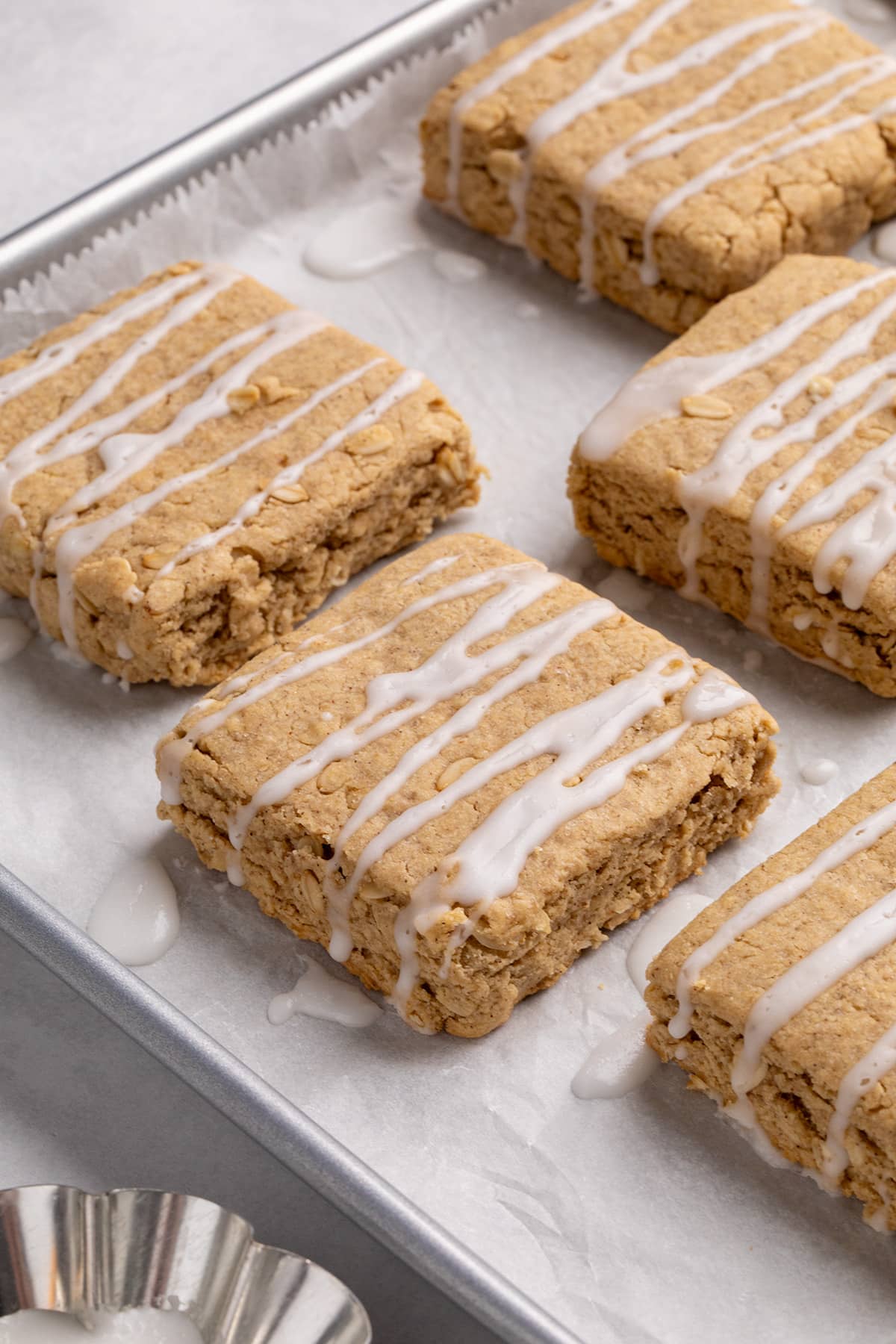
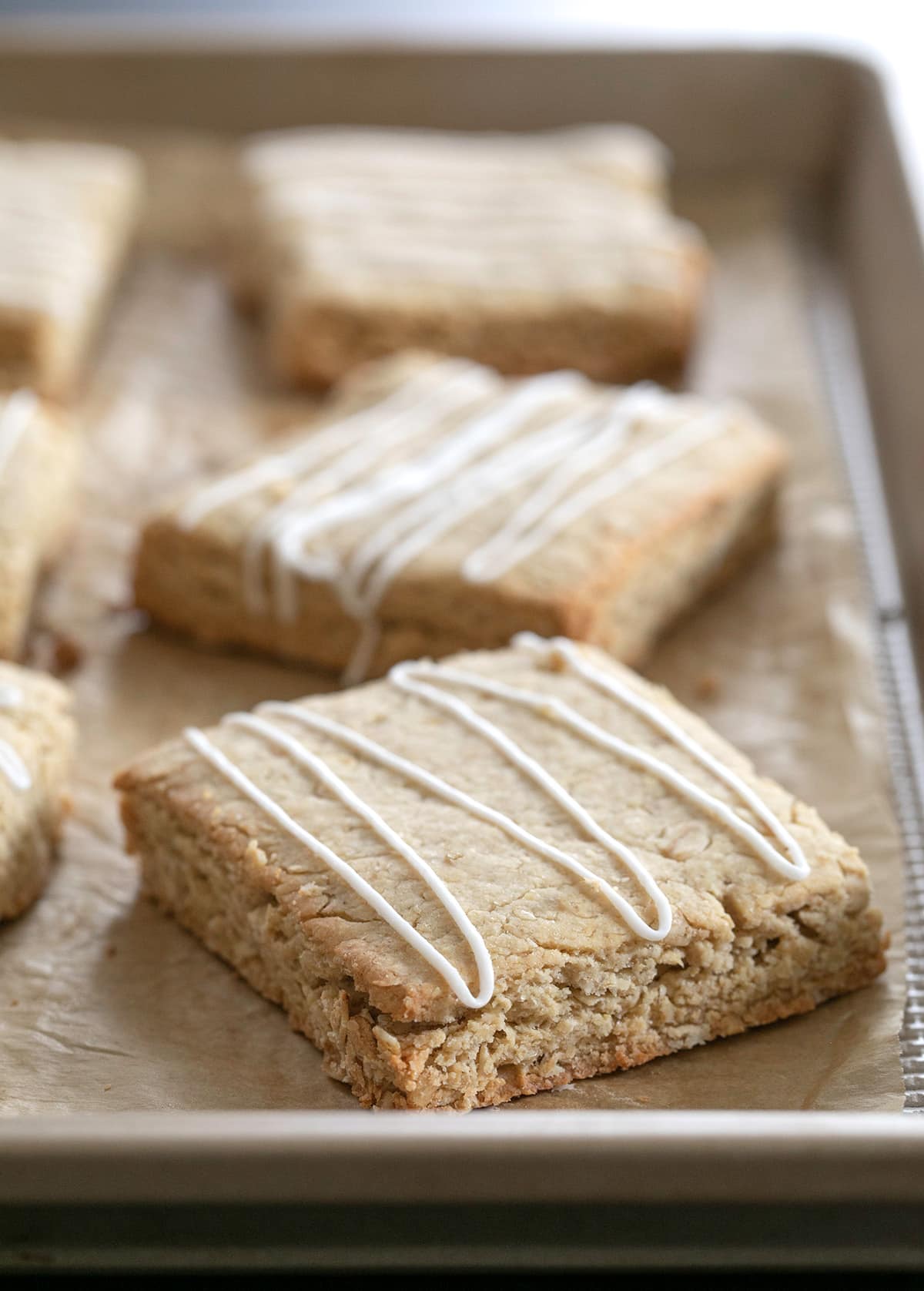
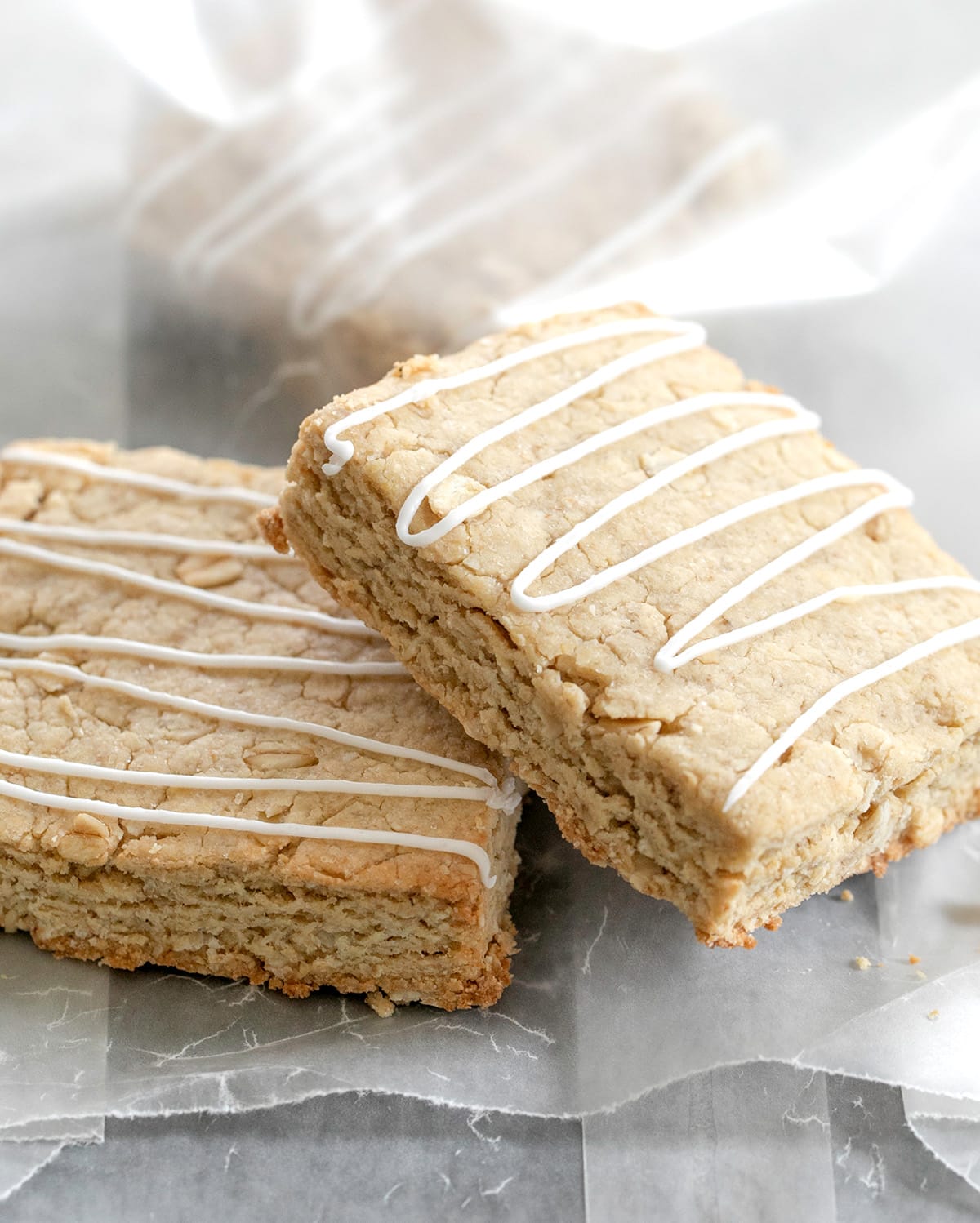
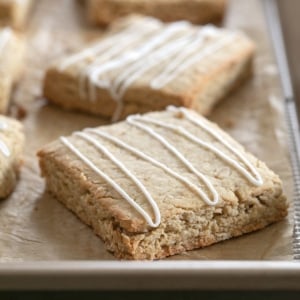
These gluten free breakfast bars taste like a thick, chewy square of brown sugar and cinnamon oatmeal. They keep that familiar oatmeal flavor front and center, with just enough texture and sweetness to make them especially kid-friendly.
Why this recipe works
Oat flour and rolled oats give these bars plenty of oatmeal flavor without loading them up with crunchy mix-ins like nuts. The oat flour creates a smooth, chewy crumb, while the whole oats add just enough texture.
Brown sugar and cinnamon add light caramel flavor and familiar sweetness, while a touch of honey helps bind everything together. The bars stay less sweet and much less sticky than gluten free granola bars.
Baking at a lower temperature keeps them pale, soft, and chewy instead of deeply browned. They’re sturdy enough to take anywhere without crumbling, and they freeze really well for busy mornings.
Recipe ingredients
Here’s what you need to make this recipe. For full ingredient amounts, scroll down to the recipe card below:
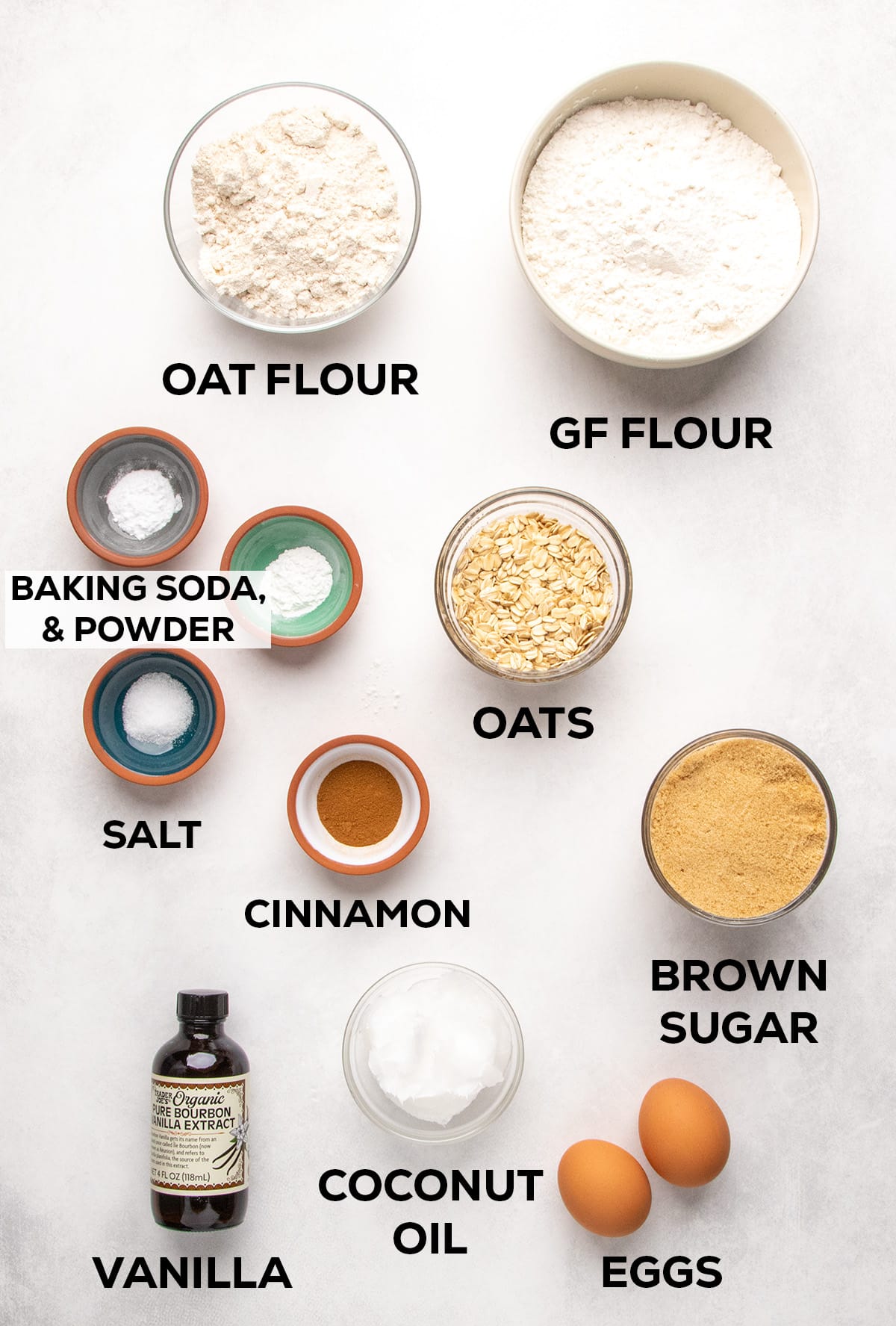
- Gluten free flour blend (with xanthan gum for binding): Provides most of the structure of these bars. I recommend Better Batter’s original blend all purpose gluten free flour without more xanthan gum added, Nicole’s Best multipurpose flour with 1 teaspoon xanthan gum, or Bob’s Red Mill 1-to-1 gluten free baking blend with an additional 1/4 teaspoon xanthan gum. Bob’s has some binder, but not enough to ensure that the bars aren’t too crumbly.
- Oat flour: Adds an earthy flavor, and a mild natural sweetness, and chewiness to the bars. You can grind old fashioned gluten free oats into flour, or use commercially ground and sifted gluten free oat flour for a smoother crumb. I like Gold Medal brand, which is well priced, gluten free, and available in a lot of larger grocery stores.
- Old fashioned rolled oats: Adds some texture, extra chewiness and some more of the earthy flavor of oats. There are lot of brands of gluten free oats available, and I usually buy Bob’s Red Mill brand. Just be sure to grab the bag that says “gluten free.”
- Baking powder & baking soda: Baking powder adds rise for a taller bar and more open crumb, and baking soda helps the bars brown gently in the oven.
- Salt: Brightens the other flavors and balances the sweetness.
- Light brown sugar: Adds sweetness and makes the bars more tender by locking in moisture. We use brown sugar instead of white here to add moisture from the added molasses, keep the bars from crisping too much, and for the light caramel flavor that naturally complements the flavor of oatmeal.
- Cinnamon: Adds the perception of more sweetness without adding more sugar, and pairs well with oats and brown sugar.
- Refined coconut oil: Adds tenderness by trapping moisture, keeps the bars dairy free, and keeps them from browning as much as butter would so the bars taste a lot like eating oatmeal. Be sure to use the kind of oil that’s solid at cool room temperature, not liquid, so that your bars aren’t greasy.
- Eggs: Help bind the bars together so they don’t crumble, and help them keep their shape and avoid falling as they cool.
- Vanilla: Adds depth of flavor to these simple bars.
How to make gluten free breakfast bars (step by step photos)
Here’s an overview of how to make these bars in your own kitchen.
Combine dry ingredients
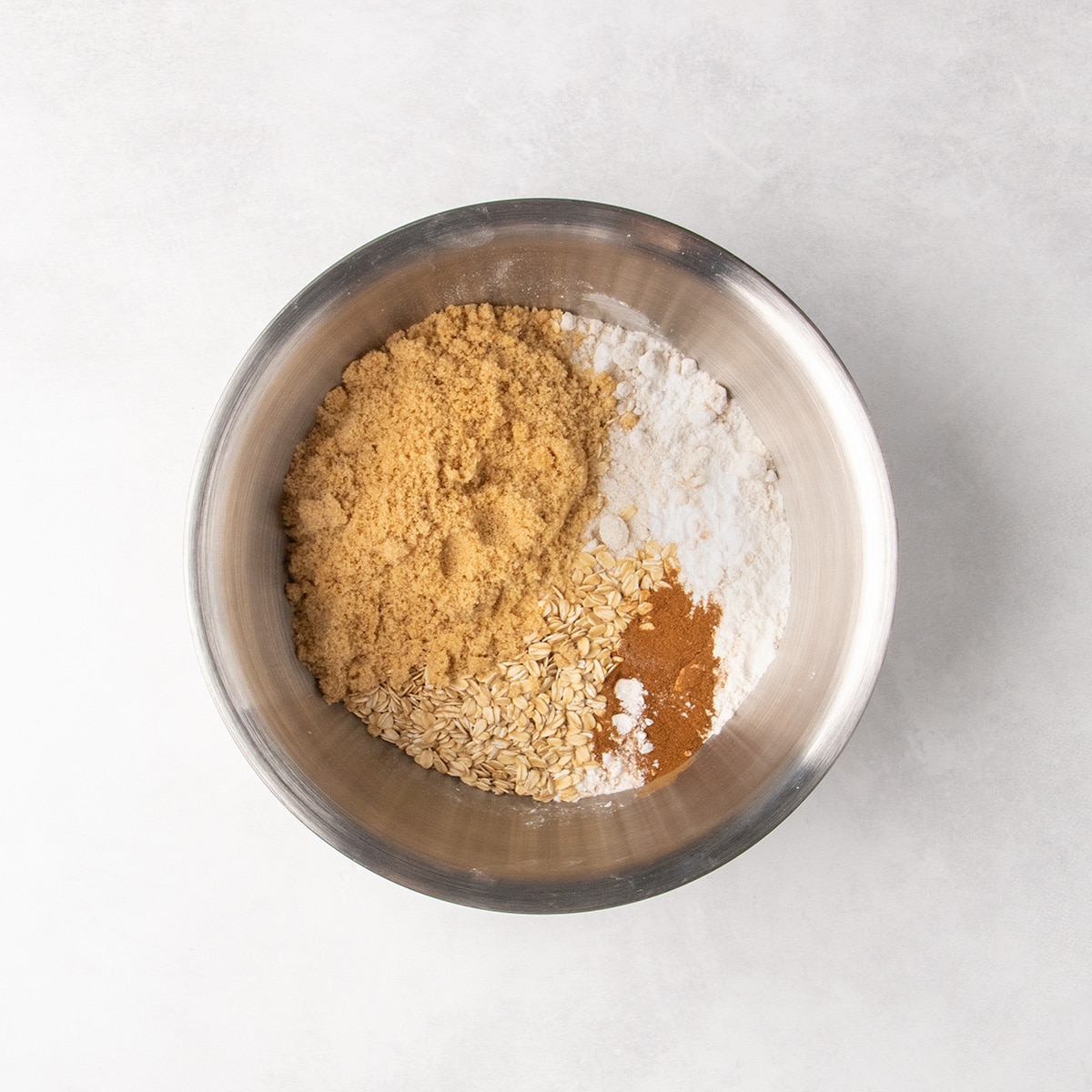
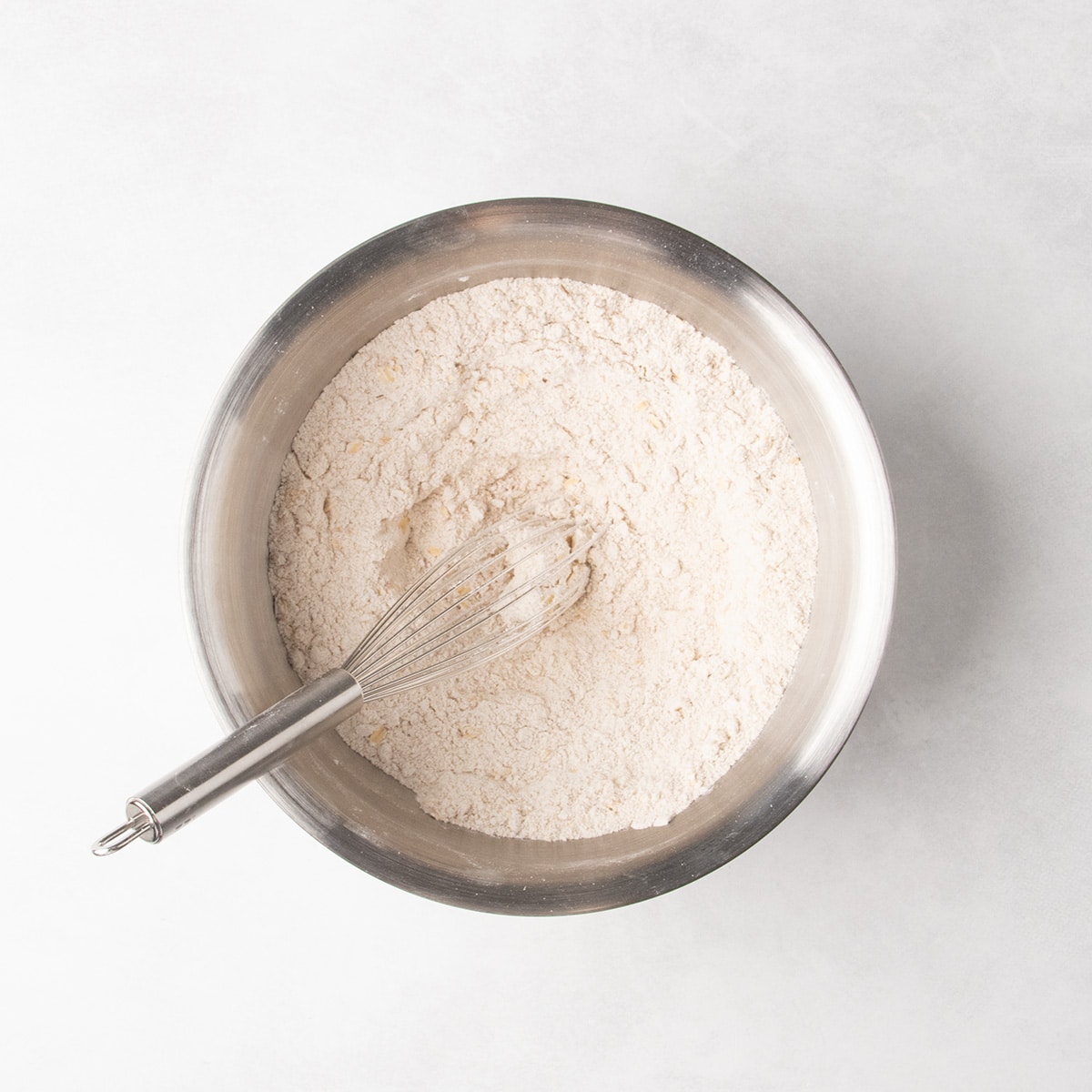
In a large mixing bowl, whisk together all of the dry ingredients (gluten free flour blend with xanthan gum, oat flour, baking powder, baking soda, salt, cinnamon, light brown sugar and rolled oats). This will prevent any bitter clumps of leaveners or salt, and will lessen the amount of mixing necessary once you add the liquids. Be sure to break up any lumps, since the moisture in brown sugar can make it harden into clumps that won’t bake properly.
Mix in wet ingredients
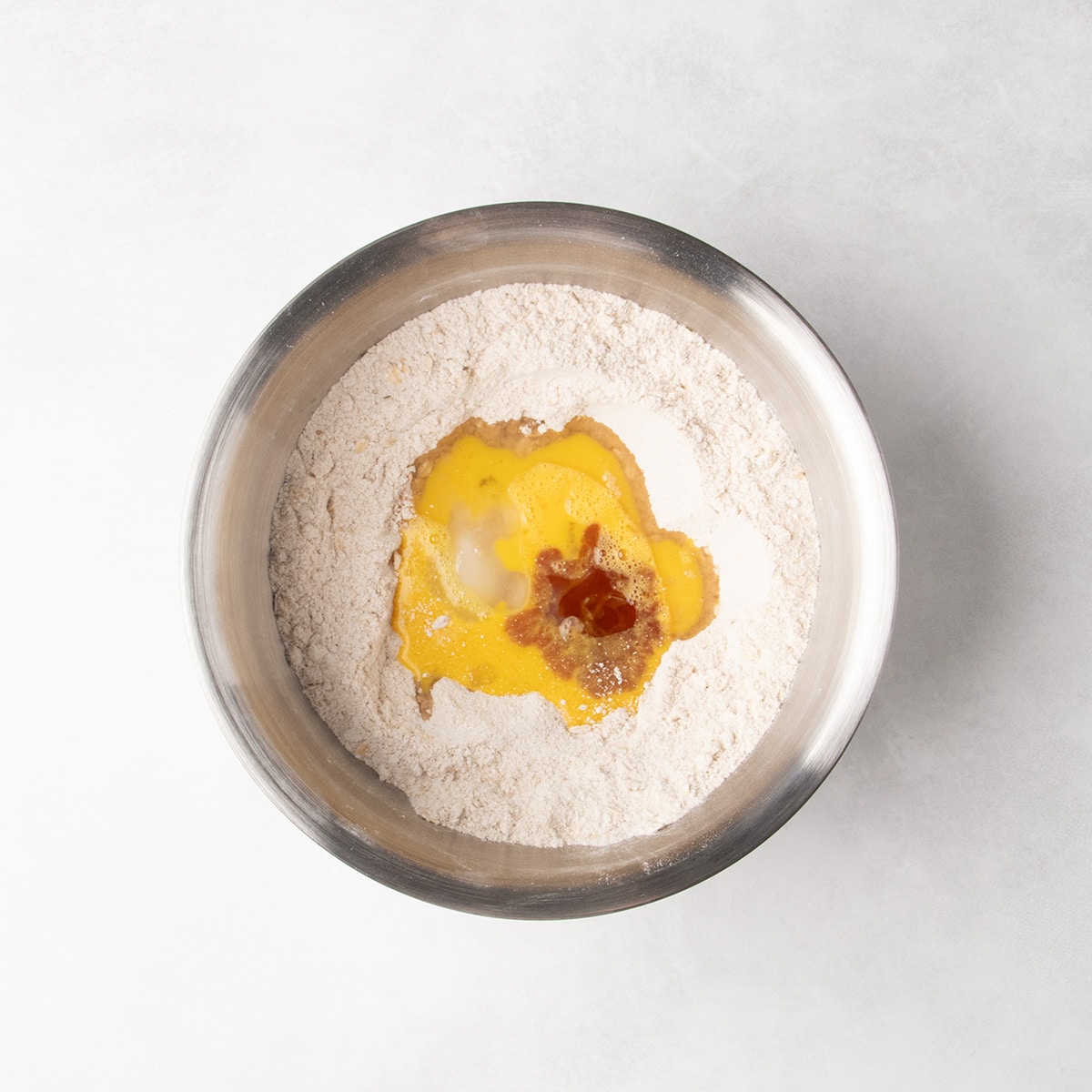
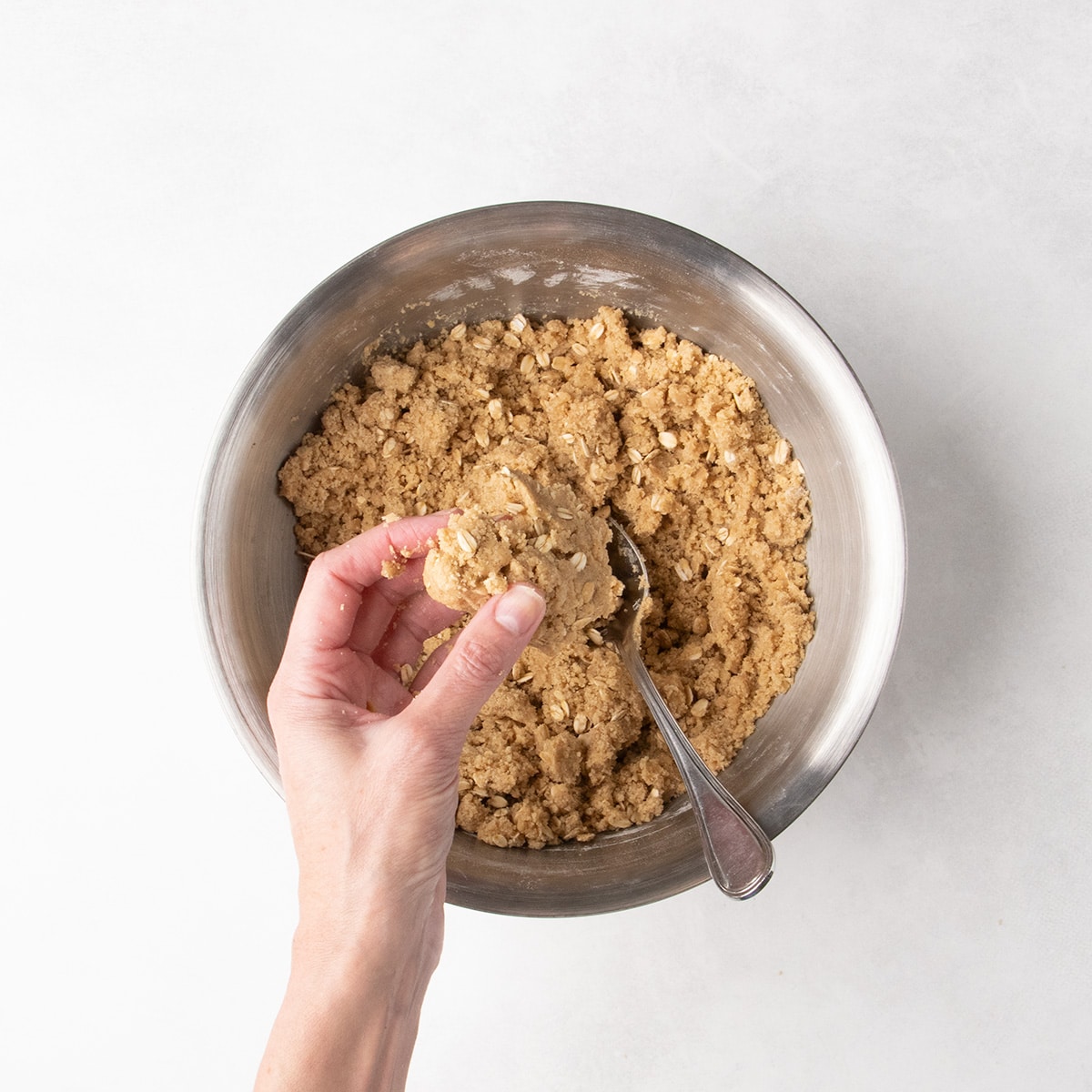
Add the liquids (beaten eggs, melted coconut oil and vanilla extract) to the dry ingredients and mix to combine. The dough isn’t very wet, but everything should get moistened enough that the dough holds together when squeezed. If any very dry pockets remain, drizzle in a bit of lukewarm water just to those spots, but go slowly because too much moisture will make the bars spread.
Roll the dough
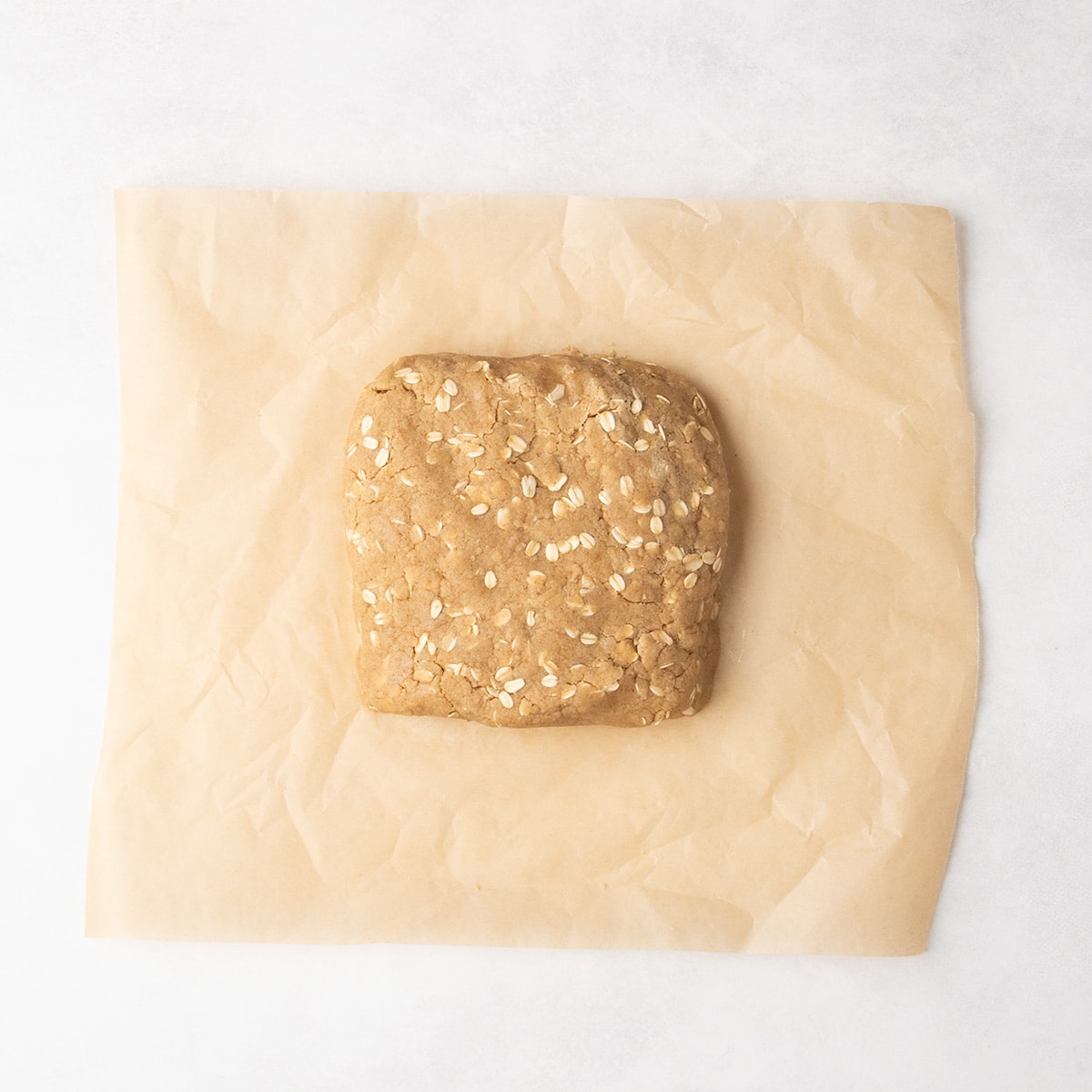
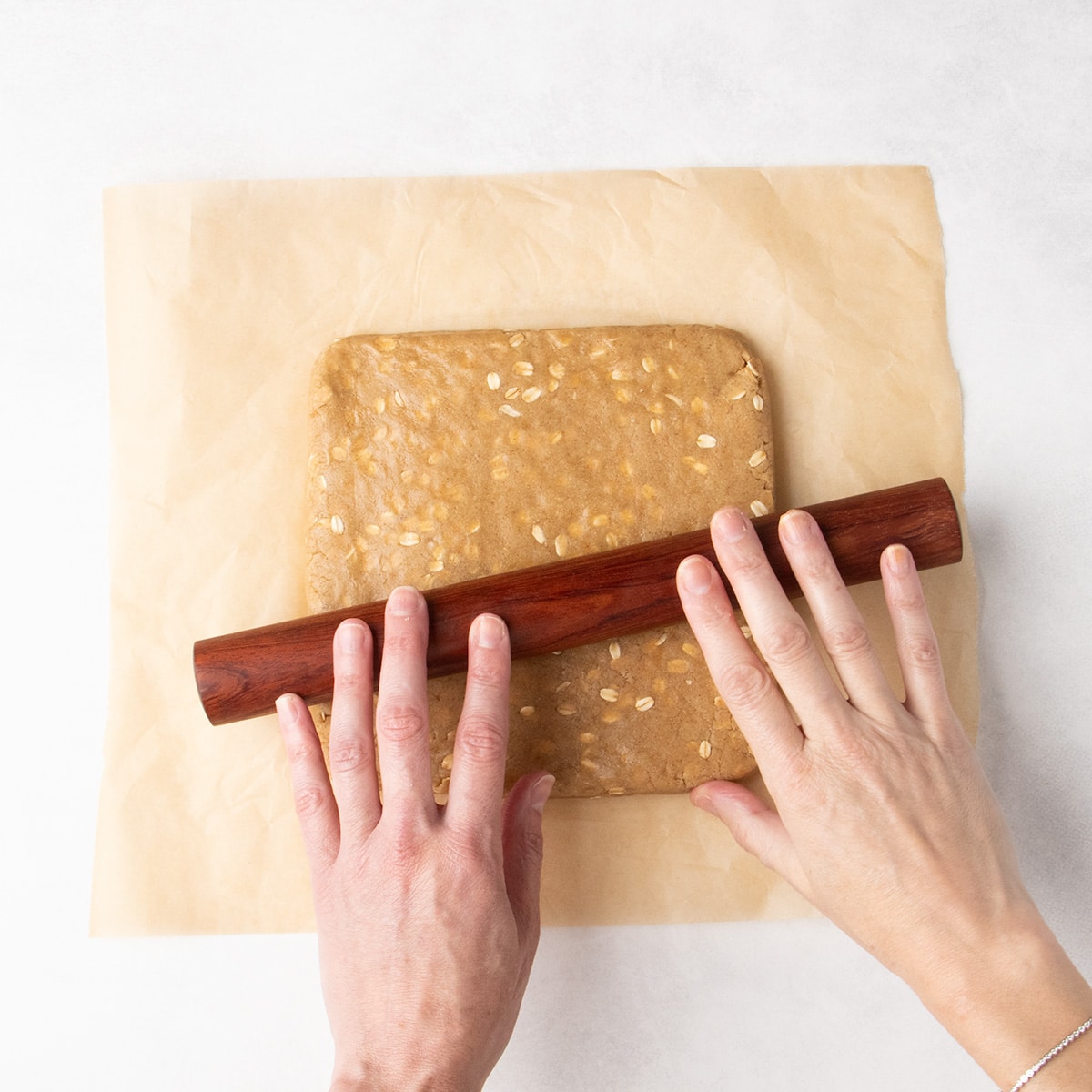
Turn the dough out onto a piece of parchment paper and press it roughly into a square, about 1-inch thick. Use a rolling pin to roll from the center to the edges to create an 8-inch square that’s about 3/4-inch thick. If the dough cracks easily as you’re rolling it out, gather it back together with your hands, press it together firmly, and try rolling it again.
Shape and cut the bars
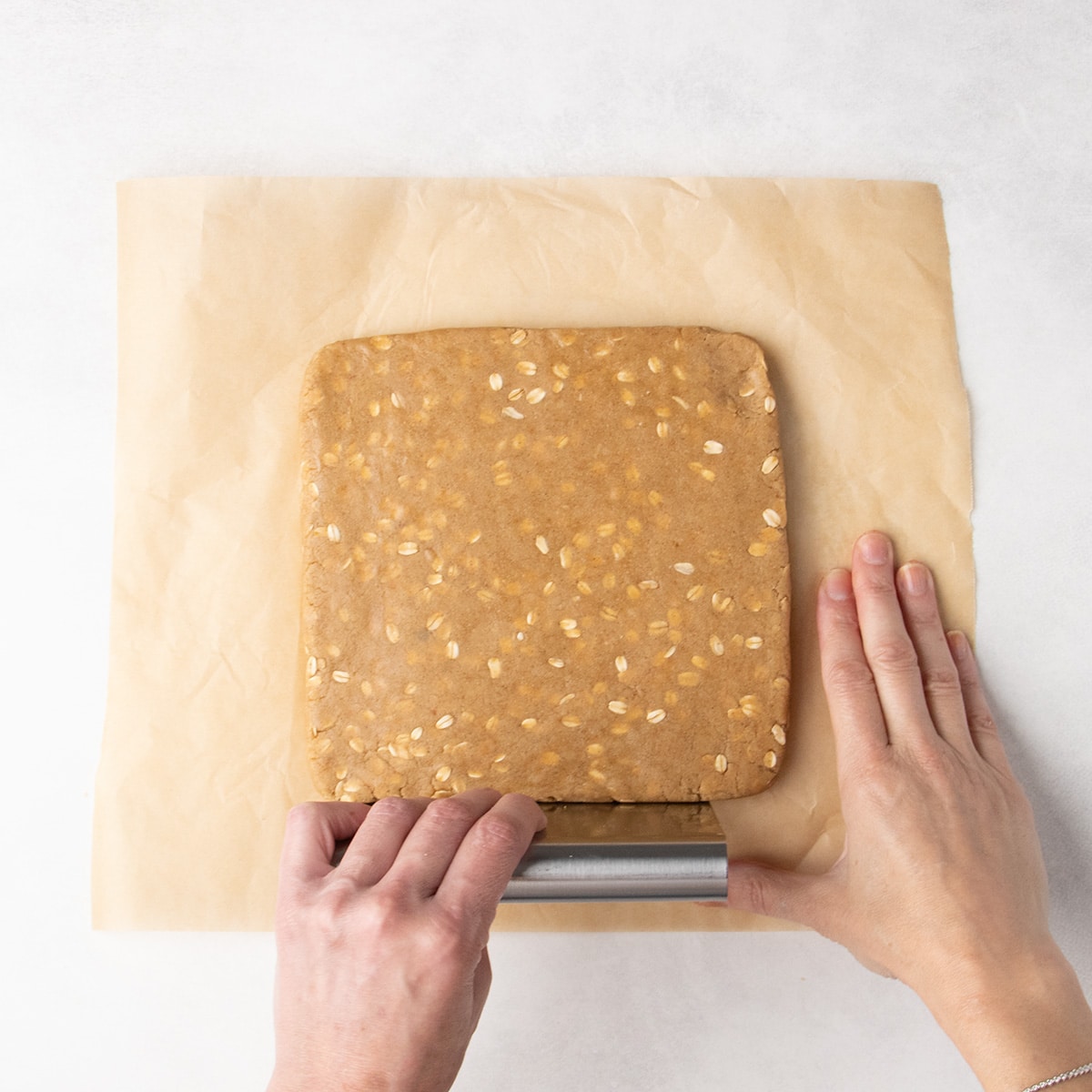
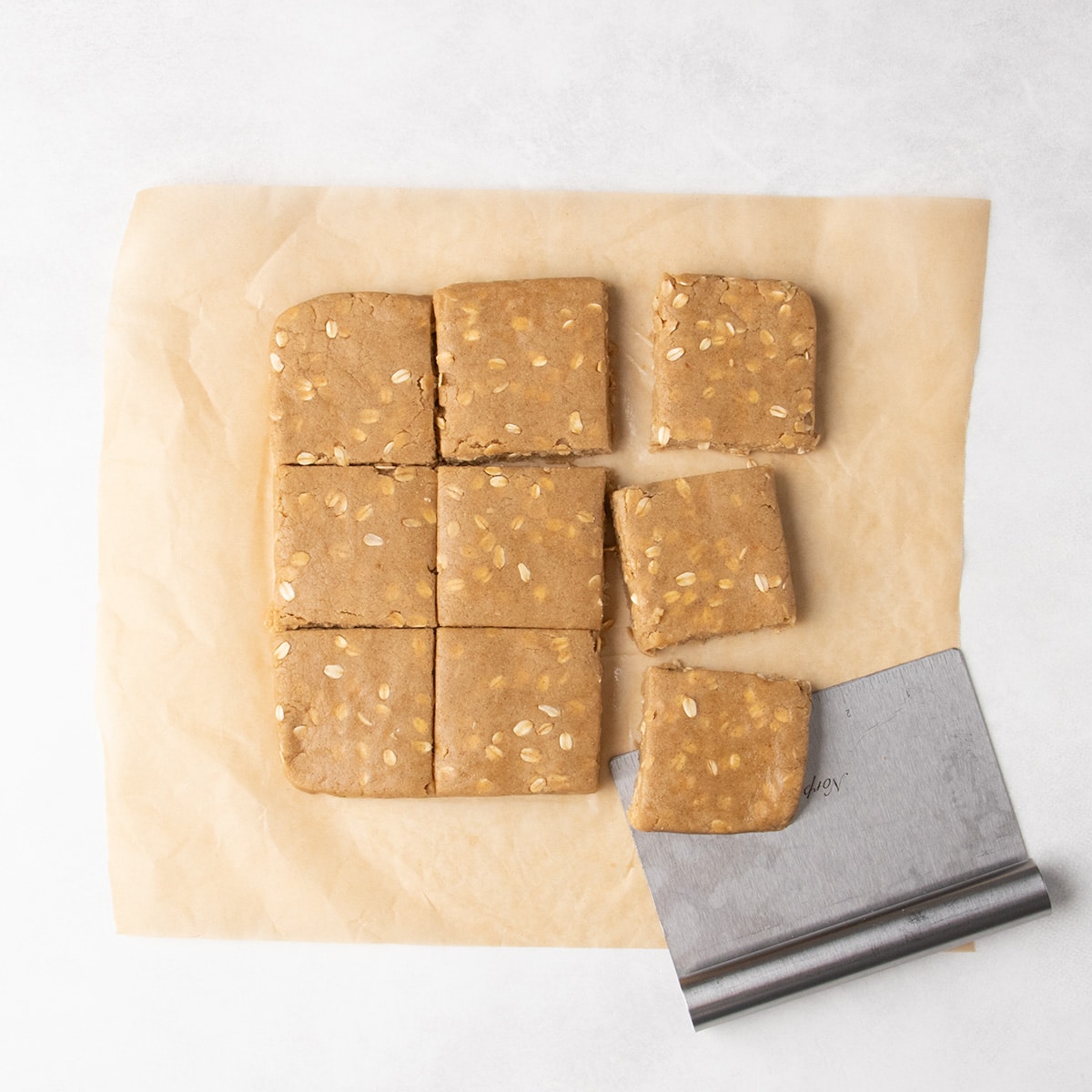
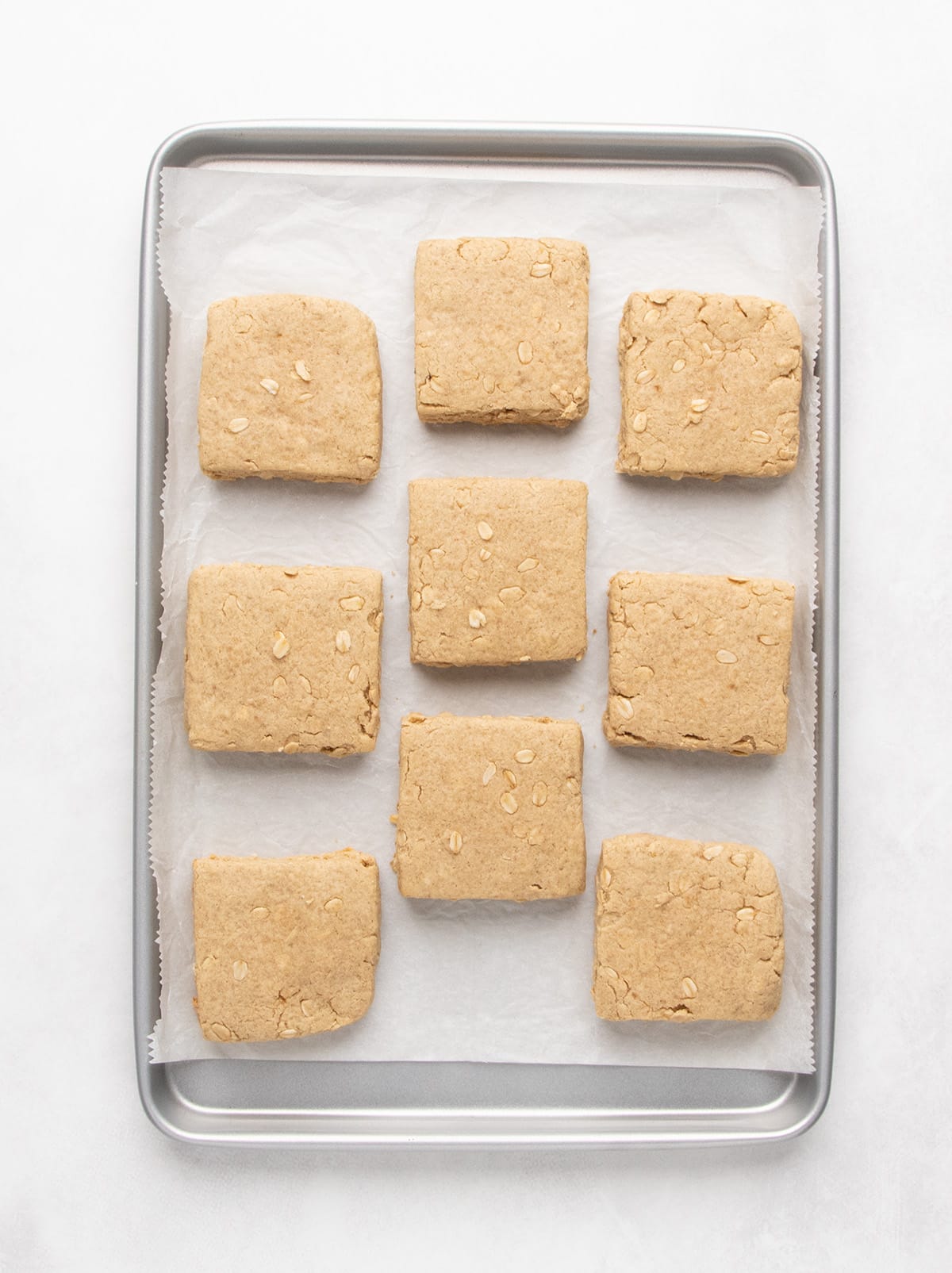
Use a metal bench scraper or other straight edge on each of the 4 sides of the square to sharpen the edges into 3/4-inch tall walls. Like with gluten free biscuits, sharpened edges will help the bars rise up tall, rather than spreading out wide. Cut the bars into 9 equal-size squares with edges that are as sharp as possible. If you’re having trouble getting clean edges, try refrigerating the dough for a few minutes.
Bake the bars
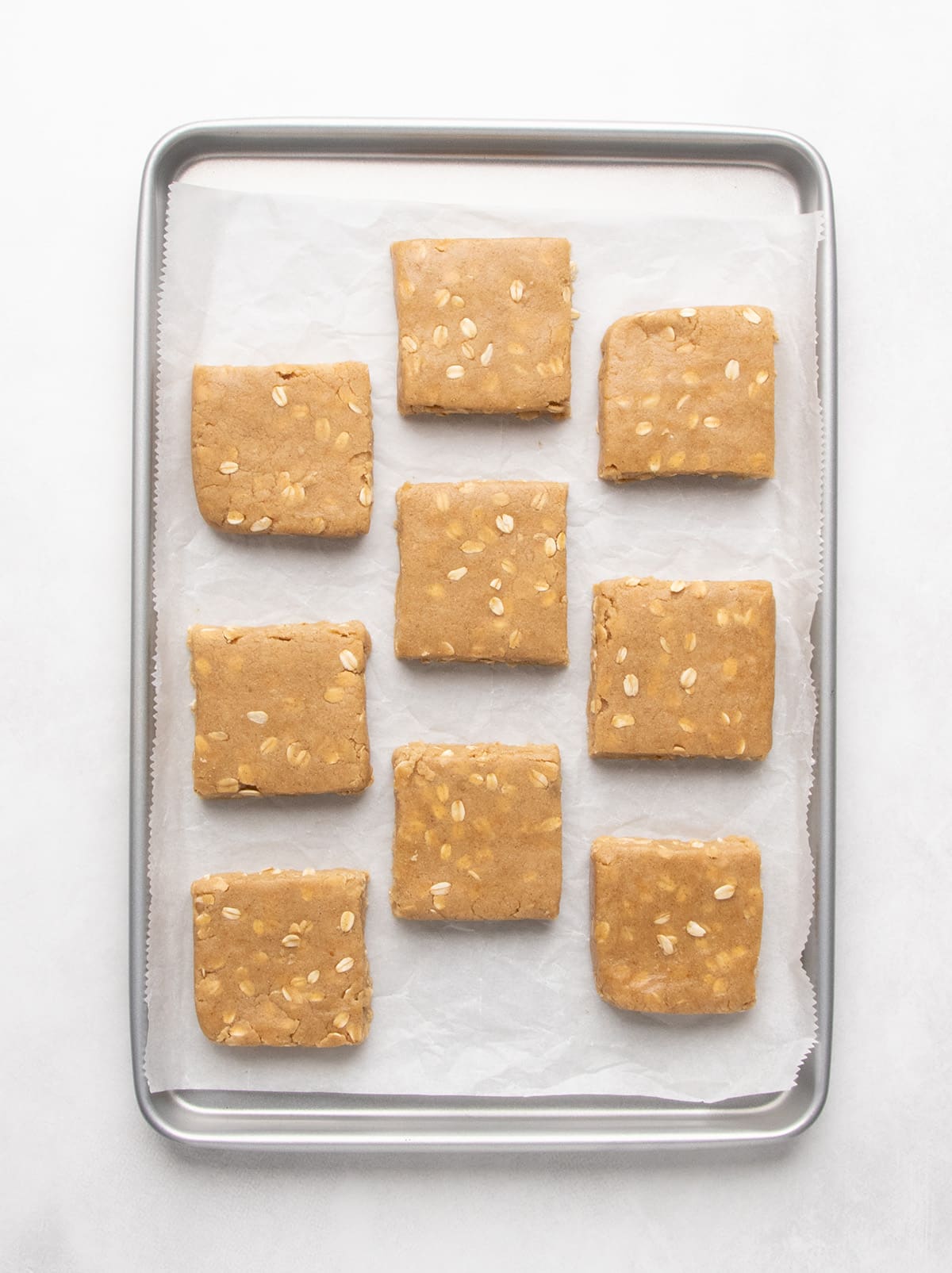
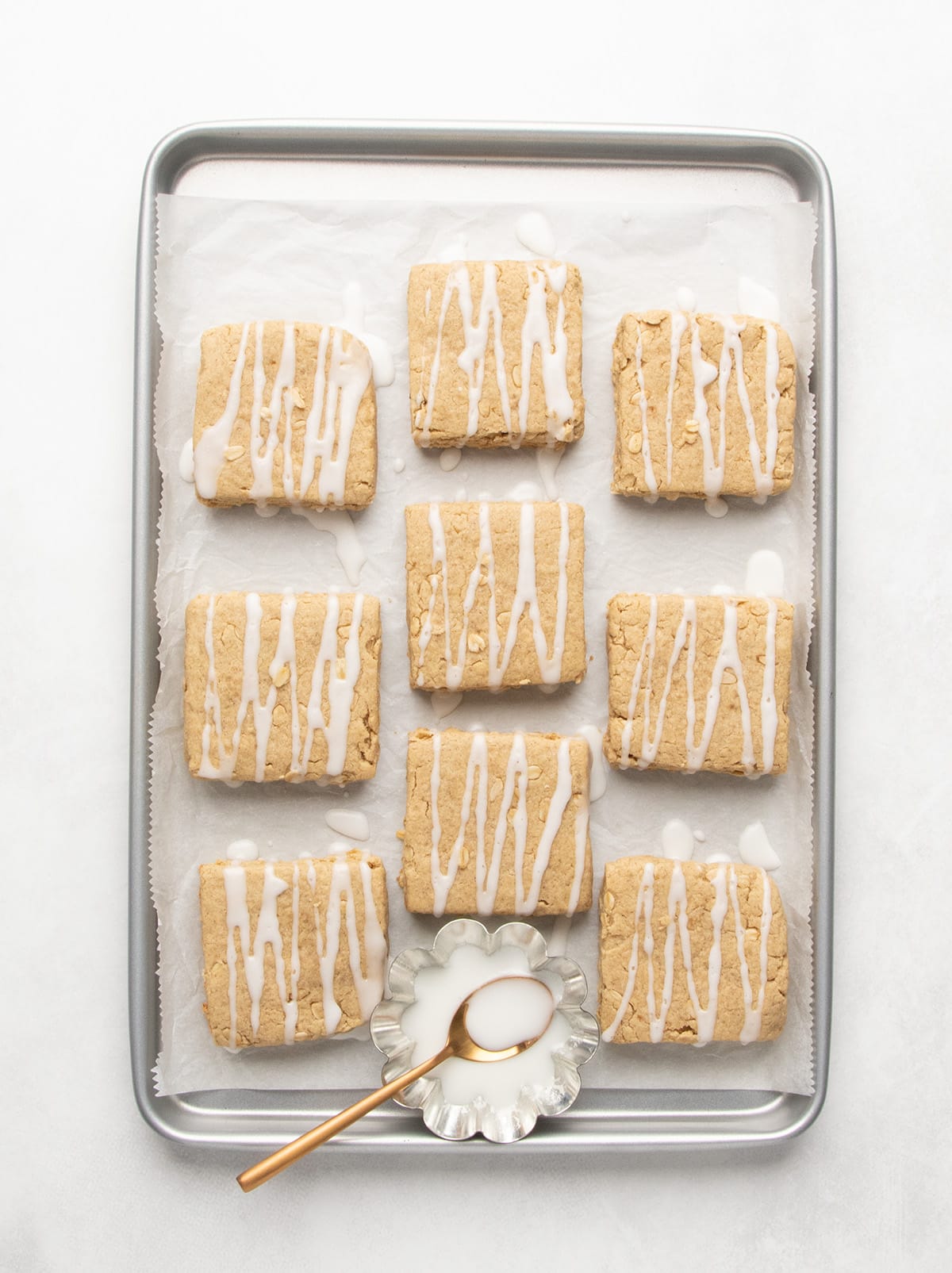
Place the bars on a parchment-lined baking sheet about 1-inch apart from one another. Bake in the center of a 325°F oven until the bars have risen about 1/4-inch and are firm to the touch, 12 to 14 minutes. Baking the bars at a low temperature for a bit longer yields pale bars that taste a lot like a bowl of oatmeal with cinnamon and brown sugar. Drizzle lightly with the optional confectioners’ sugar glaze, if you like, after the bars cool completely.
Expert tips
Unlike most breakfast bars, these are shaped before baking instead of sliced afterward. That makes them sturdier and easier to take on the go. Here are a few other tips:
Add water sparingly
The dough should be thick and somewhat dry, but it must hold together when squeezed. Add lukewarm water only to visibly dry patches, a little at a time, since excess moisture may make the bars spread instead of holding their shape.
Sharpen the edges
After rolling the dough into a square, use a bench scraper or straight edge to create clean, upright sides before cutting it into bars. Sharp edges encourage the bars to rise upward and stay thick instead of spreading outward.
Use the right coconut oil
Choose refined coconut oil that’s solid at cool room temperature, not liquid coconut oil. It will resolidify as the bars cool, which helps them stay tender without becoming greasy.
Ingredient substitutions
Dairy free
The recipe for the bars is already naturally dairy free since it calls for coconut oil, not butter, as the fat. To make the glaze dairy free, just use a nondairy milk or even water, and replace the unsalted butter with Earth Balance buttery sticks or block-style vegan butter like Melt or Miyoko’s brand.
Egg free
You can try this recipe with 2 “chia eggs” in place of regular eggs (a “chia egg” is just 1 tablespoon of ground chia seeds mixed with 2 tablespoons of water and allowed to gel). You can also try Bob’s Red Mill egg replacer or Just Egg liquid egg replacer, each according to package instructions.
Coconut oil
If you don’t like the taste of coconut, try using triple filtered coconut oil, which has no odor or flavor. If you can’t have coconut oil, you can use shortening in its place. You can use melted unsalted butter, but the bars will be a bit more dry because butter contains less fat than oil.
Oat free
If you can’t have oats, you can probably use a substitute for oats for each type of oat product in this recipe. In place oat flour, try grinding quinoa flakes into a smooth powder. In place of the rolled oats, try using rolled buckwheat.
Storage instructions
These bars will stay fresh in a sealed container, or wrapped in plastic individually, at room temperature for at least 3 days. If it’s warm in your kitchen, the glaze may get a bit tacky at room temperature. For longer storage, wrap each in freezer-safe wrap individually and freeze for up to 3 months. Defrost at room temperature or microwave on half power for 30 seconds.
Gluten Free Breakfast Bars Recipe
Tell Google you trust GFOAS!
Ingredients
For the bars
- 2 cups (280 g) all purpose gluten free flour blend, (See Recipe Notes)
- 1 teaspoon xanthan gum, (omit if your blend already contains it)
- 1 cup (120 g) gluten free oat flour
- ¼ teaspoon baking soda
- ½ teaspoon baking powder
- ½ teaspoon kosher salt
- 1 teaspoon ground cinnamon
- ¾ cup (75 g) gluten free old-fashioned rolled oats
- ¾ cup (164 g) packed light brown sugar
- 2 (100 g out of shell) eggs, at room temperature, beaten
- 6 tablespoons (84 g) virgin coconut oil, melted and cooled
- 2 teaspoons pure vanilla extract
- Lukewarm water, as needed
For the optional glaze
- 1 cup (115 g) confectioners’ sugar
- ⅛ teaspoon kosher salt
- 1 tablespoon milk (any kind), plus more as necessary, at room temperature
- 1 tablespoon (14 g) unsalted butter, at room temperature
- ½ teaspoon pure vanilla extract
Instructions
- Preheat your oven to 325°F. Line a rimmed baking sheet with unbleached parchment paper and set it aside.
Make the bars
- In a large bowl, place the flour, oat flour, baking soda, baking powder, salt and cinnamon, and whisk to combine well.
- Add the rolled oats and brown sugar, and mix to combine, working out any lumps in the brown sugar.
- Create a well in the center of the dry ingredients, and add the beaten eggs, coconut oil and vanilla. Mix until combined, kneading with your hands as necessary to bring the dough together. It will be very thick.
- If the dough has any patches that seem very dry, sprinkle them lightly with only as much lukewarm water as necessary to bring the dough together.
- Transfer the dough to a sheet of unbleached parchment paper and press and pat into a square about 1 inch thick.
- Use a rolling pin to roll out the dough until it is about 8 inches square, and about 3/4-inch thick.
- Sharpen the edges of the square of dough with the sides of your hands and/or a bench scraper.
- Using a bench scraper or a large knife, slice the dough into 9 equal squares.
- Place the squares about 1 inch apart on the prepared baking sheet.
- Place the pan in the center of the preheated oven and bake until the bars are mostly firm to the touch and just beginning to brown on top, 12 to 14 minutes.
- Remove from the oven and allow to cool completely on the pan.
Make the (optional) glaze
- In a medium-size bowl, place the confectioners’ sugar and salt, and whisk to combine well.
- Add 1 tablespoon of the milk, butter and the vanilla, and mix until a thick, smooth paste forms.
- If it’s too thick to pipe, add more milk by the half-teaspoonful until you reach the proper consistency.
- Once the squares have cooled completely, pipe a zigzag pattern of glaze on top of each.
- Allow to set at room temperature.
Video
Notes
Nutrition
Nutrition information is automatically calculated, so should only be used as an approximation.










I recently discovered your wealth of gluten free recipes and subscribed to receive your emails. These oatmeal bars are the first recipe I’ve tried from “Gluten-free on a Shoestring.” They turned out great! Very soft and chewy, just the right amount of sweetness, and satisfying as a snack or breakfast bar! I haven’t even put glaze on the bars and they’re still delicious! Hm, which recipe to try next…
That’s so great to hear, Donna, and I’m so glad you found GFOAS! Thank you so much for sharing your experience, and welcome!
Hi these seem perfect for my daughter. Although she cannot have eggs can you suggest a substitute for this recipe?
Hi, Cindy, please see the text of the post under the heading “Ingredient substitutions,” the subheading “egg free.” Hope that helps!
These are a family favorite, and a friend requested the recipe and my copy so so stained and sticky I had to come back to the website to print out a clean version. They are very filling and delicious, and they also freeze well. I have used several types of higher qualify GF flour blends, and they all come out fine. We love these for travel too.
So glad you love these breakfast bars, Jodi! I love the visual of a stained and sticky recipe printout. Well-loved, indeed! Thank you so much for sharing your experience.
These are now one of our go-tos. I have four picky eaters under 8 and everyone wants a second or third of these in the morning. I have used King Arthur GF 1:1 Flour and a homemilled blend of sweet brown rice, long grain brown rice, tapioca starch and potato starch with the xanthan gum mentioned and both turned out beautifully. Thank you for this recipe! Using our stand mixer and a bench scraper for measuring and cutting the bars really made it easy and very quick for being fresh baked.
I want to make these. They look great! I finally purchased some betterbatter mix. Do I need to include xantham gum if I use this flour mix?
Nope, Margarita! Better Batter has xanthan gum already in it, so you omit that ingredient. :)
Hi Nicole, I would love to make your gf oat bars but I can’t have sugar can you please help with what I can use instead? I can have stevia liquid and rice malt syrup but I’m not sure if it will work in this recipe??? Thankyou Maria
Hi, Maria,
I’m afraid you can’t use a liquid sweetener to replace a granulated one, one for one. You’d have to alter the rest of the recipe, and it would require new recipe testing. You can try a granulated sugar replacement, like Swerve.
While I often make GF items for my friend, my hubby & I are not GF. Do you know if I could make these using regular AP flour?
I’m afraid I don’t know, Becky! I haven’t baked with conventional flour in years and years. Sorry!
What would you use in place of the oats? My children are celiac and cannot tolerate them.
My son is celiac as well, and has no problem with certified gluten free oats, as are called for in this recipe. If you can’t use oats, though, I’m afraid you’ll have to skip this recipe. It’s very oats-centric!
OK, this is a breakfast I am down with! I will try the chia eggs and let you know my results! I will make them in December to be sold in our firm bake sale to benefit Casa de los Ninos, along with your cranberry bread which was a huge hit last year!
On another note, Nicole, on the paleo pizza where you used the vegan cashew ricotta recipe, did you use miso paste in the recipe? I am wondering if I really need it.
Hi, Mare, These are perfect for that bake sale!
I think you should use the miso paste, yes, because it gives the ricotta a lot of depth of flavor. But it won’t hurt to try it without!
xo Nicole
Going to try oatmeal bars..making flour..wish me luck
Have you ever used vanilla bean in place of vanilla?
I haven’t in these, Dawn, but you could definitely do that. Maybe add a bit of vanilla extract to the seeds. That’s what I usually do to help incorporate them into a mixture.