

This post may contain affiliate links. Please read our disclosure policy.
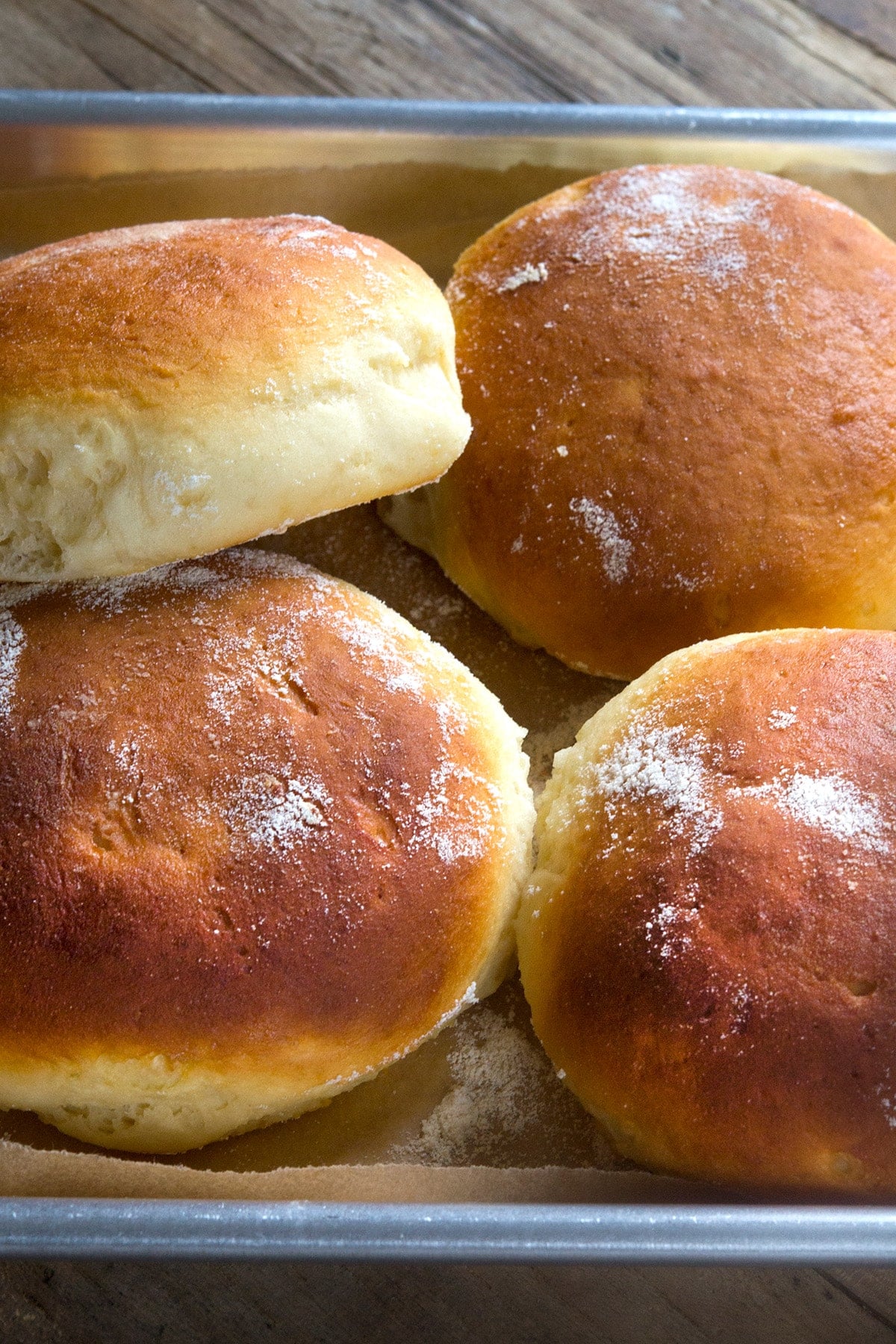
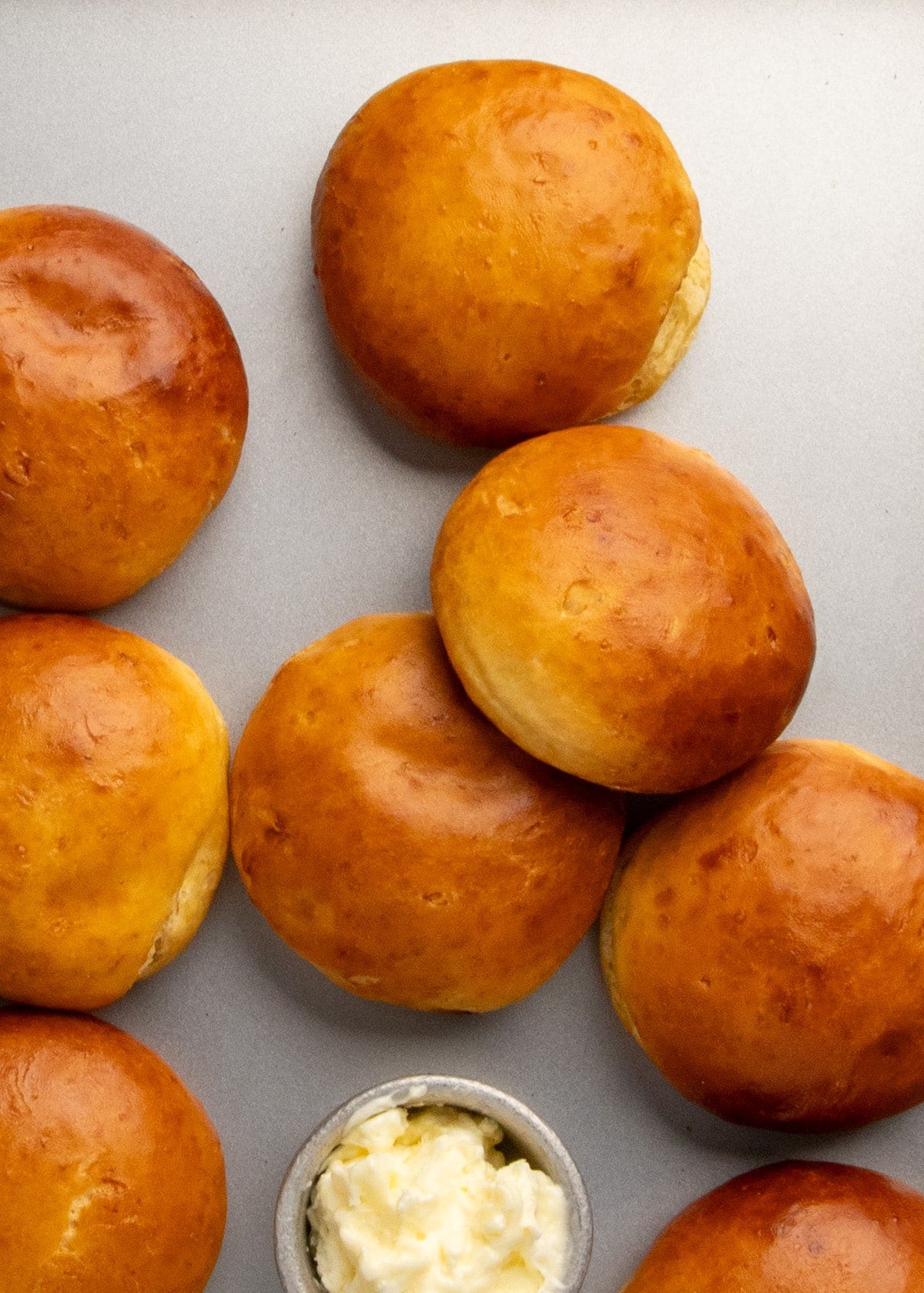
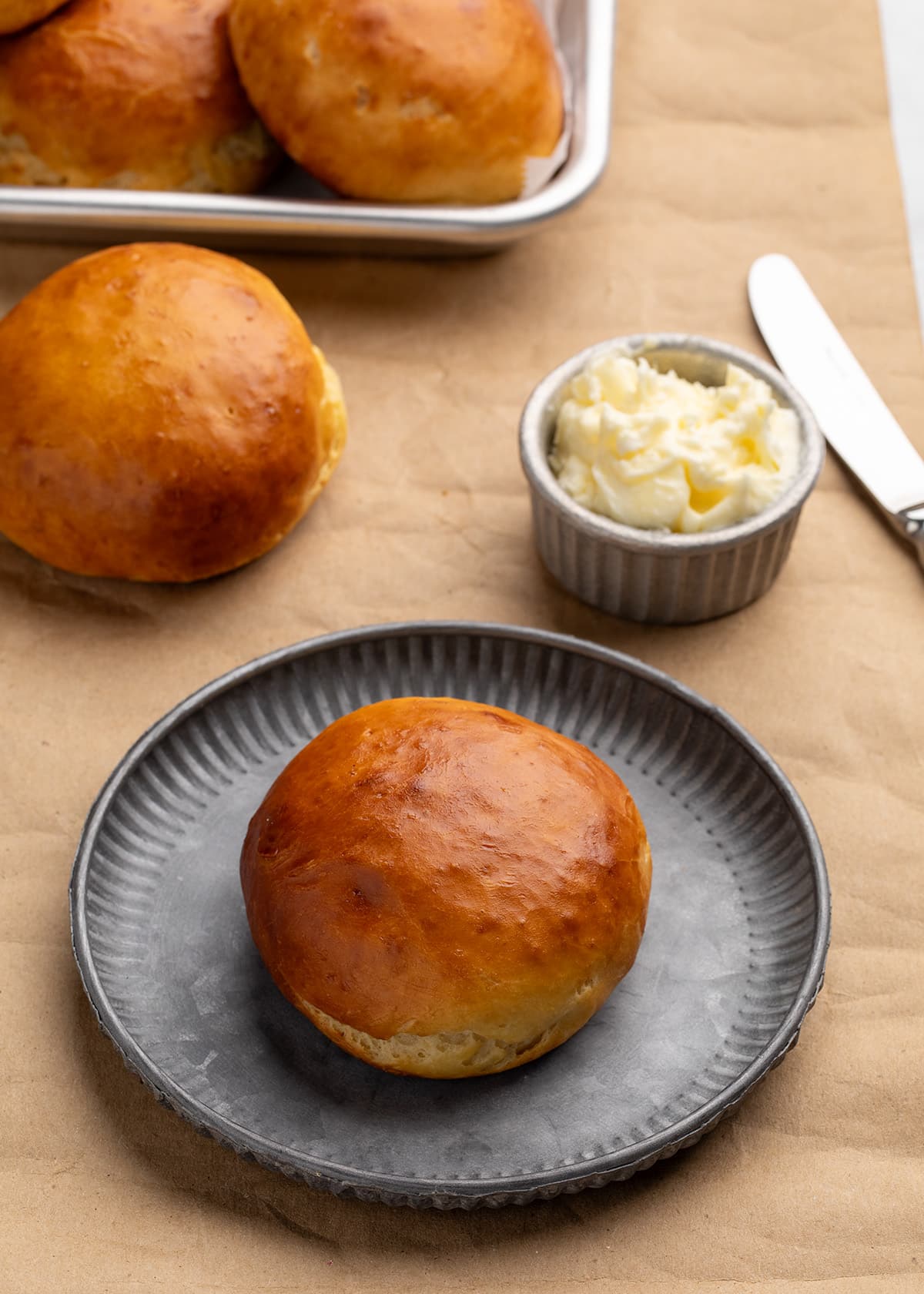
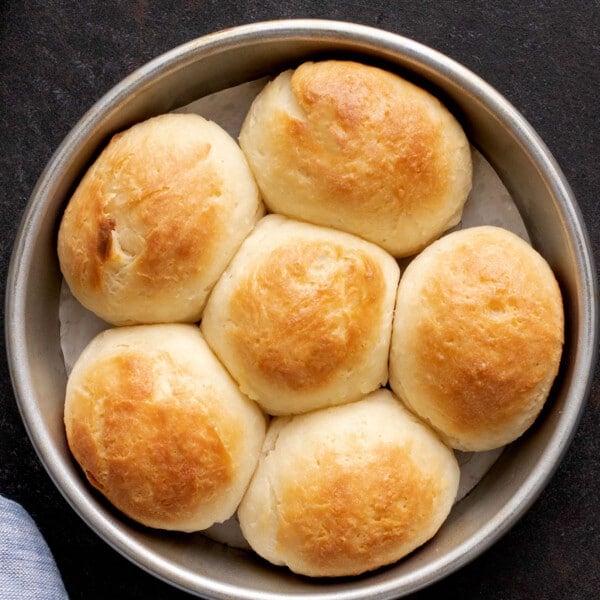
These extra soft, tender gluten free Hawaiian rolls have a lightly sweet, tropical flavor that's just right for savory sandwich fillings, or to serve alongside a salty meal.
They brown deeply in the oven with a generous egg wash that keeps the moisture in and develops a super thin, shiny shell as the rolls cool.
Why this recipe works
These Hawaiian rolls are made with plenty of pineapple juice for a unique lightly sweet, tropical, and tangy flavor. Enriched with butter, an egg, and some sugar, they have an incredibly tender, pillow-soft crumb, and turn deep golden brown in the oven.
Learn my secrets for making perfectly round rolls, then shape them into 8 full-size rounds for sandwich buns. Or try dividing the dough into 12 equal pieces, shaping them into classic rounds rather than pressing them into disks, and serving them as savory-sweet gluten free dinner rolls.
Recipe ingredients
Here's what you'll need to make these rolls at home, plus an explanation of the role that each ingredient plays in the expected results:
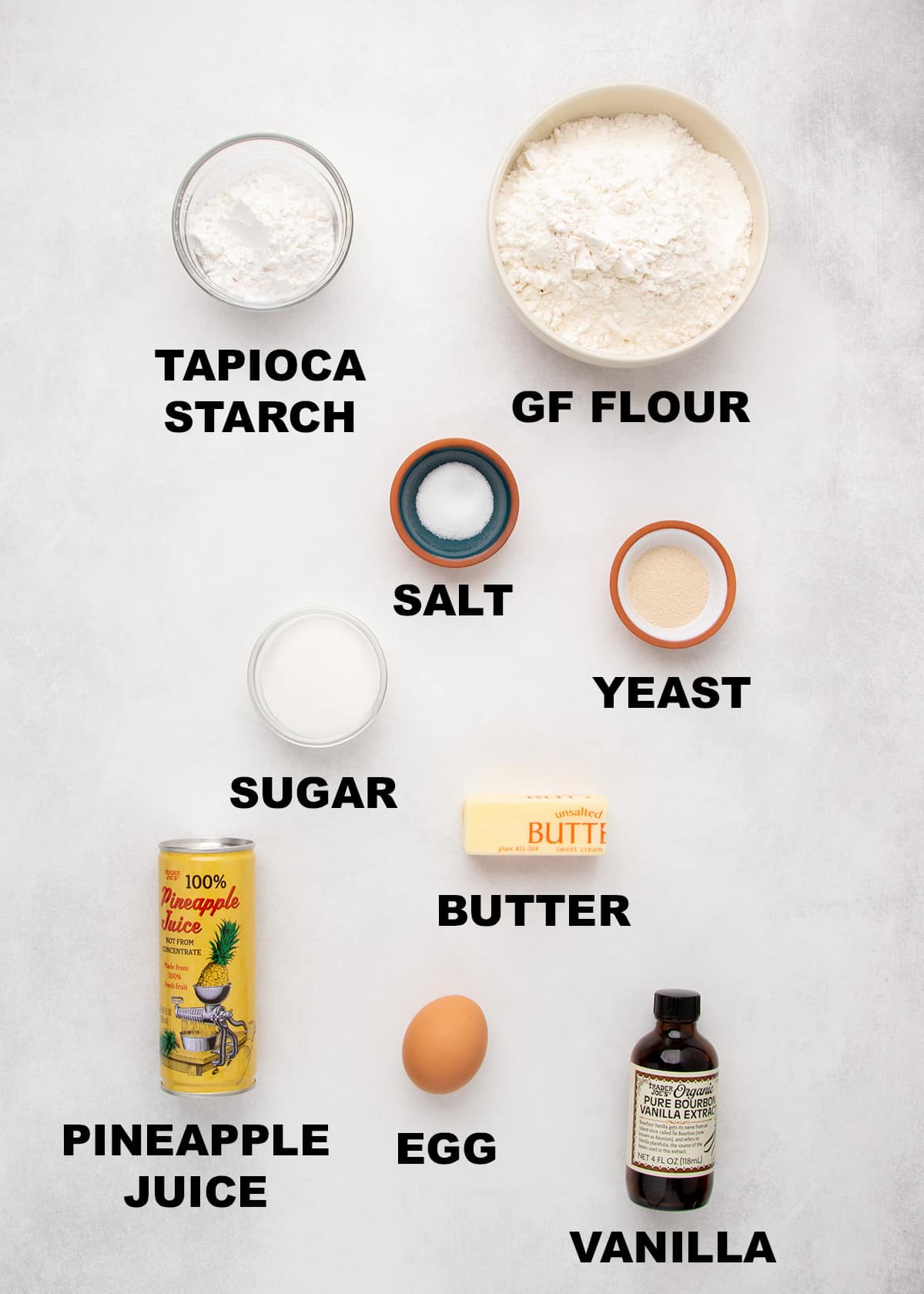
- Gluten free flour: Provides most of the structure for the rolls, so be sure to choose a well-balanced blend based on superfinely ground and sifted rice flour as an all purpose gluten free flour blend. I recommend Nicole's Best multipurpose gluten free flour blend or Vitacost's Multi-Blend Gluten Free Flour with added xanthan gum, or Better Batter's original all purpose blend without additional xanthan gum.
- Tapioca starch/flour: Adding additional tapioca starch (the same as tapioca flour) as a separate ingredient in addition to what is already in all my recommended gluten free flour blends adds stretch and chewiness to the rolls.
- Instant yeast: Provides the rise in these rolls. Instant yeast, also called bread machine or rapid rise yeast, has less of a protective shell around each grain than active dry yeast, so it doesn't have to be soaked before adding it to the other ingredients. If you'd prefer to use active dry yeast, you'll need 25% more yeast by weight for a bit below 8 grams, and you'll need to proof it first in some of the pineapple juice.
- Sugar: Adds some added sweetness, locks in moisture for tender rolls, feeds the yeast and helps the rolls brown deeply in the oven.
- Salt: Brightens the other flavors and helps control the activity of the yeast.
- Butter: Adds richness, buttery flavor, and moisture for a tender, flavorful crumb.
- Egg: Helps the rolls rise, and the white helps the rolls hold their rise as they cool. The egg wash we brush on top of the rolls helps browning in the oven and gives the rolls a shine even as they cool.
- Pineapple juice: Adds tanginess, flavor and moisture to bring the roll dough together and hydrate the yeast so it's active. The classic flavor of Hawaiian rolls comes from using pineapple juice in place of milk or water. Make sure you're using pure 100% juice, without additives. I usually buy Trader Joe's brand canned juice, which has a little less than I need for this recipe, so I top it off with just a little water rather than opening a second can.
- Vanilla: Adds depth of flavor, complementing and enhancing the flavor of the pineapple juice.
How to make gluten free Hawaiian rolls (step by step photos)
This is a visual guide for how to make these rolls at home in your kitchen, including an explanation of why the recipe is written as it is. For full ingredient amounts, see the recipe card below.
Combine the dry ingredients
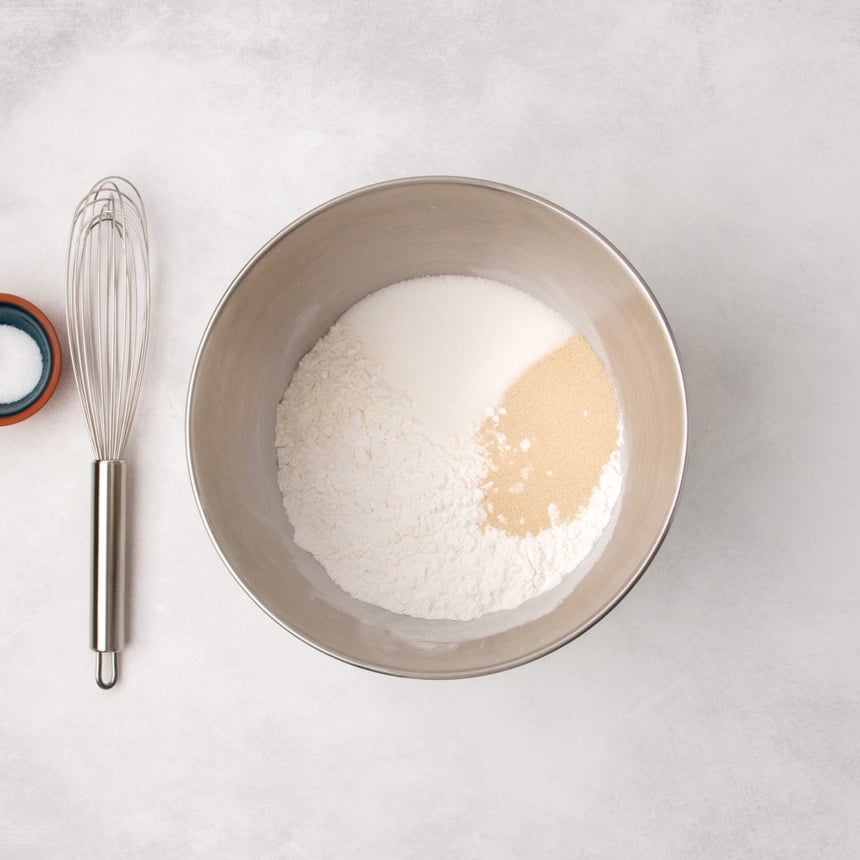
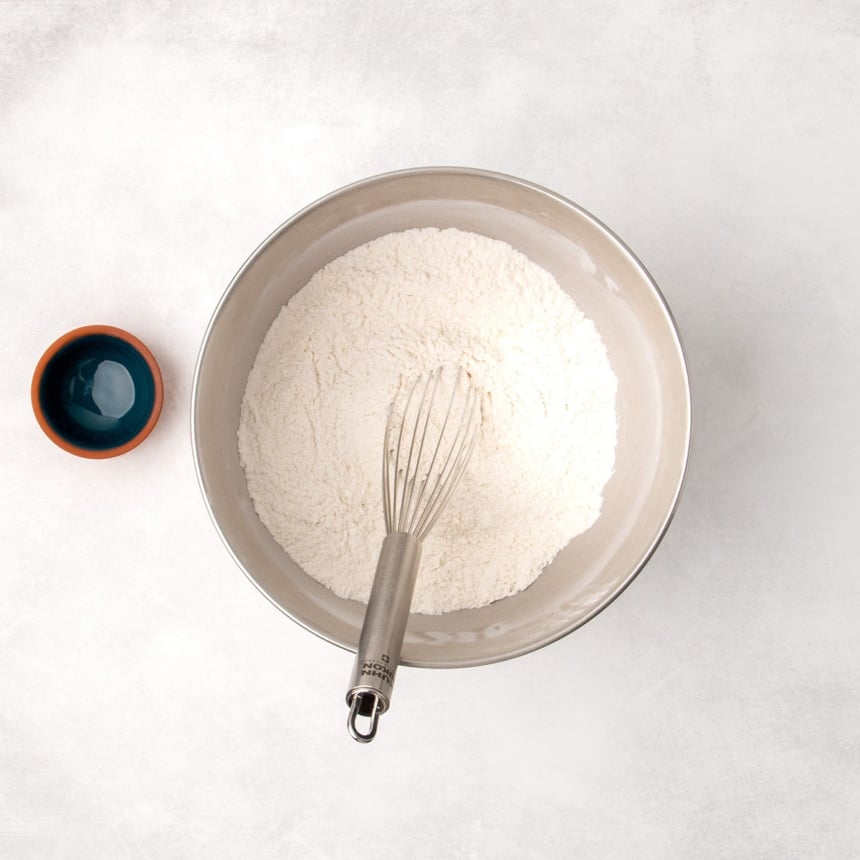
In the bowl of a stand mixer, whisk together the gluten free flour blend including xanthan gum, plus more tapioca starch, yeast, and sugar,. Whisk in the salt separately to avoid any possibility of the salt and yeast clumping together, since they operate at cross purposes.
Add the wet ingredients
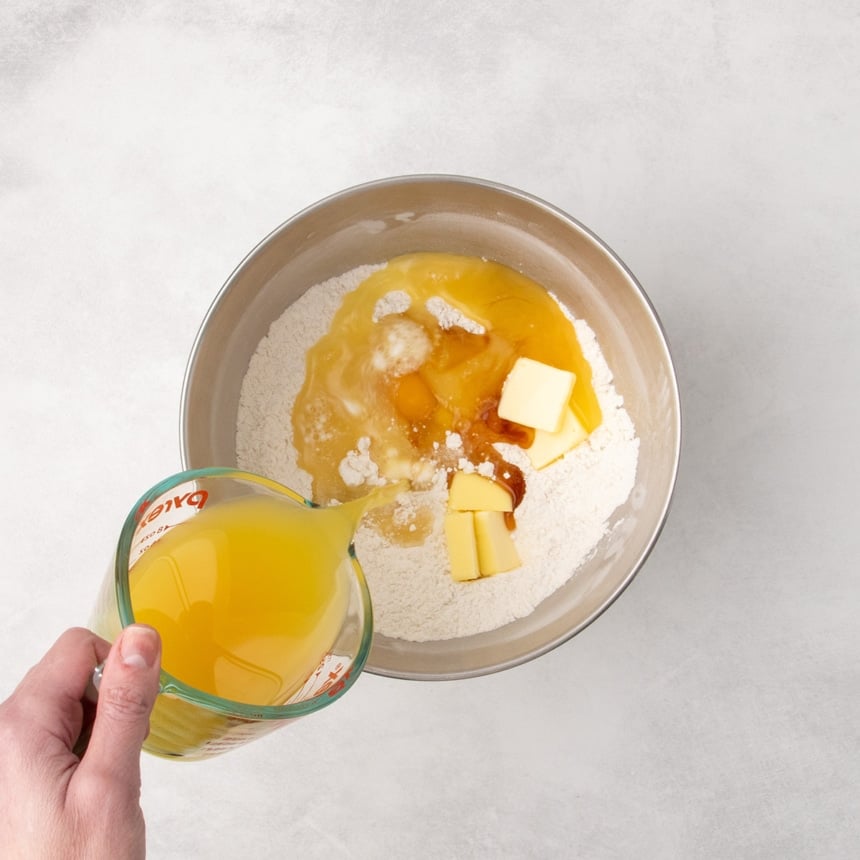
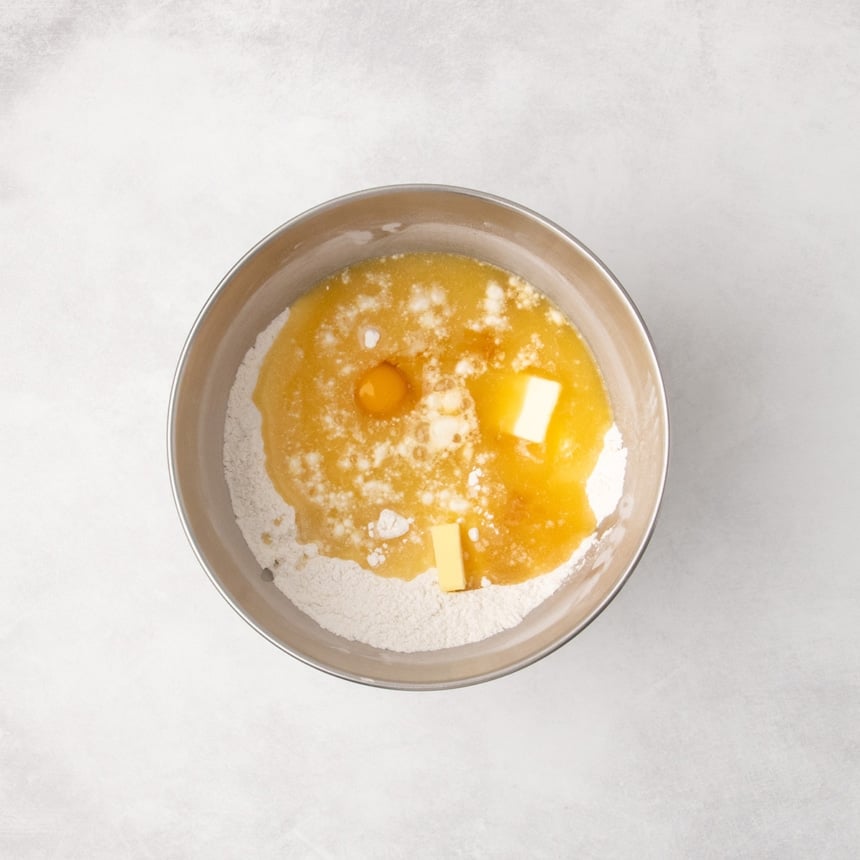
To the dry ingredients, add the butter, egg, vanilla and pineapple juice, making sure that everything is at room temperature so everything combines completely and smoothly. Cold liquid will cause softened butter to clump.
Mix the dough
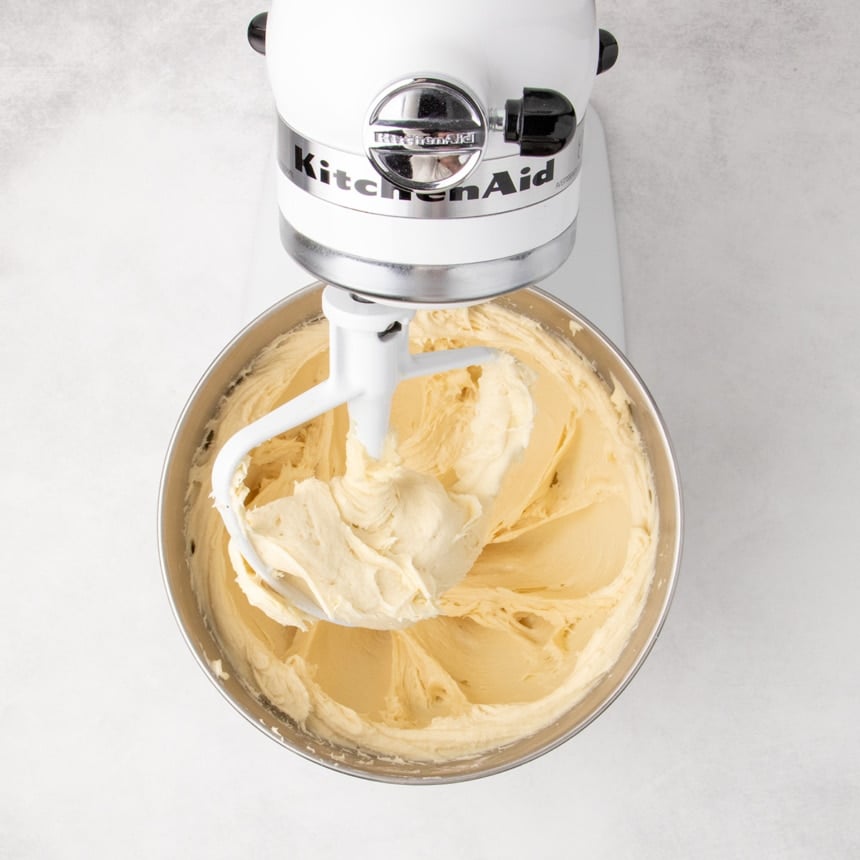
Add the paddle attachment, and mix on low speed first until the flours are moistened so everything stays in the mixing bowl. Increase the speed to medium, and beat until the dough begins to look whipped, like it has had more air incorporated into it. This helps create well-rising, less dense rolls.
Chill the dough
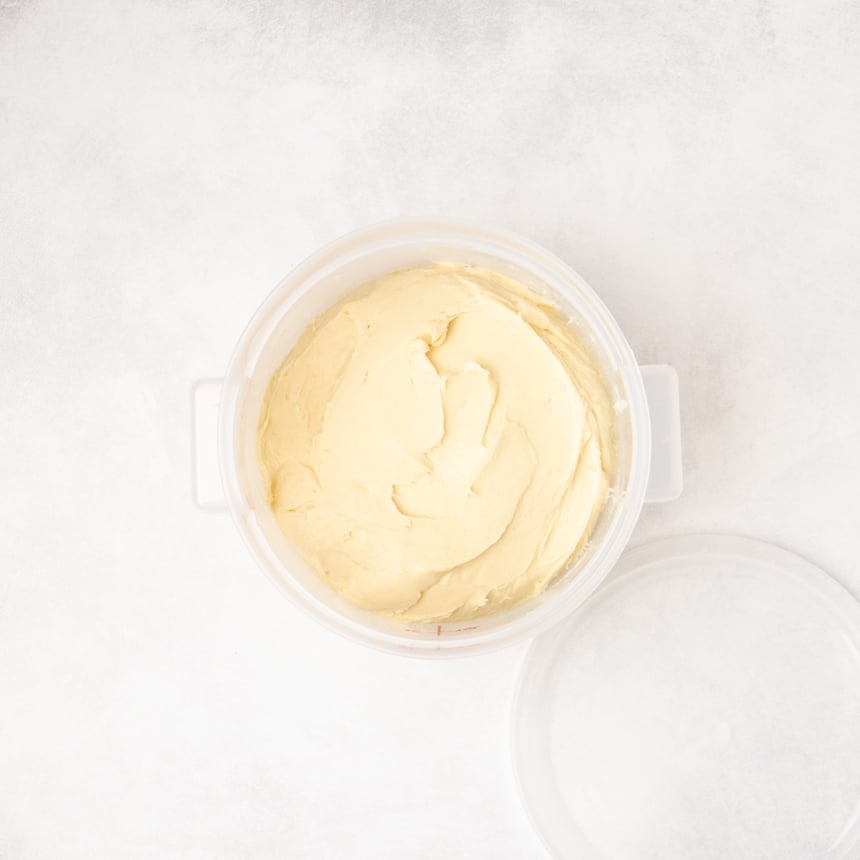
Transfer the dough to a bucket or bowl with a tight-fitting lid that’s large enough for the dough to expand to about double its size, although it won't rise quite that much. Chill the dough in the refrigerator for at least 12 hours and up to 3 days. This cold rise is for flavor development and to let the dry ingredients absorb some of the moisture, making the dough easier to shape.
Smooth the dough
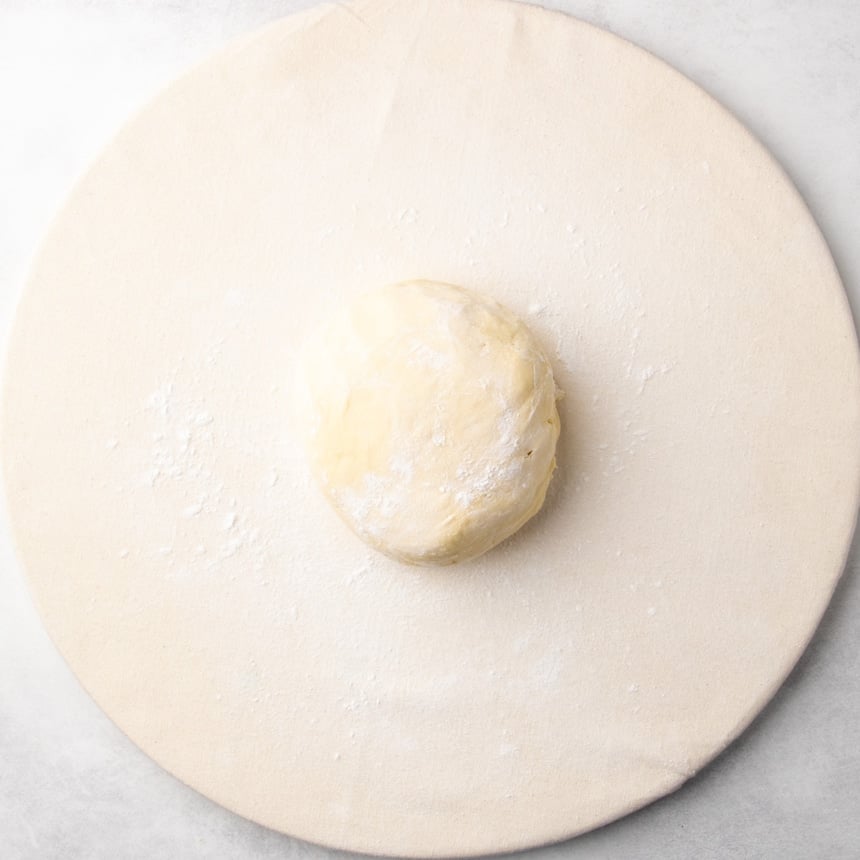
When you're ready to work with the dough, turn it out onto a clean surface sprinkled lightly with tapioca flour, and dust the top with more. Turn the dough over a few times until it's no longer sticky.
Divide into equal portions
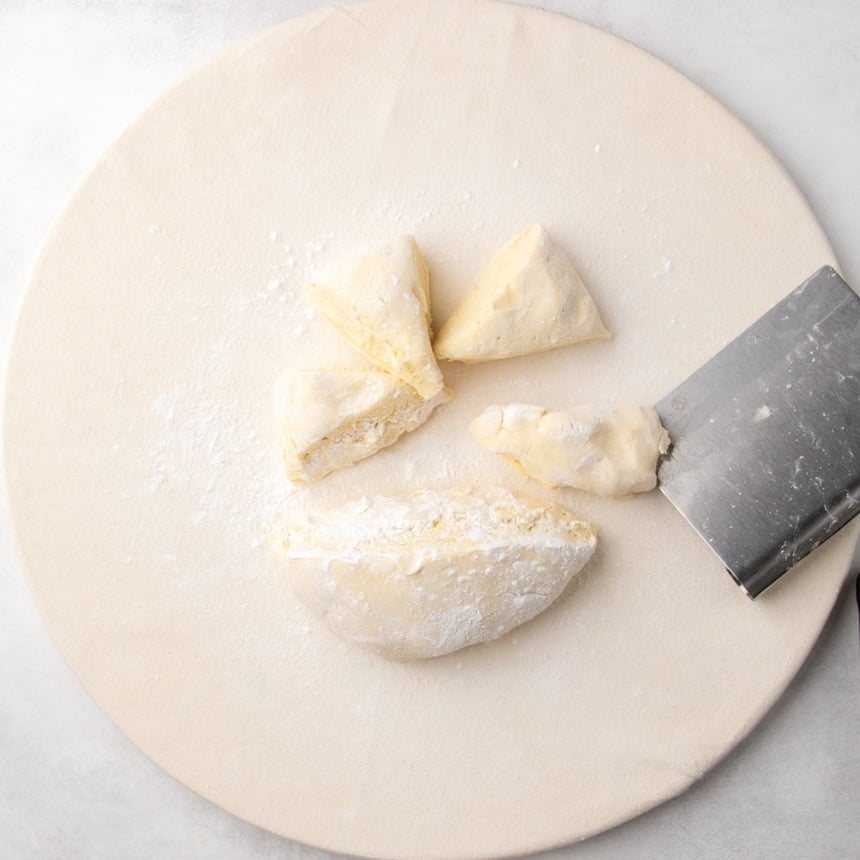
Use a bench scraper, cake turner, or sharp knife to cut the dough evenly in half, then each half into 4 equal parts for a total of 8 pieces, each weighing about 4 ounces. Equal sized rolls will rise and bake evenly together.
Shape the raw rolls
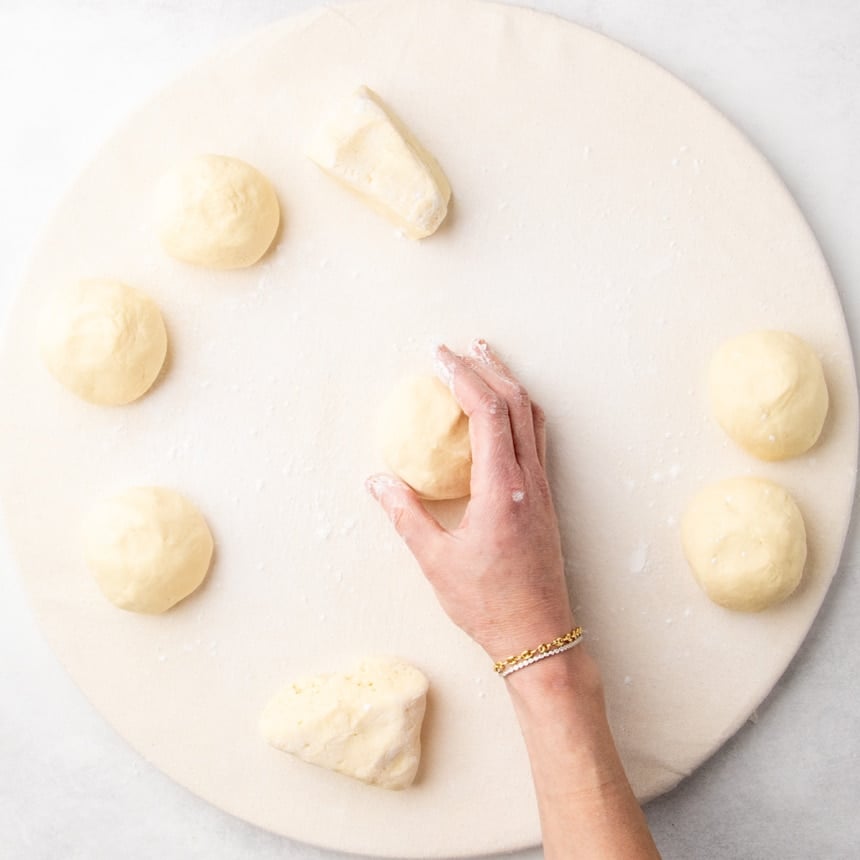
Pull the edges of each piece of dough toward the center, and pinch between your thumb and forefinger to secure. Flip the dough over so that the gathered edges are on the bottom.
Cup the palm of your dominant hand around the dough with the side nearest your pinky resting on the flat surface. This side of your hand should always maintain contact with the surface.
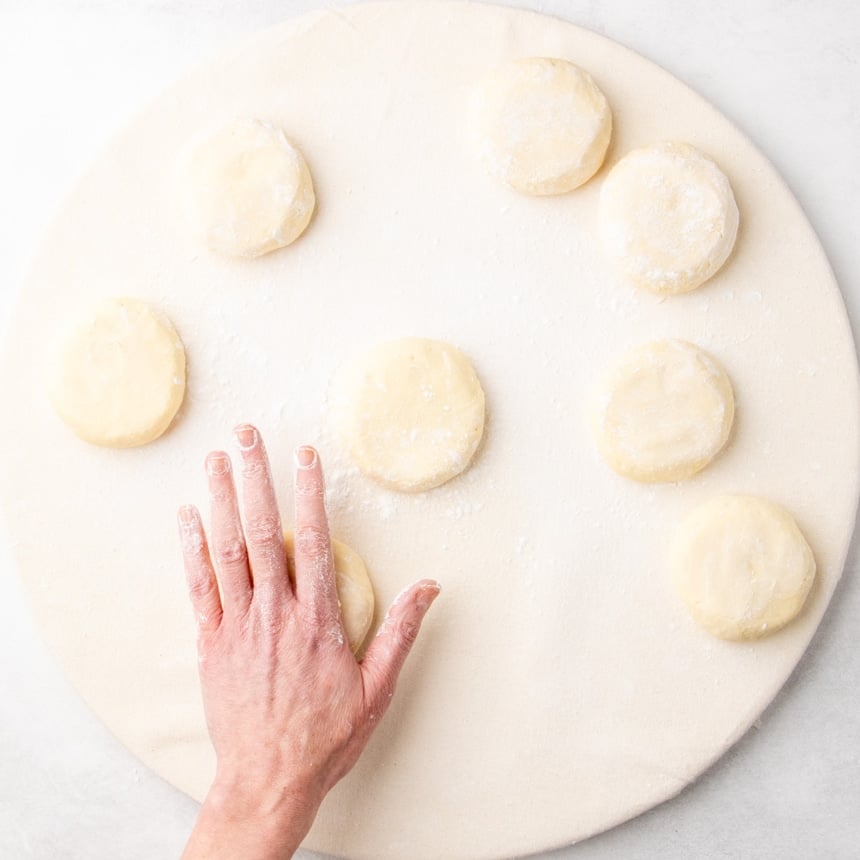
Move your hand in a tight circle to round the edges, using your fingers to coax the sides upward. Press each round into a round, flat disk with your palm to make rolls with a wider bottom for proper sandwiches.
Let rise covered
Place the shaped pieces of dough on a lined baking sheet, and cover loosely with plastic wrap. Make sure it's secured all around the perimeter so the rolls maintain enough moisture to allow them to rise.
Brush with an egg wash
After 30 minutes, remove the plastic wrap and brush generously with an egg wash. The egg wash will keep them from drying out even without the plastic covering. It also helps the rolls brown in the oven and creates a thin glossy shine during baking.
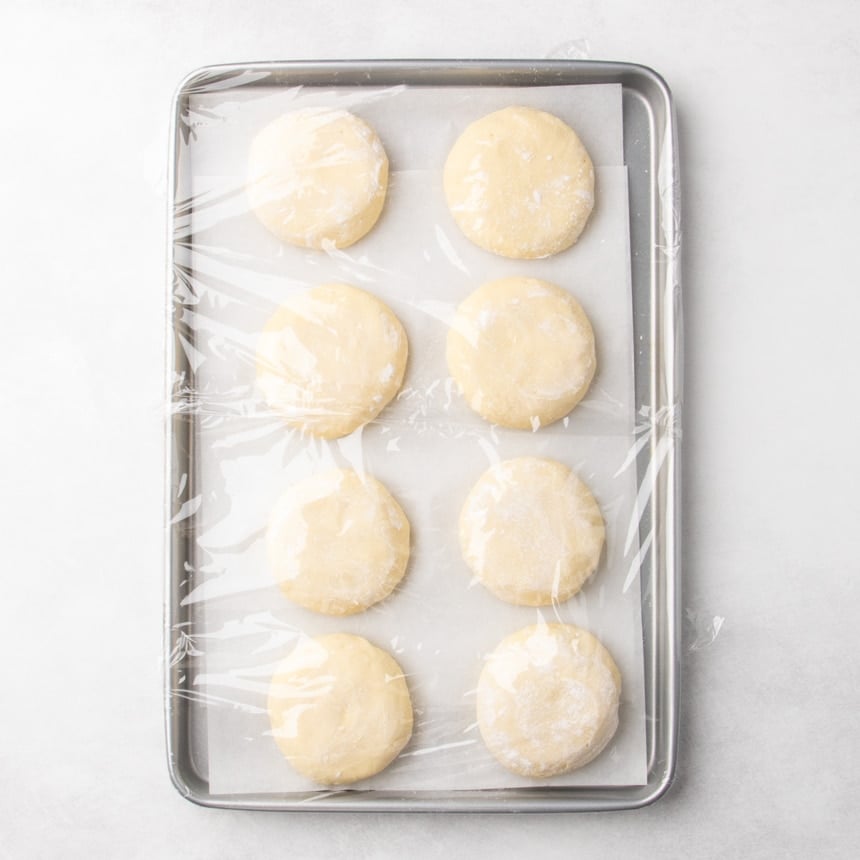
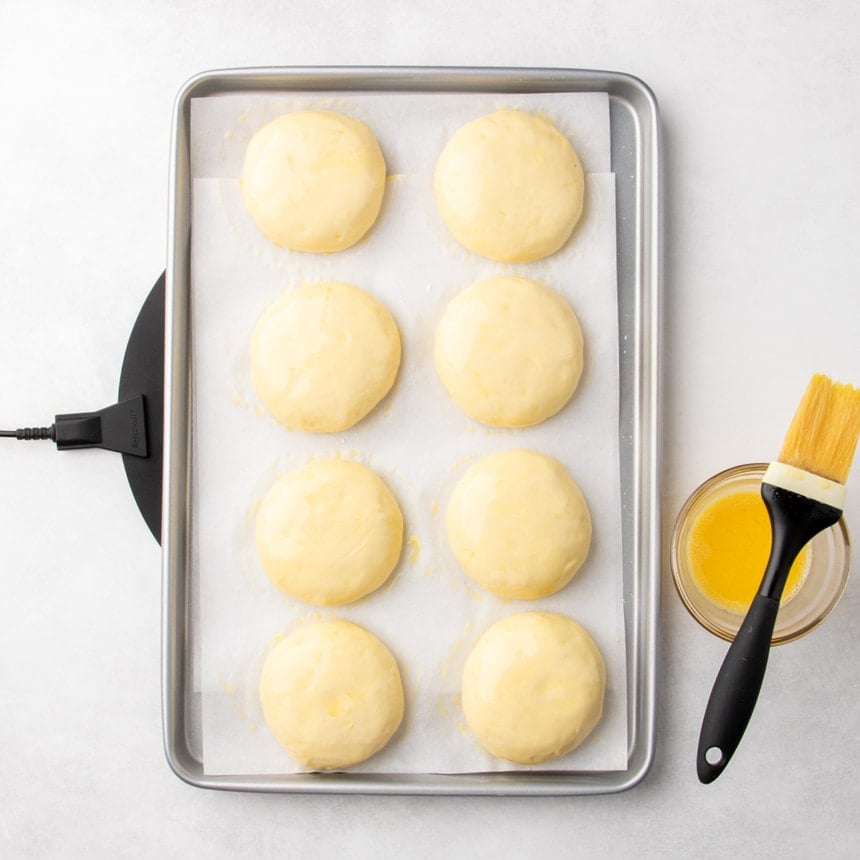
Finish rising
Let the rolls finish rising uncovered until they're at least 50% bigger in size than when they started. They won't fully double. If the dough begins to dimple or look pockmarked, the rise is breaking through and the rolls are beginning to overproof.
Bake
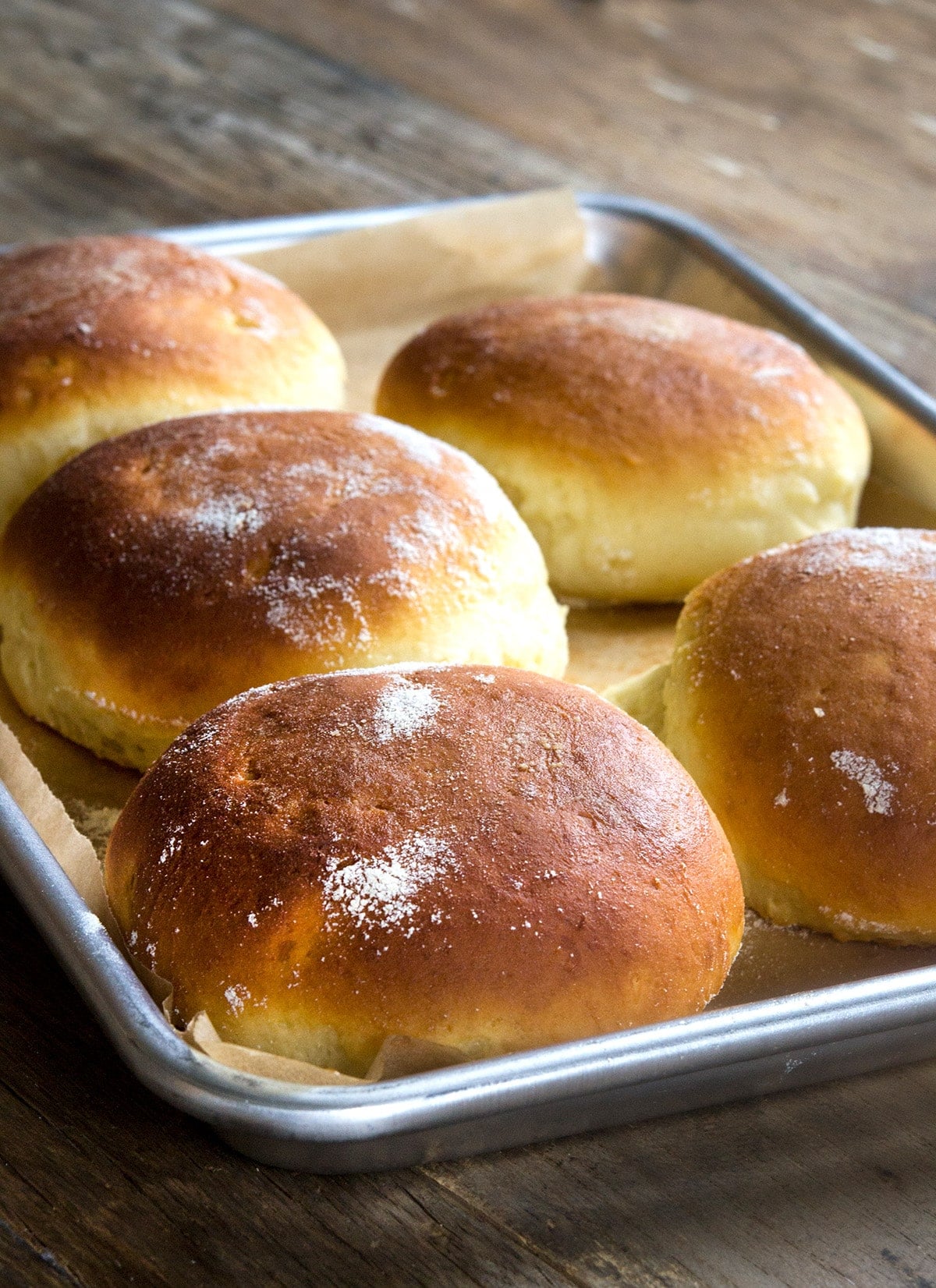
As soon as the rolls are done rising, or if you see signs of overproofing, place them right into the oven and bake at 375°F. They're done baking when they're golden brown all over, appear tight across the top, and register at least 185°F on an instant read thermometer. Cover the hot rolls loosely in a tea towel to trap moisture as the hot rolls cool, keeping the crust from getting too crispy or drying out.
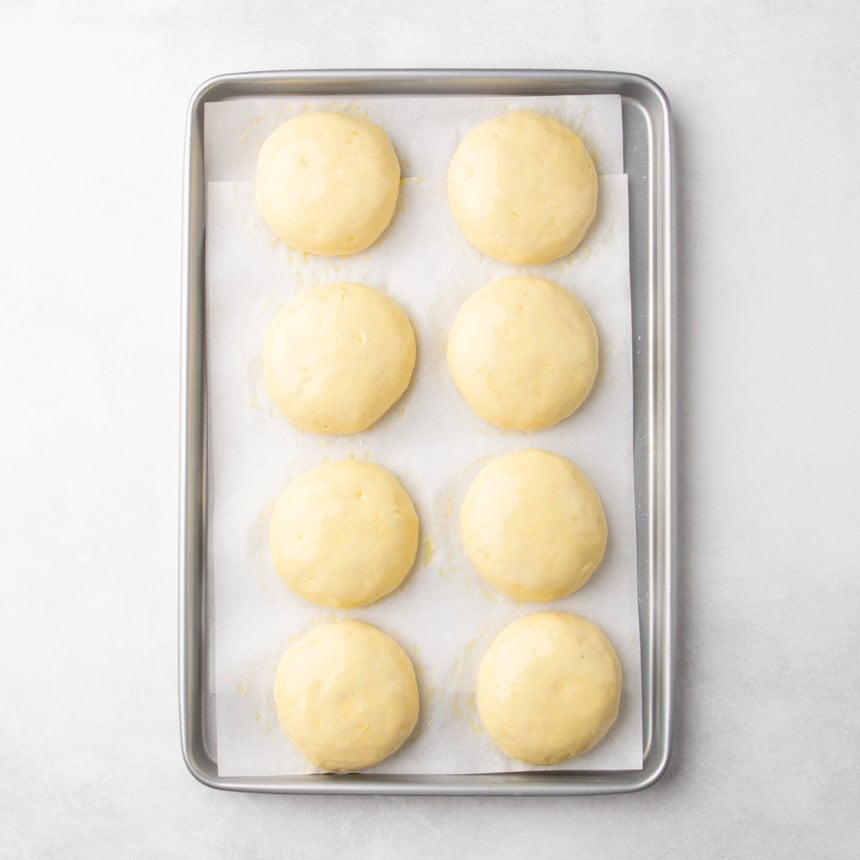
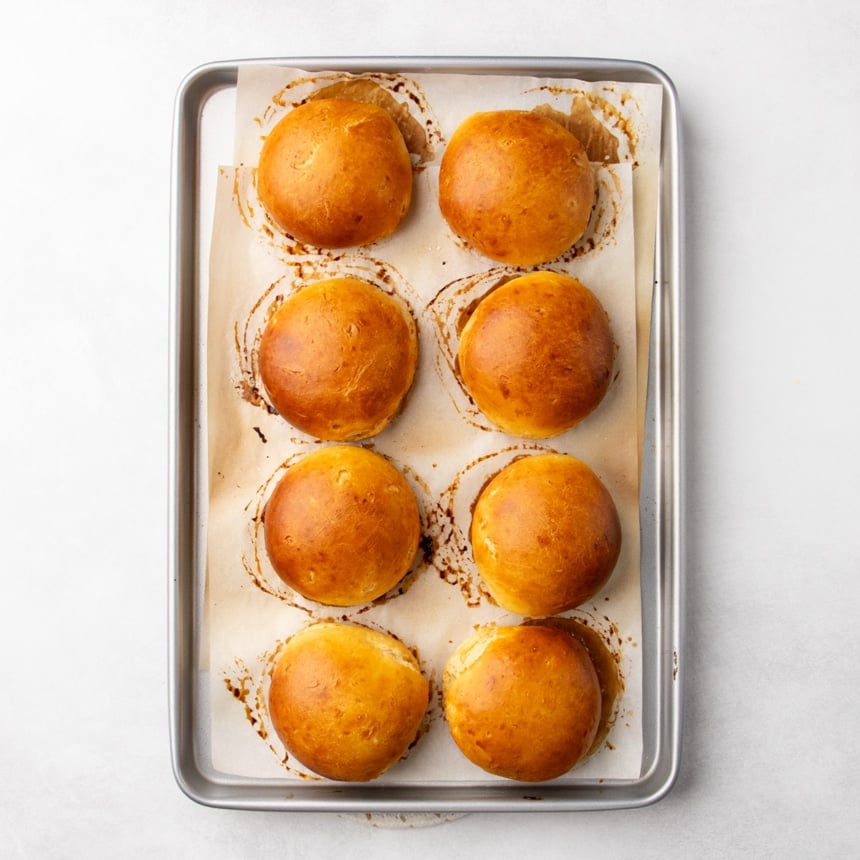
Expert tips
The first rise has a different purpose
When you first make the dough, you'll seal it in an airtight container and let it chill in the refrigerator for at least 12 hours and up to 3 days. This is a “cold rise,” but don't worry about how much the dough actually rises. As long as the yeast is activated by adding moisture to it, the dough will develop some flavor.
This rest is also designed to give the flour time to absorb some of the moisture in the egg, juice, and butter, making the dough easier to handle and shape. Avoid letting it sit for much longer than 3 days, though, or it will taste too yeasty for Hawaiian rolls and the rise after shaping may be more irregular and uncontrolled.
Handle the dough lightly
As you incorporate additional flour into the raw dough during shaping, you're lowering the overall amount of moisture in the dough, which can prevent a proper rise. To avoid adding too much extra flour, work with the dough cold, handle it more with your fingertips than with your palms, and keep it moving so it doesn't have a chance to stick to anything other than itself.
If you don't have a stand mixer
You can't make a well-incorporated dough that rises smoothly by hand here. A handheld mixer with miniature balloon attachments won't work, and will incorporate too much air into the dough.
If you don't have a stand mixer with a paddle attachment try using a food processor with the plastic, and be careful not to overprocess or heat the dough.
Ingredient substitutions
If you need to eliminate other allergens from the rolls, here are my suggestions for how to do that.
Dairy free
Instead of dairy butter, try block-style vegan butter like Melt, Miyoko's, or Trader Joe's brands.
Egg free
These rolls contain only one egg in the dough, and one egg in an optional egg wash. In place of the egg in the bread dough, try using a chia egg, Bob's Red Mill egg replacer, or JustEgg refrigerated liquid egg replacer. In place of the egg wash on top of the shaped rolls, try brushing them with cream.
Pineapple juice
If you can't have pineapple juice or just don't want to use it, try apple juice for a similar, although more mild, lightly sweet roll. You can also use milk in place of pineapple juice, in equal amounts, for a rich, tender and not really very sweet roll. Nothing else in the recipe has to change.
Storage instructions
Once completely cool, each leftover roll can be wrapped tightly in freezer-safe wrap and frozen for up to 3 months. Defrost at room temperature, sprinkle lightly with water, and refresh in the microwave or a toaster oven.
Gluten Free Hawaiian Rolls Recipe
Equipment
- Stand mixer with dough hook (gf bread flour) or paddle attachment (all purpose gf flour)
Ingredients
- 2 ½ cups (350 g) all purpose gluten free flour blend, See Recipe Notes for help choosing
- 2 teaspoons xanthan gum, omit if your blend already contains it
- ½ cup (60 g) tapioca starch/flour, plus more for sprinkling
- 2 ⅓ teaspoons (7 g) instant yeast
- ¼ cup (50 g) granulated sugar
- 1 teaspoon kosher salt
- 5 tablespoons (70 g) unsalted butter, softened
- 1 egg (50 g (weighed out of shell)) at room temperature
- 1 teaspoon vanilla extract
- 1 ¼ cups (10 fluid ounces) pineapple juice, at room temperature
- Egg wash 1 egg, at room temperature, beaten with 1 tablespoon water
Instructions
Make the bread dough
- Place the all purpose gluten free flour blend, xanthan gum, and tapioca starch, yeast, and sugar in the bowl of your stand mixer, and use a handheld whisk to combine well. Add the salt, and whisk to combine again.
- Add the butter, egg, vanilla, and pineapple juice, and mix on low speed with the paddle attachment until just combined. Raise the mixer speed to medium and beat for about 3 minutes or until it begins to take on a whipped appearance, sticking to the sides of the bowl and stretching from the paddle to the sides.
- Spray a silicone spatula lightly with cooking oil spray, and scrape down the sides of the bowl.
- Transfer the dough to a lightly oiled bowl or proofing bucket large enough for the dough to rise to double its size, and cover with an oiled piece of plastic wrap (or the oiled top of your proofing bucket).
- Place the dough in the refrigerator for at least 12 hours and up to 3 days.
Shape the rolls
- On baking day, line a large rimmed baking sheet and set it aside. Remove the dough from the refrigerator and turn it out onto a lightly floured surface. Sprinkle the dough lightly with more flour, and turn over a few times until it appears smoother and is less sticky.
- Use a floured bench scraper, cake turner or large sharp knife to divide the dough into 8 pieces of equal size, each weighing about 4 ounces.
- Working with one piece of dough at a time, shape it into a round by rolling it with a floured palm in circles on the lightly floured surface. Handle the dough lightly and keep it moving in a circle with your palm, keeping your pinky and that side of your hand in contact with the surface all the time.
- Pinch together any cracks and keep shaping, sprinkling lightly with flour as necessary to prevent sticking. Use your palm or 4 fingers of your hand to press down the round of dough into a disk for even rising.
- Place the first roll in the prepared baking pan. Repeat with the remaining pieces of dough, placing the rolls less than an inch apart from one another.
Let the shaped rolls rise
- Cover the baking pan with oiled plastic wrap and set it aside in a warm, draft-free location to rise for 30 minutes.
- Uncover the pan and brush the rolls generously with the egg wash. Allow the rolls to finish rising, uncovered, until at least 50% larger than when you began, about 20 to 30 minutes more.
- Preheat your oven 375°F, while the rolls finish rising. If they begin to take on a dimpled appearance, they have begun to overproof and should begin baking immediately.
Bake
- Place the baking pan on the lower rack of the preheated oven and bake until golden brown all over, appear taut across the top, and the inside of the rolls registers at least 185°F on an instant-read thermometer, about 25 minutes.
- To maintain the softest crust on the rolls, cover them loosely with a tea towel while still hot out of the oven. Allow the rolls to cool for at least 10 minutes before slicing and serving.
Video
Notes
Nutrition
Nutrition information is automatically calculated, so should only be used as an approximation.










When kneading and shaping the individual rolls, is it important to use a particular flour when sprinkling to keep from sticking? Would almond, white rice, buckwheat etc. work?
I would recommend more of either the all purpose gluten free flour blend, or the bread flour, whichever you used to make the dough, Jeffrey. Not almond flour or buckwheat or anything else that wasn’t already used in the recipe.
The flour that I get already has the tapioca flour in it. Do I still put some more into the recipe?
Yes, Lynn. All good all purpose gluten free flour blends contain tapioca starch in the blend. This is an additional ingredient that everyone must include, regardless of the blend you’re using.
I love this recipe and have made it many times with great success. I now have a daughter with and Egg allergy, do you think with recipe would work using a flax egg replacement? I know I wouldn’t get the same texture, nut was wondering if you had tried it.
Thank you for all the great recipes you work so hard on
Hi, Kathy, so glad you love these Hawaiian rolls so much, and thank you for the kind words. They mean so much to me. For my suggestion, please see the text of the post under the heading “Egg free, gluten free Hawaiian rolls”
Hello!
Would arrowroot starch/flour work in place of tapioca starch?
Tapioca starch really has no true substitute, Casey, and I can’t promise results with any substitute. You can try superfine sweet white rice flour, but again I can’t promise results.
Can you use GF sourdough starter for this?
No, Lauren, this is developed to be made with commercial yeast. A sourdough starter can only be used in a recipe developed for it.
I’ve made these rolls with great success at several times and my daughter-in-law loves them. Absolutely love this recipe!!
Do you happen to have the nutrition facts for this recipe?
I just added approximate nutrition facts for the all purpose gluten free flour blend version of this recipe, Maeci (not the bread flour blend). I hope that helps!
Nicole,
Today was my “baking day” and these Hawaiian Rolls were my main recipe. I’ve been wanting to make them for several months. I watched this shaping video several times in a roll, and it made all the difference in the world.
By showing me how each step is done and how the steps will look, it has given me endless confidence to try anything! My first try at the Hawaiian rolls resulted in 8 gorgeous tender Hawaiian rolls to use with right away in a Bacon, Lettuce and Tomato sandwich. The density of the tender roll was perfect even without a traditional toasting. Your video mentioned its perfect for a ham sandwich, but I didn’t have ham on hand, so I used bacon instead. The mix of textures, temperatures and flavors hit it out of the ball park!
I mentioned this was a baking day. My first recipe was your (beginner)Sandwich bread, followed by starting your Chocolate Carmel Shortbread bars, and then finishing these Hawaiian rolls. Last night, I made your quiche recipe with a store bought frozen GF crust. Earlier in the week I made your recipe for orange and chocolate biscotti.
In my extended family, I have was the first of now 4 who eat a gluten free diet. I am NOT known as Karen who brings the gluten free stuff. I am Karen who brings the awesome stuff! For Christmas Eve, I made your red Velvet layer cake.
Thank you for making life as a celiac baker one that is now filled with everything that I want to eat! You have made a true impact in my life and I greatly appreciate it.
Thank you so much for sharing all of that with me, Karen! That sort of positive attitude is the most important ingredient in baking, and you’ve got it in spades! I would tell you that the sky’s the limit, but you already know that, Karen-who-brings-the-awesome-food!!
Makes really wonderful hamburger buns. Great Recipe
So glad you enjoyed them, Vicki!
You note to use ‘Better Batter’ in the AP version of the Hawaiian rolls. Why not GFOAS Mock Better Batter?
Thanks
They’re interchangeable, Andrea! I discuss that in the post, as well. :)