

This post may contain affiliate links. Please read our disclosure policy.
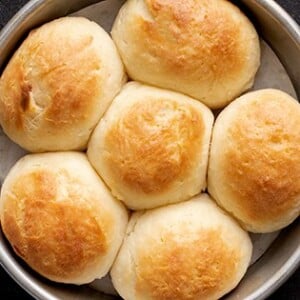
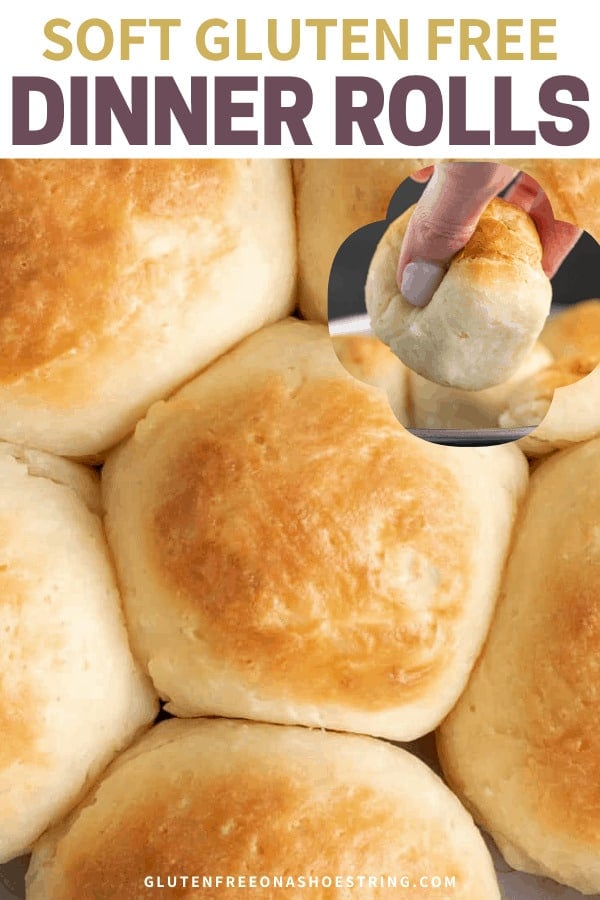
These soft, homemade gluten free dinner rolls are easy enough for a weeknight, and special enough for any holiday table. They bake up golden, tender, and fluffy every time.

Why this recipe works
These dinner rolls bake up soft and fluffy inside with a beautiful golden brown crust outside that’s still squishy, never tough. The dough comes together with just about 20 minutes of hands-on time and a fast rise, so you can have fresh rolls on the table quickly.
The dough itself is easy to handle and shape, making the process smooth from start to finish. Even if you’re new to baking bread, you’ll find this straight-forward recipe do-able, especially with our step by step photos below.
You can also parbake, or partially bake, them, and freeze, so you defrost and finish baking them right when you’re ready. And if you’re avoiding dairy, simple ingredient swaps make it easy to keep these rolls completely dairy-free without losing their soft texture or buttery flavor.
Recipe ingredients

These few ingredients come together to make the softest, most tender gluten free rolls you’ve ever had:
- Gluten free flour: Use a high-quality all purpose gluten free flour blend made with finely ground rice flour. It should be designed for yeast baking. My favorite blends are Better Batter’s original blend which already contains xanthan gum, and Nicole’s Best with added xanthan gum. King Arthur Flour gluten free bread flour should also work (try adding 1 to 2 tablespoons extra milk), but avoid their multipurpose blends, which KAF itself says are not designed for yeast breads.
- Tapioca starch: Even though your blend almost certainly already includes this flour, this extra tapioca starch gives the dough stretch and flexibility.
- Instant yeast: Gives the rolls their rise. Also called rapid-rise or breadmaker yeast. Be sure yours is fresh.
- Sugar: Feeds the yeast and adds a subtle sweetness.
- Milk: Warm milk activates the yeast, moistens the dough, and adds richness.
- Butter: Adds moisture and flavor, keeping the rolls soft and tender.
- Egg whites: Provide structure, help bind the dough together, and help the rolls keep their shape as they cool.

How to make gluten free dinner rolls (step by step photos)
This visual overview should help you envision making these rolls at home, with an explanation of the role of each step as support for my reasoning. For the precise ingredient amounts, see the recipe card below.
Step 1: Mix the dry ingredients
In the bowl of a stand mixer, if possible, whisk together the gluten free flour, xanthan gum (if needed), tapioca starch, yeast, and sugar until well combined. Whisk in salt next. This is how we keep the salt from clumping with the yeast and creating an uneven rise.
Step 2: Add wet ingredients and beat the dough
Pour in the warm milk, melted butter, and egg whites. Using the paddle attachment, beat the mixture until it comes together and begins to look whipped (about 6 minutes total) to introduce air into the dough and help create fluffy rolls.
Step 3: First rise/chill
Transfer the dough to a lightly oiled container with a tight-fitting lid. Let the unshaped dough rest at room temperature for about 2 hours, then refrigerate it for 30 minutes, or refrigerate it for up to 2 days. Either resting period will help the dough develop some yeasty flavor and allow it to absorb some of the liquid.
Chilling the dough for about 30 minutes will make it easier to handle. If you’ve chilled the unshaped dough for longer than 1 hour, let the dough warm up a bit at room temperature before shaping or the cold butter in the dough may make it hard to shape without visible seams.


Step 4: Divide and shape
Turn the dough onto a very lightly floured surface and divide it in half, then each half into 8 equal pieces. Gently roll each piece into a ball by cupping your hand around the dough and moving it in a circular motion. This is the way to gently shape the dough into a round without compressing it and making the rolls dense.
Step 5: Arrange and rise again
Place the rolls into a greased and lined baking pan. You can crowd them slightly for pull-apart rolls or leave space for individual ones. Cover with plastic wrap and let them rise in a warm, draft-free spot until at least 150% of their original size (they won’t double).


Step 6: Bake
Once risen, brush the tops with melted butter. Bake at 375°F until the rolls are golden and an instant-read thermometer reads around 190°F in the center—about 20 minutes. If the rolls are touching, reduce the oven temp to 350°F after 18 minutes and bake a bit longer, since keeping them close together means there’s less room for the warm oven air to circulate.
Step 7: Serve warm
Brush the hot rolls with more melted butter for extra flavor, and serve while warm and soft.


Expert tips
Use a stand mixer if you can
A stand mixer with the paddle attachment creates the smooth, whipped dough that gives these rolls their signature texture. If needed, a food processor with a plastic blade can work—just pulse carefully and don’t overmix. Avoid hand mixing.
Create a warm, steady rise
Place your dough in a draft-free spot with gentle warmth—like on top of a warm oven, never inside. If the environment is too hot, you risk killing the yeast. Too cool, and the dough will rise very, very slowly. Too dry, and it won’t rise.
Adjust for dry climates
If you live in a dry environment and your dough isn’t rising well, try adding 1 extra tablespoon of warm milk or water. But don’t overdo it—too much liquid can cause overproofing and gummy rolls.
Shape gently
Don’t press or knead the dough aggressively. On a lightly floured surface, cup your hand around the dough ball and gently move it in a tight circle on a very lightly floured surface to create a smooth round shape.
Want to make them ahead? Try parbaking
To prep rolls in advance, bake the shaped rolls at 300°F for 15 minutes to 20 minutes—just until puffed and set but not browned. Cool completely, then freeze. They may sink a bit as they cool. When ready to serve, defrost at room temp, then finish baking at 375°F until golden and fully cooked (190°F inside). This method gives you fresh-baked rolls in less time.

Ingredient substitutions
Dairy free
Replace the melted butter with a block-style dairy-free butter alternative. Melt and Miyoko’s Kitchen brands both work well. For the milk, use an unsweetened nondairy variety with some fat and a texture that mimics cow’s milk Avoid fat-free options, since richness matters here, and anything with unwanted texture, like oat milk.
Egg free
You should be able to replace the 2 egg whites with 50 grams of aquafaba (the liquid from a can of unsalted chickpeas).
Yeast
You can’t make these rolls without yeast, but you can swap instant yeast for active dry yeast. Use 15 grams of active dry yeast and be sure to proof it first in some of the warm milk.
Tapioca starch
Even though most good gluten free flour blends already include tapioca starch, this recipe needs extra. If you don’t have it, try replacing it with an equal amount of superfine glutinous rice flour or sweet white rice flour.

Storing & freezing the rolls
Best when fresh
Like all yeast rolls, these are at their best the day they’re baked. But you can still store and reheat them with great results.
Room temperature
Store leftover rolls in a sealed container at room temperature for up to 2 days. To refresh before serving, sprinkle lightly with lukewarm water and warm in a 300°F toaster oven for about 5 minutes.
Freezer storage
Once cooled, place baked and cooled rolls in a freezer-safe zip-top bag and press out as much air as possible. Freeze for up to 3 months. Defrost at room temperature and reheat as above. For parbaking instructions, see the Expert Tips section above.
Gluten Free Dinner Rolls Recipe
Tell Google you trust GFOAS!
Ingredients
- 3 ¼ cups (455 g) all purpose gluten free flour blend, (See Recipe Notes)
- 3 ¼ teaspoons xanthan gum, omit if your blend already contains it
- ⅞ cup (105 g) tapioca starch/flour, plus more for sprinkling
- 4 teaspoons (12 g) instant yeast, See Recipe Notes
- ¼ cup (50 g) granulated sugar
- 1 teaspoon kosher salt
- 1 ⅝ cup (13 fluid ounces) warm milk (about 90°F)
- 8 tablespoons (112 g) unsalted butter, melted and cooled (plus more for brushing)
- 2 (50 g) egg whites, at room temperature
Instructions
Make the dough
- In the bowl of a stand mixer (See Recipe Notes), place the flour, xanthan gum, tapioca starch/flour, instant yeast, and granulated sugar, and whisk to combine well. Add the salt, and whisk again to combine.
- Add the milk, melted butter, and egg whites. Using the paddle attachment, beat vigorously. The mixture will come together in a clump and clear the sides of the bowl. Keep beating until it begins to look whipped, and sticks to the side of the mixing bowl again (about 6 minutes total).
- Transfer the mixture to a lightly oiled bucket or bowl with a very tight-fitting lid. The container should be large enough for the dough to nearly double (although it won’t double fully).
Let the dough rest/chill it
- At this point, you can let the unshaped dough rest in the bucket at room temperature for 2 hours, and then refrigerate it for 30 minutes, or refrigerate it for up to 2 days. Do not let the dough rest/rise for much longer than that, or your rolls will rise much more irregularly after shaping.
- If your dough has been refrigerated for more than 1 hour, allow it to sit at room temperature until no longer very cold to the touch before working with it.
Shape the rolls
- Grease a quarter sheet pan or 2 8-inch round cake pans for baking, and set them aside. You will later decide if you’d like to crowd the rolls, and have them rise then bake touching, or have them separate.
- Flour a clean, dry work surface very lightly with tapioca starch. Divide the dough in half, then each half into 8 equal portions, for 16 pieces, each about 2 1/2 ounces in weight.
- Working with one piece of dough at a time, cup your fingers around the dough, keep the side of your palm on the surface, and move your hand in tight circles to coax the dough into a round.
- Place the shaped rounds of dough in your chosen baking pan(s) either touching (they will rise mostly up), or a bit more than 1-inch apart, taking care not to crowd them (the will rise up and out).
Let rise
- Cover the pan(s) with lightly greased plastic wrap, place in a warm, draft-free location, and allow to rise until about 150% of their original size (they won't quite double).
- This rise can take anywhere from 45 minutes to hours, depending upon the ambient temperature in your kitchen. Overproofing is not very likely, and can be detected when the surface of the rolls begins to look pockmarked.
- When the rolls are nearing the end of their rise, preheat your oven to 375°F. Once the rolls are properly risen, remove the plastic wrap from the pan(s), and brush generously on all exposed sides with melted butter.
Bake
- Bake until an instant read thermometer inserted into the center of each roll reads about 190°F.
- If there is any space between the rolls after they’ve risen, they will take around 20 minutes until fully baked.
- If the rolls are touching one another, lower the oven temperature to about 350°F at 18 minutes and continue to bake for about another 5 minutes or until the center reaches 190°F.
- Remove the pan from the oven, and with the rolls still in the hot pan, brush again with melted butter and serve warm.
Video
Notes
I recommend Better Batter’s original blend or my Nicole’s Best multipurpose blend (with 3 teaspoons added xanthan gum). King Arthur’s gluten free bread flour can work but makes denser rolls, so consider adding 2 tablespoons more milk. To make your own blend using one of my “mock” recipes, please see the all purpose gluten free flour blends page. No stand mixer?
A food processor with the plastic blade works in a pinch. Don’t use a hand mixer or mix by hand; the dough needs vigorous mixing to whip up properly and create a smooth shaped roll.
Nutrition
Nutrition information is automatically calculated, so should only be used as an approximation.
FAQs
No, you still need the additional tapioca starch listed in the recipe. All gluten free blends include some tapioca, but this recipe relies on a larger amount to give the dough its flexibility and the rolls their soft, stretchy texture.
No, this dough won’t hold its shape that long after shaping. It’s best to refrigerate the dough before shaping, then bring it to room temperature and shape right before the second rise.
Not recommended. It’s best to bake and freeze the rolls, or use the parbake method above.
Yes, but they won’t have the same pull-apart quality. Bake time may be slightly shorter.
Yes, just cut all ingredients in half. I do this all the time! Rise and bake times stay the same.










Hi, Nicole,
Is it possible to substitute chia “eggs” for the egg whites?
Thanks,
Cheri
Plains, MT
Hi, Cheri, I don’t recommend that, no. I’d recommend aquafaba. Please see the ingredient substitutions section for more info!
Thanks for the info.
Hooray! I have been longing to make these, but as there are only 2 of us and we are stay at home 79year old pensioners. I have been apparently using an earlier recipe and trying to work out 1/2 recipe in cups I have been ready to give up trying. We can’t afford to throw anything out.
Anyway now it’s all weight measurements (we are Aussies) I am going to give them a try!
Thank you Nicole for all your work. As I’ve not baked the rolls, the 5 stars are for your diligence and grace you show us all.
Is your Best multipurpose blend recipe available Online? I am in Canadá and unable to order.
Hi, Anne, I’m afraid I don’t ship outside the continental U.S. as of yet. Hopefully one day!
I just made these tonight. I took the whole flour amount, including the tapioca, and split it half Cup4Cup and half mama’s almond blend. No xantham gum. (This combination works very well in a lot of recipes.)
If you’re new to gf baking, don’t worry that the dough seems wrong. It’s totally different. After the first rise, I wet my hands with cold water and “punched” down the whole ball of dough without removing it from the bowl. Then I kept the cold water running and re-wet my hands after shaping every couple rolls. I tried the author’s trick of letting it raise on the oven top. They rose a lot quicker than I thought. I think this is a recipe that requires flexibility and attention.
I must say, I’m very pleased with the result. Very good. I’m curious to see how they’ll be tomorrow. My whole family liked them, even those who do not need to eat gluten free.
And I’m excited to try this dough for cinnamon rolls sometime soon. I think it would work really well! I’ve been searching for years for the perfect gf cinnamon roll recipe.
Thanks! I’ve used so many of your recipes over the years!
Hi, Emmy, you’re very welcome. For others’ benefit, I do want to point out that I recommend against “punching down” gluten free yeast bread dough. It just doesn’t have the surface tension that that requires, and it actually tends to inhibit later rise.
Do these freeze or store in fridge for a couple days?
Yes, you can freeze them, Aleta, but I don’t ever recommend refrigerating bread. Please see the text of the post under the heading “Gluten free bread rolls: storage tips” for details.
Question: can Psyllium husk be added to the existing recipe?
If you’re using a gluten free flour blend that doesn’t contain xanthan gum and you want to use ground psyllium husk in its place, you can try using about 20 grams ground psyllium husk powder in this recipe. I haven’t tried it yet, though, so I can’t promise results. Bread made with psyllium husk instead of xanthan gum typically gets stale much faster, though, so keep that in mind.
Thank you so much for the quick response. I won’t be using it.
My sister in law is gluten free and processed sugar free. Is there anyway that I can substitute honey for the sugar in this recipe without messing it up?
Hi, Melissa, you can try using about half as much honey, by volume, but that will add more moisture to the dough and the dough will likely be more sticky. If you are able to, I’d really recommend sticking with the granulated sugar, especially if you’re not that experienced in gluten free yeast bread dough.
Thanks for another great recipe, Nicole! Which brand of yeast do you recommend? Also, I’ve just ordered your flour blend and Xanthan Gum. Would you recommend that over Better Batter for this recipe? Thanks in advance:)
Hi, Katie, so glad you enjoyed the rolls! I usually use Red Star brand yeast. Better Batter will always work in all of my recipes that call for an all purpose gluten free flour blend. Nicole’s Best will always produce superior results, though. Thank you for giving my flour blend a try!
Thank you, Nicole! I am looking forward to trying this recipe. I am wondering if I can make these rolls using a bread machine?
I don’t generally recommend using a bread machine, Lisa, and I’m honestly not sure how you would for shaped bread like these dinner rolls.
These are the BEST gluten free rolls I have ever made. If you follow the directions exactly, you will be rewarded. Thank you!
I’m so glad to hear that, Sara! Thank you so much for sharing your experience.