

This post may contain affiliate links. Please read our disclosure policy.
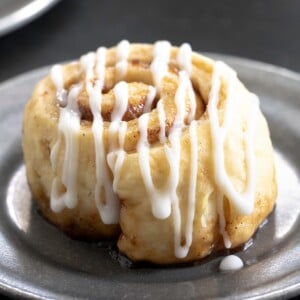
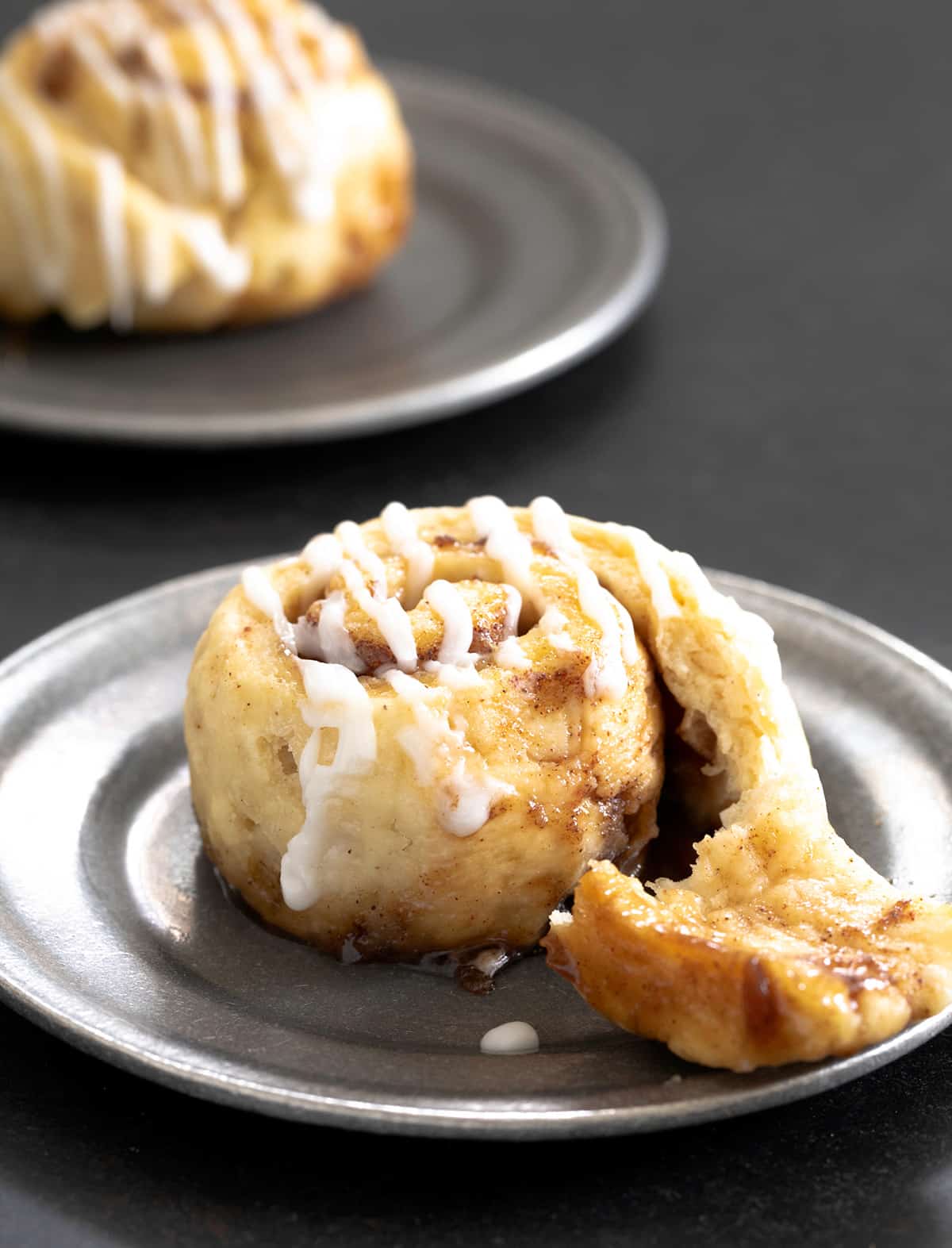
These gluten free cinnamon rolls are soft, gooey, and full of cinnamon-sugar flavor, just like the kind you thought you couldn’t have anymore.
The dough is easy to work with, they rise beautifully, and I’ve even revised the recipe so you can finally make them ahead of time without the rolls losing their shape!
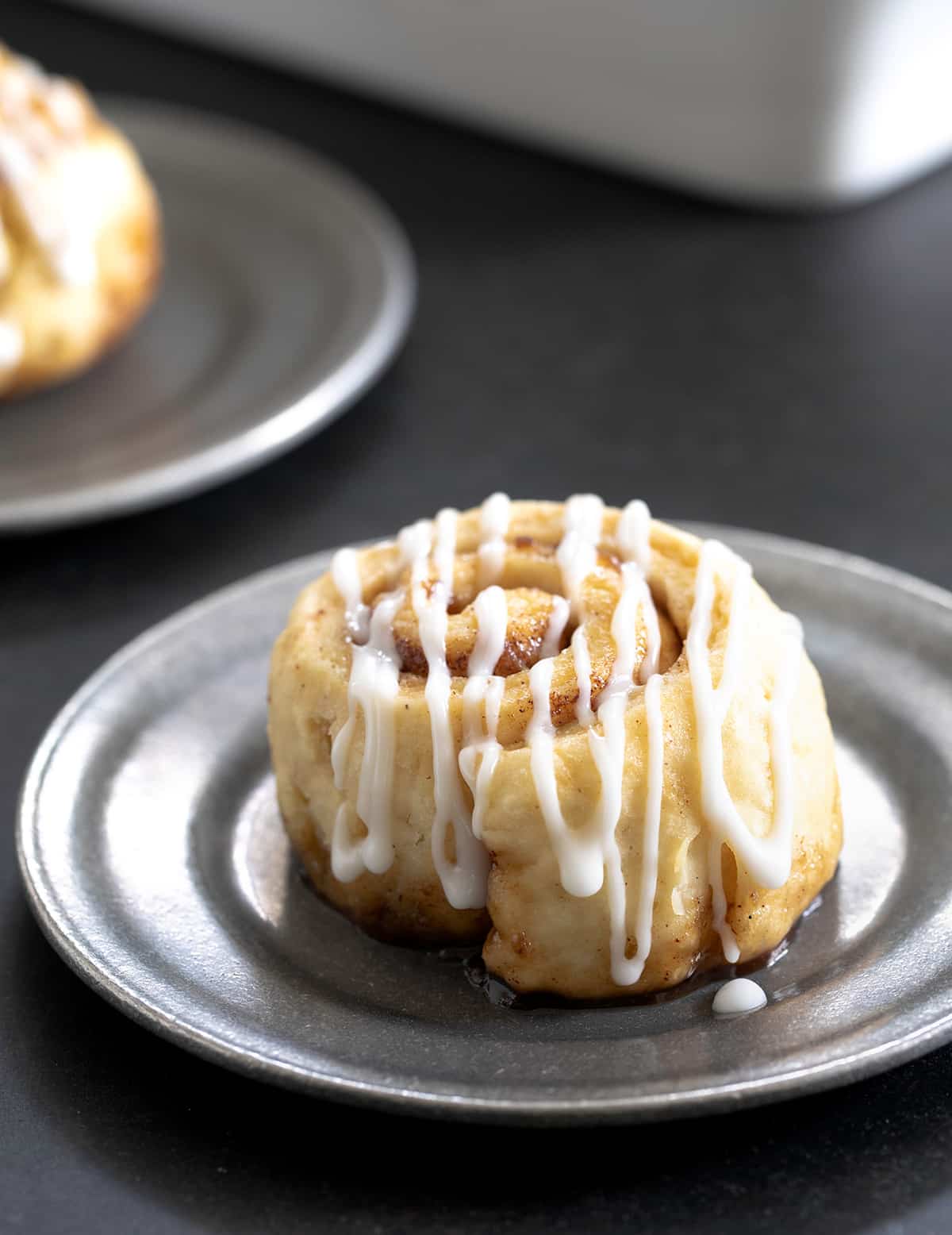
“OMG! These were incredible. Light, fluffy and the perfect sweet I have been missing. Will definitely make these again.”
Why this recipe works
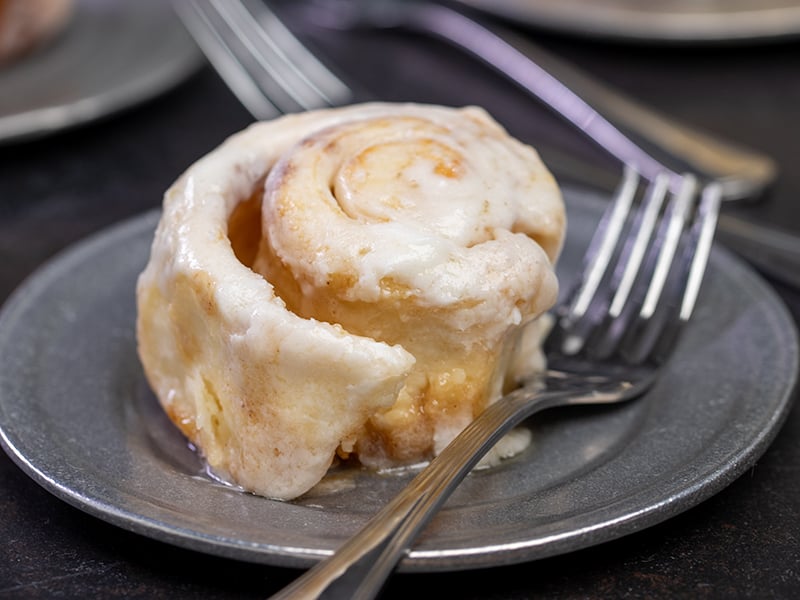
These gluten free cinnamon rolls rise beautifully and have that classic pillowy, tender texture you’d expect from the original. No one will guess they’re gluten free.
The dough is easy to make and even easier to shape, especially after a quick chill in the refrigerator. There’s just enough balanced sweetness in the rolls to complement the cinnamon, but not so much that you can’t enjoy any icing or frosting.
They’re also great for making ahead. Parbake and freeze a batch so fresh cinnamon rolls are ready whenever you want them.
Recipe ingredients
Here’s what you’ll need to make the rolls, the filling, and the topping, plus an explanation of what role each ingredient plays in a successful result:
For the rolls
- Gluten free flour blend: This recipe works well with a high quality blend based on a finely ground and sifted rice flour like Better Batter’s original all purpose flour blend, Nicole’s Best multipurpose (be sure to add the full 2 teaspoons xanthan gum), or King Arthur Flour’s gluten free bread flour (not Measure for Measure or Bob’s Red Mill 1-to-1, which aren’t meant for yeast bread and won’t hold up).
- Tapioca starch: Any well-balanced blend will already have some tapioca, but it’s important to add more for extra stretch, resilience and softness.
- Milk powder: Adds richness to the dough and helps with browning in the oven without overbaking and burning.
- Instant yeast: For rise and flavor. Active dry yeast also works if you add about 25% more and proof it first in some of the liquid in the recipe.
- Cream of tartar + baking soda: Work together to help the rolls rise and brown.
- Brown sugar: Adds some depth of flavor and sweetness.
- Salt: Balances and enhances other flavors.
- Apple cider vinegar: Adds a slight tang and helps with lift.
- Butter: Adds buttery flavor, and firms up as you chill the dough for easier shaping.
- Egg: Binds the dough together and gives it some resilience to hold its shape during baking and as the rolls cool.
- Milk: Adds moisture to bring the dough together and some fat for richness. Use full fat cow’s milk whenever possible.
For the filling
- Brown sugar + cinnamon: Add the classic flavors and melts for some gooey texture.
- Butter: Softened so it spreads easily, butter helps the cinnamon and sugar adhere to the dough.
For the optional glaze or frosting
- Confectioners’ sugar + milk: The milk hydrates the powdery sugar and added cornstach for a simple pourable glaze that stiffens as it dries.
- Butter + heavy cream: For a thicker, rich frosting. Use at room temp for best texture.
How to make gluten free cinnamon rolls (step by step photos)
Follow along with my directions below to see how to make gluten free cinnamon rolls in your own kitchen, including an explanation of the reason behind each step. For full ingredient amounts, see the recipe card below.
Mix the dry
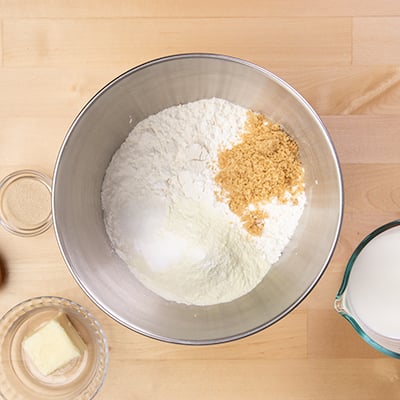
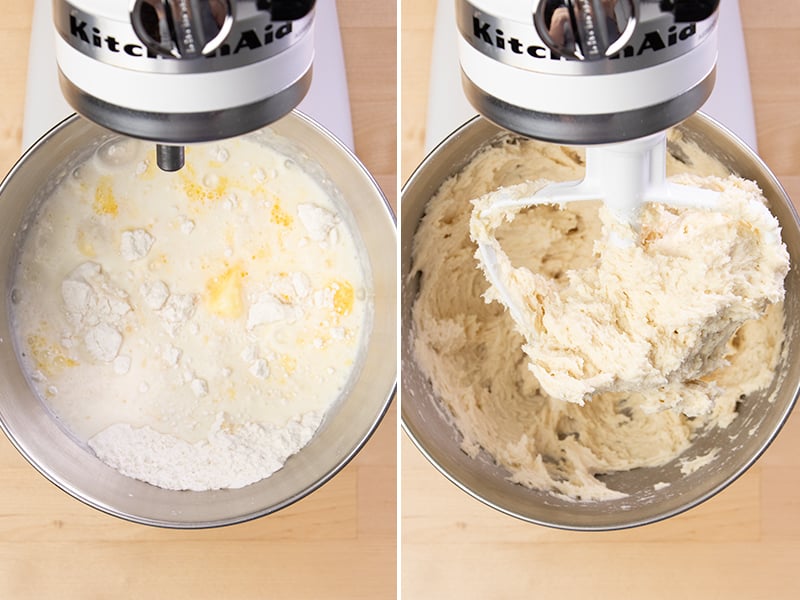
Use the bowl of a stand mixer but without any attachments at first. Use a handheld whisk to combine all the dry ingredients first except the salt (gluten free flour with xanthan gum, tapioca starch, milk powder, instant yeast, cream of tartar, baking soda, brown sugar). Whisk in the salt alone next to avoid any clumping of the salt with the yeast, since salt inhibits yeast.
Add wet
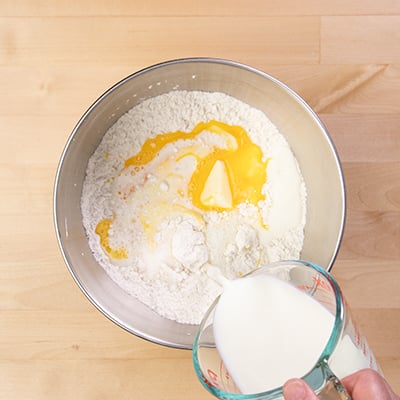
Since we’re using a stand mixer which will thoroughly blend everything together, add all the wet ingredients (apple cider vinegar, butter, egg, and milk) at once on top.
Beat
Use the paddle attachment to combine everything on low in a stand mixer, then beat on high speed for 3 minutes, or until it appears fluffy and whipped, with air incorporated into it.
Chill the dough
Refrigerate the dough for 30 minutes so it’s easier to handle since the butter will become firm. Make sure the dough is well-covered, though, so it doesn’t dry out, which will lower the hydration and the dough’s ability to rise.
Roll it out
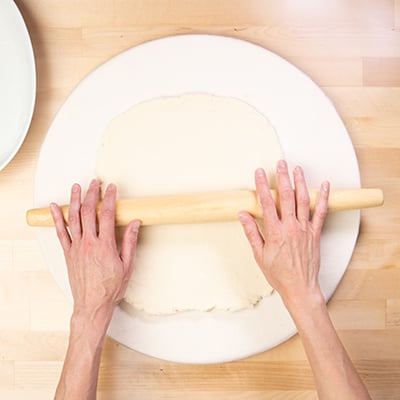
Work with half of the chilled dough at a time to make it less likely to tear. Place the dough on a very lightly floured surface (a canvas-covered board or even a sil-pat will prevent sticking with little to no added flour).
Use a tapered rolling pin to roll each half into a 9×12-inch rectangle about ½-inch thick. If the dough seems very uneven, gather it together again, sprinkle it very lightly with extra flour and roll it again.
Spread with butter
Use a small offset spatula to spread the whole top of the dough with half of the softened butter in a thin, even layer.
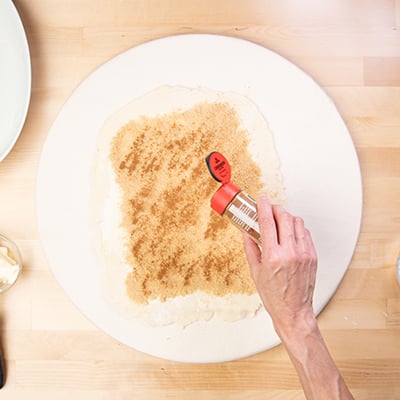
Add the cinnamon-sugar
Add the brown sugar, ground cinnamon and a touch of flour to help the filling thicken and not leak as much. Pat the filling down gently to help it stick.
Shape the rolls
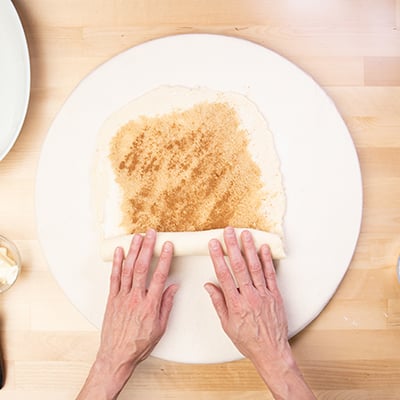
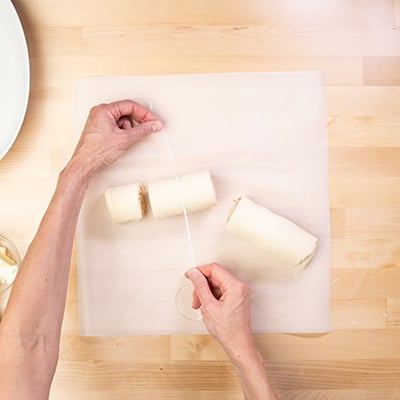
Roll the dough tightly from a short side into a coil. Slice into 6 even pieces using dental floss or a saw gently with a serrated knife to avoid tearing the dough, creating uneven edges.
Repeat with the other half.
Let them rise
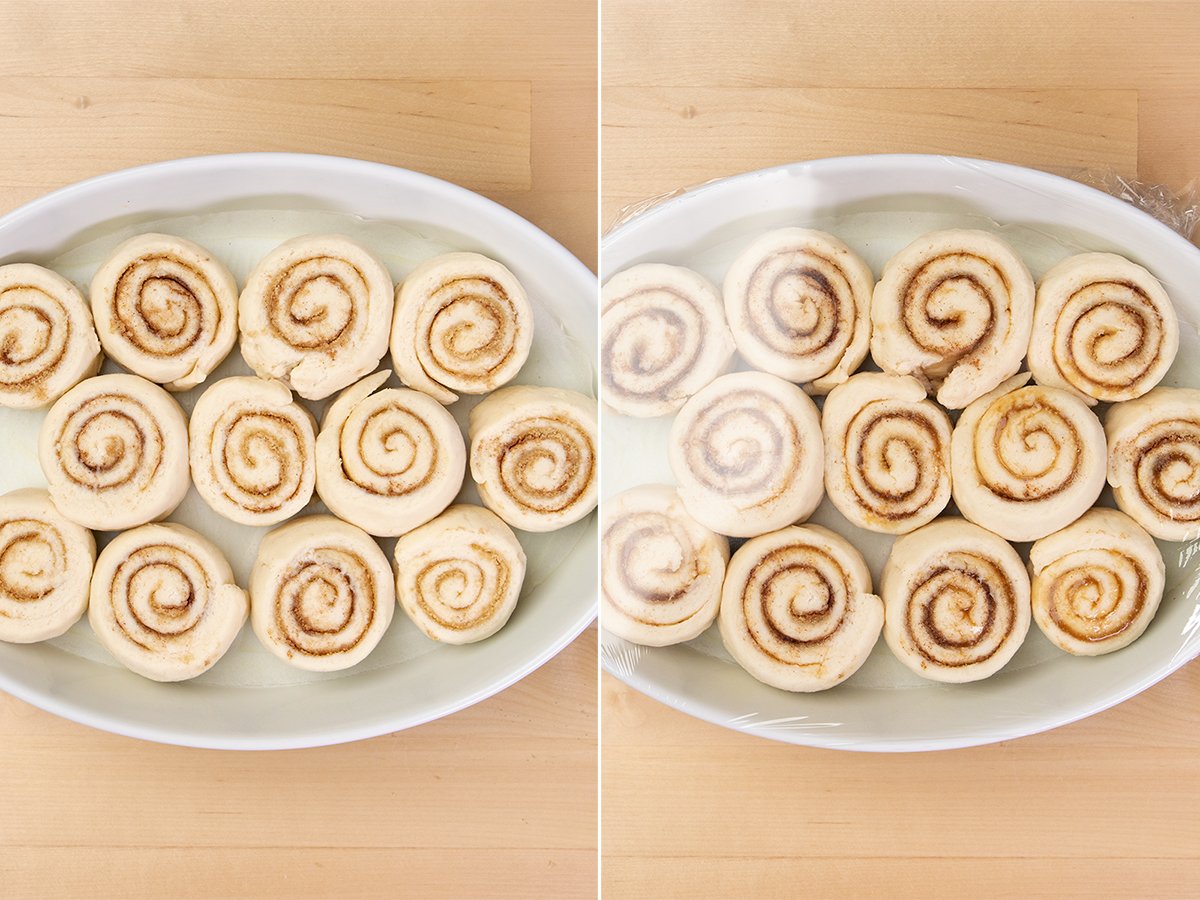
Place the rolls with the end pieces cut side up for a smooth rise, touching, in a greased baking dish, and cover with plastic wrap to avoid moisture evaporation, which would prevent a proper rise.
Let the rolls rise until puffy, about 50% larger, not doubled. Once the dough starts to take on a pockmarked appearance, it’s beginning to overproof and should go right into the oven.
Bake and frost
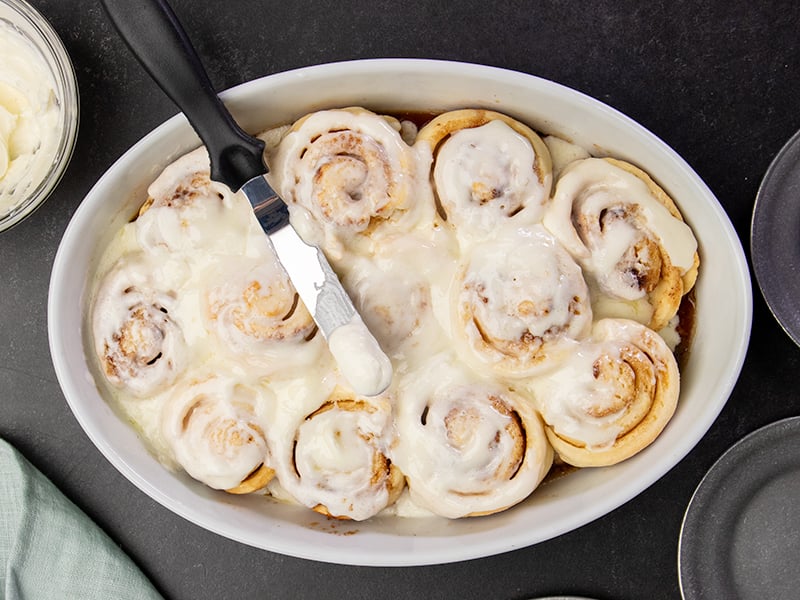
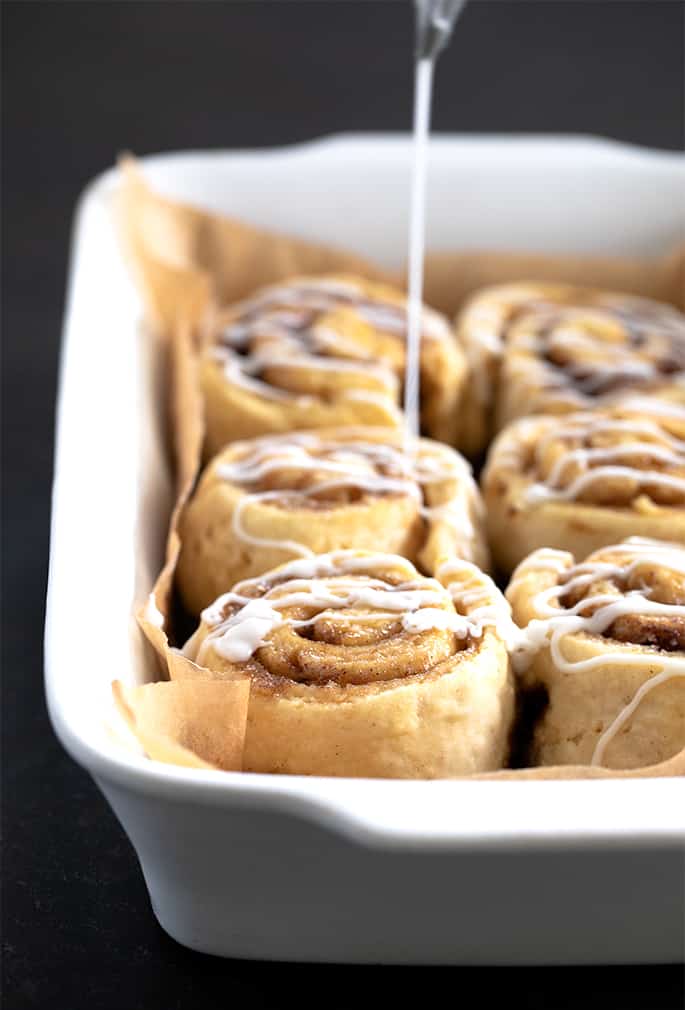
Bake at 350°F until risen and lightly golden. The rolls should read about 190°F on an instant read thermometer. While still warm, top with glaze or frosting, if using.
Expert tips
Work with cold dough
Cold dough is easier to handle, and you’re less likely to add extra flour, lowering the hydration ratio and leading to dense rolls that don’t rise fully. The hydration ratio here, or how much water there is compared to how much flour, is at about 58%. That’s relatively low for gluten free dough since gluten free flours absorb a lot of moisture, and it’s how we keep the rise controlled and stable.
Don’t overproof
They should rise to about 50% bigger, not double. Overproofed rolls lose structure and bake up flat. You’ll know they’re beginning to overproof when the tops start to look cratered. Bake them right away.
Roll evenly
A ½-inch thickness gives the best swirl without tearing the dough or losing too much filling during baking.
Slice cleanly
Try using unwaxed, unflavored dental floss to cut slices without compressing the rolls. If using a knife, use a serrated knife and saw gently back and forth so you exert very little pressure, which can collapse the rolls.
Ingredient substitutions
Dairy free
Use powdered coconut milk in place of milk powder. Substitute vegan butter for dairy butter, and choose a nondairy milk with fat (like almond milk, not fat-free).
Egg free
Replace the egg with a chia egg (1 tablespoon ground white chia seeds + 1 tablespoon lukewarm water, mixed and gelled).
Apple cider vinegar/cream of tartar
Use white wine vinegar instead of apple cider vinegar, and lemon juice (½ teaspoon) in place of cream of tartar.
Instant yeast
You must use commercial yeast in this recipe, but to replace instant yeast with active dry yeast, you need 25% more, by weight, for a total of 8 grams, and to dissolve it first in the warm milk in the recipe.
Parbake and freeze
To make fresh cinnamon rolls in the morning without overproofing, follow these steps:
- Shape the rolls and let them rise as usual.
- Bake at 300°F for 15 minutes—until puffed but very pale.
- Let cool completely, then wrap tightly and freeze.
- When ready to serve, defrost at room temp.
- Bake at 350°F for about 10 minutes, until browned and bubbling.
Gluten Free Cinnamon Roll Recipe
Equipment
- Stand mixer with paddle attachment
Ingredients
For the rolls
- 3 cups (420 g) all purpose gluten free flour blend, (See Recipe Notes), plus more for sprinkling
- 2 teaspoons xanthan gum, omit if your blend already contains it
- ¼ cup (36) tapioca starch/flour
- ½ cup (43 g) dry milk powder, or buttermilk powder; make sure it's powder, not liquid!
- 3 teaspoons (6 g) instant yeast
- ¼ teaspoon cream of tartar
- ¼ teaspoon baking soda
- 2 tablespoons (26 g) packed light brown sugar
- 1 teaspoon kosher salt
- 1 teaspoon apple cider vinegar
- 4 tablespoons (56 g) unsalted butter, at room temperature
- 1 (50 g (weighed out of shell)) egg, at room temperature, beaten
- 1 ¼ cups (10 ounces) warm milk, about 95°F (plus a bit more, only as necessary)
For the filling
- 4 tablespoons (56 g) unsalted butter, at room temperature
- ¾ cup (164 g) packed light brown sugar
- 1 teaspoon ground cinnamon
- 1 teaspoon (3 g) gluten free flour, you can use more all purpose gluten free flour, tapioca starch, superfine rice flour, or arrowroot
For an optional glaze
- 1 cup (115 g) confectioners' sugar, sifted
- 1 tablespoon milk, any kind, plus more by the 1/4 teaspoonful
For an optional frosting
- 6 tablespoons (84 g) unsalted butter, at room temperature
- 2 cups (230 g) confectioners' sugar, sifted
- 3 tablespoons heavy whipping cream, at room temperature, plus more as necessary
Instructions
- Grease a 9-inch x 13-inch casserole dish and set it aside.
Make the dough
- In the bowl of a stand mixer fitted with the paddle, whisk together the flour, xanthan gum, tapioca starch, milk powder, yeast, cream of tartar, baking soda, and sugar. Add the salt and whisk again.
- Add the vinegar, butter, egg, and milk, and mix to combine.
- Increase the mixer speed to high and beat for about 3 minutes, until the dough is fluffy and has a shaggy whipped appearance from air being incorporated into it.
- Transfer the dough to a sealed container, and refrigerate for 30 minutes to make it easier to handle.
Roll out the dough
- Turn the chilled dough onto a lightly floured surface and knead gently to smooth.
- Divide in half, keeping one half covered. Roll the other into a 9×12-inch rectangle about ½ inch thick, dusting with flour as needed.
Add the filling and shape
- Spread half the softened butter over the dough, leaving a 1-inch border.
- In a small bowl, combine brown sugar, cinnamon and flour, and mix to combine without compressing the sugar.
- Sprinkle the dough evenly with half the cinnamon and sugar mixture and pat it down gently to help it adhere.
- Starting from a short side, roll the dough tightly into a coil. Slice into 6 rolls using floss or a sharp knife.
- Place in a greased 9×13-inch pan, 1 inch apart. Press each roll down about ⅓ of the way to flatten slightly.
- Repeat with the second half of the dough and the remaining filling.
Let rise
- Cover the pan with lightly oiled plastic wrap. Let rise in a warm spot until the rolls are about 50% larger (about 45 minutes).
Bake
- Preheat the oven to 350°F.
- Remove the plastic wrap and bake for 20 minutes, until risen, lightly golden, and baked through (about 190°F on an instant read thermometer)
- Let cool for 5 to 10 minutes before icing or frosting, but no longer.
Optional glaze.
- Whisk together confectioners’ sugar and milk until thick but pourable. Add more milk ¼ teaspoon at a time if needed.
- Drizzle over warm rolls.
Optional frosting
- Beat butter and confectioners’ sugar until smooth. Add cream gradually to reach a spreadable consistency.
- Spread generously over warm rolls.
Video
Tell Google you trust GFOAS!
Notes
Nutrition
Nutrition information is automatically calculated, so should only be used as an approximation.
Storage instructions
Let the rolls cool completely before storing. Wrap tightly and freeze in a single layer before adding glaze.
To reheat, defrost at room temp, sprinkle with a bit of water, and warm in a 275°F oven until soft and heated through.
FAQs
Be patient. Gluten free yeast dough takes time to rise and usually won’t double. If they seem stalled, the environment may be too cold.
Most likely causes: too much flour during shaping or not enough proofing time. Make sure to let the dough rise until noticeably puffy.
Check that you used the correct flour blend, measured by weight, and used dry milk powder—not liquid. Sticky dough often means it’s overhydrated.
They may have overbaked, or the flour blend may have absorbed too much moisture. Avoid adding extra flour while shaping.











Hi!
I would love to try your recipe but I live in Europe and can’t buy milk powder near where I live. I know it’s important for the recipe so is there anything I can substitute it with? Thank you anyway!
Hi, Saartje, I did a quick Google search, and it appears that milk powder is often sold in the baby food aisle or with coffee creamers widely across Europe. I’m afraid you need some sort of milk powder for this recipe to turn out as expected.
I have used a recipe for a few years now. I absolutely love it. I can make it into pumpkin cinnamon rolls so easy. Just love your recipe very very much. And I own a bakery. And my customers love the recipe so I appreciate you very much
That’s great to hear, Vanessa! Thanks so much for sharing your experience.
my Mom used to make cabbage rolls, which consisted of the cabbage mixture inside dough. the dough was rolled very thin. I have been trying to find a gluten free recipe for “roll dough” that I can roll thin enough to make these. Can I use this recipe for this? without the sugar and cinnamon, of course?
I am going to make these rolls for my husband, but wondering if I can use it for both?
Hi, Ann, I’m afraid I don’t think this recipe would work for that sort of application. It’s a sweet dough, so I wouldn’t recommend it for something savory like that. Plus, the dough isn’t designed to be rolled as thin as you describe.
Hi Nicole,
I need some help please!
I have made these cinnamon rolls twice. I made no substitutions. I weighed all ingredients. I used better batter original blend, yeast, cream of tater and baking soda were in date and fresh, room temp butter & egg, warm enough milk and correct buttermilk powder, etc.. The rolls seemed to puff during proofing, but when i baked them, they got a bit smaller and were dense.
I don’t know what to change to correct what went wrong.
We live in Texas and we keep our home really cold. So, I proofed them in my oven; turned the oven temp on for 1 minute, then turned oven off, and proofed them in there for about 1 hr.
Can you give me some advice? Thank you!
You really should never proof yeast dough in the oven, since it can easily kill the yeast no matter how “low” you think the oven temperature is. Other than that, if they rise and then shrink during baking, you’re most likely overproofing them and/or proofing them too quickly. Even if the yeast isn’t dying in the oven, only a slow, steady rise is a stable rise. Yeast will still multiply in a cool environment, just more slowly. Don’t proof in the oven, ever. You can turn on the oven to its lowest temp and place the tray of shaped rolls, covered, on top and let the ambient heat help them rise that way, but mostly, you just need to be patient during the rise and let it happen slowly. Then bake.
Thank you so much for your advice! I’ll try them again.
The taste is incredible; I’m excited to get a soft & fluffy roll.
Hi Nicole, I just discovered this recipe and am eager to try it. I am wondering if I can sub corn starch or white rice flour for the tapioca starch/ flour? Thank you!
Hi, Mary Faith, I’m afraid you can’t use corns starch or plain white rice flour as a substitute for tapioca starch, which has unique stretchy qualities. But you might be able to use superfinely ground glutinous white rice flour, made from short grain white rice. Mochiko is a common brand.
I’d like to make these but i cannot have dairy OR coconut. Couldn’t I just skip the milk powder?
Hi, Donna, I’m afraid you can’t just skip an ingredient, no. You’d need to replace it with something. You could try soy milk powder, if you can have that.
Hi Nicole ,
Can I use oatflour instead ?
I am from India .
Thanks !
Hi, Divya, no I’m afraid oat flour is not an all purpose gluten free flour blend and can’t substitute for one in a recipe like this. I have a whole category of recipes developed to be made with oat flour. I’d try one of those.
Hi Nicole! have you tried this recipe using your bread flour blend with Expandex and whey protein isolate? I’m wondering if it would come out even better.
Thanks!
Hi, Maria, no, you can only use that blend in recipes that were developed specifically for it, and this one wasn’t. Glad you asked before trying!
I used to be a really bad gf baker but since I started to follow your recipes, I genuinely feel a lot more confident and am able to make soft, fluffy doughs and cakes. Just made the cinnamon rolls today and they turned out fantastic! Dough was so easy to roll as well. Thanks so much for your recipes!
Oh, wow, Selin, I’m just so happy to hear not only that you loved the cinnamon rolls, but the sense of confidence you feel that you can make all kinds of things. That is why I started this blog way back in 2009, so that no one had to feel helpless like I did. The sky’s the limit! I appreciate your words, maybe more than you know!
This was AMAZING. I followed the recipe to a T, I read, re read, and re read again your blog on all the flour blends. I made your “better than cup4cup” blend, and the dough was beautiful, easy to work with, and absolutely DELICIOUS. The dough is definitely sticky and I was worried it’s not coming together, but knowing I followed the instructions I scraped into a bowl and chilled it, it was perfect! Thanks for doing all the dirty work and putting this beautiful recipe together !!