

This post may contain affiliate links. Please read our disclosure policy.
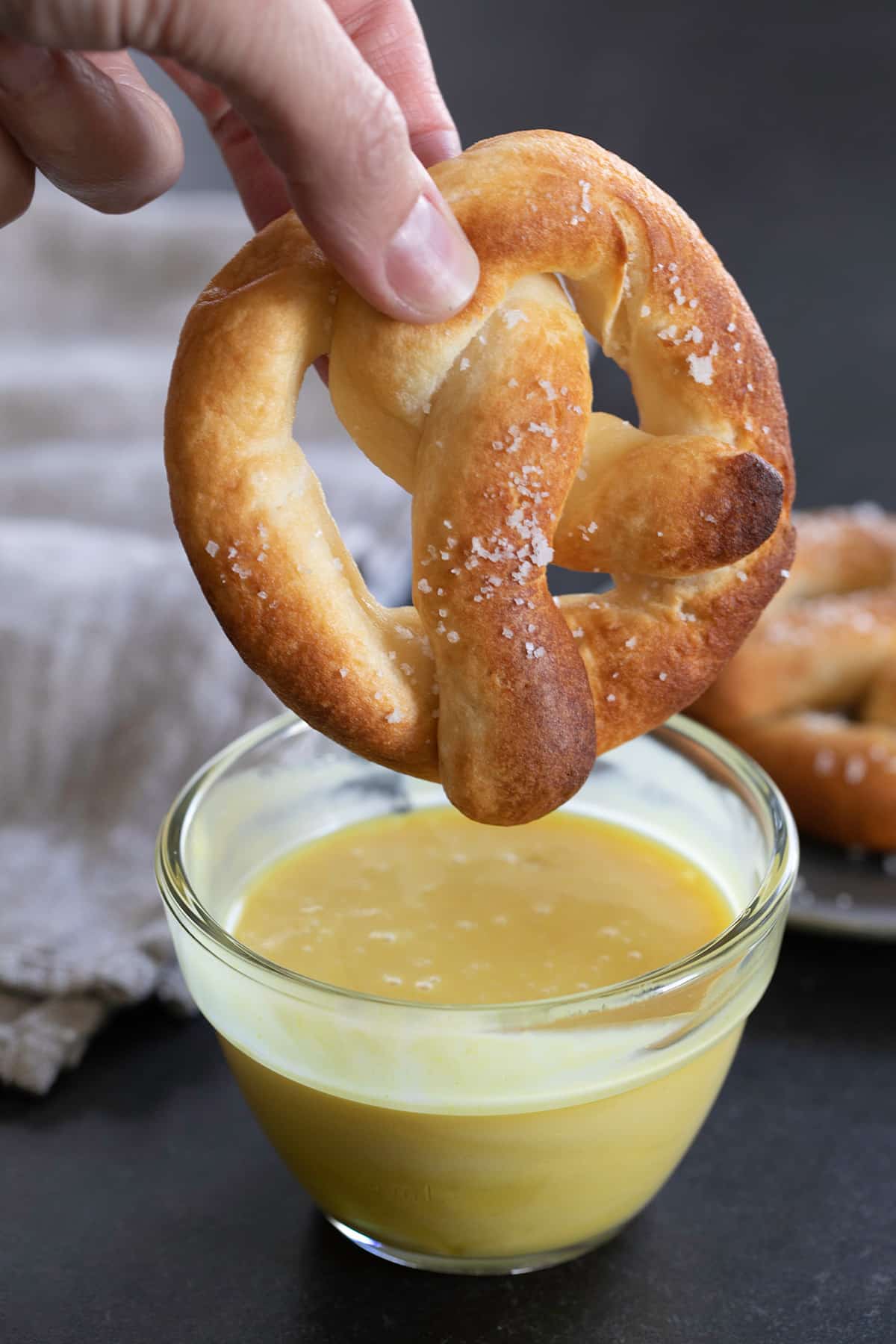
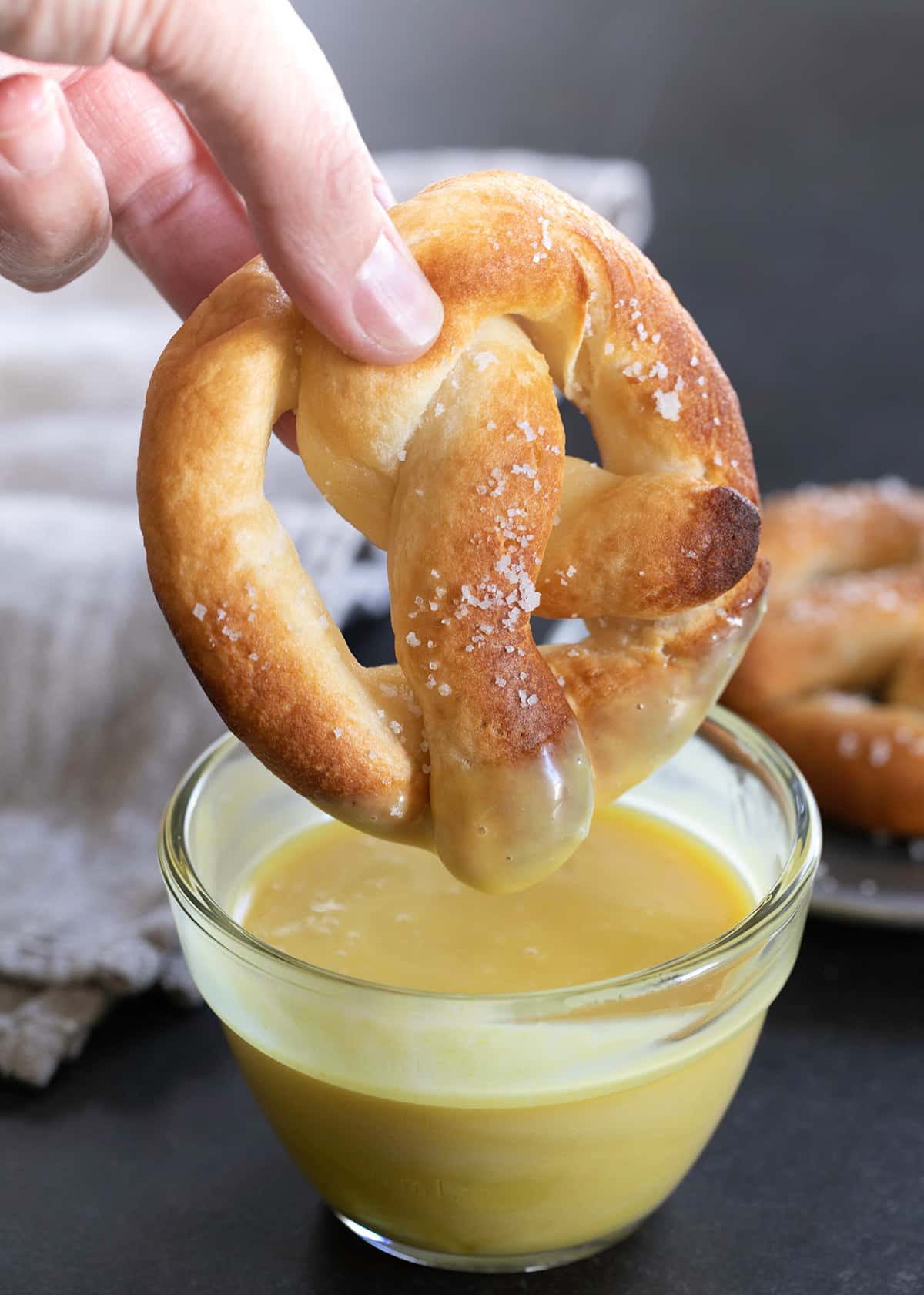
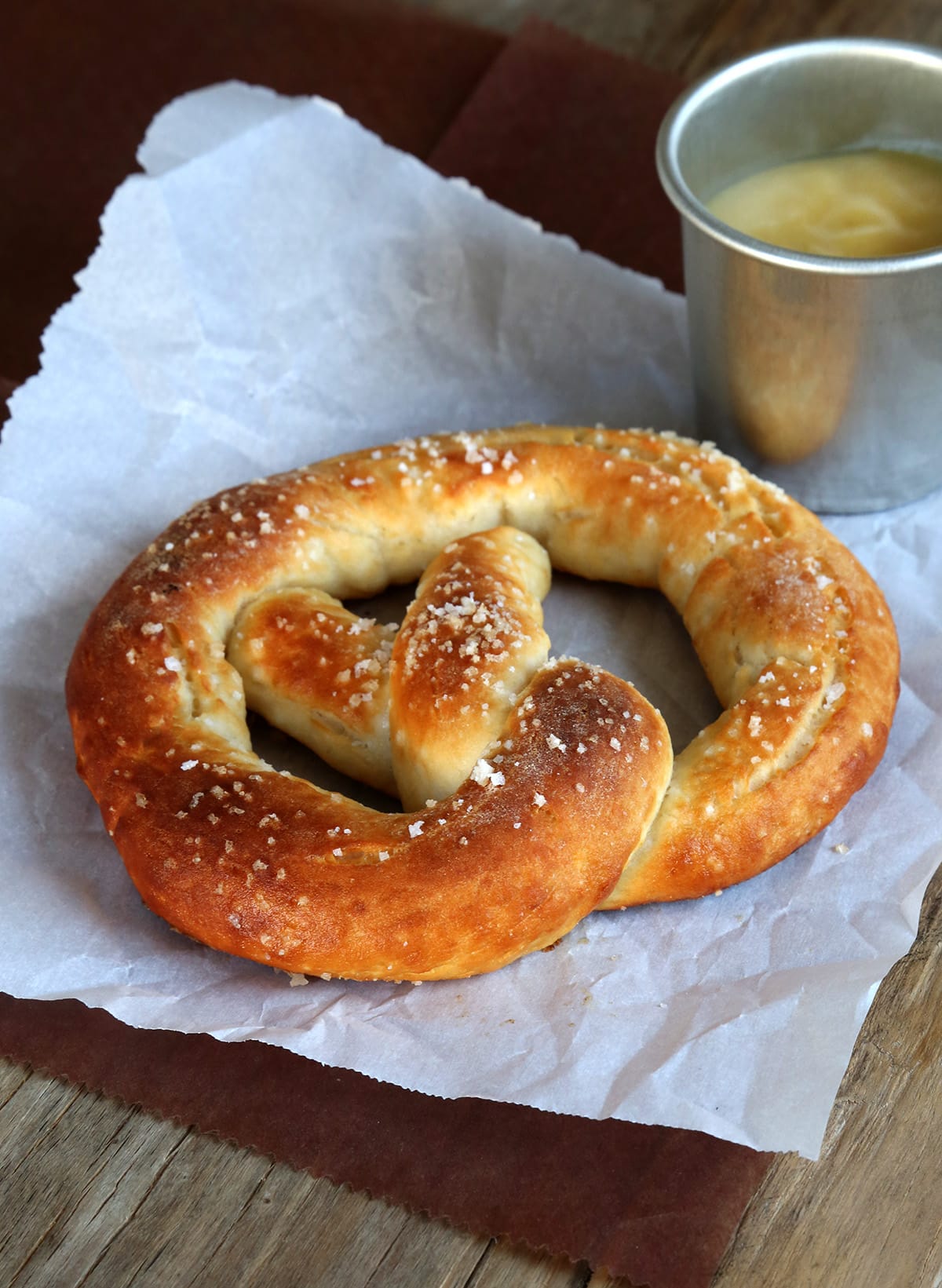
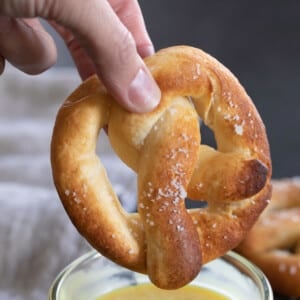
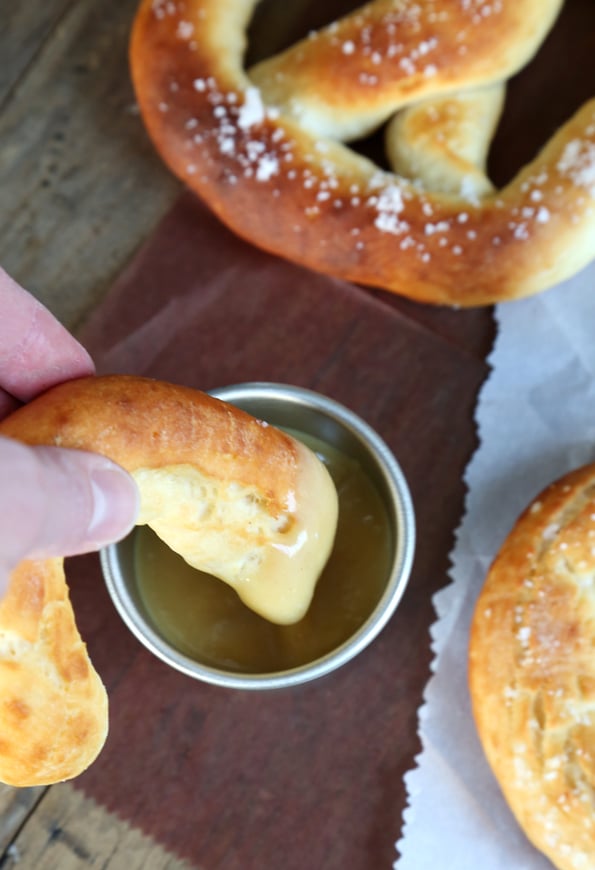
These Auntie Anne's-style gluten free soft pretzels are chewy, buttery, and have that truly authentic chew. Add in the sweet mustard dipping sauce, and you won't even be tempted to have “just one” gluteny pretzel at the mall!
Why this recipe works
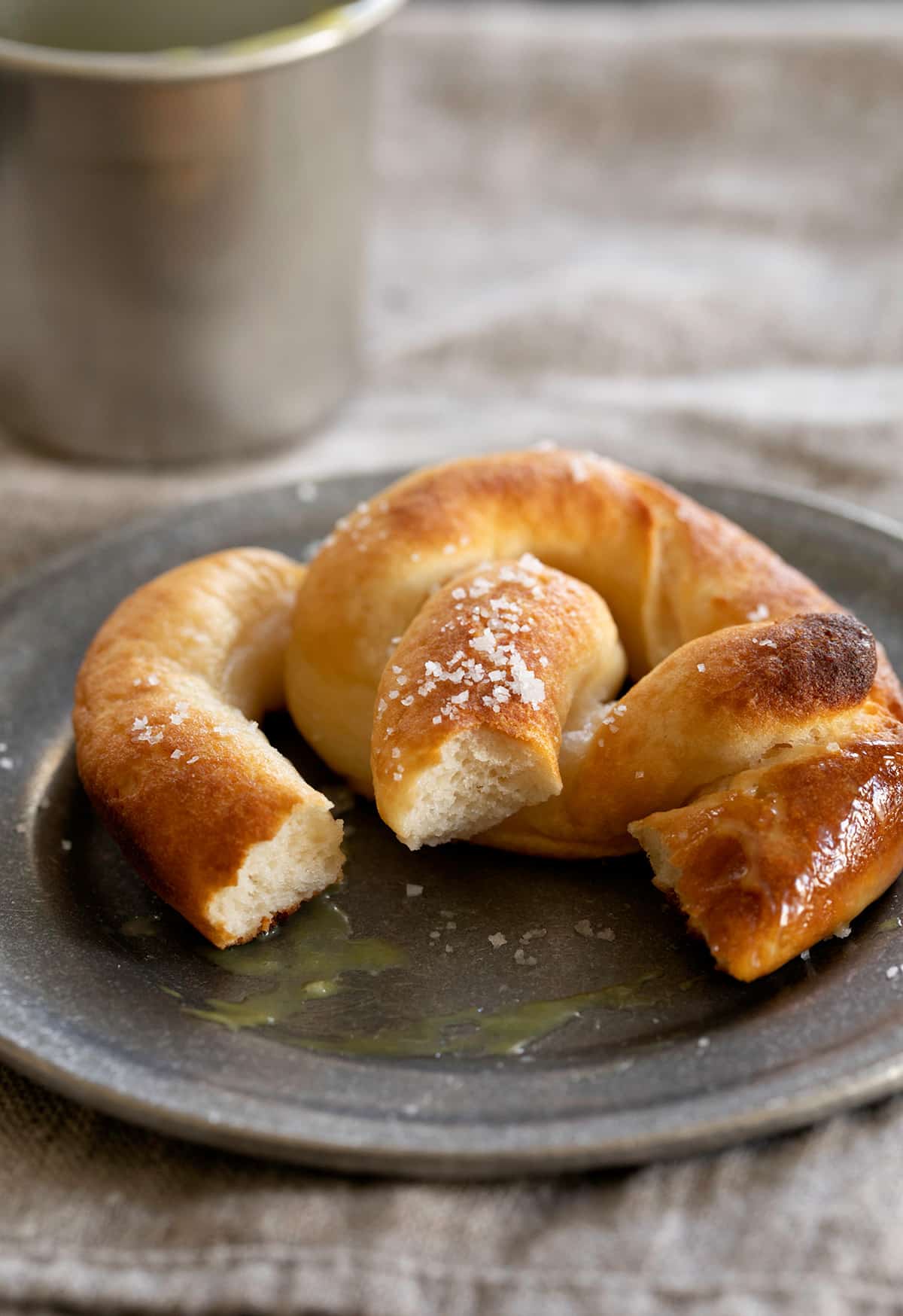
Just like the mall pretzels, these soft pretzels are made with a touch of brown sugar in the dough, butter baked into the dough for flavor and richness, and plenty of melted butter on top. You won't be able to resist that buttery, sweet and salty combination.
This new and improved version is made with a touch of psyllium husk in the dough for extra chewy pretzels with a better rise. Plus, the raw dough is easier to handle than ever.
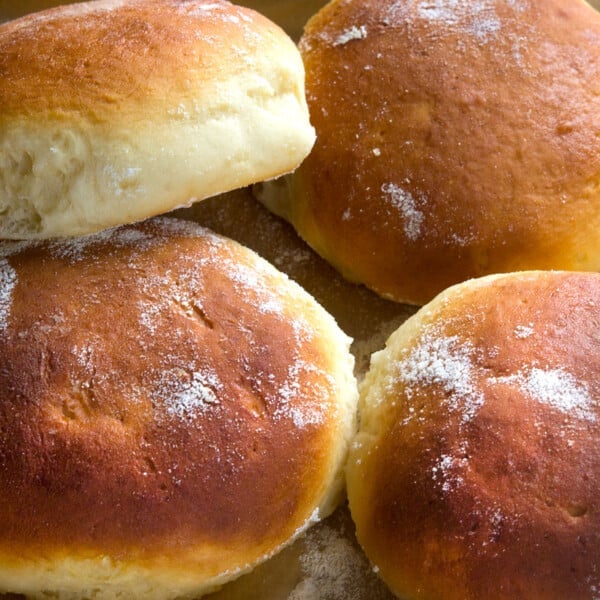
The dough can even rest in the refrigerator in a sealed container for up to 3 days before baking. Bake half the dough one night for 4 fresh pretzels, and the other half the next. You can also use it to shape into rounds and bake pretzel rolls. Score the dough in two long slashes on top, and otherwise follow the recipe as written.
Ingredients explained
There are more than a few ingredients in this recipe, but don't worry! They are all pretty common, and each has an important role in the perfect soft pretzel:
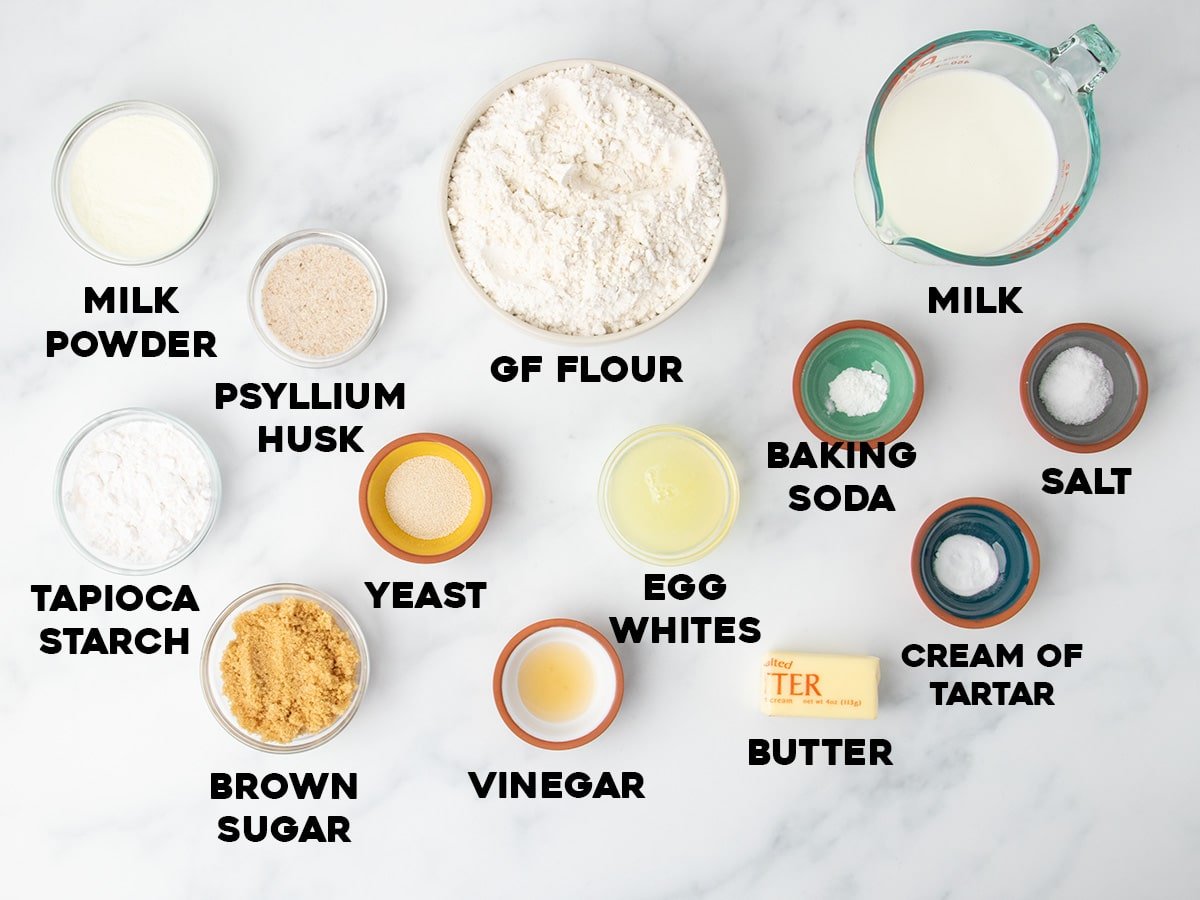
- Gluten free flour blend: Be sure to use an all purpose gluten free flour blend that uses superfinely ground white and brown rice flours as a base, with a mix of starches to balance it. My favorites are Better Batter's classic blend and Nicole's Best multipurpose with added xanthan gum. Vitacost's gluten free multi-purpose blend with added xanthan gum should also work, as should King Arthur Flour's gluten free bread flour blend. I would avoid Bob's Red Mill 1-to-1 here, as it isn't well-suited to yeast bread.
- Tapioca starch: Even though most well-balanced all purpose gluten free flour blends already contain some tapioca starch, this is a separate added ingredient that adds stretch and chew to the pretzels.
- Milk powder: You can use nonfat, lowfat or whole milk powder. It helps the blend brown in the oven and adds more richness than just liquid milk.
- Psyllium husk: Pure fiber, this absorbs a lot of moisture and forms a gel-like substance that helps give the dough more support, allowing it to rise higher. Be careful to use higher purity “blond” husk, or your baked goods may turn a harmless but unsightly blue/purple color. I like NaturaleBio brand whole husk from Amazon, but if it's out of stock, buy Yupik brand. This is not a replacement for xanthan gum, but used in addition to it as the combination helps the rise, and then holds it as the pretzels cool.
- Brown sugar: Adds some sweetness and depth of flavor, and feeds the yeast.
- Cream of tartar: reacts with acid to assist the bread's rise and helps the egg whites maintain the rise as the bread cools.
- Baking soda: helps the pretzels brown in the oven.
- Salt: Controls the activity of the yeast, and brightens the flavor of the bread.
- Butter: Adds flavor, moisture, and tenderness to the crumb.
- Vinegar: Reacts with cream of tartar to create with rise; encourages yeast to rise in a stable way.
- Milk: Adds moisture to bring the dough together, plus flavor and richness.
How to make gluten free soft pretzels
This recipe has 3 main steps: making the raw dough then letting it rise and chill, shaping it and letting it rise again, then boiling and baking the dough. The full recipe with ingredient amounts and a video are in the recipe card below. These step by step photos should aid you in making these pretzels in your own kitchen:
Make the raw dough
Hydrate the psyllium husk
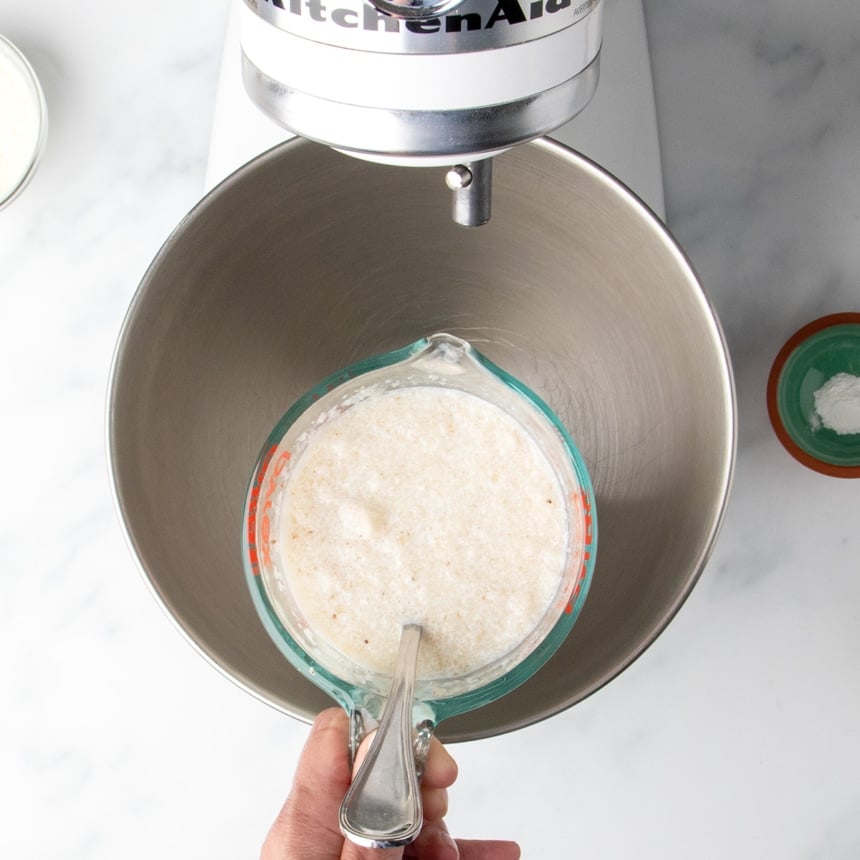
In a 2 cup measuring cup with a pour spout, so it's easy to pour later, whisk whole psyllium husk into warm milk. Allow the mixture to sit for about 30 seconds or until the psyllium soaks up the liquid and begins to swell and form a loose gel. Hydrating the psyllium husk first prevents it from clumping in the dough.
Whisk the dry ingredients
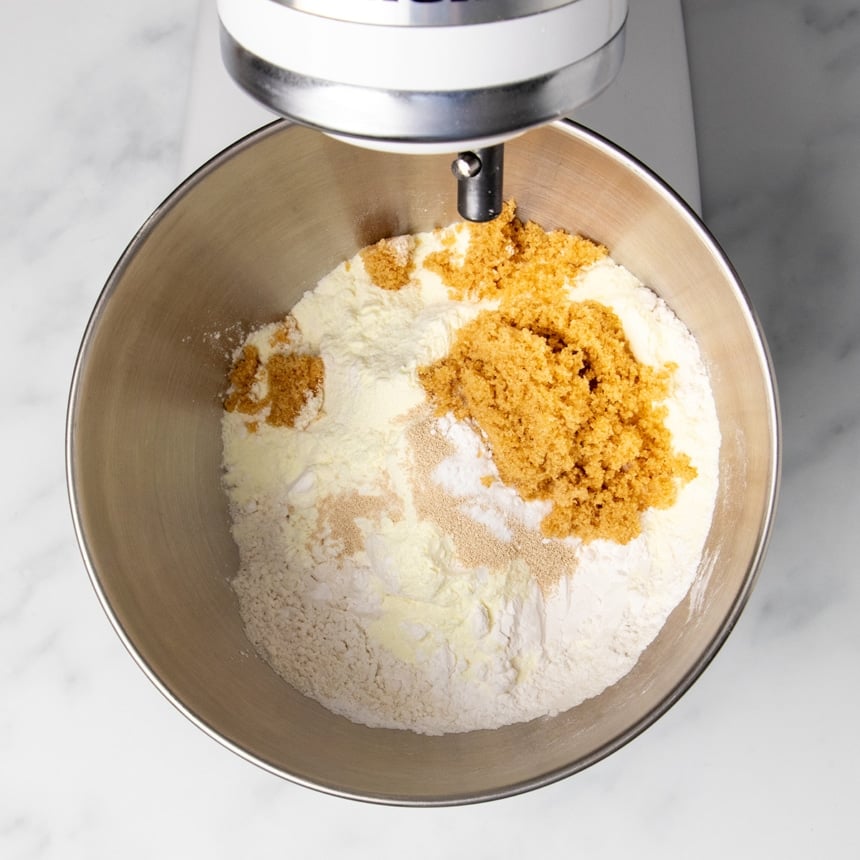
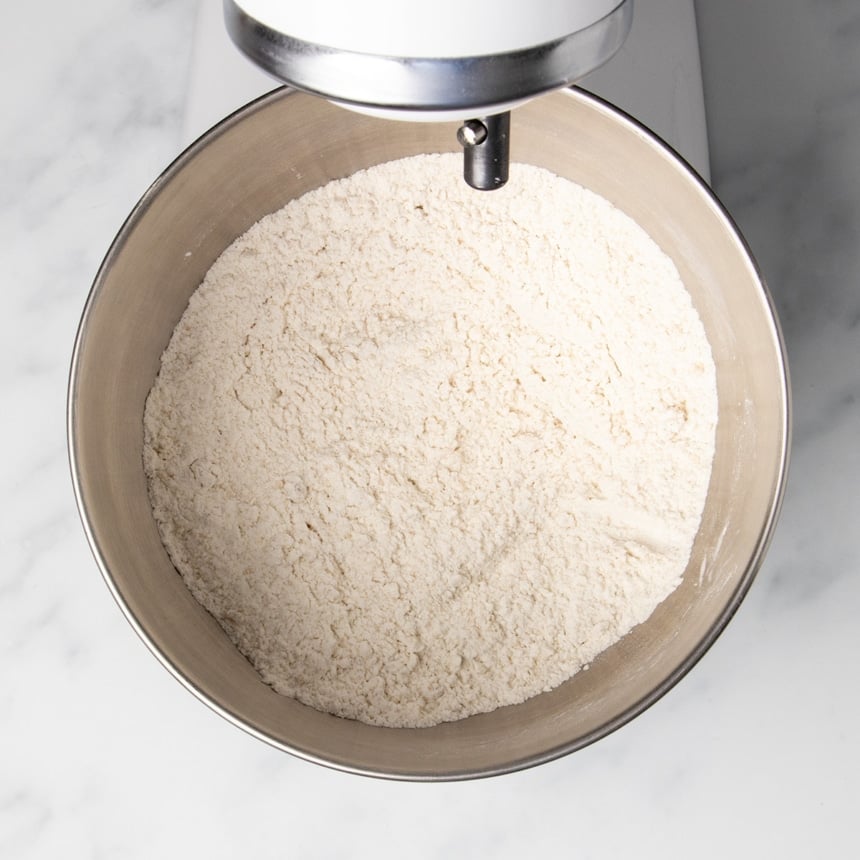
Whisk together the remaining dry ingredients (gluten free flour blend with xanthan gum, tapioca starch, milk powder, yeast, cream of tartar, baking soda, and brown sugar) in the bowl of a stand mixer. Whisk in the salt separately to make sure it doesn't clump with the yeast, since they work against one another.
Add the wet ingredients
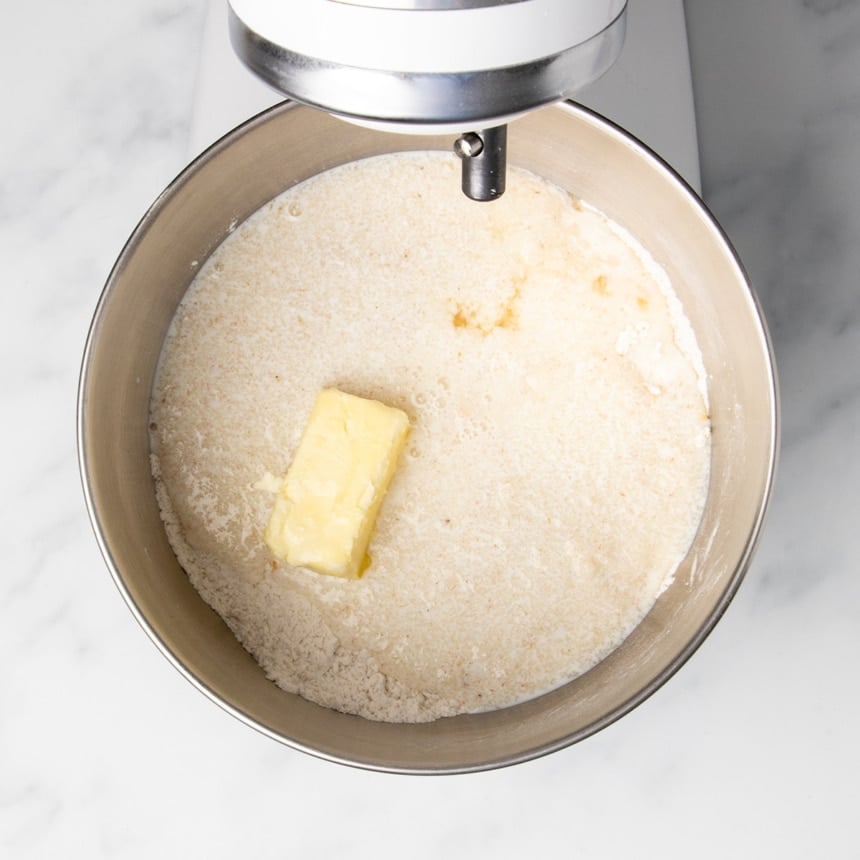
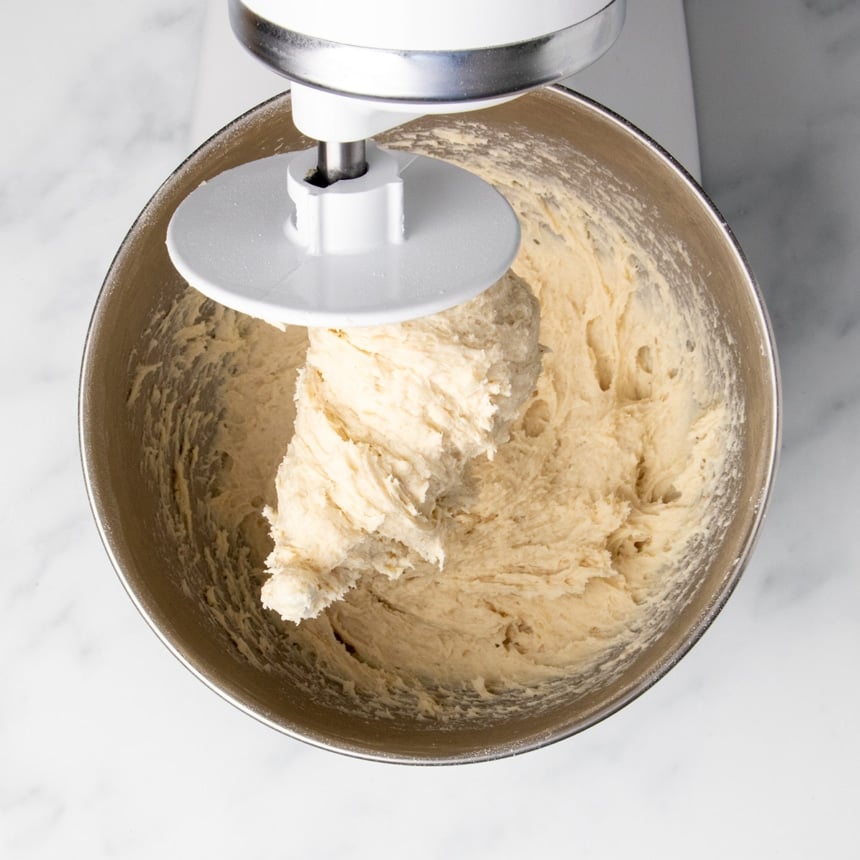
Add the wet ingredients (apple cider vinegar, butter, egg whites, and milk and psyllium husk mixture) to the dry, and beat with the paddle attachment until the dough just begins to come together. Continue with the paddle attachment or switch to the dough hook (as long as you've added psyllium husk to the dough). Process on high speed for 4 full minutes for a well-mixed dough with some added air for a lighter crumb.
Refrigerate the dough
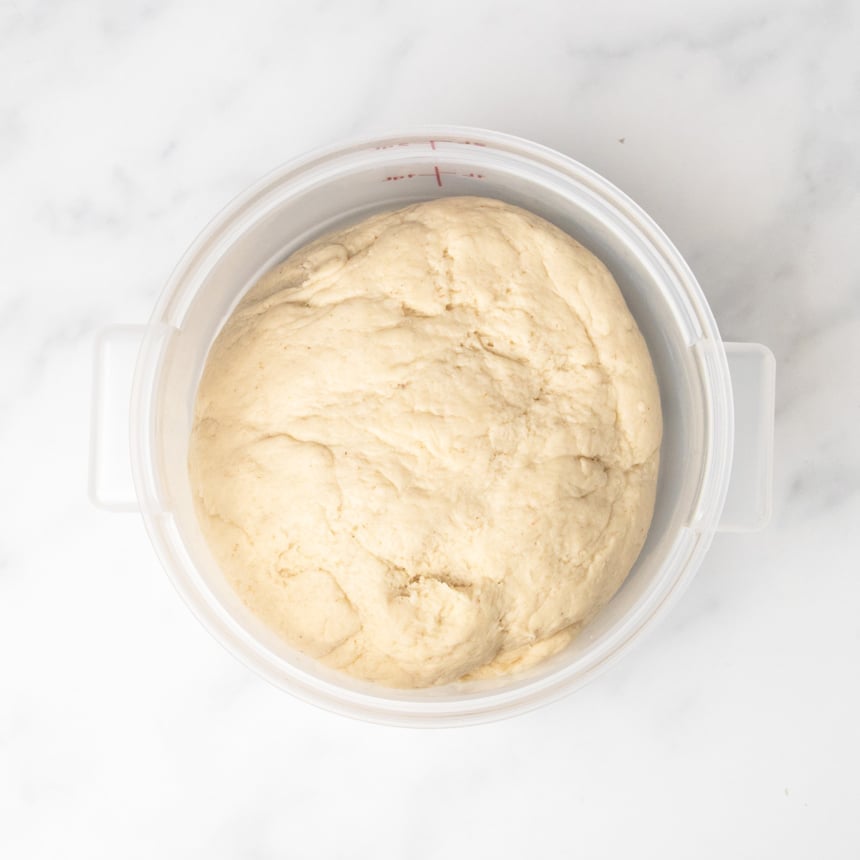
Place the dough in a tightly sealed container and refrigerate it, unshaped, for at least 1 hour. The dough will develop some yeasted flavor and become easier to handle as the flour absorbs some of the moisture.
Shape the dough into pretzels
Divide the dough
Using a metal bench scraper or sharp knife to cut the dough in half, then half again, and finally half again for 8 equal pieces. Each should weigh about 5 ounces for full-sized soft pretzels.
Shape the pretzels
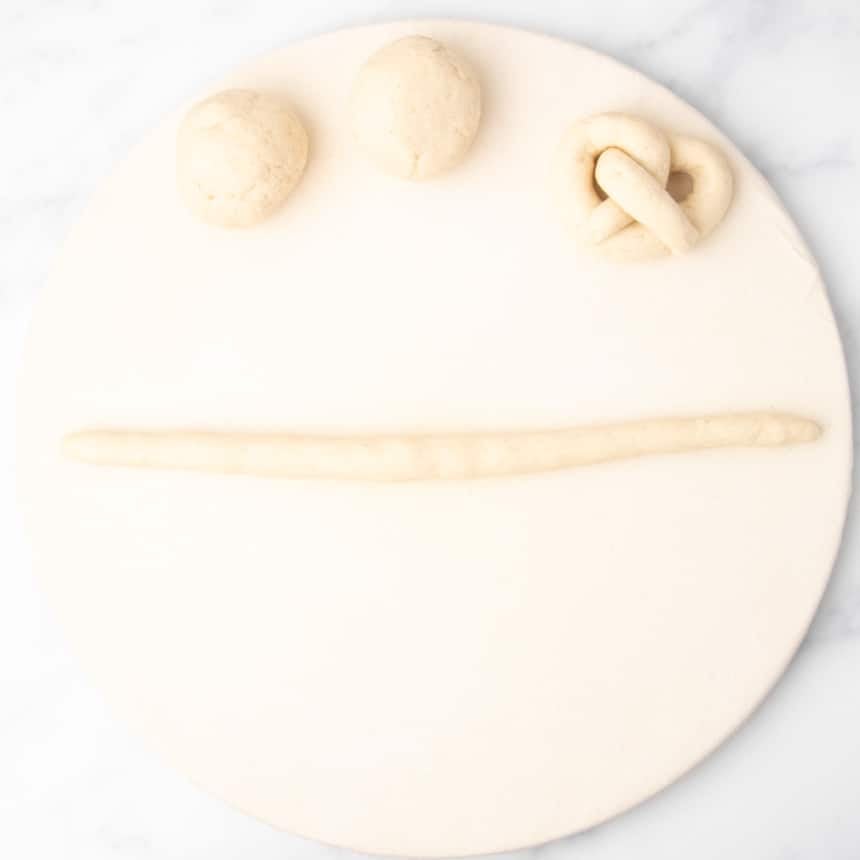
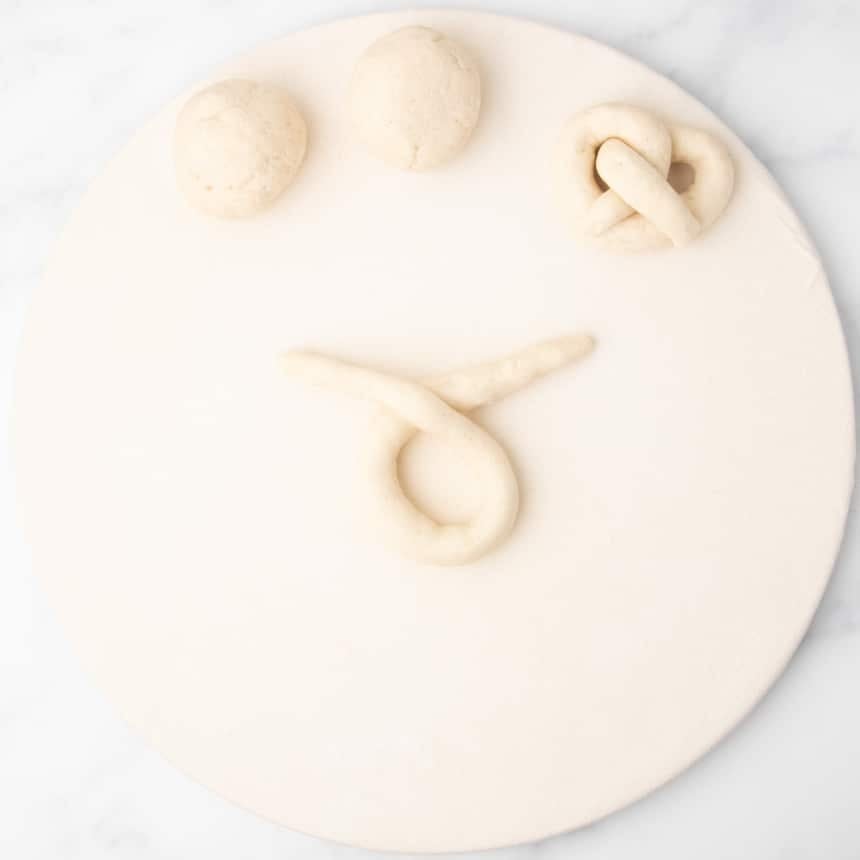
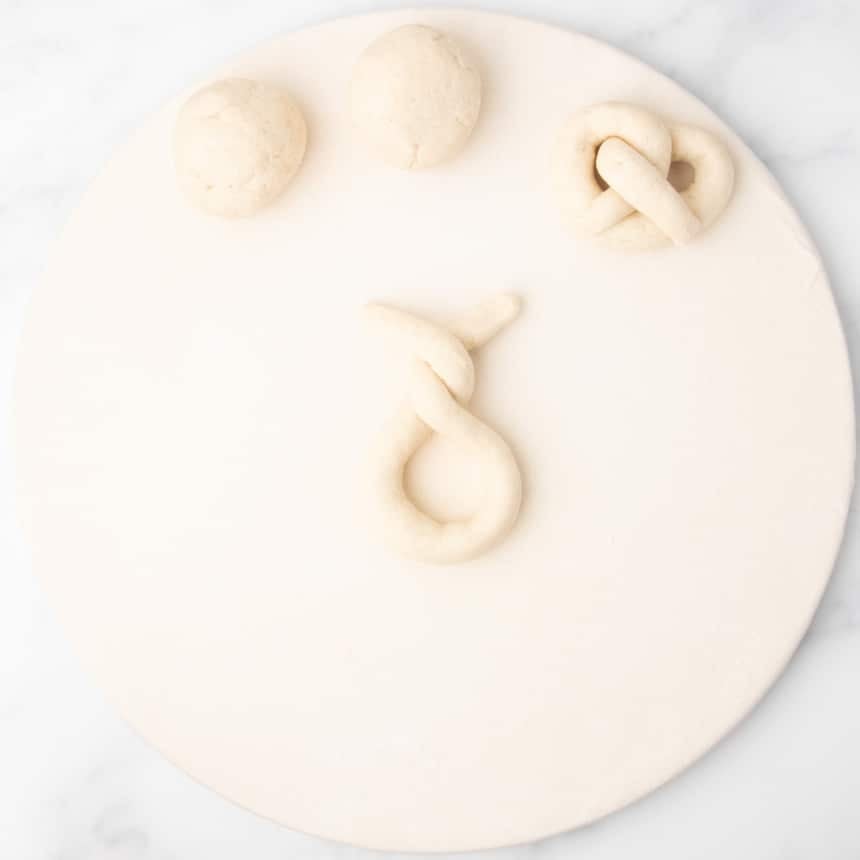
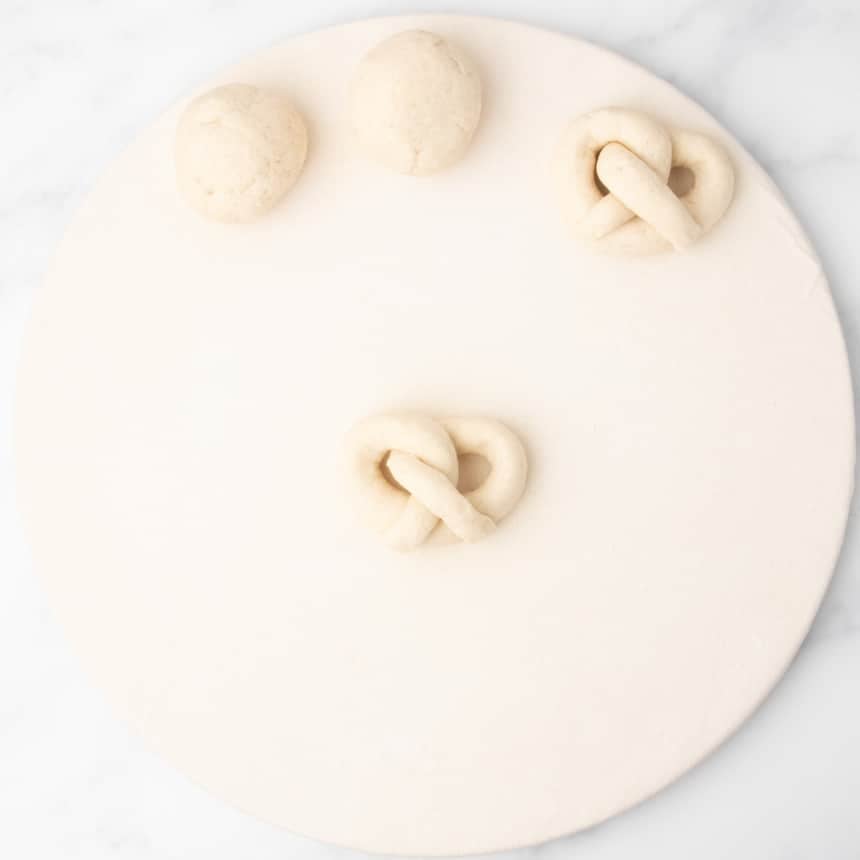
Roll and twist each piece of dough into a classic pretzel shape ? like this:
- Roll the first piece of dough into a 12-inch rope with the palms of both hands pressing lightly away from one another. For larger pretzels with more visible shapes, roll the dough into a longer rope, closer to 15-inches long.
- Curve it into an upside down “U” shape and criss cross the ends over one another into an “X” about 3 inches away from each end.
- Criss-cross each end of the dough over one another once more to create a helix.
- Grab each of the ends again, and invert the helix over on itself toward the round end of the original U shape.
- Press the ends down to help them adhere so the twist doesn’t unravel during boiling.
Let rise
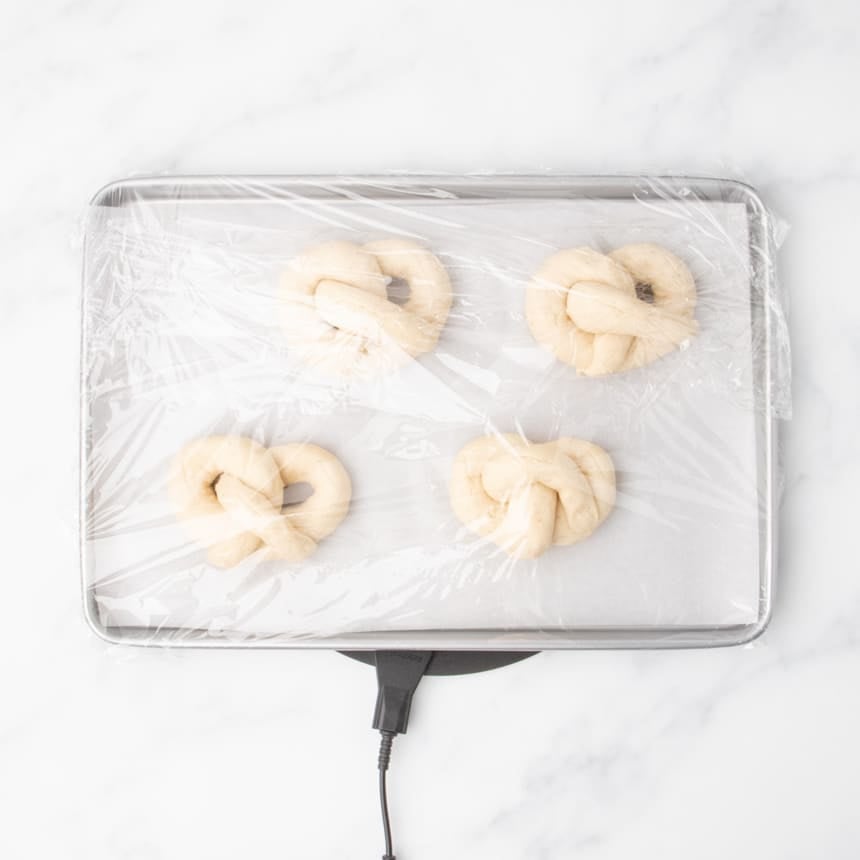
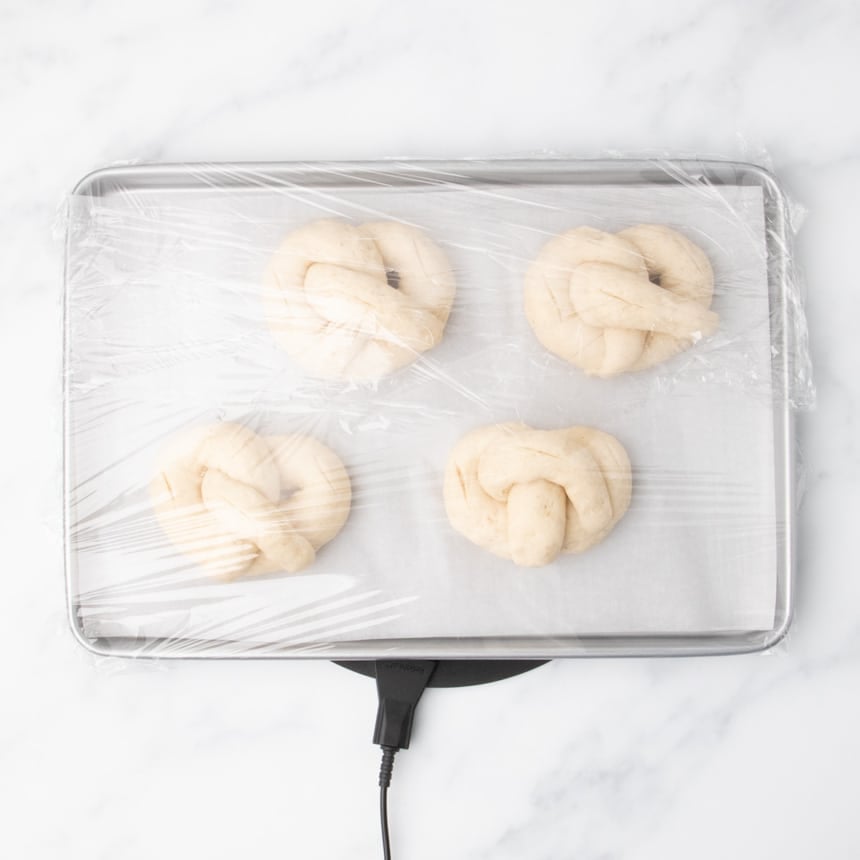
Place the raw soft pretzels on lined baking sheets and cover with plastic wrap so they don't dry out. Place them in a draft-free location to rise until they're nearly doubled. Be careful not to let them overproof so they stay intact during boiling.
Boil and bake the bagels
Boil
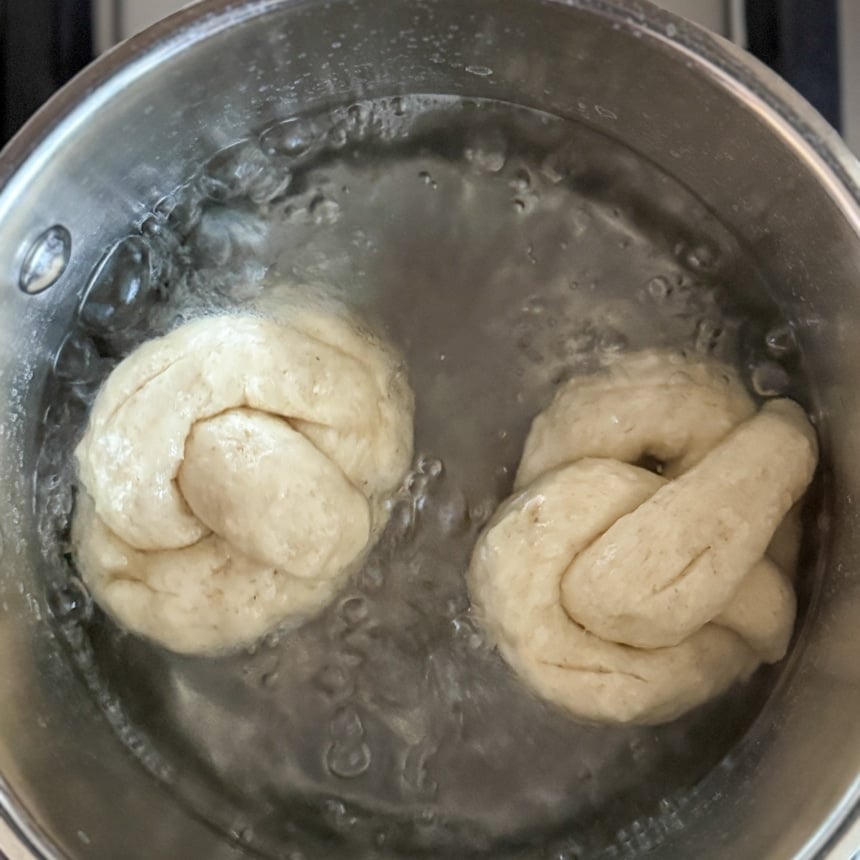
Add baking soda and salt to a large pot of water, and bring it to a vigorous, rolling boil. Place the risen pretzels gently in the boiling water and, without crowding each other, let them boil for about 1 minute each. You can use a strainer to flip them over to boil on both sides, or press down gently with a silicone spatula to immerse the top in the water.
Bake
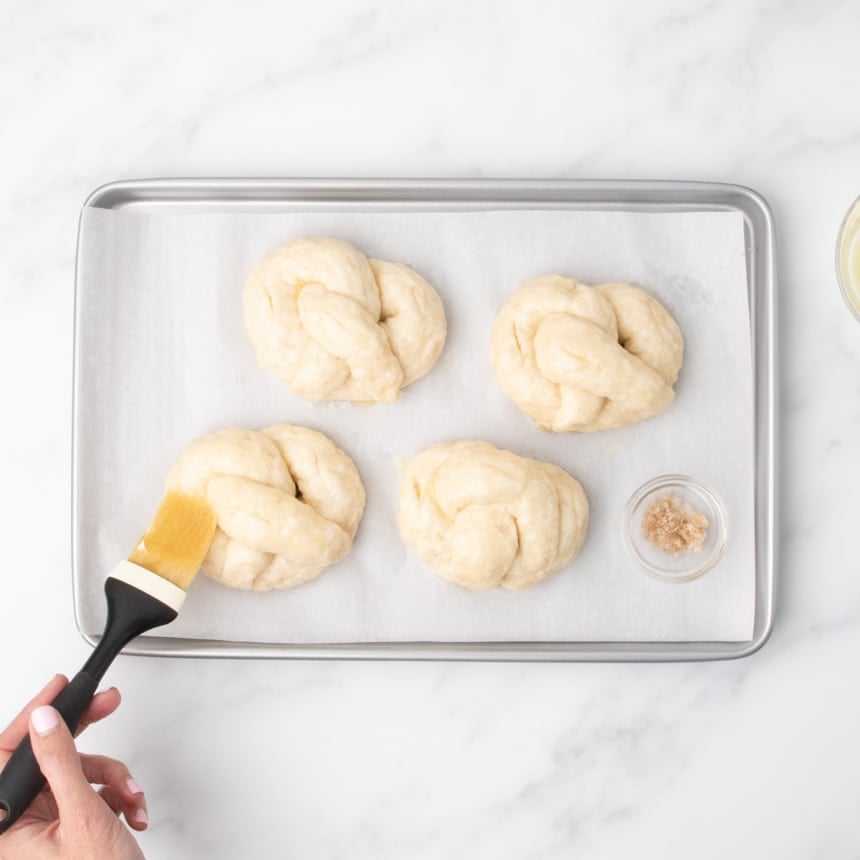
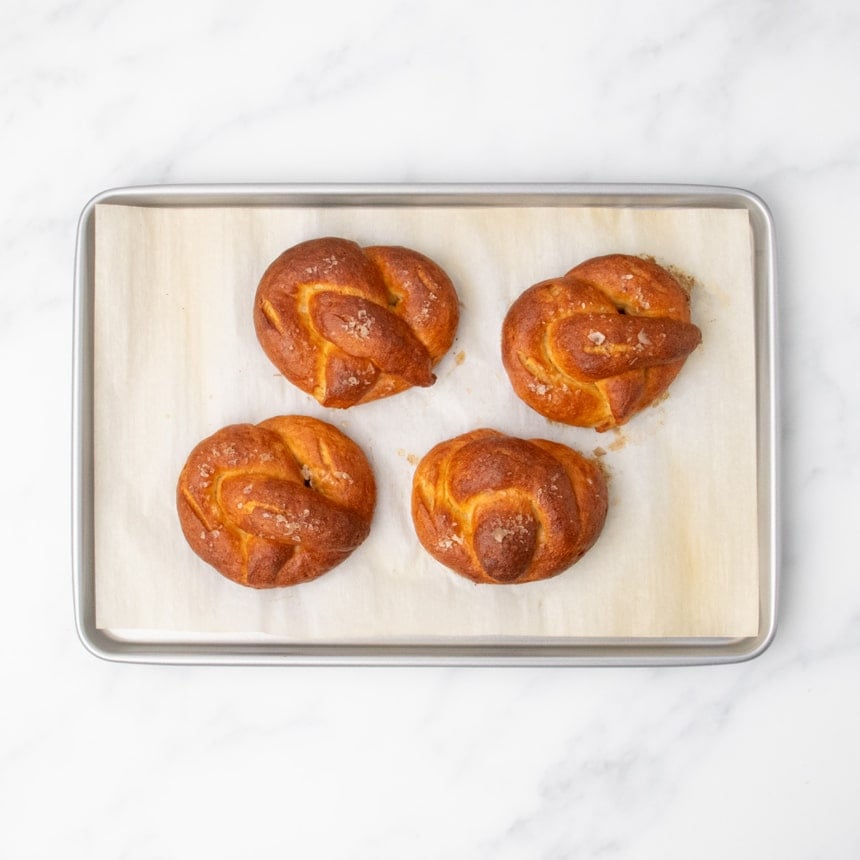
Return the boiled pretzels to the baking sheet, brush them with butter, sprinkle with salt, and bake at 400°F for 15 minutes. Reduce the oven temperature to 350°F and continue to bake until they’re golden brown all over and firm to the touch so you're certain they won't deflate as they cool. The internal temperature should be at least 205°F on an instant read thermometer.
Expert tips
Boil the pretzels first
Don't skip the first step of boiling the shaped and risen bagels in a baking soda bath before baking. This sets the exterior of the dough, which restricts the dough from rising quite as much during baking and begins to gel the starches in the dough. These reactions create that characteristic chewy exterior, and a tender, yet somewhat tight, crumb.
Keep your pretzels from falling apart
Make sure that the shaped, risen dough doesn't fall apart during boiling by following my time-tested tips:
- Bring the baking soda bath to a full, rolling boil. A slow boil will do little to seal the outside of the pretzel, and will just cause it to wilt.
- Do not overproof the dough past the point where the surface of the rising dough starts to crater and break. If you've added psyllium husk, the pretzels should nearly double in size; if you haven't, only expect them to rise about 50% more than the original size.
- Boil quickly; if you soak the dough too long, it may begin to dissolve in the water.
Use a stand mixer
For a smooth and cohesive dough that rises evenly, make the dough with a stand mixer, fitted with the dough hook or the paddle attachment. If you don't have a stand mixer, try using a large food processor with the plastic, rather than the metal, blade.
Use psyllium husk + xanthan gum
Psyllium husk added to the dough helps it rise higher and bake up chewier, and makes the raw dough overall more stable. But psyllium husk begins to break down in the oven at 180°F/82°C. So you'll still need xanthan gum (or a xanthan gum substitute) plus egg whites to hold that rise for the rest of baking and as the pretzels cool.
Ingredient substitutions
Dairy free
In place of the butter in the dough and for brushing on the pretzels before baking, try vegan butter or even Earth Balance buttery sticks. In place of powdered dairy milk, try powdered coconut milk.
Egg free
Try aquafaba (the brine from a can of unsalted chickpeas) in place of 2 egg whites (weighing 50 grams total).
Tapioca starch/flour
In its place, try superfine glutinous (short grain) white rice flour.
Psyllium husk
You can make this recipe entirely without psyllium husk. Increase the total amount of xanthan gum to 3 teaspoons from 2. If your flour blend already contains xanthan gum, add 1 teaspoon more. Use the paddle attachment on your stand mixer, and your dough won't roll quite as smooth or be as easy to handle. It also won't rise quite as high.
I prefer to use the whole husk, as opposed to psyllium husk powder, because it's less likely to clump in liquid and create patches of excess fiber. If you prefer to use the powder, use about 15% less by weight (here, about 14 grams).
Cream of tartar/apple cider vinegar
You can replace cream of tartar with 1/2 teaspoon of lemon juice or white wine vinegar, and reduce the apple cider vinegar to 1/2 teaspoon. You can also replace apple cider vinegar itself with a total of 1 teaspoon lemon juice or white wine vinegar.
Gluten Free Soft Pretzels Recipe
Equipment
- Stand mixer fitted with paddle attachment or dough hook
- Sealed bucket for proofing dough.
Ingredients
For the soft pretzels
- 1 ¾ cups (14 fluid ounces) warm milk, (about 95°F)
- 1 ⅝ tablespoons (16 g) whole blond psyllium husk, (See Recipe Notes)
- 3 cups (420 g) all purpose gluten free flour blend, (See Recipe Notes), plus more for sprinkling
- 2 teaspoons xanthan gum, omit if your blend already contains it
- ¼ cup (36 g) tapioca starch/flour
- ½ cup (43 g) powdered milk, nonfat or lowfat are both fine
- 2 teaspoons (6 g) instant yeast
- ¼ teaspoon cream of tartar
- ¼ teaspoon baking soda
- ¼ cup (55 g) packed light brown sugar
- 1 teaspoon (6 g) kosher salt
- 1 teaspoon apple cider vinegar
- 4 tablespoons (56 g) unsalted butter, at room temperature
- 2 (50 g) egg whites, at room temperature
- Baking soda bath for boiling, 6 cups water + 1 tablespoon baking soda + 1 teaspoon salt
- Coarse salt for sprinkling
- Melted unsalted butter, for brushing
- Coarse salt, for sprinkling (See Recipe Notes)
For the sweet mustard dipping sauce
- 6 tablespoons mayonnaise
- 1 tablespoon Dijon mustard
- 3 tablespoons honey
- ¼ teaspoon kosher salt
- ½ teaspoon dry mustard powder, optional
Instructions
Make the pretzel dough
- Place the milk in a 4 cup measuring cup or similar sized bowl. Sprinkle the psyllium husk on top and whisk or mix to combine well. Allow the mixture to sit for at least 30 seconds so the psyllium absorbs the moisture and gels.
- In the bowl of a stand mixer fitted, place the flour, xanthan gum, tapioca starch, milk powder, yeast, cream of tartar, baking soda, and brown sugar, and whisk to combine well, breaking up any lumps in the brown sugar. Add the salt, and whisk again to combine.
- Add the apple cider vinegar, butter, egg whites, and milk with psyllium mixture. Use the paddle attachment or a separate, handheld spatula to mix the dough at low speed or by hand until just combined into a cohesive dough.
- You can continue to use the paddle attachment, or scrape the dough off of it and replace it with the dough hook. Turn the mixer speed up to medium-high, and then high speed and beat for 4 more minutes. The dough should start off clumping around the dough hook, and eventually start sticking to the sides of the bowl again.
Let the dough rise, refrigerated
- Transfer the dough to a lightly oiled bowl or proofing bucket large enough for it to rise to nearly double its size.
- Cover the bowl tightly with an oiled piece of plastic wrap or the oiled top of your proofing bucket. Place it in the refrigerator for at least 1 hour and up to 3 days.
Shape the prepared dough
- When the dough is ready, line rimmed baking sheets with unbleached parchment paper and set them aside. Turn the dough out onto a lightly floured surface, sprinkle it lightly with a bit more flour, and turn it over on itself a few times until it’s smoother.
- Using a bench scraper or large knife, divide the dough into 8 equal portions, each about 5 ounces, and roll each into a ball.
- Working with one piece of dough at a time, and using the palms of both hands lightly pressing away from one another, roll the dough into a thin rope about 12 inches long. As you work on the dough, sprinkle it very lightly with flour to prevent sticking.
- Create an upside-down U shape with the dough, and cross the two ends over one another into an X shape 2 to 3 inches away from each end.
- Grab each crossed end with the opposite hand, criss-cross them once, then turn them over onto the round end of the original U shape. Press the ends onto the round end to adhere. You can moisten the ends a bit to help them stick as they rise.
- Transfer the shaped pretzels to the prepared baking sheets about 2 inches apart from one another. Cover with lightly oiled plastic wrap and set in a warm, draft-free location to rise until nearly doubled in size (about 1 hour). Do not overproof.
Make the (optional) dipping sauce.
- Combine all the ingredients in a medium-sized bowl, and whisk to combine well. The dry mustard powder really gives the sauce a nice depth of flavor, but it is entirely optional. Set the sauce aside.
Boil and bake the risen pretzels
- As the dough nears the end of its rise, preheat your oven to 400°F.
- In a large pot, make the baking soda bath by dissolving the baking soda and salt in approximately 6 cups of water, and bringing it to a rolling boil over medium-high heat.
- Once the dough has finished rising, use a bread lame or small sharp knife to score each risen pretzel about 1/8-inch deep in 3 spots: the left arm and right arm, and on the top of the twist at the center.
- Place the pretzels a few at a time in the boiling baking soda bath for less than one minute total. Flip gently to invert, and boil for another 30 seconds.
- Reinvert the boiled pretzels and use a strainer to remove them from the water, letting excess water drain off into the pan. Return each of them the baking sheet.
- Brush each boiled pretzel generously with the melted butter, then sprinkle with coarse salt.
- Place the baking sheet in the center of the preheated oven. Bake for 15 minutes at 400°F. Reduce the oven temperature to 350°F, and continue to bake for about 15 minutes more or until dark brown all over and firm to the touch.
- Remove from the oven, let cool for 20 minutes before serving with the dipping sauce.
Video
Tell Google you trust GFOAS!
Notes
I recommend Better Batter’s original blend or my Nicole’s Best multipurpose blend (with added xanthan gum). King Arthur's gluten free bread flour should also work but,add up to 2 tablespoons more milk by the teaspoon as you make the dough, mimicking the texture you see in the photos and video. Avoid Cup4Cup and Measure for Measure here—they won't produce the right texture. Vitacost's multi-blend gluten free flour, with added xanthan gum, should also work. To make your own blend using one of my “mock” recipes, please see the all purpose gluten free flour blends page. I recommend my mock Better Batter. Psyllium husk.
You must use higher purity “blond” husk, or your baked goods may turn a harmless but unsightly blue/purple color. I like NaturaleBio brand whole husk from Amazon, but if it's out of stock, I would buy Yupik brand. You can make the dough without the psyllium husk, but will not be as smooth. You must use the paddle attachment on your stand mixer, not the dough hook, and the dough will be more difficult to handle. Add an additional 1 teaspoon xanthan gum to the dry ingredients, and add the milk alone when you add the other wet ingredients. Nutrition information excludes the baking soda bath, melted butter and coarse salt on top, and dipping sauce.
Nutrition
Nutrition information is automatically calculated, so should only be used as an approximation.

FAQs
Yes, you can make these soft pretzels without boiling them first, but they'll be missing their deep brown color, slightly crisp exterior, and will rise more unevenly and haphazardly.
Yes, after these pretzels are fully baked and cooled, they can be frozen for up to 3 months in an airtight freezer-safe container. If possible, avoid salting the pretzels you intend to freeze, since the salt on top draws moisture out of the pretzels and makes them go stale faster. Defrost frozen pretzles in the microwave or toaster oven, but first sprinkle them with water so they are refreshed.
Yes! Every good rice-based all purpose gluten free flour blend has tapioca starch in it. Adding more tapioca starch creates special stretchy properties that make this dough easier to handle when raw, and improve the texture and mouthfeel once boiled and baked. You should never leave out an ingredient in a recipe.
Storage tips
If you don't plan to serve all of these gluten free soft pretzels right after baking, try salting only the ones you intend to serve. Then, moisten and salt the other ones right before serving.
Wrap any leftover pretzels tightly in plastic wrap or Glad Press ‘n' Seal and store at room temperature for 2 days. Sprinkle lightly with lukewarm water in case the rolls have dried out at all, and warm briefly in a 300°F toaster oven before serving.
For longer storage, wrap each cool pretzel tightly in freezer-safe wrap and freeze. Defrost at 50% power in the microwave and warm in a toaster oven before serving.










O.M.G. I have been gf for 15 years. And my 9yo has never tasted a soft pretzel (gf since she was 3 due to eczema). We just made these and I am mind blown. We used the Better Batter bread flour, which wasn’t cheap, but it was absolutely worth the price and effort. Thank you for making my day!
Aw, Maggie, I really get that! My son has been gluten free since he was a toddler, and I started developing recipes for this site 20 years ago because otherwise he’d never have had a soft pretzel either. Thanks so much for sharing that, and I’m really glad to know that Better Batter’s bread flour worked so well. I’ve never tried it!
Great pretzels!
Made these twice in a week!!
First batch wasn’t the best…I used the Cup4cup flour blend and it just didn’t produce the right batter consistency. Too sticky and hard to mold. Then made the Better Batter flour blend and they turned out perfect!! The dough was so easy to form, and the finished product was a perfect consistency. I did add more baking soda for the baking soda bath, as a read other recipes that added much more baking soda. Turned out incredible. Thank you!!
This looks amazing. Going to try next weekend for an Oktoberfest party for my wife who has celiac. Do you think I could use Better Batter Artisan blend flour mix for this recipe?
Hi, Shawn, I’m afraid I don’t like that flour blend at all. I can only recommend the original Better Batter all purpose blend.
My dough turned out like cake batter instead of dough. I used a scale to measure things so I am not sure how you got your dough so perfect. I must have done something wrong. I have made regular pretzels dozens of times without fail but unfortunately I haven’t been able to get this recipe to work for me.
Thelma, cake batter sounds like a result of a poor quality, unbalanced flour blend that I recommend against, like perhaps Bob’s Red Mill, although you didn’t say. Please click through to the all purpose gluten free flour blend page for information on what blends are appropriate. It’s linked to that ingredient in this recipe as it is in all recipes that call for such a blend. I’m afraid any experience with conventional yeast bread dough will not be instructive here at all, and as we are fundamentally replacing wheat flour, the flour blend must be appropriate.
Thank you for such a delicious recipe!
You’re so welcome, Cynthia!!
I’ve been hesitant to do any gluten free breads since my wifs learned she was allergic to wheat 7years ago. Decided to give thsse a try because she was pining for soft pretzels. While they aren’t even in the oven yet J already want to ask a question. What does “the almost whipped” dough look like? I thought I did it right but after chilling 2 hours this dough was too loose to roll. I worked more flour in there but I think it went to far the other way. I want to try again (because I fear this batch is lost) but any guidance would be appreciated! Is there a time of beating to shoot for?
Hi, Matt, I recommend you watch the video for more guidance on appearance. If you can’t see the video, you’ll need to turn off your ad blocker or it won’t be visible. If your dough was very loose, that sounds like an issue with ingredient substitutions (if you’re not using one of my recommended flour blends, for example, as some simply won’t work) or not measuring by weight. Volume measurements are inherently unreliable. Good luck!
I just have to say…I’m SO grateful to have found your recipes. Your yeast free pizza dough is now a family favourite and we have our vegan, gluten free pizza every Saturday for dinner. It’s so nice having pizza again! I’m not sure this is even possible or if you’ve already done this (if not, consider it a challenge? haha!!), I’d LOVE to see a gluten free, yeast and sugar free pretzel recipe! I’ve been missing pretzels! *cries* I’ve been diagnosed with this stomach issue called SIBO that makes it so I’m not allowed to have sugar (minus honey) or yeast and every pretzel recipe I find has yeast. If you’d ever consider tackling this, I’d be eternally grateful!
Aw, Dianna, that’s really tough. I actually do happen to have a number of yeast-free bread recipes here on the blog. I haven’t tried yeast-free pretzels, but I think you’d really find the Weight Watcher’s-style bread recipes I’ve published useful (just search “Weight Watcher” on the blog). And this yeast-free GF dinner roll recipe would be perfect for you, too. I didn’t realize that you can’t have sugar on a SIBO-friendly diet. The keto-friendly recipes (just use the search function again) should work for you, too. I hope that’s helpful! ?
These were a huge hit with my family. We have never tried Annie’s, but I can’t imagine that they are as good as these!
That’s so awesome!
Hi! Can’t wait to try this recipe? Do you need to use xantham gum with the better batter flour? Just making sure I pick some up at the store I’d i need it. Thank you!
Nope, Becky! If you use Better Batter, you’ll omit the xanthan gum in the recipe. Enjoy!