

This post may contain affiliate links. Please read our disclosure policy.
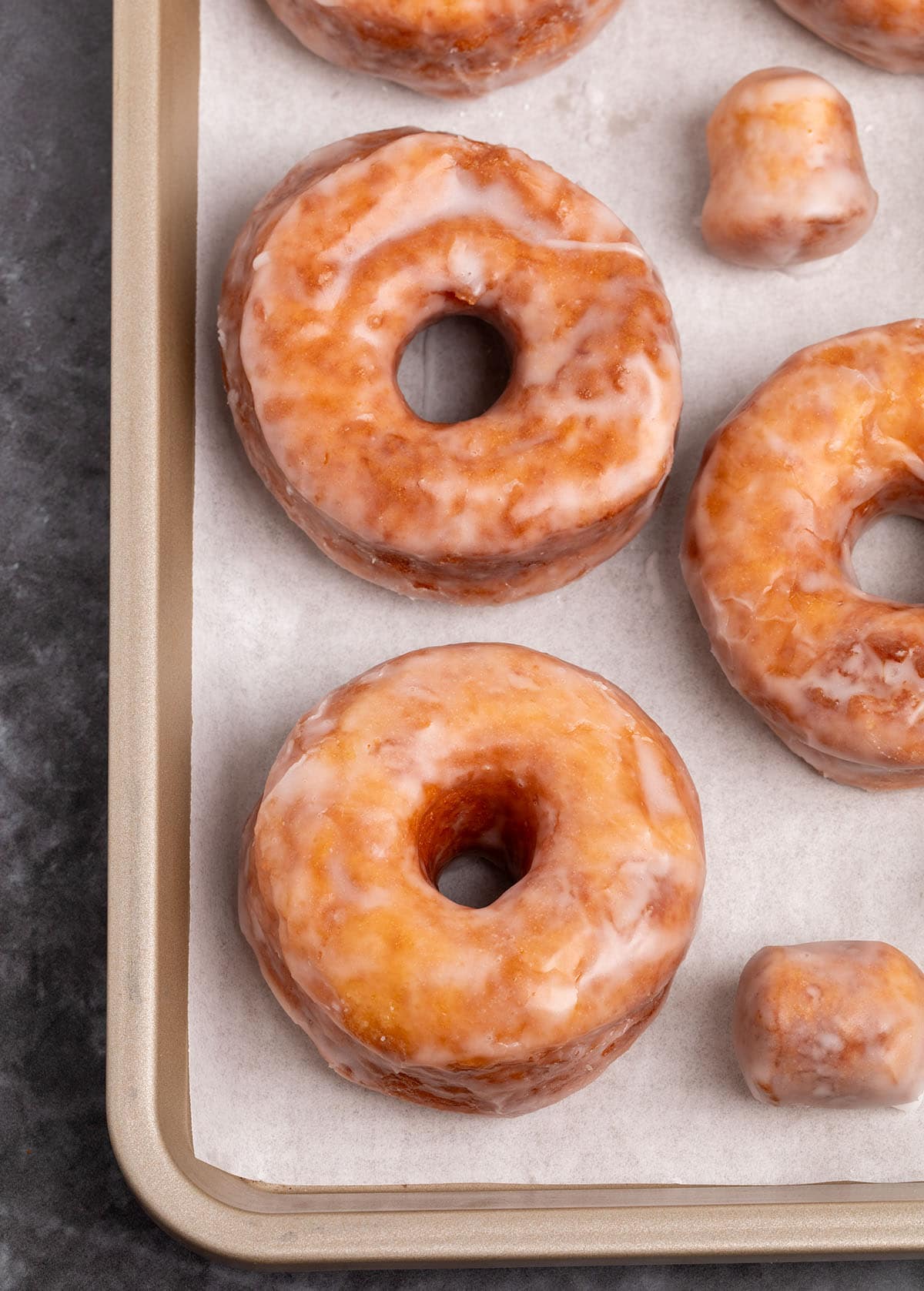
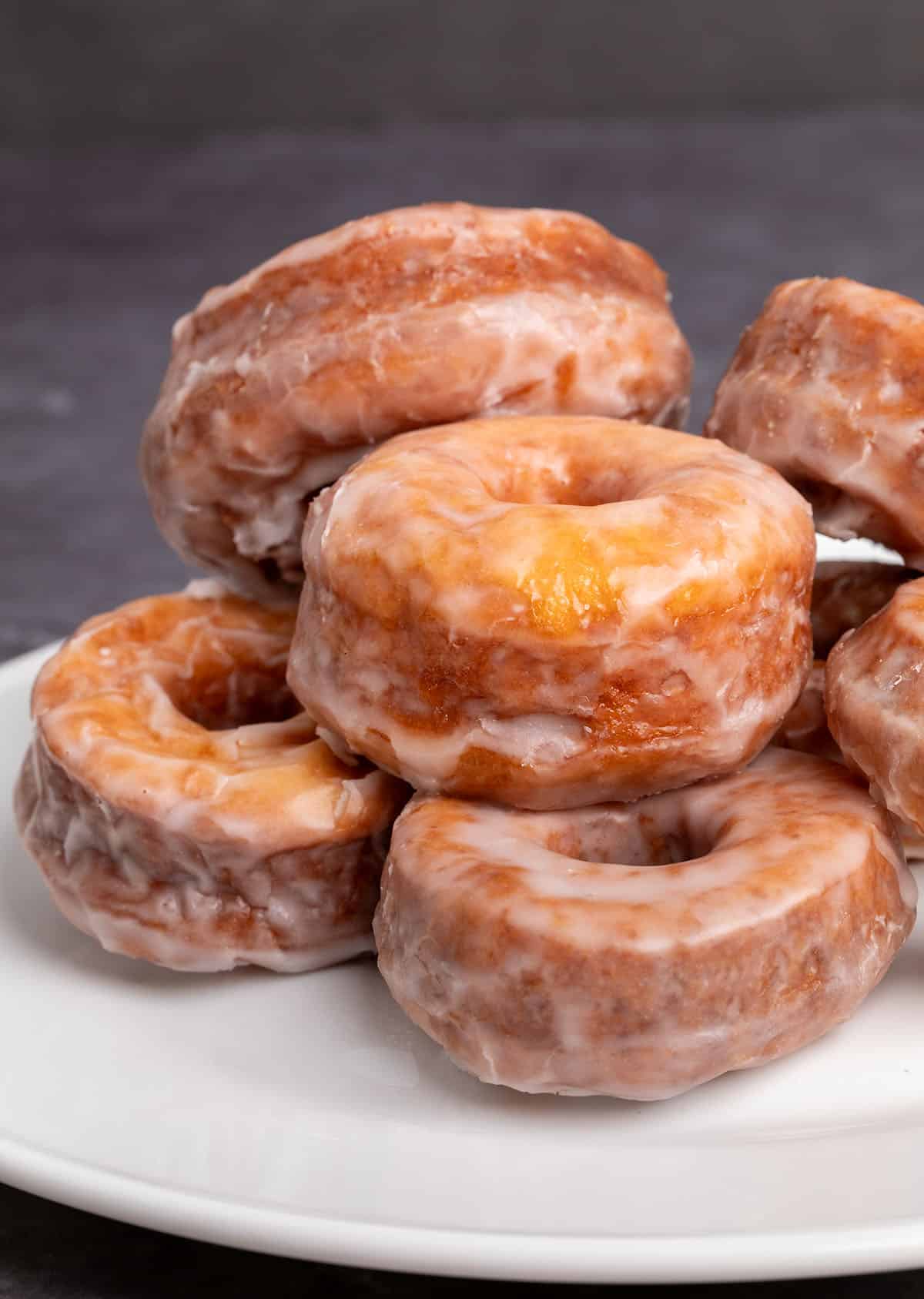
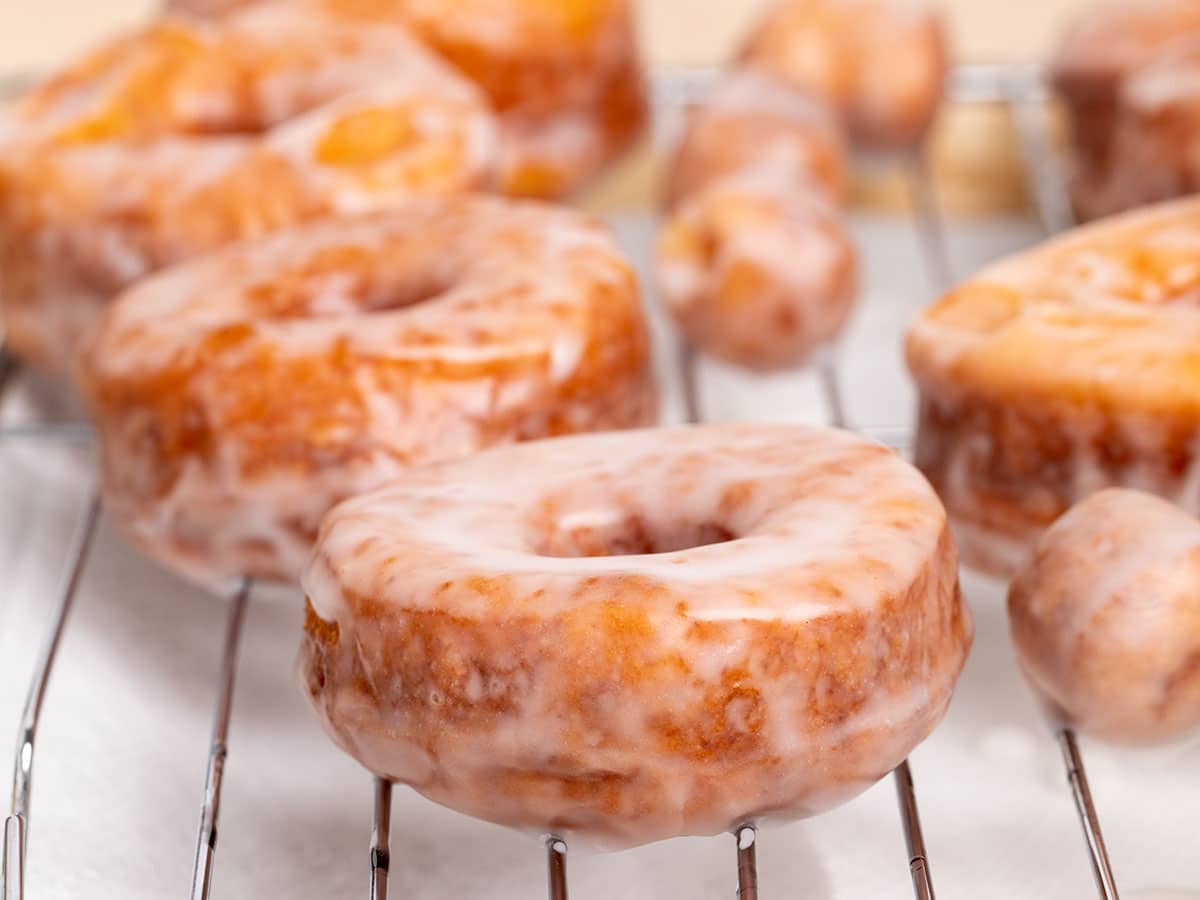
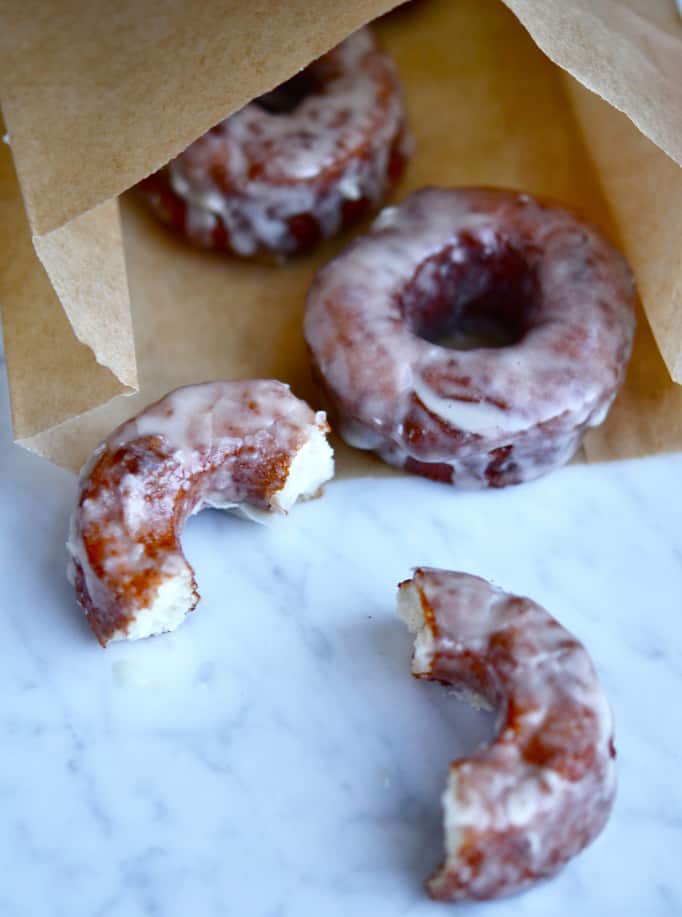
These light and airy glazed yeast-raised gluten free donuts taste like they’re from your favorite bakery from way back when. Deep fry them for the full experience, or air fry them with almost no oil.
The secret to making tender fried donuts that are easy to shape is in adding extra tapioca starch to the dough. It makes the dough so much stretchier!
My Take
Nicole’s Recipe Notes
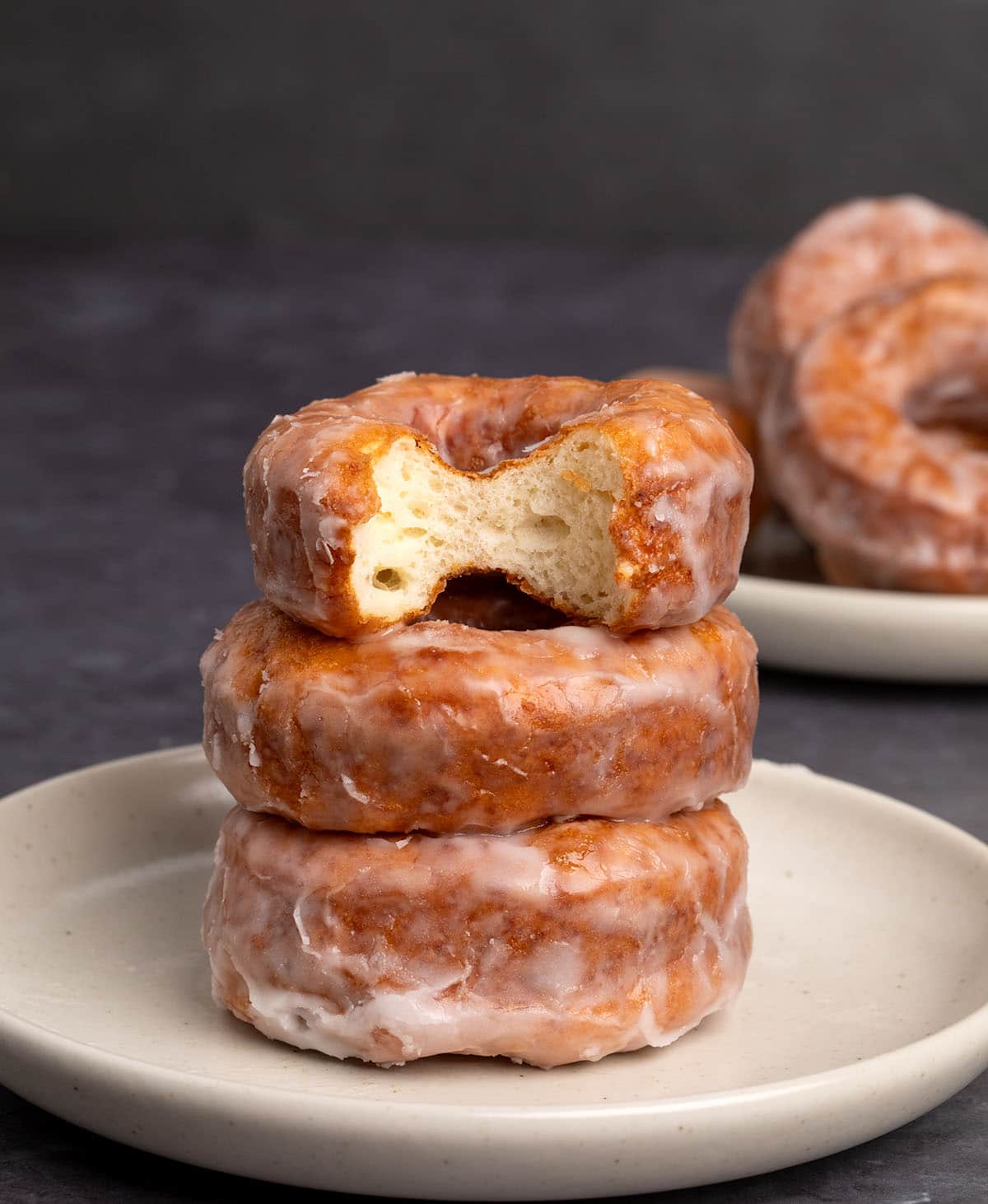
- Texture: Golden brown and slightly crispy on the outside and soft, rich, and fluffy on the inside — just like Krispy Kreme donuts!
- Taste: With just 1/2 cup sugar in a dozen donuts, the sweet glaze adds just the right touch. And a dash of nutmeg adds that special taste and aroma.
- Versatile: You can make the dough up to 4 days ahead of time and fry only the donuts you’re ready to eat. And deep fry in oil or air fry for a lighter but still fluffy option.
Recipe Ingredients
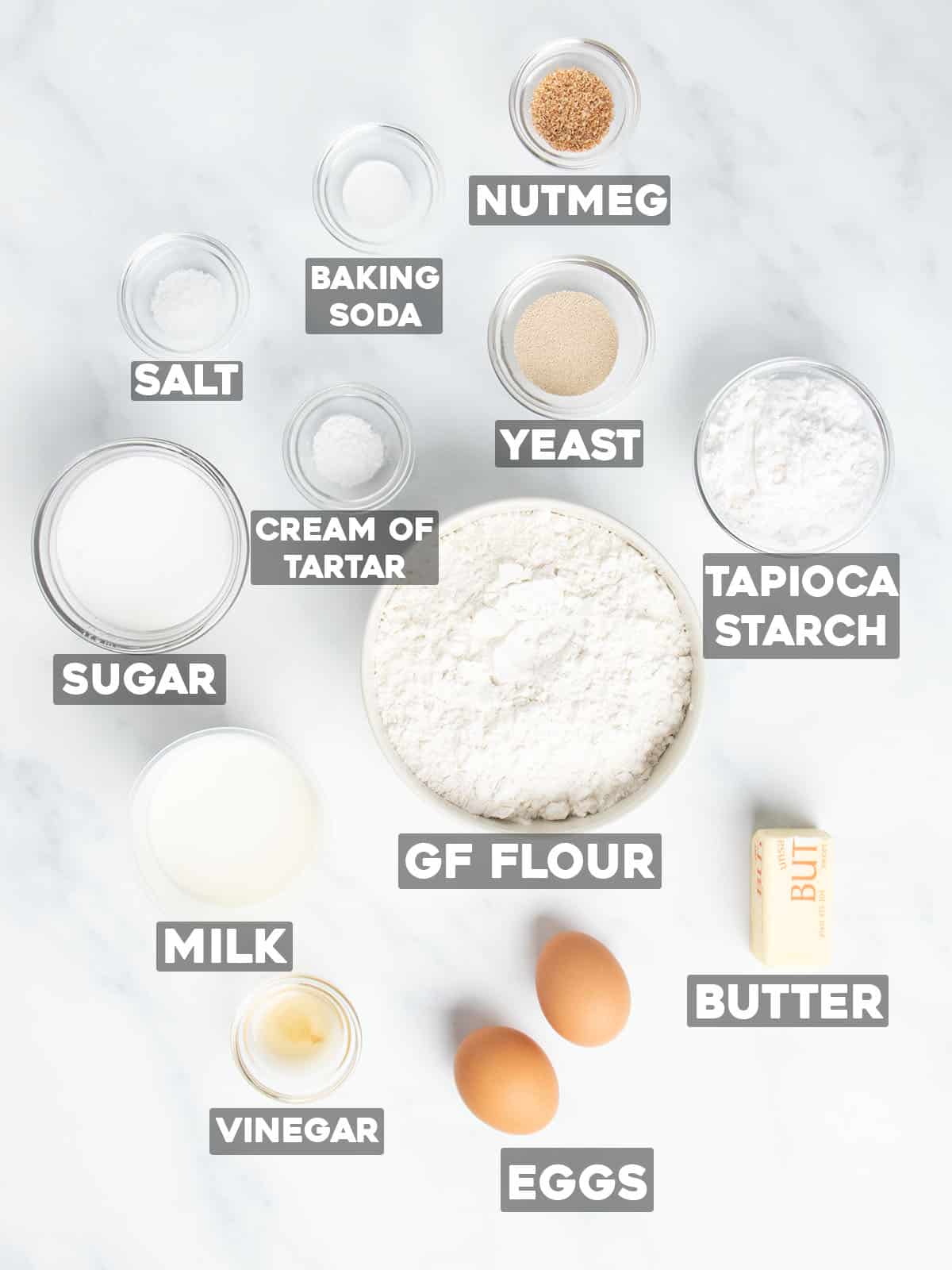
- Gluten free flour blend – Make sure you’re using a good quality all purpose gluten free flour blend that’s made to work with yeast bread dough. As always, click through to our all purpose gluten free blends page for full info on this super important topic.
- Tapioca starch/flour – replacing some of the all purpose flour with additional tapioca starch gives the donuts more elasticity, makes the dough a bit easier to handle, and helps make the donuts fluffier and more tender. Even if your all purpose blend contains tapioca starch, you still must add this ingredient.
- Salt – salt brightens all the other flavors and helps keep the yeast from overproofing the dough.
- Cream of tartar and baking soda – together, they help the donuts puff up and help them brown
- Sugar – adds sweetness and tenderness
- Instant yeast – Adds flavor and give the donuts their rise.
- Apple cider vinegar – Helps make the rise more stable and adds flavor.
- Eggs – An egg and an egg white help bind the dough together, and helps the rise.
- Milk – Adds moisture and richness
- Melted butter – Adds tenderness and flavor
- Oil – Any oil with a neutral flavor and a high smoke point will work to fry the donuts from the outside in
How to make gluten free donuts
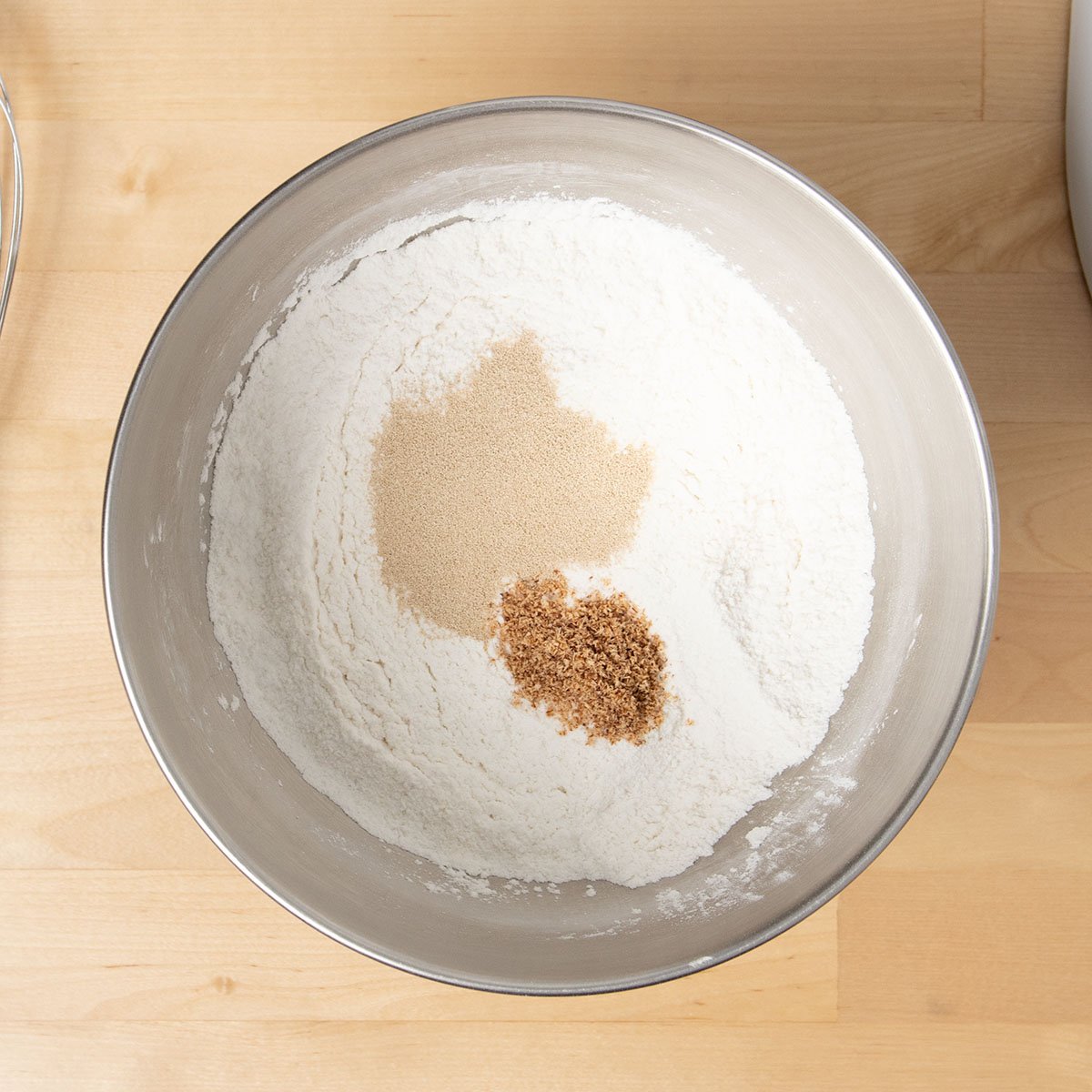
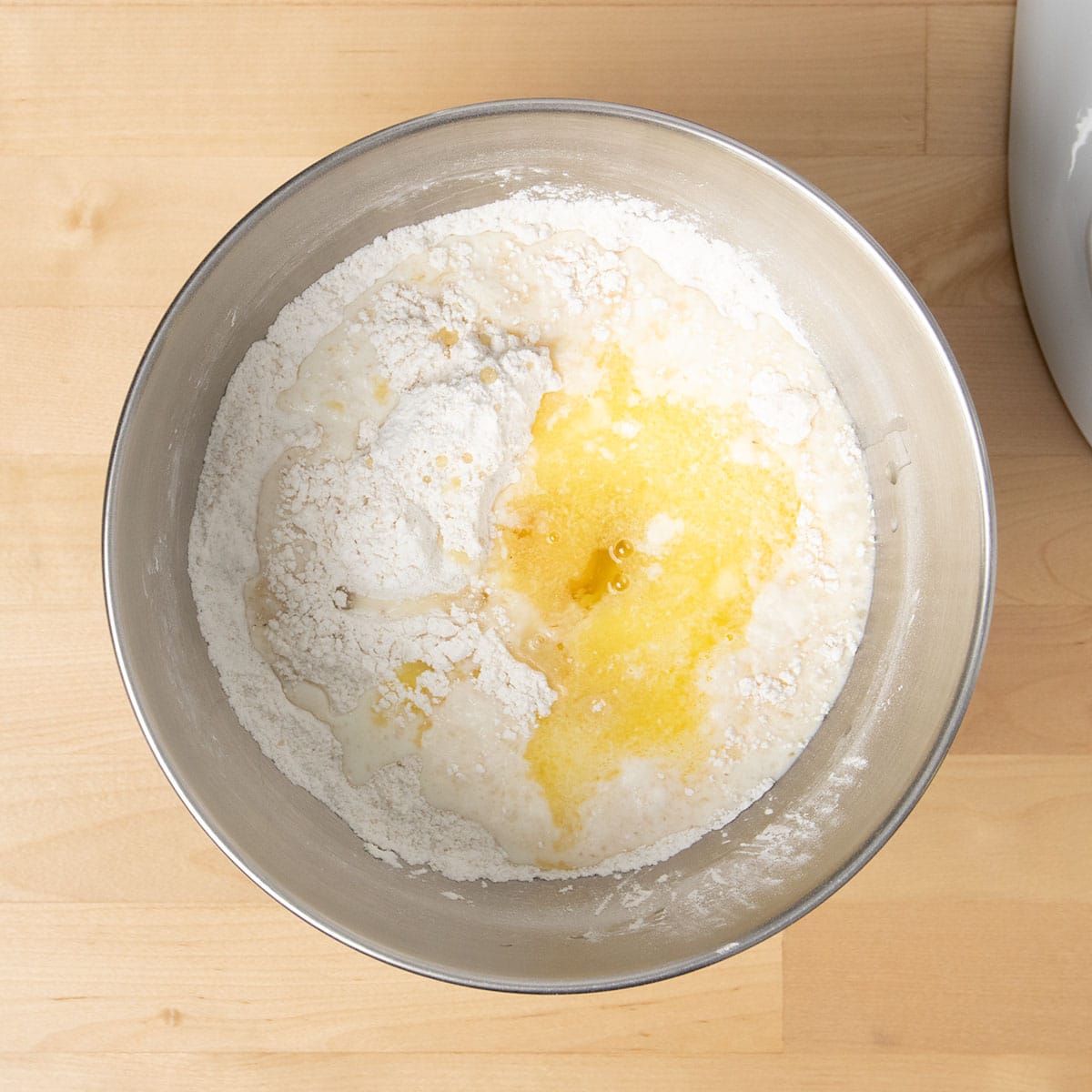
- Whisk together all the dry ingredients, adding the yeast and nutmeg last
- Add the wet ingredients, including the vinegar, eggs, milk, melted butter
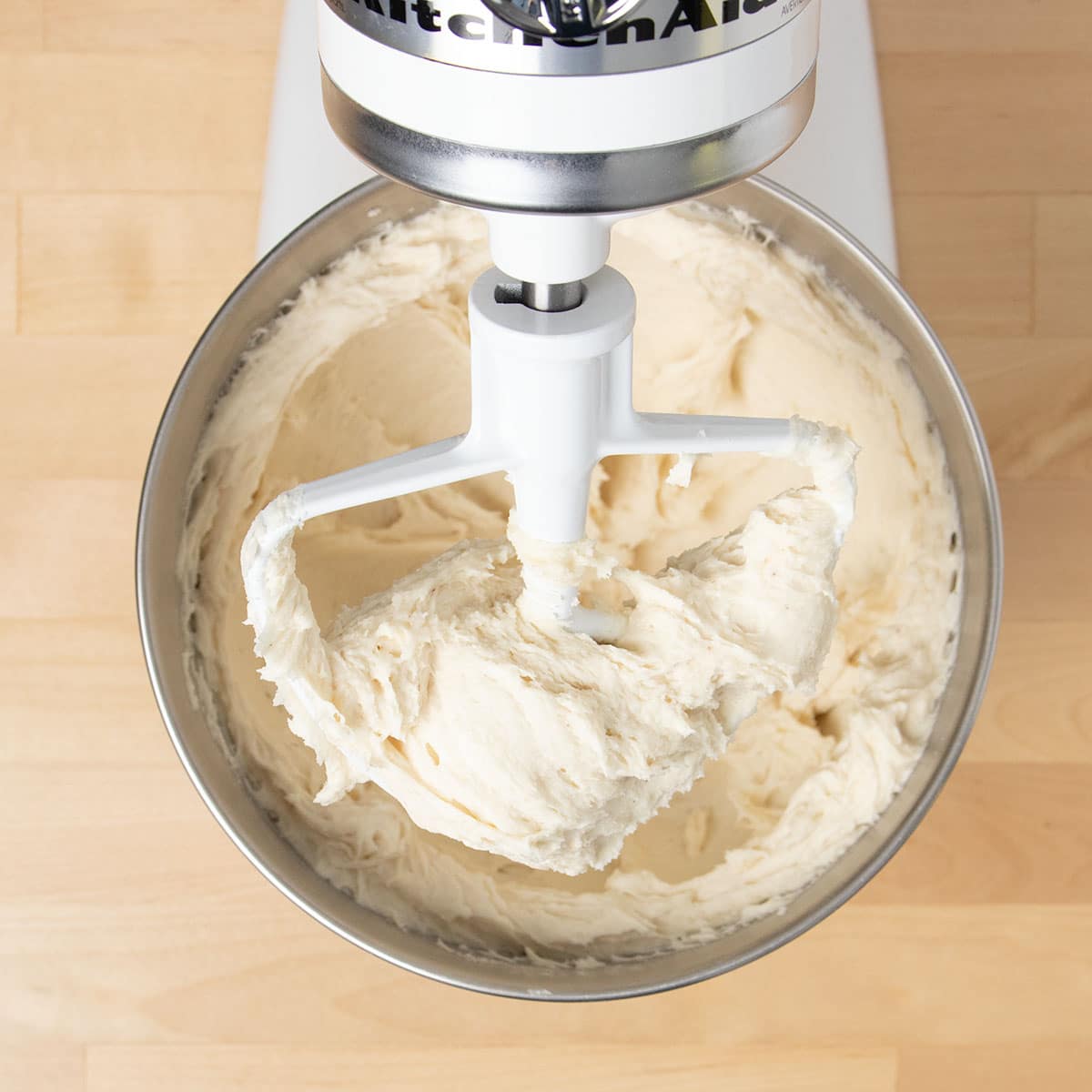
- Beat the ingredients very well to form a wet dough
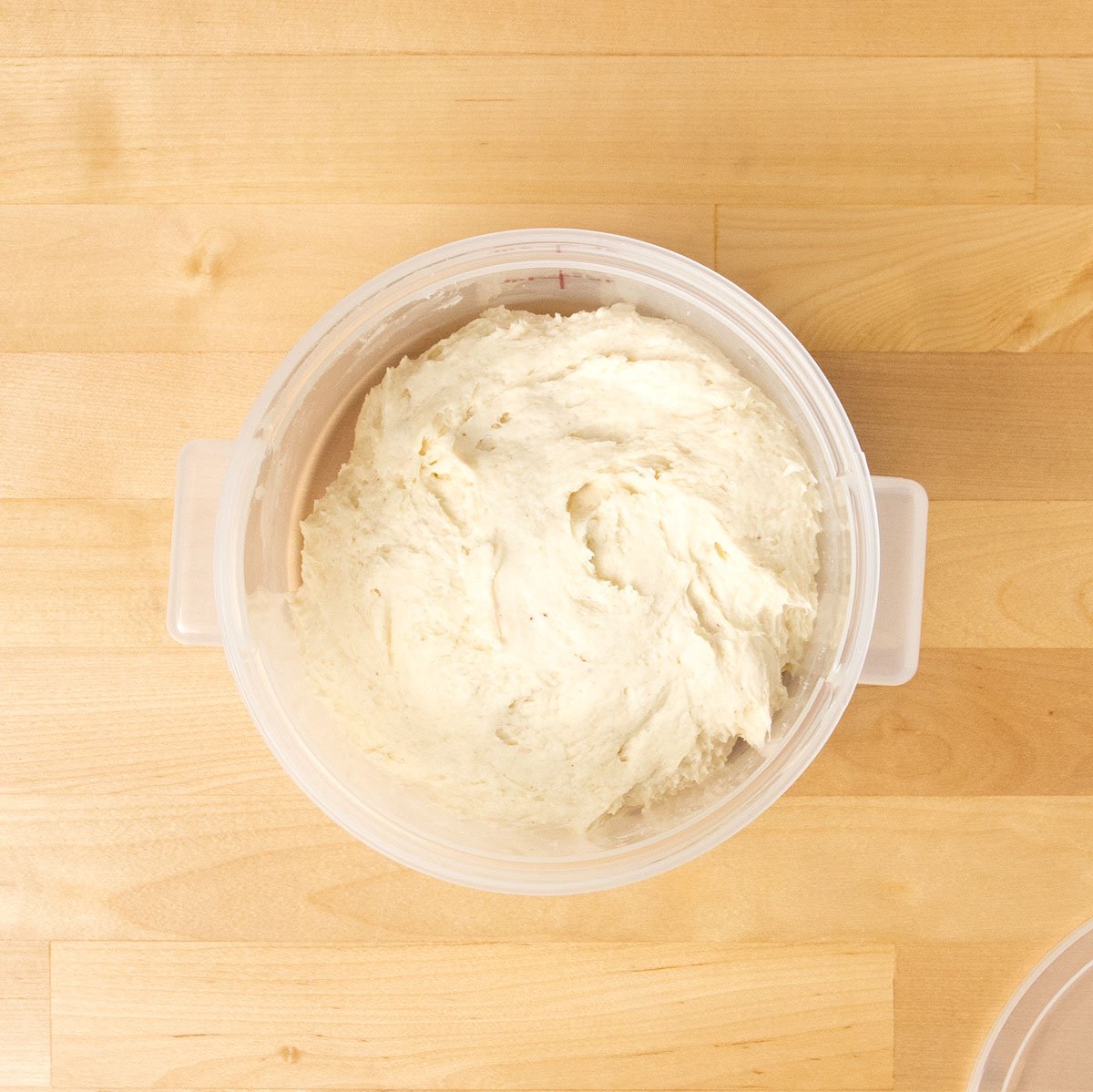
- Let the dough rise in a sealed container in the refrigerator for at least 1 hour
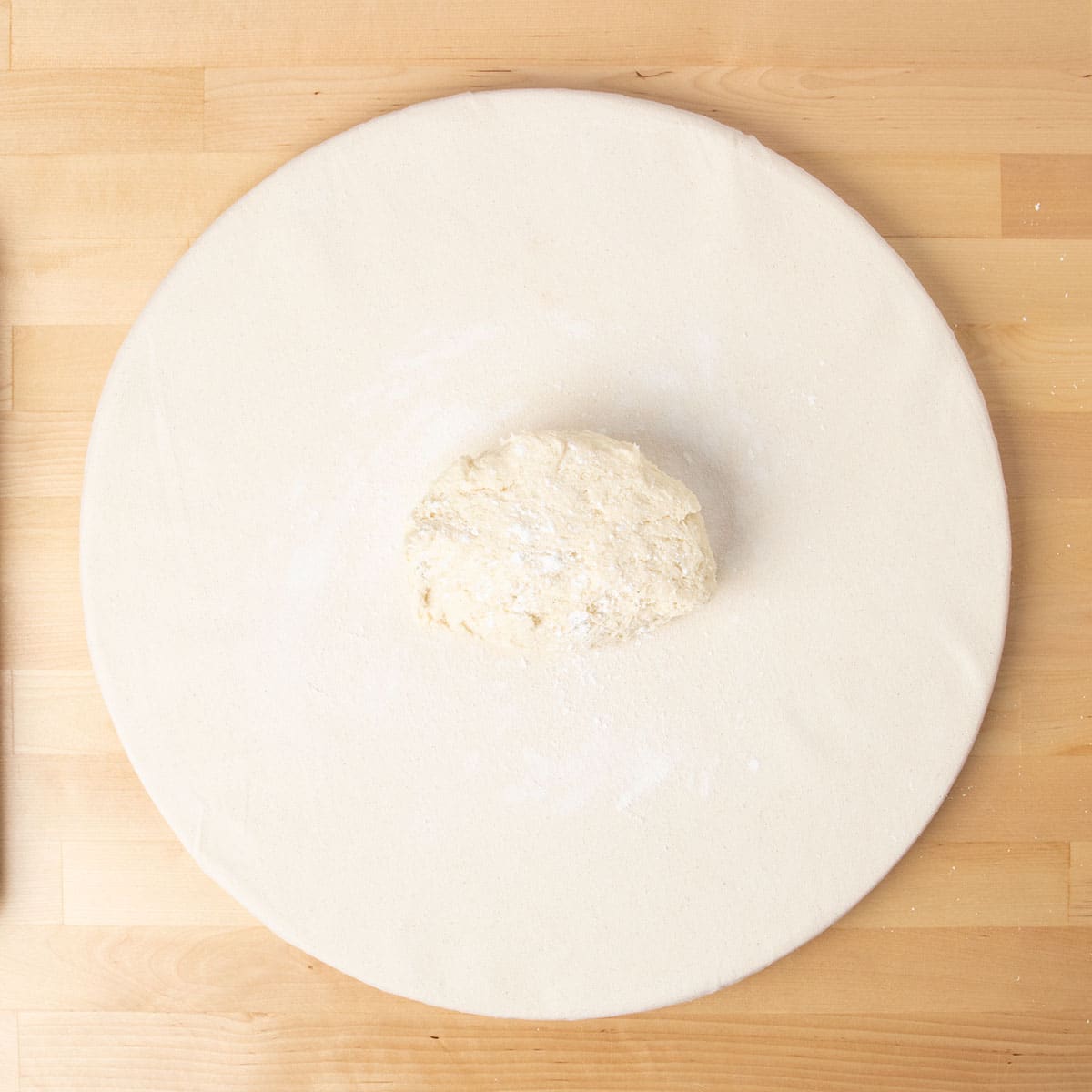
- Divide the dough in half, sprinkle with more flour, and shape into a round
- Roll the dough about 1/2-inch thick
- Cut out round shapes from the dough, and small center holes
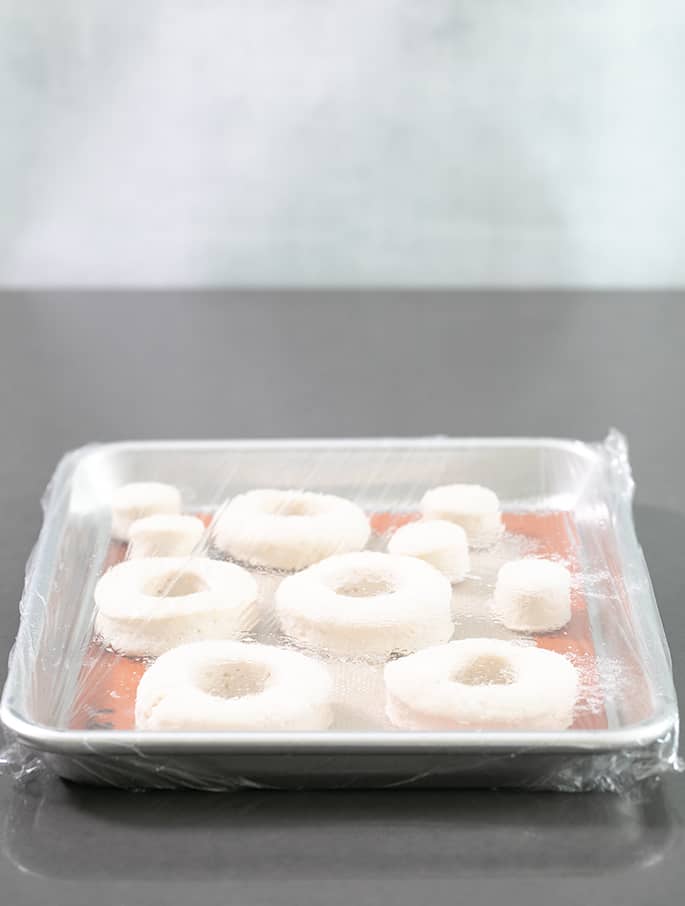
- Place the donuts (and donut holes) on a lined baking sheet, cover, and let rise at room temperature for about 1 hour
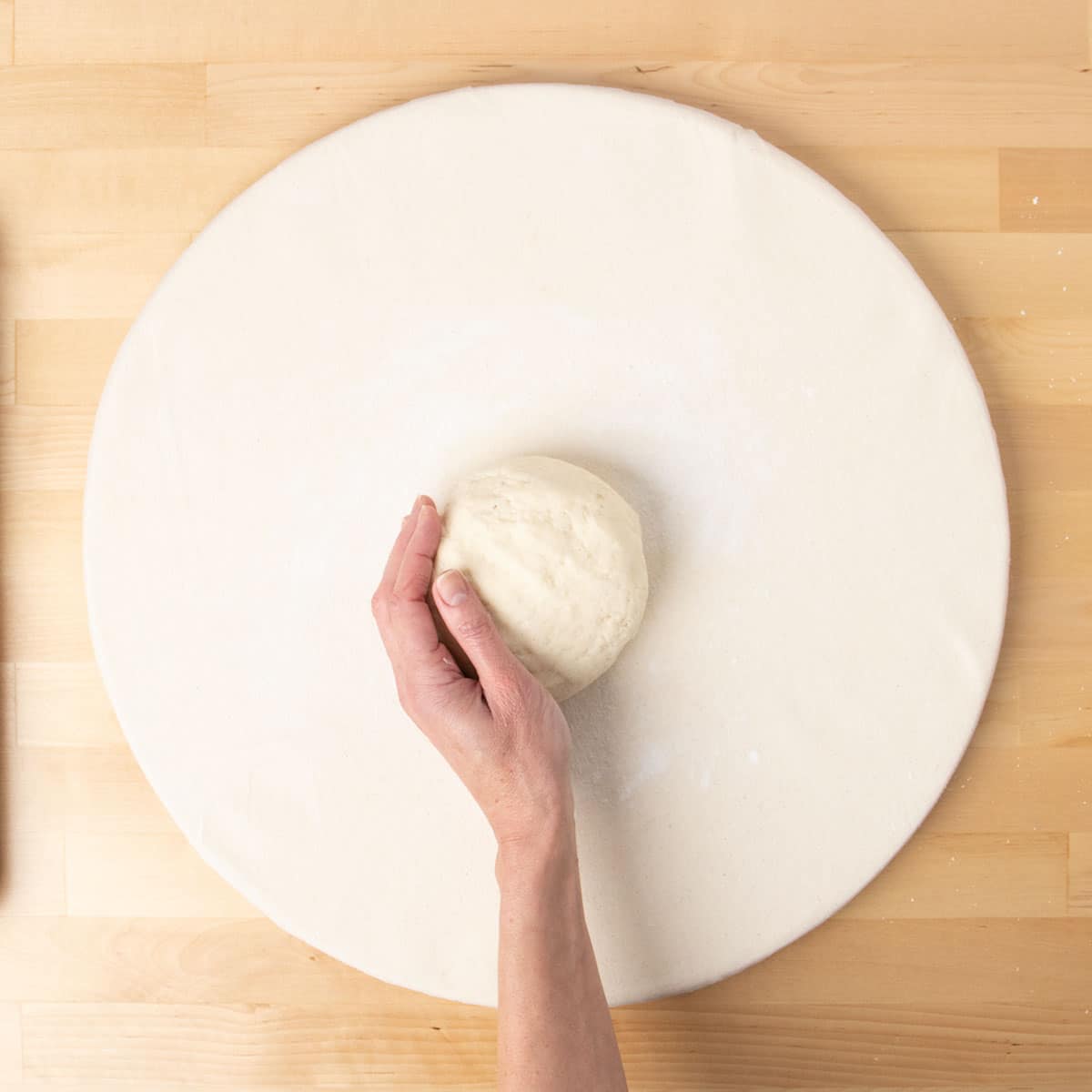
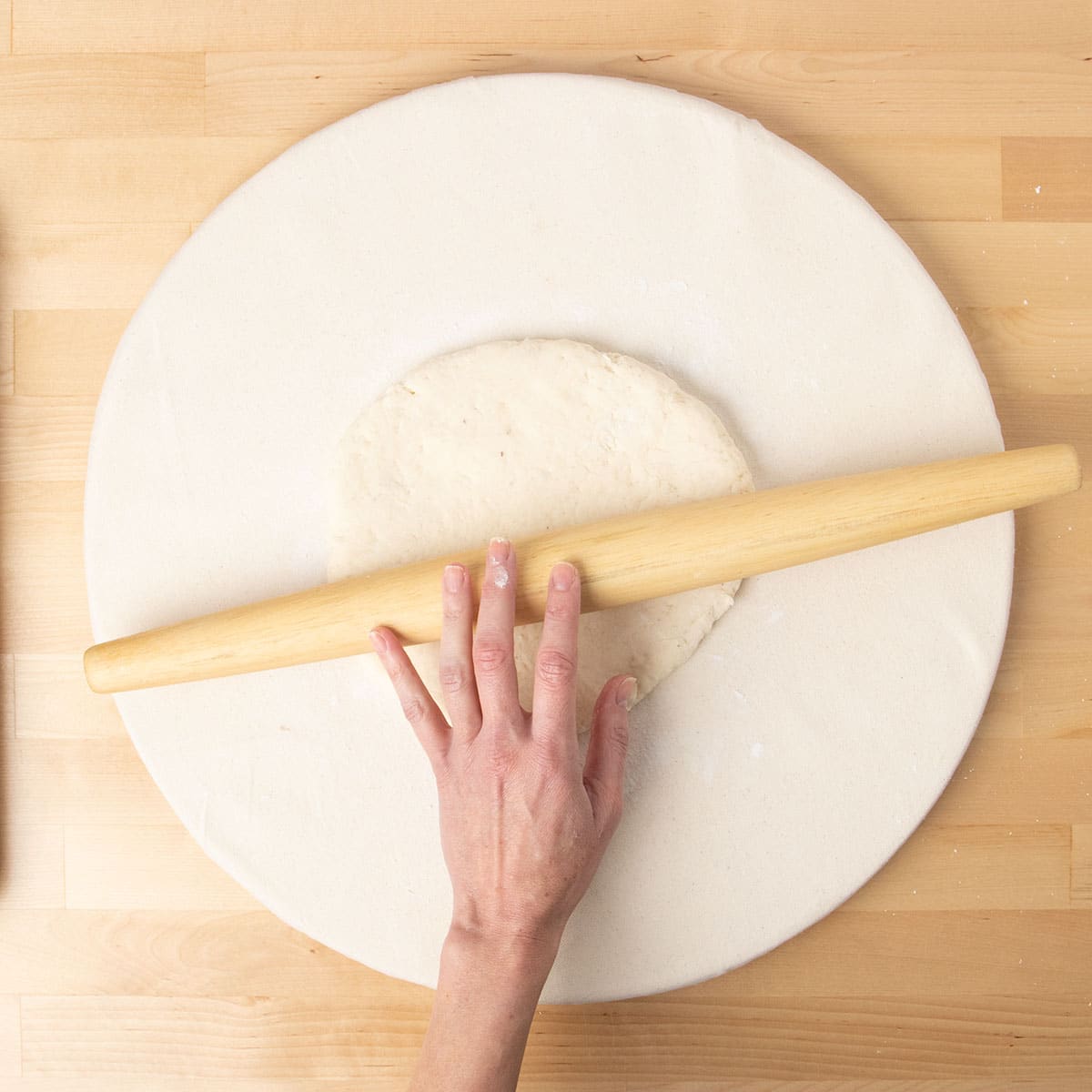
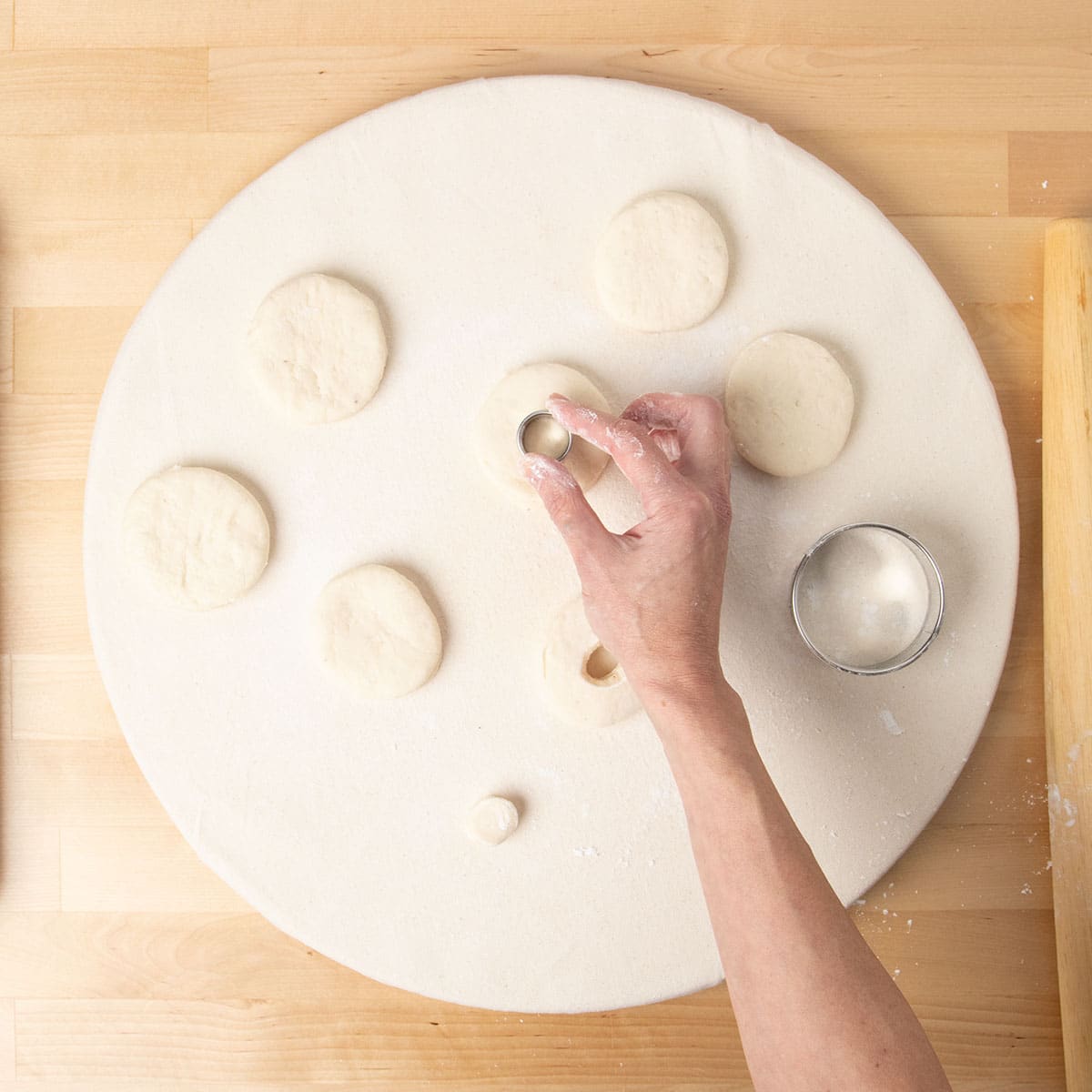
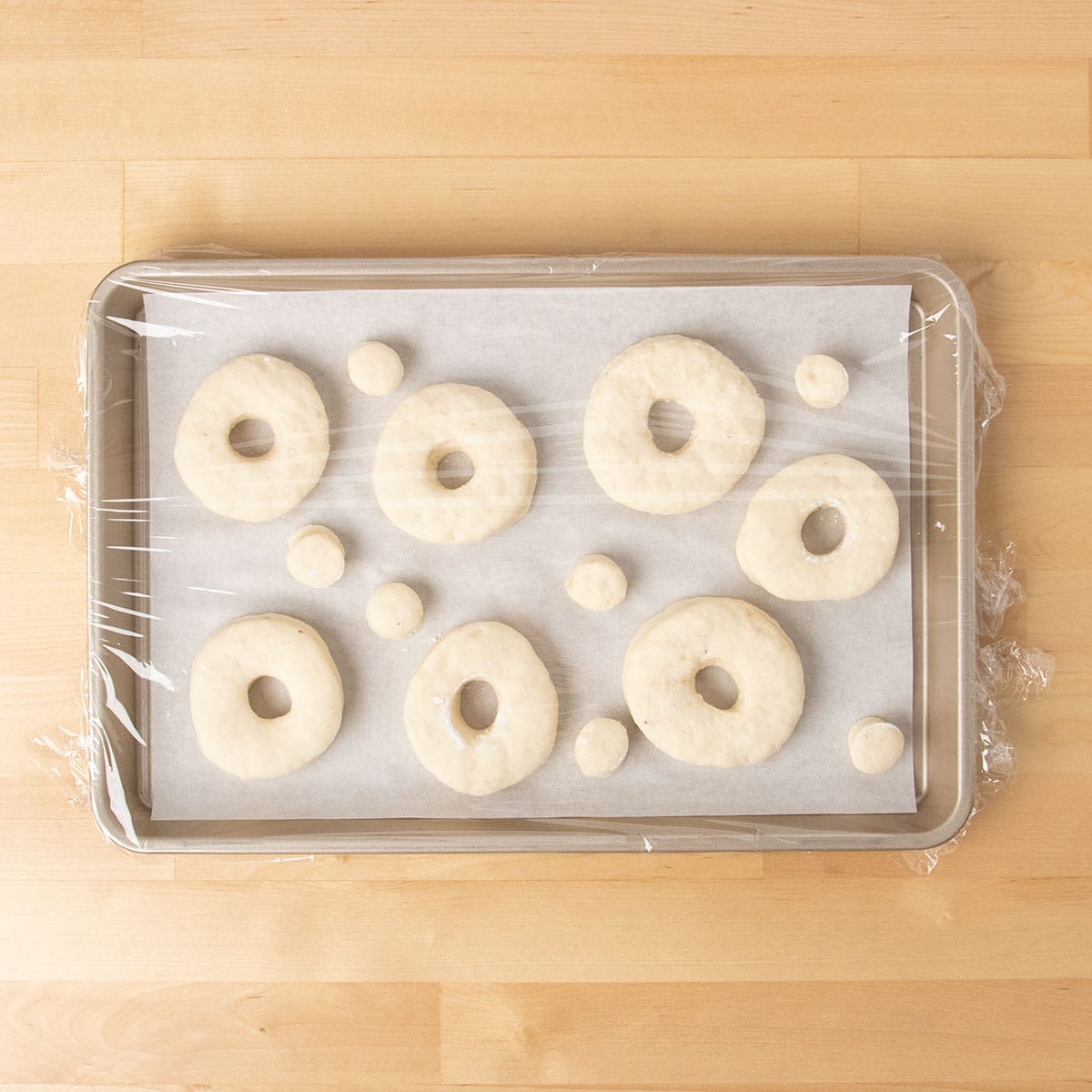
- As soon as the donuts appear to be nearly 1 1/2 times as big as they started (not a full doubling), bring your frying oil to a bit over 350°F
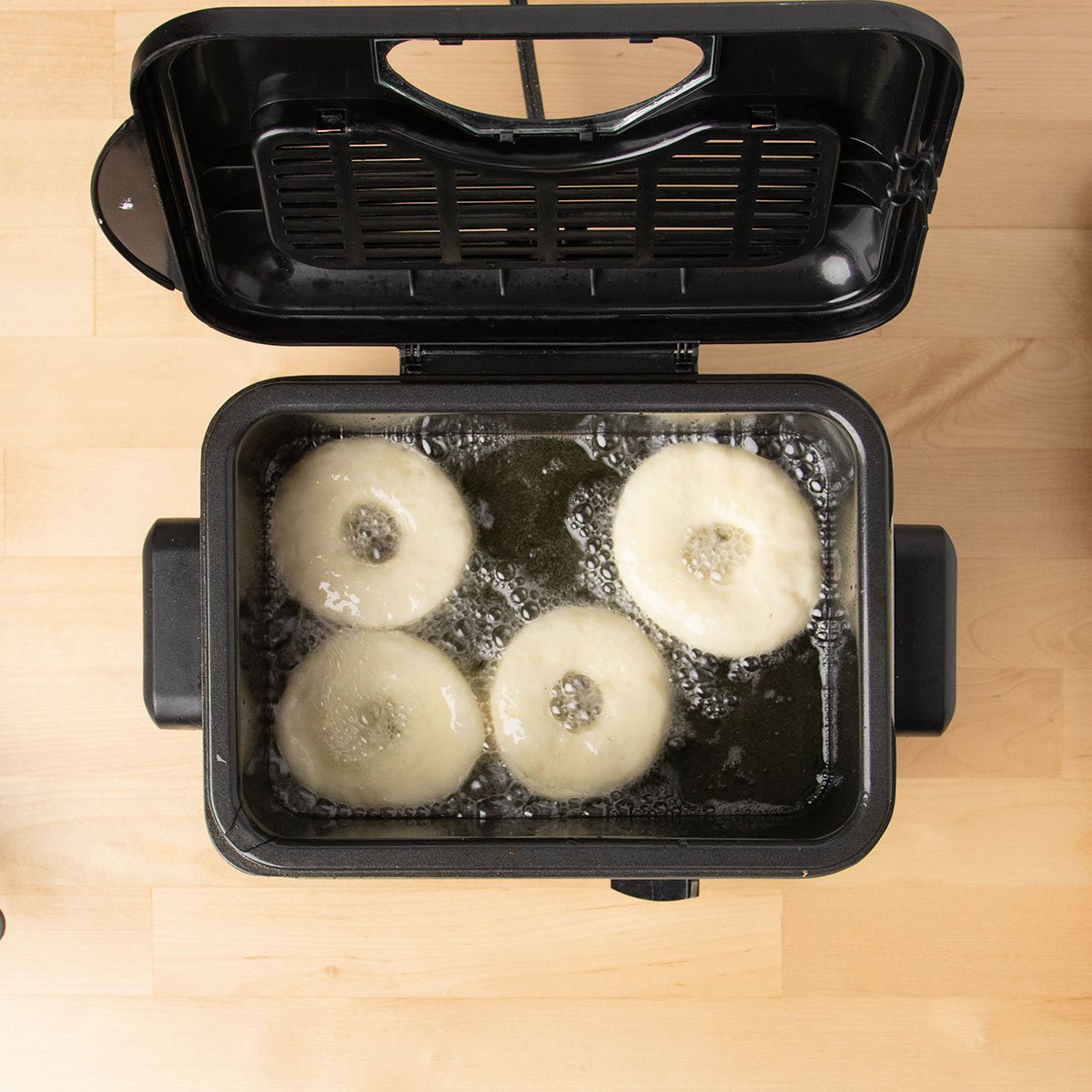
- Fry the risen donuts and holes a few at a time without crowding the oil
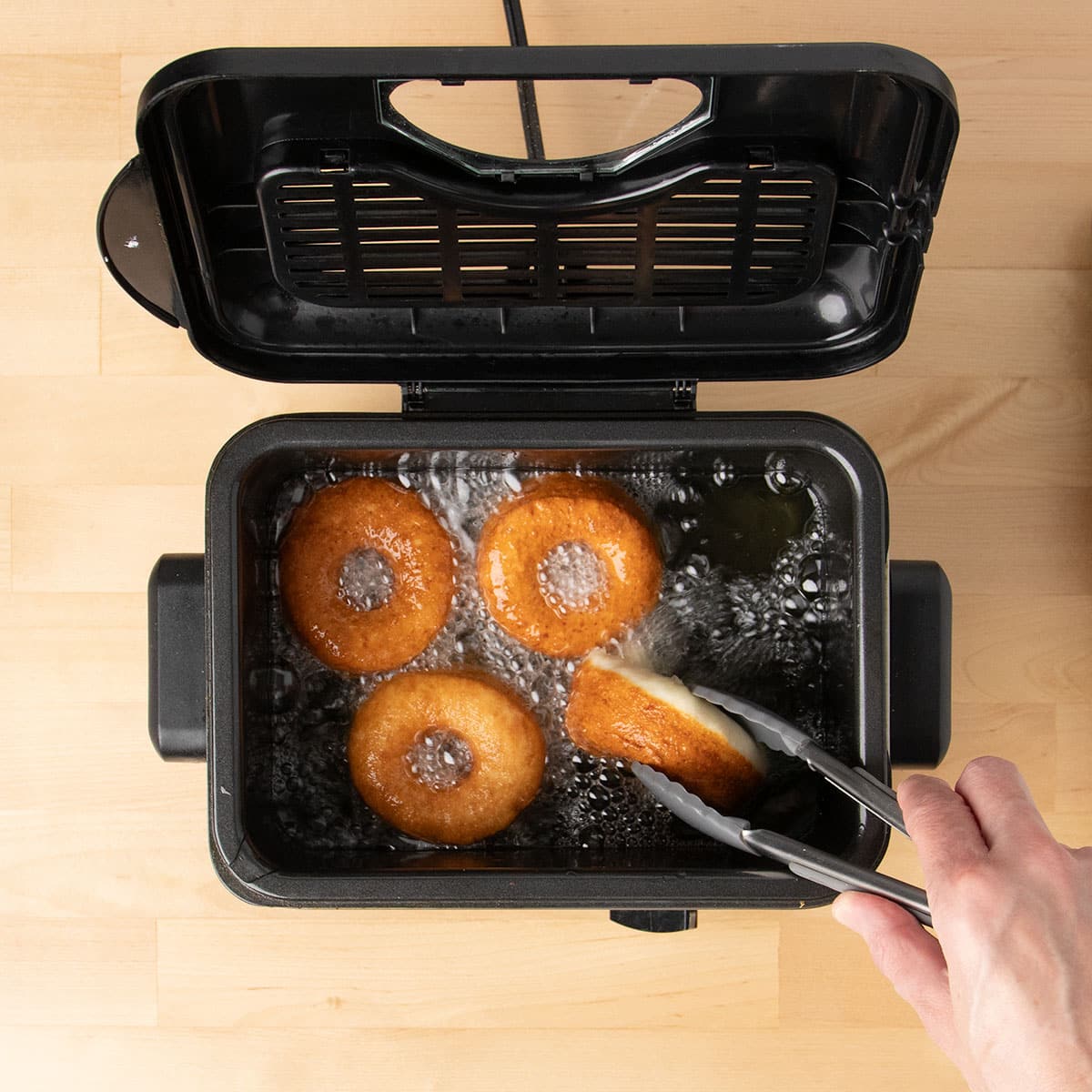
- Flip and let fry all the way through on the other side
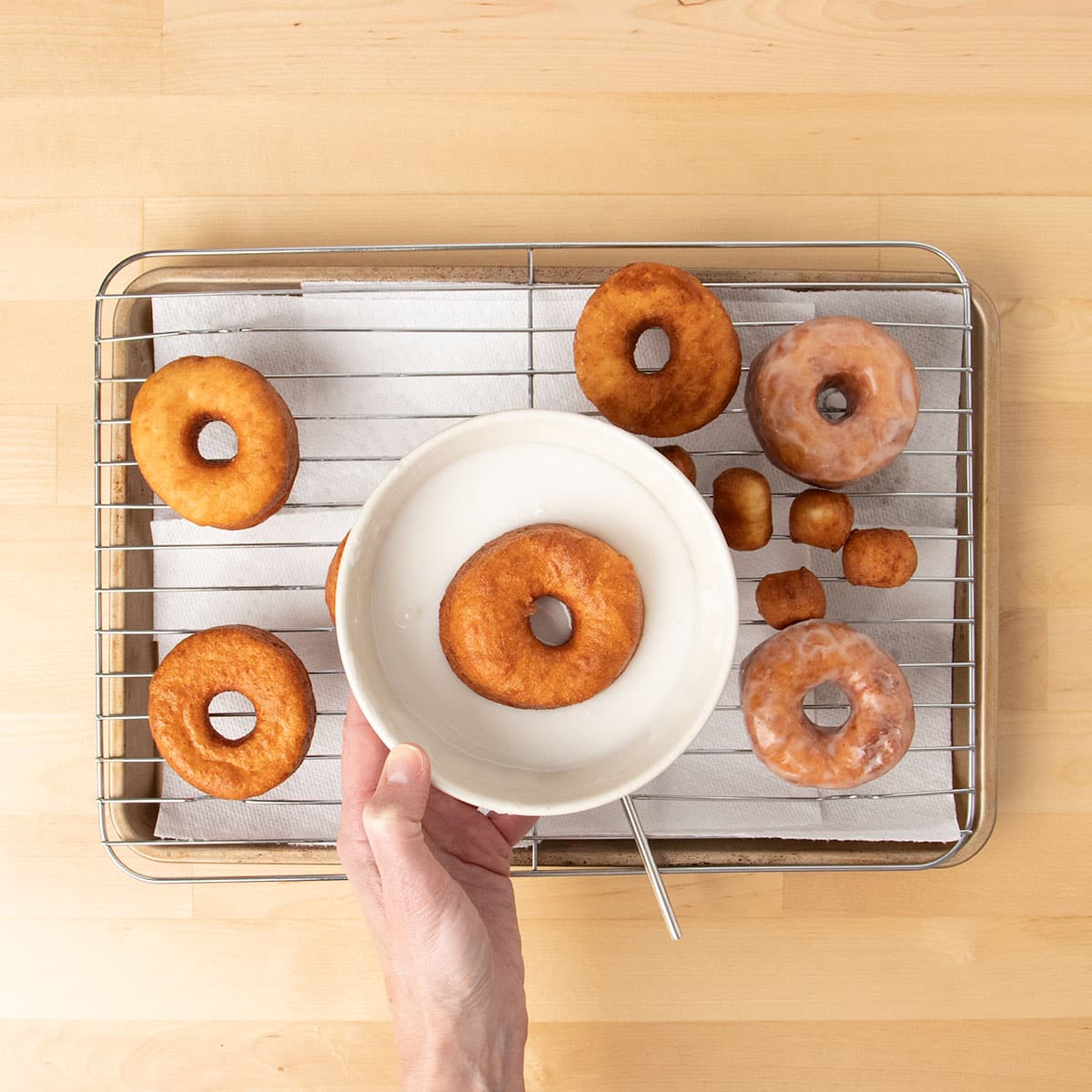
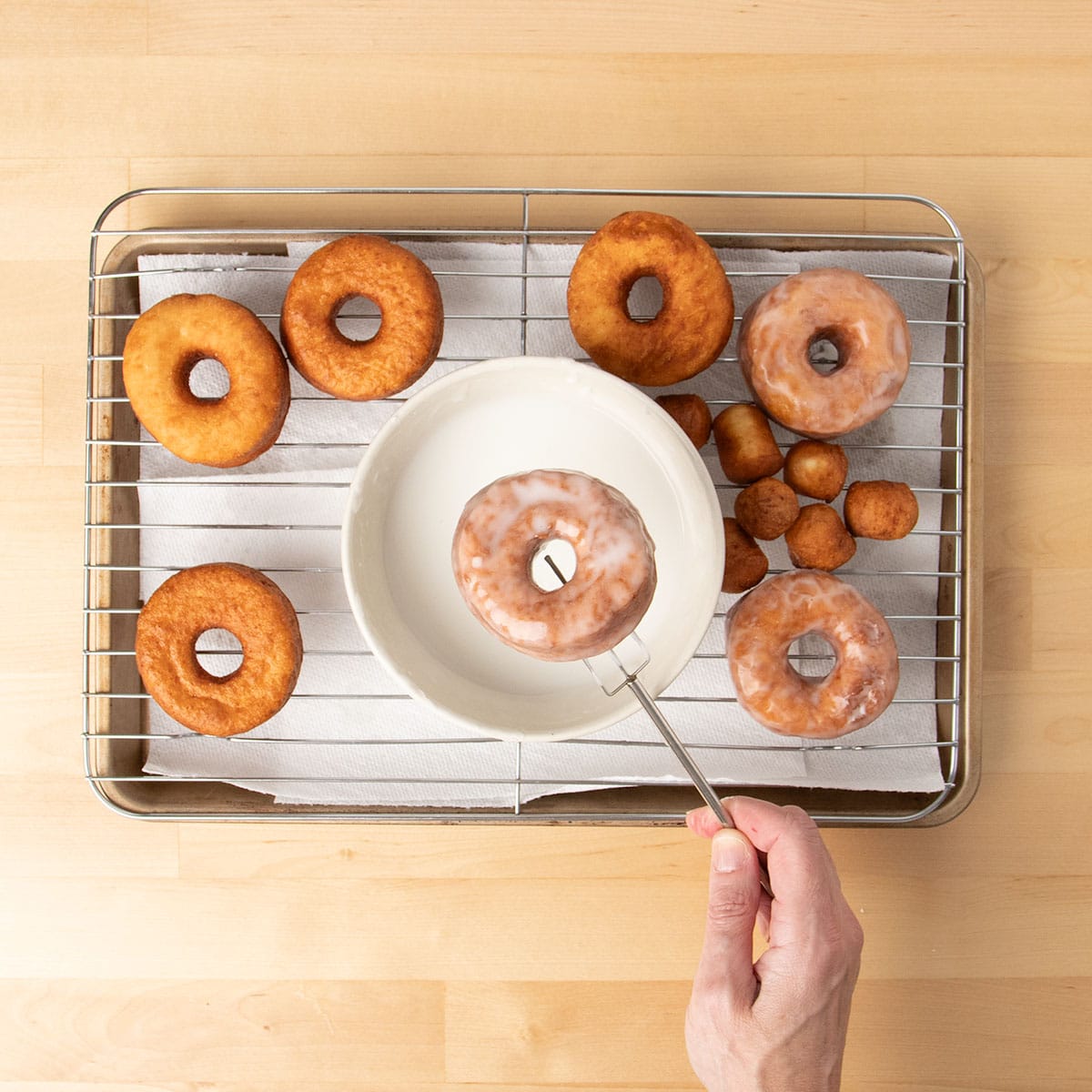
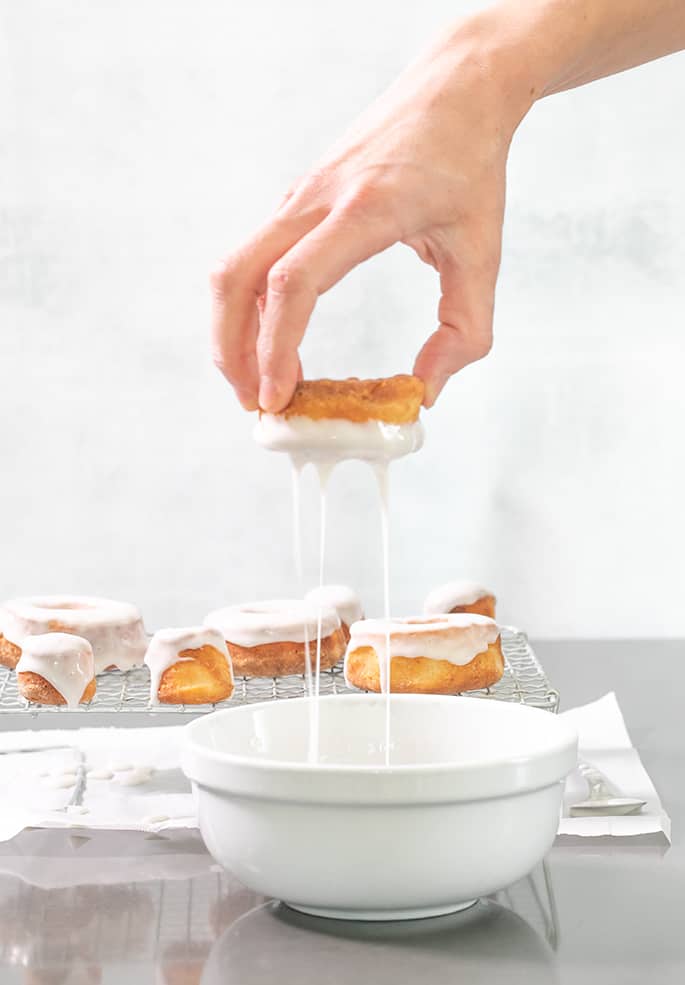
- Dip warm donuts on both sides in a simple sugar glaze, then let set on a wire rack
- Serve immediately!
My Pro Tip
Expert tips
Use a stand mixer if you can
A stand mixer with the paddle attachment creates smooth and properly aerated and incorporated dough. Otherwise, try using a food processor with the plastic dough blade and pulse.
Let the dough rest
Once you’ve made the dough, refrigerate it in a sealed container for at least an hour. This gives the flour time to absorb the liquid, making it much easier to handle—and the yeast time to develop flavor. Although the dough is suitable for use after chilling for an hour, try leaving it in the fridge overnight, if possible.
Use a thermometer for frying
If you’re frying in a pot of oil, you definitely want to use a candy thermometer to ensure your oil reaches 350°F. If your oil is too cold, your gluten free fried donuts will absorb oil as they cook, resulting pale, greasy lumps. If your oil is way too hot, the outsides of your doughnuts will darken and possibly burn before the center is done cooking. Your donuts should bubble vigorously and begin to fry as soon as you place them in the oil.
Fry in “dirty” oil
Oil that is not quite clean is best for frying. Frying a few chunks of old bread in the oil before using it for the doughnuts will help all of your doughnuts come out golden brown and delicious. They brown quickly.
Air frying tips
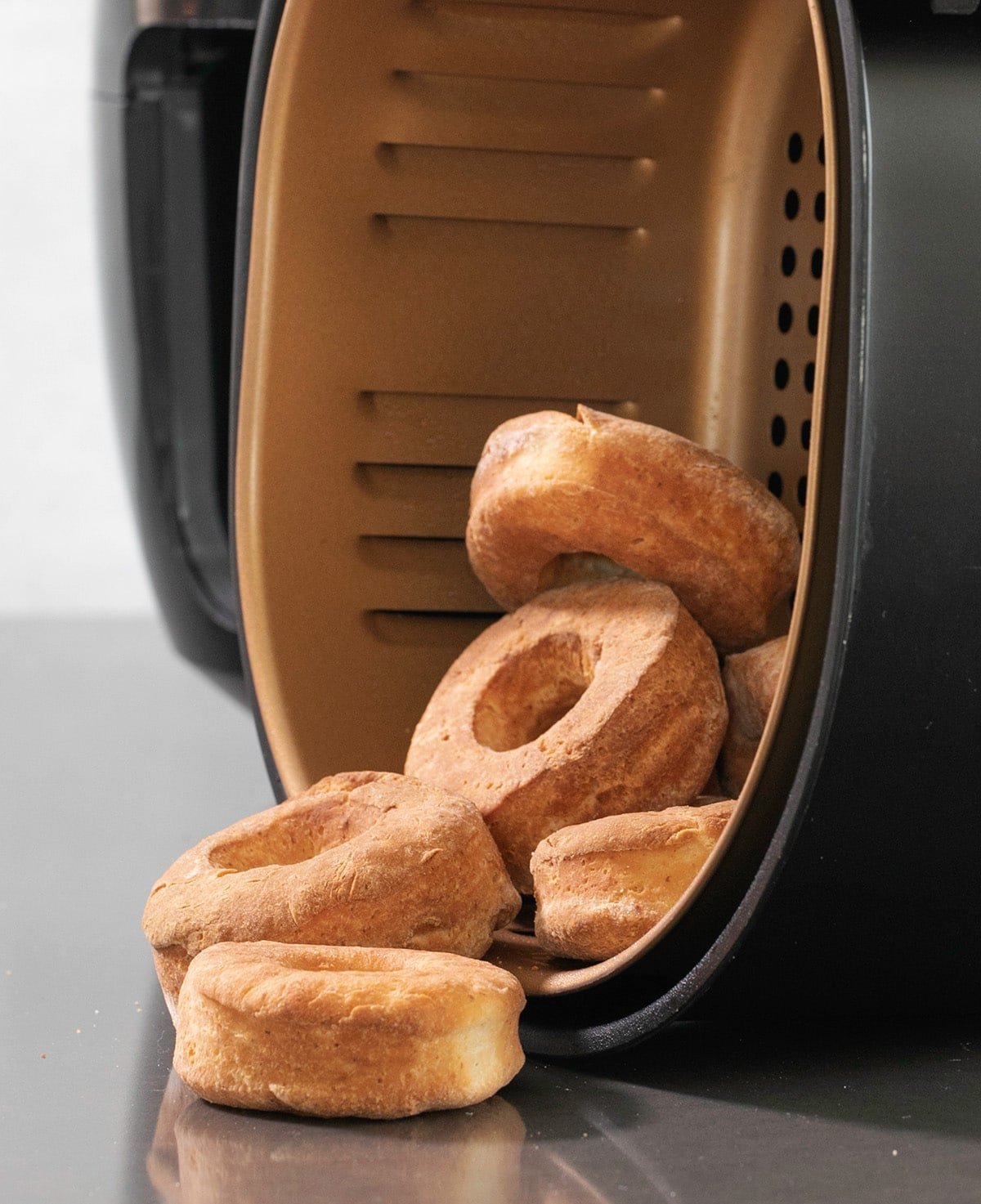
An Air Fryer is not really created to “fry” anything at all. It’s really just a very efficient, small convection oven.
But you can make foods that do taste like they were, in fact, deep fried in the Air Fryer. To give air fried food that deep fried taste, spray or brush it first generously with cooking oil spray and fry at a high temperature. Flip, spray and finish air frying!
Ingredient substitutions
Dairy free
I’ve made these donuts dairy free quite easily by replacing the unsalted butter with virgin coconut oil and using unsweetened almond or coconut milk (in the carton). Those substitutions work perfectly well.
You can also replace the butter with Melt VeganButter or Spectrum nonhydrogenated vegetable shortening, each melted and cooled.
Egg free
Since there are only one egg and one egg white in this recipe, you can try replacing the egg with a “chia egg” (1 tablespoon ground chia seeds + 1 tablespoon lukewarm water, mixed and allowed to gel).
Try replacing the egg white with aquafaba (the brine from a can of chickpeas). I haven’t tried either of these substitutions, so you’ll have to experiment!
Apple cider vinegar
In place of apple cider vinegar, you can another neutral or full-bodied vinegar. I would not use a particularly bright, tart vinegar, like white wine vinegar.
White balsamic vinegar is rather mellow. That works well in place of apple cider vinegar. You can also use freshly-squeezed lemon juice.
Yeast
I like baking with instant yeast (also called rapid rise or breadmaker yeast) because you don’t have to “proof” it first. If you prefer to use active dry yeast, just use 25% more, by weight (here, 3 1/8 teaspoons or 10 grams), and soak it in some of the milk first before adding it when you add the rest of the milk.
If you enjoyed creating this recipe, you might as well try my gluten free black bean burger, this is the perfect veggie burger.
Gluten Free Donut Recipe

Tell Google you trust GFOAS!
Equipment
- Candy thermometer or electric deep fryer or Air Fryer
Ingredients
For the donuts
- 2 ¼ cups (315 g) all purpose gluten free flour blend, (I used Better Batter; click through for full info on appropriate blends without which the recipe will not turn out), plus more for sprinkling
- 1 ½ teaspoons xanthan gum, omit if your blend already contains it
- ⅜ cup (45 g) tapioca starch/flour, add this ingredient even if your all purpose blend contains tapioca starch
- ½ teaspoon kosher salt
- ¼ teaspoon cream of tartar
- ½ teaspoon baking soda
- ½ cup (100 g) granulated sugar
- 2 ½ teaspoons (8 g) instant yeast, also called breadmaker or rapid rise yeast
- ½ teaspoon fresh finely-ground nutmeg, optional
- 1 teaspoon apple cider vinegar
- 1 (50 g out of shell)) egg, at room temperature
- 1 (25 g) egg white, at room temperature
- 1 cup (8 fluid ounces) milk, at room temperature, plus more as necessary
- 4 tablespoons (56 g) unsalted butter, melted and cooled
- Oil for frying or non-aerosol oil spray for Air Frying
For the glaze
- 1 cup (115 g) confectioners' sugar
- 2 tablespoons (42 g) Lyle’s Golden Syrup, (or honey)
- 2 tablespoons (1 fluid ounce) water, plus more as necessary
Instructions
Make the donut dough.
- In the bowl of your stand mixer, place 2 1/4 cups flour, the xanthan gum, tapioca starch, salt, cream of tartar, baking soda and sugar. Whisk to combine well. Add the yeast and optional nutmeg, and whisk again to combine well.
- Fit the mixer with the paddle attachment.
- Add the vinegar, egg, egg white, milk and melted butter, and mix to combine. Mix on low speed until the liquid is absorbed by the dry ingredients, then turn the mixer speed to high and mix for about 2 minutes or until very well-combined. It should take on a bit of a whipped appearance.
- The dough will be wet but should scrape easily off the sides of the mixer with a spatula. Beat in more milk a drop at a time as necessary to get the dough to move freely in the mixer.
- For best results, spray the inside of a lidded bucket or bowl with cooking oil spray, scrape the donut dough into the container, and cover the bucket or bowl.
- Place in the refrigerator to rise and chill for at least 1 hour, or up to 4 days. You can work with the dough immediately, though, if you prefer. It will just be stickier and a bit harder to handle, and will have less flavor.
Shape the dough.
- Line rimmed baking sheets with unbleached parchment paper and set them aside.
- When you’re ready to work with the dough, divide the dough in half and place the first half onto a lightly floured surface.
- Sprinkle the dough lightly with some extra flour and turn over on itself a few times to create a smoother dough.
- Press the dough into a disk, sprinkle lightly with more flour, and roll it out about 1/2 inch thick. The dough will begin as relatively sticky, so keep sprinkling lightly with more flour to prevent the rolling pin from sticking, and move the dough frequently.
- Flour a doughnut cutter or biscuit or large round cookie cutter (about 7 cm in diameter), and cut the dough into donut shapes. If you’re using a large plain round cutter instead of a donut cutter, use a much smaller cutter to cut out donut holes from the rounds (about 2.5 cm).
- Place the donut shapes and the holes on the prepared baking sheets about 1 1/2-inches apart from one another. Gather scraps and reroll, then cut more shapes.
- Repeat with the other half of the dough either now or in a few days. The dough keep in a sealed container in the refrigerator for up to 4 days.
Let the dough rise.
- Cover the baking sheets with plastic wrap, and place in a warm, draft-free spot and allow to rise to about 150% of their original size. They won't fully double, but instead will end up about 1 1/2 times as large as they began.
- This usually takes 45 minutes to 1 hour, but it can take less time in warm, humid environments and more time in cold ones. Be sure that the dough has begun to swell before you consider it done rising, or your donuts will be dense.
Air Fryer Instructions.
- Spray the bottom of the Air Fryer basket with non-aerosol cooking oil spray. Place as many donuts and holes as will fit comfortably in the basket of your Air Fryer in a single layer, without crowding.
- Spray or brush the tops of the donuts generously with cooking oil, and place in the Air Fryer. Set the machine to fry at 380°F for 12 minutes. Allow to cook for about 6 minutes.
- Remove the basket carefully from the fryer and, using heat-safe tongs, flip each of the donuts and holes over. Spray or brush again generously with cooking oil, and return to the fryer.
- Finish frying until lightly golden brown all over. Remove the donuts and place on a wire rack to cool. Repeat with the remaining donuts and holes.
Deep-frying directions.
- In a large, heavy-bottom stock pot or electric deep fryer, heat at least 2 inches of oil to a bit more than 350°F.
- Line a rimmed baking sheet or tray with paper towels, then place a heat-safe wire rack on top.
- Once the oil reaches temperature, fry the donuts and holes in small batches for 2 to 3 minutes per side, or until golden brown all over.
- Remove with tongs or a slotted spoon and drain on the prepared wire rack and baking sheet.
Make the glaze.
- Make the glaze while the first batch of donuts is hot from the oil. You want to glaze them while they're still warm.
- In a small-to-medium-sized bowl, place the confectioner’s sugar. Add the syrup or honey, and mix to combine into a thick paste.
- Add water, a teaspoon at a time, and mix well until you have achieved a smooth and thickly pourable glaze.
- Immerse the whole donut (or donut hole), while still warm, in the glaze, covering it on all sides. Lift the glazed donut from the mixture using a fork, allow any excess to drip off, and then return to the wire rack to set.
- If the glaze thickens between batches, sprinkle in a drop or two of water and whisk again until smooth. Finish the the remaining donuts.
Video
Notes
Nutrition
Nutrition information is automatically calculated, so should only be used as an approximation.
make ahead/leftovers
Storage instructions
I wouldn’t recommend storing deep fried donuts for more than a few hours after frying. They’ll start to harden even if they’re covered in plastic wrap. Air fried donuts will stay fresher for longer, but they’re also best when freshly made.
Instead, make the dough in advance and store it in the fridge for up to 4 days. Just fry as many as you plan to eat!
Filling and topping ideas
Here are a few ideas to make something other than my personal favorite, plain glazed:
- Chocolate – let your donuts cool a bit, then drizzle them or dip them in a chocolate glaze
- Jelly donuts – use a pastry bag with a pointy tip called a Bismark tip to make gluten free jelly doughnuts — just skip the hole during shaping, and pipe your favorite flavor into the center of the donuts after frying
- Powdered sugar coating – roll a freshly fried donut in powdered sugar as soon as it comes out of the fryer. Let it set, then coat it again after it’s begun to cool for a complete covering.
- Sprinkles – Press glazed donuts in sprinkles or nonpareils before the glaze has set.
FAQs
No! There is no such thing as a Krispy Kreme gluten free donut. I’m serious when I say that my recipe for gluten free yeasted donuts is good enough to be a Krispy Kreme copycat recipe.
You may have overmeasured the milk a bit, but generally this is a relatively sticky dough. Feel free to sprinkle the surface and the dough lightly with more gluten free flour as you shape it to prevent it from sticking. Just work with a light touch so the dough doesn’t absorb all of the extra flour. If the raw donuts are too dry, they won’t rise.
Yes. The first rise, ideally, is slowly in the refrigerator. It makes the dough easier to shape, and allows the yeast to develop flavor. The second rise is after shaping and what holds during frying.
The differences between cake donuts and yeast donuts lie in how they’re prepared and their textures. Cake donuts tend to be sweeter, and because they’re not made with yeast, they don’t have the same airy texture. As they’re generally cooked in an oven using doughnut pans, these baked donuts are a bit more dense, like cake. Yeast donuts, on the other hand, are soft and fluffy after they’ve been fried.
Not really. I’ve baked them in the oven, and they taste okay, just not like donuts. Frying them ensures that they cook quickly while maintaining their fluffy center. If you’d rather have baked donuts, try my gluten free chocolate donuts. We also have gluten free apple cider donuts, if you’re in the mood, or our gluten free vanilla donuts for a more neutral flavor. If you’re looking for a soft, tender yeasted dough that you don’t fry, try our baked gluten free cinnamon rolls instead.
Vegetable oil is probably the most popular oil for frying donuts, but you can use any neutral oil of your choosing. You can use vegetable shortening, or you can try canola oil, peanut oil, or sunflower seed oil. Anything with a comparably high smoke point will work.
Yes! It’s easy to turn plain gluten free doughnuts into jelly donuts. Don’t cut a hole in the center of the donuts before you rise and fry them. Then, fit a pastry bag with a long angled Bismark piping tip, or just snip off the end. Place a jam or jelly of your choosing (I love grape jelly and strawberry jam) into the bag. Cut a hole in your doughnut using a small knife or skewer (or the end of your Bismark tip), and then pipe the filling into the doughnut just until it starts to spill back out.













Do you think there’s an alternative to melted butter? I do dairy free but don’t have access in my area to vegan butter.
I’m afraid I can’t recommend anything else with any level of confidence, Natalie. Sorry!
Hi! I can’t wait to try this recipe! I typically don’t use xanthan gum (inflammation issues) and was wondering if psyllium husk could be used instead, and if so what amount would you suggest?
Hi, Jenny, no you can’t replace xanthan gum with psyllium husk entirely, since psyllium breaks down at 180°F so you always need something else that will hold regardless of temperature. I suggest you take a look at my post about xanthan gum substitutes.