

This post may contain affiliate links. Please read our disclosure policy.
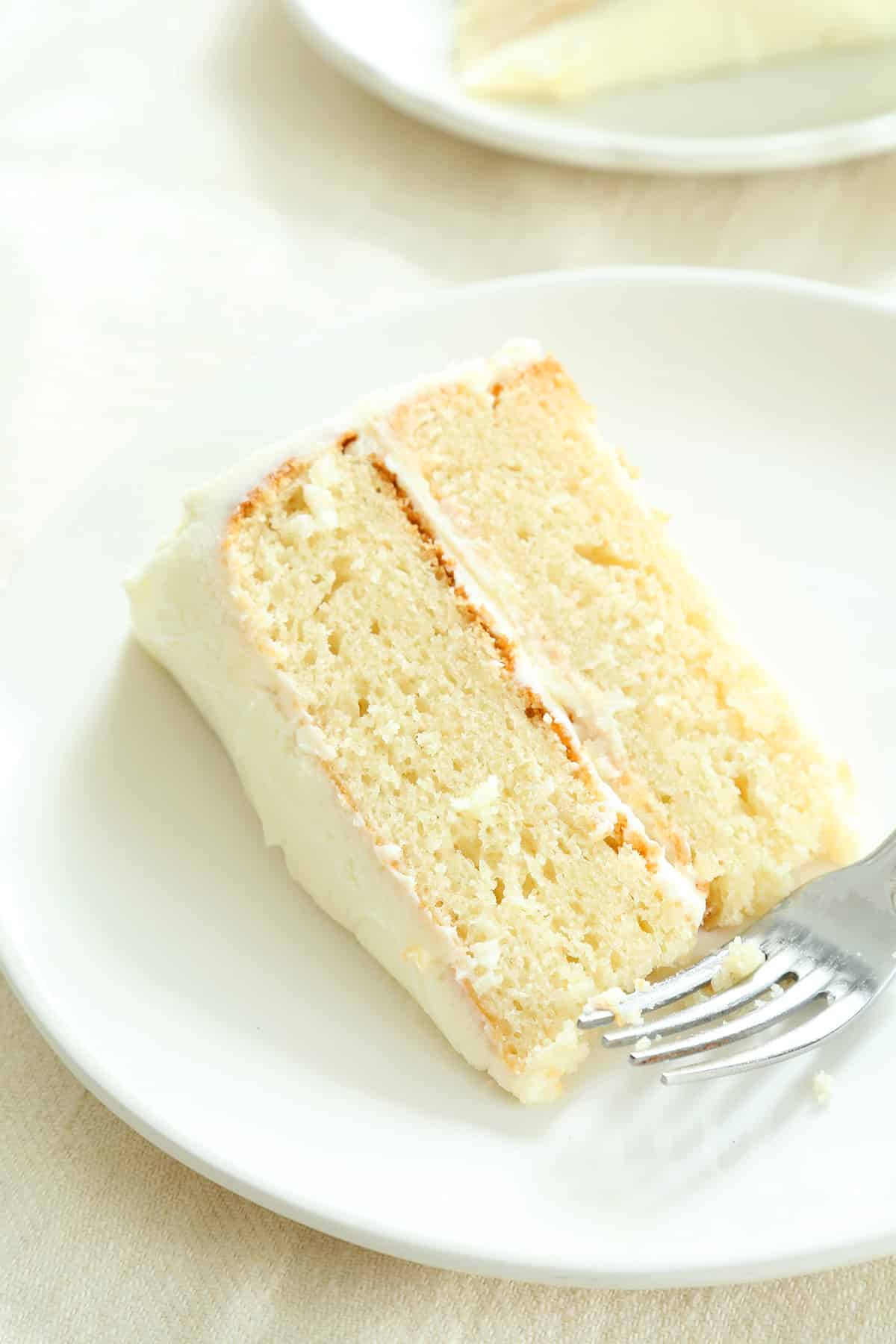
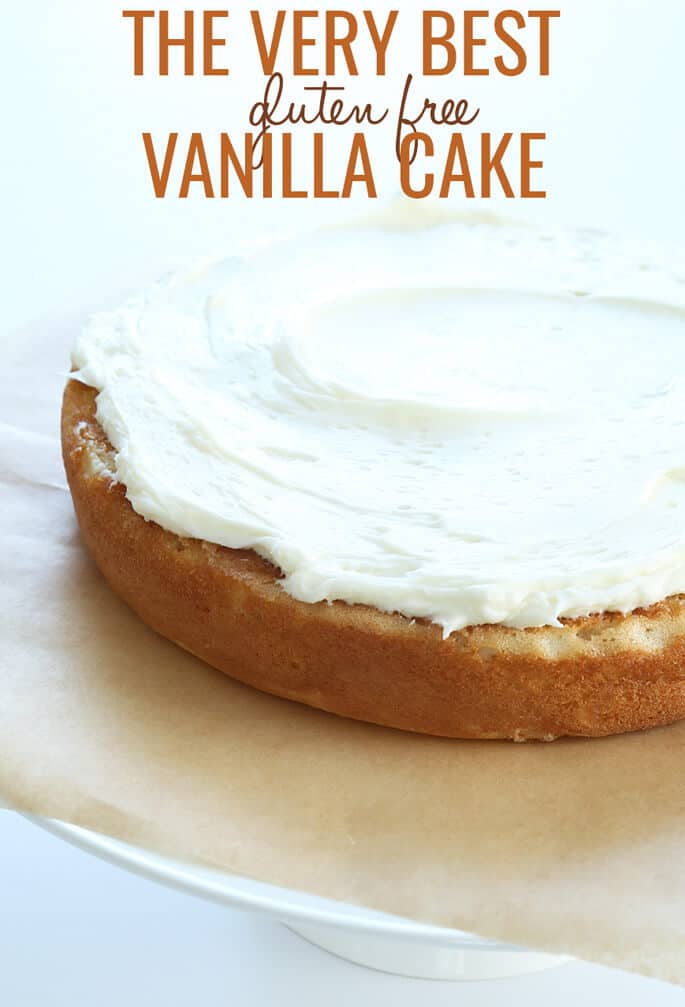
The impossibly light, moist and tender crumb of this cake makes it (yes, really) the very best gluten free cake you've ever had.
It's so light and airy, it proves, once and for all, that gluten free baked goods can be just as good, if not better, than conventional gluten cakes. You've made it over the years for countless weddings, birthdays, and other events that mean the most to you. I'm so proud!
Why this recipe works
It may be bold, but this isn't just the best gluten free cake. It's the cake that you serve to people who can eat as much gluten as they want, and they ask if they can make it at home with their conventional flour.
I tell them that they can have the recipe, since it's right here on the blog. But they can't make this cake without our gluten free all purpose flour. They have their recipes; leave us ours.
The secret to the very best vanilla cake recipe, gluten free, is in the balance of ingredients at the proper temperature—and in the method. Read the recipe through carefully first, follow it closely, and you'll know you can make a vanilla cake, gluten free, with an open crumb and tons of delicate flavor any time. If you'd like to save on time, combine the dry ingredients in step 2 in the recipe below in a sealed container for a sort of dry cake mix to make later.
The most important parts of the method are using one of my recommended gf flour blends, sifting it well like our gluten free angel food cake, and beating the butter and sugar together until they're light and fluffy. And your ingredients must be at room temperature before you begin, or they won't combine properly no matter what you do.
You may notice some negative reviews sprinkled in among the positive ones commenting on this recipe. They were left by people who used the wrong gluten free flour blend, didn't measure by weight, didn't sift, didn't combine the dry and wet ingredients separately first or didn't beat the butter and sugar for long enough.
In other words, they didn't follow the recipe as written! I wish it were as simple to make a perfect gluten free vanilla cake as it is to make, say, a one bowl gluten free banana bread.
This cake may be a diva, but the results speak for themselves!
Recipe ingredients
This cake doesn't call for super specialized ingredients; instead you'll only need classic gluten free pantry ingredients. It's made with basic vanilla cake ingredients like butter, sugar, eggs, vanilla, and buttermilk.
Unlike our one bowl gluten free chocolate cake, to get the best vanilla cake you’re going to have sift the dry ingredients. Yes, you really do have to if you want that super tender, non-grainy crumb.
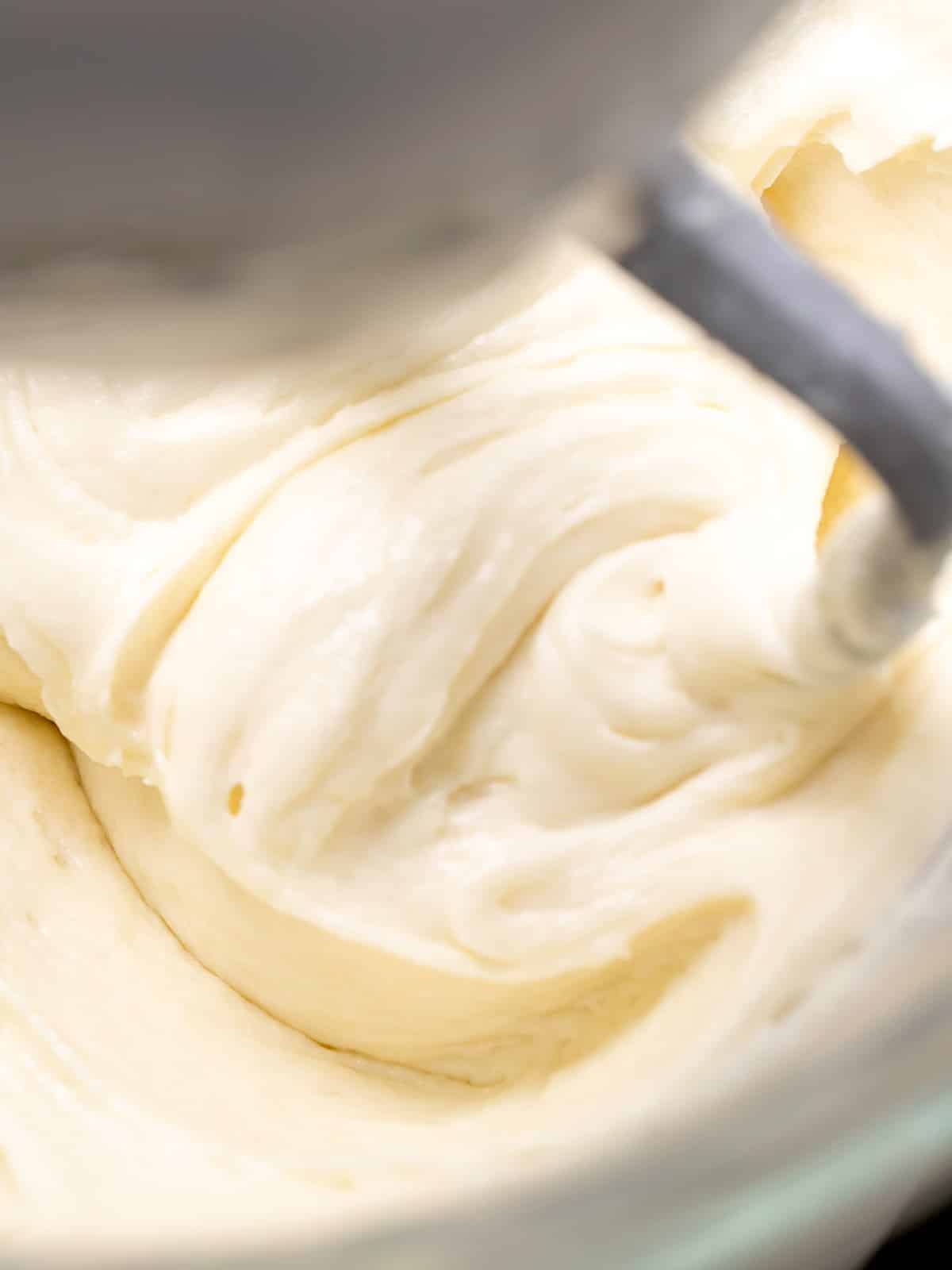
Then, beat the heck out of the butter and sugar before you even think about adding anything else. A stand mixer is great, but a handheld mixer works just as well provided you’re willing to stand there, beating and beating for at least 3 minutes.
Choosing cake pans
I like to bake these cakes in 2 aluminum 8-inch round cake pans to make a layer cake They bake evenly in about 30 minutes at 350°F, and never dome even if my oven has some hot spots (which all ovens do).
If you'd rather bake the cake in 9-inch cake pans, just reduce the baking time accordingly. You'll have to watch it carefully after the initial 20 minutes. And your layer cake will be wider, and a bit less tall.
Don't bake in a dark colored pan or in a glass pan. They attract and conduct too much heat, so your cake may burn on the bottom or the edges before it's baked all the way through to the center.
If you'd like, you can also use 8-inch square pans. The baking time should be the same as with 8-inch round cake pans.
Choosing a frosting
I usually frost this cake with a stiff vanilla buttercream frosting, especially when I make it into a layer cake. It holds its shape really well and protects the cake from drying out like a softer frosting but without wilting. If you'd really like to dive in, please see our full discussion of gluten free frosting recipes, tips, and FAQs.
The simplest way to a lovely, basic gf frosting is to just beat 10 to 12 tablespoons (140 to 168 grams) unsalted butter, at room temperature, until light and fluffy. Add vanilla extract and/or the seeds from the inside of a vanilla bean, and begin with 2 cups (230 grams) confectioners' sugar.
Beat until well-combined. Add more confectioners' sugar as necessary to make the frosting as stiff as you'd like it.
Test the consistency by running your finger through it, but only after beating the frosting really well. If it's stiff enough, it won't stick to your fingers very much.
Expert tips
Cream butter and sugar properly
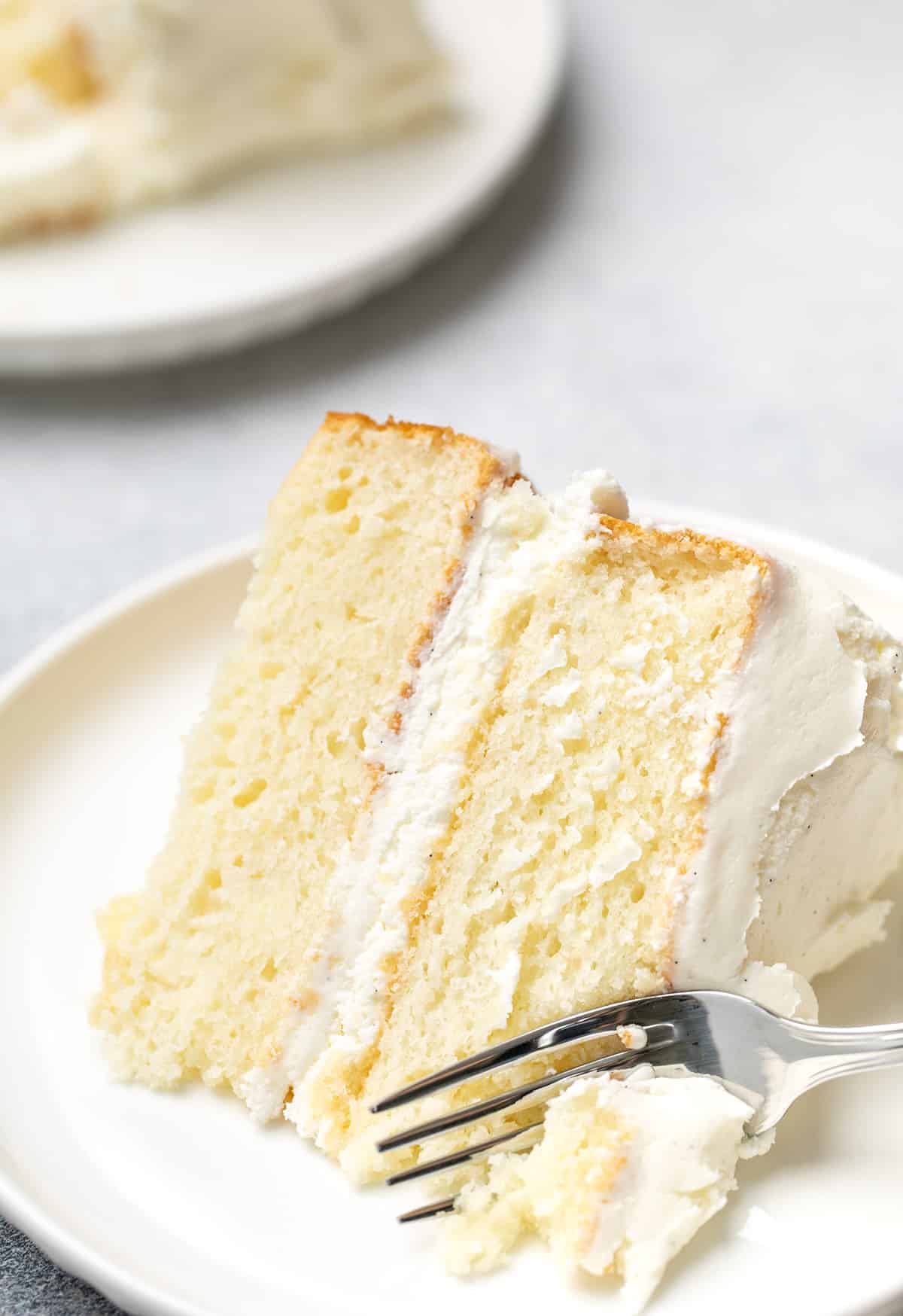
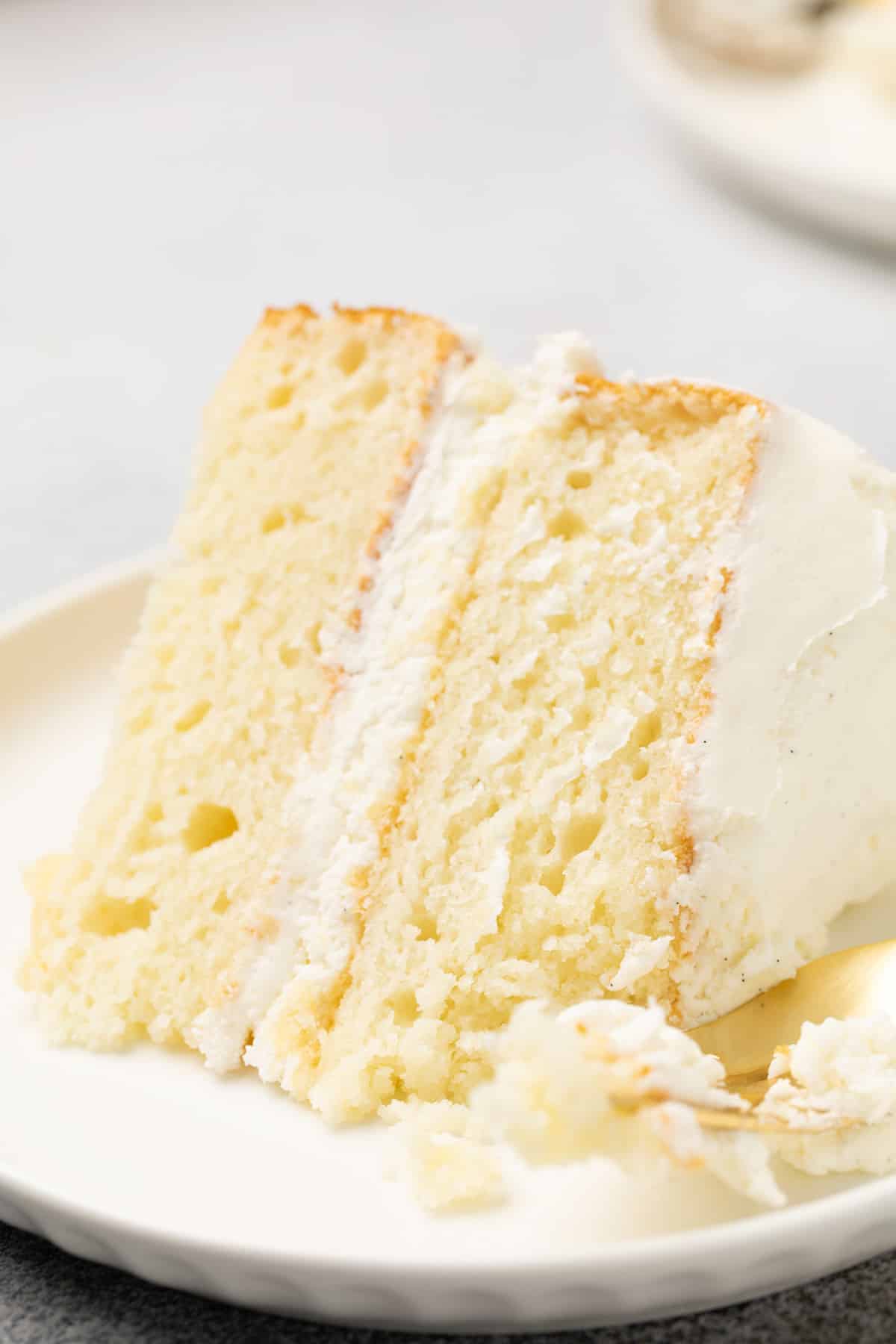
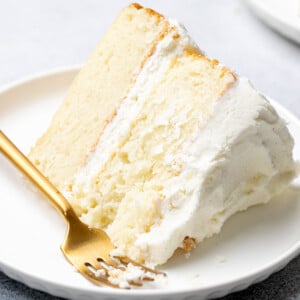
The buttermilk in this recipe softens the crumb so it has a tender mouthfeel. But the airy, open and soft crumb you can see clearly in the photos and the video comes from air being incorporated into the batter at the start by creaming together the butter and sugar for about 3 minutes, or until it turns creamy, lighter in color and begins to increase slightly in volume. That's due to the sugar crystals piercing the fat molecules in the butter.
Sift
Since this is cake has simple flavors, it shines due to the softness of the crumb. Sifting the flour blend and cornstarch ensures even distribution throughout the batter and introduces air into the mixture. That's what creates a professional quality, velvet-soft crumb. Don't skip this step, as much as you might not want to bother!
Only frost a cooled cake
When you first remove them from the oven, let the cakes cool in the pan for 15 minutes. This allows them to firm up enough that they won't fall apart when you move them.
After 15 minutes, turn the cakes over onto a wire rack to cool 100% before you handle or frost them at all. If your cake has any residual heat at all, your frosting will melt.
Choose the right gluten free flour blend
I'm partial to Better Batter gluten free flour's original blend for nearly all of my gluten free recipes. If you can't buy it online, you can always use my mock Better Batter blend recipe to make your own. I also recommend Nicole's Best multipurpose gluten free flour blend with added xanthan gum as described in the recipe.
If you are using a higher starch all purpose gluten free flour blend like my mock Cup4Cup, replace the cornstarch in this recipe with an additional 54 grams of your flour blend.
Do not try to make this recipe using one of the lower-quality flour blends that use gritty, poor quality rice flour, like King Arthur Flour's Measure for Measure blend. Bob's Red Mill 1-to-1 in the blue bag has improved significantly and is no longer gritty, but it does have a slight unpleasant aftertaste. You can use, though, if you add 1/2 teaspoon extra xanthan gum, since it contains too little to be effective.
Ingredient substitutions
I’ve tried this cake every which way, and this is truly the best. If you need to modify the ingredients, of course the cake will be different.
Dairy free
For dairy-free, you can use my recipe for a super tender gluten free dairy free cake. But if you'd like to try making this cake recipe, I recommend vegan butter like Miyoko's Kitchen or Melt brands in place of butter. Try 1:1 by weight. You can also try Spectrum brand nonhydrogenated butter-flavored vegetable shortening.
You'll need a buttermilk substitute. Try half unsweetened almond milk by volume and half nondairy plain yogurt in place of the buttermilk.
I really don't like a simple milk + acid like lemon juice or vinegar as a buttermilk replacement. That only replaces the acid, but not the thickness of buttermilk. The half milk half yogurt swap is the best.
Maybe you'd like to make a white cake, instead of this yellow cake. My recipe for gluten free white cake is perfect for adding food coloring for a special occasion. If you're looking for a super light white cake, you might prefer our gluten free angel food cake, made without any egg yolks (only whites) and even without any butter.
Egg free
I have not tried this cake with an egg substitute. But I'm afraid I just can't see working out very well since this cake is very egg-dependent.
My typical egg replacement suggestion is a “chia egg” (1 tablespoon ground white chia seeds + 1 tablespoon lukewarm water, mixed and allowed to gel). But this cake calls for mostly egg whites, and a chia egg is not an egg white substitute.
If you're feeling adventuresome, you can try replacing the whole egg with a chia egg and the egg whites with slightly whipped aquafaba. Aquafaba is simply the brine from a can of chickpeas.
I'm working on a true vegan gluten free vanilla cake recipe because I really prefer a cake that is designed to be made egg-free, rather than one with an egg replacer. But, in the meantime, here we are.
Corn free
In place of cornstarch, try arrowroot or even potato starch. Either should work fine. We're really using cornstarch to make our all purpose gluten free flour blend into more of a gluten free cake flour.
If you are using a higher starch all purpose gluten free flour blend like my mock Cup4Cup, replace the cornstarch in this recipe with an additional 54 grams of your flour blend.
Storage instructions
If you'd like to serve a few slices of fully prepared cake and then store it at room temperature for a few hours, just after taking a slice, use leftover frosting to cover the missing area, extending the cake's life in the fridge.
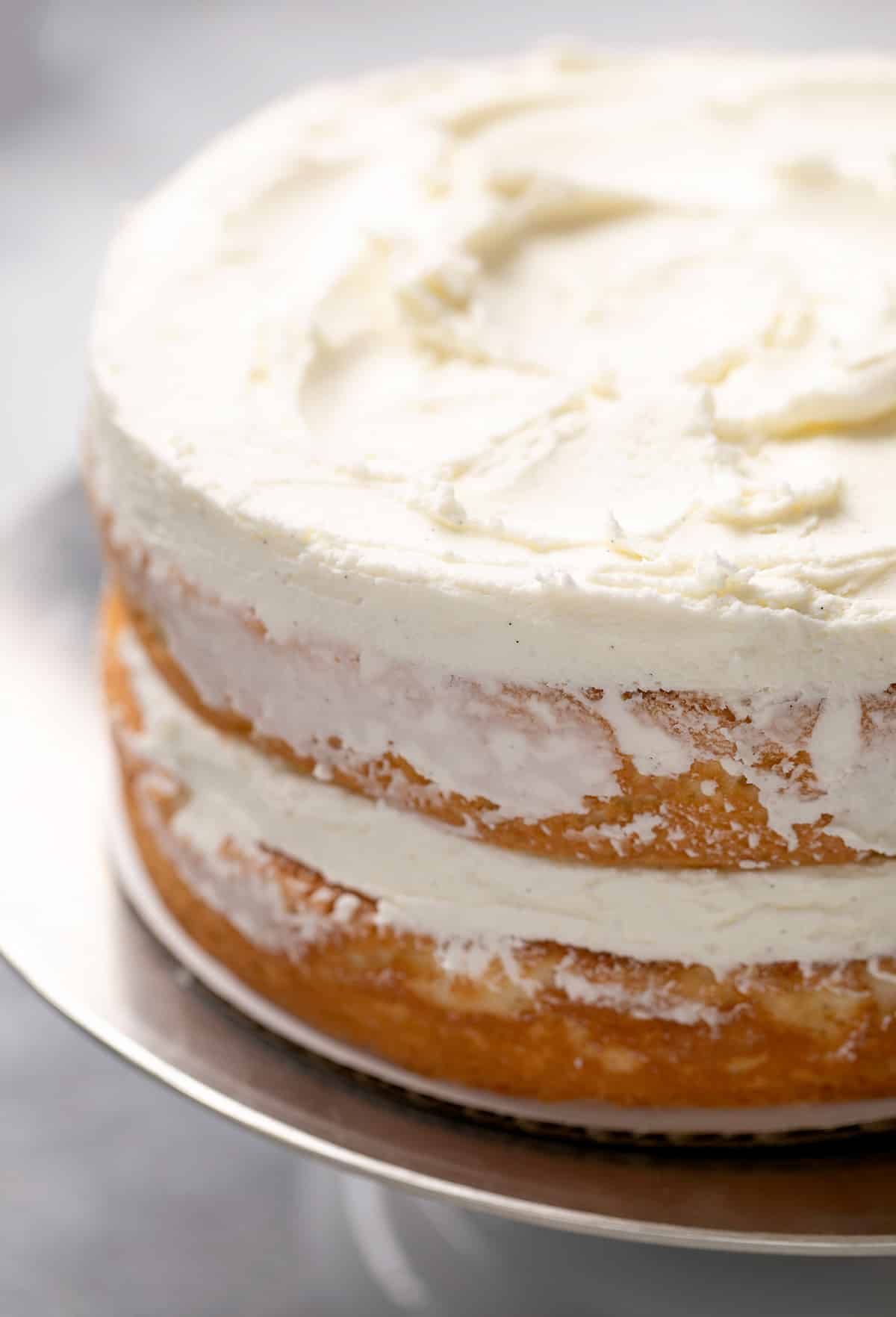
I like the look of a “naked cake,” which just means that it's frosted fully in between the layers and on top. The sides have a very thin crumb coat, and that's enough to keep in the moisture if you'd like to wrap the cake tightly in plastic wrap and store it in the refrigerator for a couple days before completing the frosting. Since this is an all butter cake, it will taste dry when it's cold, so be sure to let it warm to room temperature before serving it.
I recommend against refrigerating the cake without the crumb coat and covering it tightly, as it will dry out.
For longer storage, you can make the cake layers ahead of time, let them cool fully, then wrap each tightly in plastic wrap and store in the freezer for up to 3 months. Defrost at room temperature while still wrapped in plastic, then unwrap, frost and serve.
Gluten Free Cake Recipe
Equipment
- Stand mixer or hand mixer
Ingredients
- 2 cups (280 g) all purpose gluten free flour blend, (See Recipe Notes)
- 1 teaspoon xanthan gum, omit if your blend already contains it
- 6 tablespoons (54 g) cornstarch, replace with 6 tablespoons additional Cup4Cup if Cup4Cup is your all purpose gluten free flour
- ½ teaspoon baking soda
- 2 teaspoons baking powder
- ½ teaspoon kosher salt
- 4 (100 g) egg whites, at room temperature
- 1 egg (50 g (weighed out of shell)) at room temperature
- 1 ⅓ cups (10 ⅔ fluid ounces) buttermilk, at room temperature
- 2 teaspoons pure vanilla extract
- 10 tablespoons (140 g) unsalted butter, at room temperature
- 1 ½ cups (300 g) granulated sugar
Instructions
- Preheat your oven to 350°F. Grease 2 8-inch round cake pans and line the bottom of each with a round of parchment paper (trace the perimeter of the cake pan on the parchment, then cut out the circle). Set the pans aside.
- Into a medium-size bowl, sift (yes, you have to sift!) the gluten free flour blend, xanthan gum, and cornstarch. Add the baking soda, baking powder, and salt, and whisk to combine well. Set the dry ingredients aside.
- In a large measuring cup or medium-size bowl, place the egg whites and egg, buttermilk, and vanilla. Whisk to combine very well. Set the wet ingredients aside.
- In the bowl of a stand mixer fitted with the paddle attachment or a large bowl with a handheld mixer, beat the butter and sugar on medium-high speed for at least 3 minutes, stopping at least once to scrape the entire mixture off the sides and bottom of the bowl, or until very light and fluffy.
- To the large bowl with the butter and sugar mixture, add the dry ingredients in 4 equal portions, alternating with the buttermilk and egg mixture in 3 parts, beginning and ending with the dry ingredients and mixing to combine in between additions.
- The batter will sometimes look a bit curdled. That's normal and not a problem at all.
- Once all the ingredients have been added, beat for another minute on medium speed to ensure that everything is combined, then turn over the batter a few times by hand.
- The batter should be fluffy and relatively smooth, although a few lumps are fine. Do not overmix the batter in an attempt to make it perfectly smooth. It will be relatively thick.
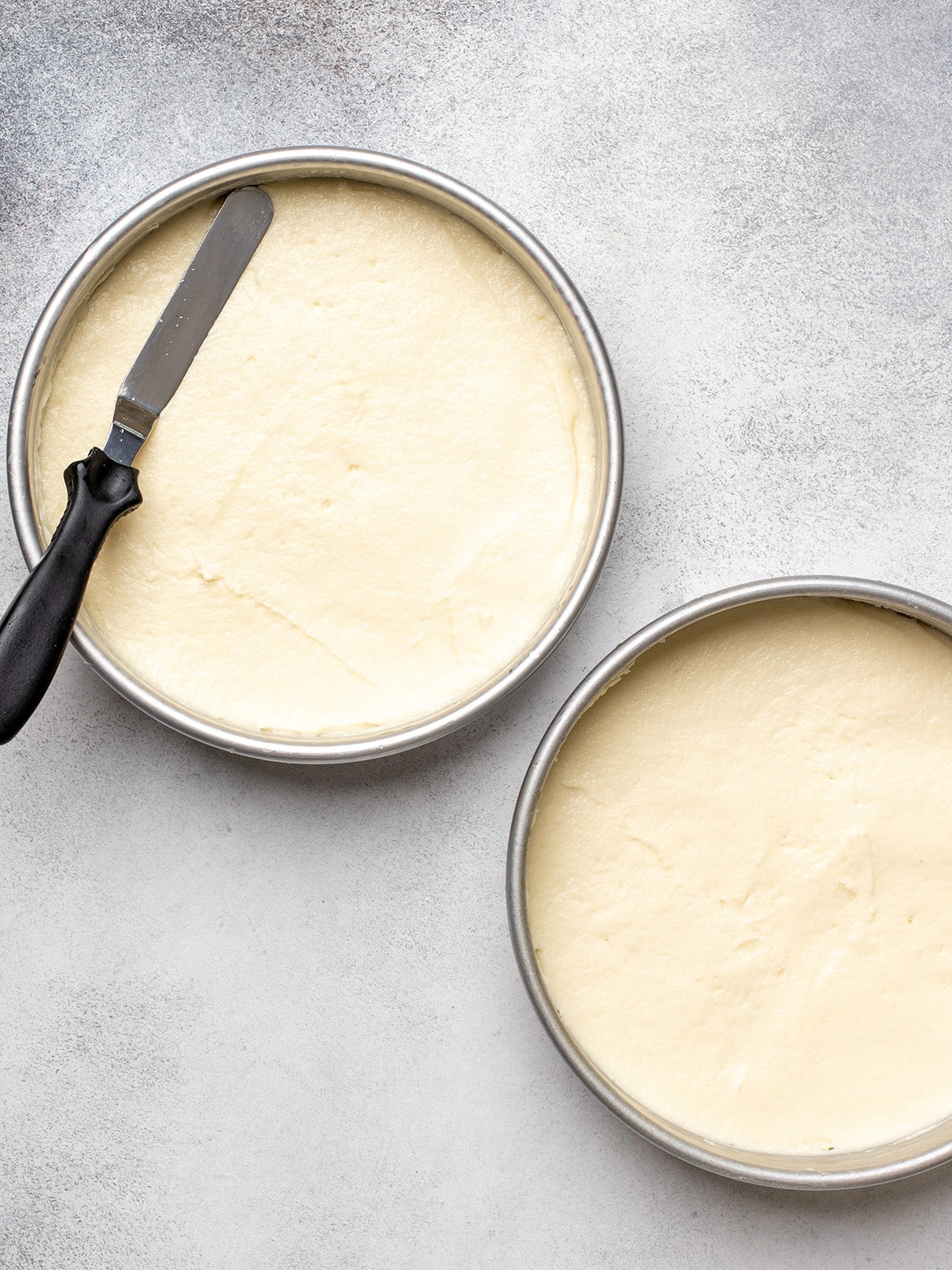
- Divide the batter evenly between the two prepared baking pans and smooth each into an even layer with an offset spatula. Bang the bottoms of the pans flat on the counter a few times to break any large air bubbles.
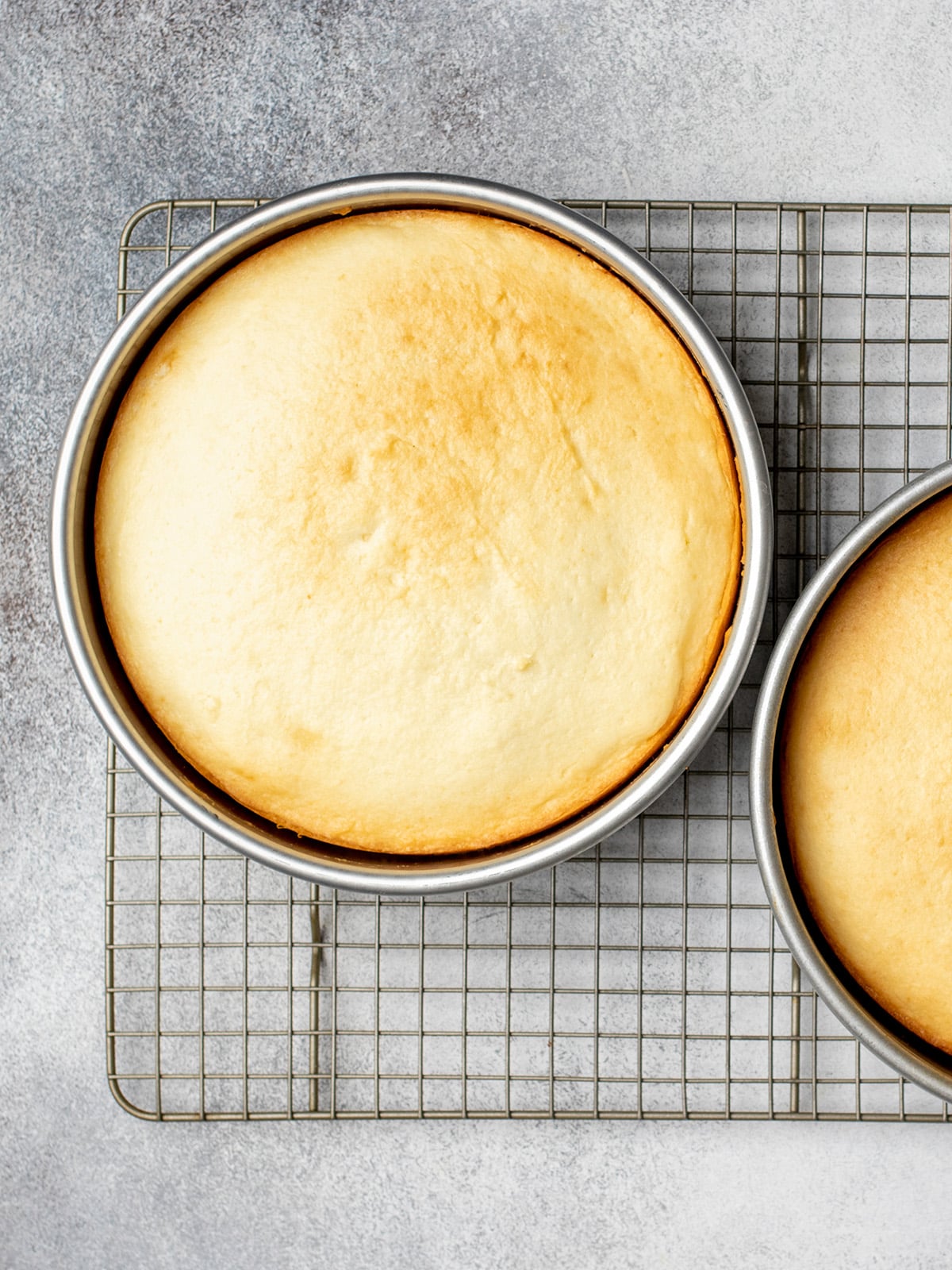
- Place the baking pans in the center of the preheated oven and bake for 20 minutes. Rotate the pans, and continue to bake until the cakes are lightly golden brown all over, have begun to pull away from the sides of the pan and do not jiggle in the center at all (about another 10 minutes). These tests for doneness are more useful than the toothpick test. Do not overbake.
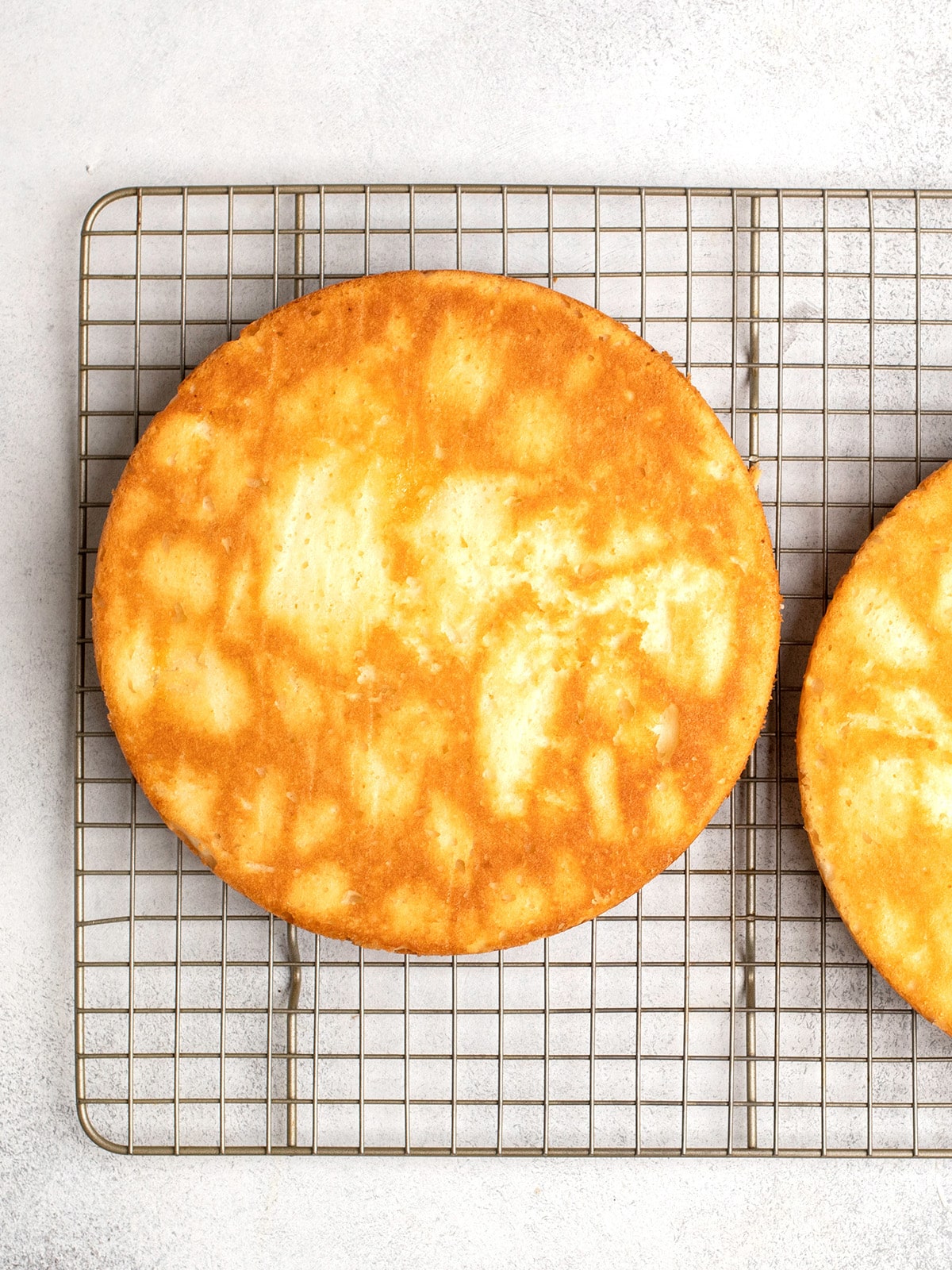
- Remove the cakes from the oven and allow to cool in the pans for 15 minutes before turning out onto a wire rack (and removing the parchment paper liners) to cool completely before frosting and serving.
Video
Tell Google you trust GFOAS!
Notes
Nutrition
Nutrition information is automatically calculated, so should only be used as an approximation.
FAQs
Yes, pure vanilla extract is gluten free because distilled alcohol is gluten free. See: Gluten Free Living Magazine.
If your cake baked and appeared done, but sunk as it cooled, it wasn't baked properly all the way in the center. That is usually due to a too-hot oven that bakes the outside of the cake until well done before the inside is done.
I don't recommend using this cake recipe to make cupcakes, since it's easier to make cupcake batter than it is cake batter. Use my recipe for the perfect gluten free vanilla cupcakes, which don't require any sifting, instead!
Yes! To freeze the cake whole, wrap it very tightly and defrost at room temperature before slicing and serving. To freeze slices, wrap them tightly and freeze individually, then defrost at room temperature. It's always best to freeze the cake before it's frosted, but if you're storing leftover and they're already frosted, defrost slices in the refrigerator overnight.










This is the best gluten free recipe I’ve tried so far! It was fluffy and light just like a regular cake, my husband didn’t even know it was GF! Thank you for the recipe!
You’re so welcome, Anne! Pleasing the gluten eaters is the gold standard. Thanks for sharing that!
This cake was delicious!! It was perfect all on its own even without icing or toppings but I used it in a trifle and my family said this was the best one I’d made recently thanks to this cake. It held its own very well in the trifle (berries, pudding and whipped cream) and didn’t get mushy at all. This recipe is definitely a keeper!
So glad to hear it, Nancy! I honestly wouldn’t have thought a regular cake would work in a trifle, so thank you for sharing that!
Wow— this cake is delicious and you’d never guess it was a gluten free cake. So good just on its own with no icing or anything but I used one of the cakes in a trifle and it was perfect!! The other one we’ll enjoy as is or simply add toppings as we take a slice. So, so good. (BTW I used Ardent Mills GF flour which we buy at Costco here in Canada). I will definitely be saving this recipe—thank you!
I just wanted to confirm something, your list of all-purpose flour blends said that Bob’s Red Mill was ok as long as you added extra xantham gum, but later on in the directions for the cake batter it said specifically NOT to use Bob’s Red Mill.
I am now using your top recommendation Better Batter.
Moving on to the main question, the recipe also says to use xantham gum unless your blend already contains it. The Better Batter ingredients list xantham gum so I’m guessing I can leave it out.
Sorry for the long comment I really just want to make sure I understand perfectly. Thanks in advance!
Hi, Leanna, on the all purpose gluten free flour blends page, I discuss how Bob’s Red Mill performs reasonably well in most recipes, with additional xanthan gum. But in certain recipes, like this one, I recommend against it. Yes, you leave out xanthan gum when you’re using Better Batter in this recipe.
I mixed up your flour mixture 3 different times and used it in your recipe. All 3 times the cake turned out the same. It rose and looked normal until I pulled it out of the oven. It then fell and got very dense & heavy. No lightness. No cake like texture. At first I thought I didn’t cook it long enough so cooked a little longer the next time. No jingle, light brown on top and pulling away from edge. Let sit in pan for 15 mins and then turned out.
What am I doing wrong? I have a thermometer in my oven to verify temp is correct. I beat butter and sugar until light and fluffy. All ingredients at room temp. I cannot figure out what is wrong. We cater and bake all the time but this cake is kicking my behind. Lol
Hi, Sherry, it sounds pretty clear that your cake isn’t baked all the way through, and that you’re largely judging doneness visually, but not testing the center. In addition, I’d ask myself what all purpose gluten free flour blend you’re using, and start there. You also didn’t mention measuring your ingredients by weight instead of volume. I’m afraid there aren’t any other clues you’ve given that help me understand where you’ve deviated from the recipe as written, and there are just too many variables for me to guess any further.
Hi Nicole,
Pictures of sliced cake these days often include what looks to me like way too much frosting — or icing, I don’t know the difference, lol.
In your The Very Best Gluten Free Vanilla Cake Recipe, the first picture shows a very thin icing, which is the way cakes were always shown when I was a kid. For me the point of it is the cake, not the icing. The icing is just a way of keeping the cake from drying out. And it’s usually too sweet as well.
Is it all the same icing recipe, or is the thin one different from what you described in this “best vanilla cake” recipe?
Thanks,
Kathleen
Hi, Kathleen, that’s an interesting point, and I honestly hadn’t thought that much about it. It’s really just a matter of how thin or thick you spread the frosting. They’re all frosting, not icing, so they can all be spread however you like. If you’d like an alternative to buttercream, and maybe something a bit less sweet, I recommend the “best vanilla frosting recipe” on the site. It’s a cooked flour frosting, very old school. :)
I have made this cake recipe before, and it was excellent. If I were to make it using your “Better than mock cup 4 cup blend” should I still replace the 6 T cornstarch with additional cup 4 cup flour? Thank you!
Hi, Joan, so glad you love the vanilla cake! And if you’re using my Better Than Cup4Cup blend, you should use the cornstarch, not additional flour. My blend corrects for too-much-cornstarch-in-the-blend problem, so you’ll add in the 6 tablepsoons of cornstarch for this recipe.
I just made this cake following the recipe exactly. I baked it in 3 x 6″ round pans as the total batter for 2 x 8″ rounds is 12 cups and 6″ are each 4 cups so it works perfectly. I have done this with many recipes over the years. This way I can freeze one small cake for later use and still have a small layer cake. NIcole, I love your baking recipes as you explain why the instructions and ingredients are the way they are. You recipes are much like my favourite cooking magazine which does the same. Thank you.
That’s so great to hear that your smaller baking pans worked out so well. That’s because you took a scientific approach to the swaps, which appeals so much to my nerdy math-loving heart! Thank you so much for sharing that, and your appreciation of the explanations I provide. My hope is that the explanations encourage readers to stick to the recipes exactly as written so they are successful, like you!
Hi! I want to make this cake for my friends birthday tomorrow but the better batter flour blend isn’t going to come in time :( What flour would you recommend?? I also wanted to make it a funfetti cake and was wondering if you had any suggestions on that. Thank you!
Hi, Sara, please see the all purpose gluten free flour blends page for full information on the blends I recommend. And I have a recipe for funfetti cupcakes that should help with adding edible confetti to the recipe.
Thank you so much! If I use the blue bag for bobs red mill flour – How much xantham gum should I add for this recipe? Thanks again
Hi, Sara, you can try using Bob’s 1-to-1 and adding more xanthan gum (I’d try an extra 1/4 teaspoon), but I’m honestly not sure how well it would work in such a simple recipe like a vanilla cake. I’d be much more optimistic about a chocolate cake. I wish I had better news! I just really can’t promise results in such a specific recipe as this one.
The texture was more bready or mealy like cornbread though. We thought it was gummier than other gluten free cake recipes as well. I can’t figure out the rationale for the egg white amount if they aren’t being used to lighten the cake itself.
Hi, Ellie, cake often comes out grainy if the ingredients (especially the butter and sugar) aren’t incorporated properly, which is often due to ingredients not being properly at room temperature before you attempt to combine them. I try to be as specific as possible in the instructions about how specific this recipe is in both the ingredients selected and the preparation, which is why you see so many ecstatic reviews when the recipe is made according to the specific instructions. In addition, if the flour blend you chose isn’t one of my recommended blends, which you sifted properly, the recipe won’t turn out as expected. I hope that’s helpful!