

This post may contain affiliate links. Please read our disclosure policy.
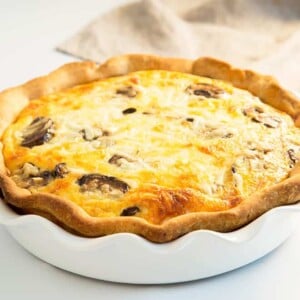
The secret to making the perfect gluten free quiche is a light and flaky crust (or go crustless!), and a creamy egg custard filling. With the right ratio of eggs to milk, you'll make the perfect quiche every time!
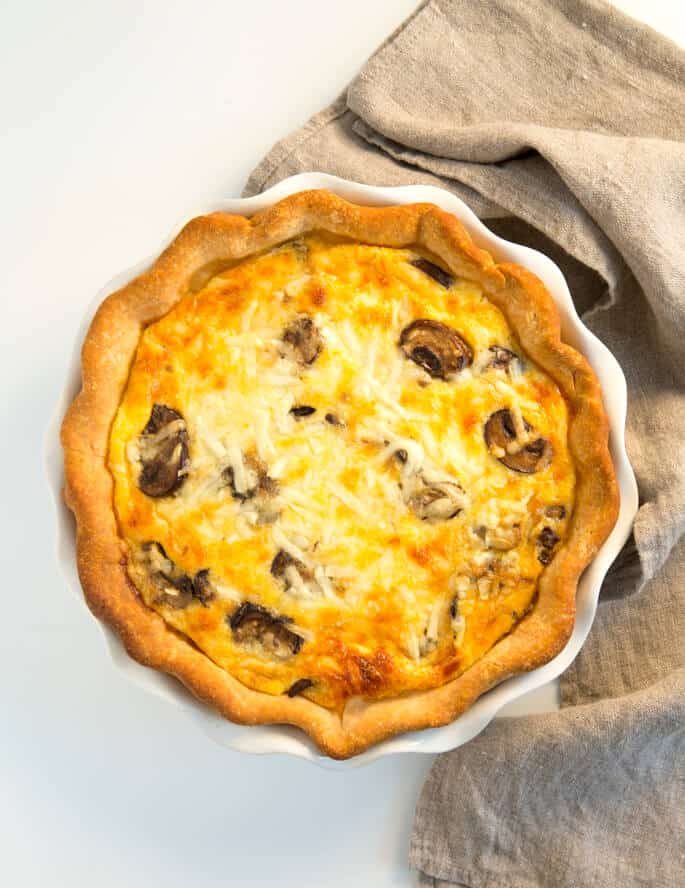
Table of Contents
- What makes this recipe for gluten free quiche so perfect
- What's in the filling of this delicate, savory quiche?
- How to make gluten free quiche
- FAQs
- Gluten free quiche ingredients and substitution suggestions
- How to serve this gluten free quiche
- The perfect gluten free quiche recipe
- Perfect Gluten Free Quiche Recipe
What makes this recipe for gluten free quiche so perfect
Whether you call it a gluten free breakfast for dinner, brunch or just a lovely French-style breakfast, mastering the art of the perfect gluten free quiche will come in very handy indeed. There's not a lot you need to know, but whatever I know, I've detailed right here.
The most lovely quiches start with a light and flaky pie crust. I have a favorite pie crust recipe here on the blog, my extra flaky gluten free pie crust. You'll need a single recipe, not a double one, since we are only making a single crust.
What's in the filling of this delicate, savory quiche?
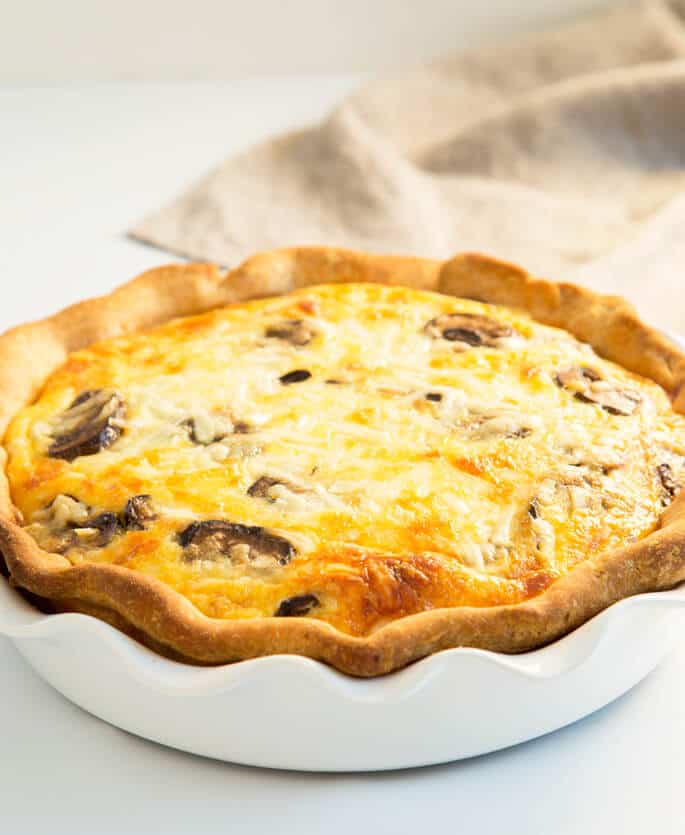
I've made this quiche with a mushroom and cheese filling, since it's a classic, lovely combination. The key to any proper quiche filling, though, is in the ratio of eggs to milk or cream (see below)—and in the absence of too much moisture in the remaining filling.
If you're using mushrooms as I have, you must cook down the mushrooms so they release their moisture, and then leave the moisture behind. If using a blanched vegetable (frozen broccoli and/or cauliflower work beautifully), be sure to blot it dry before adding it to the filling. Failure to heed these moisture warnings will result in a sad, soggy quiche that never quite sets up!
How to make gluten free quiche
There are two main elements to any quiche: the crust, and the filling. The crust is light, flaky and buttery. The filling is smooth, creamy, rich with milk and cheese with some texture from lightly sauteed vegetables.
A single gluten free pie crust recipe
To make a quiche, you need a single 10-inch pie crust. A good pie crust is made with very cold butter and water, plus all purpose gluten free flour, baking powder, and salt.
Pie crust, like all pastry, is a combination of flour and water, and cold layers or chunks of fat, like butter. When the cold butter is surrounded by flour and water, it will expand and push out the dough and create flaky, crispy layers of pastry.
Here, we shape the pie crust, chill it to ensure it's very cold before it goes in the oven, then bake it half way without any filling. This is called parbaking, and it's the reason that the crust stays light and flaky even after we add the moisture of the filling.
To parbake a shaped and chilled pie crust in a pie plate, pierce the shaped pie crust to ensure that it doesn't bubble in the oven. Line the crust with a piece of parchment paper, and weigh it down with some dried beans or ceramic pie weights.
Bake the lined and weighted pie crust at 425°F for about 15 minutes or until it's beginning to brown.
The 4 main quiche filling ingredients
Once you've baked the crust, set it aside to cool a bit. It's time to prepare the filling. The proper quiche filling is a simple ratio or formula, much like a cheesecake filling is made of eggs, granulated sugar, and cream cheese.
A quiche filling has only 4 main ingredients in proper proportion, each related to how many eggs are in the filling. For each egg in your quiche filling, you'll need:
- 1/4 cup (2 fluid ounces) milk or 1/3 cup (2 2/3 fluid ounces) half-and-half;
- 1/2 cup not-too-wet cooked (or at least blanched) vegetable; and
- 2 ounces semi-hard cheese, grated.
The vegetables are cooked in some sort of butter or oil just until they're tender. If you don't saute the vegetables, they'll be too hard, especially as compared to the rest of the egg, milk and cheese filling.
Plus, cooking the vegetables first means that they will release at least some of their moisture, which can then be drained or cooked off. If you don't cook the vegetables a bit before baking them in the filling, you'll have a watery quiche.
Assembling the quiche
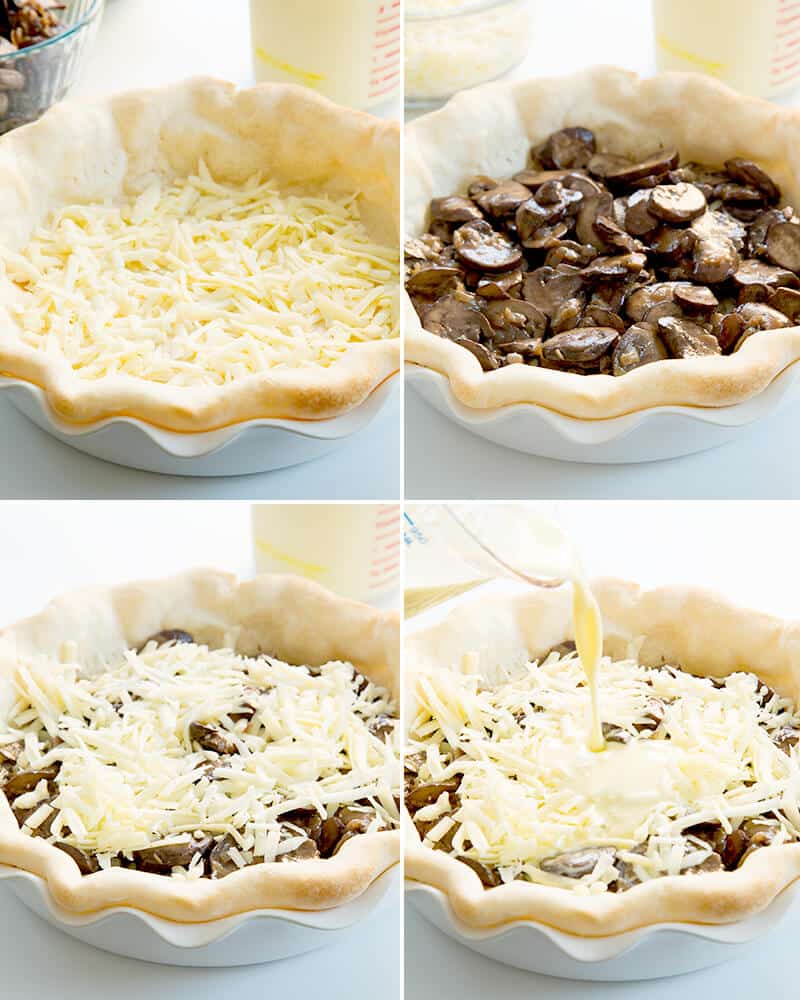
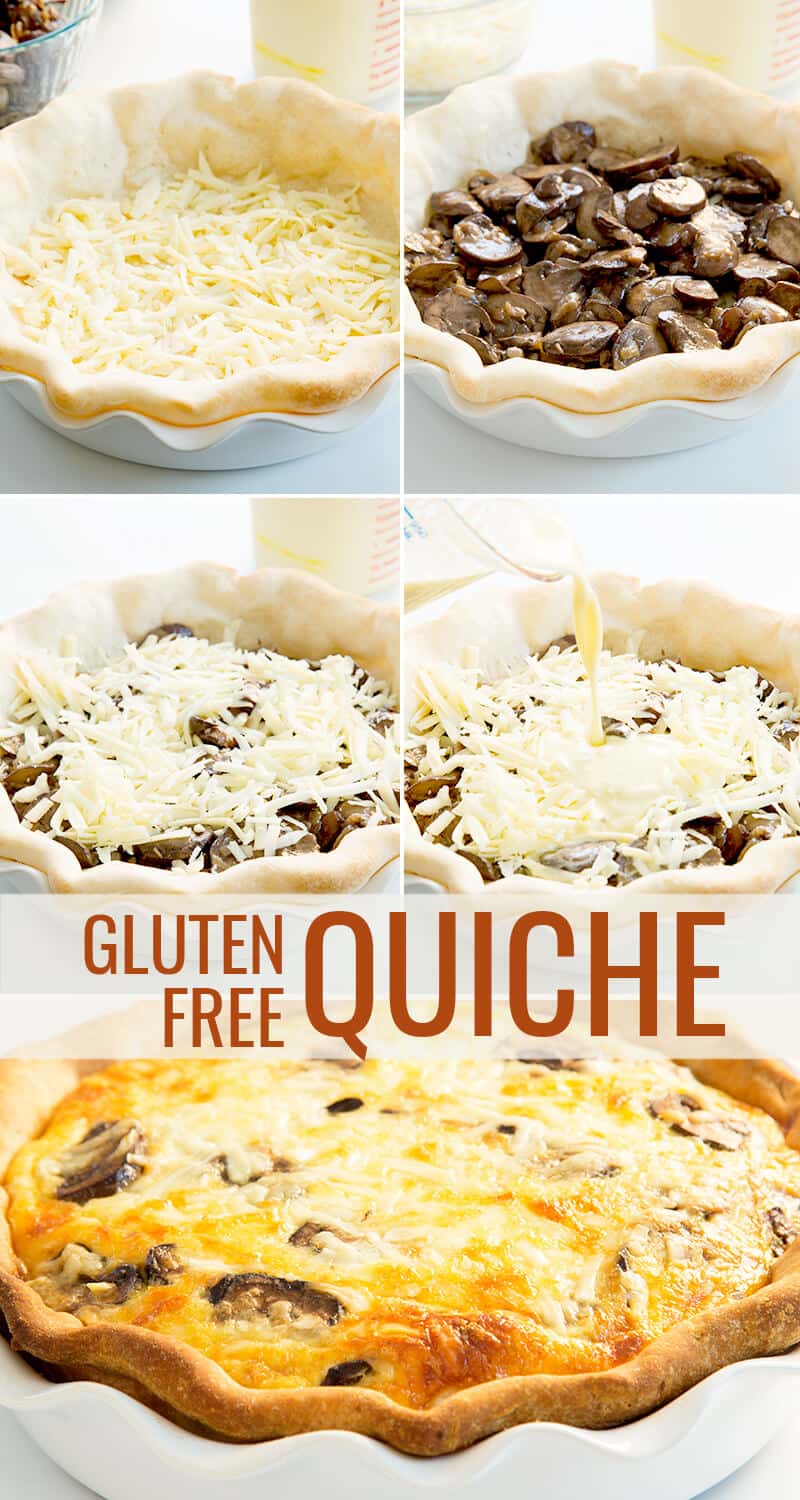
Once the crust is parbaked and the vegetables are cooked, it's time to assemble the quiche. First, place half of the grated cheese on top of the parbaked crust. Top with the cooked vegetables, followed by the remaining cheese.
Beat the eggs with the half and half or milk until well-combined, and pour that mixture on top of the vegetables and cheese.
Although we parbake the crust at 425°F, we'll reduce the oven temperature to 350°F to bake the filling and finish the quiche. It's done when the filling is set, and the edges of the crust are golden brown. Let the quiche sit until the filling is set, then slice and serve.
FAQs
A quiche made without a crust is usually gluten free, as long as there aren't any gluten-containing fillers or grains in the filling. A crusted quiche will always have gluten unless it's made specifically to be gluten free, since conventional pie crust is made with wheat flour.
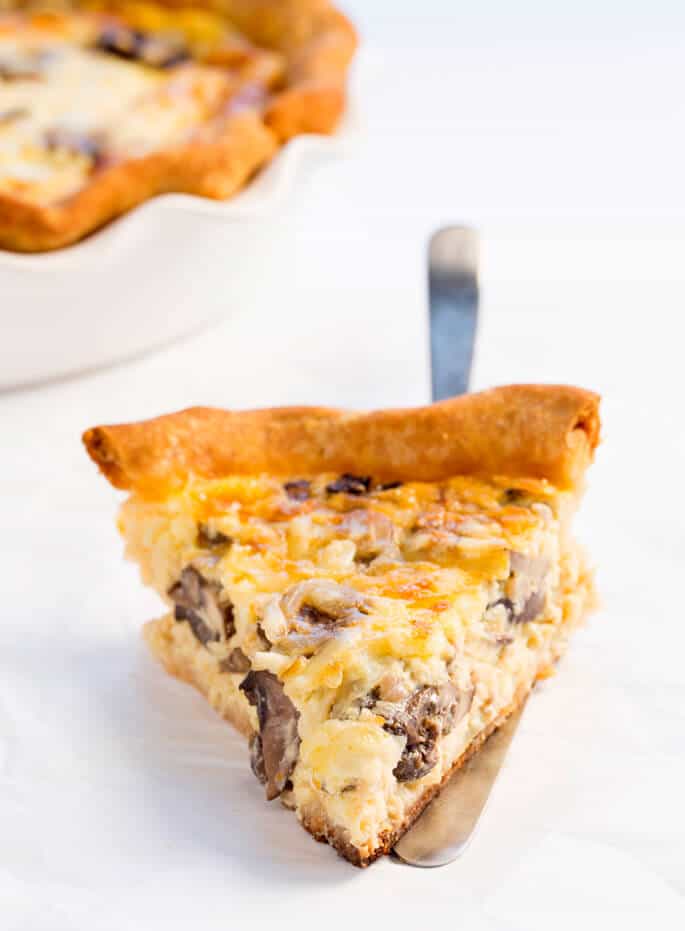
Quiche filling is done baking when it is lightly golden brown on top, with just a tiny bit of jiggle in the center when moved from side to side. It will continue to cook a bit even after it’s removed from the oven, as it cools.
If you don't parbake the pie crust, it will probably be soggy after the filling is cooked in it. Plus, the filling will be overcooked by the time the pie crust browns fully.
Yes, if you use raw vegetables in your quiche, they will release their moisture during baking, leading to a watery filling, and they will be crunchy in an otherwise smooth and creamy filling.
Did you cook your vegetables first by sauteeing them, and drain or cook off the moisture before adding them to the filling? Did you use too much milk in your filling, or simply not cook it for long enough so that it was fully set?
Once your fully baked and prepared quiche is completely cool, you can freeze the whole quiche or individual slices. To freeze the whole quiche, I recommend slicing it into wedges and then wrapping the whole quiche in a tight-fitting freezer-safe wrap and freeze for up to 3 months. To freeze individual slices, wrap them tightly in freezer-safe wrap and freeze for up to 3 months.
Yes, you can follow the instructions for freezing the whole quiche just above, or you can make and/or parbake only the pie crust first, then add and bake the filling later. The prepared pie crust can be frozen as raw or baked, then baked or defrosted before filling and proceeding with the recipe as written.
Yes! You can make a quiche entirely crustless. Simply skip the ingredients and instructions that relate to the crust, and bake the filling right there in a greased pie plate. The baking time for the filling will not differ.
Yes! Mushrooms can be replaced with 10 ounces broccoli or cauliflower florets, blanched and blotted dry, or 1 pound frozen cut spinach, thawed and drained of most of its moisture.
Gluten free quiche ingredients and substitution suggestions
Dairy free quiche
The dairy in this recipe comes from butter, grated cheese, and half and half. You can try replacing the butter in the pie crust with vegan butter. Melt and Miyoko's Kitchen brands are the best.
For the grated cheese, you can use your favorite nondairy cheese, but be sure you're using something that melts and doesn't have a ton of moisture. Violife brand nondairy cheese blocks are excellent, but Daiya is usually quite good, too.
For half and half, there are some really good dairy free versions of heavy cream on the market. I'd recommend using half the volume as one of those, and half your favorite unsweetened nondairy milk. There are even some nondairy half and half milks, which would be ideal.
Avoid any nondairy milk that's nonfat, though, since fat provides richness and acts like a flavor delivery system, which is part of why fat free baked goods taste so bland. And don't ever replace half and half or cream with just plain nondairy milk, as they're not the same at all.
Eggs
I have not tried to make this recipe with an egg replacer, but I would not recommend trying any replacement that you would normally use for eggs when they're not the primary ingredient, like in baking a cake. You may be able to make this quiche with a beaten egg replacement like “Just Egg,” but I haven't tried so I don't know how well it bakes, especially in a custard like quiche filling.
How to serve this gluten free quiche
Everyone in my family cheers for a quiche, and it's even the stuff of birthday dinner requests around here. Serve it with a nice green salad, and you've got a meal to remember, elegant in its delicious simplicity.
The perfect gluten free quiche recipe
Perfect Gluten Free Quiche
Ingredients
For the pie crust (See Recipe Notes for alternative recipe.)
- 2 cups (280 g) all purpose gluten free flour blend, (I used Better Batter; please click thru for full information on appropriate blends), plus more for sprinkling
- 1 teaspoon xanthan gum, (omit if your blend already contains it; use a heaping teaspoon)
- ⅓ teaspoon baking powder
- ⅓ teaspoon kosher salt
- 8 tablespoons (112 g) unsalted butter, diced and chilled (a 1/2-inch dice is best)
- ½ cup (4 fluid ounces) cold water, iced (ice doesn't count in volume measurement), plus more as necessary
For the filling
- 2 tablespoons (28 g) unsalted butter
- 1 tablespoon (14 g) extra virgin olive oil
- 1 small yellow onion, peeled and diced
- 1 pound (16 ounces) white or baby portabello mushrooms, sliced
- ½ teaspoon kosher salt
- ⅛ teaspoon freshly ground black pepper
- 4 (200 g (weighed out of shell)) eggs, at room temperature
- 1 ⅓ cups (10.66 fluid ounces) half and half, at room temperature (See Recipe Notes for alternative.)
- 8 ounces Gruyère cheese, grated (alternatives are another semi-hard cheese, like Asiago, Jarlsberg or sharp white cheddar)
Instructions
Prepare the pie crust.
- In a large bowl, place the flour, xanthan gum, baking powder, and salt, and whisk to combine well.
- Add the chopped and chilled butter, and toss to coat it in the dry ingredients. Flatten each chunk of butter between your thumb and forefinger so that it’s about 1/8-inch thick.
- Create a well in the center of the dry ingredients and slowly add the water (reserving the ice cubes), mixing gently until the dough begins to come together.
- With floured hands, press together the dough into a disk. If there are any crumbly, dry spots at this point, add more water by the teaspoonful and press together with your hands.
- Turn the dough out onto a lightly floured surface.
- Sprinkle the top lightly with more flour, and roll out into a rough rectangle that is about 1 inch thick. Sprinkle the dough lightly with more flour, fold it over on itself in thirds like you would a business letter, sprinkle again with flour, and roll out the dough once again into a rectangle about 1 inch thick.
- Repeat the process of rolling, sprinkling and folding at least once more, this time ending with a rectangle about 1/2-inch thick.
- Roll the dough in thirds once more, and wrap it securely in plastic wrap.
- Place in the refrigerator to chill until firm (30 minutes to an hour).
Shape the pie crust.
- Grease a 9-inch deep dish pie plate and set it aside.
- Remove the pie dough from the refrigerator. Place it on a lightly floured piece of unbleached parchment paper, dust lightly with flour, and roll into an 10-inch round, about 3/8-inch thick.
- Roll the pie crust loosely on the rolling pin and then unroll it over the prepared pie plate.
- Press the pie crust gently into the bottom and up the sides of the pie plate and, with kitchen shears, trim the crust so that only 1/4-inch of excess is overhanging the plate.
- Tuck the 1/4-inch of excess under itself, and crimp the edge gently all the way around the crust. Pierce the bottom of the pie crust with the tines of a fork.
- Preheat your oven to 425°F.
- Place the pie plate in the freezer to chill for 10 minutes.
Par-bake the empty pie shell.
- Remove the pie plate from the freezer and place a large piece of unbleached parchment paper in the center of the crust. Place pie weights or dried beans in a single layer in the center of the pie crust, on top of the paper.
- Place the pie plate in the center of the preheated 425°F oven. Bake for 15 minutes or until just beginning to brown on the bottom and edges.
- Remove the pie plate from the oven and remove the paper and pie weights.
- Reduce the oven temperature to 350°F.
Prepare the filling.
- In a medium sauté pan over medium heat, place the butter and oil. Once the butter has melted, add the onion and cook for a minute, stirring frequently.
- Add the mushrooms, salt and pepper, and cook, stirring frequently, until the mushrooms are browned and the pan has very little if any liquid in it (about 10 minutes). Drain any remaining liquid from the pan and set it aside.
- In a medium size bowl, beat the eggs with the half and half or milk until well-combined.
Assemble the quiche.
- Line the bottom of the parbaked pie crust with half of the grated cheese, then the cooked mushrooms and onions, followed by the remaining cheese. Pour the milk and egg mixture on top.
Bake the quiche.
- Place the pie plate in the center of the preheated oven.
- Bake for about 35 minutes, or until the quiche is mostly set and lightly golden brown on top, with just a tiny bit of jiggle in the center when moved from side to side.
- The quiche will finish cooking when it’s removed from the oven.
- Remove the pan from the oven and place it on top of a wire rack to cool for at least 20 minutes or until set.
- Slice into wedges and serve warm.
Tell Google you trust GFOAS!
Notes
Nutrition
Nutrition information is automatically calculated, so should only be used as an approximation.










enjoy finding really great recipes. love this site.
Could this filling be used without the crust, in cupcake liners/pan to be like a frittata ? How long would you bake them?
I’ve never tried that, Regina, so feel free to experiment!
Can I make the crust the day before and let it sit in the fridge until ready to roll out? AND, can I make it the day before, roll it and place in the quiche dish and let that sit in the fridge overnight and then just add the filling when ready to bake?
Hi, Lisa, for instructions on handling the gluten free pie crust, I recommend you see the full post for that recipe.
This pastry makes a lovely quiche.
Great recipe! I use it as a guide to make all pastry either sweet or savoury without xantham gum which makes me ill. I’m very pleased with the results.