

This post may contain affiliate links. Please read our disclosure policy.
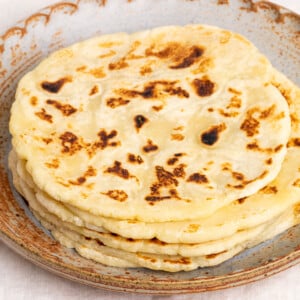
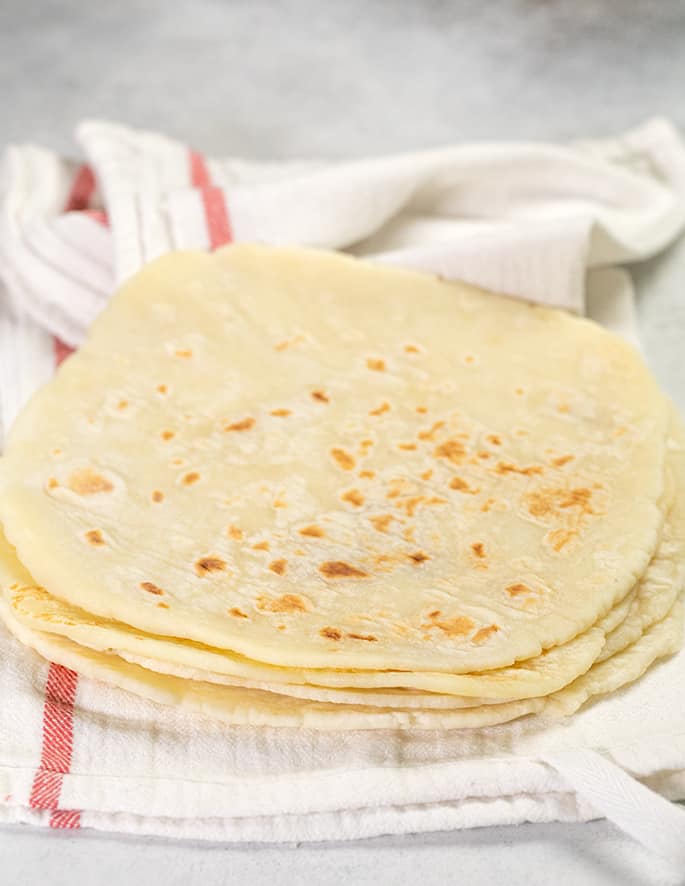
This soft gluten free flatbread bends, folds, and wraps without cracking. It’s quick enough for a weeknight, made without yeast, and perfect anywhere you’d use pita, naan, tortillas, or sandwich bread.
Make the dough now and cook it right away, or portion and chill it for later. Either way, you can have warm, fresh flatbread in minutes, any night of the week.
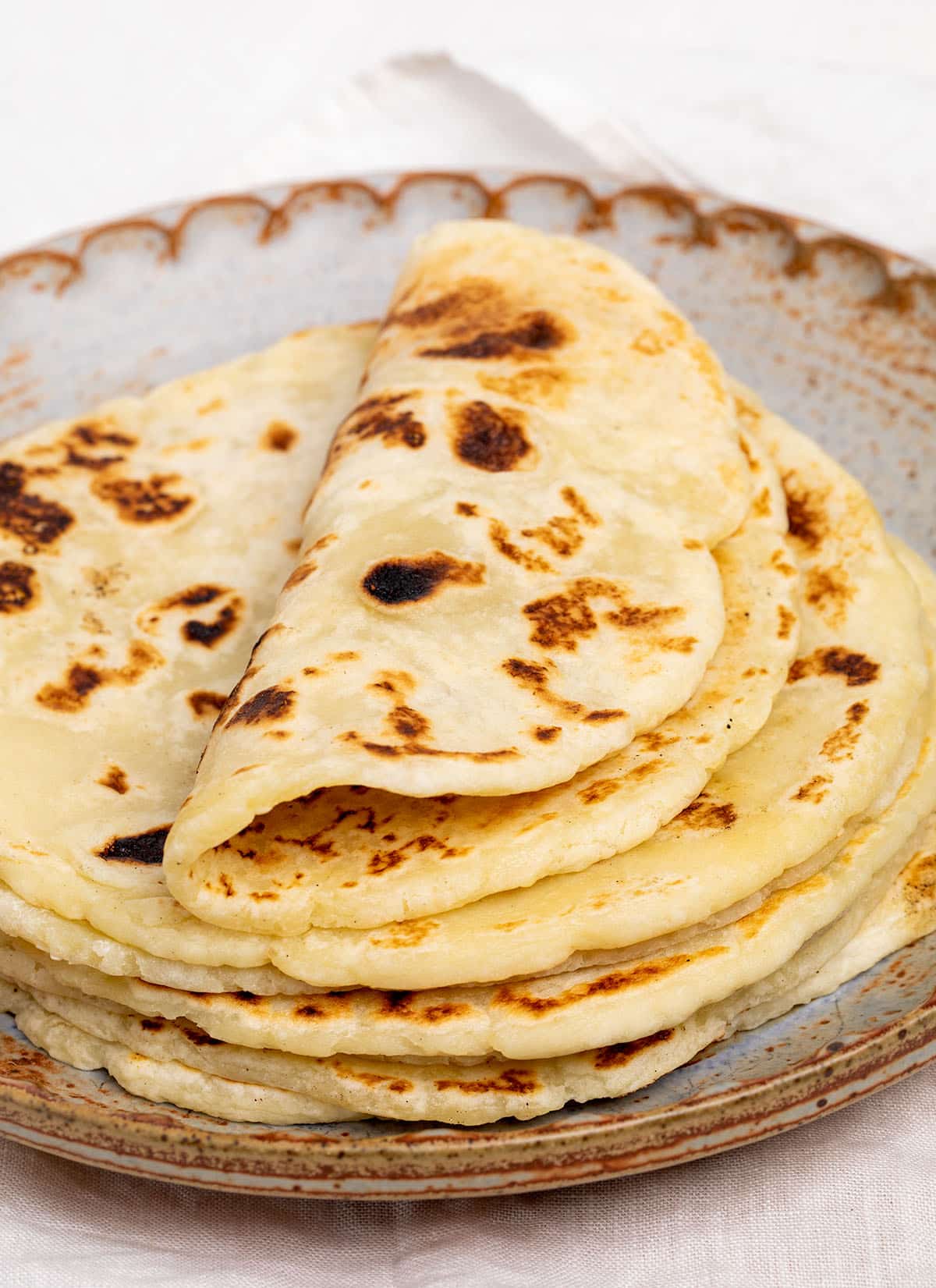
“These are AMAZING! They are going to be a regular part of the rotation for sure. They were super easy to make and came out so well. Thank you thank you thank you! Even gluten-eaters loved them, and we all know that’s the truest test!”
Why this recipe works
Most gluten free flatbread is either too stiff or too fragile to wrap around and contain any fillings. This one is soft, flexible, and chewy enough for gyros, burritos, sandwiches, or quick mini pizzas.
The ingredient balance is what makes the texture work. A good all purpose gluten free flour blend gives the dough structure, and added tapioca starch provides much-needed stretch and chew.
The method and ingredients are simple, but the details matter. Letting the dough rest helps the flour absorb moisture for easy handling, and rolling the cooked flatbread while it’s still warm helps it stay flexible as it cools.
Recipe ingredients
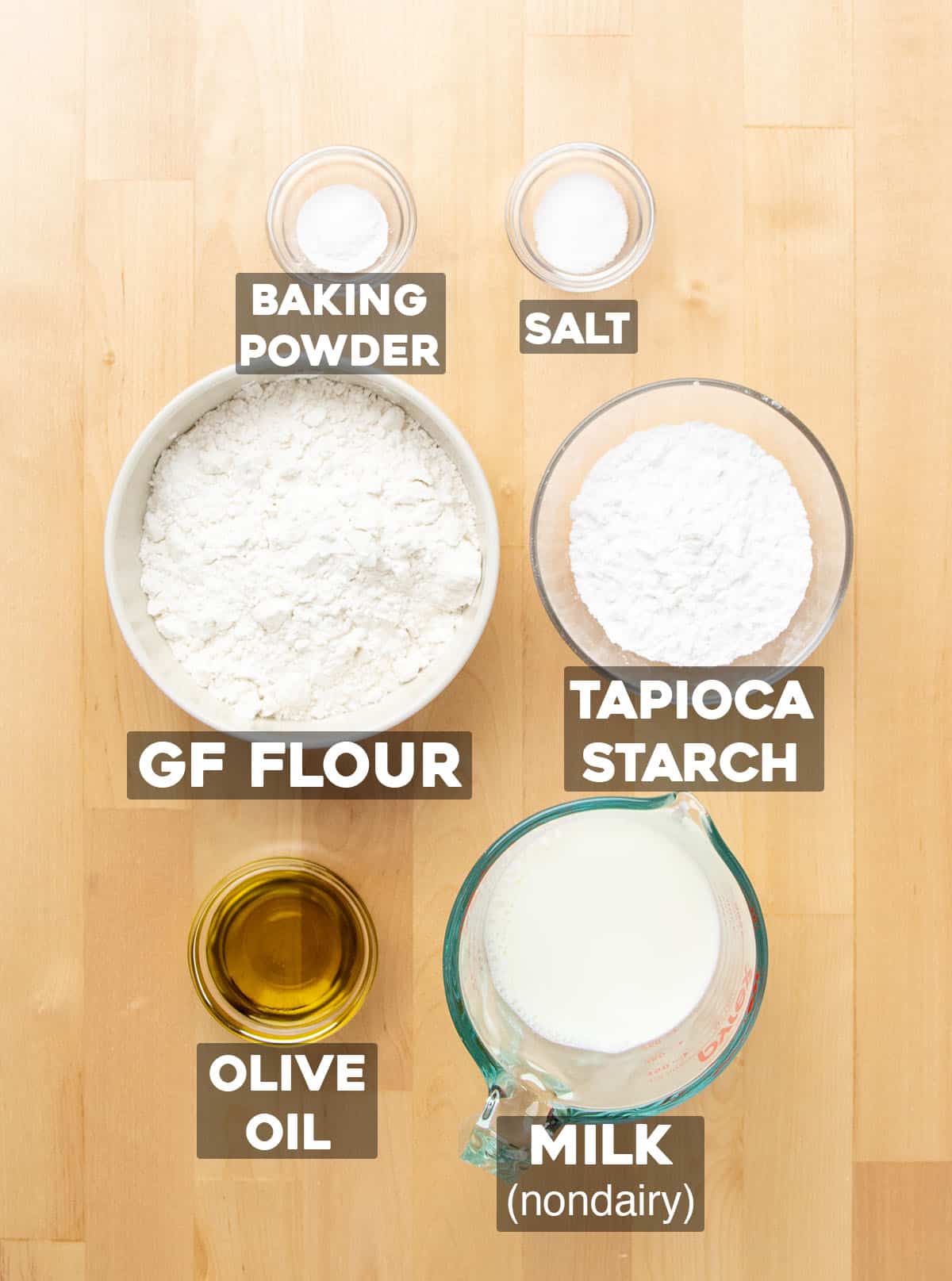
Here's what you need to make this recipe, including some information about what purpose each ingredient serves in a successful result:
- Gluten free flour blend: The base of this recipe is a high quality all purpose gluten free flour blend, which provides the basic structure and mouth feel, so be sure your blend doesn't use a gritty rice flour. I highly recommend Better Batter's original blend and Nicole's Best with xanthan gum as directed. Bob's Red Mill gluten free 1-to-1 should also work.
- Tapioca starch/flour: Even though all my recommended blends contain some, adding more helps create more stretch and pliability.
- Baking powder: Adds rise and those bubbles that form on the bread for beautiful brown spots.
- Salt: Brightens the flavor of the bread.
- Olive oil: Adds flavor, richness, and tenderness.
- Milk: Brings the dry ingredients together into a pliable dough. Use unsweetened nondairy milk for vegan flatbread. Avoid nonfat milk, whether dairy or not, for best texture and flavor since fat adds richness.
How to make gluten free flatbread
I've doubled the recipe to make 4 flatbreads for these photos, since it's easier to view the ingredients well in larger amounts. To do the same, just change the yield in the recipe card from 2 to 4.
Make the raw dough
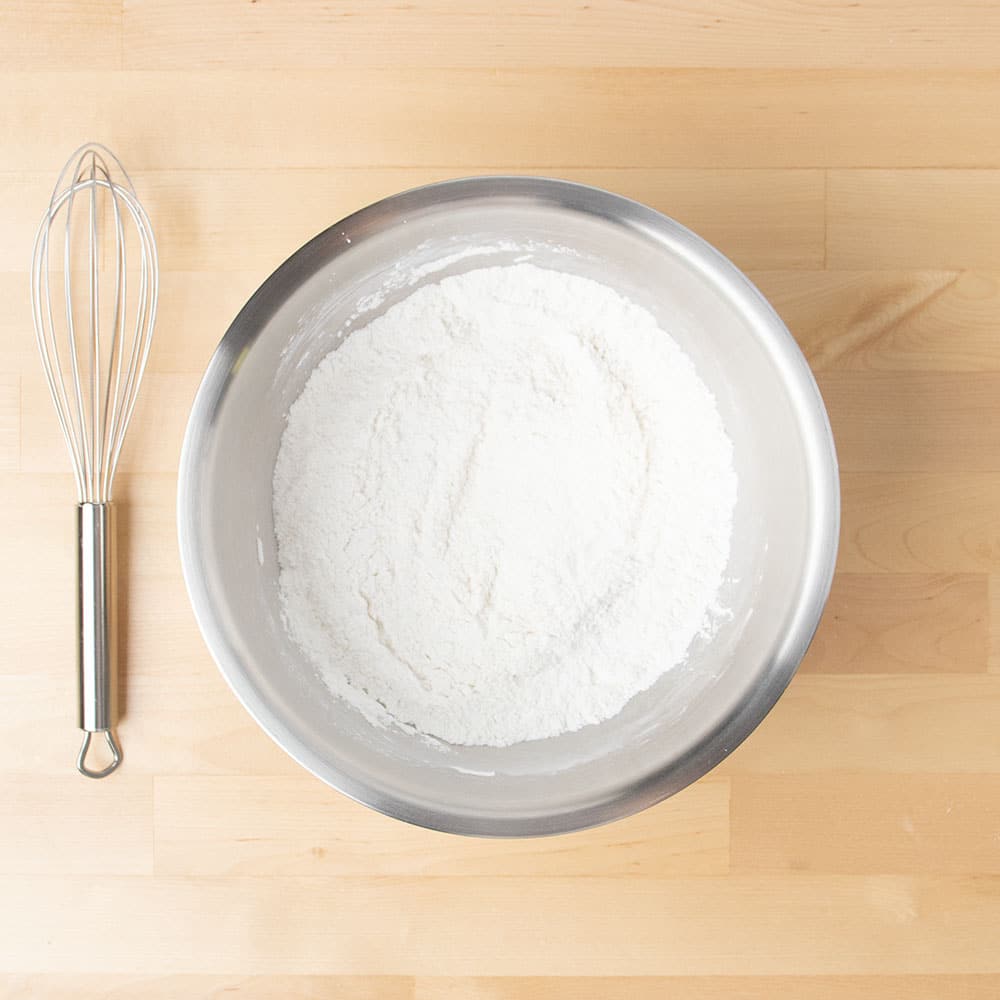
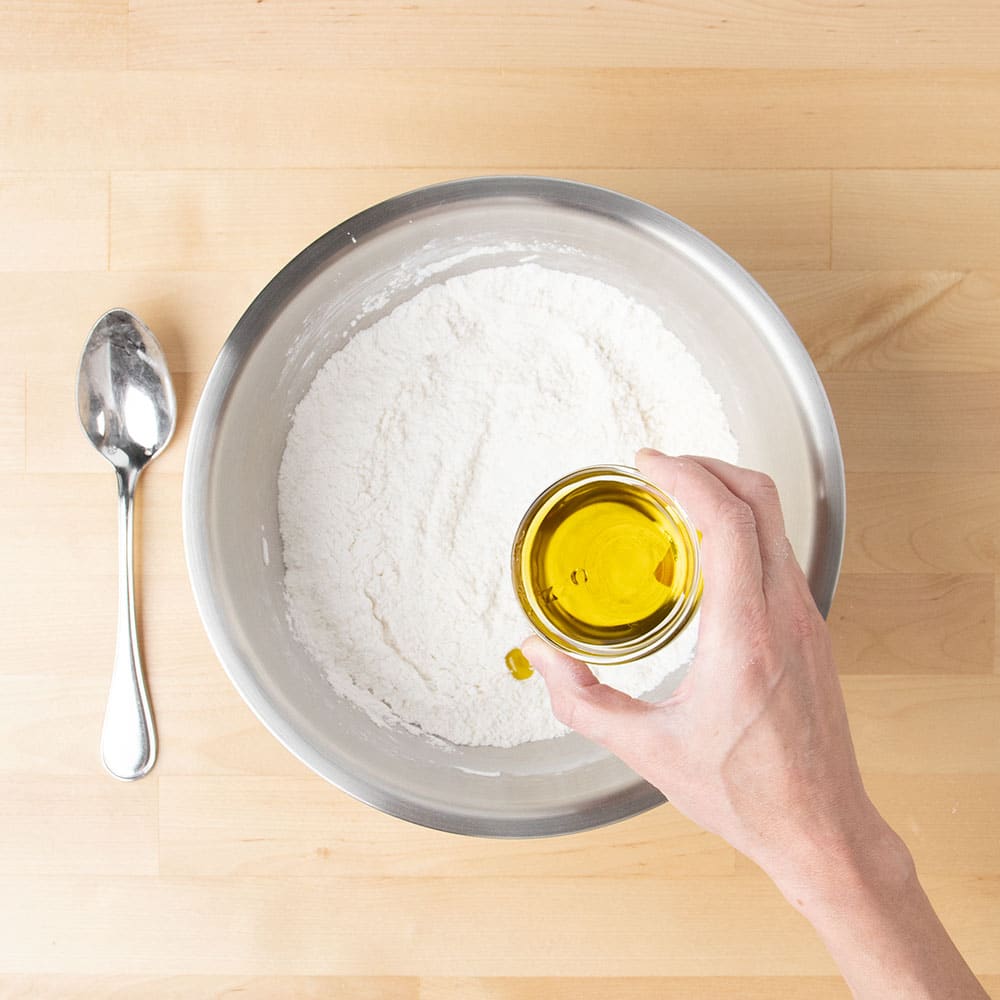
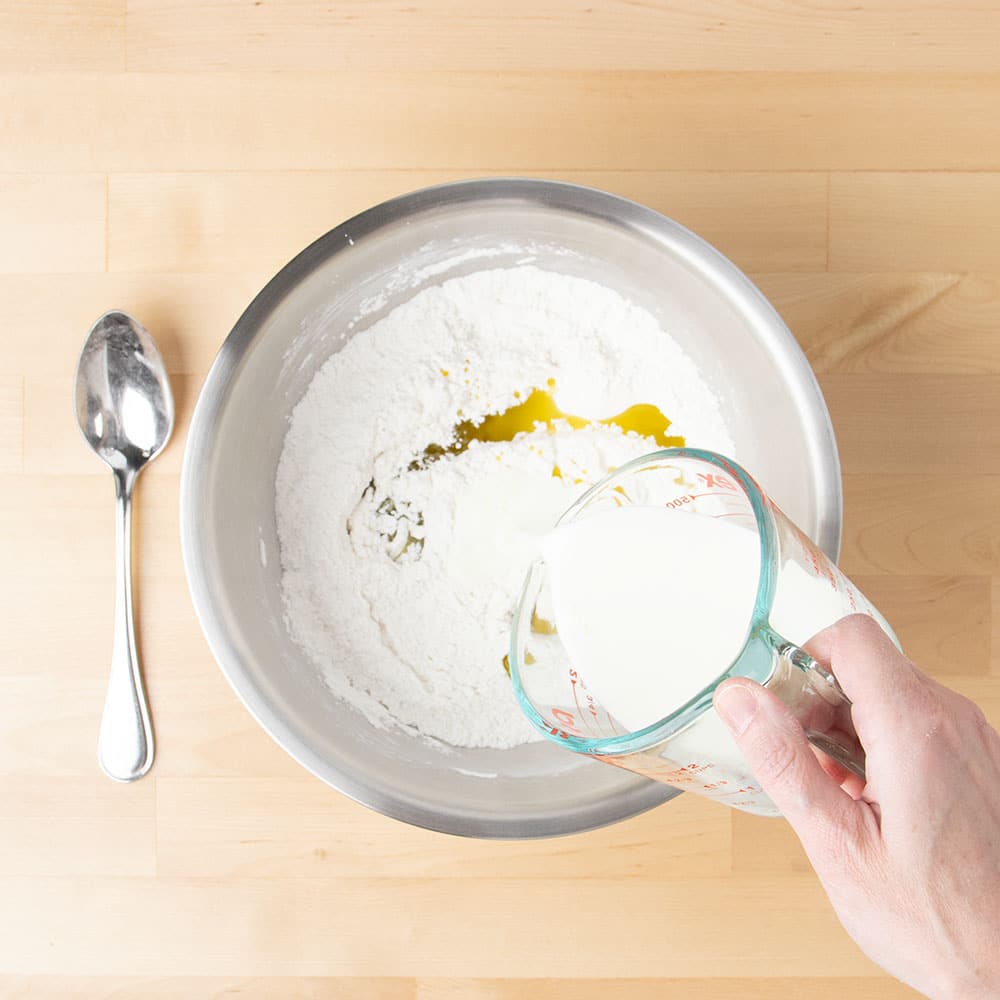
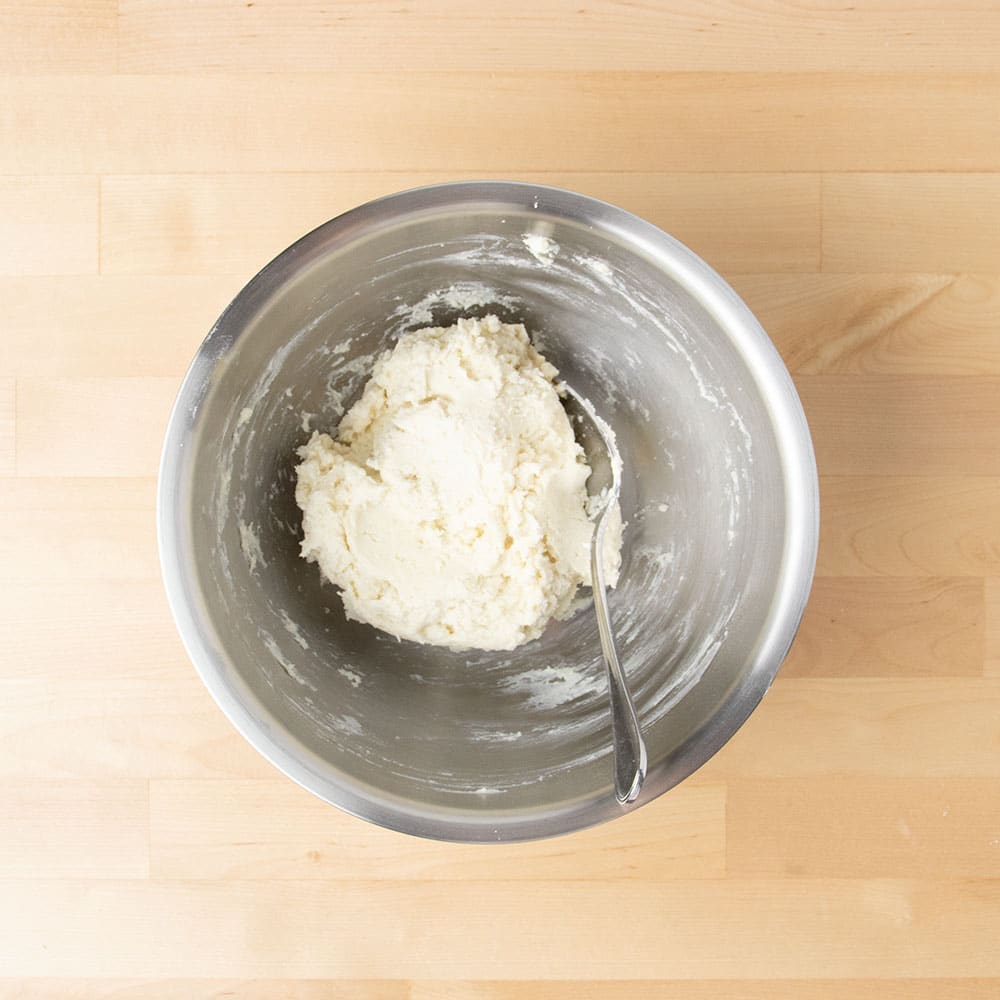
Whisk together the dry ingredients (flour blend, tapioca starch, baking powder, salt) in a large mixing bowl to avoid any clumps of individual ingredients. Create a well in the middle of the dry ingredients to make combining easier, then pour in the wet (olive oil and milk). Mix together to form a cohesive dough.
Rest the dough
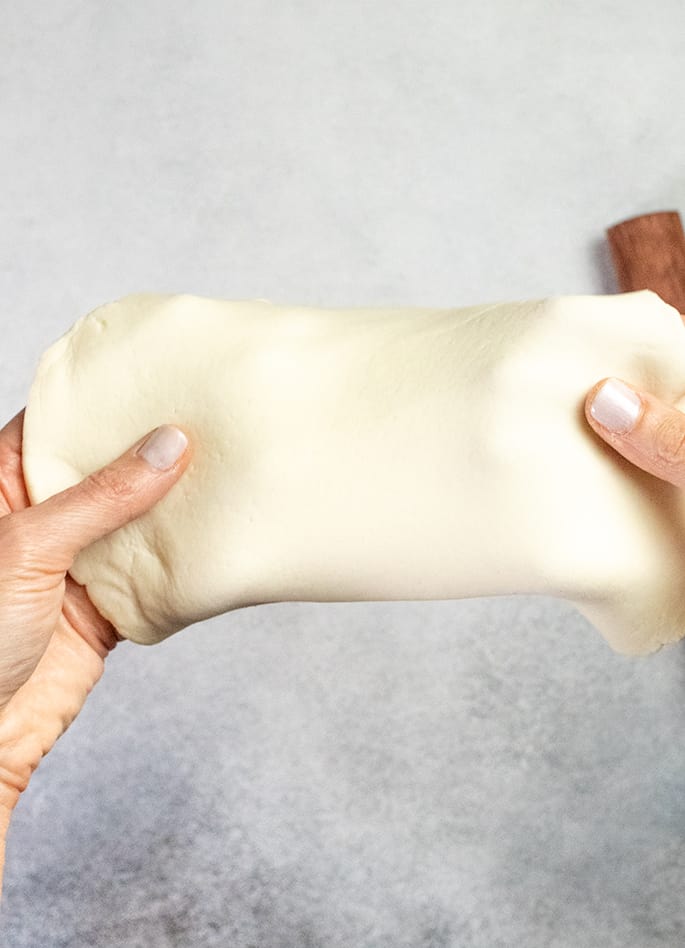
Let the dough sit briefly to let the flours absorb the moisture. This will make it easier to handle the raw dough without adding much extra flour to avoid stickiness, which can make the flatbread dry and stiff.
Divide the dough
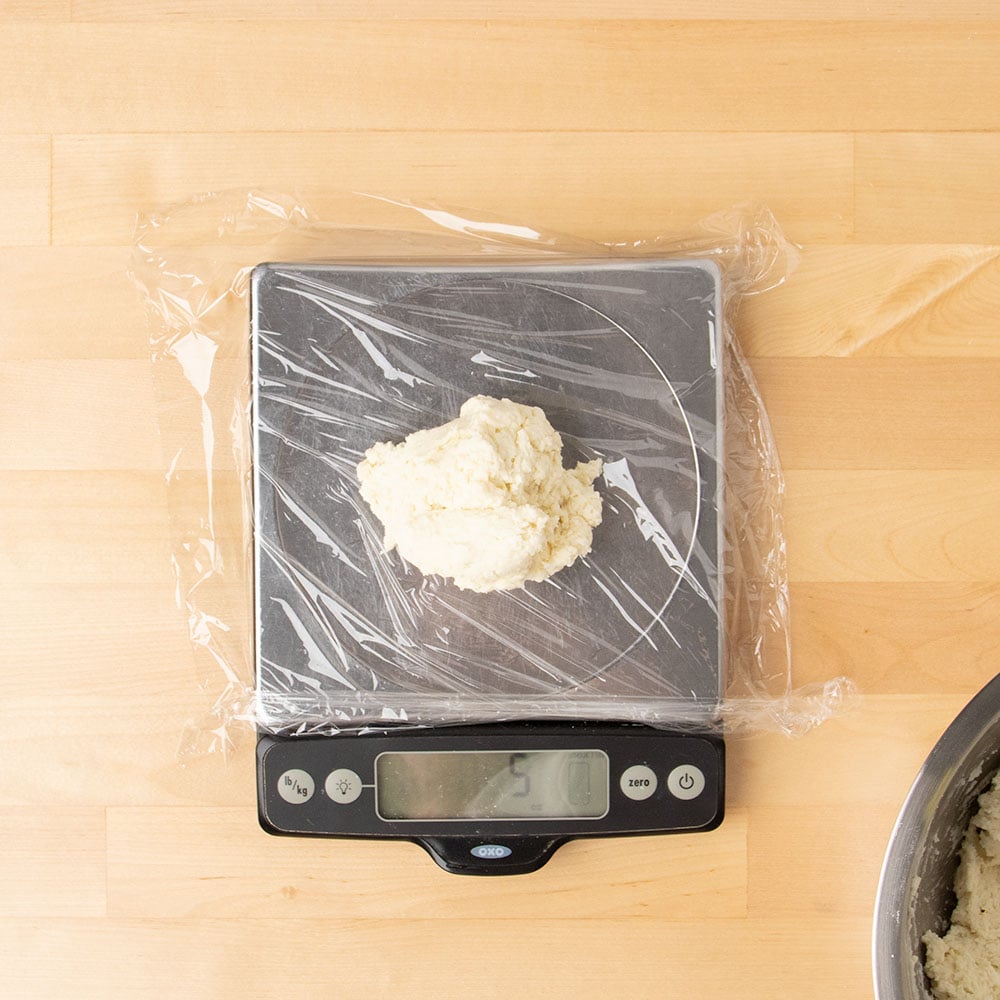
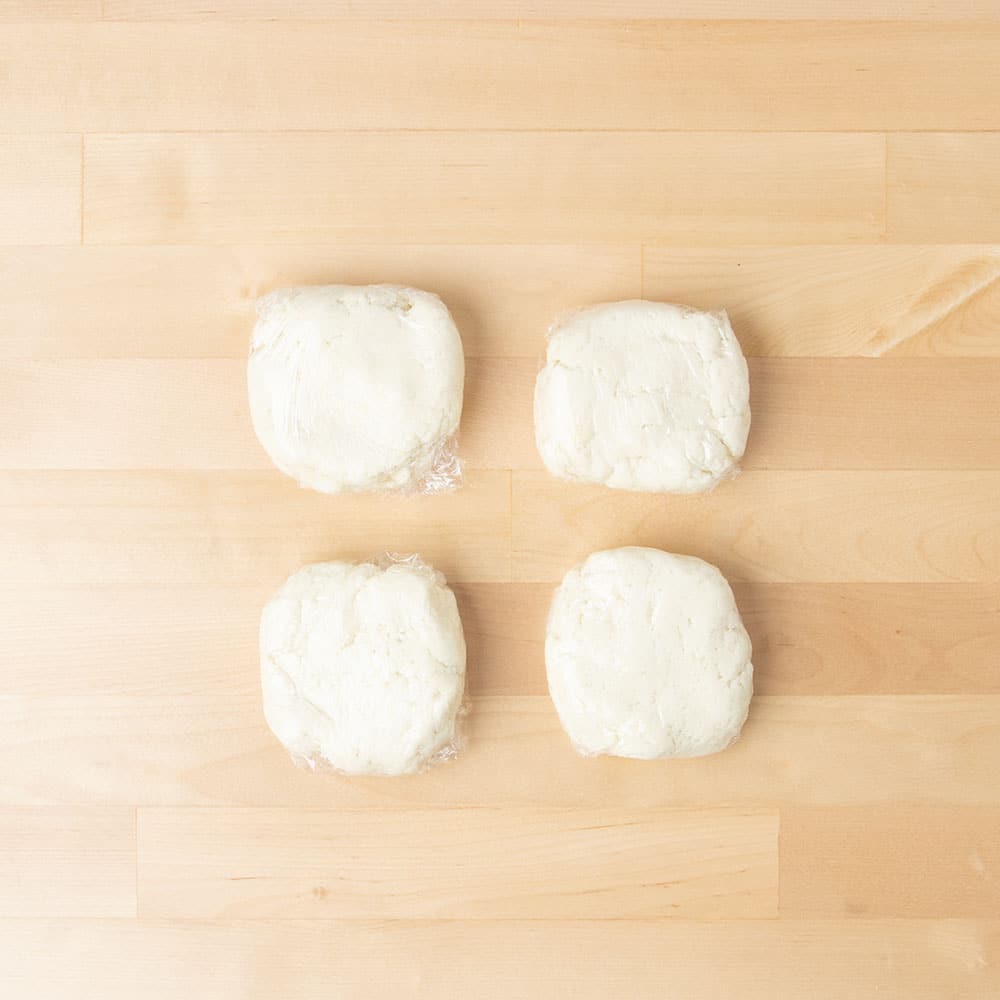
Separate the dough into equal pieces, each about 5 ounces. Weighing on a scale makes precise portions easy.
Chill each portion
Wrap each portion of dough tightly in plastic wrap so it doesn't dry out when you refrigerate it for 30 minutes to make it easier to handle since the fat in the dough becomes firmer.
Shape the flatbread
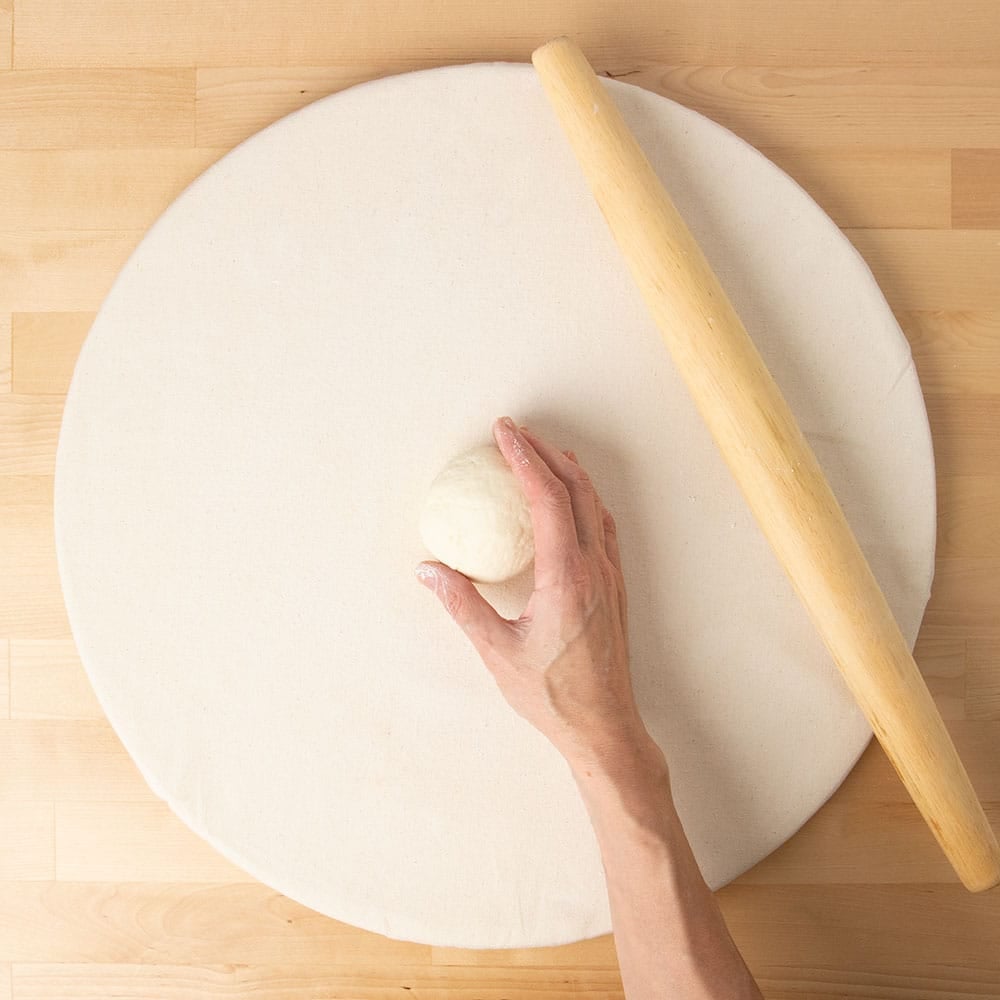
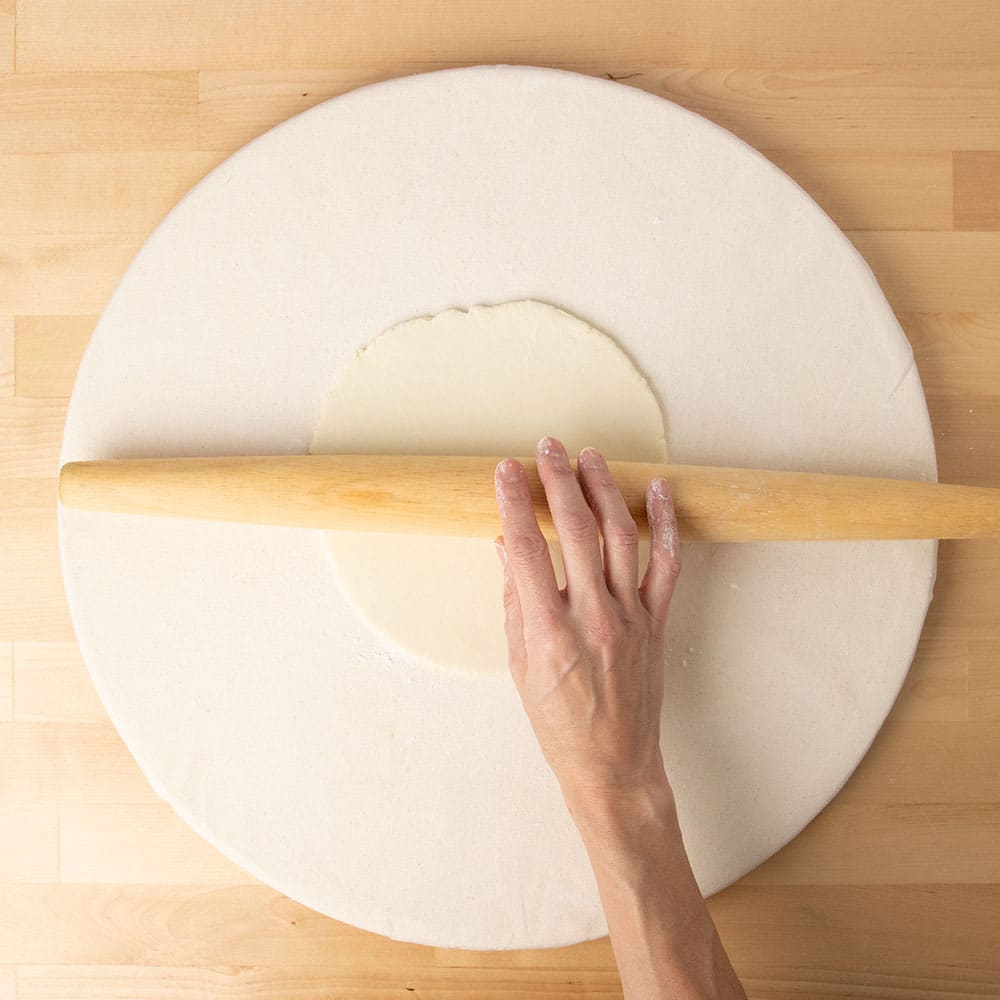
Lightly flour the dough, roll it into a rough round, then gather it into a ball and roll again into an 8-inch circle. This is the best way to work the dough a bit so it rolls out smoothly without having to add too much extra flour.
Cook the first side
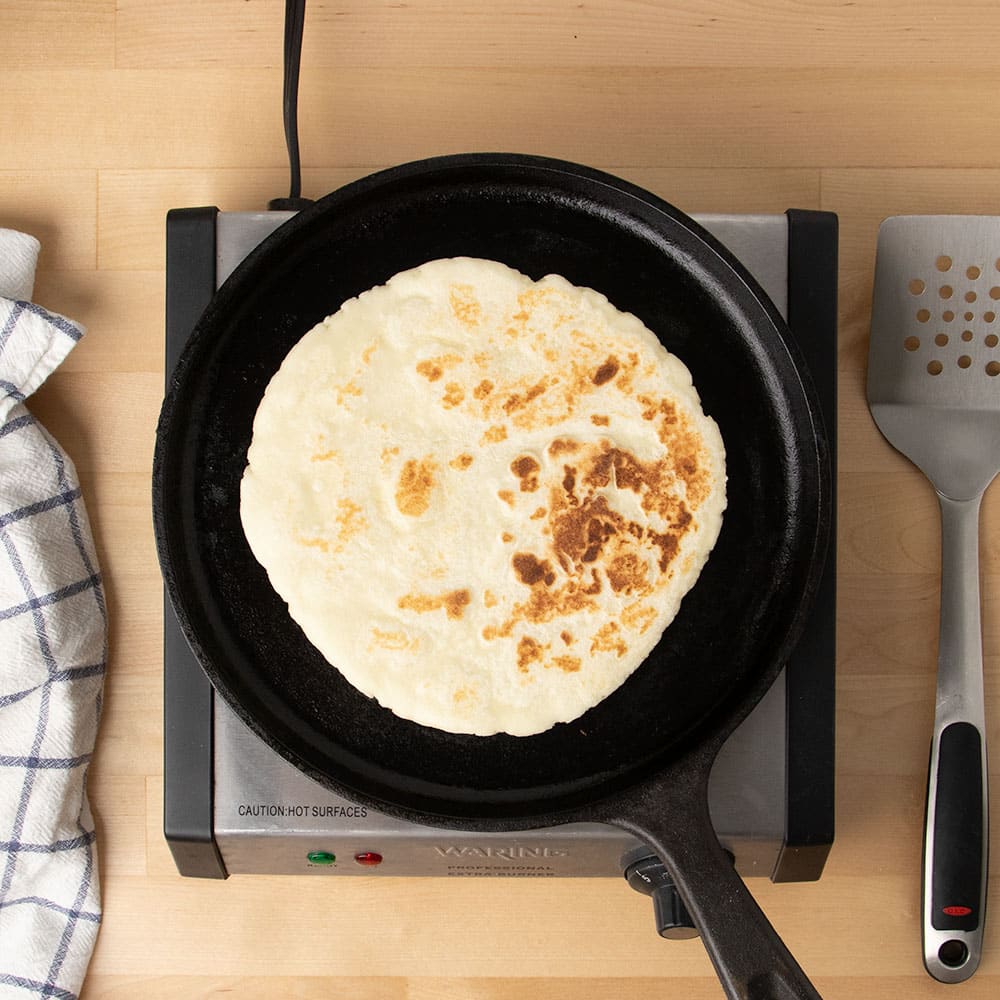
Grease your skillet very lightly so the bread doesn't fry but also doesn't stick. Heat the skillet, then place the shaped raw flatbread on it, and cook for 1 minute, no more. You'll come back to this side once it has a sealed surface.
Cook the second side
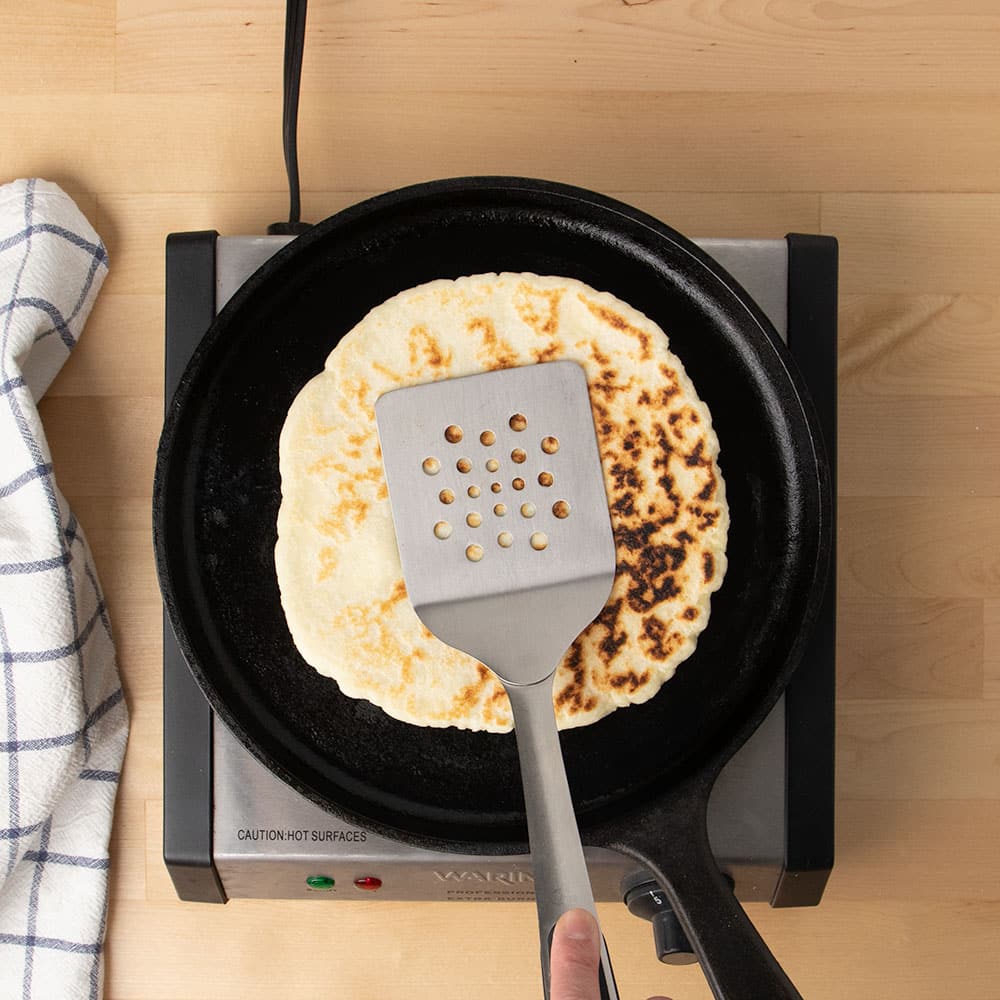
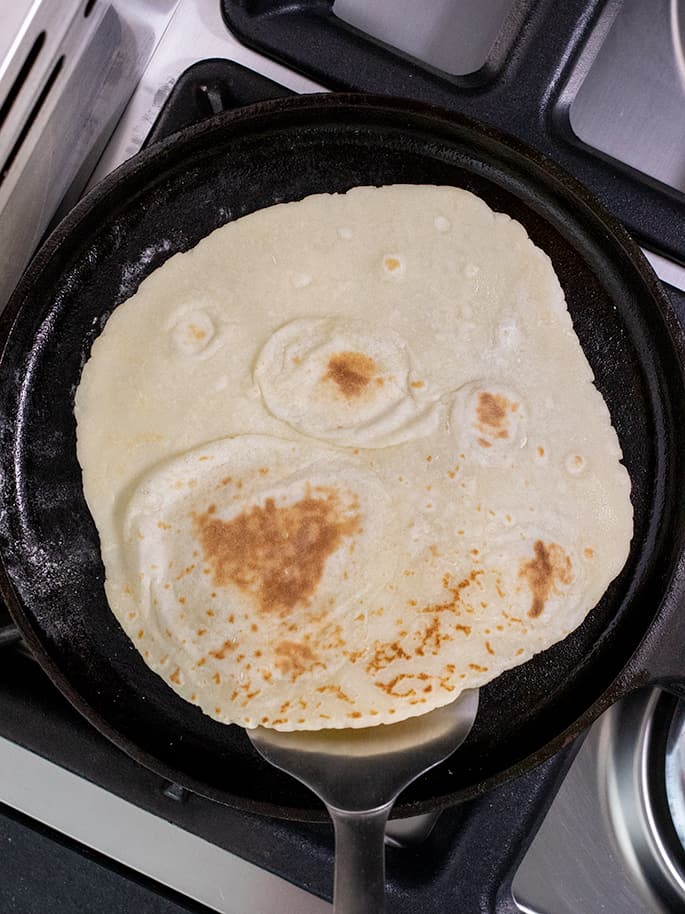
Flip, and cook on the second side, pressing down on the bread with a large, flat spatula to make sure it makes good contact with the skillet and creates some golden brown spots.
Cook the first side again
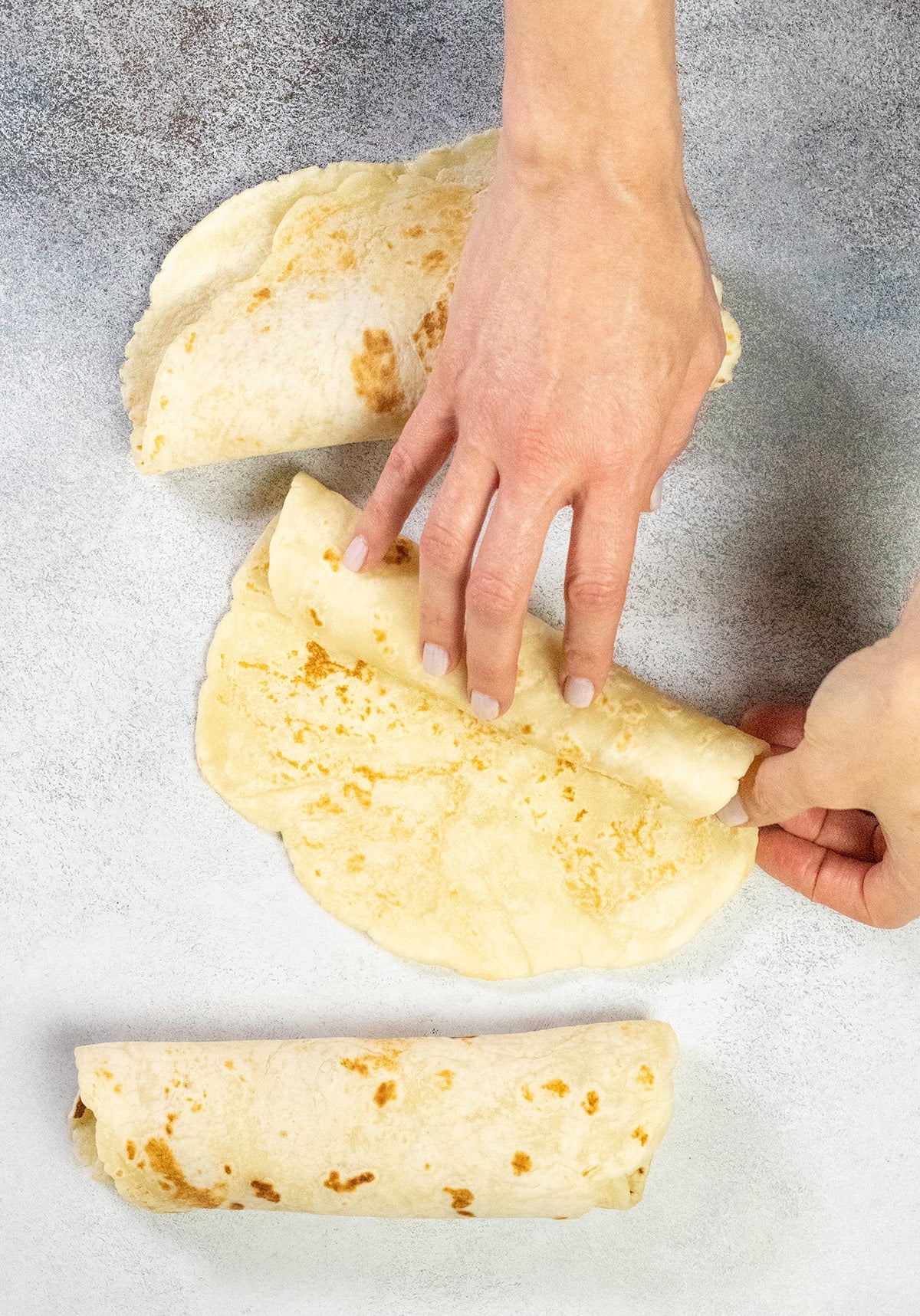
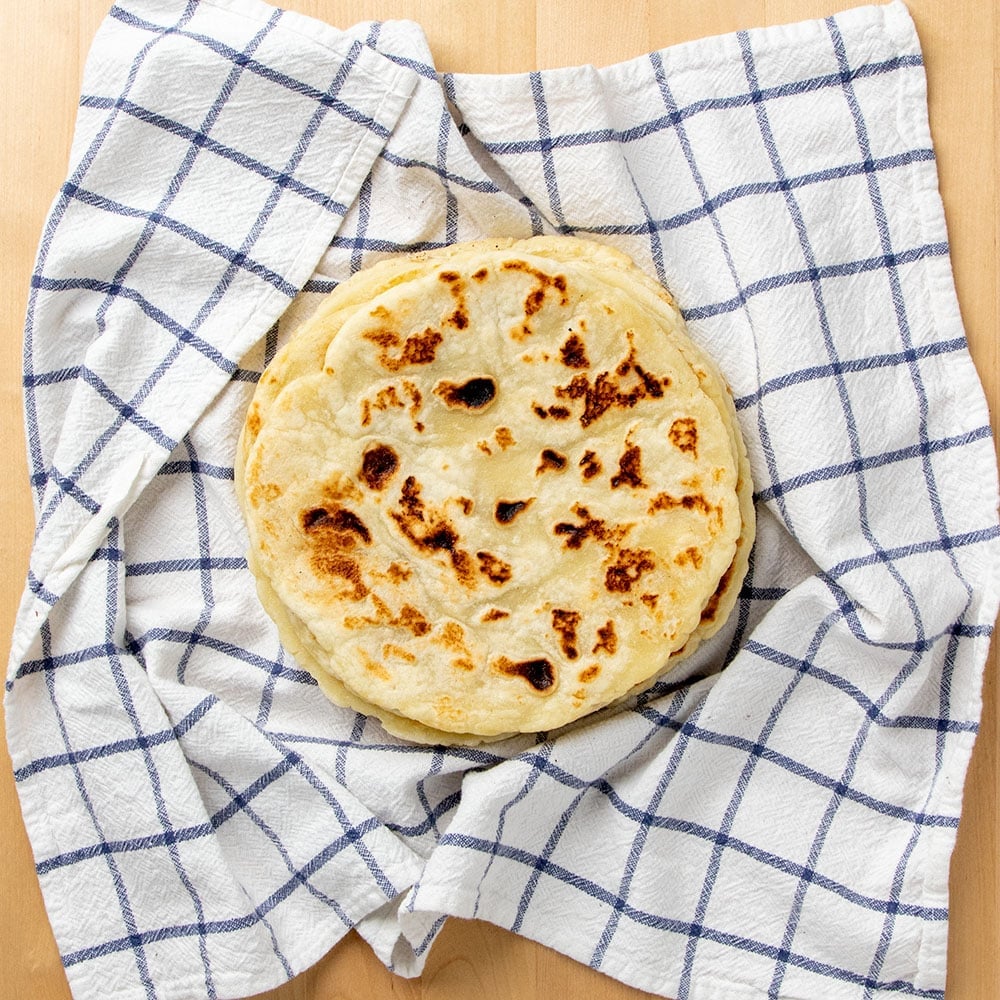
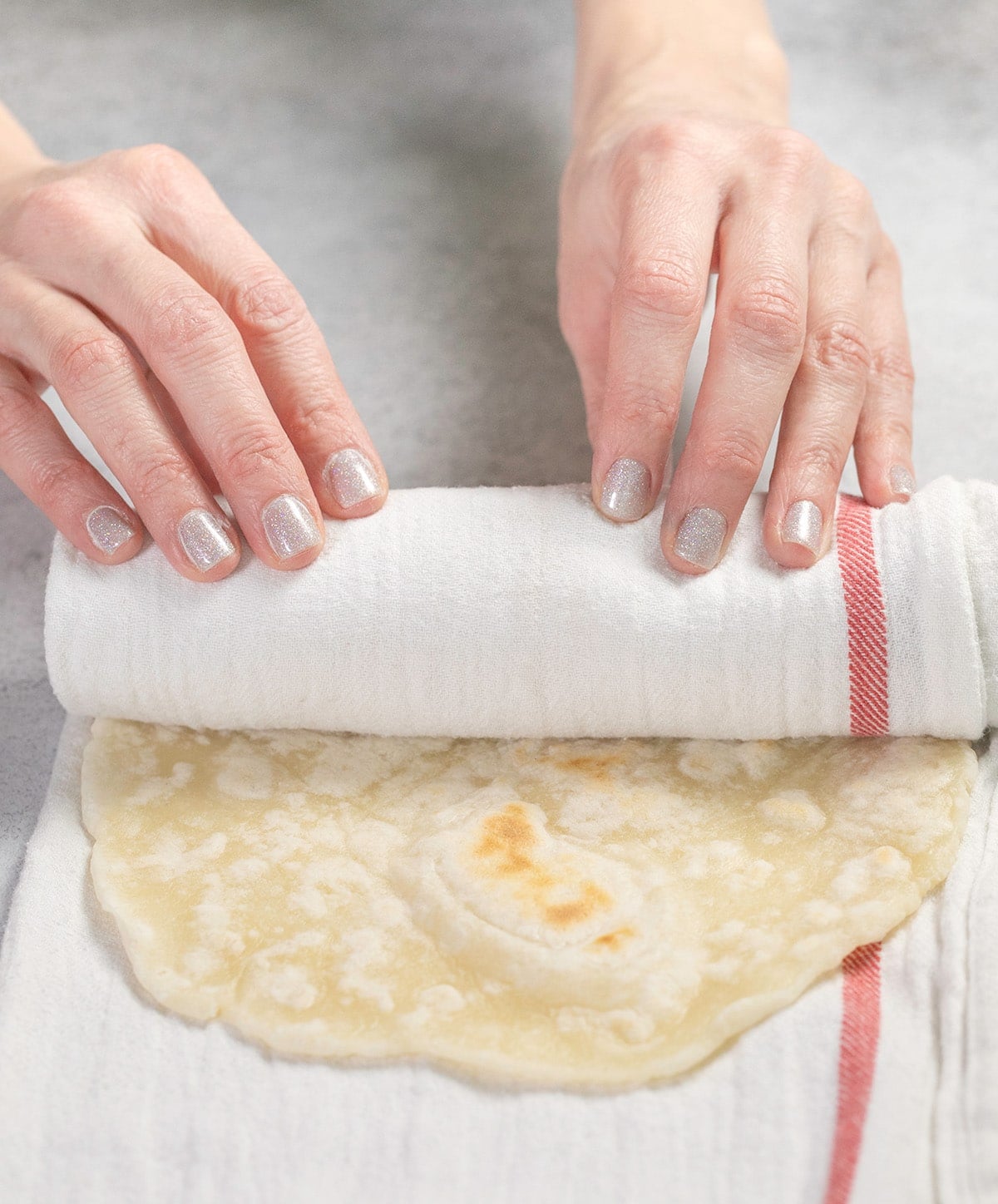
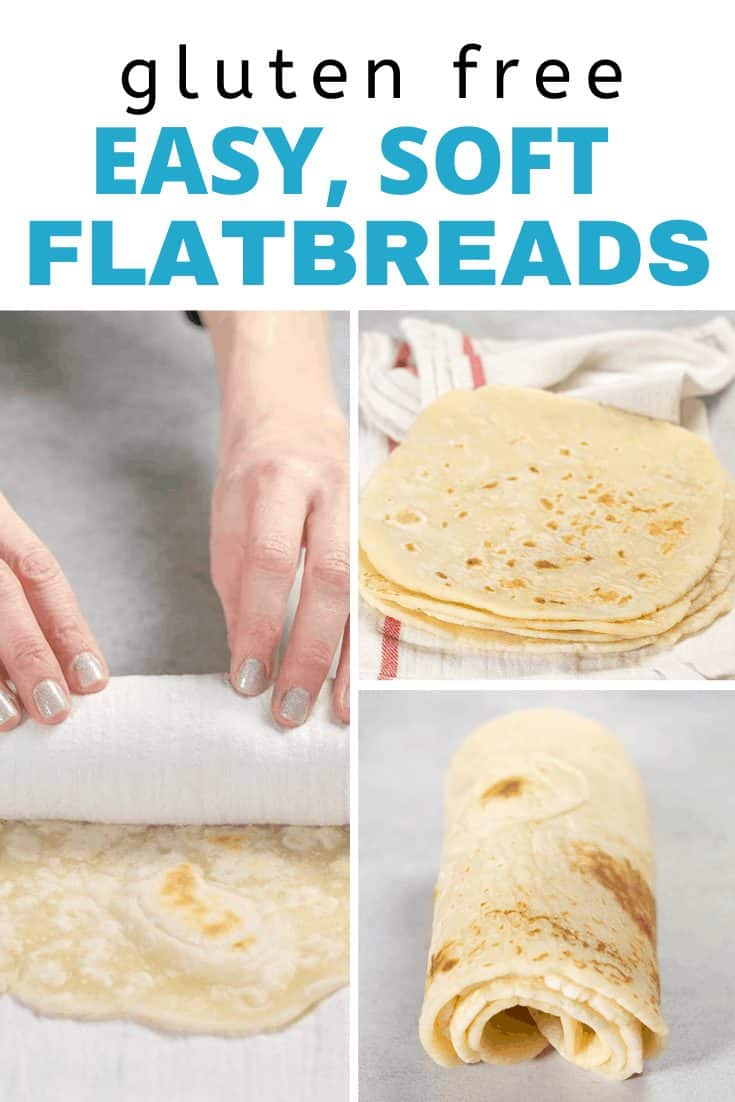
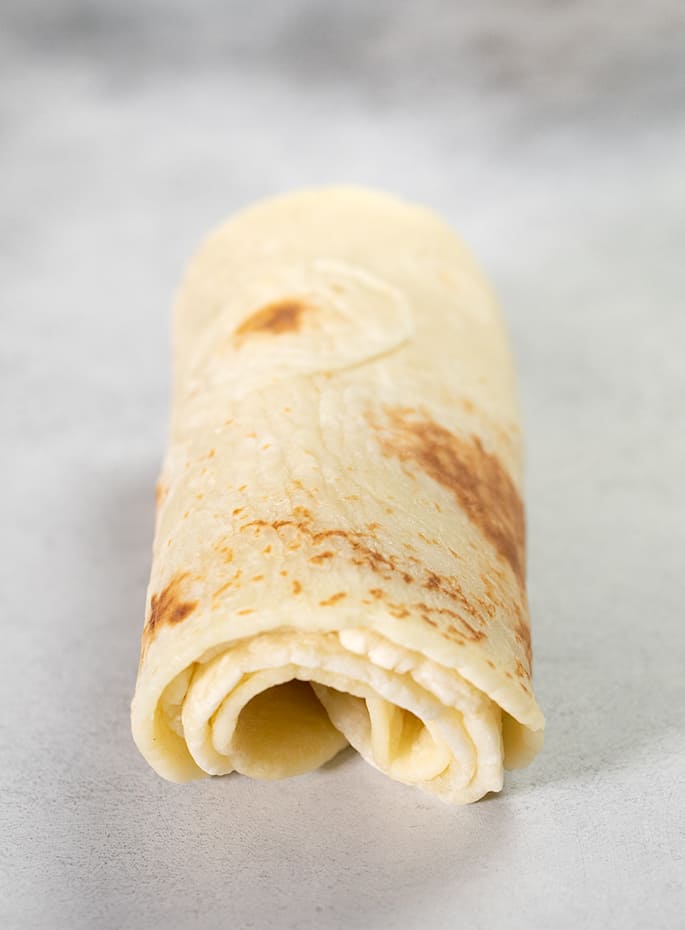
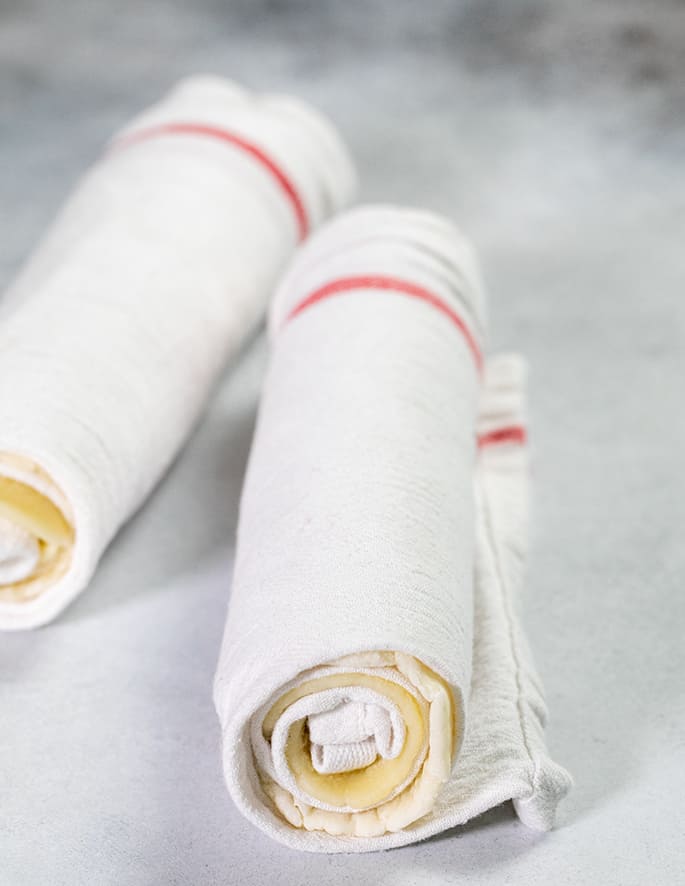
Flip again and cook until the surface looks dry and no longer glistens. Wrap the cooked flatbread in a tea towel to keep it warm, rolling it around the towel if you intend to roll it around a filling. This helps it create a memory so it rolls easily even when it's no longer warm.

Expert tips
Cook in stages
Make only as many flatbreads as you intend to sit down and eat the same day. The raw dough stores really well in the refrigerator, but the cooked bread does tend to get stiff when chilled.
Roll when warm
Rolling flatbread while it’s still warm helps it stay flexible when cooled. It’s just like rolling a yule log or Swiss roll, warm dough remembers its shape.
Test your skillet first
Your skillet should be hot enough to sear quickly, but not burn. Test it by cooking a small dough piece first. A cast iron skillet works best for that golden, blistered finish.
Ingredient substitutions
The only common allergen in this recipe is dairy, and even that’s easily replaced. This flatbread is naturally egg-free.
Dairy free
Use any plain, unsweetened plant-based milk instead of dairy. I like almond milk best for flavor and texture.
Water works in place of milk, though the flatbread will be slightly less tender. It’s still soft, just not quite as rich as recipes that use yogurt, like our gluten free naan.
Tapioca starch/flour
Tapioca starch makes the dough pliable and helps create that chewy texture. In a pinch, you can try superfine glutinous (sweet) white rice flour as a substitute, though results may vary.
Storage instructions
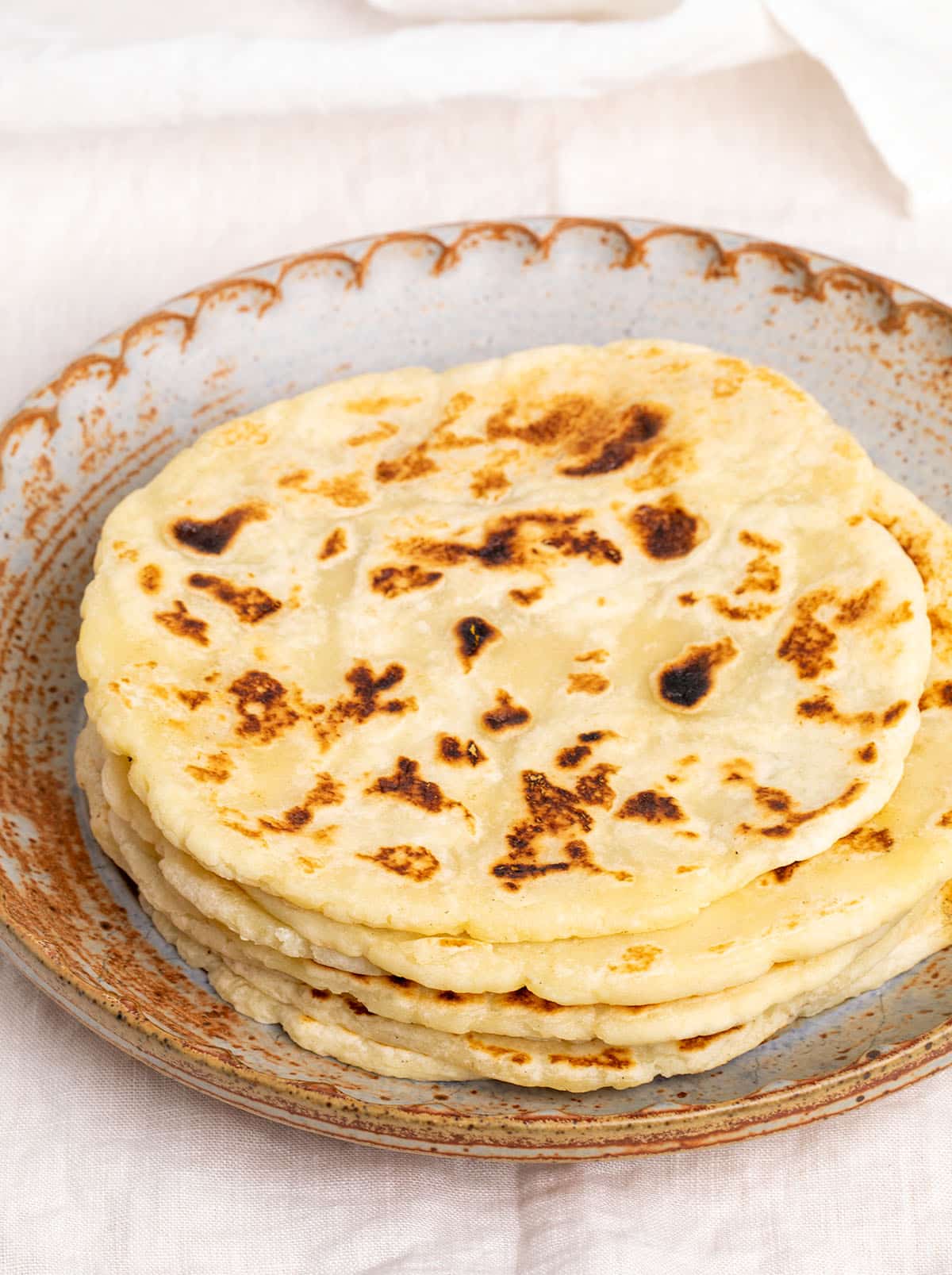
Wrap cooked flatbreads tightly in plastic wrap or Press’n Seal. They stay fresh at room temperature for a whole day, and even up to 2 days.
To refresh, lightly sprinkle with lukewarm water and either microwave for 20 seconds or warm in a hot skillet for 10 seconds.
For longer storage, freeze flatbreads in freezer-safe wrap for up to 3 months. Thaw at room temp or in the microwave before refreshing.
You can also refrigerate the raw dough, portioned and wrapped, for up to 5 days. Don’t refrigerate the cooked bread, as it becomes stiff and dry.
Gluten Free Flatbread Recipe
Ingredients
- ¾ cup (105 g) all purpose gluten free flour blend, (See Recipe Notes), plus more for sprinkling
- ½ teaspoon xanthan gum, omit if your blend already contains it
- 5 tablespoons (38 g) tapioca starch/flour, (See Recipe Notes)
- ¾ teaspoon kosher salt
- ½ teaspoon baking powder
- 1 tablespoon (14 g) extra virgin olive oil
- ½ cup (4 fluid ounces) plain unsweetened plant-based (for vegan) milk, or cow’s milk, chilled
- Neutral oil for the skillet, like grapeseed, canola, or vegetable
Instructions
Make the dough
- In a large bowl, place the flour, xanthan gum, tapioca starch/flour, salt, and baking powder, and whisk to combine well.
- Add the oil and milk, and mix to combine. The mixture will seem very wet at first, but the flour will begin to absorb the liquid quickly and the dough will become stiffer.
- If the dough doesn’t come together, knead it briefly with clean hands until smooth.
- Ideally, divide the dough into 5 ounce portions (as written, the dough makes 2 portions), wrap each tightly in plastic wrap, and chill for 30 minutes and up to 3 days. You can also work with the dough immediately, if you don’t have time to chill it.
Shape and cook the bread
- Heat a cast iron skillet that’s at least 10-inches in diameter, or a heavy-bottom nonstick skillet, over medium heat. Place a flat, wide spatula and a tea towel on the counter next to the skillet.
- If you’ve chilled the dough in portions, unwrap and work with one piece at a time. If the dough hasn’t been divided, divide it in two equal halves, each weighing about 5 ounces.
- Turn each piece of dough out onto a very lightly floured flat surface, and sprinkle lightly with extra flour. Cover the remaining dough loosely with a cloth to keep it from drying out.
- Sprinkle the dough lightly with more flour and begin to roll it into a round, sprinkling lightly with more flour as necessary to prevent sticking. The edges will be jagged and a bit rough.
- Gather the dough together and repeat the process at least once more, until the dough is smoother. Roll the dough into an approximately 8-inch round, turning and flouring lightly as necessary. The edges should be less rough, but this is rustic flatbread.
- Brush about 1 teaspoon of neutral oil on the hot skillet. Pick up the prepared raw piece of flatbread and place it flat in the center of the skillet, taking care not to bend any of the edges.
- Allow it to cook for about 1 minute without disturbing it, or until the edges begin to lift. Slide the spatula underneath the flatbread, ensuring that there are no spots that are sticking.
- Flip the flatbread over and allow it to cook for another minute, pressing it firmly back onto the skillet with the spatula to prevent it from puffing up. You can also take a toothpick and prick any bubbles to deflate them.
- Continue to cook the flatbread, flipping it frequently, until it is set on both sides and doesn’t glisten anywhere. It should take 2 to 3 minutes total.
- Remove the flatbread from the skillet, place it in the center of the tea towel, and fold the edges of the towel over on it to enclose it and keep it warm.
- Repeat with the second piece of dough, adding more oil to the skillet if needed.
To roll the flatbread
- If you'd like to roll them in a coil while they are still very warm, open the tea towel and remove both pieces of bread. Place one about 4 inches from one short end of the towel, fold the edge over the bread, and roll the bread tightly in the towel.
- Place the second flatbread on the unrolled portion of the towel, and repeat the process, rolling until the two flatbreads are tightly wrapped in the towel. Allow them to cool for at least 5 minutes wrapped in the towel before unwrapping and serving.
Video
Notes
Nutrition
Nutrition information is automatically calculated, so should only be used as an approximation.
FAQs
If the dough is too wet, add tapioca starch 1 teaspoon at a time until it’s no longer sticky.
If it’s too dry, add milk 1 teaspoon at a time, just until it comes together.
No—tapioca starch is essential here, even if it’s already in your blend. It improves dough texture, makes rolling easier, and adds chew.
Possibly! The dough is stable enough to grill if your grates are very clean and well-oiled. Try one flatbread as a test.










Hi Nicole, I’m just wondering if I can use a stand mixer with the dough attachment to mix and knead the dough. I have a medical condition which causes my hands and arms etc., to be quite painful.
Hi, Tania, definitely if you use the paddle attachment, that should work fine!
I love this recipe! I’ve used a few different types of flour, and it works well with each of them. However, I use it most often as a base for quiches – it’s delicious, easy to cut, and doesn’t fall apart.
That’s great to hear about the recipe in general, Tara. I’m having a little trouble picturing what you mean by using it as a base for quiches, but it sounds like a delicious combination! Thank you for sharing your experience. I really appreciate it!
A bit of a challenge. In most recipes you’re so worried about incorporating too much flour so I’m super stingy when rolling it out. And I rolled it too thin/big. And had a time getting it into the pan. And made a mess! But I ate bits of it anyway while I was working the second one. Smaller, thicker, and used one of the plastic flexible cutting mats to roll it out and transfer it to the pan. Much better! I love the part where you can hold it for 3 days, or make and freeze. I’ll be making them again. Bobs 1-1 flour, skim milk, part evoo and part veg oil (@1/2T each cause that’s what I had). Held up to heavy toppings (pizza) most excellently! AF 375F @8 minutes.
If you’re going to use Bob’s 1-to-1, Cat, you need to add extra xanthan gum, which I state in the post and the recipe card. Without that, the dough would be quite fragile!
Ok! I saw that but, you know, we all think…oh that’s not me she meant ?. Need to get some evoo and I’ll try another batch! I did love it though. Best pizza so far!
This turned out better than I expected it to. I used Bob’s Red Mill 1 to 1 Baking Flour and I added a 1/4 tsp garlic powder to the mix for a little garlic flavor. So happy to have a gluten free flatbread for soups and wraps. Thank you so very much!
Helen, Toronto, Canada
You’re very welcome, Helen!
Came out beautiful, tried with glutinous rice flour and came out nice. Served with honey and butter and another with fish. Yum
So glad glutinous rice flour worked in place of tapioca starch, Chris! Thanks so much for sharing your experience.
Thank you for your GF options
Possible to cut salt in half? One of these is over half my daily allowance of low salt intake.
Hi, Beth, you can, but unfortunately the flatbread will taste pretty bland. The recipe will still work though.
These are AMAZING! They are going to be a regular part of the rotation for sure. They were super easy to make and came out so well. Thank you thank you thank you! Even gluten-eaters loved them, and we all know that’s the truest test! I had just enough flour to make them so I used cornmeal to dust my surface when rolling them out, which will be a great trick when I use them as pizza crusts!
So glad you love this flatbread, Catherine. And yes—gluten eaters are the true test! That’s always been my yardstick. Would someone who could eat anything they want, no matter the allergens, enjoy the recipe. Great idea about rolling them out on cornmeal! And thank you for sharing your experience.
Love your recipes but I haven’t tried any because I’m allergic to tapioca starch (cassava) and gums. I could probably substitute corn starch for tapioca starch but I can’t use gums or psyllium husk in them. So there’s a challenge for you
Thank you so much for this recipe! I made them yesterday and they came out amazing! This is the best gluten-free flatbread I’ve ever made – this recipe is a keeper in my book!
I used the Better Batter “Artisan” blend (because I avoid xanthan gum) and even with that substitution, they were still amazing – soft and pliable, and tasted delicious!
I’m really glad you enjoyed the flatbread, Jaya! I do unfortunately recommend against that blend, but I’m glad it worked to your satisfaction in this instance.