

This post may contain affiliate links. Please read our disclosure policy.
This gluten free naan bread is made extra soft and tender with yogurt, eggs and a bit of butter or ghee in the dough.
Pillow soft, chewy, and full of flavor, I keep this versatile dough in my refrigerator for days, then fry it up in a pan in minutes on a busy weeknight!
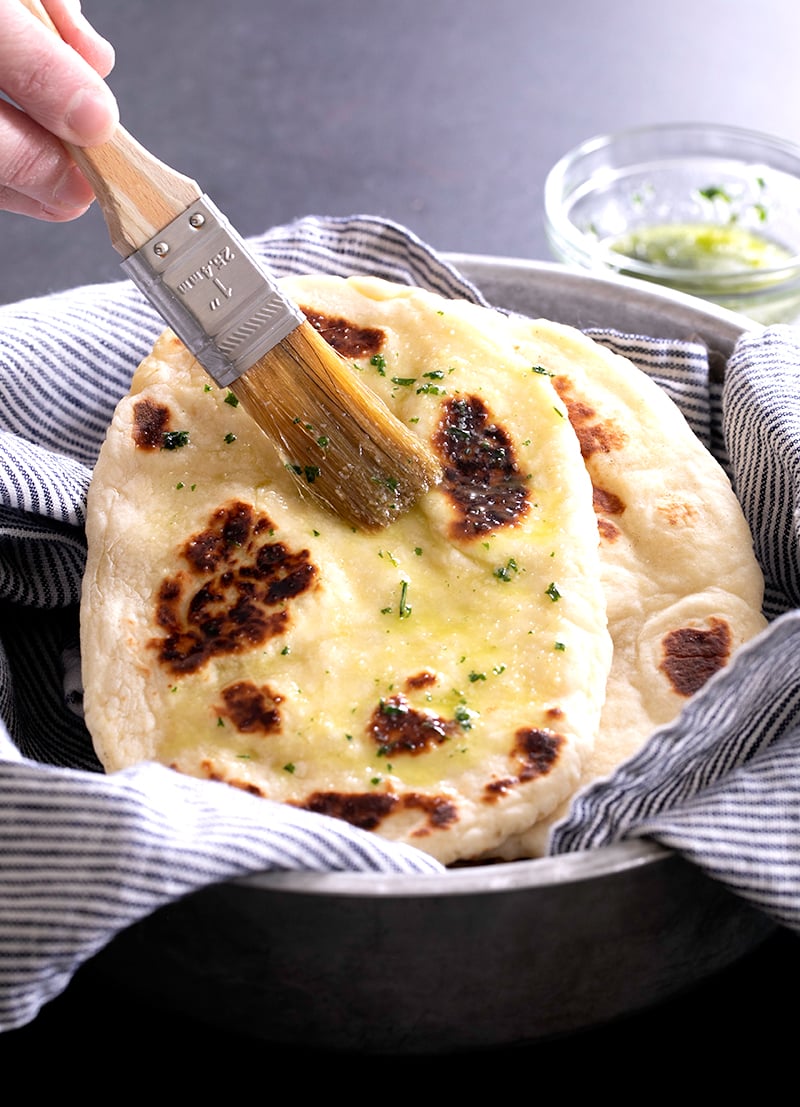
“This naan is so good even my husband loves it, and he is not a fan of the idea of GF. Yeasty, chewy deliciousness!”
“The great bubbling when it hit the frying pan..the light fluffy poofs, grilled to golden brown…Yum! Brushed it with garlic butter and herbs before serving. Will make it again and again!”
my take
Nicole's Recipe Notes
- Flavor: made with plain yogurt and butter for a slightly tangy taste and subtle richness.
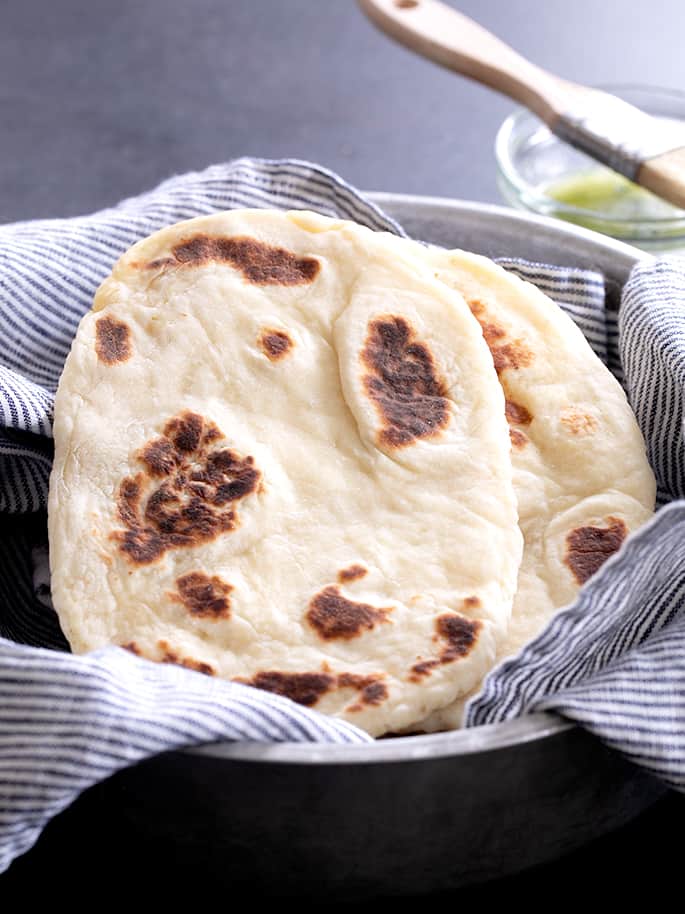
- Texture: Tender and pillowy soft, with golden brown spots that add some crispness.
- Easy to handle: We begin with a relatively wet dough, and shape with plenty of extra flour so it's smooth, pliable, and easy but never tough.
- Make ahead: Let the dough rise and work with it right away, or store it in the refrigerator for days, then shape and fry in minutes.
Recipe ingredients
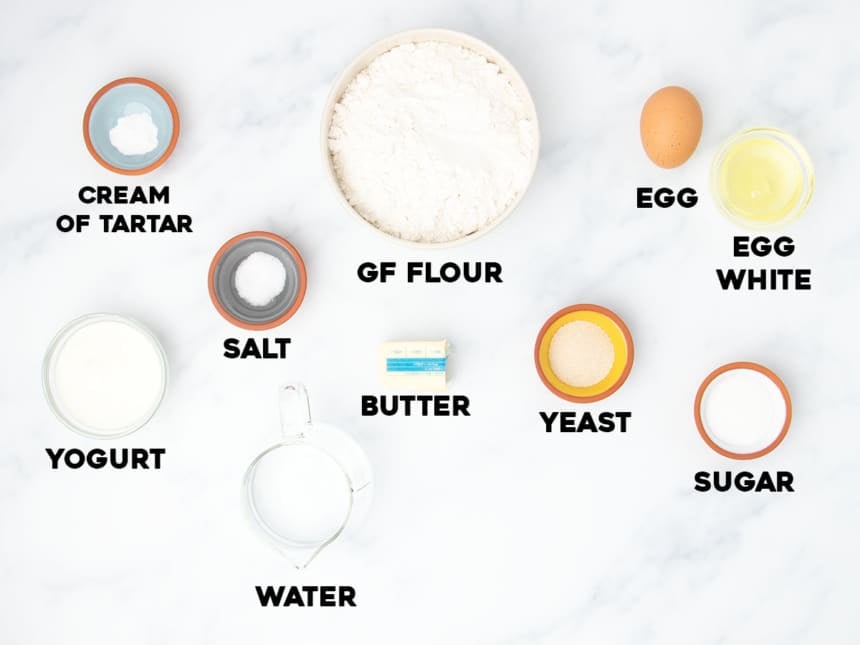
- Gluten free flour: This bread calls for a regular all purpose gluten free flour blend like Better Batter's original blend or Nicole's Best multipurpose, with added xanthan gum, not a gluten free bread flour or other specialized blend.
- Sugar: Just a touch of sugar helps enhance the flavor, tenderize the bread, and feed the yeast. You can replace it with half as much honey, and reduce the water by 1 tablespoon.
- Yeast: I prefer instant yeast, also called breadmaker's or rapid-rise yeast, because you don't need to dissolve it first in water. It adds rise and flavor.
- Salt: Enhances and brightens other flavors and helps control yeast development.
- Cream of tartar: Helps support the rise of the bread, and enhances the tangy flavor of the yogurt. You can replace it with 1/2 teaspoon lemon juice or white vinegar.
- Egg and egg white: Help bind the bread, add richness and help rise.
- Butter: Adds moisture, tenderness and flavor.
- Plain yogurt: Adds richness, moisture, and a tangy flavor.
- Water: Even if you don't plan to let the bread rise at room temperature, make sure the water is warm or the ingredients won't combine well in the mixer.
How to make gluten free naan bread
The best way to make a smooth dough is to use a stand mixer fitted with the paddle attachment. If you don't have one, try pulsing the dough in a large food processor with the plastic blade, or mixing as vigorously as possible in a bowl with a spoon.
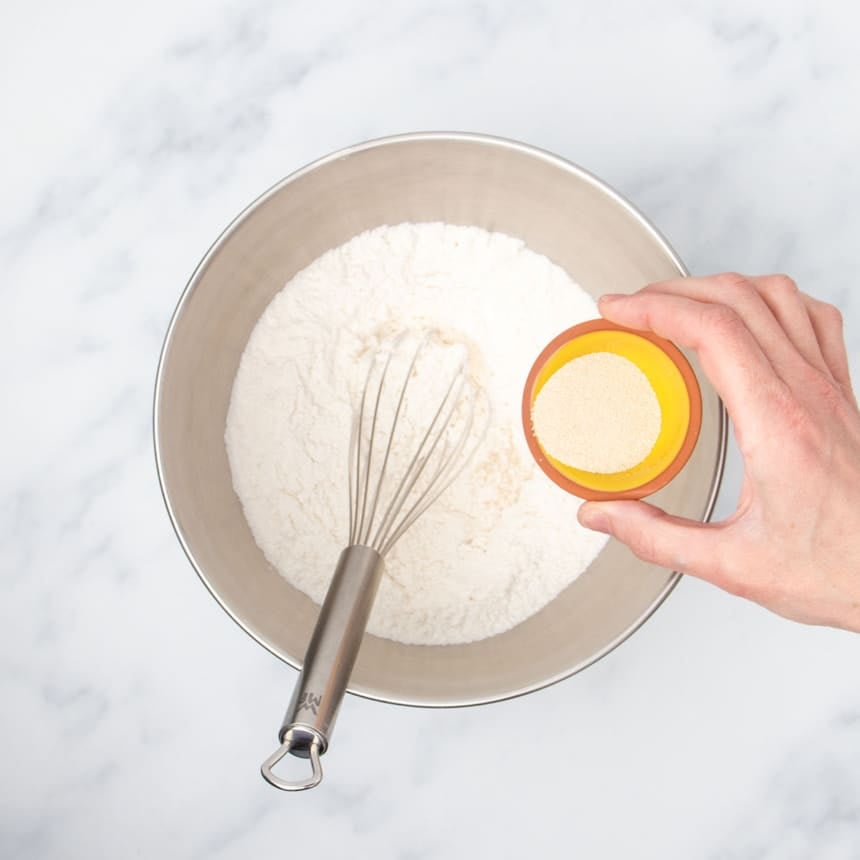
In the mixer bowl, place the gluten free flour blend with xanthan gum, salt, cream of tartar, and sugar, and whisk to combine well. Whisk in the yeast separately.
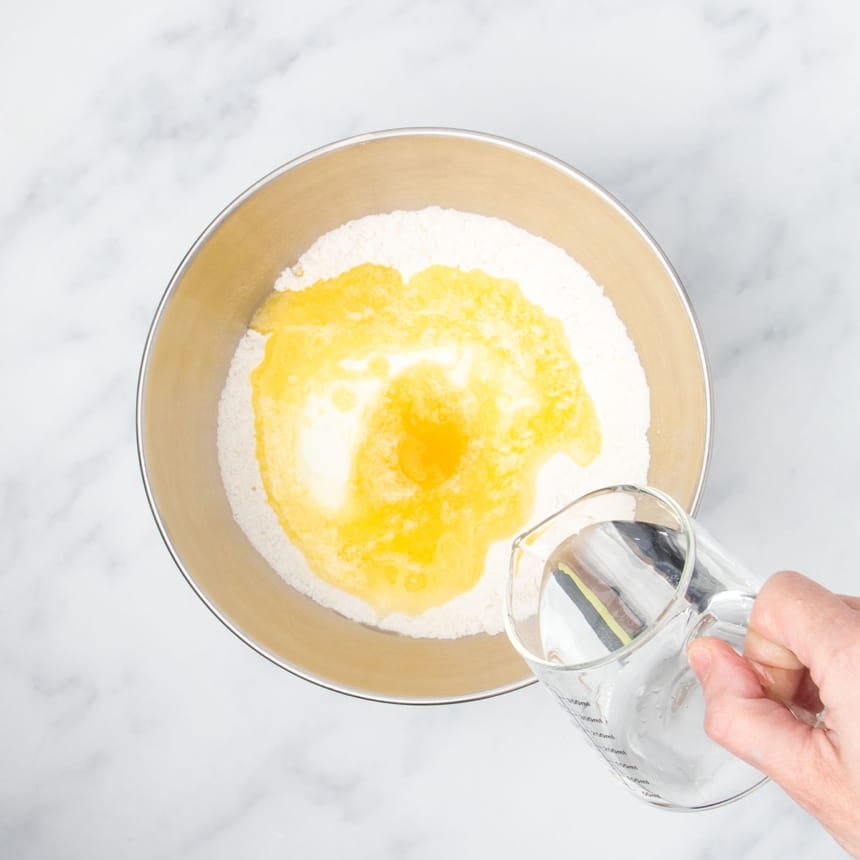
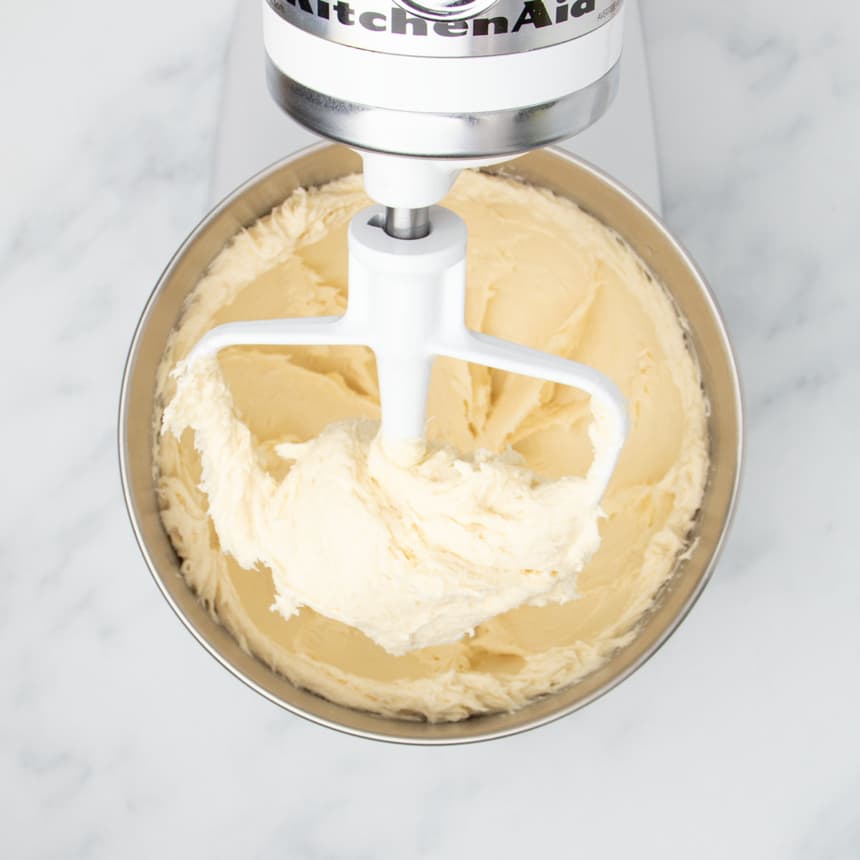
Add melted butter, an egg, egg white, and warm water. Mix on low speed at first, then on medium speed for about 3 minutes until the dough is well combined. It will look shaggy and be quite wet.
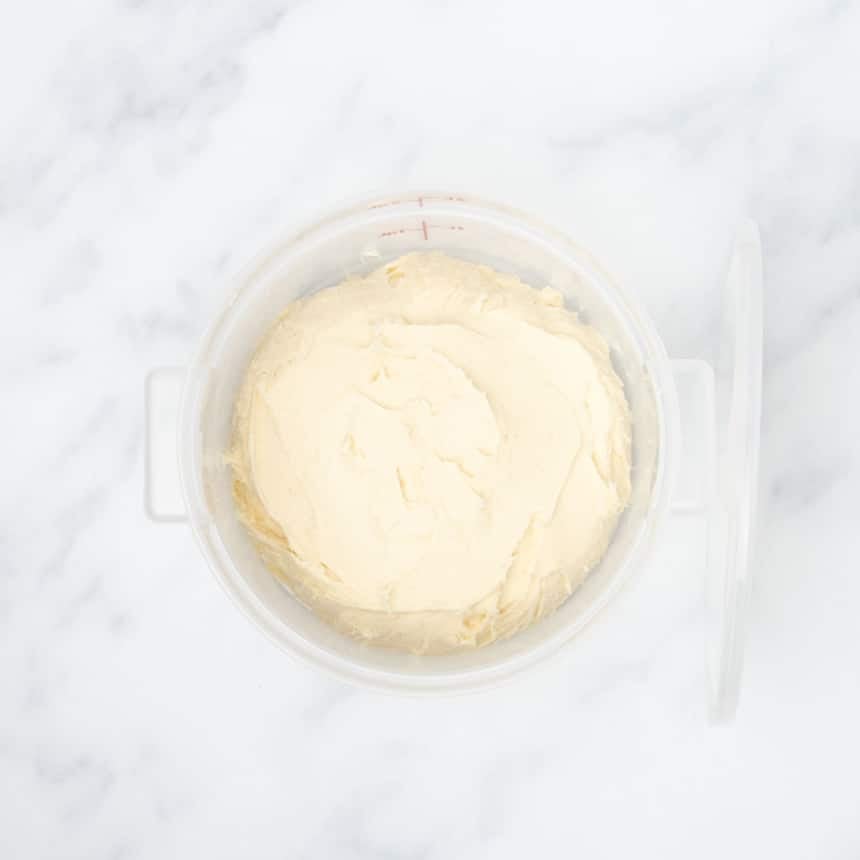
Place the dough in a tightly sealed container, and refrigerate overnight or up to 5 days. The dough will rise slowly in the refrigerator, in the container. Or you can let it rise for about 45 minutes or until nearly doubled, then chill and shape.
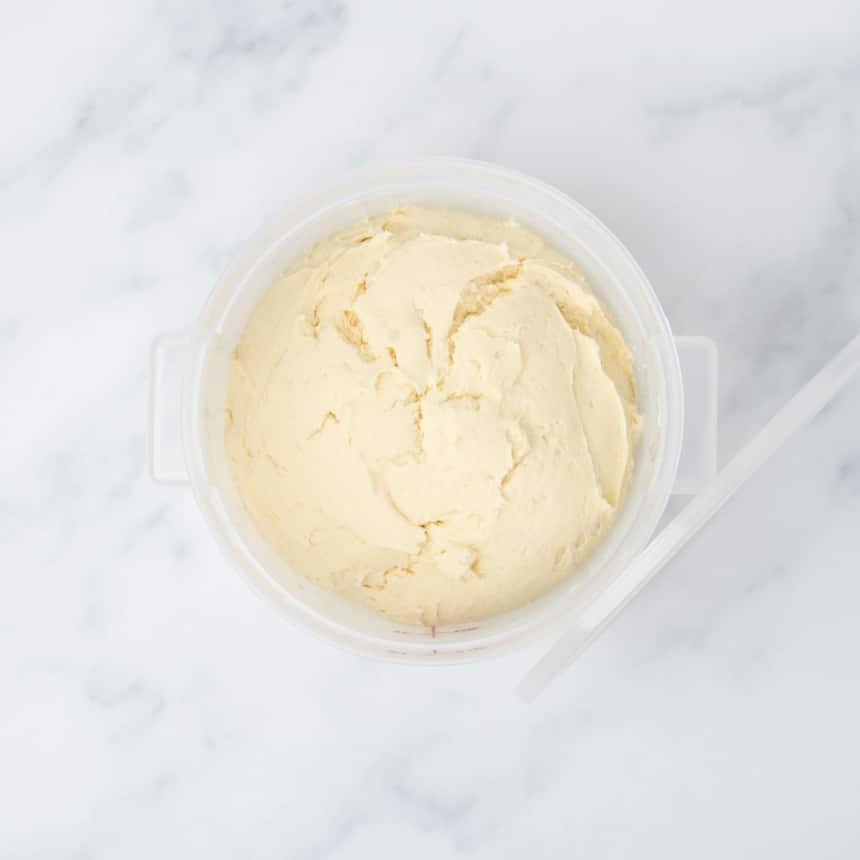
Divide the dough into 8 equal pieces, or just separate out a few pieces of about 100 grams each. The dough will seem pretty shaggy and wet. Sprinkle each piece generously with more flour and shape it into a round by moving it around with your palm in circles.
Begin to roll it into a long oval about 3 inches wide and 5 inches long. If the dough seems fragile and too sticky, gather it back together, and work in some more flour.
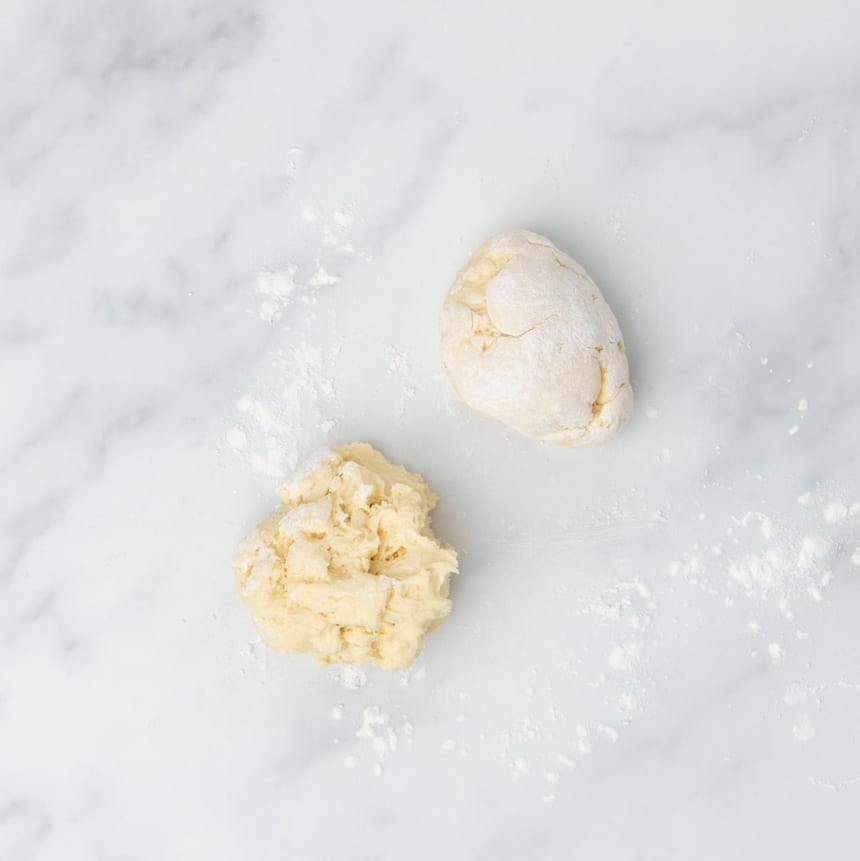
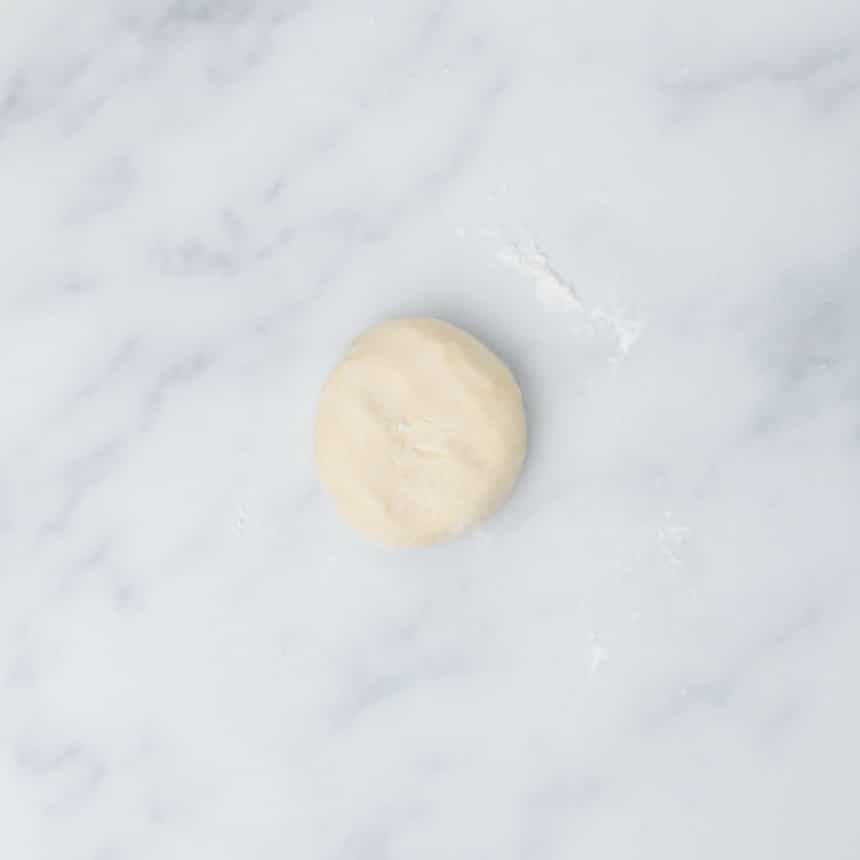
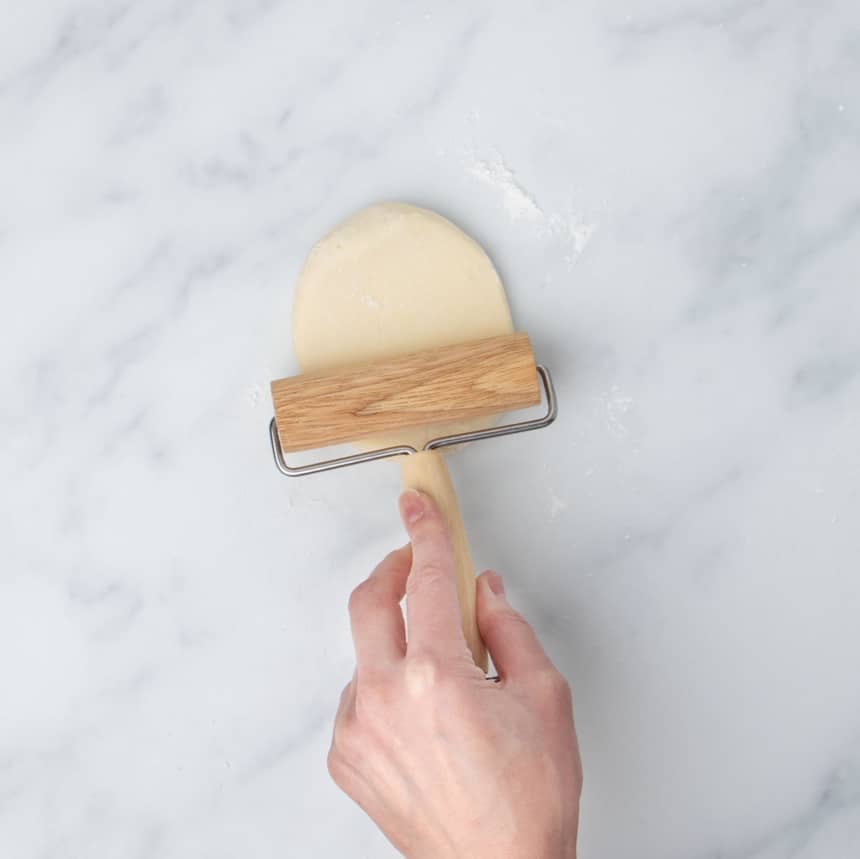
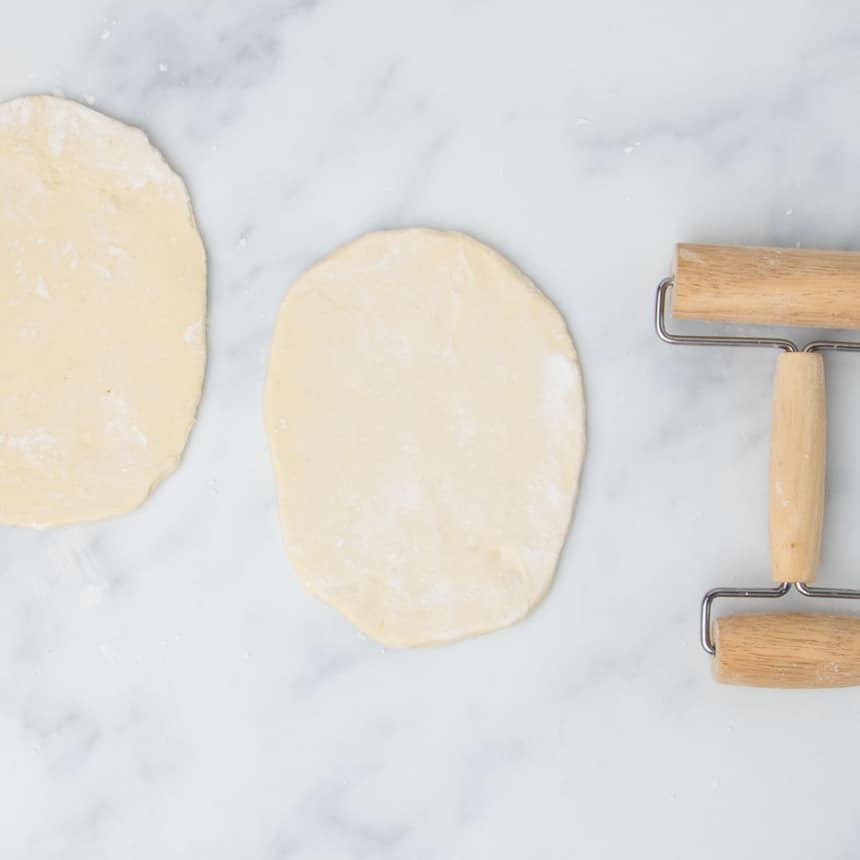
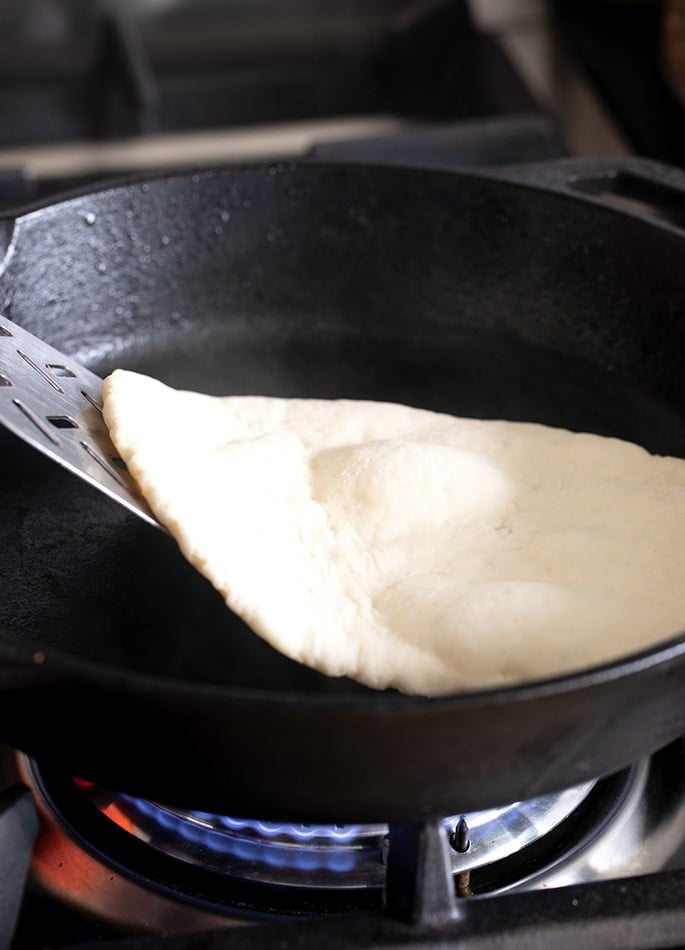
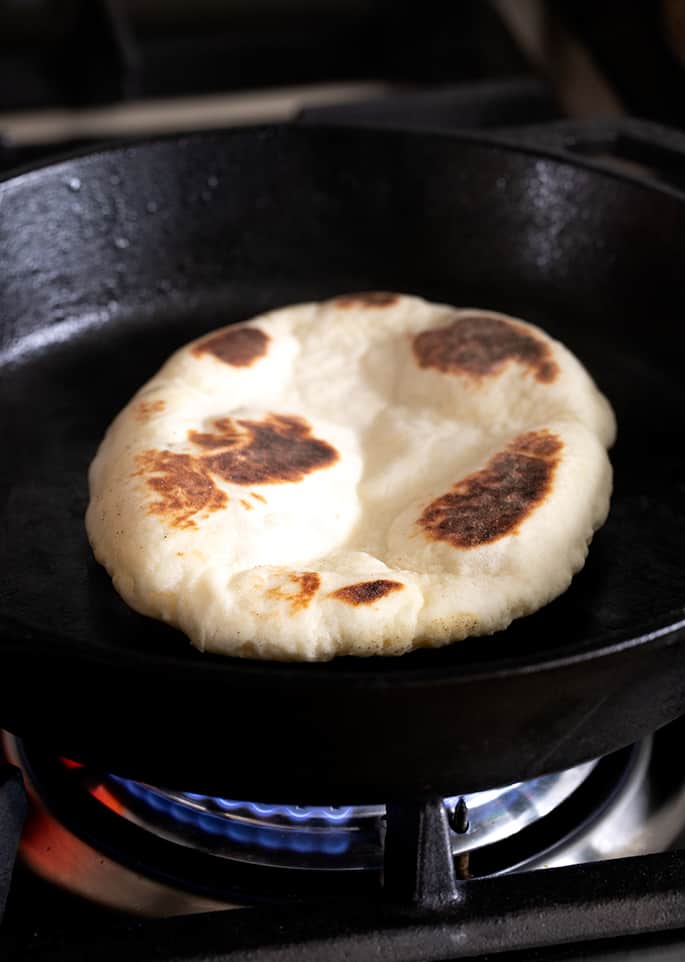
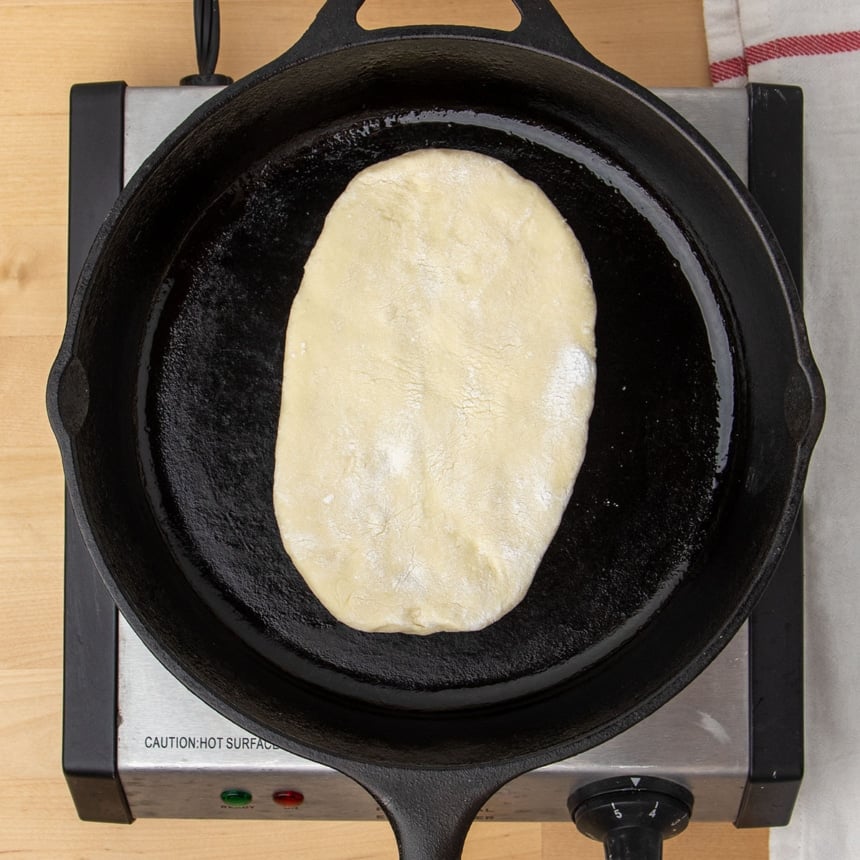
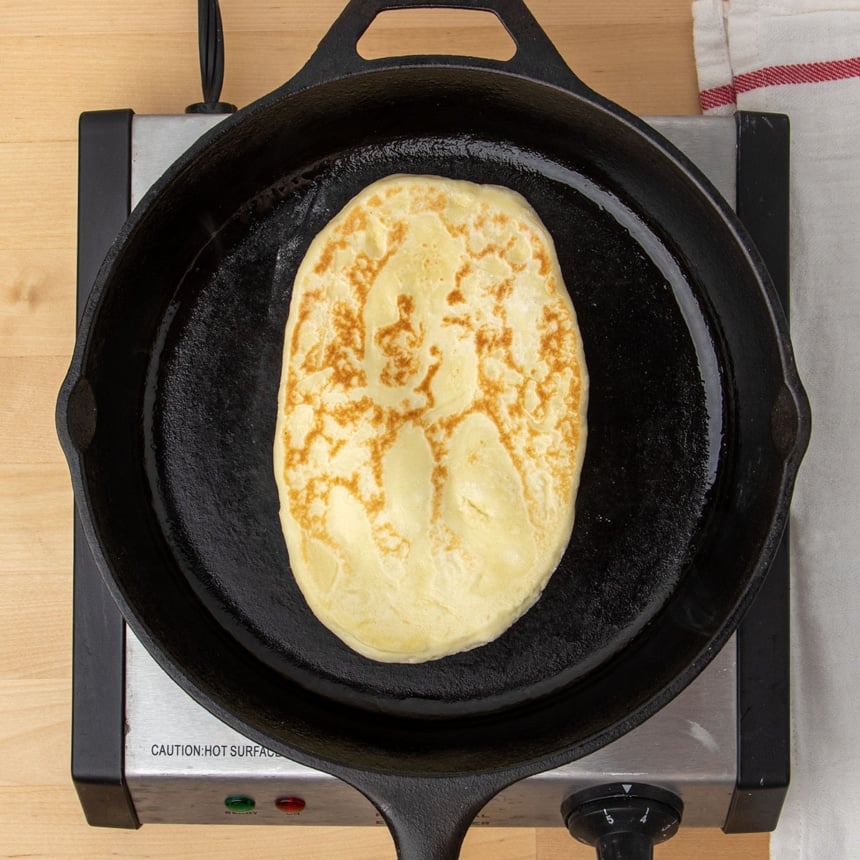
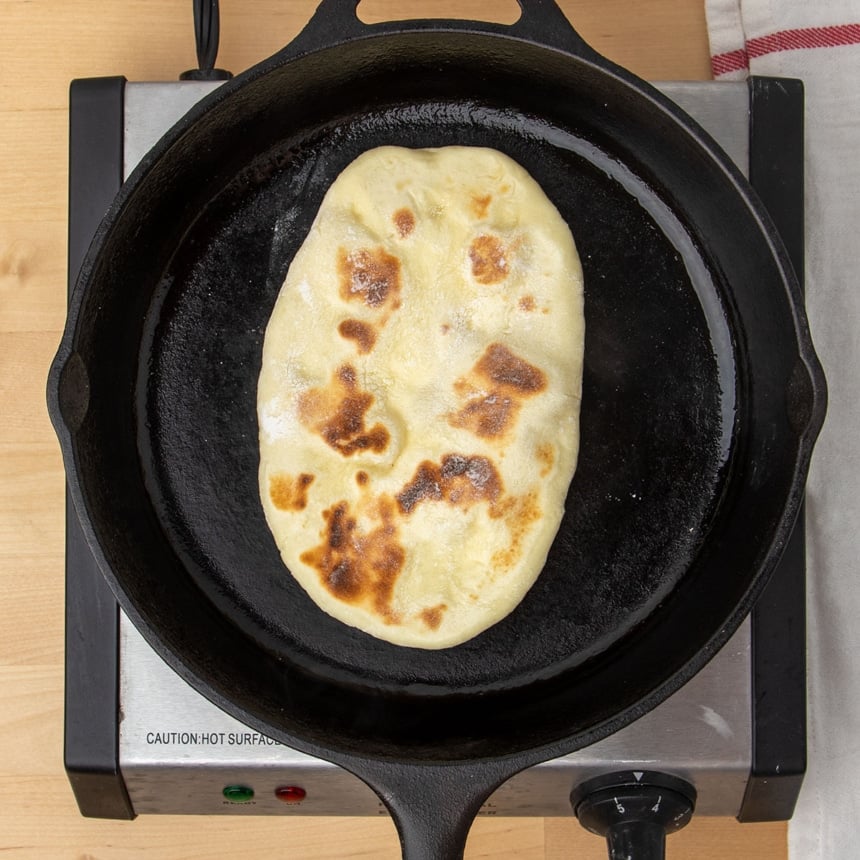
Heat a cast iron or other heavy-bottom skillet, heat over medium heat, and grease it generously. Place the shaped dough in the center, fry on one side for 30 seconds, flip and fry until very lightly golden brown, then flip back and finish frying.
My Pro Tip
Expert tips
Work with cold dough
You can make the bread the same day, or let it rise in the refrigerator for up to 5 days. If you’d like to make it the same day, let it rise, covered tightly, for about 45 minutes or until nearly doubled in volume. This step is designed to let the yeast develop some flavor, and to allow the flour to absorb moisture, making the dough easier to handle.
Flour the wet dough generously
This is a relatively wet dough (unless you've used a very starchy flour blend). The flour will absorb some of the moisture if you chill it for a few days, but it should still be tacky to the touch. If it is, don't be afraid to sprinkle more flour and add it to the dough until you can roll it without its sticking to the surface. You need to be able to lift it into the pan.
Heat the pan properly
If the pan isn't hot enough, or the dough is rolled too thick, it won't bubble. If you're concerned, cover the skillet. But don't make the skillet screaming hot, or it'll just burn the bread. Once it bubbles, flip it to the other side. Place a cast iron skillet or medium heat, a nonstick skillet over medium-low heat.
Use a spatula for even frying
To make sure that all the dough comes into contact with the hot skillet, I'll occasionally press down on the dough with my spatula. It should puff right back up. Flip and cook a few times until the dough seems puffy at least in spots and cooked through when you view it from the side.
Ingredient substitutions
Dairy free
To replace the butter or ghee in this recipe, try vegan butter or extra virgin olive oil. If you choose olive oil, the dough is a bit softer and harder to shape, though.
Instead of regular plain yogurt, try your favorite nondairy plain yogurt. Just be sure you like the taste of whatever brand you choose, since you'll taste it in the bread. My favorite brand is Forager, and So Delicious is also really good.
Egg free
Try replacing the whole egg with a “chia egg” (1 tablespoon ground white chia seeds + 1 tablespoon lukewarm water, mixed and allowed to gel), Bob's Red Mill egg replacer, or “Just Egg” brand refrigerated plant egg replacer. For the egg white, try 1/4 cup aquafaba (the brine from a can of chickpeas/garbanzo beans).
Yeast
There is no replacement for yeast in a yeast bread recipe. Instead, try our yeast-free gluten free pita bread, or gluten free yeast free pizza, and shape it into a naan-style dough.
You can use active dry yeast instead of instant yeast. You need 25% more yeast by weight (here, a total of 10 grams active dry yeast). Just be sure to let the active dry yeast dissolve in 1/4 of the warm water from the recipe first, and then add it in when you add the rest of the water to the dough.
Gluten Free Naan Recipe

Equipment
- Stand mixer with paddle attachment
- Rolling Pin traditional, or small pastry roller
Ingredients
- 2 ½ cups (350 g) all purpose gluten free flour blend, (See Recipe Notes), plus more for sprinkling
- 2 ½ teaspoons xanthan gum, omit if your blend already contains it
- ½ teaspoon kosher salt
- ¼ teaspoon cream of tartar
- 4 ½ teaspoons (18 g) granulated sugar
- 2 ¼ teaspoons (8 g) instant yeast
- ⅓ cup (76 g) plain yogurt, at room temperature
- 3 tablespoons (42 g) butter or ghee, melted and cooled
- 1 (50 g (weighed out of shell)) egg, at room temperature, beaten
- 1 (25 g) egg white, at room temperature
- ¾ cup (6 fluid ounces) warm water, about (95°F)
- Ghee or virgin coconut oil, for frying
Instructions
- In the bowl of your stand mixer fitted with the paddle attachment, place the flour, xanthan gum, salt, cream of tartar, and sugar, and whisk to combine well. Add the yeast and whisk again to combine.
- Add the yogurt, butter or ghee, egg with egg white, and the water, and mix on low speed with the paddle attachment until just combined. Once the water has been absorbed, turn the mixer up to medium speed and mix for about 3 minutes.
- The dough will most likely be quite fluffy but will come together and thicken, but it will not turn into a fully integrated ball of dough on its own.
- Turn off the mixer, scrape the dough off the sides of the bowl with a spatula, and gently press it into a ball. Place the dough in a greased bucket with a lid (or a bowl with a lid or one you can cover very tightly), and cover tightly.
- If you plan to make naan the same day, place the dough in a warm, draft-free spot to rise until it is nearly doubled in volume, about 45 minutes. Refrigerate the dough for at least 15 minutes to make the dough easier to handle.
- Alternatively, place the well-sealed container in the refrigerator for up to 5 days, and work with the dough straight from the refrigerator.
- Once the dough has finished rising, turn it out onto a lightly floured surface and sprinkle lightly with more flour.
- Divide the dough into 8 pieces. You can also just scoop out or pull off a few pieces, each a bit less than 100 grams in weight.
- Working with one piece of dough at a time, flour it generously and shape it into a smooth round on a floured surface by moving your palm in a circular motion on a floured surface.
- Use a rolling pin to roll the dough into an elongated oval about 3-inches by 5-inches (and about 3/8-inch thick). If the dough tears easily and seems fragile, gather it together again, work in some more flour, and roll it again.
- While you’re shaping the dough, place about 1 tablespoon of ghee or virgin coconut oil in a cast iron skillet, and melt over medium heat. You can also use a nonstick skillet, but heat to medium-low.
- Lift the first piece of shaped dough up and place in the center of the heated skillet. Fry on one side until large blisters begin to form (about 30 seconds).
- Flip and fry until the underside is golden brown and beginning to blister. Flip the bread again and cook until browned all over, about another 45 seconds.
- Remove to a paper towel or tea towel, and cover the dough to retain the heat and moisture.
- Repeat with the remaining pieces of dough, adding more fat to the skillet as necessary. Stack the pieces of naan one on top of another, keeping them covered with a tea towel to maintain freshness. Serve warm.
Video
Tell Google you trust GFOAS!
Notes
You may also be able to make this bread using Caputo Fioreglut flour or King Arthur Flour gluten free bread flour, but both will absorb a lot more moisture and will make bread that is less tender. The dough should be quite easy to handle.
Nutrition
Nutrition information is automatically calculated, so should only be used as an approximation.
make ahead/leftovers
Storage instructions
All bread is fresh right after baking, so it's best to shape and cook this bread right before serving. It will, however, stay fresh for at least a day wrapped in wet paper towels in a sealed container at room temperature.
For longer storage, let the bread cool completely, wrap each piece tightly in freezer-safe wrap, and freeze for up to 3 months. Defrost at room temperature or in a microwave oven at 50% power for 45 seconds to 1 minute.
To refresh bread whether it's been frozen or not, sprinkle it with lukewarm water and place it in a 300°F oven to refresh. You can also use a dry cast iron skillet over medium heat, or nonstick skillet over medium-low heat.
FAQs
Yes! A cast iron skillet holds heat really well at a consistent temperature so your bread cooks fast and doesn't burn easily. If you don't have one, you can use a nonstick skillet and just keep your pan on medium-low heat. Grease it anyway, though, since that will add color to the bread.
Plain yogurt has more moisture than Greek yogurt, so if you want to use Greek yogurt, you'd need to thin it out with some milk until it's the same consistency as plain yogurt. It won't be exactly the same, but if you add the right amount, it should work.
You can try baking them on a pizza stone if you keep the shaped dough on parchment paper. I would try baking them like you do gluten free pita bread, at 400°F for 3 to 4 minutes total.
No, you don't need to give the dough extra time to rise after shaping. The long, first rise here is for flavor development, and most of the rise in the shaped naan is when it fries in the pan.


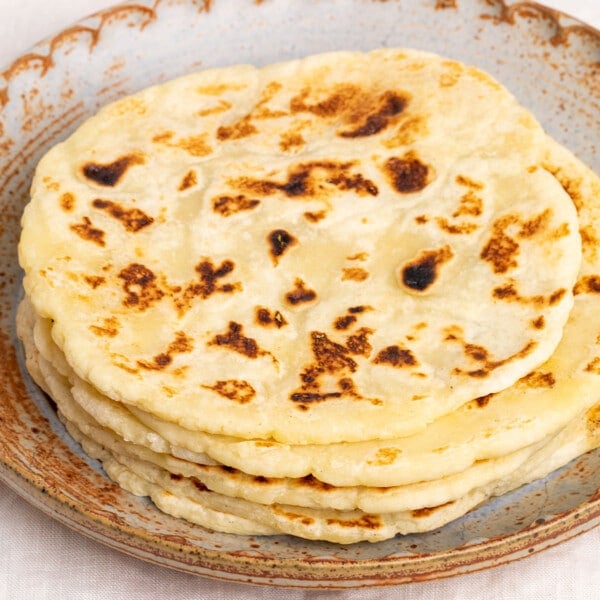










I have missed eating flatbread since I had to go gluten free (more than a year) so you can imagine my delight when I tried out your recipe! It’s as close to the real thing as you can get. Thank you sooo much! I shall be working my way through all your recipes!
You’re so welcome, and that’s so great to hear, Patricia! Thank you for sharing your experience, and for trusting my recipes.
I recently made this recipe and it was delicious! But I struggled with it. I used a stand mixer and then let it rise. When I tried to roll out individual naan, it was super fragile. I used a bench scraper to transfer the pieces to the stove because if I tried to pick it up with my hands, then it just wanted to fall apart. It also didn’t bubble up like traditional naan. The end result was really good and I want to make it again but just don’t know where I went wrong. I used Nicole’s Best Multipurpose GF flour blend and I added the required amount of xanthan gum.
Hi, April, did you measure your ingredients by weight, not volume? Did you make any ingredient substitutions? Did you add 2 1/2 teaspoons of xanthan gum, as directed by the Nicole’s Best Usage Guide (1 teaspoon per cup of all purpose gluten free flour blend for yeast bread)? I would also try letting the first rise happen in a sealed container in the refrigerator and/or chilling the dough before you work with it. The lack of bubbling up sounds like the pan just wasn’t hot enough. I hope that’s helpful!
After I already sent my comment…I realized my mistake!!! In my mind I was making traditional bread and used the dough hook even though you said to use the paddle attachment. It was my fault for misreading it. I did not chill the dough either. I can’t wait to try it again and follow the directions better ?
Thank you so much for your feedback. It is really appreciated!
I do it the whole time because it always comes out fluffy and soft. I find it works best with sorghum. I’ve tried other recipes but this is the best, thanks ?
Is there something I could substitute for cream of tartar by chance?
Sure, Meggie. Try using 1/2 teaspoon freshly squeezed lemon juice instead.
Tried to comment previously but it didn’t go through. We loved this recipe! Used Bob’s Red Mill because that is what I had and for those in the same boat- no worries; it works! (Not pastry flour though as someone commented. Mine was regular g/f cup for cup). Also had to mix by hand but I stuck with it and…success. The great bubbling when it hit the frying pan..the light fluffy poofs, grilled to golden brown…Yum! Brushed it with garlic butter and herbs before serving. Will make it again and again.
Hi Nicole,
I am looking forward to trying this recipe, as we are always looking for gluten free recipes. I am wondering if I can substitute any other flours, like cassava, coconut, blanched almond flour ?
( I didn’t see you mention any flour subs in your recipe commentary)
No, definitely not, Shannon. I’m afraid none of those flours is an all purpose gluten free flour blend, and they can’t be used for that ingredient. Only a rice flour-based blend will work. I do have a recipe for cassava flour tortillas that you might like instead. And a recipe for almond flour tortillas that you might like as well.
Just made this for the first time but had to adjust ingredients due my son’s medical condition and used dairy items but still turned out fantastic. Thank you for this recipe
This naan is so good even my husband loves it, and he is not a fan of the idea of GF. Yeasty, chewy deliciousness!
That’s so great to hear, Sharon! We aim to please everyone—most of all the GF skeptical. :)
I used Bob’s Red Mill gluten free bread flour and unfortunately this recipe was a fail. Not only was the texture nowhere near a regular naan (does not have that soft and chewy stretchy goodness) but it also could use more salt. We served it to company and most people did not bother finishing their piece. On the positives, it was an easy recipe to make and rolled out easily.
You simply cannot make this recipe with Bob’s Red Mill, and I suspect that’s why you mentioned that you had used it, since the all purpose gluten free flour blends page that is linked to that ingredient makes that very clear. And the flour blend choice is discussed in the text of the post. Your rating is based on the flour blend, not the recipe.
I’ve noticed most of your bread recipes use instant yeast even with a long rise time. Can you explain the reasoning? Would you be willing to speculate if traditional yeast would work if I proofed it in the warm water and a bit of sugar?
The only difference between instant yeast and active dry yeast is the coating on the outside of the yeast in active dry that prevents it from becoming active without being proofed. It has nothing to do with the length of the rise. It’s much simpler to save the step of proofing, which is why I use instant yeast. If you’d like to use active dry yeast, you’ll need to proof it first, and you’ll need to use more of it (approximately 125% as much yeast, so you’d multiply the amount (by weight) of instant yeast by 1.25).