

This post may contain affiliate links. Please read our disclosure policy.
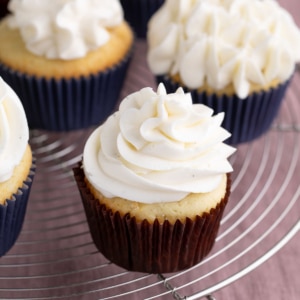
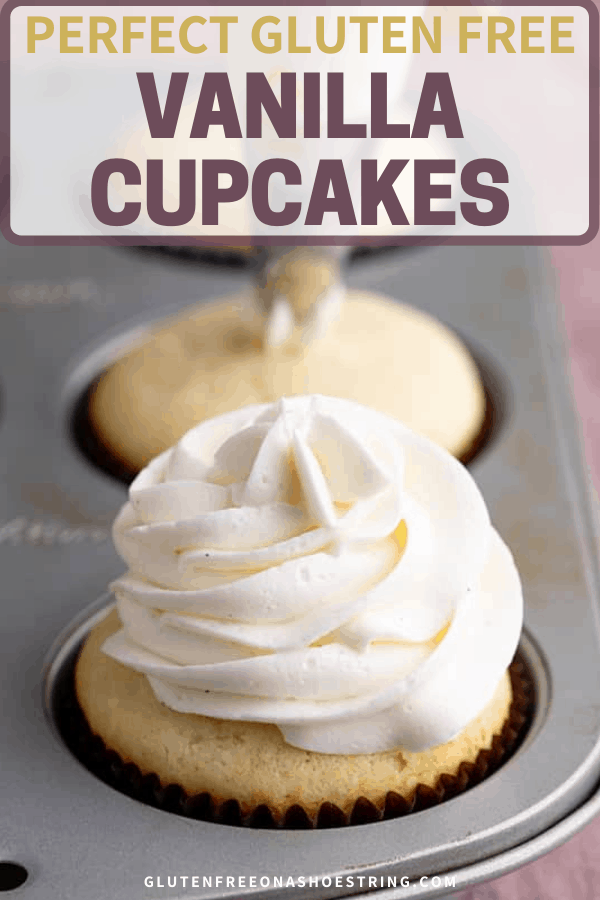
These gluten free cupcakes have the classic vanilla flavor and texture you want for birthdays, weddings, baby showers, or any celebration where no one should miss out.
They’re simple, reliable, and easy to frost, decorate, and serve! Plus, there's a simple buttercream frosting recipe below for the perfect bakery-style pairing.
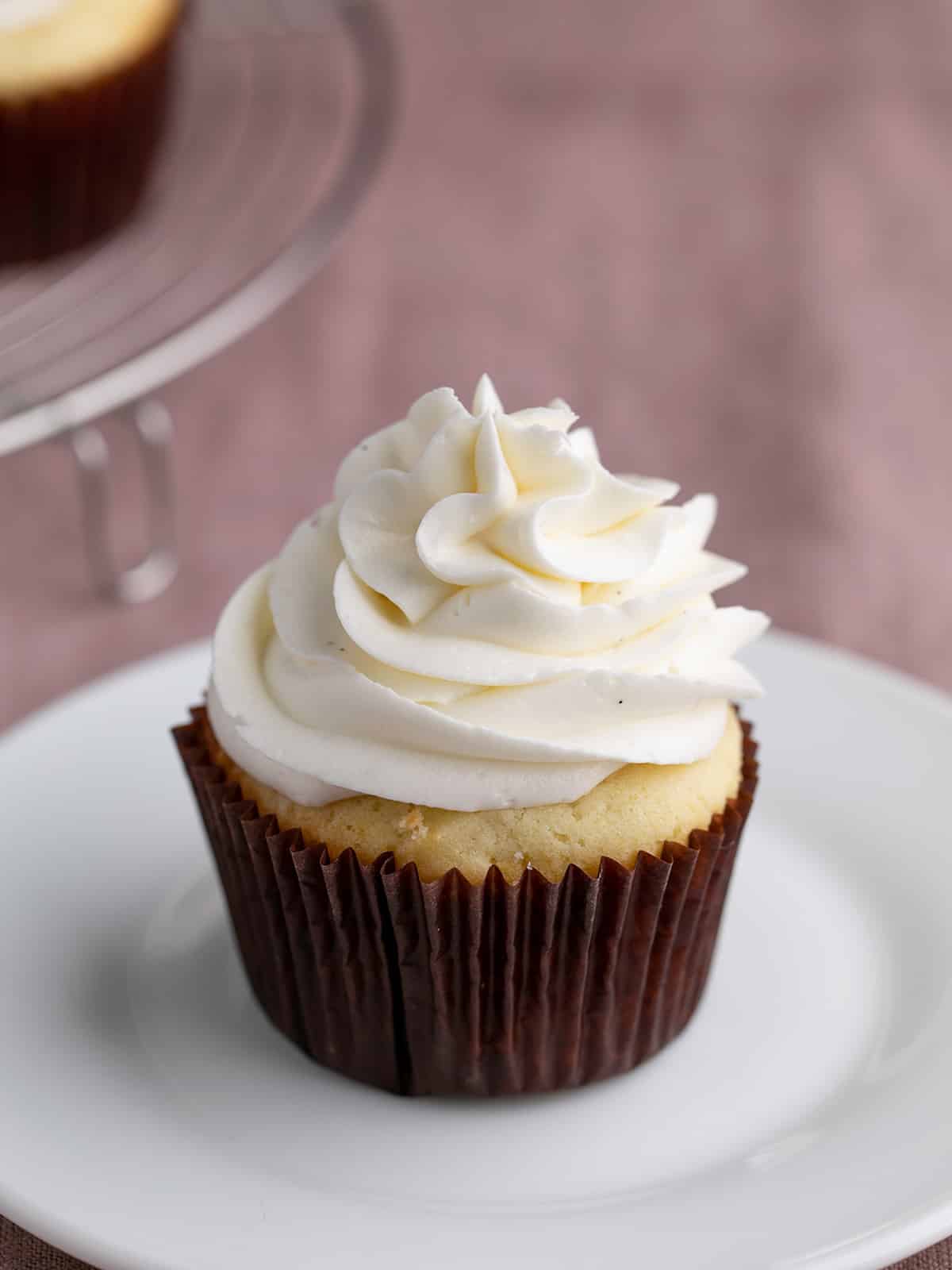
Table of Contents
- Why this recipe works
- Cupcake ingredients
- How to make gluten free cupcakes (step by step photos)
- How to make vanilla buttercream frosting (step by step photos)
- Frosting ingredients
- How to make the frosting (step by step photos)
- Expert tips
- Ingredient substitutions
- Storage suggestions
- Vanilla Gluten Free Cupcakes Recipe
- FAQs
“Just made these cupcakes today for a wedding. I received nothing but praise. Everyone questioned whether they were gluten free or not!”
Why this recipe works
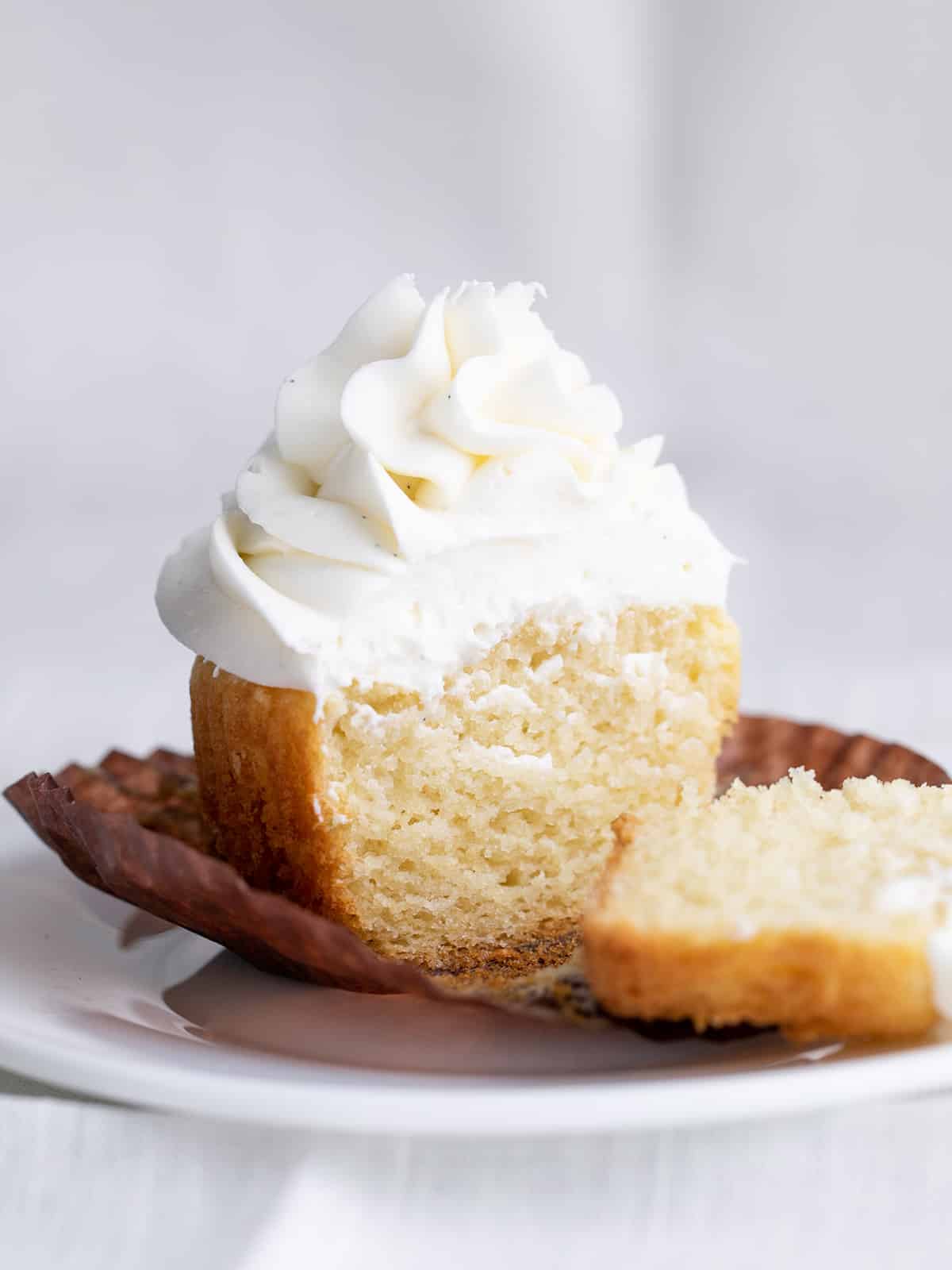
The cupcakes bake up with a light, even crumb that stays moist without ever feeling heavy. The vanilla flavor is simple and classic, so they taste like the cupcakes everyone expects.
The batter is easy to make, with no sifting or special steps: just mix the batter, scoop it into the tin, and bake. Plus the cupcakes rise with flat tops that are perfect for frosting.
They’re easy to dress up with vanilla frosting, chocolate frosting, sprinkles, or nothing extra at all. You can also freeze the plain cupcakes for up to 3 months, so they’re ready when you are.
Cupcake ingredients
Here's what you'll need to make this recipe at home, plus an explanation of the role each ingredient plays in the perfect cupcake:
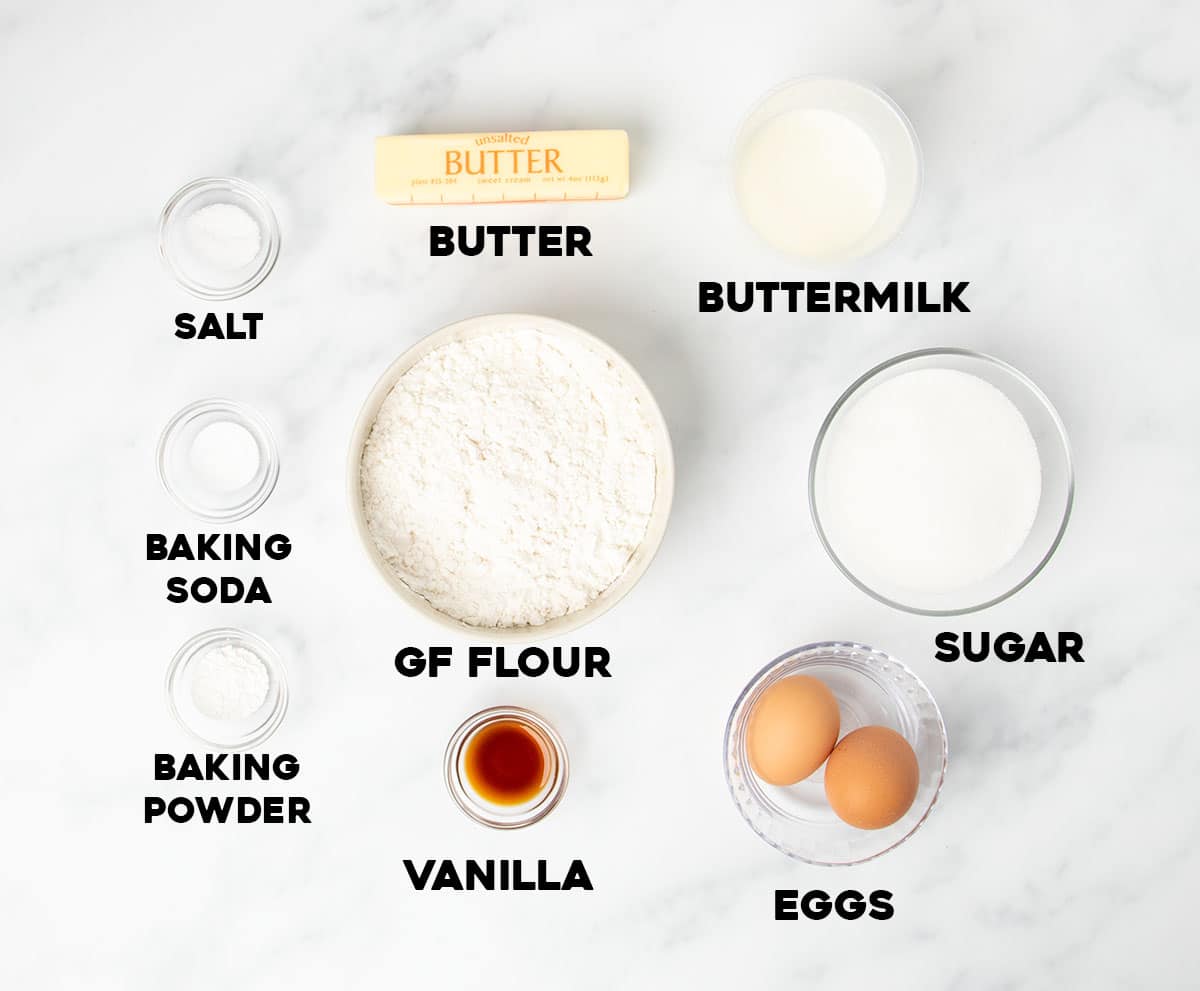
- Gluten free flour blend: Provides most of the structure for the cupcakes. I recommend Better Batter's original blend, Nicole's Best multipurpose with the added xanthan gum listed in the recipe, or Bob's Red Mill 1-to-1 in the blue bag with 1/2 teaspoon extra xanthan gum since it has some, but not enough to prevent a crumbly result that goes stale faster. Since this is such a simple recipe and it's best not to rest the batter, it's especially important to use something with superfinely ground and sifted rice flours to avoid any of that telltale grit that gluten free baked goods can suffer from.
- Baking powder + baking soda: Help the cupcakes rise and stay light and airy, and brown gently around the edges.
- Salt: Enhances other flavors and balances sweetness.
- Butter: Adds richness and moisture to help create that soft, tender crumb, plus lots of buttery flavor.
- Granulated sugar: Sweetens the cupcakes and keeps them moist by locking in moisture.
- Egg + egg white: Give structure and help the cupcakes rise evenly and the extra egg white helps them hold their shape without collapsing as they cool.
- Vanilla extract: Adds depth of flavor.
- Buttermilk: Adds moisture, gentle tang, and reacts with the leaveners to help the cupcakes rise. You can also use regular milk, but I'd recommend reducing the amount by about 1 teaspoon since regular milk has more moisture and could make the cupcakes cave in as they cool.
How to make gluten free cupcakes (step by step photos)
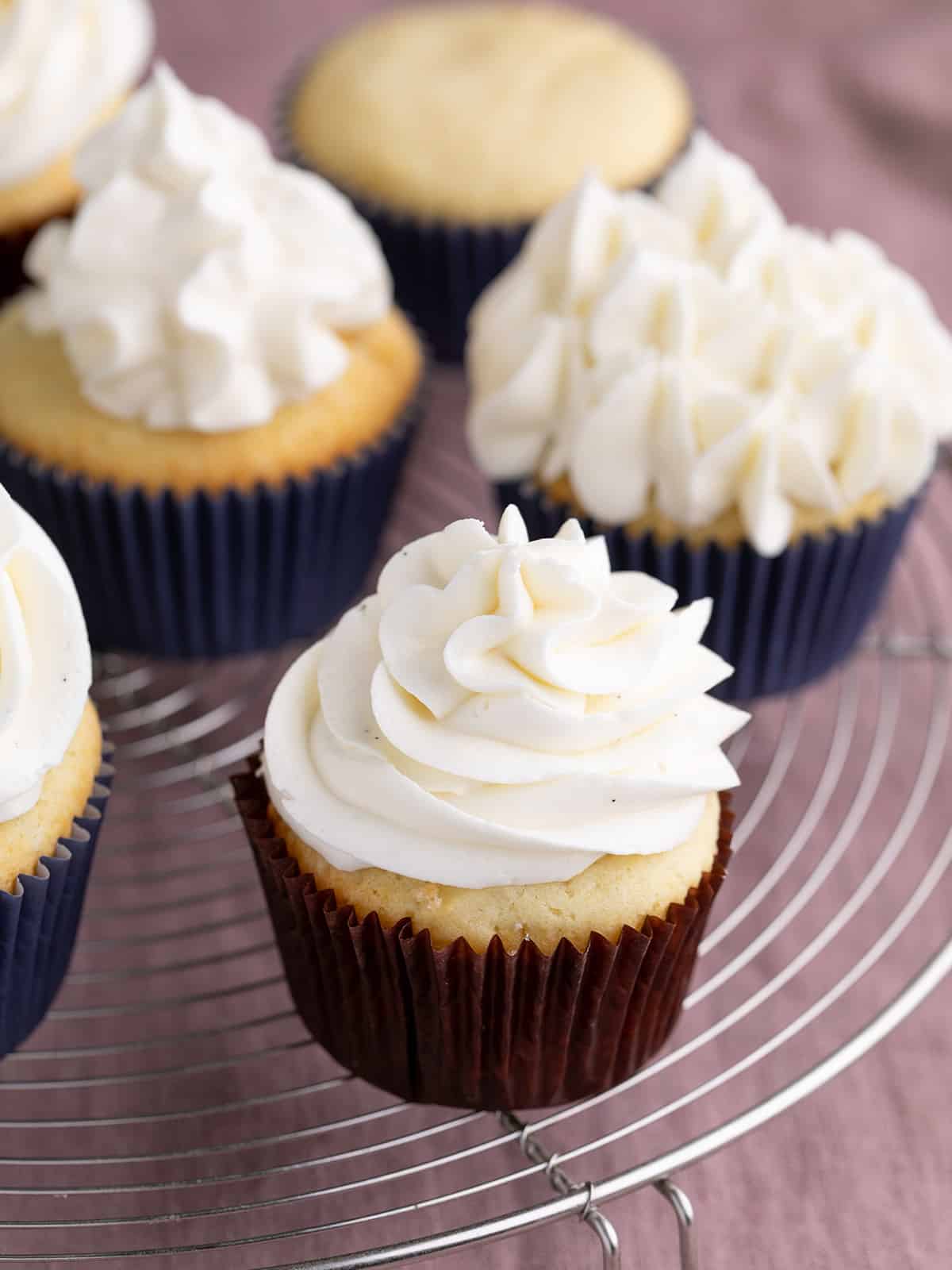
Making these gluten free cupcakes is as simple as whisking, creaming, and alternating the wet and dry ingredients. Here's a visual overview with some explanation of why each step is important:
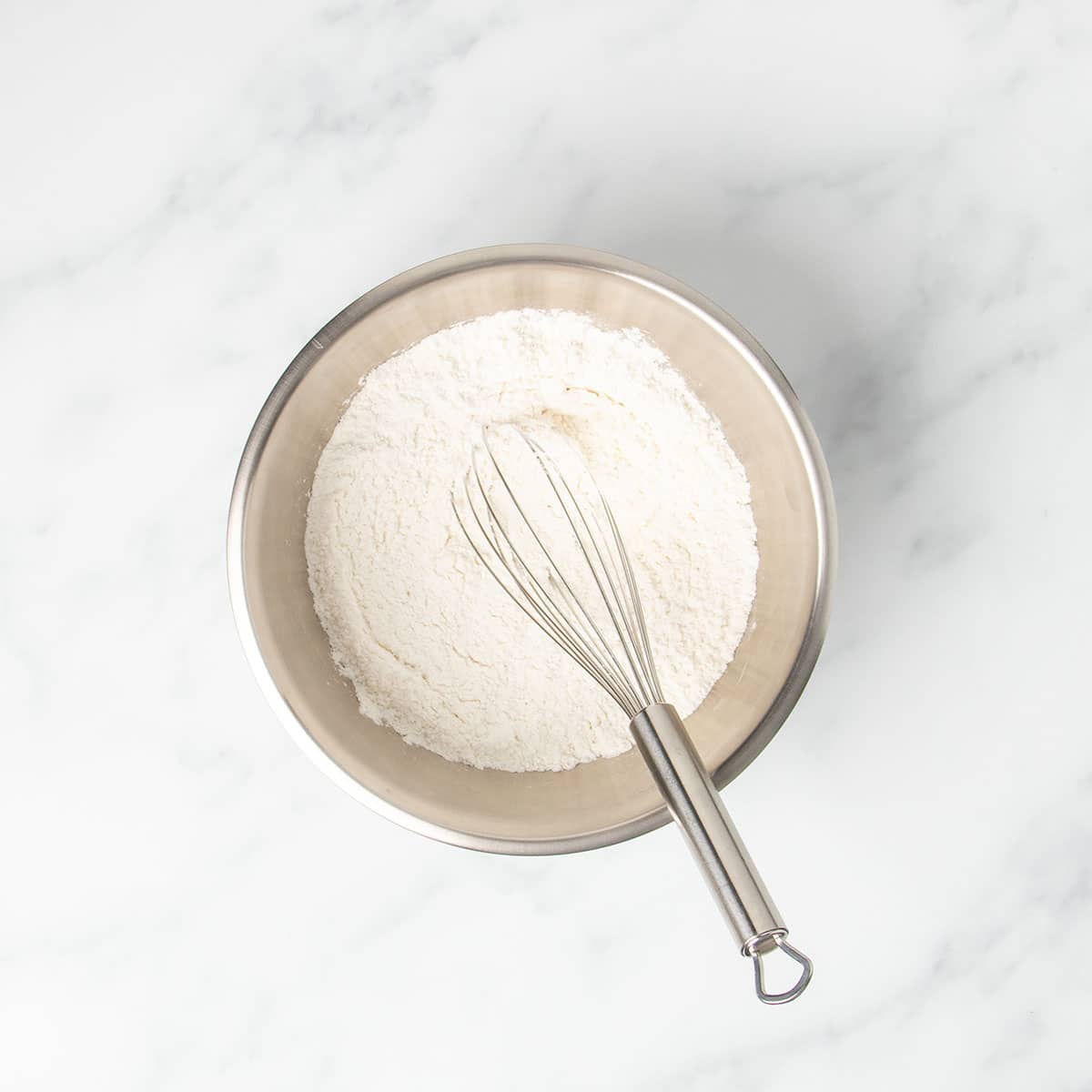
Whisk the dry ingredients
In a small mixing bowl, whisk together the gluten free flour blend, xanthan gum (if needed), baking powder, baking soda, and salt. This is we ensure that there are no bitter clumps of leaveners and that the cupcakes rise evenly. Then set those dry ingredients aside because we'll add them later.
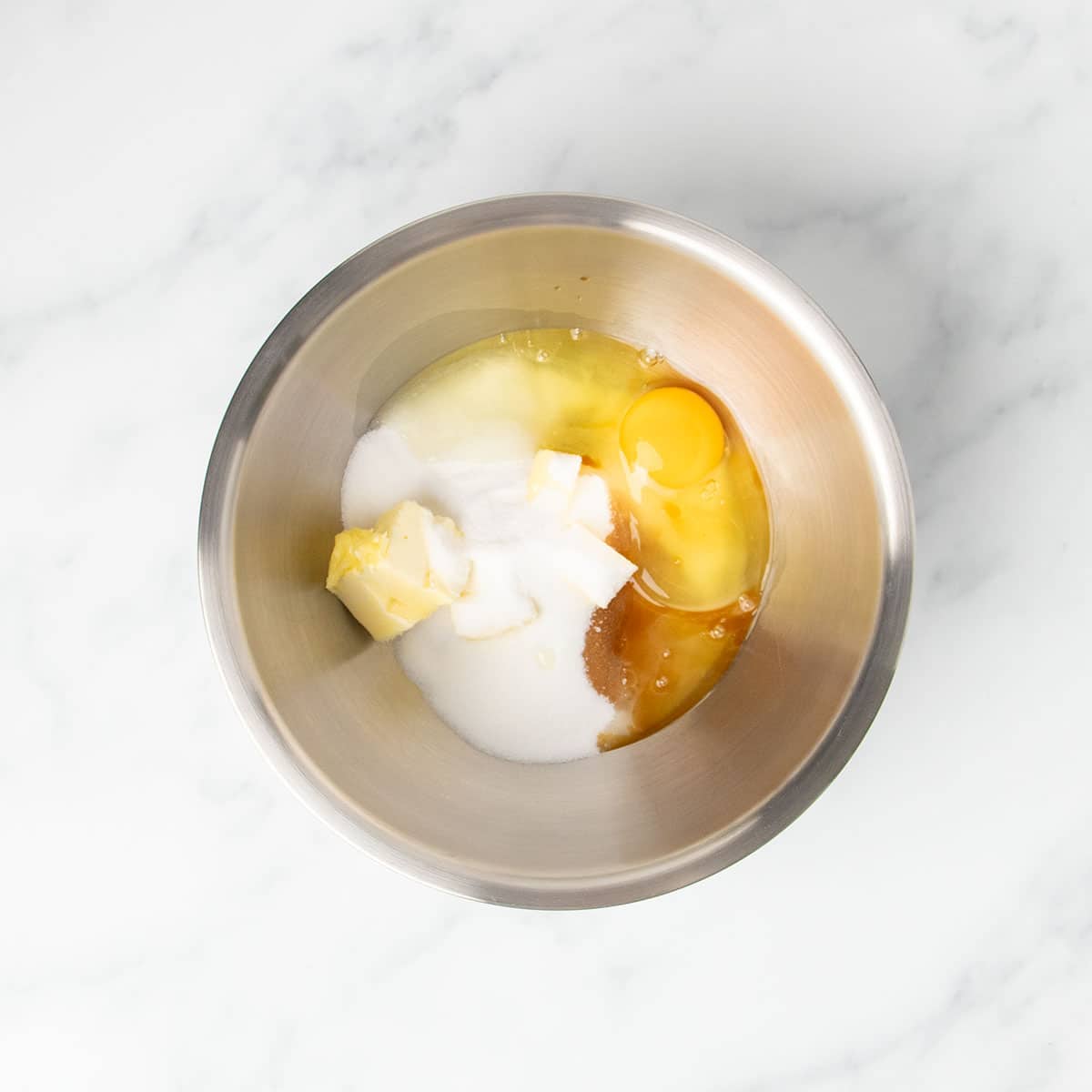
Combine the wet ingredients with the sugar
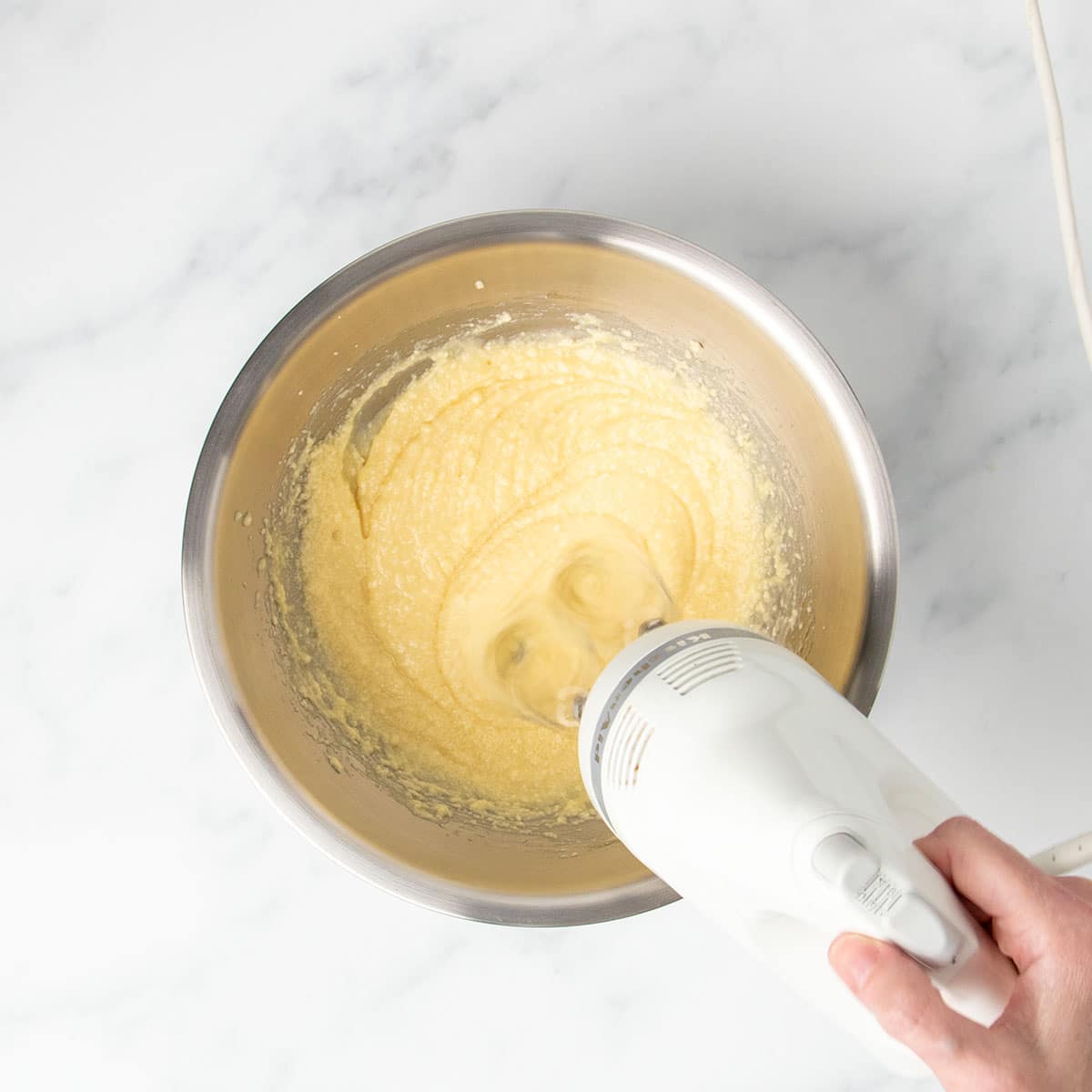
In a large mixing bowl, place the butter, sugar, egg and egg white, and vanilla, and beat them together until fluffy and well-combined. This helps dissolve the sugar in the butter first to create some lift, but not as much as it would if you creamed the butter and sugar together first separately. That might create too much rise, and the cupcakes could dome like gluten free muffins.
Combine the wet and dry ingredients
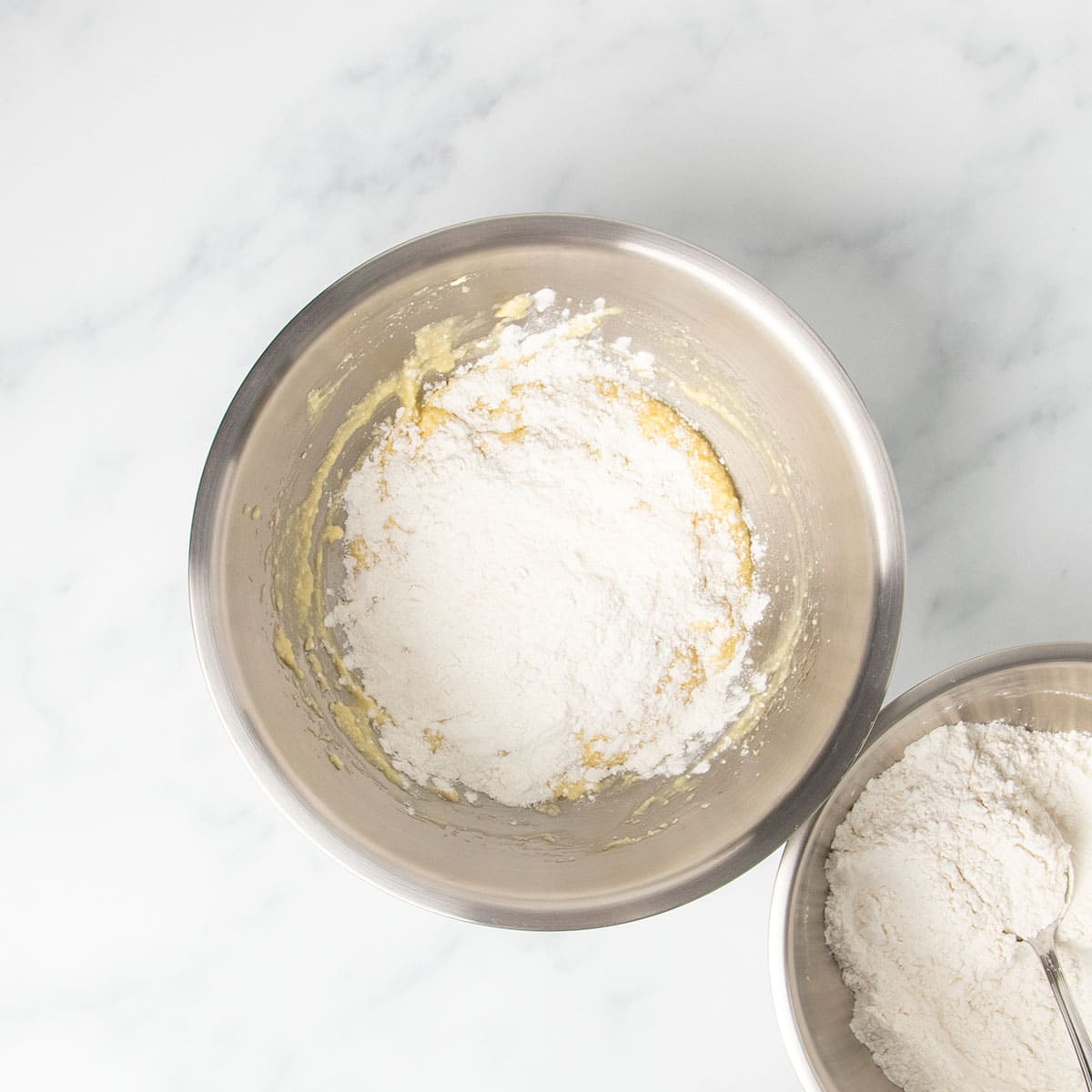
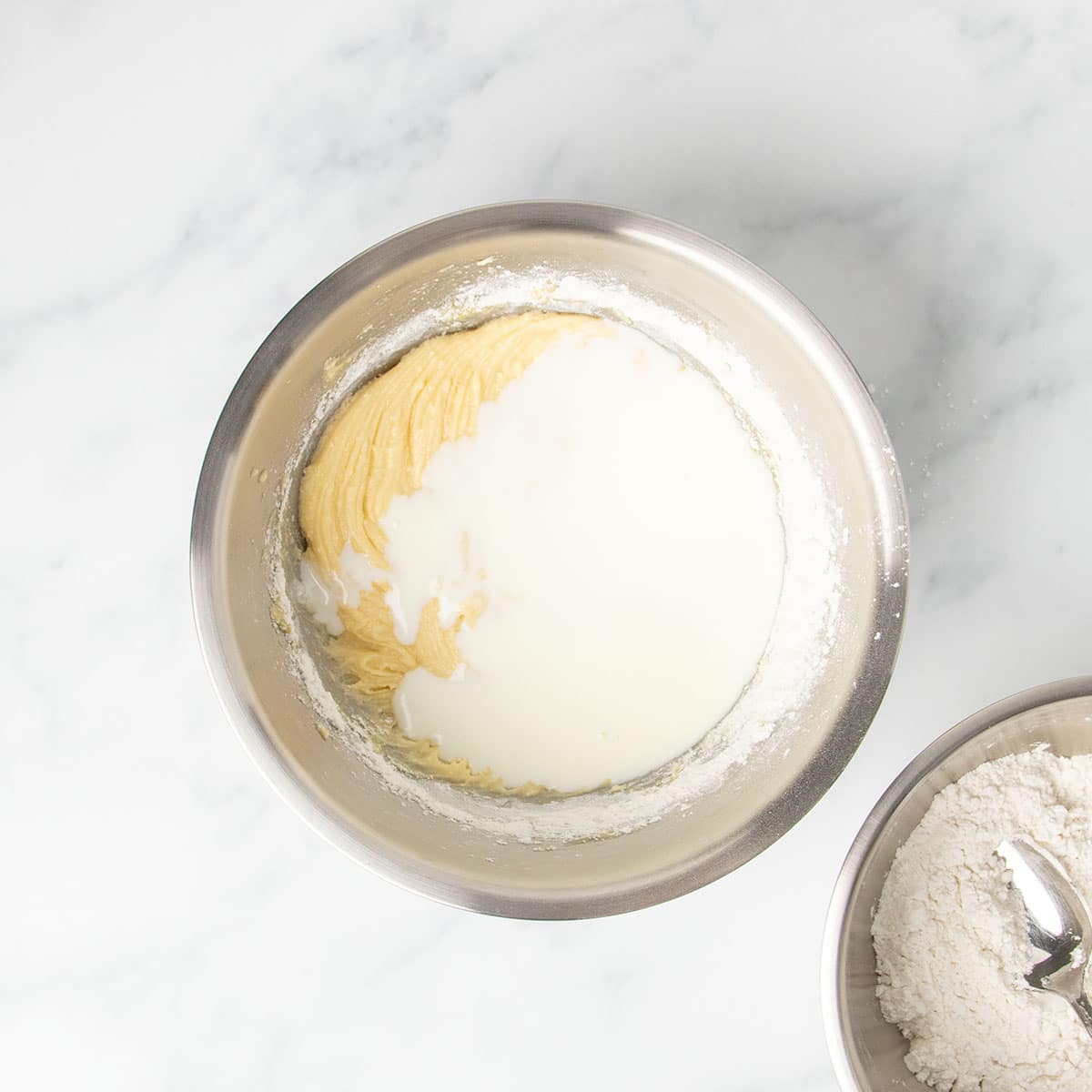
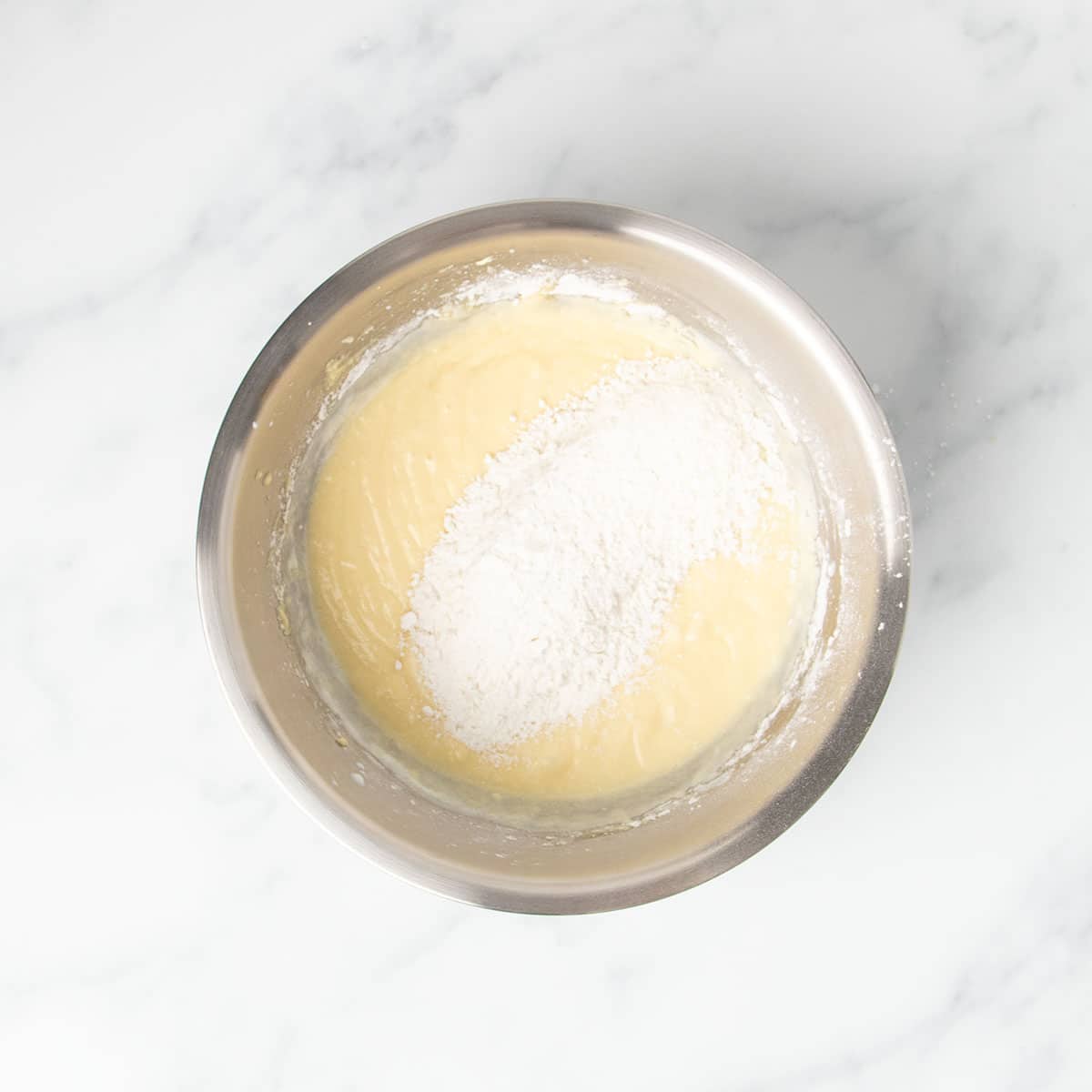
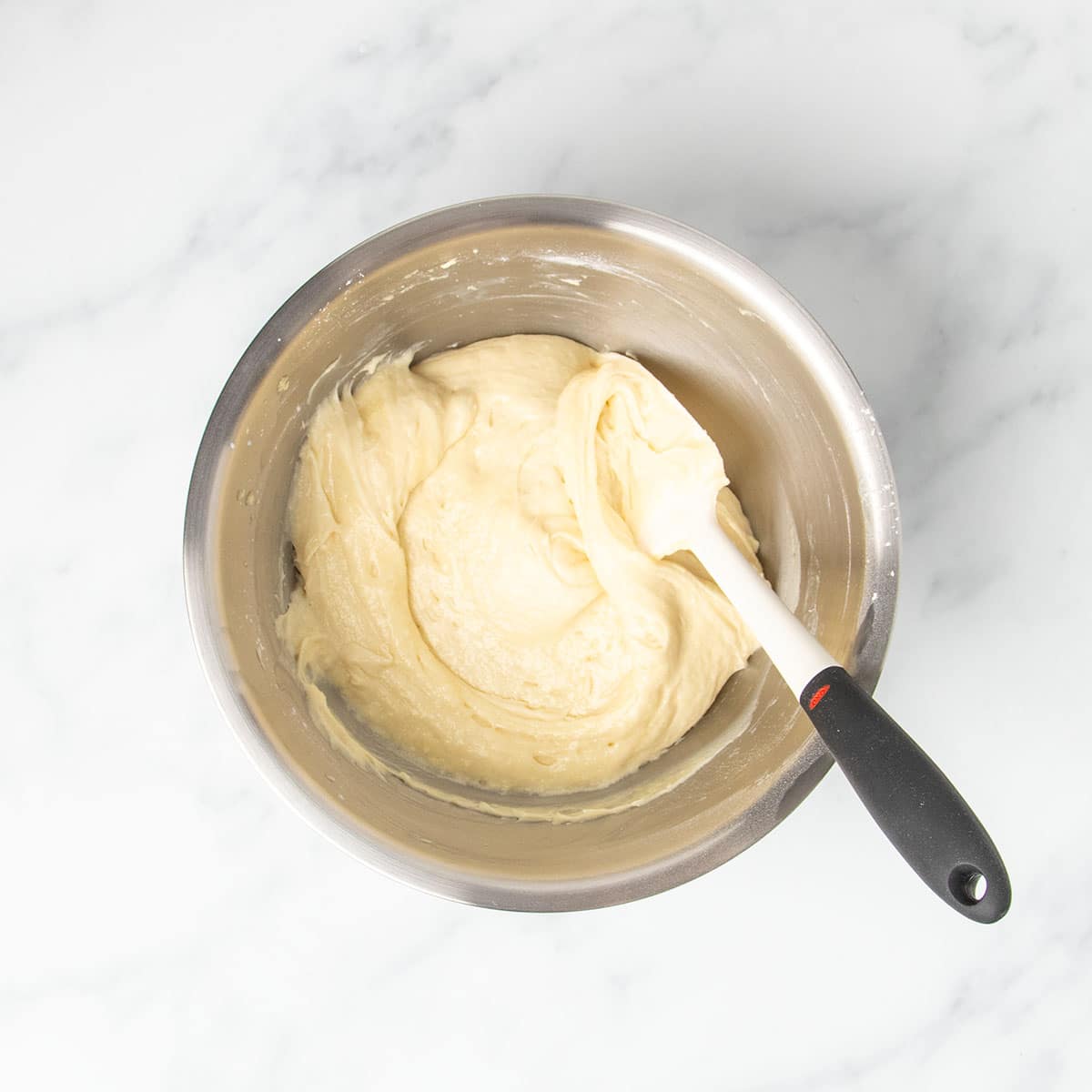
To the bowl with the egg and butter mixture, mix in the whisked dry ingredients in three parts, alternating with buttermilk in two parts in between. Start and end with dry. This is the best way to ensure that everything is combined well without overmixing, which could lead to too much rise or a stringy mixture.
Portion the batter
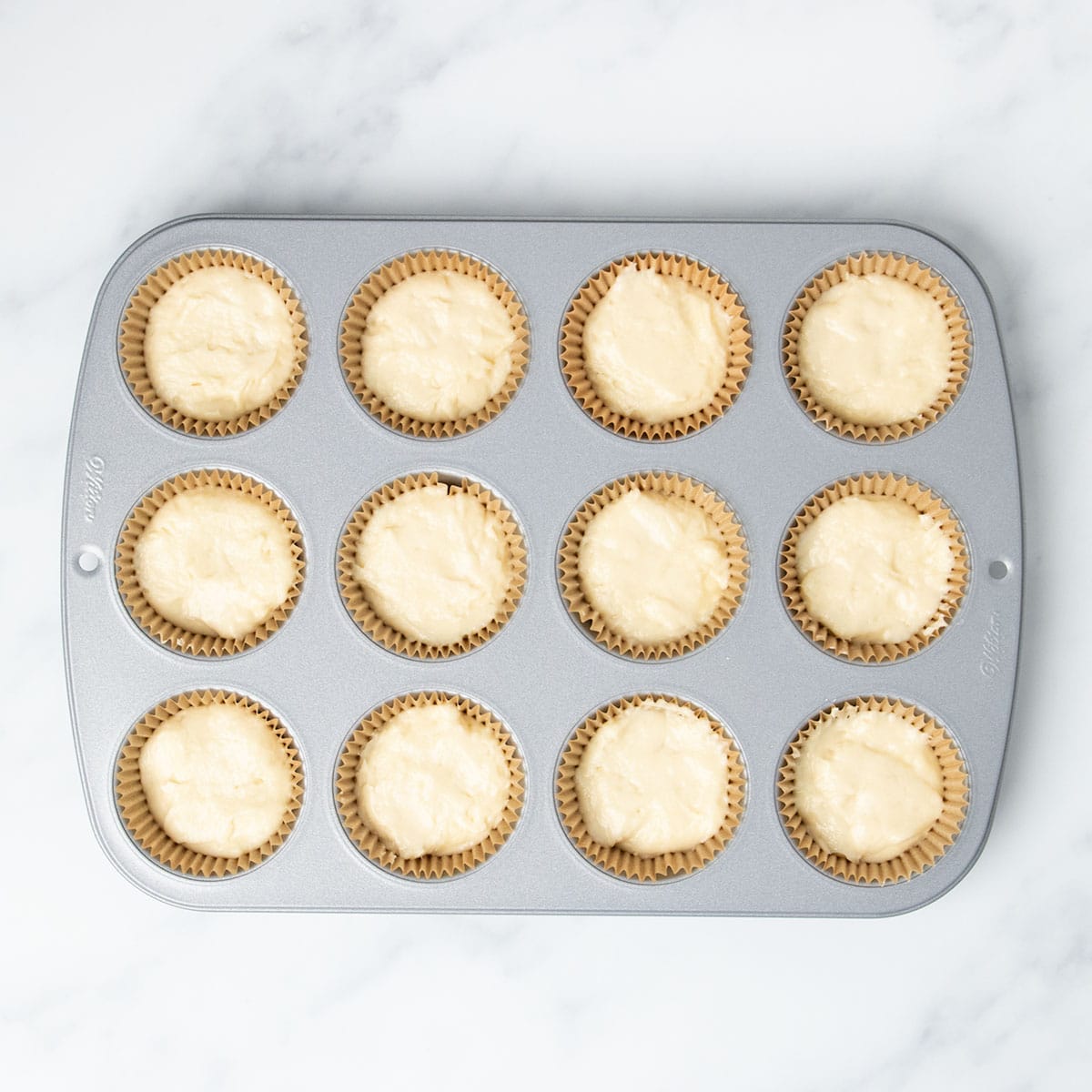
Scoop the soft but thick raw cupcake batter into a lined muffin tin, filling each well about 2/3 full. This way they'll rise to about the top of each liner. Plus, baking in liners will help the cupcakes keep their shape and ensure that nothing sticks to the muffin tin.
Bake at 325°F
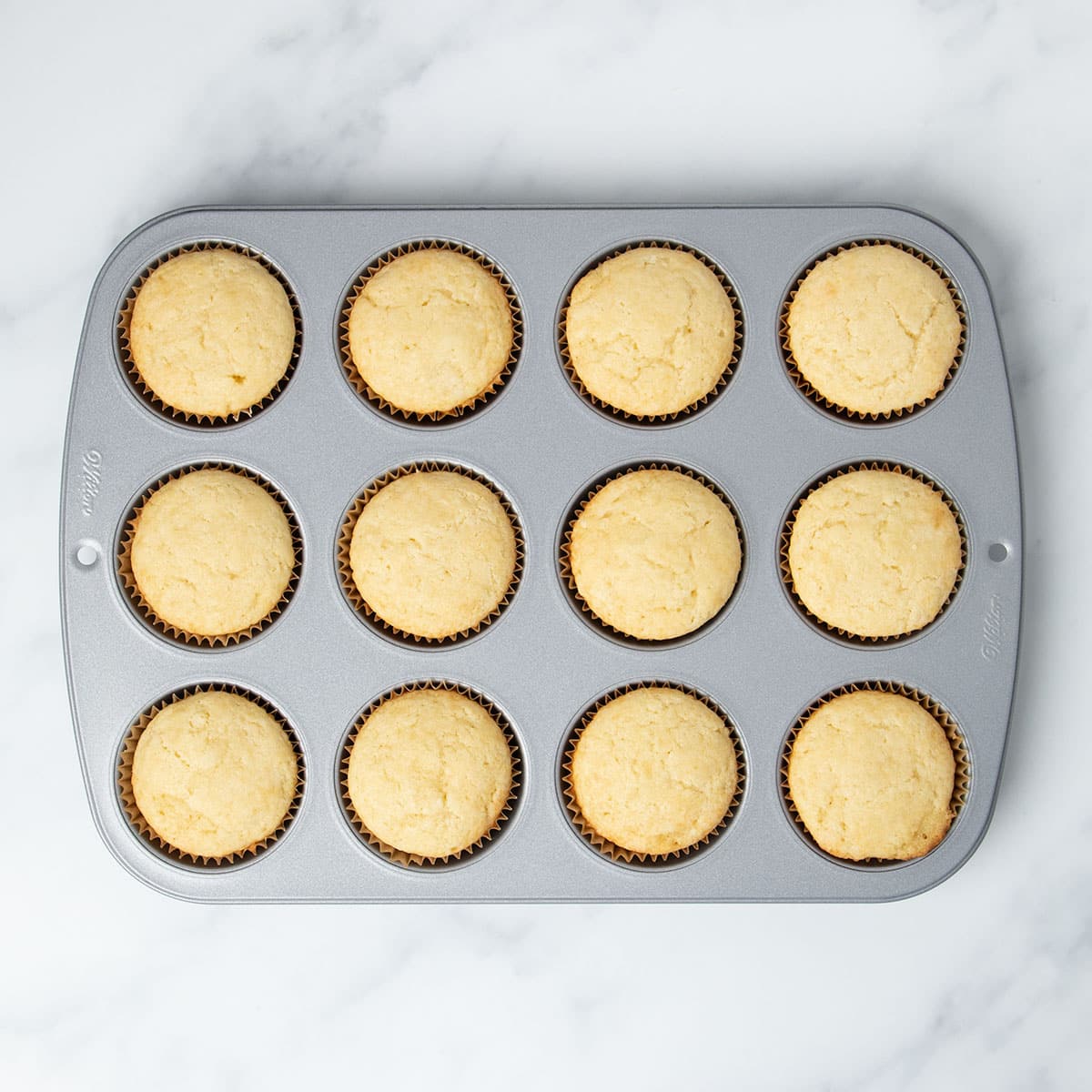
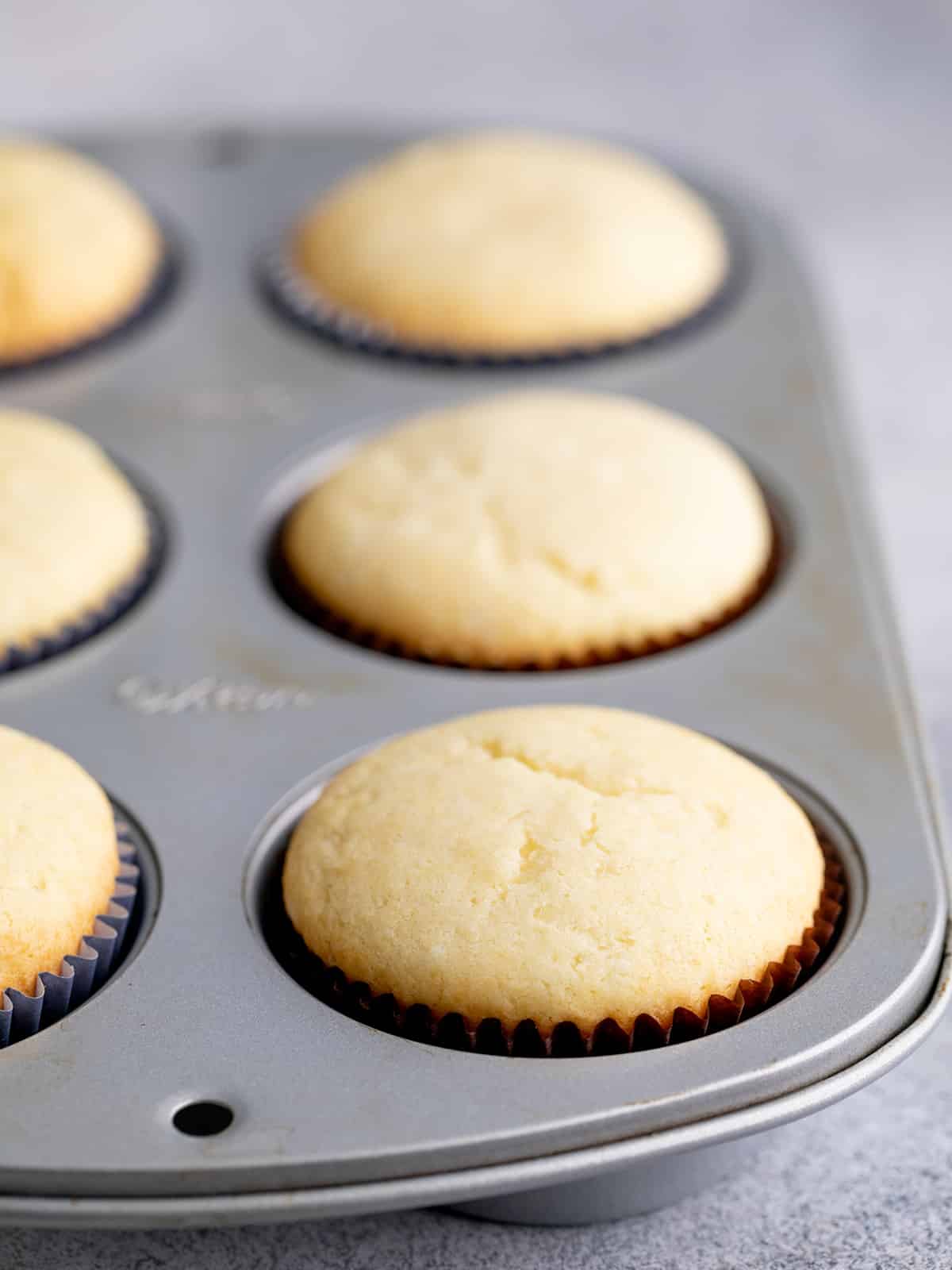
Bake for about 20 minutes, or until the tops spring back when gently pressed. Don't overbake or the cupcakes can turn out dry.
Cool completely
Let the cupcakes cool in the pan for 5 minutes just so you don't collapse them when they're too warm, then transfer to a wire rack to cool completely before frosting.
How to make vanilla buttercream frosting (step by step photos)
This classic vanilla buttercream is smooth, stable, and pipes beautifully. It’s naturally gluten free and the perfect match for these cupcakes.
Frosting ingredients
Here's what you'll need to make a simple buttercream frosting, but you can use any gluten free frosting you like best:
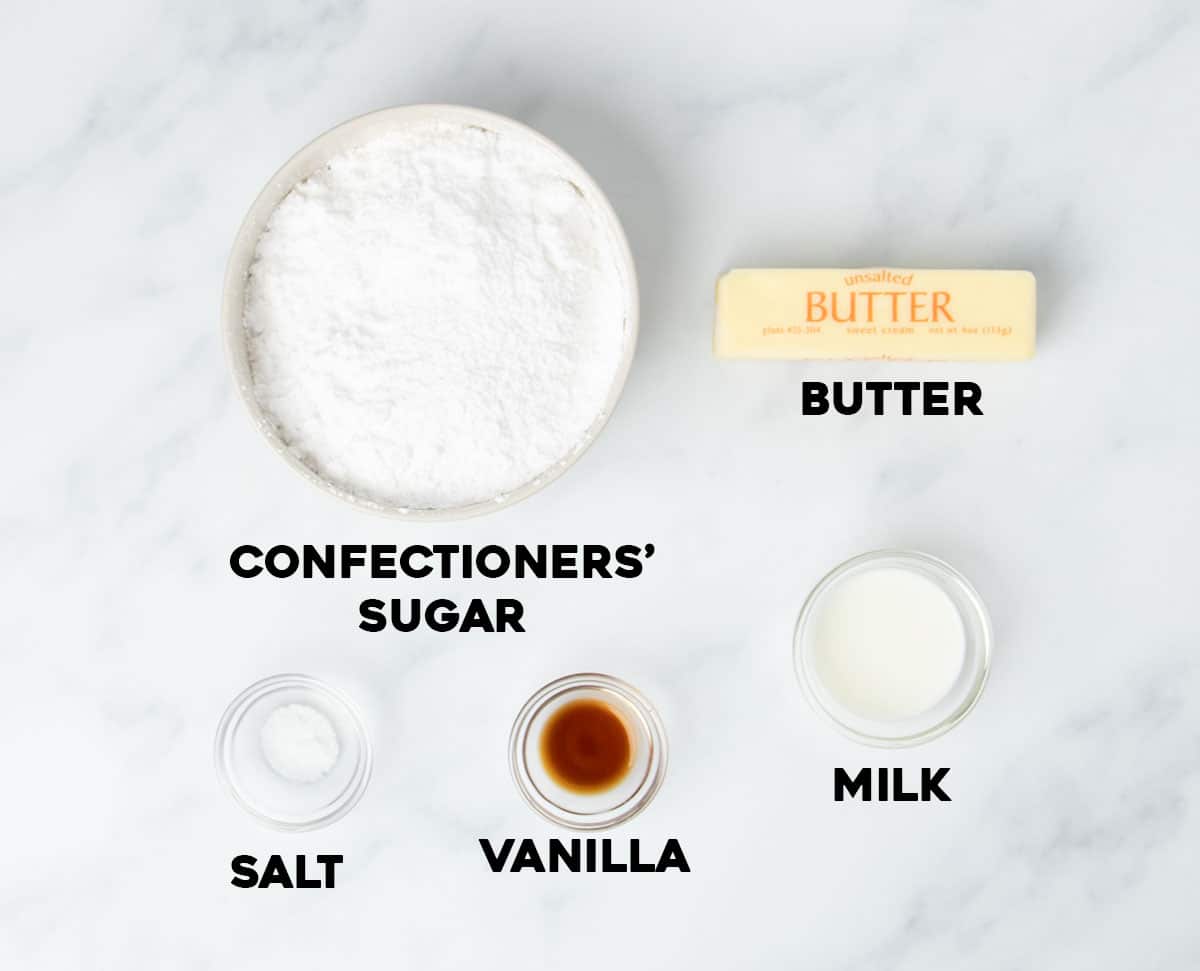
- Butter: Room temperature butter provides the creamy base for buttercream frosting. It adds buttery flavor, traps air well when beaten, dissolves the sugar, and creates a smooth texture. We use unsalted butter so we can control exactly how much salt we add.
- Confectioners' sugar: Sweetens and thickens; it also helps the frosting hold its shape by dissolving quickly and easily into the butter, and creates structure by thickening the dairy both with the finely ground sugar and the bit of added starch it contains (usually cornstarch).
- Vanilla extract: Adds depth of flavor.
- Milk (as needed): Helps thin the frosting to piping consistency since it can be hard to get the amount of sugar added exactly right.
How to make the frosting (step by step photos)
This is a visual overview of how to make a simple vanilla buttercream frosting,
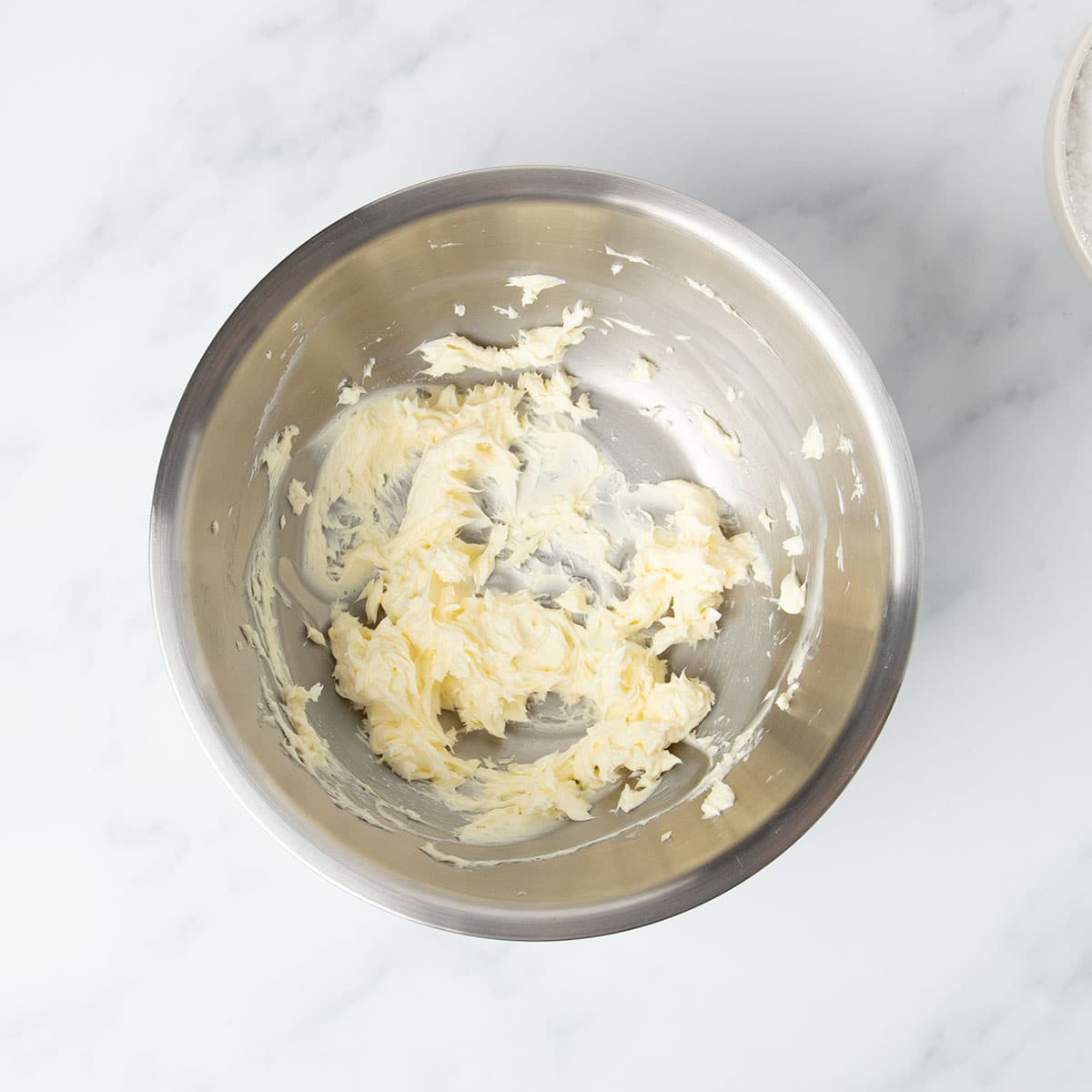
Cream the butter
Unlike in the cupcakes, we want to beat the butter until smooth and creamy, about 3 minutes, to add air to it which helps make it spreadable and easy to pipe.
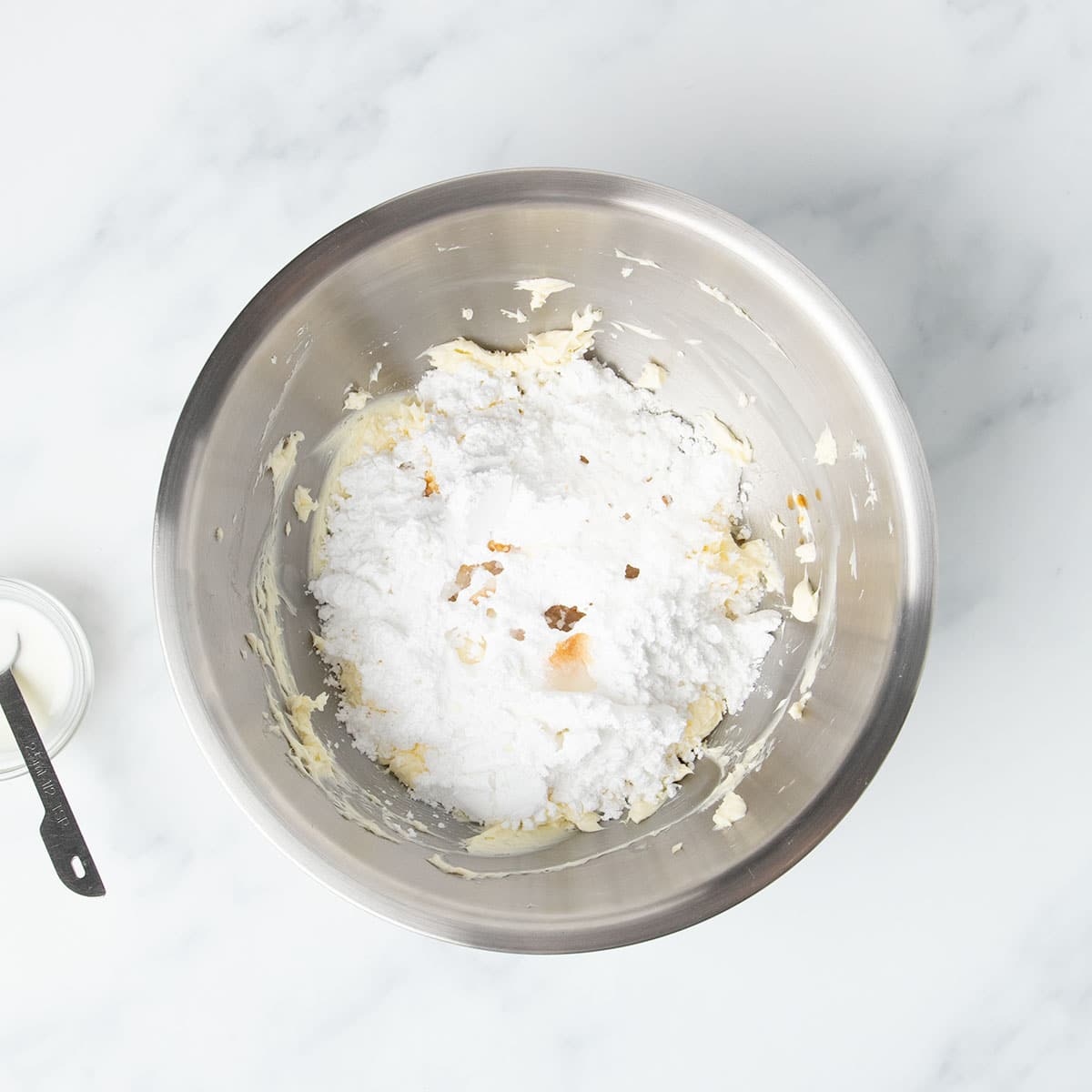
Add the sugar, vanilla, and a splash of milk
Beat in just 1 cup of confectioners' sugar for 1 stick of butter at first until well-combined, then add in vanilla which will contribute some moisture. If the buttercream seems at all crumbly or seems to stiff to spread smoothly on a cake or cupcake, beat in some milk.
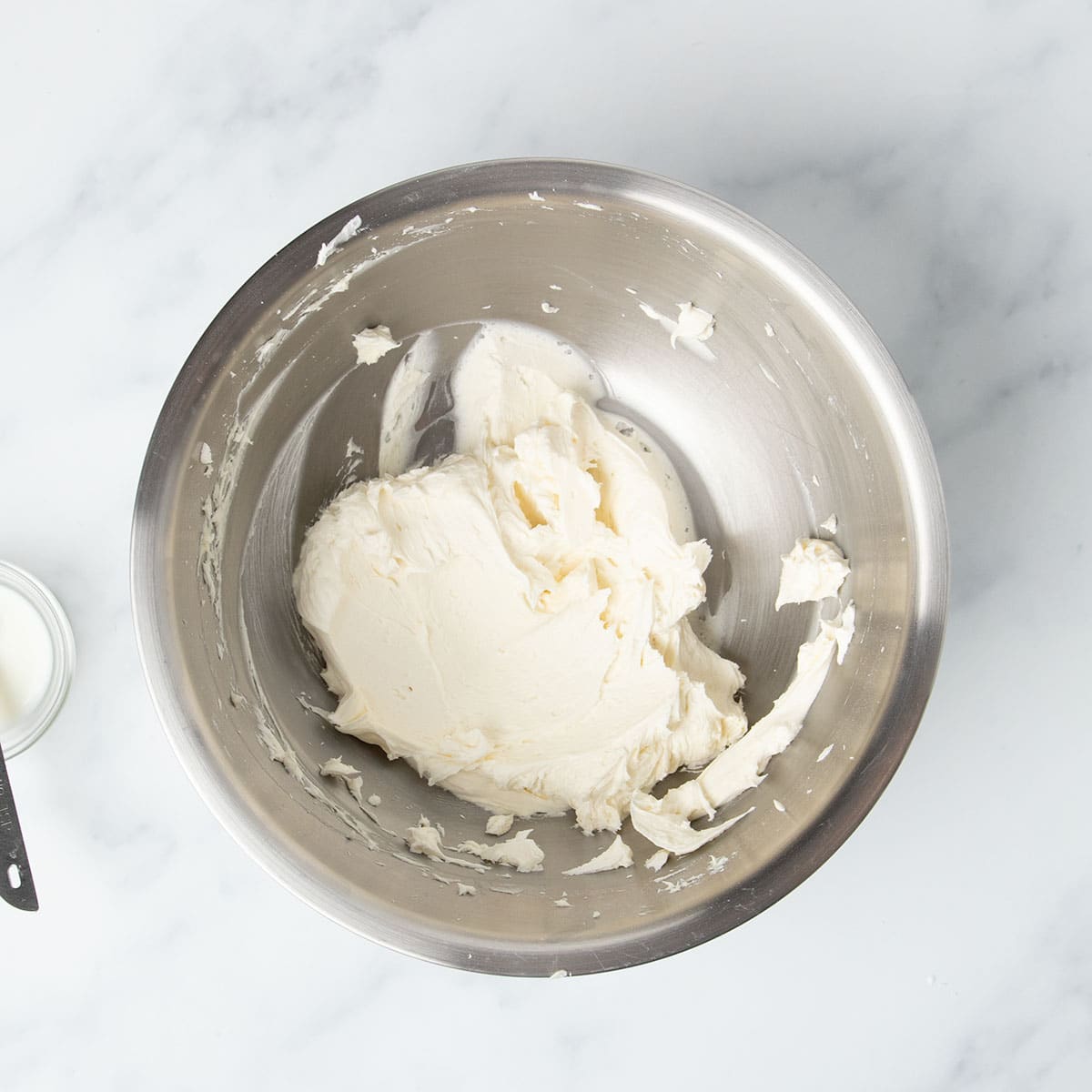
Whip until fluffy
Turn the mixer to high and beat for about 5 minutes, or until the frosting is light and airy.
Adjust consistency
The frosting is ready to use when it doesn't grip the side of the mixing bowl too tightly. Add more sugar to thicken or a few drops of milk to loosen, but go slowly. Try piping some right back into the mixing bowl, and if you see frayed edges it needs a bit of moisture. If it doesn't hold its shape, it needs some more sugar.
5. Frost your cooled cupcakes
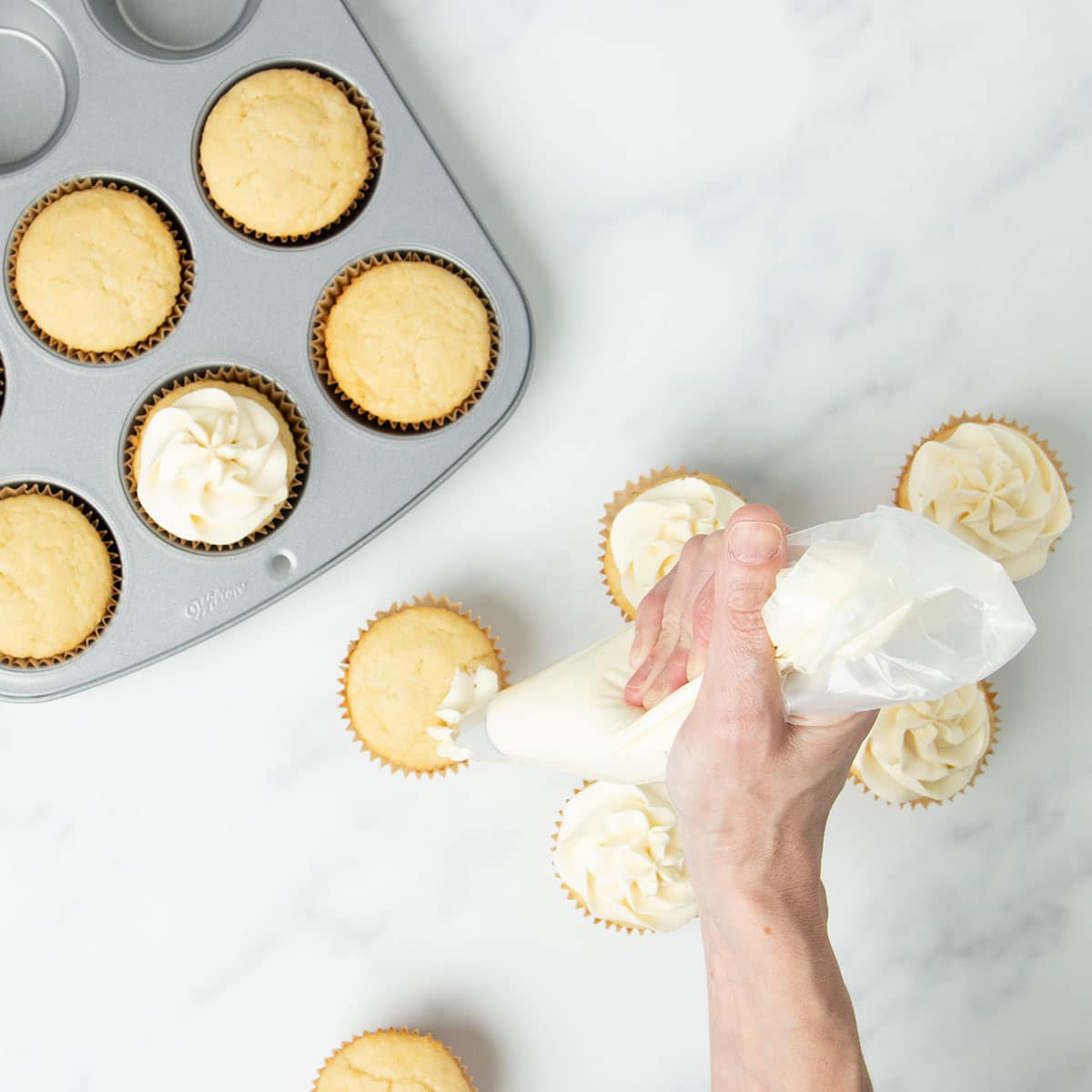
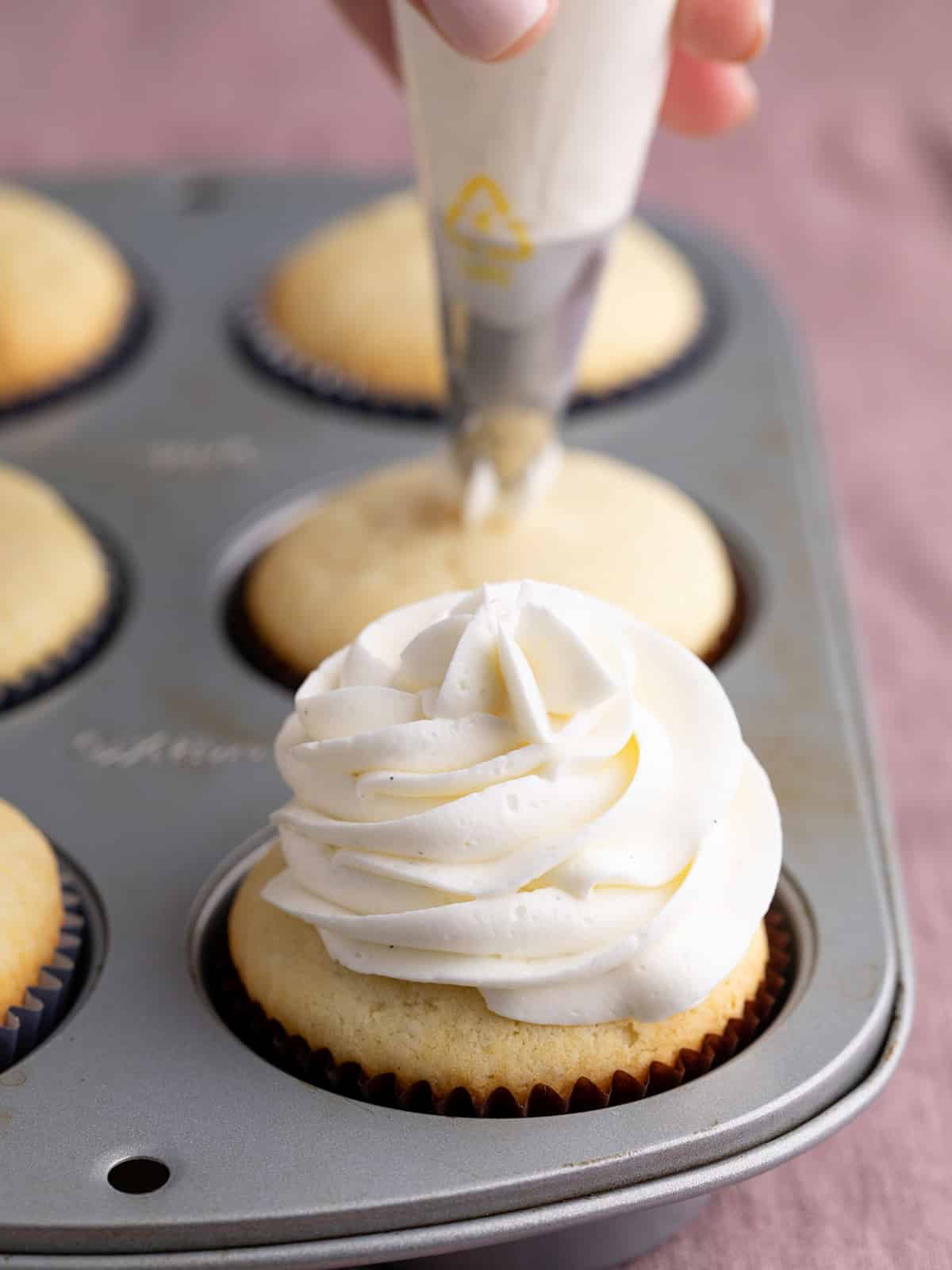
Use a piping bag or just scoop with a spoon, but be sure not to frost warm cupcakes, or the frosting will melt rather than holding its shape.
Expert tips
Use room-temperature ingredients
Cold butter, eggs, or milk won’t mix evenly and can cause texture issues.
Don’t overmix
Mix just until the batter is smooth. Overmixing adds too much air and can create tunnels.
Scoop evenly
Fill cupcake wells about 2/3 full to prevent overflow and ensure even baking.
Bake just until done
At 325°F, bake until the tops spring back when lightly pressed. Skip the toothpick, as it can be misleading here and lead to overbaking if you wait until it's completely clean.
Cool completely before frosting
Warm cupcakes will melt your frosting. Let them cool fully for best results.
Measure by weight
For reliable results, use a digital kitchen scale instead of measuring cups, especially for the flour which is very easy to overmeasure. Plus, you don't want to use what your measuring cups say is a cup, you want to measure exactly as I, the recipe developer, did to get my exact results.
Ingredient substitutions
Dairy-Free
Use block-style vegan butter (like Melt or Miyoko's brands are best) or butter-flavored nonhydrogenated shortening in place of butter.
For the best texture, replace buttermilk with a mix of half plain yogurt and half nondairy milk by volume. You can also use just unsweetened, unflavored nondairy milk, but the crumb will be a little more condensed.
Egg-Free
Replace the egg with a chia egg, Bob’s Red Mill egg replacer, or Just Egg. Avoid flax eggs because they add a strong flavor that doesn’t work well here.
Storage suggestions
Room temperature
Store unfrosted or frosted cupcakes in an airtight container at room temperature for up to 2 days. Avoid the fridge since it dries out cakes, especially when they're made with butter instead of oil.
Freezing unfrosted
Once completely cool, wrap each cupcake tightly in freezer-safe wrap, then place in a sealed container or zip-top freezer bag. Freeze for up to 3 months or the flavor might taste a bit off.
Freezing frosted cupcakes
You can freeze them fully frosted, too. Let them defrost at room temperature, and don’t microwave or the frosting will melt.
To serve from frozen
Unwrap and let sit at room temperature until thawed, or microwave unfrosted cupcakes at 50% power in 20-second bursts.
Vanilla Gluten Free Cupcakes Recipe
Equipment
- Stand mixer or handheld mixer
Ingredients
For the vanilla cupcakes
- 1 ½ cups (210 g) all purpose gluten free flour blend, (See Recipe Notes) (Click thru for full info)
- ¾ teaspoon xanthan gum, omit if your blend already contains it
- 2 tablespoons (18 g) cornstarch
- 1 teaspoon baking powder
- ½ teaspoon baking soda
- ½ teaspoon kosher salt
- 8 tablespoons (112 g) unsalted butter, at room temperature
- 1 cup (200 g) granulated sugar
- 1 (50 g, weighed out of shell) egg, at room temperature
- 1 (25 g) egg white, at room temperature
- 2 teaspoons pure vanilla extract
- ⅔ cup (5 ⅓ fluid ounces) milk or buttermilk, at room temperature
For vanilla buttercream frosting
- 8 tablespoons unsalted butter, at room temperature
- 1 cup confectioners' sugar, plus more as necessary
- ⅛ teaspoon kosher salt
- ¼ teaspoon pure vanilla extract
- Milk by the teaspoon, as necessary
Instructions
For the cupcakes.
- Preheat your oven to 325°F. Line 16 wells of standard muffin tins with cupcake liners or grease the wells, and set the tins aside.
- In a small bowl, place the flour, xanthan gum, cornstarch, baking powder, baking soda, and salt, and whisk to combine well. Set the bowl of dry ingredients aside.
- In the bowl of a stand mixer fitted with the paddle attachment, or a large bowl with a handheld mixer, place the butter, sugar, egg, egg white and vanilla, and beat at medium-low speed to combine. Increase the mixer speed to medium-high and beat until it appears whipped (about 2 minutes).
- To the large bowl with the butter mixture, add the dry ingredients in 3 batches, alternating with the milk or buttermilk, beginning and ending with the dry ingredients. Beat lightly after each addition until just combined. Do not overmix. The batter should be light and fluffy.
- Fill the prepared wells of the muffin tin about 2/3 of the way full of the batter. Shake the tin back and forth to evenly distribute the batter in each of the wells.
- Place the tin in the center of the preheated oven and bake until the cupcakes are very lightly golden brown and spring back when pressed lightly in the center (about 20 minutes). Don’t over bake.
- Allow the cupcakes to cool for at least 5 minutes in the tin before transferring to a wire rack to cool completely. Repeat with the remaining cupcake batter. Cool the cupcakes completely before frosting and/or decorating.
For the frosting.
- In a large bowl with a hand mixer or the bowl of a stand mixer fitted with the paddle attachment, place the butter. Beat on medium speed until creamy (about 30 seconds).
- Add the 1 cup (115 g) of confectioners’ sugar, the salt, vanilla, and 1 teaspoonful of milk, and beat on medium speed until well-combined (about 1 minute).
- Beat in more confectioners’ sugar until the consistency is thick but not stiff. Turn up the mixer speed to high and beat for about 5 minutes or until light and fluffy.
- Transfer the frosting to a piping bag fitted with your favorite piping tip. Pipe the frosting on the cooled cupcakes, or use two spoons to scoop a dollop onto each cupcake.
Video
Tell Google you trust GFOAS!
Notes
For best results, use Better Batter original blend or Nicole’s Best multipurpose blend with added xanthan gum as directed. Bob’s Red Mill gluten free 1-to-1 also works well as long as you add ½ teaspoon xanthan gum to the dry ingredients to prevent crumbling. To make your own blend, see the All Purpose Gluten Free Flour Blends page. Nutrition information: Approximate nutrition information is per cupcake, excluding frosting.
Nutrition
Nutrition information is automatically calculated, so should only be used as an approximation.

FAQs
Yes, vanilla bean paste works well and has a stronger flavor than extract. Use the same amount as you would vanilla extract.
Yes, just reduce the baking time. They’re ready when the tops spring back when lightly pressed.
That usually means the oven was too hot, so the outside set before the inside had time to build structure. Use a standalone oven thermometer to be sure your oven temperature is accurate. Or you may have added too much moisture by using milk instead of buttermilk.
Yes! Freeze them (unfrosted or frosted) as soon as they’re completely cool. Defrost at room temperature for best results.
You can. Just divide the batter evenly across more tins, and rotate them during baking for even results.
No, this recipe doesn't have enough structure to hold its own as a full cake. Instead, use our vanilla gluten free cake recipe. It calls for a few more steps, but go see the comments. You'll see it's worth it!










Excellent recipe! I used these as the base for some honeysuckle cupcakes. They turned out perfectly!(though I overcooked the cupcakes a bit :/ ) I cut the vanilla in half. When the cupcakes were done baking, I poked some holes all over the tops and then drizzled some honeysuckle syrup over them. For the frosting, I added honeysuckle syrup to taste and mixed. Again, I used less vanilla. I really wanted to the honeysuckle to shine! Everyone loved them!
Sounds delicious, Karissa. Thanks for sharing that twist!
Hello! I thought I had king Arthur GF box mix on hand, turns out I don’t! I came across your recipe and am excited to try it, I’m curious what your opinion is on Kruzteaz gf flour, I tend to like it but it can be inconsistent batch to batch and I’ve never used it for a vanilla cake recipe, thanks in advance ☺️
Hi, Quetzal, I’m afraid I haven’t had a good experience with Krusteaz gluten free flour blend. It doesn’t have a finely ground rice flour and seems improperly balance to me. Sorry I don’t have better news!
Can I make a cake out from this recipe instead of cup cakes?
Hi, Deb, I don’t recommend that. Instead, use my recipe for gluten free vanilla cake.
Cake was great
The cupcake taste and texture is amazing, no one would ever know they are GF! However I’m getting a slight bite from either the baking powder or baking soda. Any suggestions? Thanks so much!
Hi, Caroline, I’m really glad you enjoyed the cupcakes. I’m having some trouble understanding what you’re describing, but in 16 cupcakes, there are only 1 teaspoon of baking powder and 1/2 teaspoon of baking soda. So unless you overmeasured the baking soda, or didn’t whisk the dry ingredients properly and the baking powder clumped, I’m not sure what would be the culprit. You can try sifting the dry ingredients next time to ensure no clumping, and measure extra carefully?
Can applesauce be used in place of eggs? How much?
No, I’m afraid that won’t work, M. I think you can make them egg-free, though, in one of a few ways. Please see the “ingredient substitutions” section of the text of the post under the heading “Egg-Free.” I hope that’s helpful!
Hi
Can I substitute the eggs with a vegan alternative? I plan to sub the milk with oatmilk and the butter with vegan butter.
Thank you
Sally
Please see the text of the post under the heading “Ingredient substitutions”, Sally.
Have you tried this recipe with Bob’s Red Mill 1:1 GF flour? It says it *should* work and I’ve made this recipe before and don’t recall seeing that flour recommended. I previously used Cup4Cup flour and these cupcakes turned out phenomenal. Now with the Cup4Cup reformulation, I’m trying to find an alternative GF flour that can be bought from the grocery store. Seems like Bob’s Red Mill is the only one in this blog but I’m still hesitant it might not turn out as well?
I’m afraid I haven’t tested this recipe with Bob’s Red Mill’s 1-to-1 flour blend, which is why I say it should work if you add more xanthan gum. They have greatly improved the blend, but you can still get a bad batch, and it still has a strange aftertaste, so it simply won’t turn out quite as well as a higher quality blend. That doesn’t mean it won’t turn out at all, but the aftertaste will be particularly noticeable in a simple recipe like vanilla cupcakes.
Can you substitute arrowroot for cornstarch in this recipe? Thanks!
Hi, Lisa, sure that should work just fine. They are usually good substitutes for one another in a situation like this.
I’m confused in earlier post it said cup for cup so I got it but now it says the blend doesn’t work anymore so I’ve made an expensive purchase that can’t be used! Isn’t some way to fix I t like adding powdered milk? I hate throwing money out the door
Yes, I know that’s it’s very disappointing that they’ve changed the blend, and I was devastated by it! It’s a very recent thing that Cup4Cup has changed their formula, and I’ve indicated that the change has not been for the better on the all purpose gluten free flour blends page on the blog, Deb. They didn’t just remove powdered milk, they reformulated it entirely and I don’t have access to their proprietary formulation, so I can’t tell you how to “fix” it, I’m afraid. You can try it, and if you don’t like it, you can try reaching out directly to that company, which I have no connection to.
Hi Nicole
are you saying that I only substitute cornstarch in the Cup 4 Cup mix, but not in the Better Cup 4 Cup mix, and that I use it as is in all the cake recipes here? Is that right? Because I want to try more of your unique recipes.
Hi, Aya, the mock Cup4Cup blend contains an overabundance of cornstarch, which my “Better Than Cup4Cup” blend corrects. So when you’re making this recipe using my mock Cup4Cup, you’ll use more of the mock Cup4Cup in place of the cornstarch, by the gram. If you’re using the corrected blend, the Better Than Cup4Cup, you’ll use cornstarch as a separate ingredient. You’ve got it. :)