

This post may contain affiliate links. Please read our disclosure policy.
My gluten free pie crust recipe makes dough that is easy to handle, rolls out like a dream and always bakes up tender and flaky. Whether you’re baking a classic fruit pie or a savory pot pie, this crust delivers all the flavor and texture you’ve missed.
This is the gluten free pie crust that changed everything.
With over 1,300 five-star reviews, it’s helped thousands of gluten free bakers rediscover the joy of homemade pie.
“This pie crust is an astonishing achievement. Nicole is able to unlock secrets I didn’t believe possible and I have found a love of baking because of it.”
“I have baked pies most of my life. I thought those days of having anything with pie crust was over. I use this recipe for pies and chicken pot pies. Thank you for such a wonderful recipe!”
Why this recipe works
The texture of this crust stays delicate without turning greasy or tough because we press large pieces of very cold chopped butter into flat shards. This way, the butter stays whole as we roll out and fold the dough to create flaky layers when it expands in the oven.
The crust is also made with sour cream and just enough added ice water to bring the dough together. This adds a gentle tangy flavor and richness that enhance that buttery flavor without adding excess moisture.
Best of all, the crust is easy to make with just a bowl, a whisk and a spoon. Master this crust recipe and you'll always have a go-to base that holds up beautifully with any filling.
Recipe ingredients
Here are the 6 ingredients for this recipe, and a few words about the role each plays in the perfect crust. Full exact amounts of each, please see the recipe card:
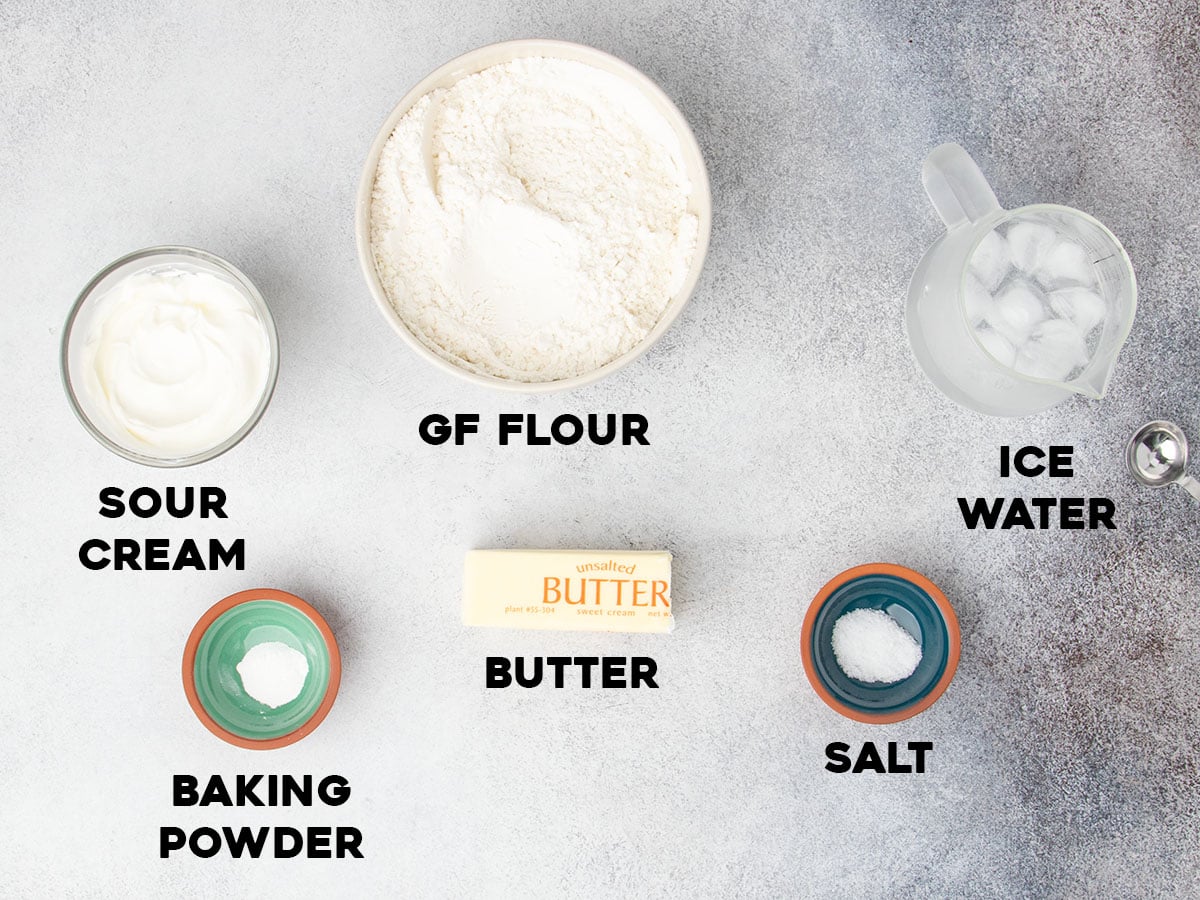
- Gluten free flour blend: Adds most of the structure for the crust. Use a high-quality, properly balanced all purpose blend with finely ground rice flour like Better Batter's original blend or Nicole's Best multipurpose with added xanthan gum. In such a simple recipe, any grittiness in your flour blend will be obvious, and will prevent the crust from rolling out smooth and having proper mouth feel after baking.
- Salt: Brightens the other flavors.
- Baking powder: Adds a touch of lift to help separate the flaky layers.
- Unsalted butter: Cold, flat shards of butter creates flakiness and rich flavor as they release steam that gets trapped in the dough and pushes out the surrounding dough, creating flaky layers.
- Sour cream: Adds tenderness, richness, and tangy depth of flavor without making the dough too wet. You can also use Greek-style plain yogurt in the same amount in its place.
- Ice water: Brings together any remaining dry spots in the the dough without warming the butter. Use just the water, leaving the ice behind.
How to make gluten free pie crust (step by step photos)
Here's an overview of how to make this pie crust in your own kitchen, with an explanation of how each step contributes to the best crust you've ever had. For full ingredient amounts, see the recipe card below.
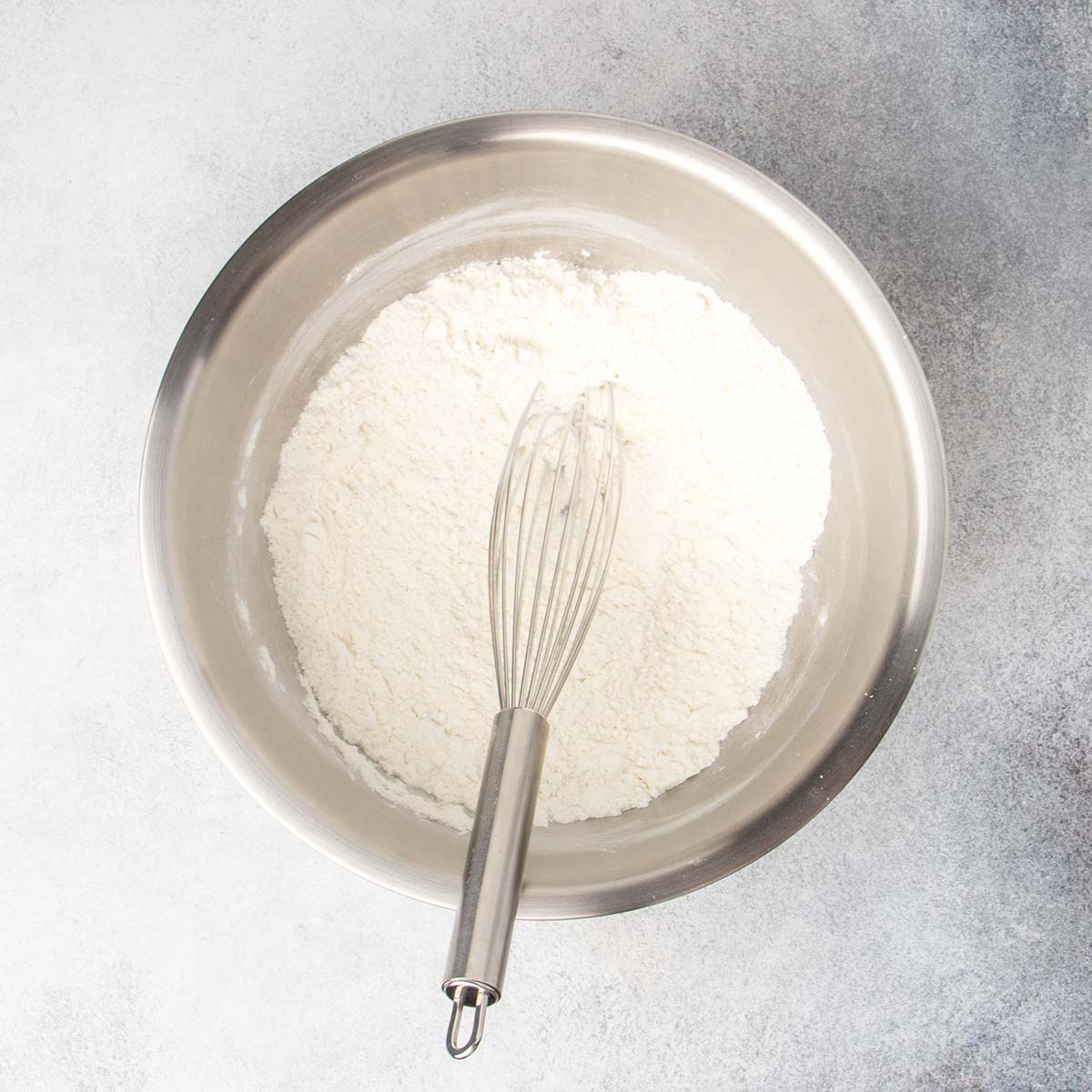
Whisk the dry ingredients
In a large bowl, whisk together your gluten free flour blend, xanthan gum (if needed), salt, and baking powder. This prevents the leavener from clumping which can lead to uneven rising or a bitter taste.
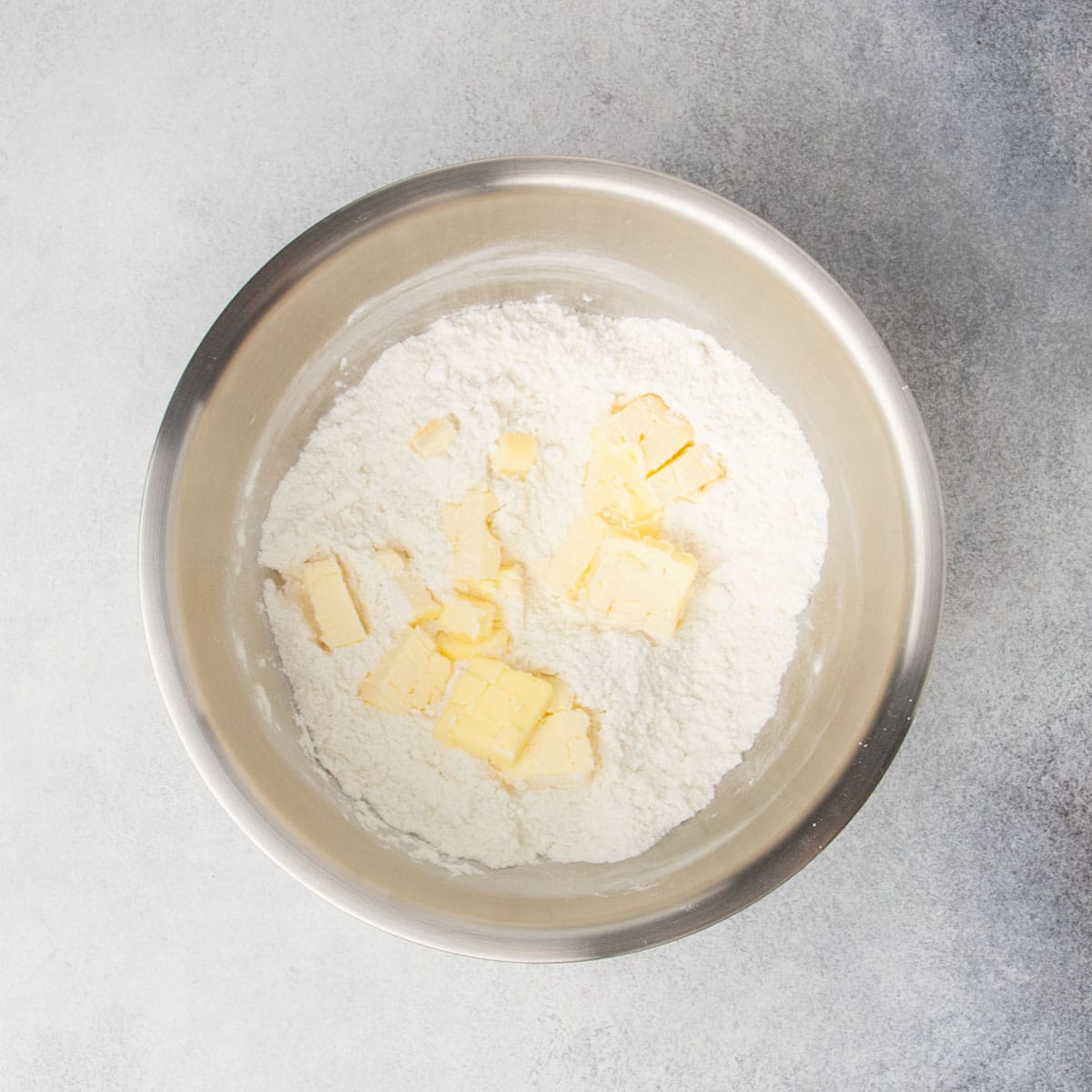
Add the butter
Add cold, chopped butter pieces, and use a spoon to toss them around until each piece is coated in the dry ingredients. Once each piece of butter is coated in flour, it's somewhat protected from the heat of your hands in the next step.
Flatten the butter
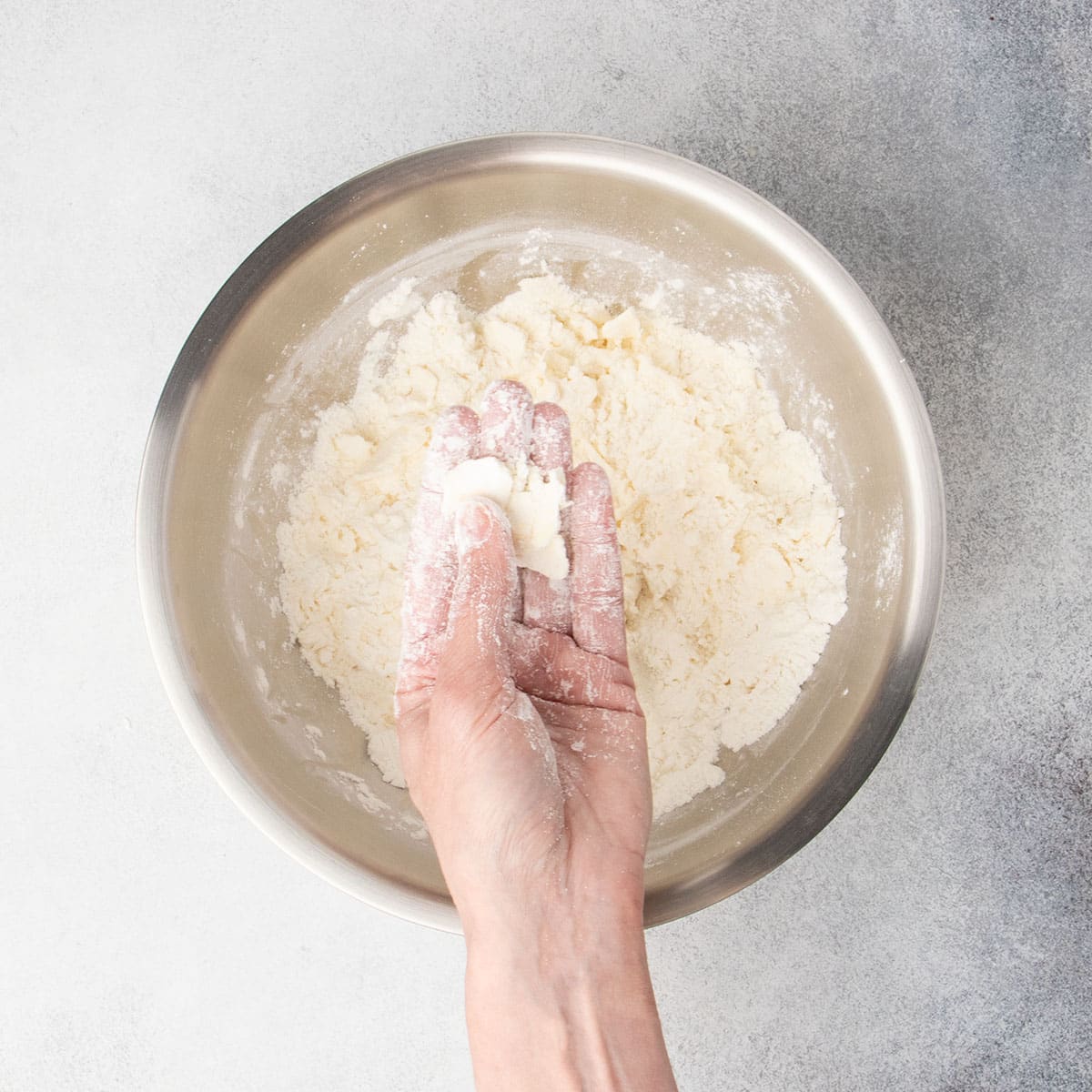
Use the tips of your fingers to press each piece of coated butter between your thumb and forefinger to create flat shards of floured butter. This allows you to nestle the butter between layers of the dough without letting sharp edges break through. Those edges would melt too soon and leak out of the dough.
Larger pieces of butter can also be reconstituted by chilling the dough, unlike small pea-sized pieces which quickly melt into the flour, leading to a tough result.
Add the sour cream
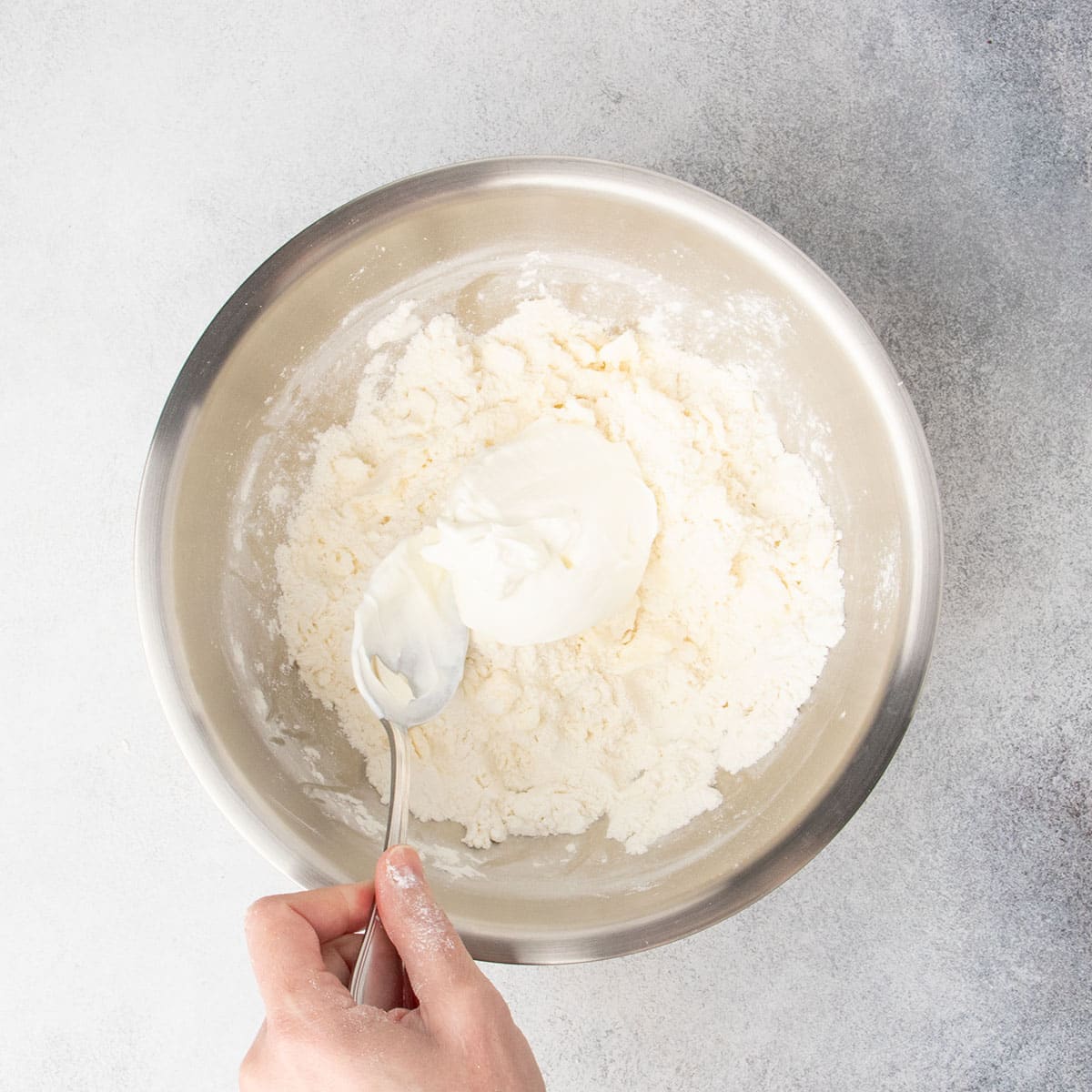
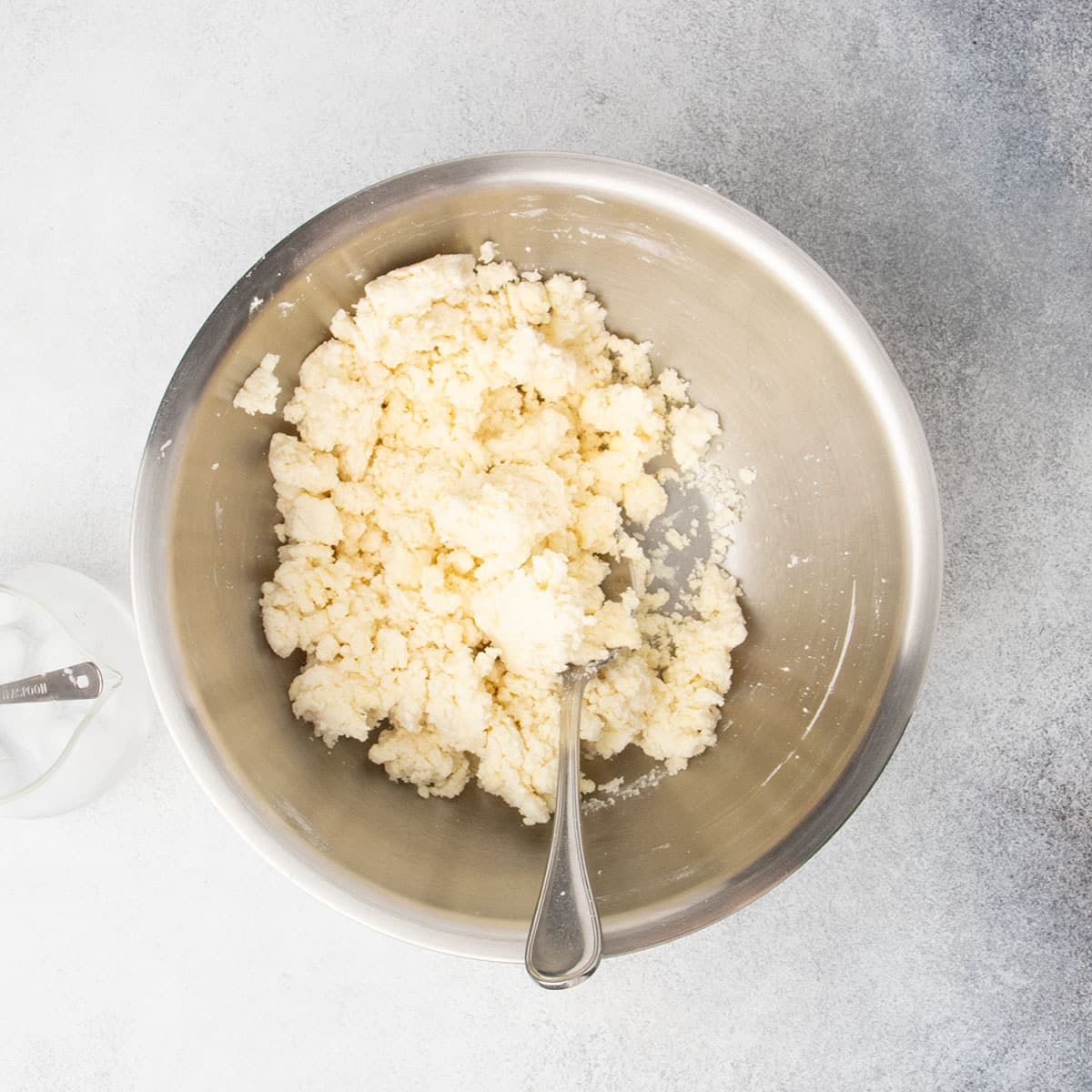
Add cold sour cream to the butter and flour mixture. Mix to bring the dough together into a shaggy, clumpy mixture without melting the chunks of butter.
Add just enough water
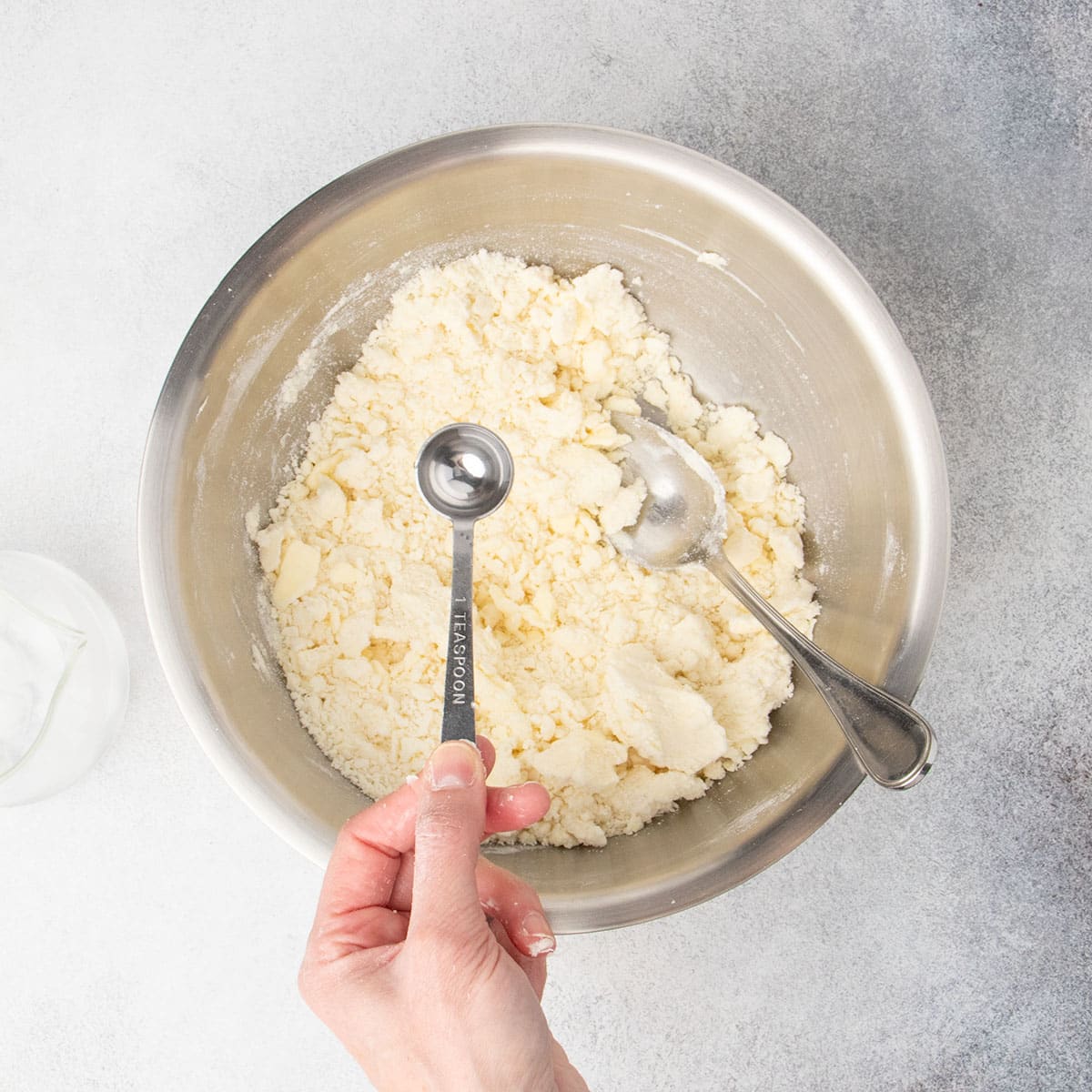
If dry patches remain, separate them from the rest of the dough and drizzle in ice water to just those dry spots. This allows you to adding just enough water to moisten all the flour without making the dough sticky wet, leading to adding more flour that would dry out the dough, making it stiff and hard.
Chill the dough
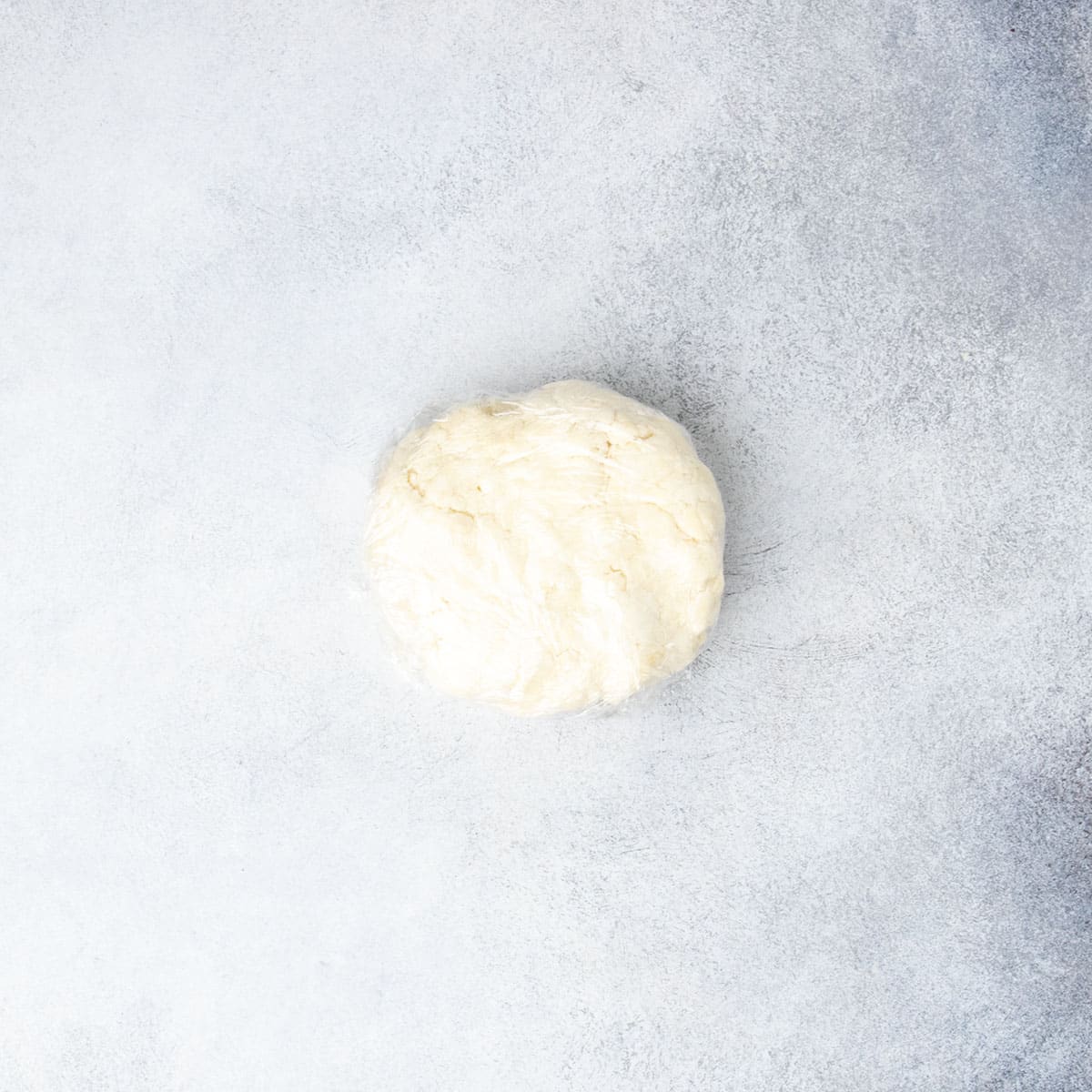
Turn the dough out onto plastic wrap, press into a rough disk, and wrap tightly. Chill it, wrapped tightly so it doesn't dry out, for at least 30 minutes to ensure that the butter is firm enough to shape without melting at all.
Roll out the cold dough
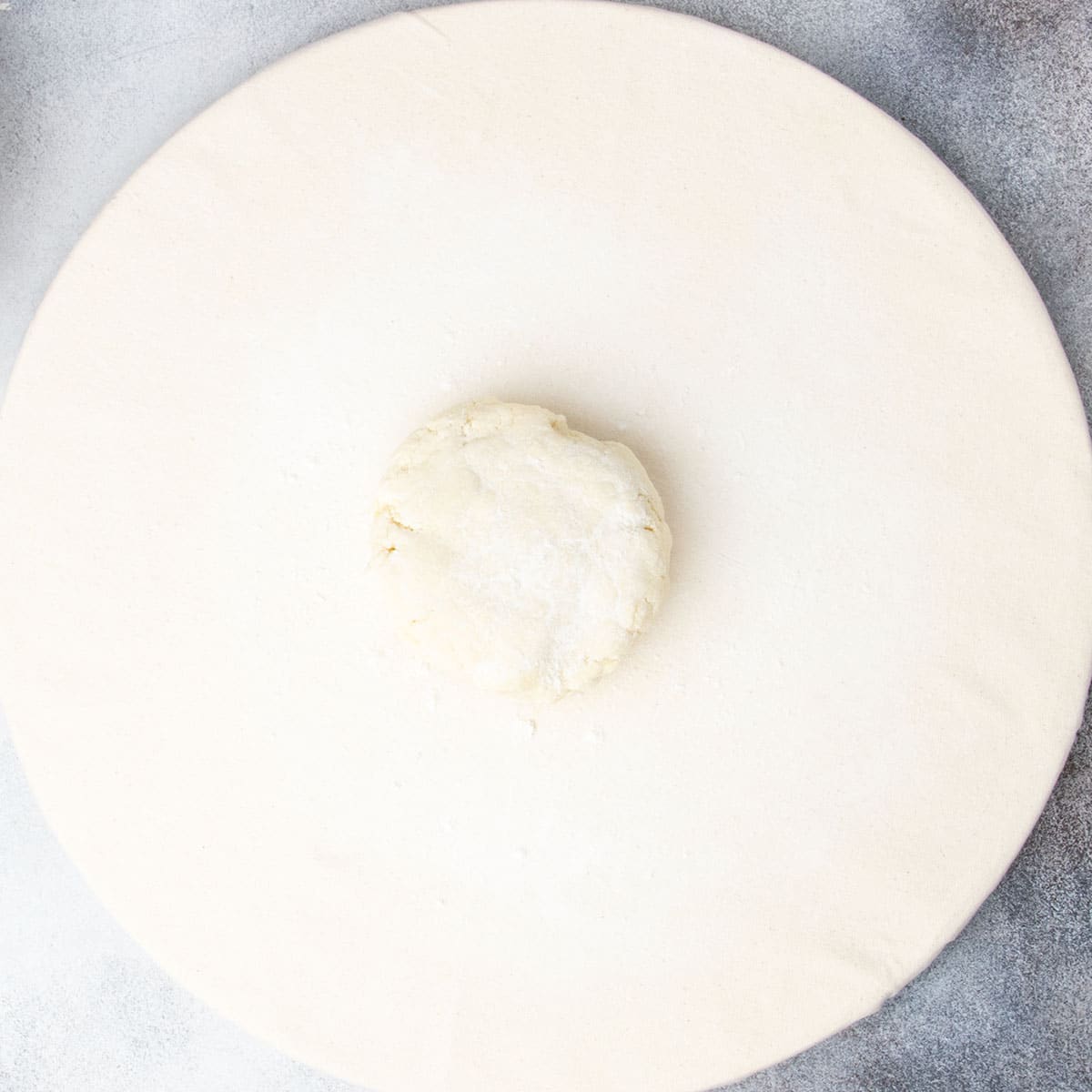
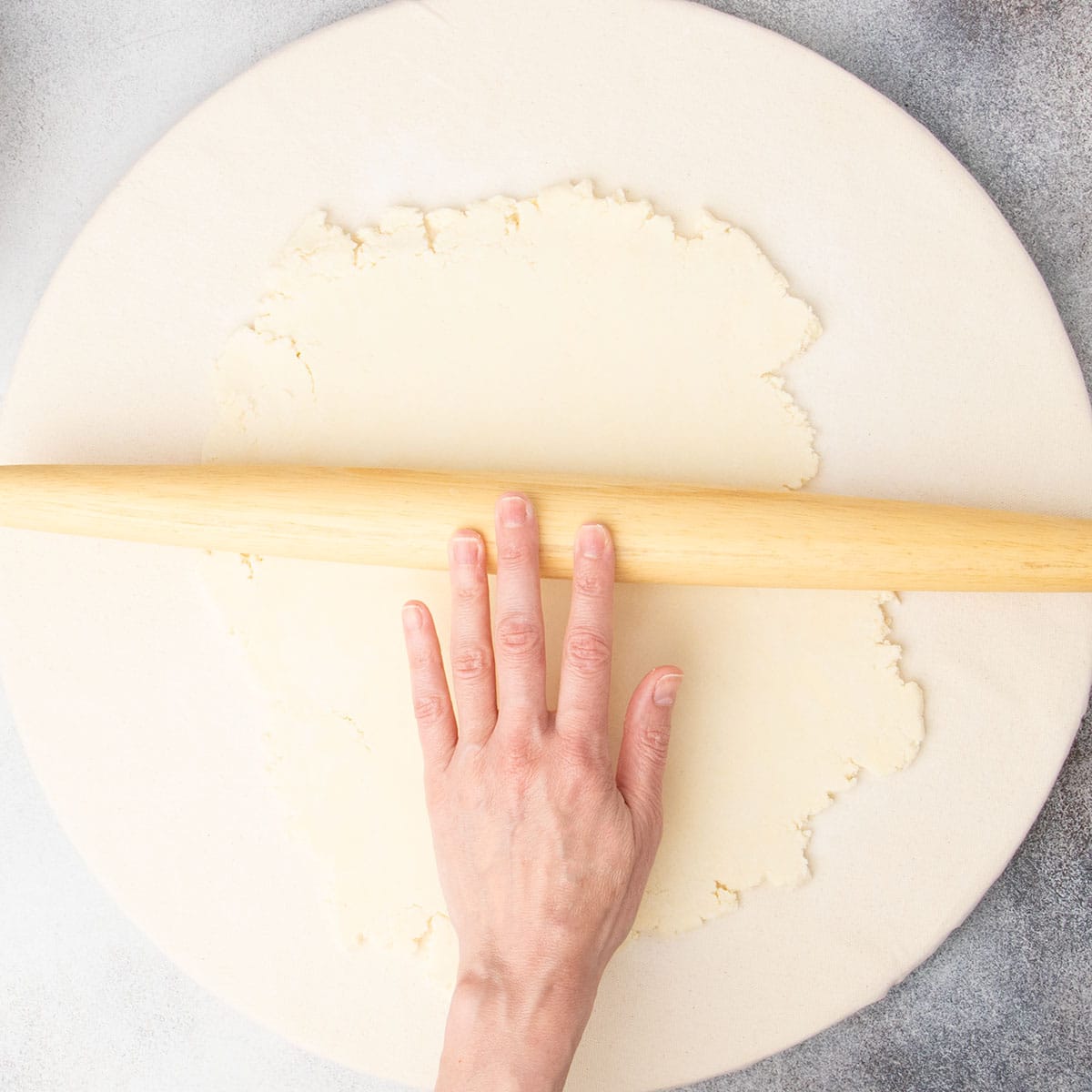
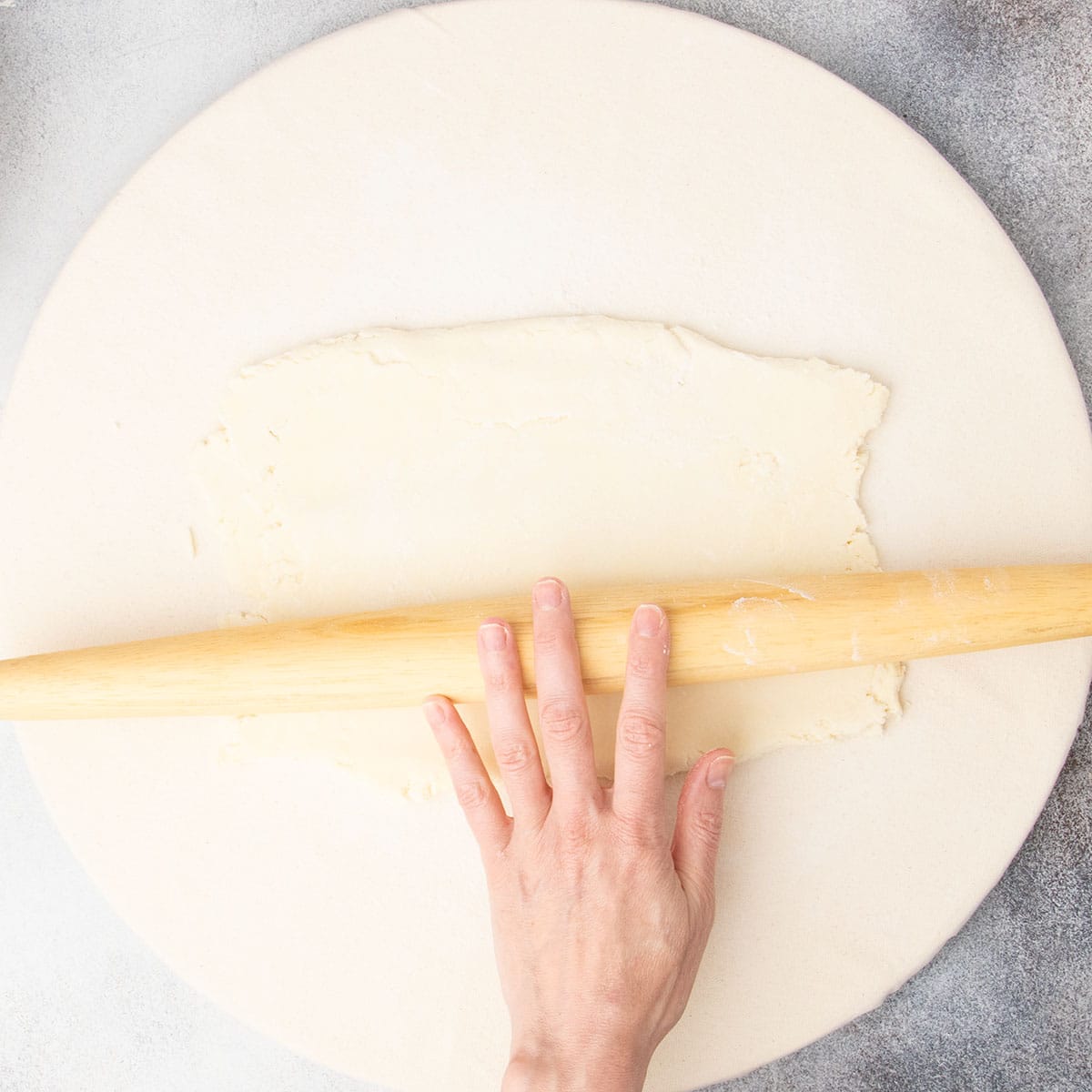
Place the cold disk of dough on a lightly floured surface, and dust it very lightly with just enough flour so it doesn't stick to the rolling pin. Use a clean rolling pin (or one lightly dusted with flour) to roll out the dough into a rough rectangle. If you've chilled the dough for too long, it may crack as you roll it out. You can let it warm up a bit before you continue.
Laminate the dough with folds and rolling
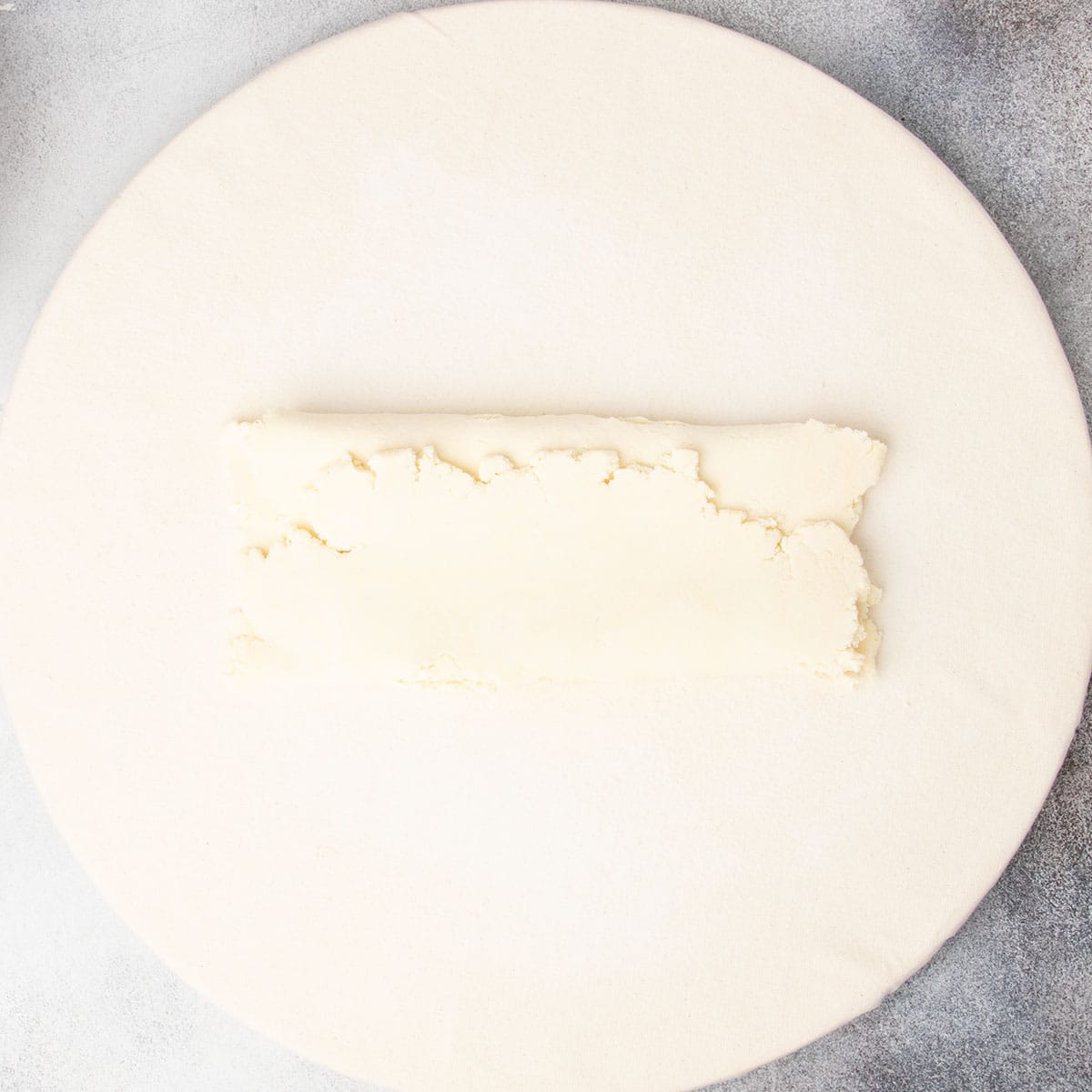
Fold the rough rectangle of dough over on itself in thirds like you would a business letter. Roll it out the same way into a rectangle, then roll and fold once more. Repeat once more for a total of 3 folds.
This process is called lamination, and each process of rolling and folding (called a “turn”), multiplies the layers of butter encased in floury dough, similar to the process of making gluten free puff pastry.
Chill the crust as needed
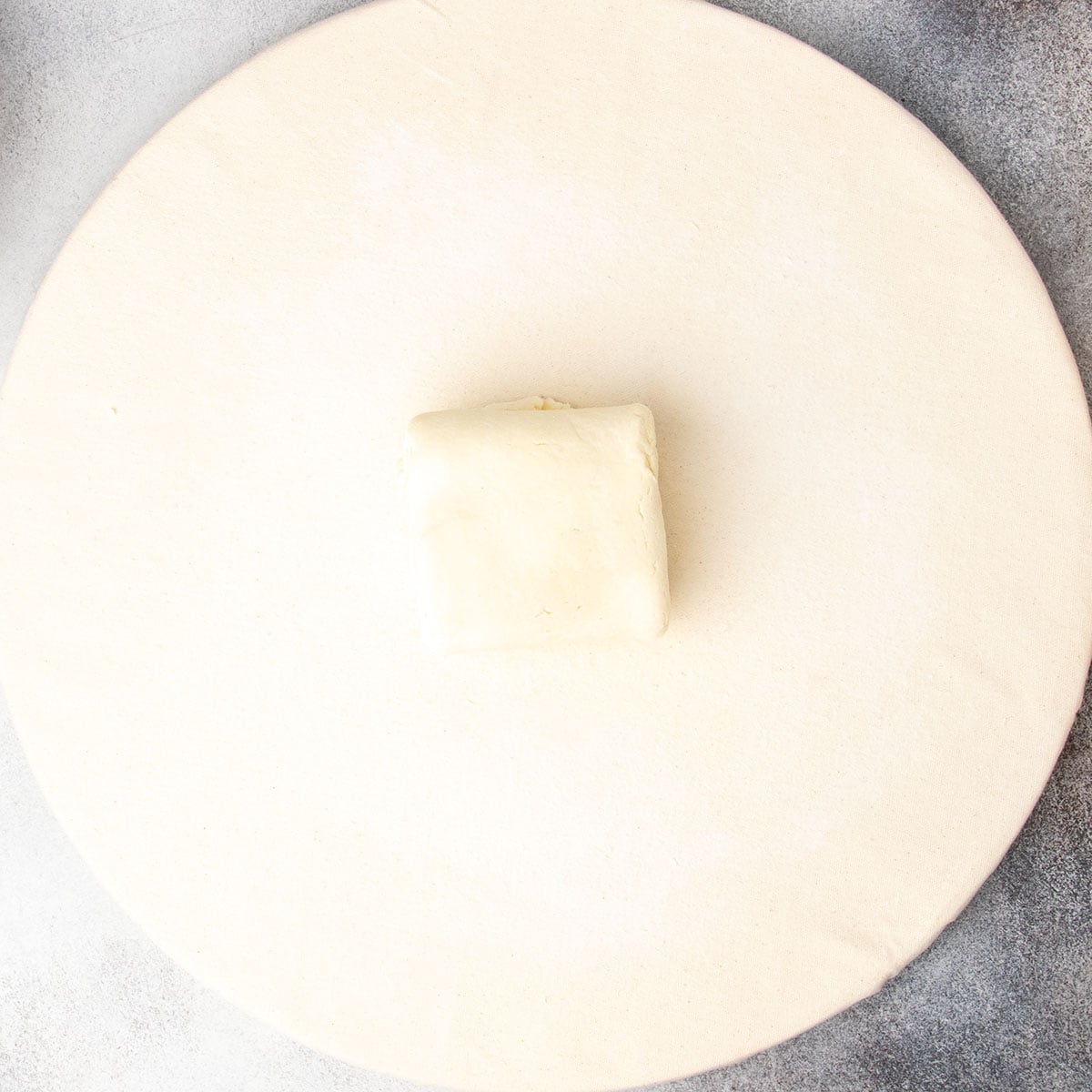
If the butter starts to melt or the dough feels soft at any point, rewrap and chill again before continuing. Fold the laminated dough into a square, press to seal, and shape into a round disk. You can wrap store refrigerate or freeze the dough now to use another time.
Create a round
If you're ready to use the crust, place the dough packet on a lightly floured surface and sprinkle it lightly with more flour to prevent sticking.
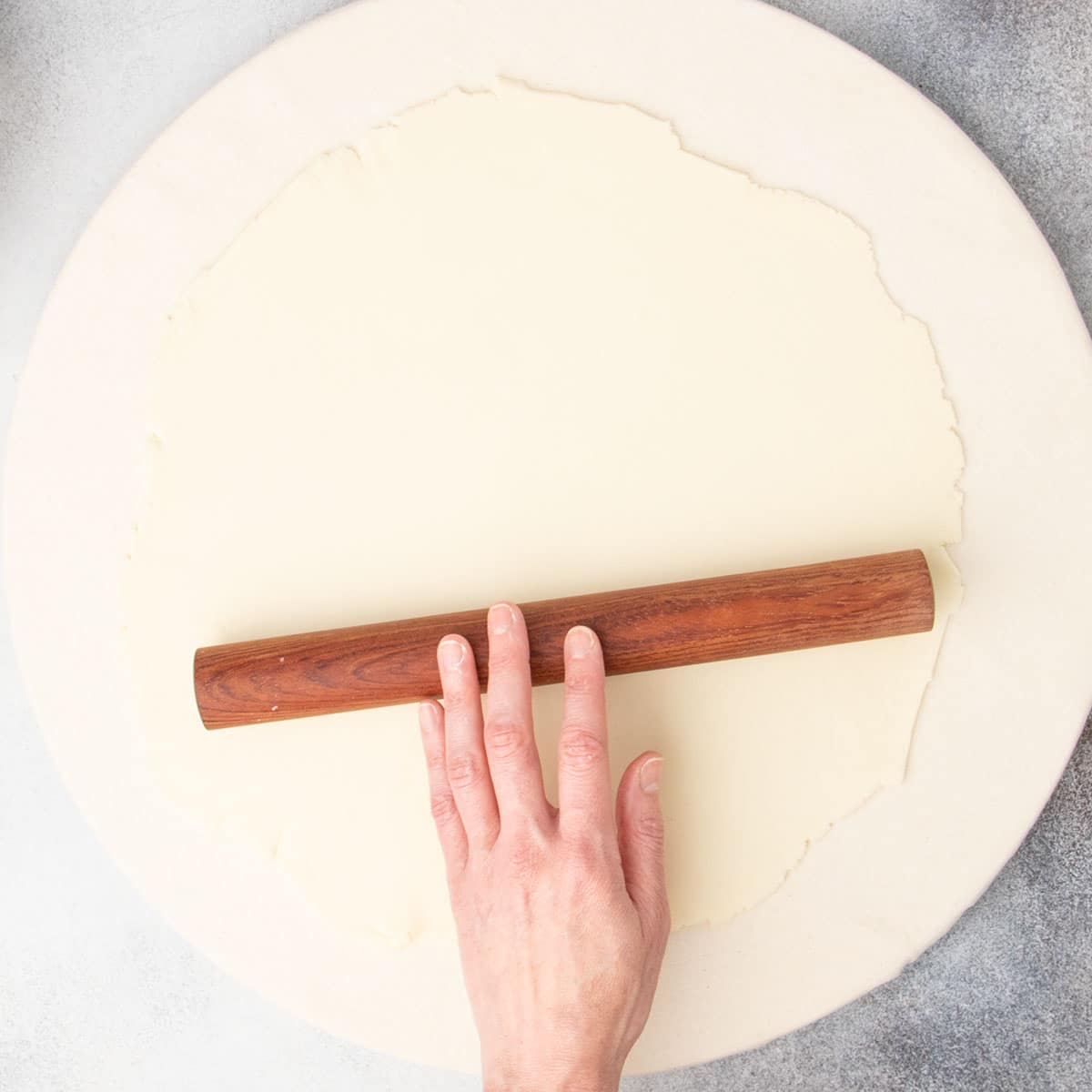
Use a rolling pin to roll the dough into a round about 2 inches larger than the dish you're baking it in. That will give you enough crust to press it into the bottom and sides of the dish without tearing it. It will be between 3/8-inch and 1/4-inch thick, depending on the size of the baking dish.
Transfer the crust
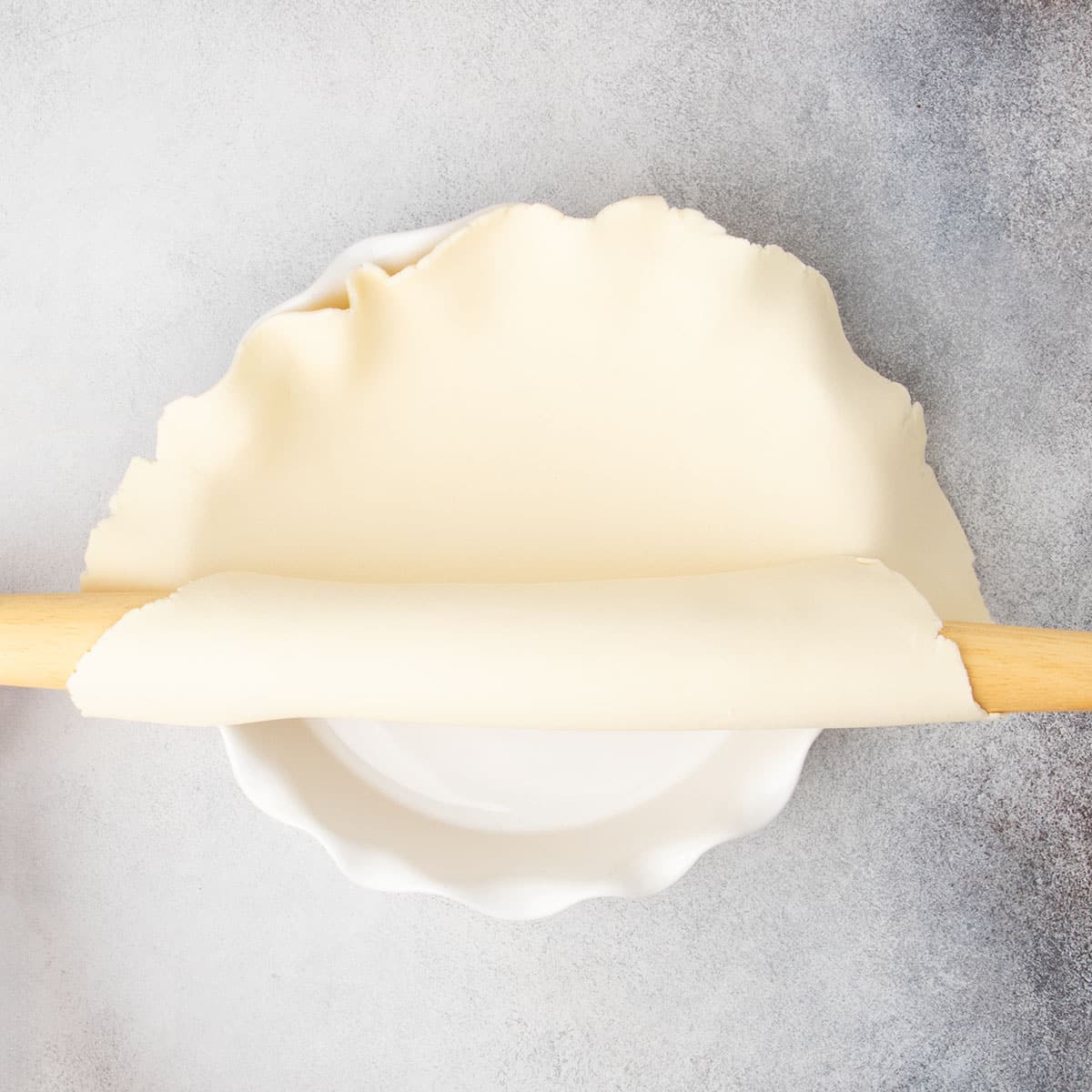
We roll the crust gently over the rolling pin to transfer it to the baking dish without stretching it. Flour the rolling pin lightly, hold it above one edge of the round pie crust, and roll the crust loosely onto it. Unroll the crust over a prepared pie plate, positioning the center of the crust over the center of the plate as best you can.
Shape the crust
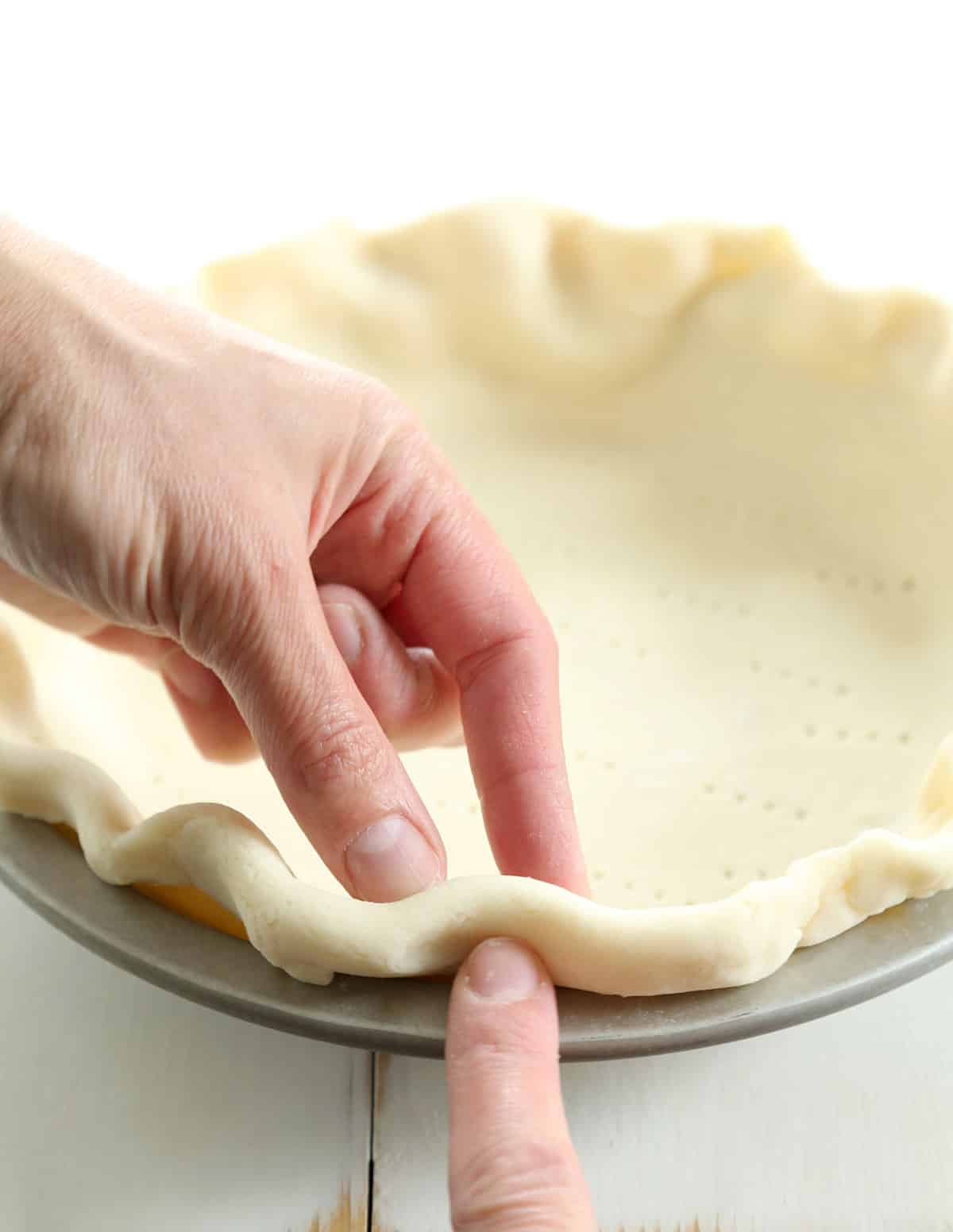
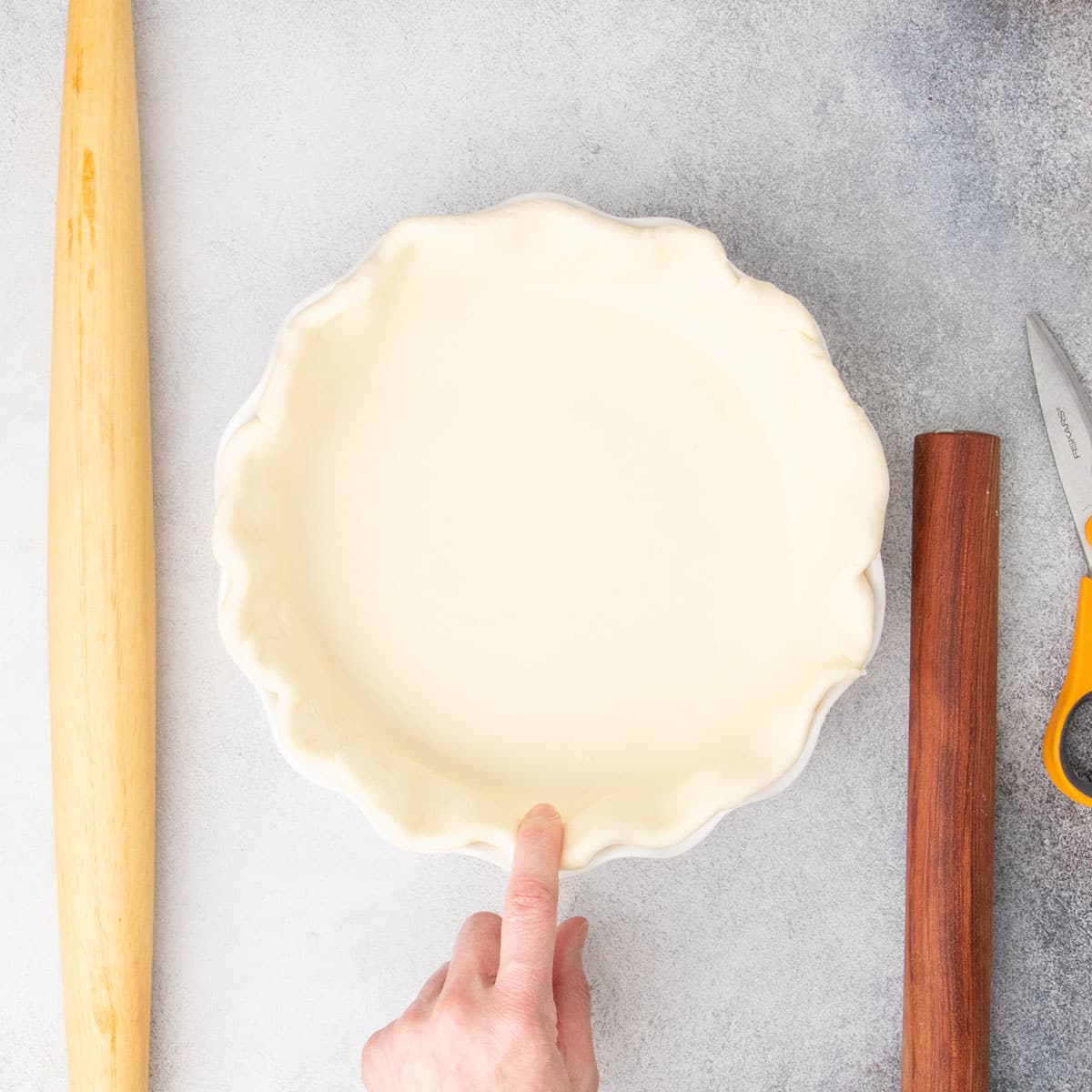
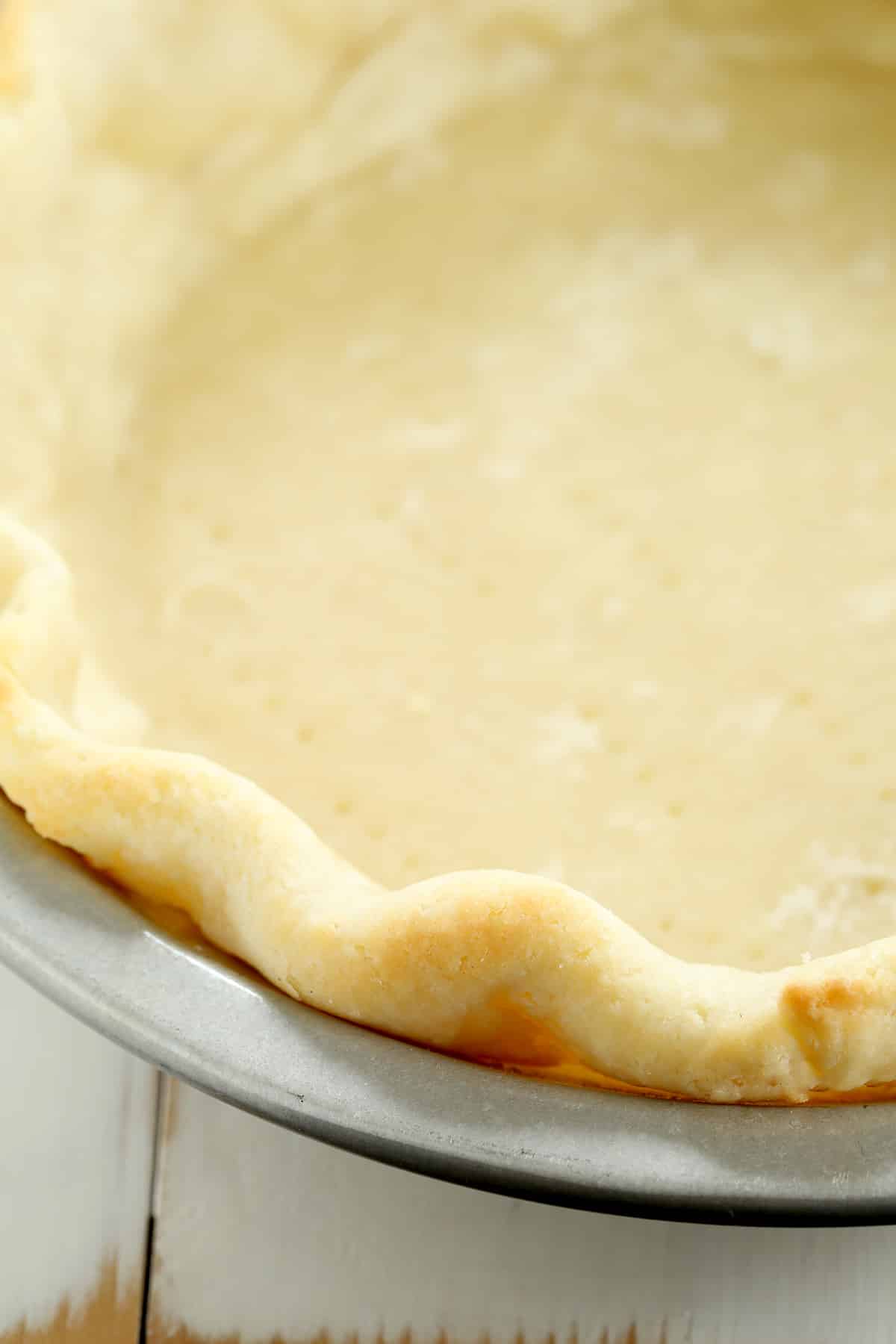
Gently lift the edges to allow the dough to settle into the corners of the plate without pulling at all. Tuck the overhanging edge under itself and crimp as desired. Chill the shaped crust in the fridge, covered, for at least 30 minutes, and up to 3 days.
How to parbake the crust
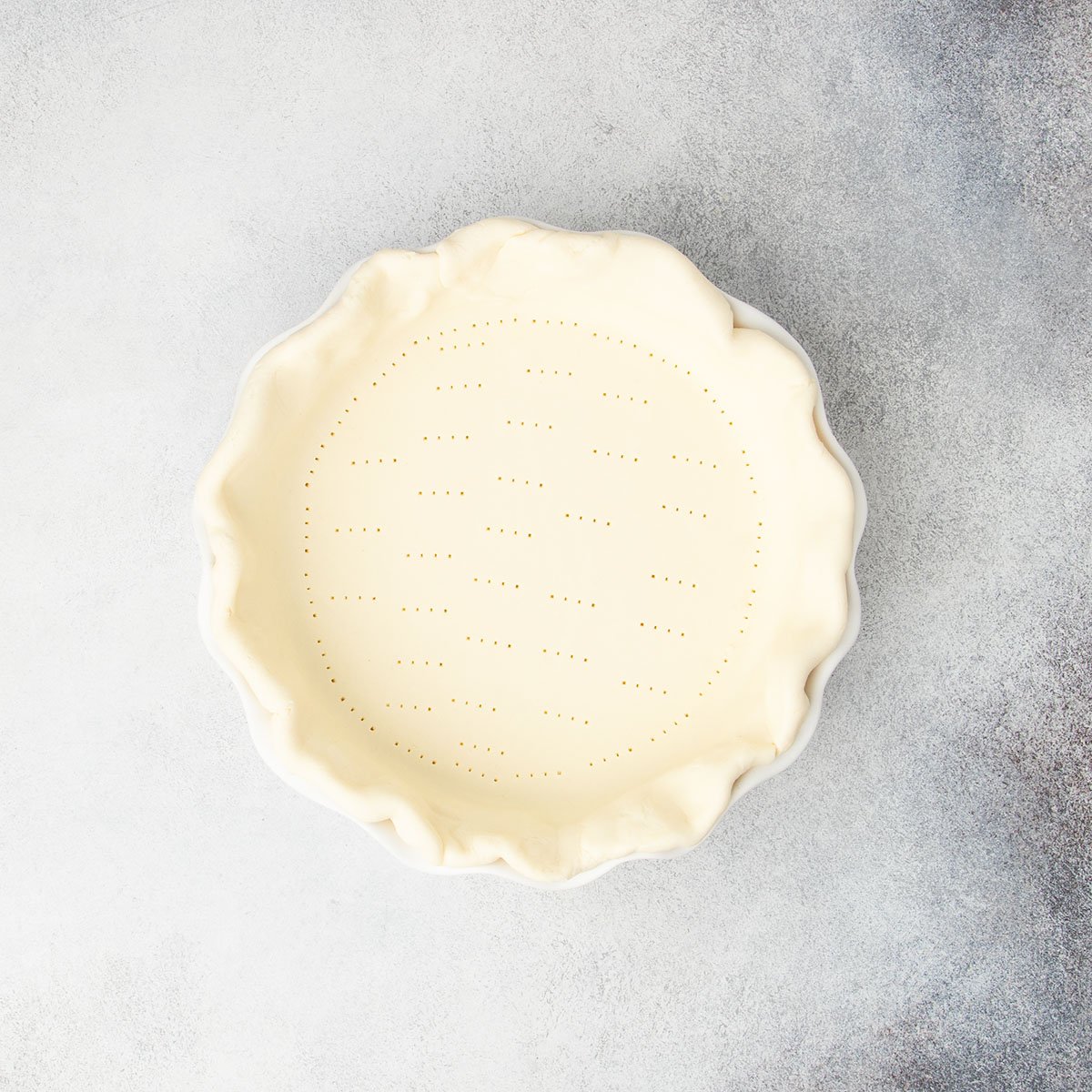
If the pie recipe you're using calls for parbaking, or partially baking the crust before filling it, here's how you do it. Pierce the bottom of the chilled crust in the pan all over with a fork to prevent it from puffing up in spots during baking.
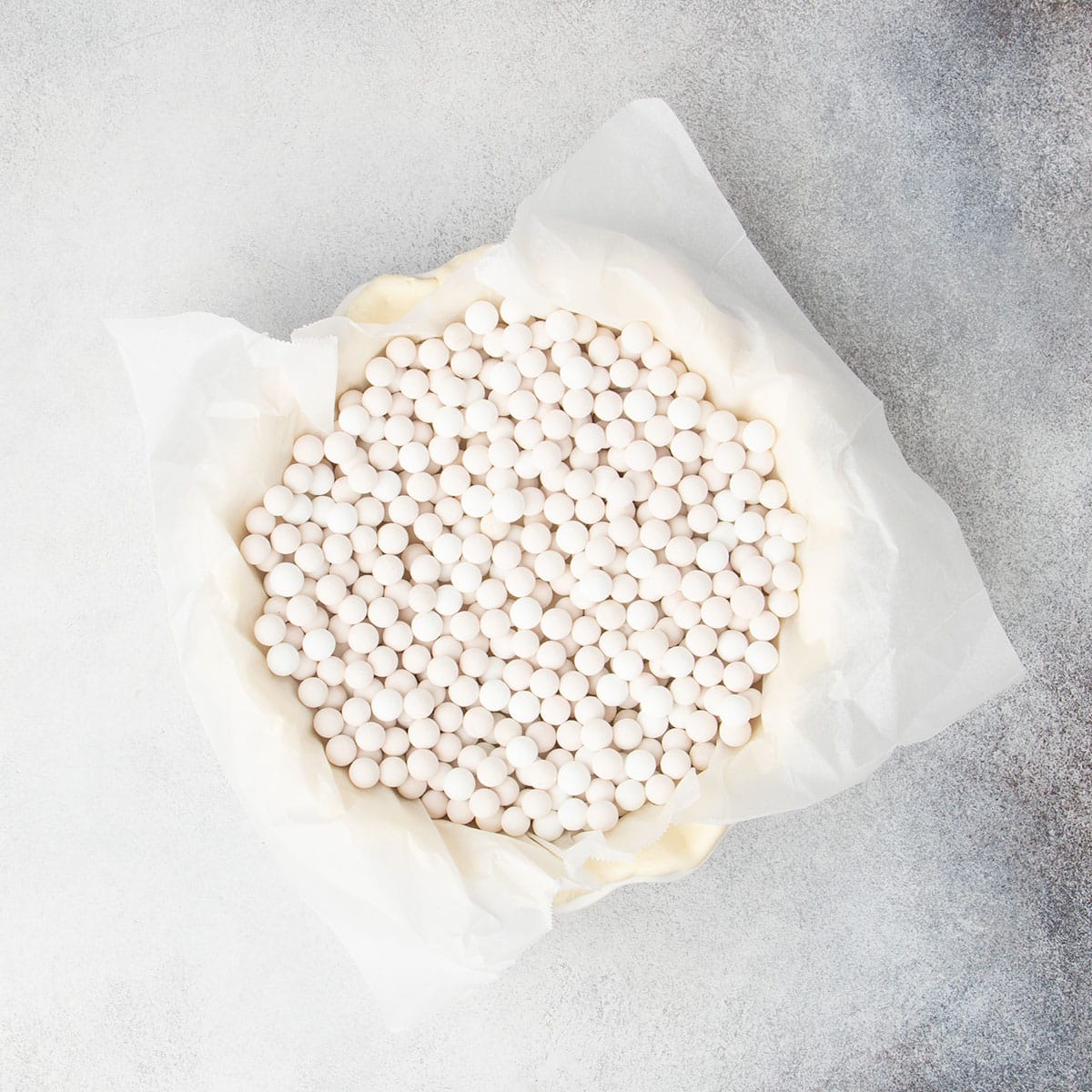
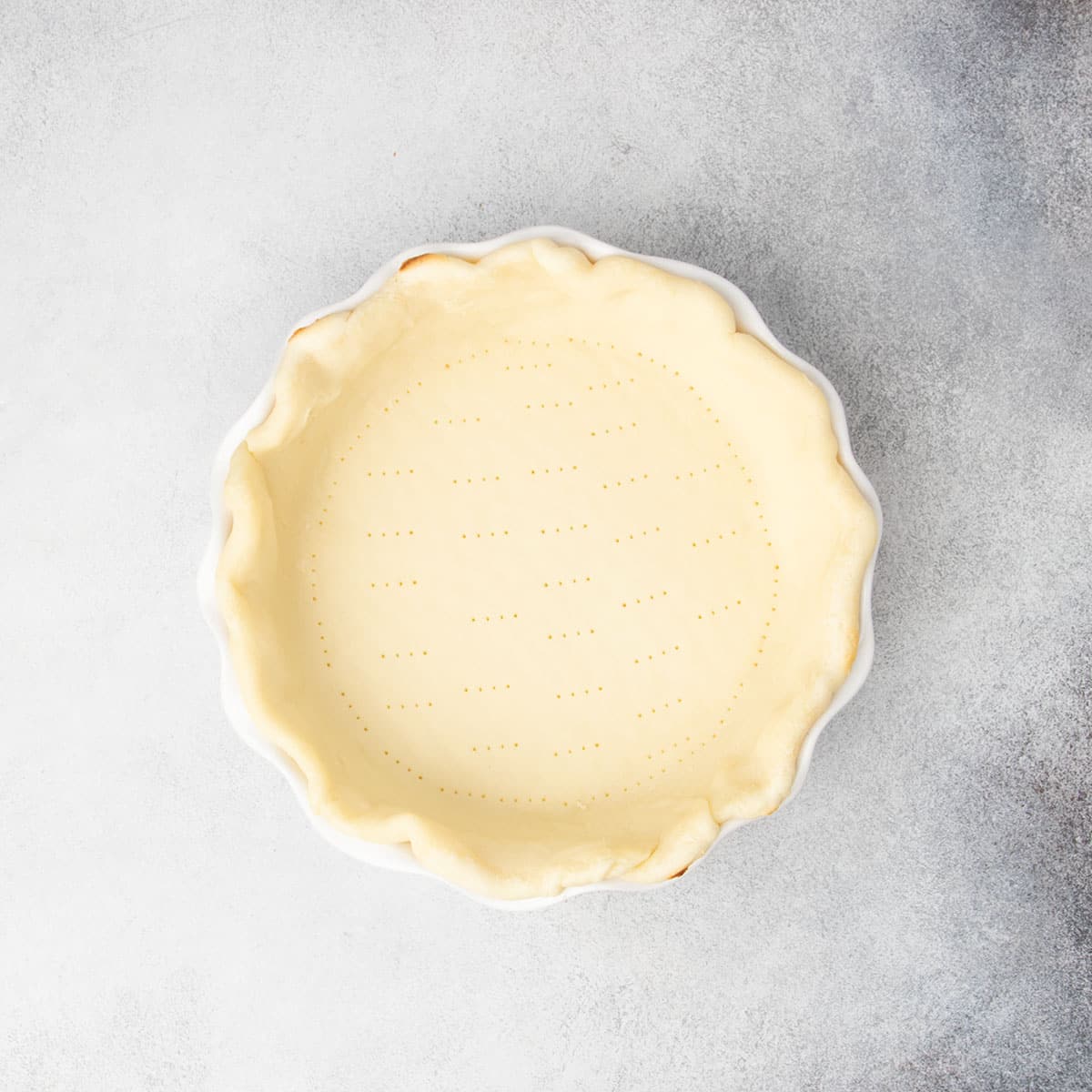
Line the raw crust with parchment and fill it completely with pie weights or dried beans to keep it from shrinking down the sides or forming irregular air bubbles which will cause it to bake unevenly. Bake for 10 minutes at 375°F, then remove the weights and parchment. If the crust still looks shiny, brush the bottom with egg white and return to the oven for 2–4 more minutes.
Expert tips
Keep the butter big and flat
Many recipes recommend “cutting in” the butter into the flour until you have pea-sized pieces, but those pieces melt very easily when you handle the dough to shape it. For real flakiness, keep your butter in large, flat shards throughout the dough that won't melt completely and can be firmed back up by chilling the dough periodically. They’ll create light, layered pockets as they melt during baking, releasing the water in the butter as steam, separating the layers of dough from one another.
Mix by hand
Use a bowl and spoon to keep control over butter size. Food processors and mixers tend to overwork the dough and overheat the butter, making the crust dense.
Chill often
If your dough softens or the butter starts to melt while working, wrap and chill again before continuing.
Don't stretch the dough
When fitting the crust into the pie plate, gently lift and lower it into place. Never stretch—it will shrink back in the oven.
Follow your pie recipe
This recipe is only for the pie crust, not the pie. There are plenty of recipes for gluten free pies on this website such as my gluten free apple pie that will tell you whether or not you need to parbake the crust (or partially bake just the bottom crust), blind bake it (for no bake fillings, you'll bake another 10 to 12 minutes after parbaking), or bake it only once filled. If you're using someone else's recipe, follow their instructions for how, when and at what temperature to bake the crust.
Ingredient substitutions
This recipe is naturally egg-free, but if you also have to bake dairy-free, here are my suggestions for how to replace the dairy-containing ingredients in the recipe:
Butter
The best way to replace the flavor and moisture balance of butter is to use 3 tablespoons shortening and 3 tablespoons vegan block-style butter. I like Miyoko’s, Melt, or Trader Joe's brands. Do not use a tub-style vegan butter, which is mostly oil.
Sour cream
Substitute with nondairy sour cream or plain Greek-style nondairy yogurt. Or, make a water-only version. Skip the sour cream completely, increase the baking powder to ½ teaspoon, and start with 3/8 cup (3 fluid ounces) ice water. Add more ice water by the teaspoon as needed to just the dry patches.
Storage instructions
For the raw dough
No matter how long you store the dough, make sure none of it is exposed to the air or it will quickly become too dry to shape. For short term storage, wrap the dough tightly in plastic and refrigerate for up to 3 days.
For longer storage, wrap the dough in plastic and in a zip-top bag, and freeze for up to 2 months. Thaw overnight in the fridge, then let sit at room temperature for 10 minutes before rolling so it doesn't crack.
For a shaped crust
Roll out the crust and shape it in the pan that you'd like to bake it in. Wrap the pan tightly in plastic wrap and then in a zip-top bag, and freeze it for up to 2 months. You can bake it straight from frozen, but you'll need to add 25°F to the oven temp for the first 10 minutes, then reduce to 375°F.
For a parbaked crust
A partially baked crust is best used the same day. If needed, cool completely, wrap tightly, and use within 24 hours.
Gluten Free Pie Crust Recipe (Extra Flaky)
Equipment
- Rolling Pin
- Pie weights enough to fill your pie crust
Ingredients
- 1 ½ cups (210 g) all purpose gluten free flour blend, (See Recipe Notes) plus more for sprinkling
- ¾ teaspoon xanthan gum, omit if your blend already contains it (use a heaping 3/4 teaspoon)
- ¼ teaspoon baking powder
- ½ teaspoon kosher salt
- 6 tablespoons (84 g) unsalted butter, roughly chopped and chilled
- ½ cup (120 g) sour cream, full fat, preferably, chilled
- Ice water by the teaspoonful, as necessary
- Egg white, for brushing (optional)
Instructions
Make the pie crust dough
- In a large bowl, place the flour, xanthan gum, baking powder and salt, and whisk to combine well.
- Add the chopped and chilled butter, and use a spoon to toss to coat the flour in the dry ingredients.
- Press each chunk of floured butter between your thumb and forefinger to make flat shards of butter, coated fully in flour.
- Create a well in the center of the dry ingredients with the butter shards, add the sour cream, and mix to moisten the dry ingredients with the sour cream. The dough should be shaggy and still somewhat crumbly.
- If there are any portions of the dough that are especially dry, try to isolate them in the mixing bowl, drizzle ice water by the teaspoon on only those parts and then mix to moisten them.
- Drizzle in more ice water only as necessary to moisten lightly all of the dry ingredients. Knead the dough together with clean hands until it begins to come together.
- Turn the dough out onto a sheet of plastic wrap, and press into a disk as you close the plastic wrap around the dough. It will still seem rough.
- Place the dough in the refrigerator to chill for 30 minutes. You can wrap the dough now and store it in the refrigerator for up to 3 days, or shape and bake it next.
- Preheat your oven to 375°F. Grease a 9-inch to 10-inch pie plate generously and set aside.
Roll out the chilled dough
- Once the dough has chilled, turn it out onto a lightly floured surface, and sprinkle the top lightly with more flour.
- Roll the dough out into a rough rectangle that is about 1 inch thick, moving the dough frequently and sprinkling it lightly with flour if it begins to stick.
Laminate the dough
- Fold the dough over on itself in thirds like you would a business letter. This is called one "turn."
- Sprinkle the dough again lightly with flour, and roll out the dough once again into a rough rectangle about 1 inch thick. Fold again in thirds.
- Working quickly, sprinkle the dough lightly with flour, and roll out once more into a rough rectangle, for a total of 3 times.
- Fold the dough in thirds again, then fold in the sides to make a square packet of dough. Press the dough together, and try to round the sides into a disk.
- If the dough feels warm at all, or like the butter is melting, cover it with plastic wrap and chill it until the butter is firm again.
Shape the dough in the pie plate
- Roll the dough out into a round about 2 inches larger than the diameter of the baking dish you're using. It will be between 1/4-inch and 3/8-inch thick. Roll from the middle to the edges in every direction to help create a round. If the dough splits on the edges, pinch them together.
- Roll the pie crust loosely onto the rolling pin and then unroll it over a greased pie plate.
- Trim any especially rough edges of the crust with kitchen shears or a sharp knife. Lift up the edges of the pie crust gently to create slack in the crust, and place the crust neatly on the bottom and up the sides of the pie plate.
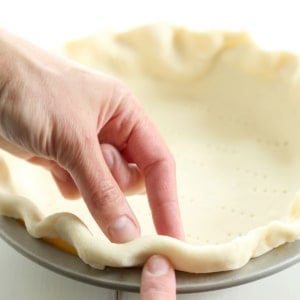
- Tuck the excess pie crust under itself along the perimeter of the crust, where it overhangs the pie plate. Crimp the edge gently all the way around the crust by pinching the dough at regular intervals with one hand, and creating a crimped impression with the forefinger of the other hand.
- Cover the pie crust with plastic wrap and place it in the refrigerator to chill until firm, at least 30 minutes (and up to 3 days).
Parbake the crust (See Recipe Notes)
- Remove the pie crust from the refrigerator, then remove the plastic. Pierce the bottom and halfway up the sides of the pie crust all over with the tines of a fork.
- Place a sheet of parchment paper on top of the raw crust and fill the crust with pie weights or dried beans. This will help keep the bottom from expanding and the edges from falling down into the pie dish.
- Place the plate in the center of the preheated oven and bake for about 10 minutes, or until the crust is just beginning to turn very lightly golden brown on some edges.
- Remove the pie weights and parchment. The bottom of the crust should be less shiny but not browned. If it's still shiny, brush the bottom of the crust with the optional egg white, and return the pie crust to the oven and bake for another 2 to 4 minutes.
- Allow the parbaked crust to cool before proceeding with your pie recipe.
Video
Tell Google you trust GFOAS!
Notes
Nutrition
Nutrition information is automatically calculated, so should only be used as an approximation.
Frequently Asked Questions
Yes! Glass works well and helps you see when the bottom crust is browned. Just keep an eye on it, since glass warms slowly but retains heat very well and can cause over-baking if left too long.
You can, but it's not ideal. These tools can overmix and melt the butter. If you do use one, use large pieces of cold butter and pulse briefly to avoid losing flakiness.
Simply double the recipe or use the 2[X] option in the recipe card. Divide the dough into two disks, chill, and roll separately.
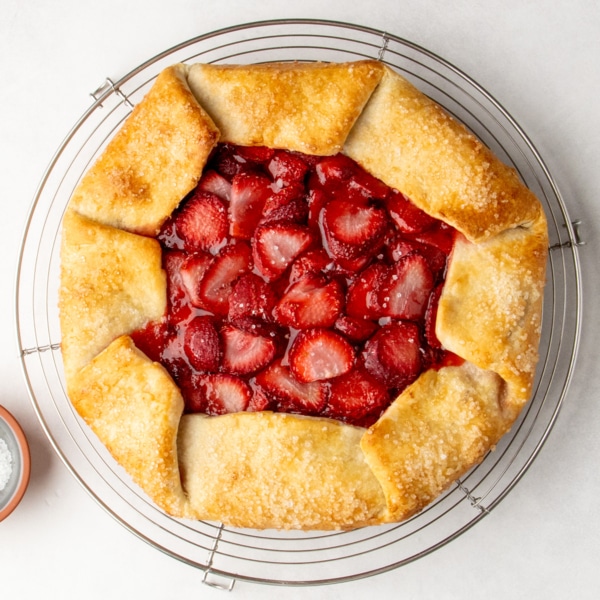
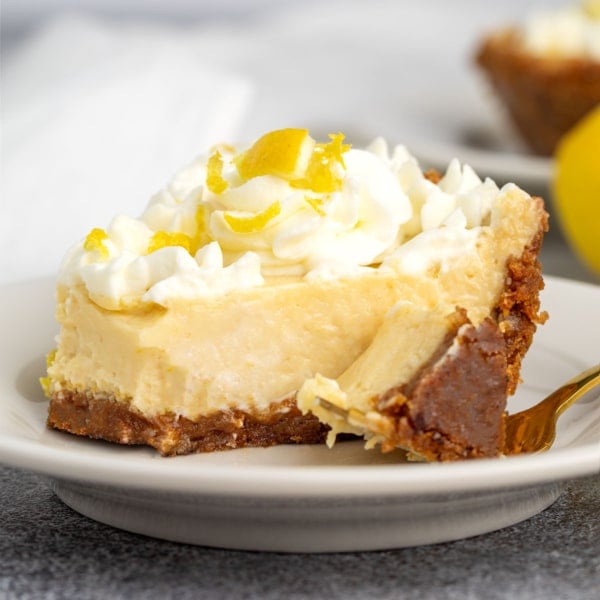
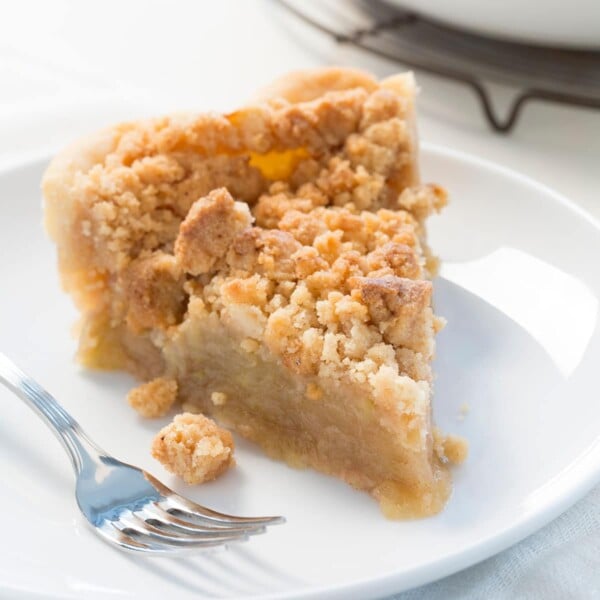










It was super flaky and delicious, and my husband loved it too, and had no idea it was gluten free.
Nice flavor crust! I couldn’t get mine very thin without it breaking apart. Do you find you need several teaspoons of ice water? I’m thinking my dough was just too dry, although it did come together with only one teaspoon and then I put the ball in the saran wrap and into the fridge to chill. It just didn’t roll out as easily as yours in the video. Also, any suggestions for a vegan alternative to the sour cream? Thanks!
The amount of ice water is very variable, Jennifer, based on so many factors among, for example, the temperature of the ingredients, the way you selected and measured the flour blend (if you didn’t measure precisely by weight, you likely overmeasured your flour; if you selected a less than ideal blend, it’s likely drier), the temperature in the environment. It also may have dried out in the refrigerator if it wasn’t wrapped well enough, as the air in the refrigerator is especially drying. For dairy free alternatives, please see the text of the post under the heading “Gluten free, dairy free crust”
Jennifer — I had the same question about sour cream. Turns out there are vegan sour creams out there! Kroger has one, as does Tofutti. Probably there are more. I’ve used the Kroger one in this recipe with great success (haven’t tried any others).
Good to know that you like the Kroger brand vegan sour cream, Maggie!
Getting my crust ready for Easter quiche and I just used Tofutti sour cream as that’s what I had so I can offer more thoughts. The Kroger brand was very wet and needed no extra ice water. (I messed up in my measurements when I made the dough — used 2x the butter so had to go back and 2x everything else, so I can’t say for sure, but it seemed plenty wet.) The Tofutti is much drier, almost like cream cheese, and I ended up using quite a bit of water.
Hi Nicole! I need to make a pie that has a pie crust on top as well on the bottom. Do I just make two of these?
Thanks in advance!
Yup, Lilli, just change the number in the “yield” section of the recipe card from “1” to “2” and it will double all the ingredients for you. It won’t, however, modify any of the recipe instruction language so you’ll have to read the recipe with the double recipe in mind.
If I need a top crust, I can’t parbake the bottom can I? Will it be soggy if not parbaked?
You can parbake the bottom crust if you’d like, Cynthia, but you don’t usually have to. I would follow the instructions in the pie recipe that you are using, and whether or not it says to parbake the crust.
Thank you for this recipe – loved this and with some left over I rolled out very thin put some seasoning on it and make crackers They were so good. Thank you so much for all your recipes.
How long do you pre bake the pie crust to fill with sour cream lemon filling, or coconut cream pie filling? The first time I made this pie crust it turned out perfect when making a baked pumpkin pie. But when making the sour cream lemon pie, and baking the crust until golden on the bottom….and cooling and filling with the cooled pie filling, it turned out hard.
How long should I cook the pie crust when filling it with a filling that doesn’t have to be baked? Thank you!
This crust recipe behaves just as a conventional one in baking. When I blind bake a pie crust, I dock it, fill it with pie weights, and bake at 375°F for about 25 minutes. But since you’re not using my pie recipe, only my crust recipe, I’d follow the “sour cream lemon pie” recipe you referenced.
I love this recipe! I have made it many times very successfully!
I am getting ready to make a very large batch of pie crusts and am wondering if I can use a dough hook to kneed the dough?
Thank you so much for sharing all your recipes!
I’m so glad you love this recipe, Julie! But definitely not. You need to make this pie crust by hand or the butter will be overworked and the crust would be dense, not flaky. I would never use a dough hook for pastry at all, just in general. I know it can be tempting to try to make this faster, but it’s the method that makes it so so good.
Thank you!
I use to hate making gluten free pie dough! This recipe is amazing!! Started by trying it with pumpkin pie. Came out delicious. Tonight I decided to make it with leftover Turkey and made a pot pie. It came out awesome. Other recipes I’ve made the dough just falls aparts. This dough does not do that. I used Americas Test Kitchen gluten free flour blend that I make. Will always use your recipe. Thank you so much.
Will this recipe work for a meat pie pastie?
This recipe will work anywhere you might use a pie crust, Shandra. I can’t say specifically because I don’t know the recipe you are using and can’t vouch for anyone else’s filling recipe, but if any pie crust will work, this one will.
I just used it for turkey pot pie. I did double crust baked at 425 it came out amazing. Going to try it with my ground beef pot pie next that we use to eat until my husband couldn’t eat gluten anymore. Hope it works out for you! Best crust ever.
That’s really great to hear, Melissa. I guess it’s hard to believe, but it really does work anywhere you would use a conventional pie crust! Thank you for sharing your experience.
This is the Holy Grail of gluten-free crust recipes. I doubled it and used it to make a chicken pot pie and my family couldn’t even tell it was gluten free. It was super flaky and tender, perfection!
I used homemade buttermilk instead of sour cream because I was out and it worked like a charm.
I’m so glad you love this pie crust, Andrea! Homemade buttermilk sounds delicious.
I want to make a pot pie with this crust. Do I still need to bake for 10 mins prior and then fill and bake additional time for filling to cook?
I have a recipe for gluten free chicken pot pie with instructions for precisely how to use this pie crust. But this is just a pie crust, and sometimes it needs to be parbaked and sometimes it doesn’t. I would follow the instructions of whatever recipe you are using for the pot pie.