

This post may contain affiliate links. Please read our disclosure policy.
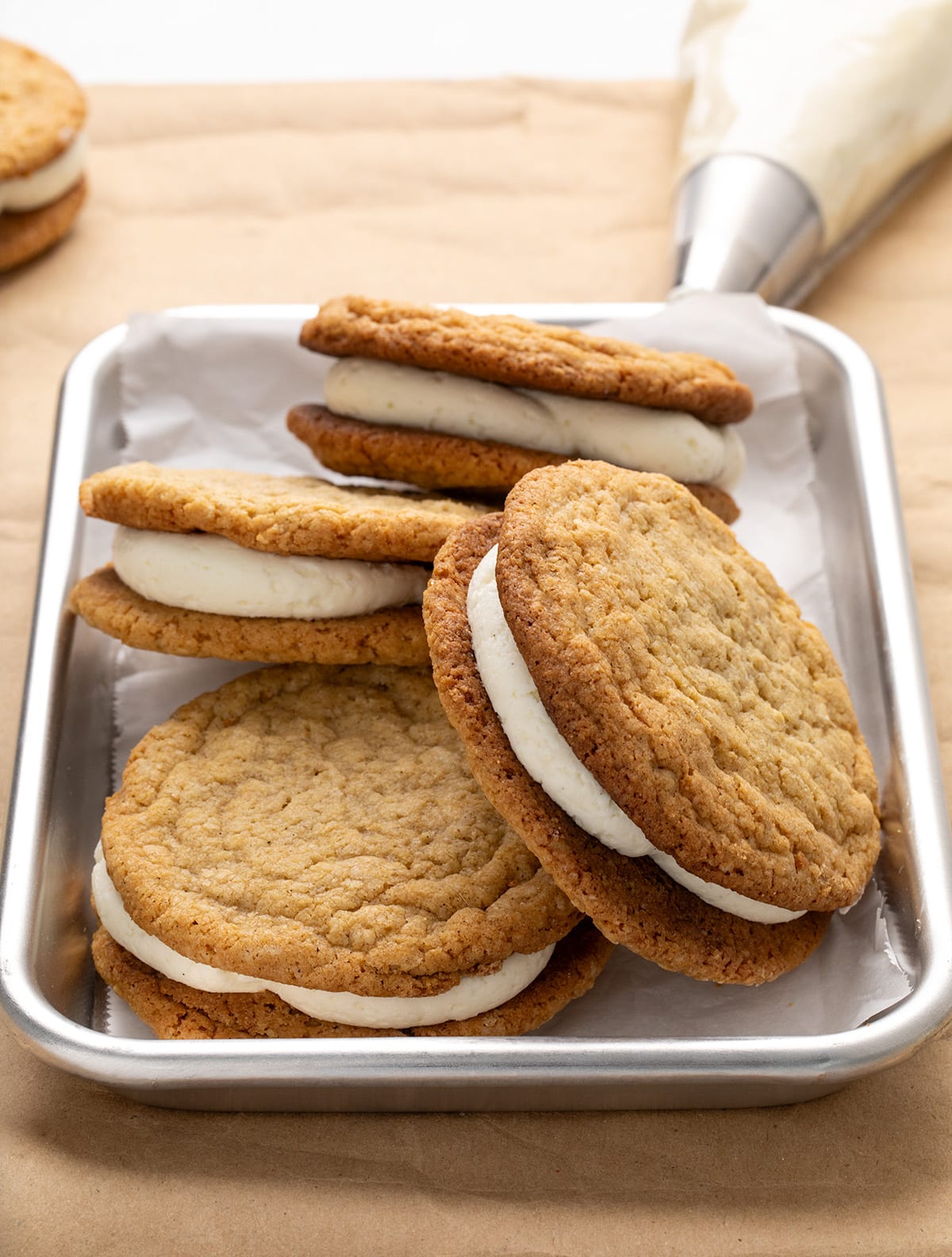
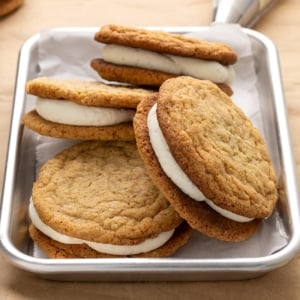
These gluten free oatmeal cream pies are my from-scratch take on the Little Debbie classic: thin, chewy oatmeal cookies with a sweet swirl of vanilla cream in the center.
Why this recipe works
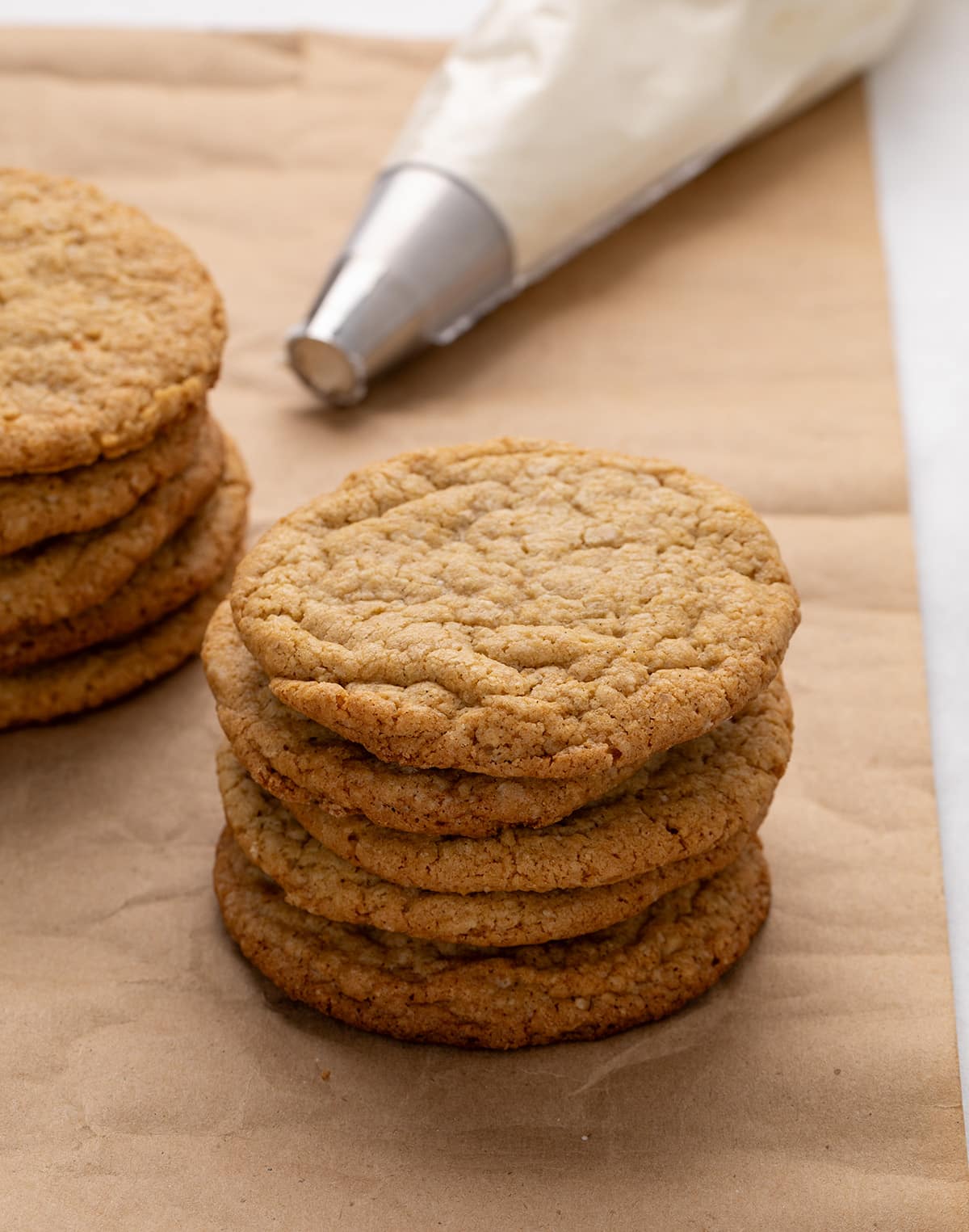
Many gluten free oatmeal cream pie recipes turn out thick and cakey. These are intentionally thin and chewy, with the lightly crinkled surface and soft texture that feel true to the original Little Debbie snack cake.
The oats are processed just enough to break them down without turning them into a smooth flour. That way, the cookies stay tender and cohesive, and have real oatmeal flavor like they should, but without the extra chewy, hearty texture of classic gluten free oatmeal cookies.
The filling is sweet buttercream with a bit of meringue powder for stability. That way, it stays fluffy and structured at room temperature, instead of softening or separating after a few hours.
Recipe ingredients
Here are the ingredients you’ll need to make the oatmeal cookies, and a bit about the role each plays:
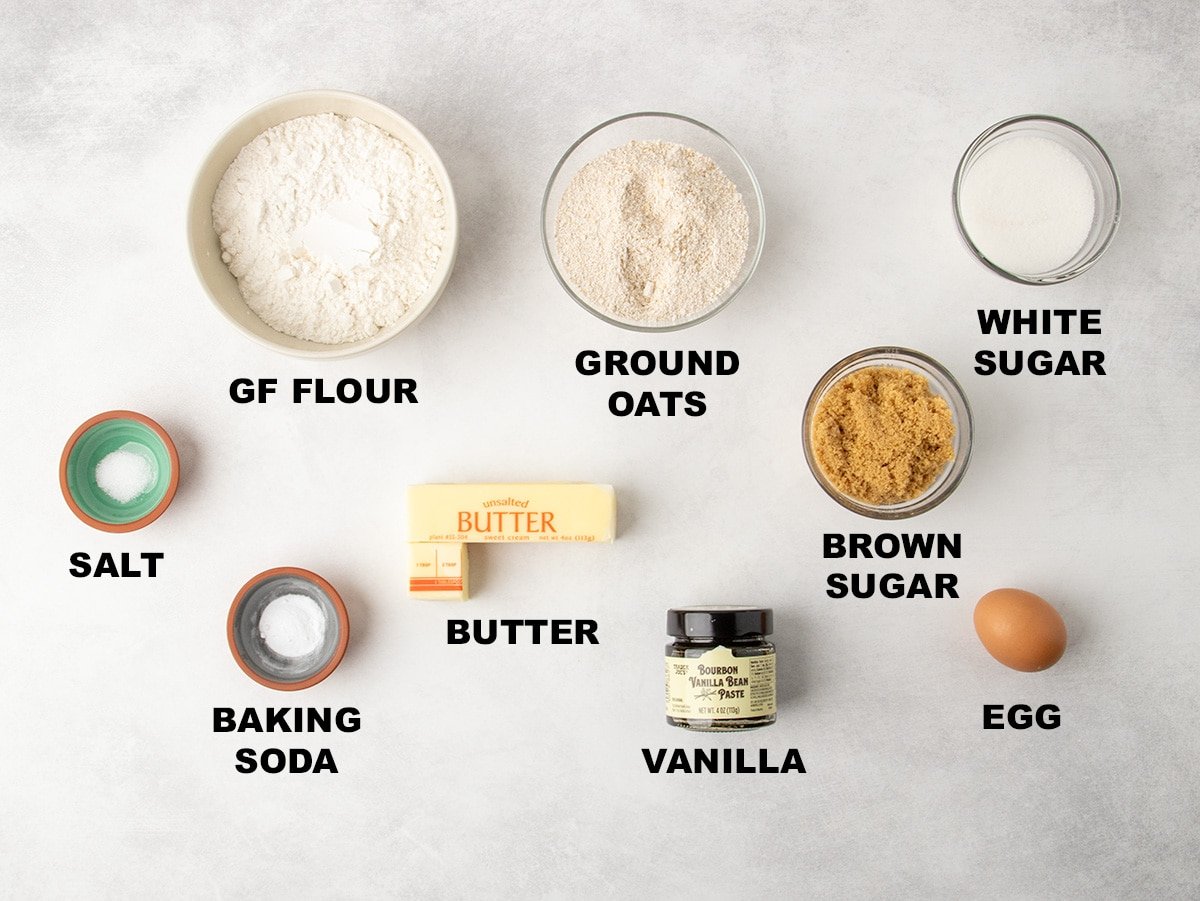
- Gluten free flour: Provides structure to the cookies as they cool, and keeps them from spreading too thin. Be sure to use a properly balanced blend without any gritty rice flour, like Better Batter’s original blend or Nicole’s Best multi-purpose gluten free flour blend with added xanthan gum. Bob’s Red Mill 1-to-1 should also work, with an additional 1/8 teaspoon xanthan gum.
- Ground oats: Adds some textured chew and gentle sweetness. Pulsing old fashioned gluten free rolled oats in a blender or food processor makes them a bit more finely ground than quick-cooking oats but not as smooth as oat flour.
- Granulated sugar: Adds sweetness, locks in moisture, and helps the cookies brown in the oven.
- Light brown sugar: Adds sweetness and richness, some brown color, and keeps the cookies from spreading too much.
- Baking soda: Helps the cookies brown and reacts with the molasses in the brown sugar for a bit of rise.
- Butter: Adds richness, buttery flavor, and causes the cookies to spread in the oven just the right amount. Adds creaminess to the filling.
- Egg: Adds some rise, chew, richness from the yolk, and the white helps the cookies hold their shape as they cool.
- Vanilla: Adds depth of flavor. Vanilla bean paste, made from vanilla extract, ground vanilla seeds, and a thickener like xanthan gum, adds more flavor than pure vanilla extract, but you can use either. I buy mine at Trader Joe’s for a reasonable price, and it adds a ton of extra flavor.
- Confectioners’ sugar: Adds sweetness and stiffness to the filling.
- Meringue powder: Helps stiffen the filling, so it holds it shape.
- Milk: Helps smooth and soften the filling.
How to make gluten free oatmeal cream pies (step by step photos)
For full ingredient amounts, please see the recipe card below. Here are step by step photos to guide you visually through making the cookies and filling them.
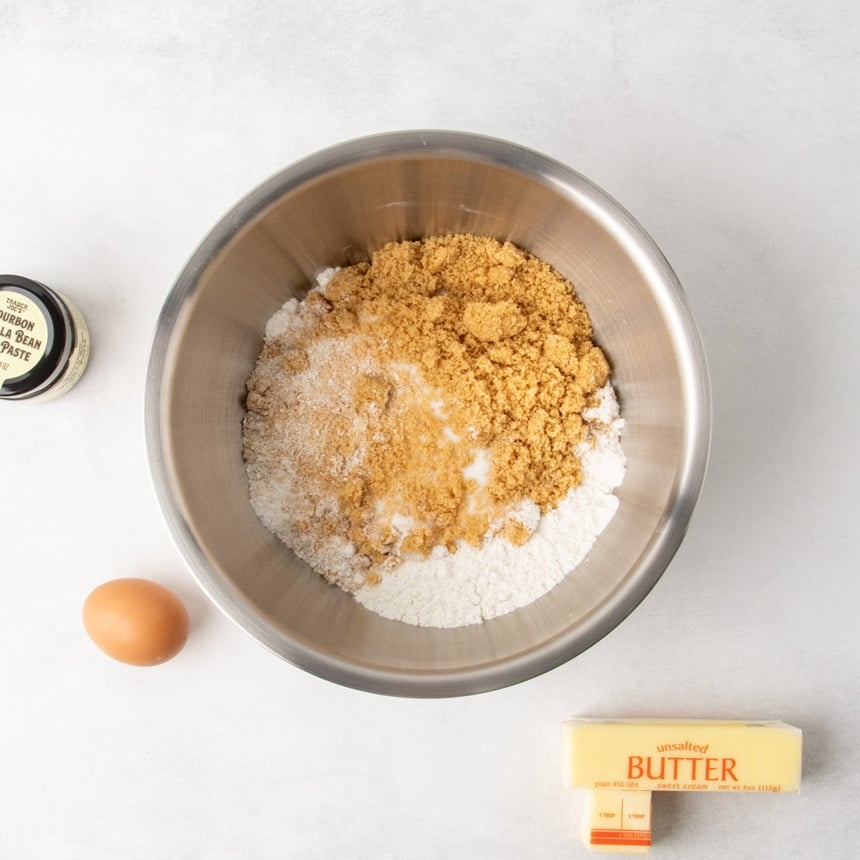
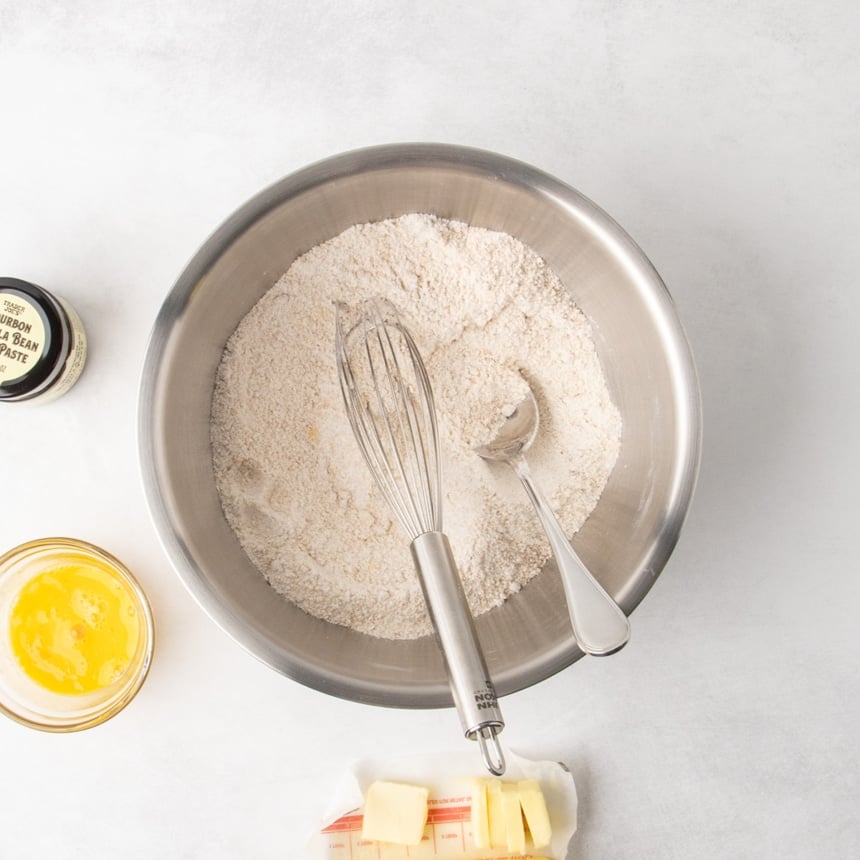
Combine the dry ingredients
Whisk together the flour blend with xanthan gum, ground oats, granulated and light brown sugars, baking soda, and salt in a mixing bowl to avoid any pockets of unmixed ingredients.
Mix in the butter
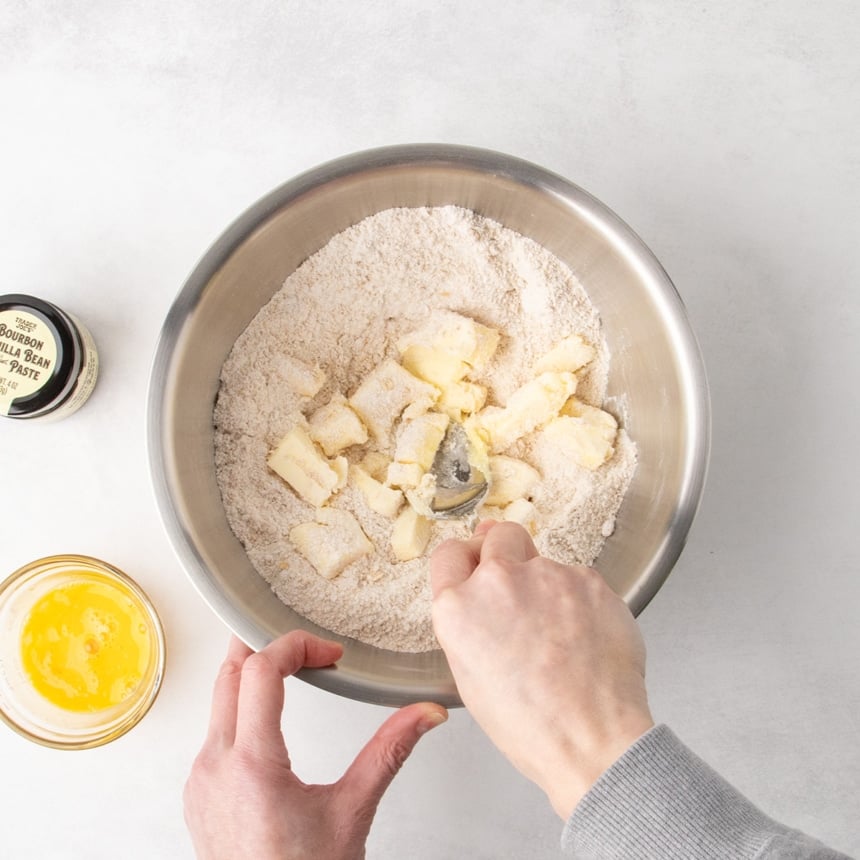
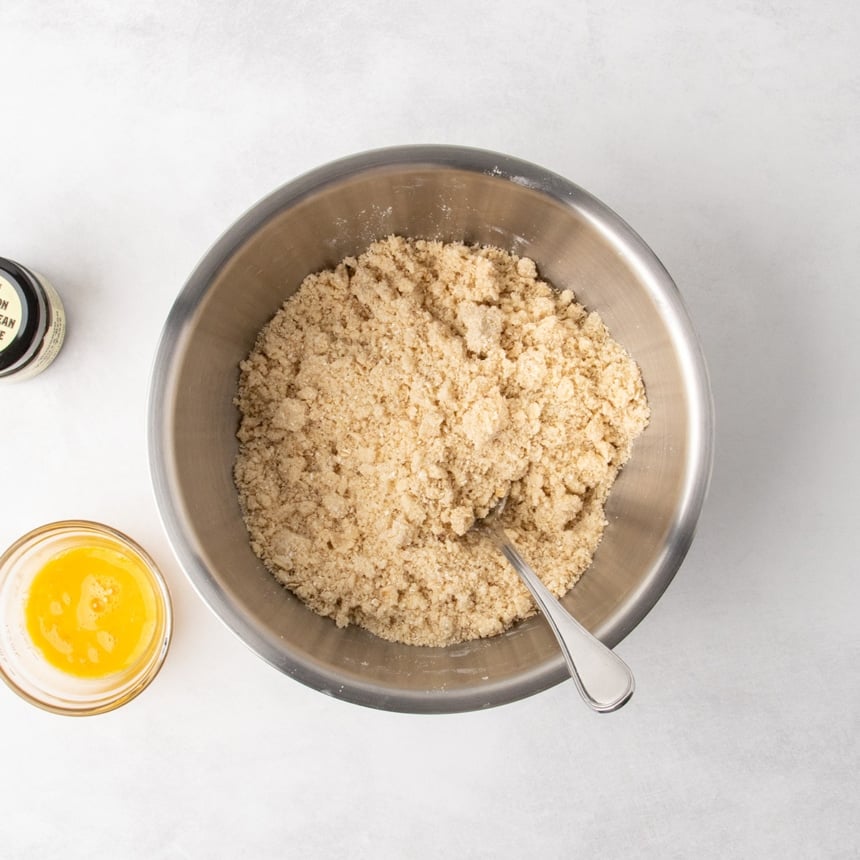
Chop room temperature butter into large chunks, each about a tablespoon, and toss it in the dry ingredients. Press down firmly with the underside of a mixing spoon to work in the pieces of butter until it resembles coarse, moistened crumbs. This helps ensure everything mixes together well, and helps control the spread by coating the butter in the flours.
Add the egg and vanilla
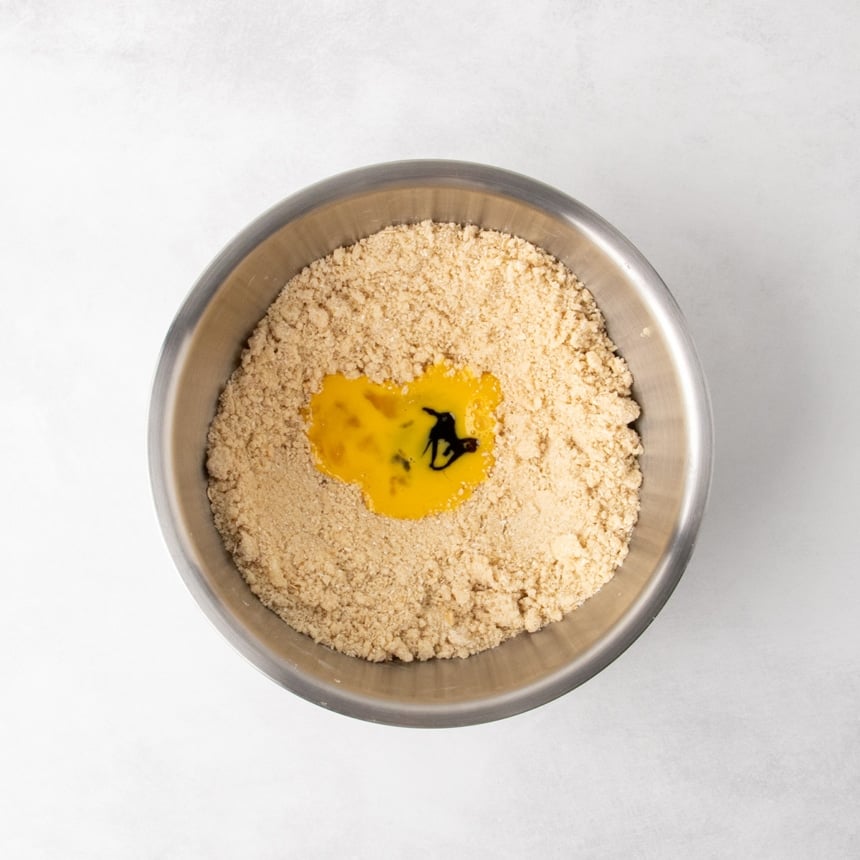
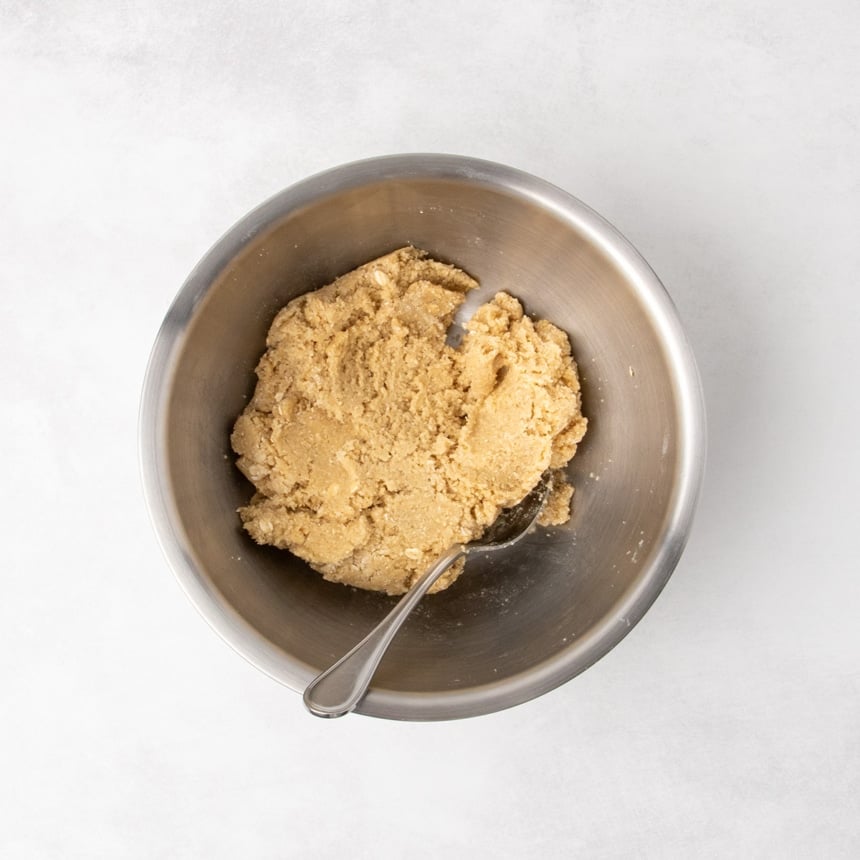
Create a small well in the center of the bowl, add the beaten egg and vanilla, and mix to combine into a smooth, cohesive light brown cookie dough. It should be thick and somewhat stiff, but not at all dry.
Portion the cookies
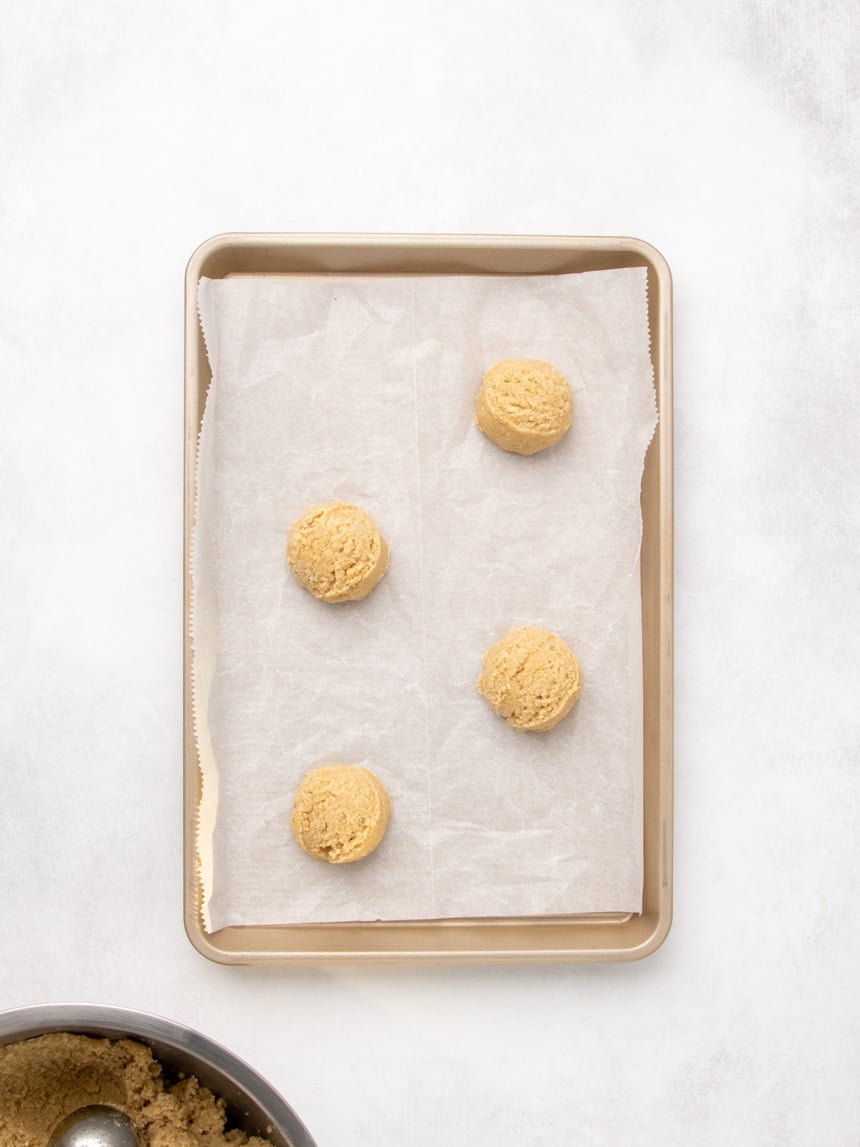
Fill a medium spring-loaded ice cream scoop, like a #40 scoop (or an OXO medium scoop) all the way to create portions of dough that each weigh about 2 ounces.
Don’t chill the cookie dough before baking it. You want the cookie dough to spread in the oven, and you want it to have plenty of chew. If you let the cookie dough sit for too long or you chill it before baking, the ground oats will soften and you’ll lose some texture.
Bake the cookies
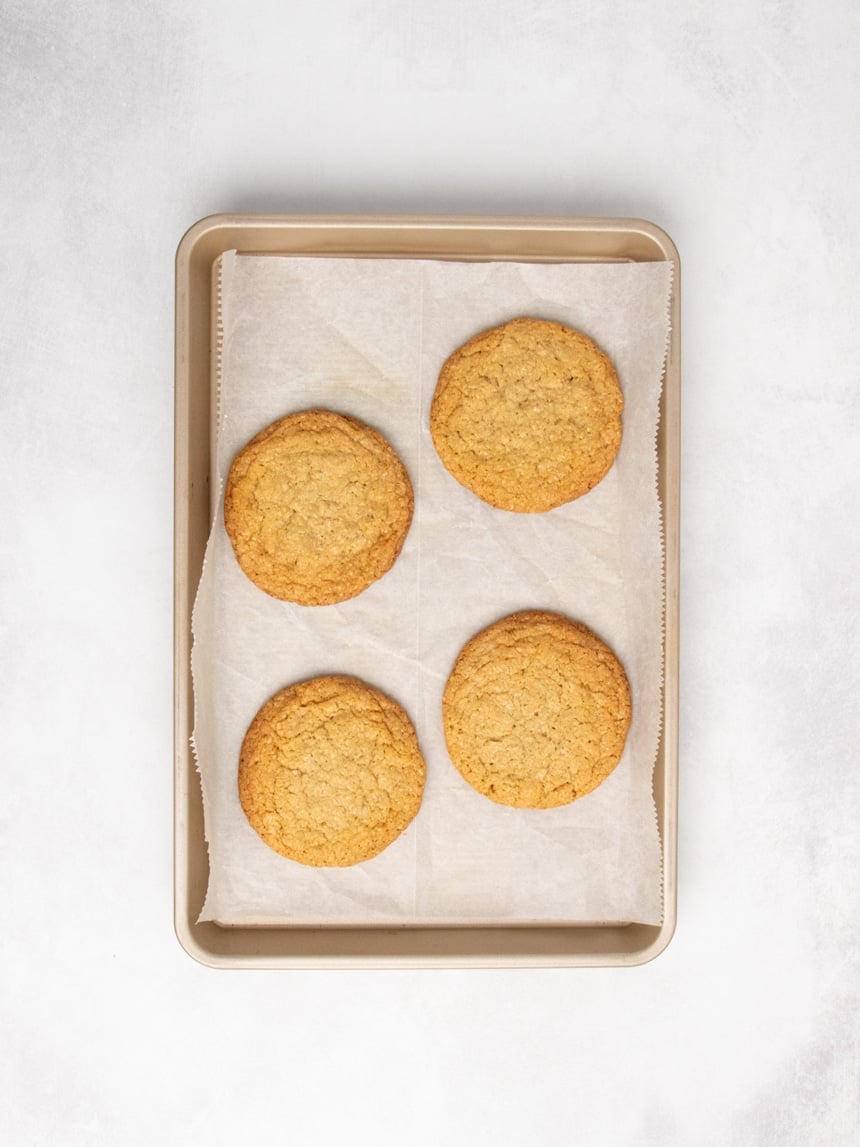
Place the portions at least 2 inches apart from each other on baking sheets so they have enough room to spread without overlapping. They’re done baking when they’re lightly golden brown all over and have spread to about 4-inches in diameter.
They’ll be fragile at first. Let them cool on the baking sheet for about 10 minutes before moving them to a wire rack to finish cooling.
Make the filling
Cream butter, some milk and vanilla with an electric mixer (handheld is fine) until creamy, then add just enough confectioners’ sugar to make a spreadable filling that holds its shape but is soft enough for you to pipe it. I like to add some meringue powder to like we do with our cut-out gluten free sugar cookies to stiffen the filling and make it more stable.
Fill the cookies
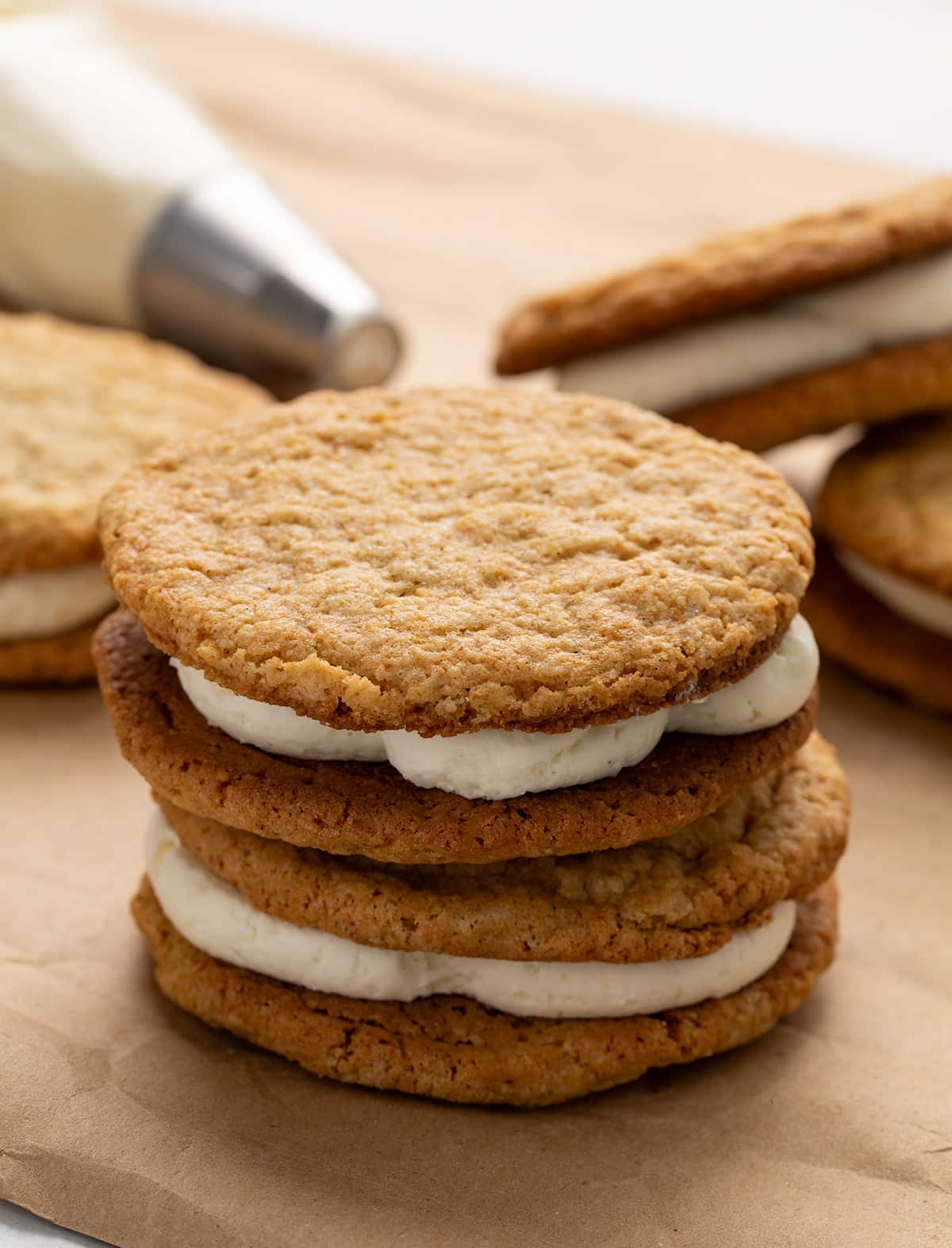
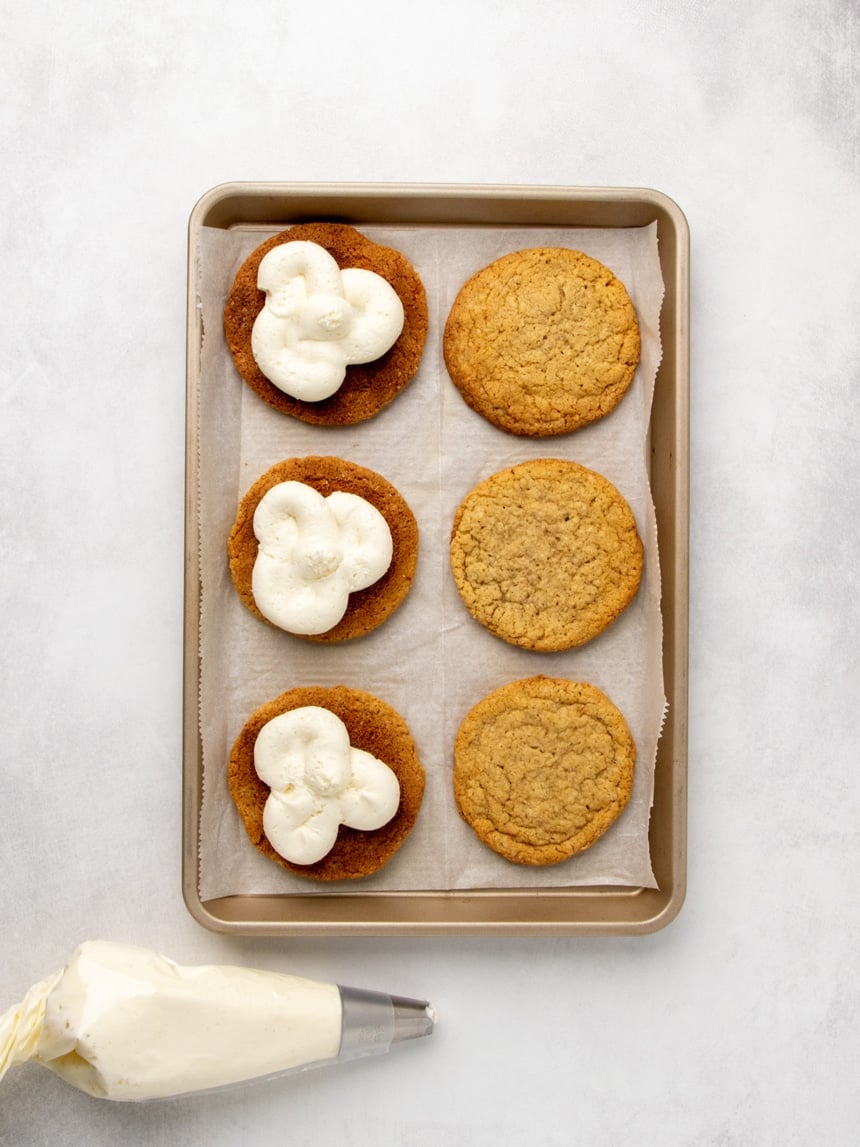
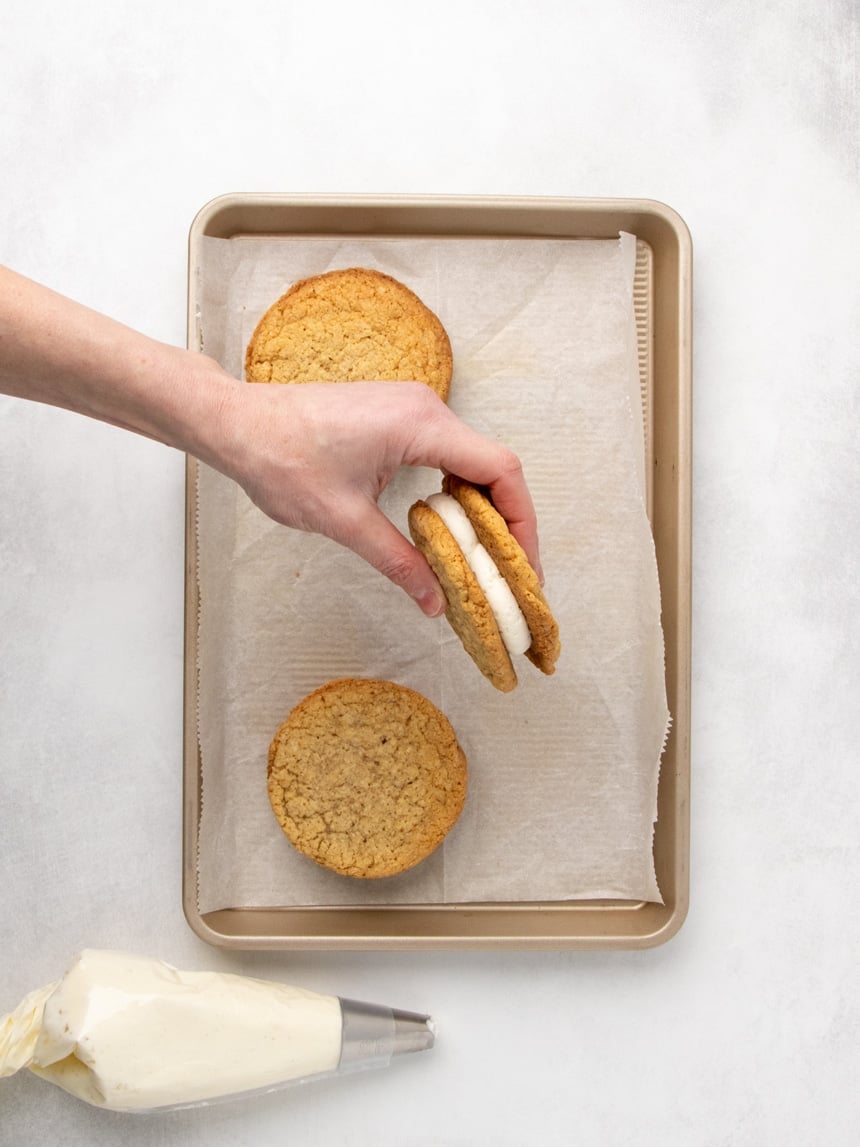
Spoon the filling into a piping bag fitted with a large open piping tip, or a zip-top bag and snip off the corner. Pipe a thick layer of filling on the underside of half of the cookies. For an authentic design from the side of each pie, make a 3-leaf clover shape with the filling before pressing the other cookies on top to sandwich.
Ingredient substitutions
If you’re avoiding other allergens, here are my suggested workarounds:
Dairy free
In place of butter, try block-style vegan butter like Melt, Miyoko’s, or Trader Joe’s brand. The cookies will probably spread a bit more, so you can also try adding about 10 grams more gluten free flour blend. In the filling, melting isn’t an issue, but don’t skip the meringue powder which helps firm it up.
Egg free
Try replacing the one egg with a chia egg, flax egg (which imparts a bitter flavor, but as it’s only one it might not matter), or try increasing the gluten free flour blend by 10 grams and adding 25 grams Greek-style plain yogurt. Just leave the meringue powder out of the filling recipe to make it egg-free and use a bit less milk to keep the filling firm enough.
If you need a bigger batch to serve to your family, make some of my oatmeal breakfast bars too.
Gluten Free Oatmeal Cream Pies Recipe
Tell Google you trust GFOAS!
Equipment
- Handheld mixer or stand mixer with paddle attachment, for making filling
- Piping bag with large open piping tip, for piping filling
Ingredients
For the cookies
- 1 ¼ cups (175 g) all purpose gluten free flour blend, (See Recipe Notes)
- ⅜ teaspoon xanthan gum, omit if your blend already contains it
- 1 ¼ cups (125 g) gluten free rolled oats, pulsed in a blender until only a few large pieces remain
- ½ teaspoon baking soda
- ¼ teaspoon kosher salt
- ½ cup (100 g) granulated sugar
- ½ cup (109 g) packed light brown sugar
- 10 tablespoons (140 g) unsalted butter, at room temperature
- 1 (50 g out of shell) egg, at room temperature, beaten
- 1 teaspoon pure vanilla bean paste, or pure vanilla extract
For the filling
- 10 tablespoons (140 g) unsalted butter, at room temperature
- 2 tablespoons milk, at room temperature, plus more by the teaspoonful
- 2 teaspoons vanilla bean paste, or pure vanilla extract
- ⅛ teaspoon kosher salt
- 4 cups (460 g) confectioners’ sugar, plus more, as needed
- 2 tablespoons meringue powder
Instructions
Make the cookies
- Preheat your oven to 325°F. Line rimmed baking sheets with unbleached parchment paper. Set aside.
- In a large bowl, place the flour, xanthan gum, processed oats, baking soda, salt, granulated sugar, and brown sugar, and whisk to combine well.
- Chop the butter into large chunks, and work it into the dry ingredients by pressing the butter down with the bottom of the bowl of a mixing spoon. Break up any lumps in the brown sugar at the same time, and keep working until the mixture resembles coarse, moist crumbs.
- Create a well in the center of the mixture, add the egg, and vanilla, and mix to combine. The dough should be thick and relatively stiff.
- Scoop the dough into about 12 pieces of relatively equal size, about 2 ounces each. Roll each into a smooth ball about 1 1/2-inches in diameter.
- Place the pieces of dough 2 inches apart on the prepared baking sheets. Bake in the center of the preheated oven until the cookies are lightly golden brown all over and set in the center (12 to 14 minutes).
- Allow the cookies to cool on the baking sheets until stable (about 10 minutes) before transferring to a wire rack to cool completely.
Make the filling
- In the bowl of a stand mixer fitted with the paddle attachment, or a large bowl with a hand mixer, place the butter, milk, and vanilla, and beat on medium speed until well-combined. Raise the speed to high and beat until creamy (about 2 minutes).
- Add the salt and about 3 1/2 cups of the confectioners’ sugar. Mix slowly until the sugar is incorporated.
- Beat at high speed until uniformly thick. It's done when it's soft enough to pipe easily but still stiff enough to hold its shape (about 2 minutes more).
- Beat in the meringue powder and as much of the remaining 1/2 cup of the confectioners’ sugar as necessary to thicken the frosting. If it gets too thick, add add more milk by the teaspoonful, beating well after each addition,
Assemble the pies
- Transfer the filling to a pastry bag fitted with a 1/2-inch plain piping tip.
- Once the cookies are completely cool, place half of them on a flat surface, inverted.
- Pipe about 3 tablespoons of filling on the bottoms of the inverted cookies in the pattern of a 3 leaf clover (or in one large dollop).
- Top with the other cookies to sandwich, and serve.
Notes
I recommend Better Batter’s original blend without adding xanthan gum, Nicole’s Best multipurpose plus xanthan gum, Bob’s Red Mill 1-to-1 gluten free (in the blue bag) with an added 1/8 teaspoon xanthan gum so the cookies don’t crumble. For a DIY version of Better Batter or the original Cup4Cup blend, which would work well here, too, see our all purpose gluten free flour blends page.
Nutrition
Nutrition information is automatically calculated, so should only be used as an approximation.
Storage instructions
The filled snack cakes can be stored in a sealed glass container at room temperature and should maintain their texture for about 5 days.
For longer storage, seal ideally unfilled cookies tightly in freezer safe wrap or bag, and freeze for up to 2 months. Defrost at room temperature and fill as directed. Or wrap each filled pie tightly in freezer-safe wrap and freeze, then defrost at room temperature.











Hello, step 2 of making the filling says, to add salt. How much Salt? Thank you the cookies are baked to perfection! Great recipe.
Sincerely,
Angela
So sorry, I added 1/8 teaspoon of kosher salt to the filling ingredients list, which I unintentionally omitted.
These sound amazing!! I only have King Arthur brand 1:1 gf flour. Will that work? Does it also need extra xanthan gum?
I’m afraid I don’t recommend that flour blend, Alissa. It’s really quite gritty. Sorry!
Ok. Thank you! I’ll wait till I have more Bob’s Red Mill then. Thanks again!
Turned out great!!!
Can I leave the oats normal for added texture?
Hi, Kay, no that won’t work in this recipe. You’d need to make my classic gluten free oatmeal cookies if you want that more rustic texture.
Haven’t tried it yet, but sounds wonderful. I have a daughter & 2 granddaughters that need this recipe!
Thank you so much, Carolyn! They do need it. We all do! Little Debbie is just necessary. :)