

This post may contain affiliate links. Please read our disclosure policy.
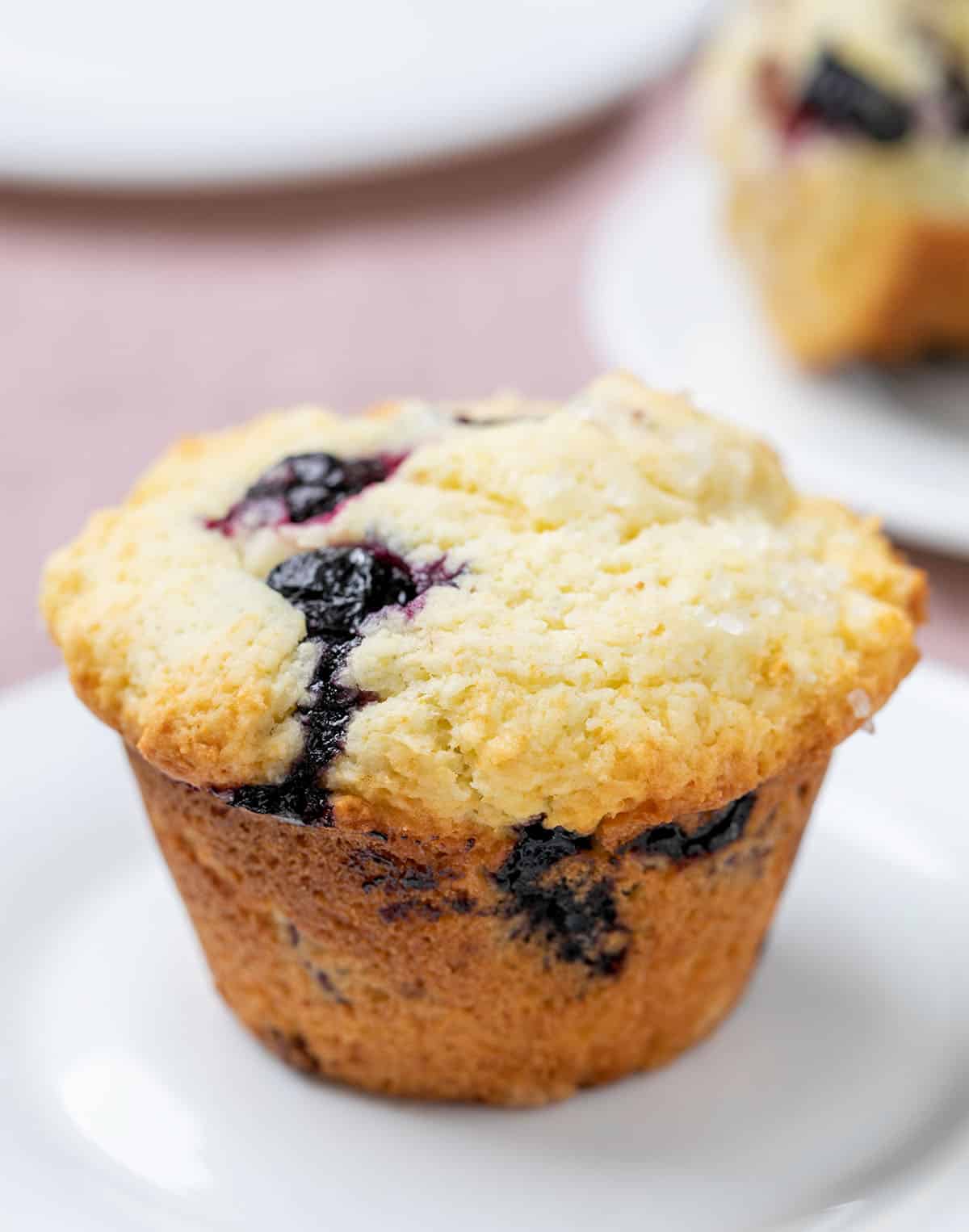
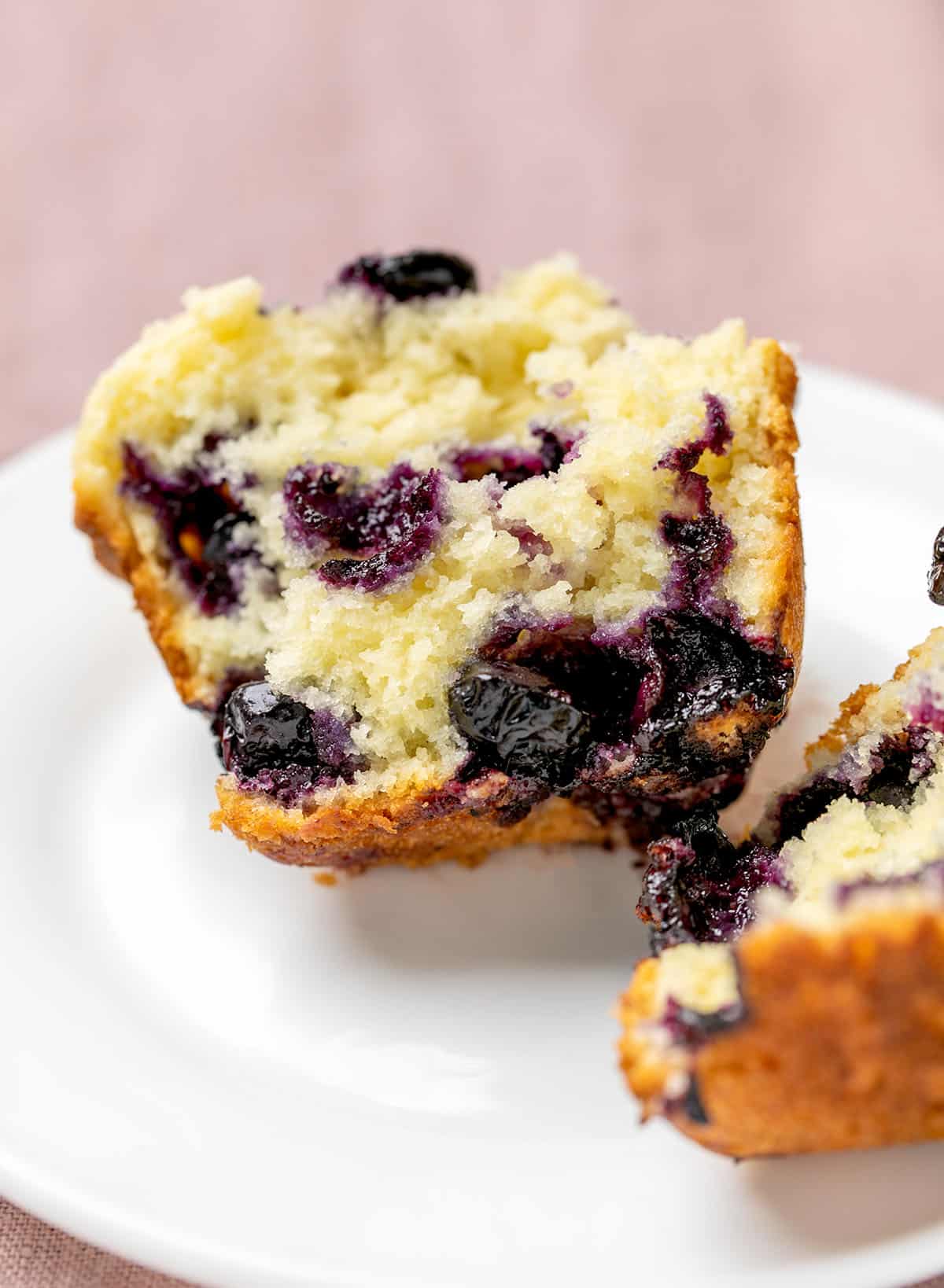
These tender, sweet gluten free blueberry muffins can hold plenty of juicy blueberries without sinking or collapsing, whether you use fresh or frozen berries.
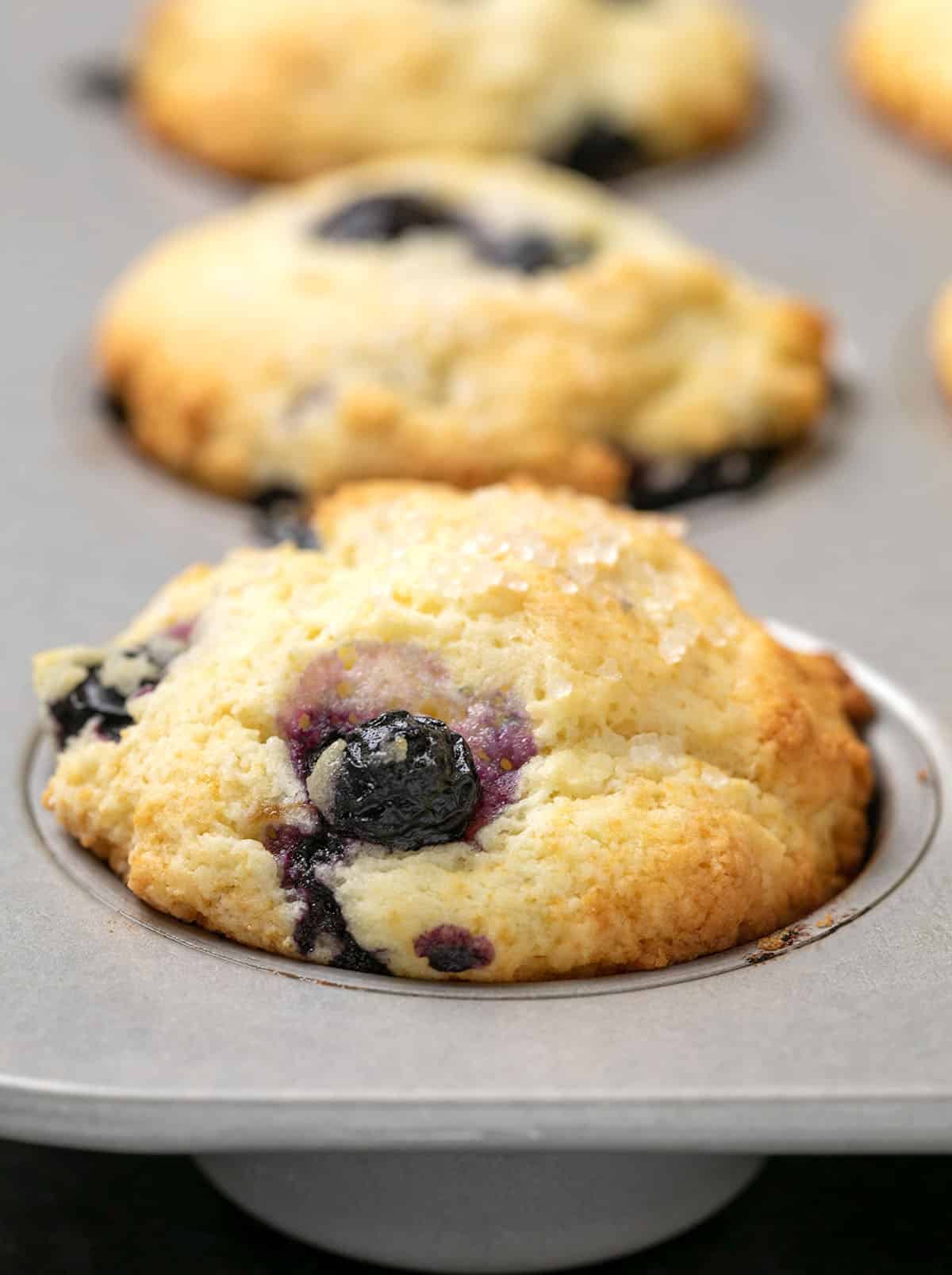
They rise high over the pan with big, craggy bakery-style tops without chilling the batter, using a special muffin tin, or even pulling out a mixer!

Why this recipe works
This isn’t just our basic gluten free muffin recipe with blueberries tossed in! A little extra xanthan gum gives the thick batter enough structure to support plenty of berries and rise into big bakery-style domes, while keeping the crumb soft and tender.
Fresh lemon juice activates the baking soda for extra lift and brightens the blueberry flavor. Buttermilk and melted butter add richness and flavor.
Starting at 400°F helps create high domes and crisp, golden edges. Then lowering the heat to 350°F lets the centers finish baking without burning the outside.
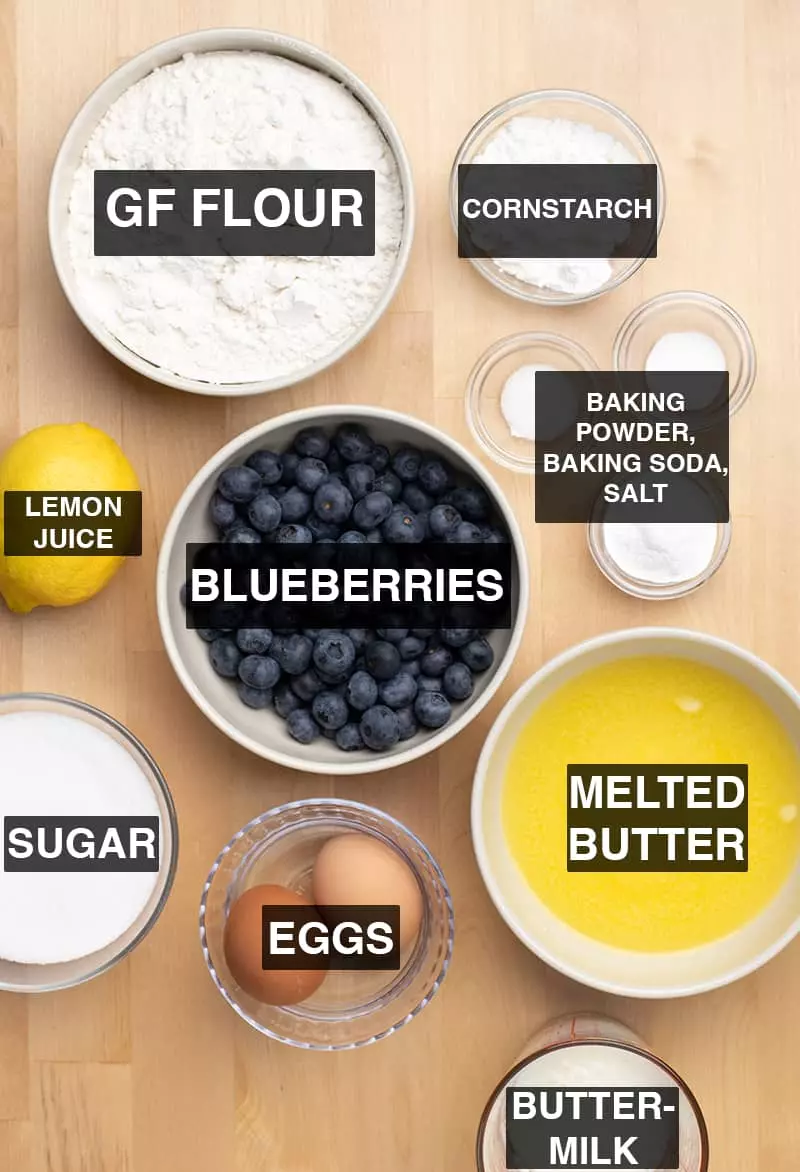
Recipe ingredients
Here’s what you’ll need to make these muffins, plus an explanation of the role each of the ingredients plays in a successful result:
- Buttermilk: Adds flavor, and creates a soft, tender crumb. Since it has less moisture than regular milk, it helps to maintain a tall muffin that doesn’t cave in as it cools.
- Melted butter: Adds buttery flavor, moisture and richness.
- Fresh lemon juice: Brightens and enhances the blueberry flavor and helps activate the baking soda for a taller rise.
- Eggs: Provide structure and lift.
- Gluten free flour blend: A well-balanced gluten free flour blend with superfine rice flour like Better Batter’s original blend or Nicole’s Best Multipurpose provides most of the structure to hold these muffins together, and create a nice, even rise. Bob’s Red Mill 1-to-1 gluten free baking flour also works, but adds a slight aftertaste.
- Xanthan gum: Traps moisture and traps gas bubbles from leavening agents. So skimping on it leads to a shorter rise and a more crumbly texture that becomes stale more quickly. In these muffins, I like to add an extra 1/4 teaspoon xanthan gum even to Better Batter, which already contains a fair amount of gum, for taller, fluffier and more tender muffins. If you’re using Nicole’s Best, which has no gum, add a slightly more generous than usual 1 1/2 teaspoons xanthan gum. If using Bob’s Red Mill 1-to-1, which has some gum but not usually enough, I recommend adding 3/4 teaspoon extra xanthan gum.
- Cornstarch: Helps the muffins crisp on the edges by adding some extra lightness to the flour blend.
- Baking powder: Ensure a high rise by releasing gas when activated both in and out of the oven (be sure to use double-acting powder).
- Baking soda: Contributes to rise when it reacts with the acid in lemon juice, and helps the muffins turn golden brown in the oven.
- Granulated sugar: Adds sweetness and locks in moisture for a tender crumb.
- Blueberries: Fresh or frozen (unthawed) berries break open in the oven to add juicy floral and sweet flavor plus moisture to keep the muffins soft inside.
How to make gluten free blueberry muffins (step by step photos)
Here’s a visual overview of how to make these muffins. For full recipe details, including ingredient amounts, scroll down to the recipe card:
Prep the oven and pan
Preheat your oven to 400°F. Grease or line a 12-cup muffin tin and set aside. I like to use muffin liners for extra support that helps the muffins rise tall.
Combine the wet ingredients
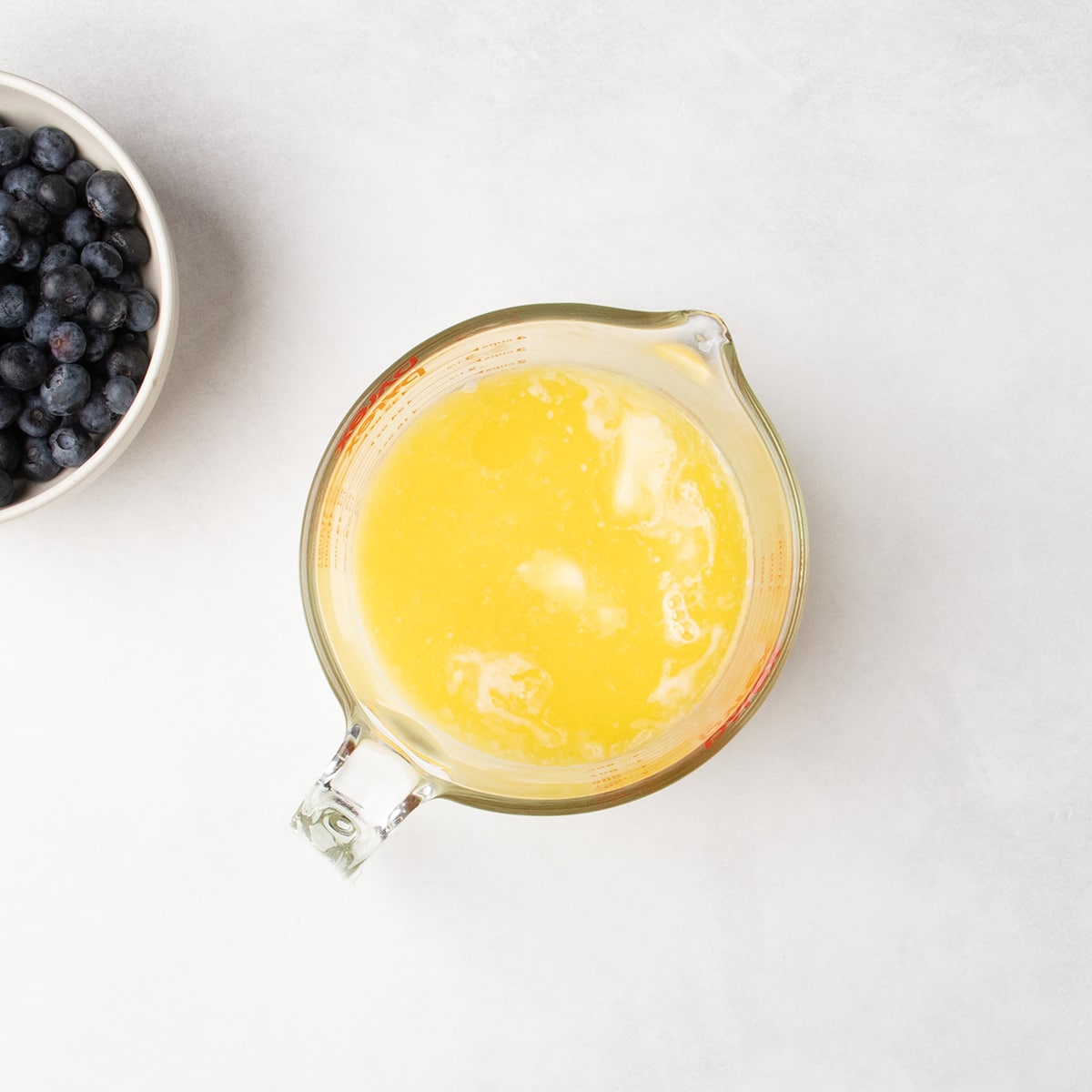
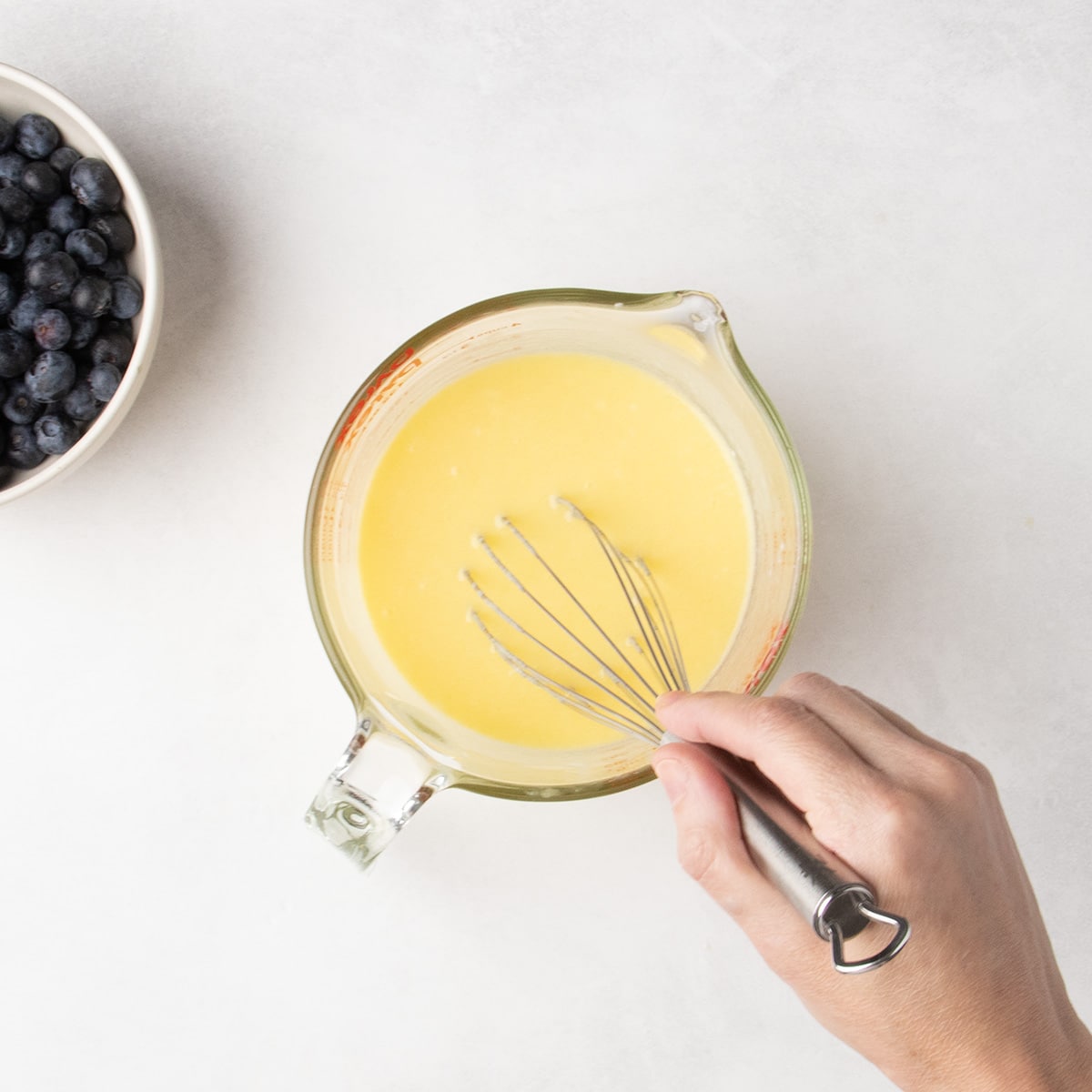
In a medium bowl, whisk together the melted and cooled butter, buttermilk, lemon juice, and eggs until smooth. This breaks up the egg yolks and makes it easier to combine with the dry ingredients without having to overmix and deflate the batter.
Whisk the dry ingredients
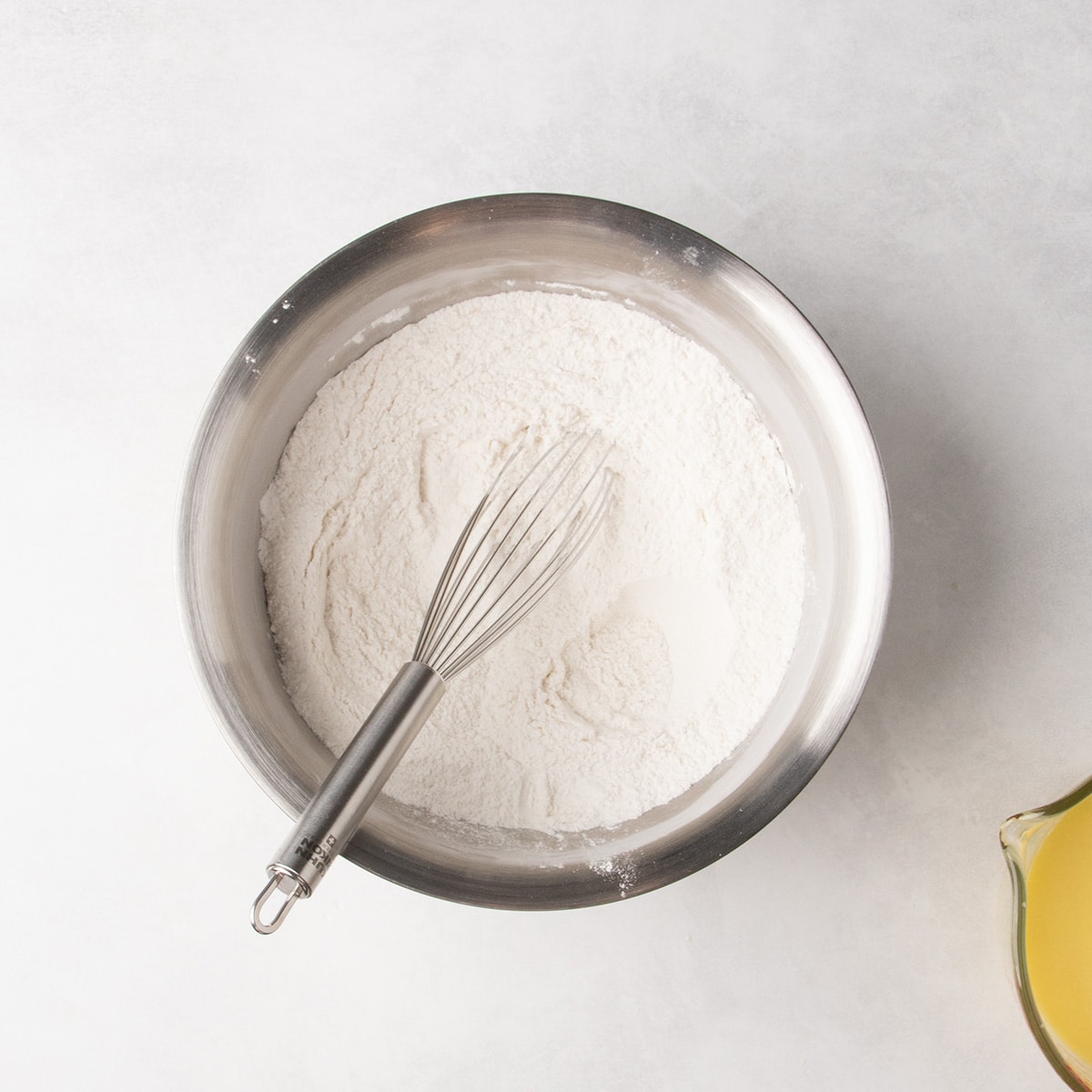
In a large mixing bowl, whisk together the gluten free flour blend, xanthan gum (remember to add more even if your blend already usually has enough), cornstarch, baking powder, baking soda, salt, and granulated sugar.
Coat the blueberries
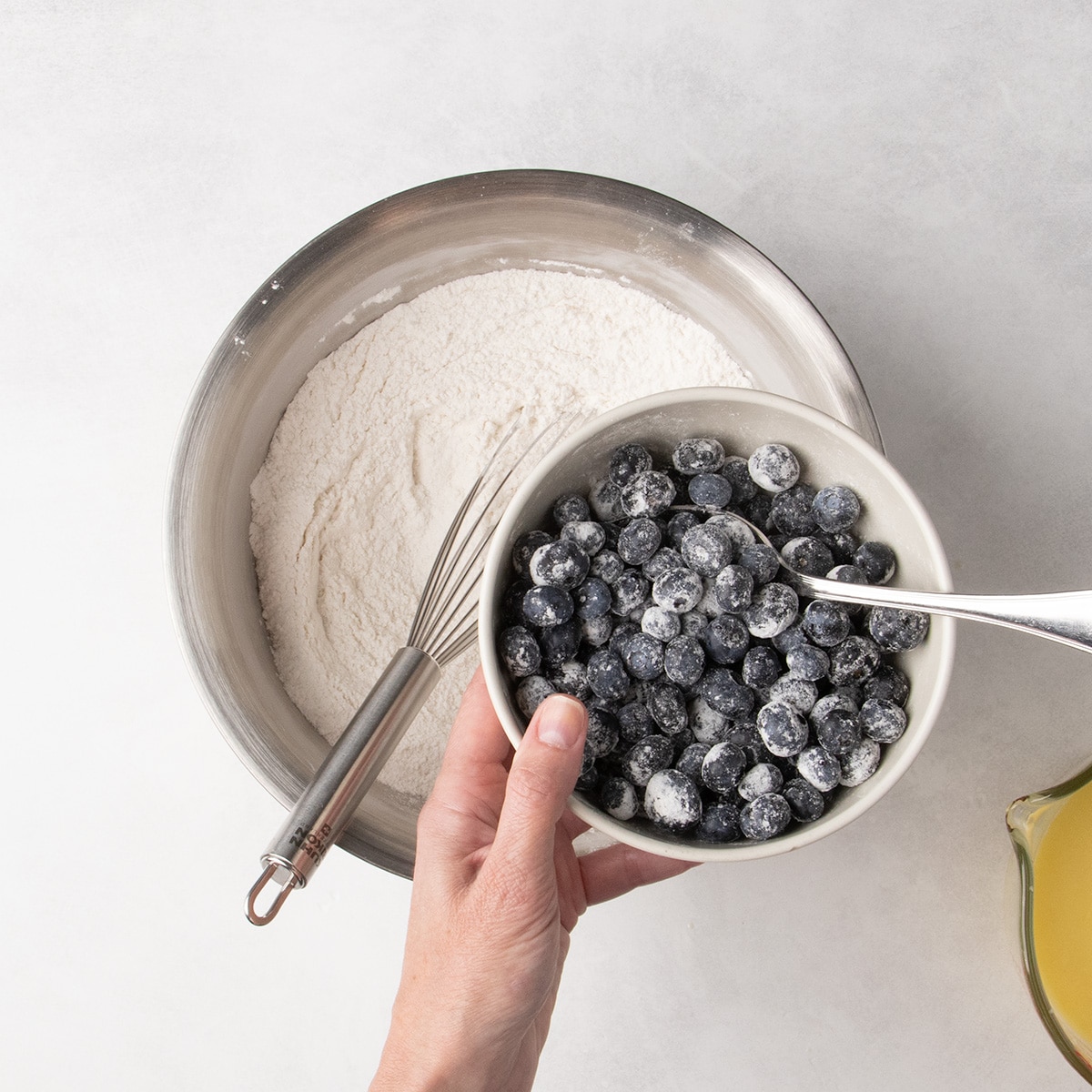
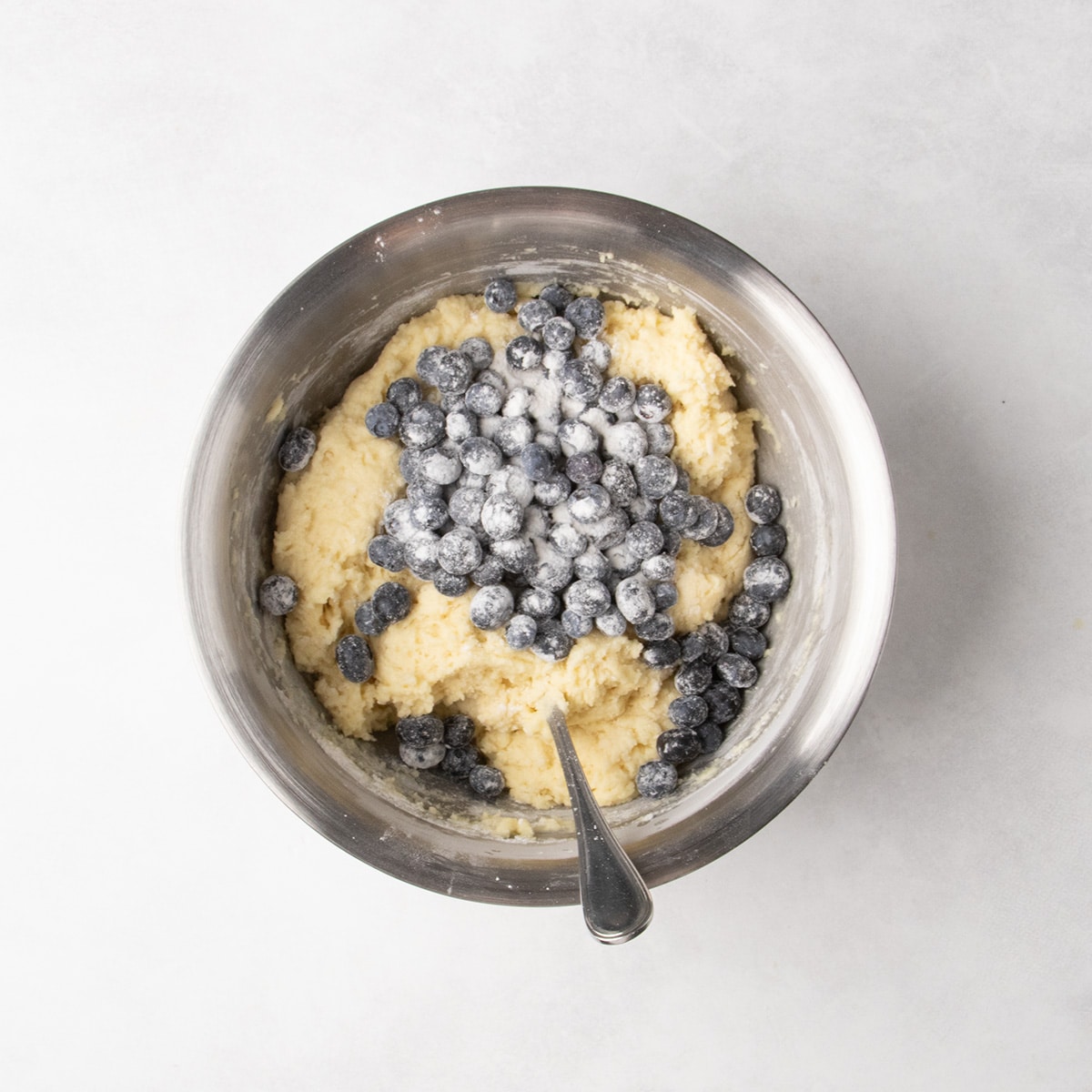
Toss the blueberries with about 1 tablespoon of the dry mixture, and set them aside. This will help suspend them in the batter, so they don’t sink to the bottom during baking.
Combine wet and dry
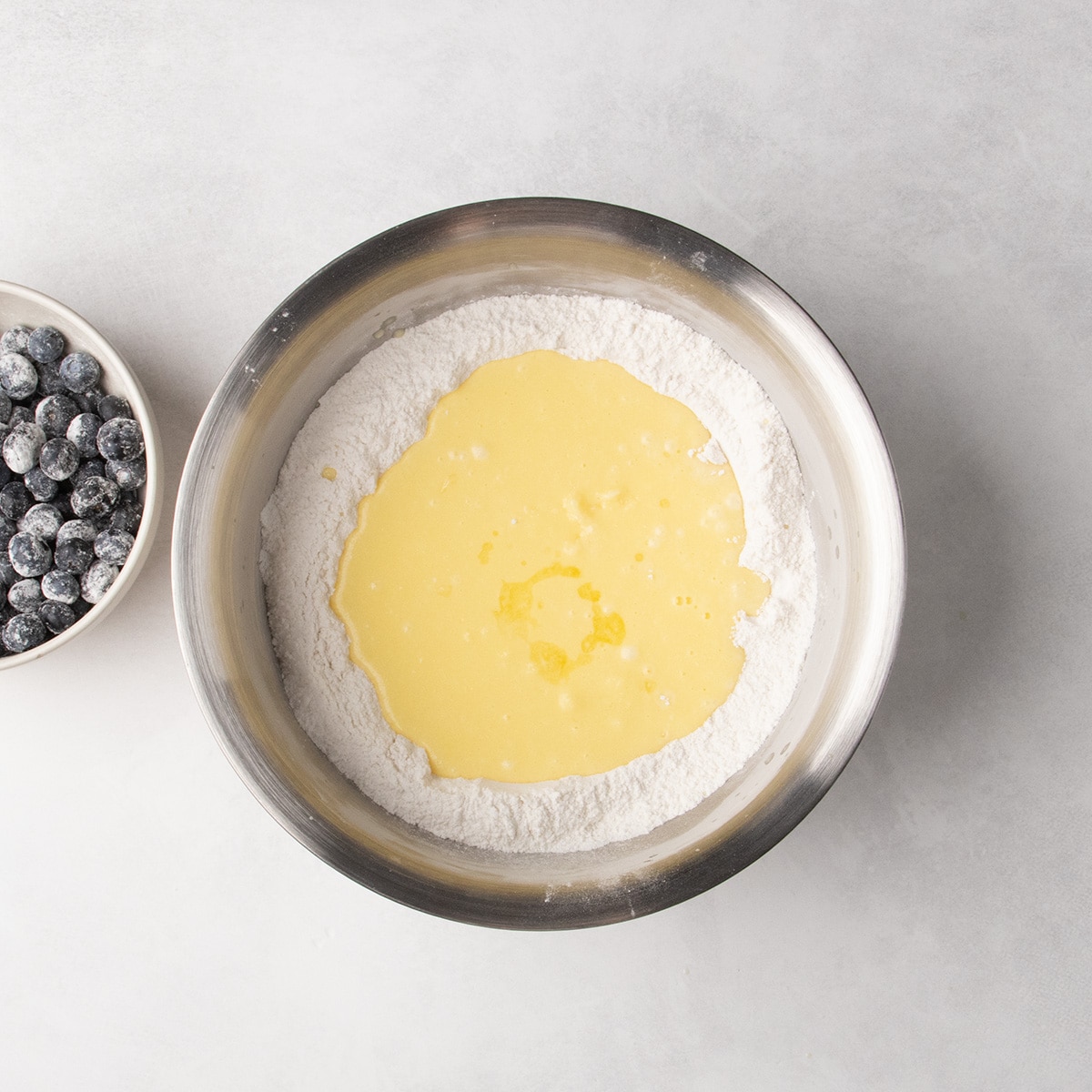
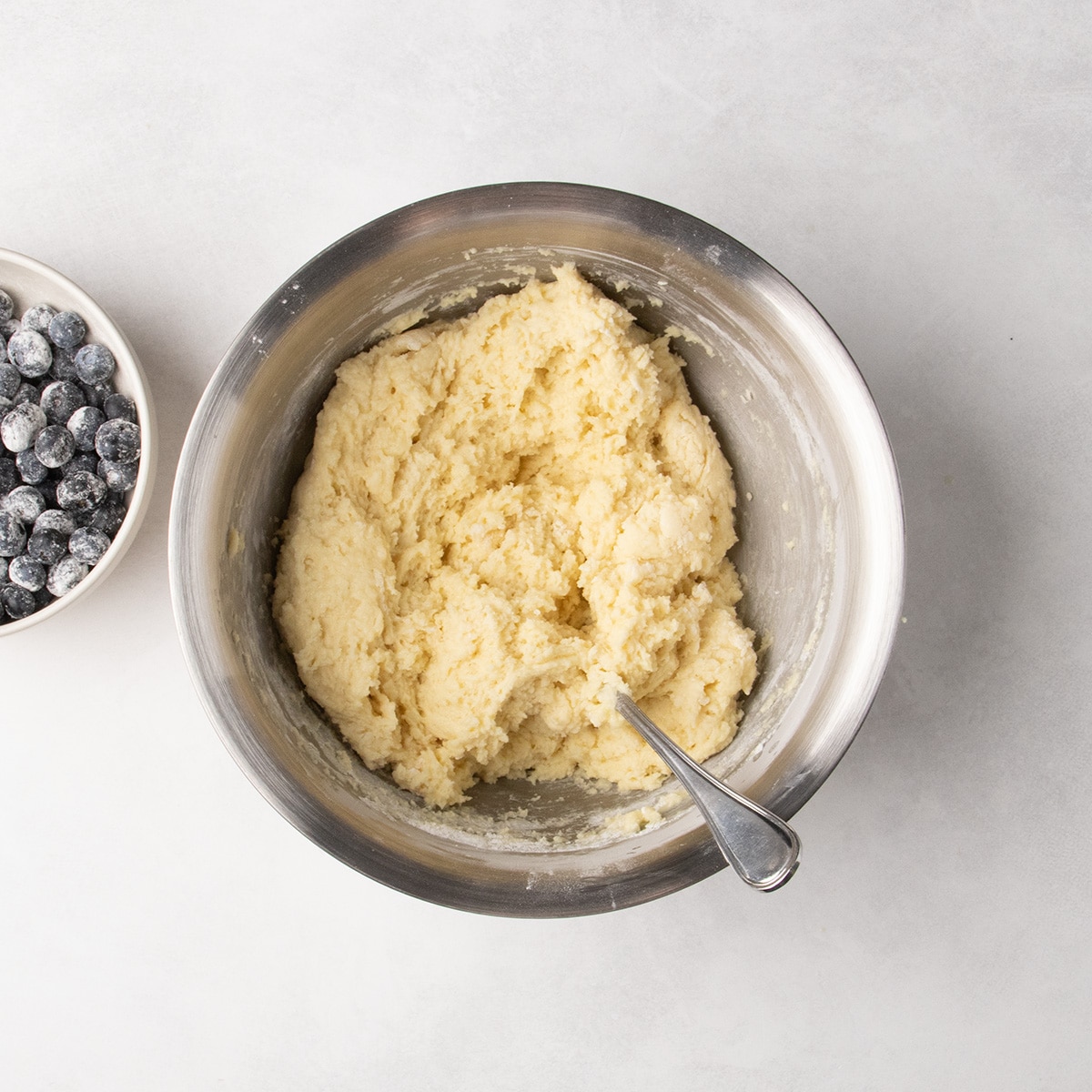
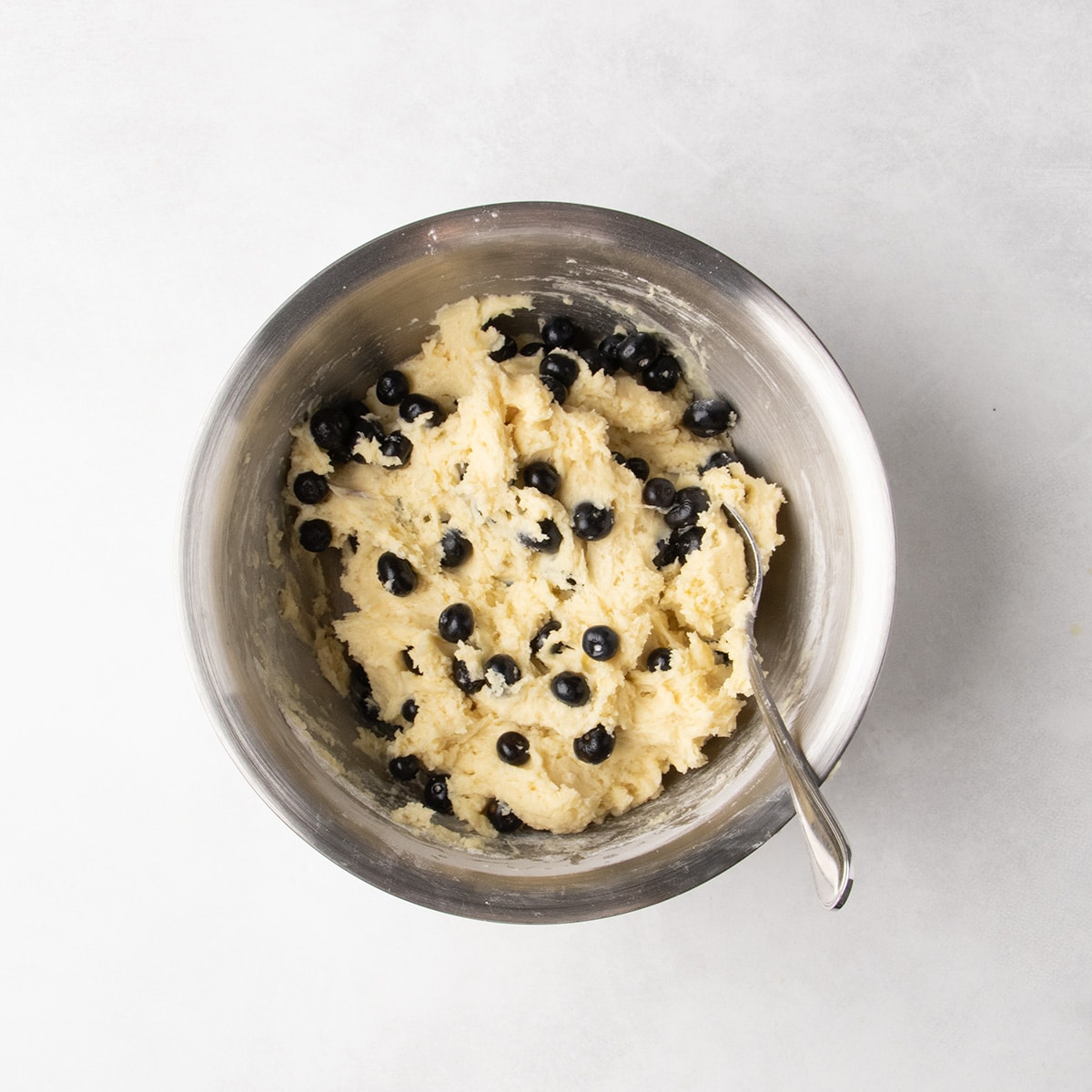
Use your mixing spoon to create a hole in the center of the dry ingredients, and pour in the wet mixture. Stir until combined, and expect that the batter will be thick, perfect for holding those berries in place, ensuring plenty of blueberry flavor and moisture in every bite.
Fold in the berries
Gently fold in the coated blueberries just until evenly distributed. Adding them in last makes it easier to avoid them bursting, which will turn the batter blue and make the batter too wet, which could cause them to cave in.
Fill the muffin tin
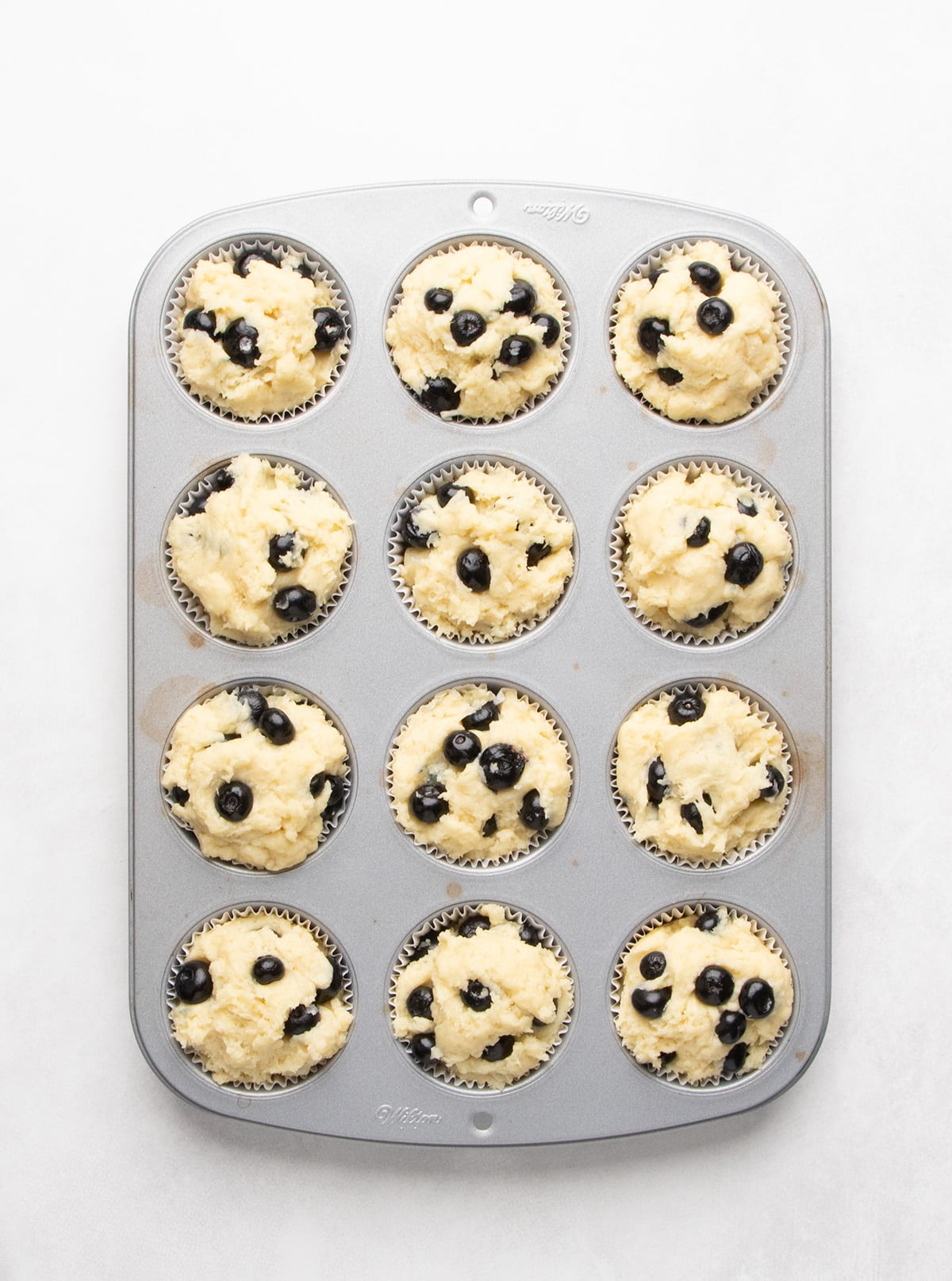
Divide the batter evenly among the muffin cups, filling them completely full for that big muffin dome. Pile the batter a bit toward the center of each well to encourage the shape even more, if possible, evening out the batter in each well as needed.
Add the topping
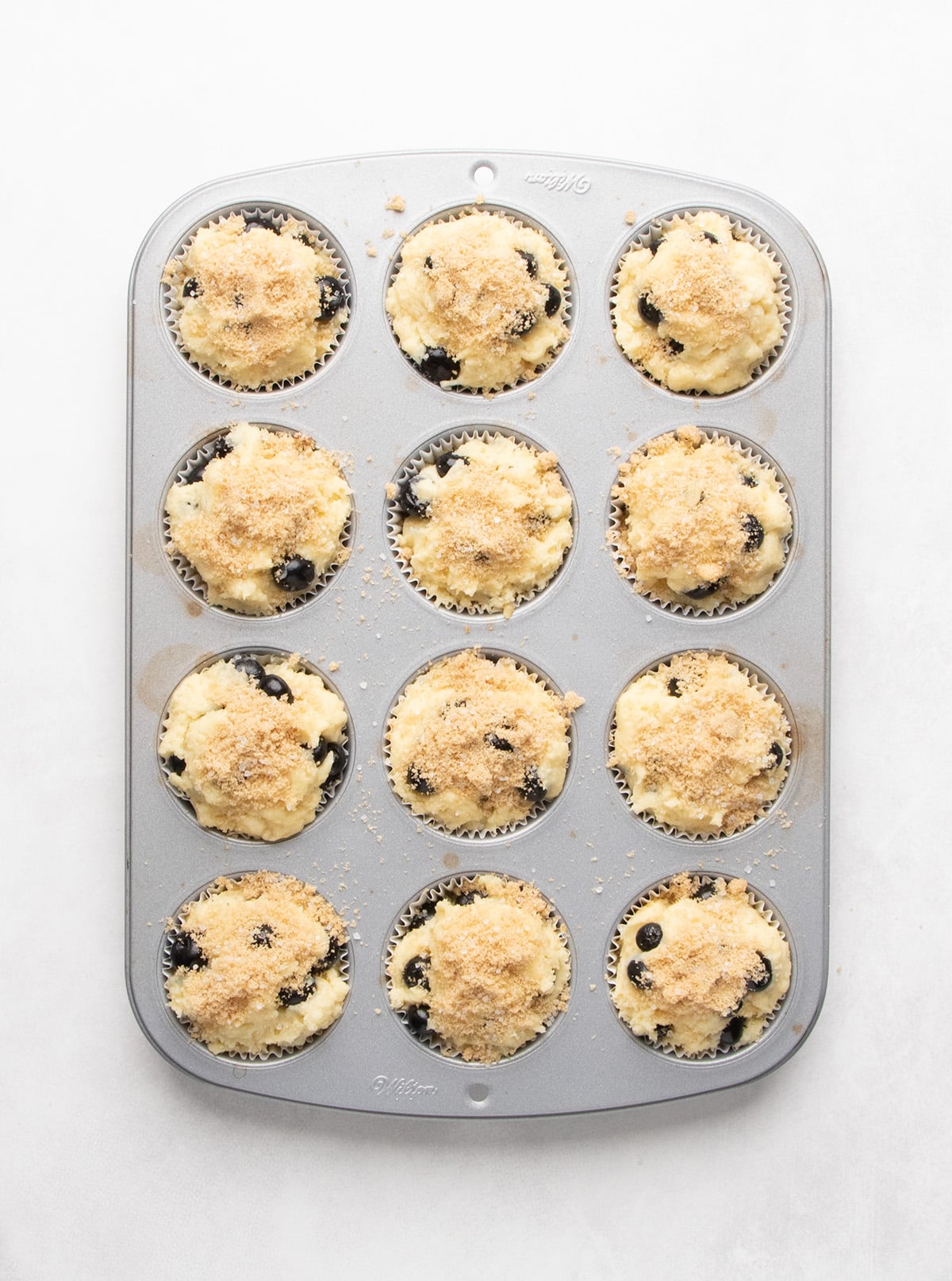
Brush the top with melted butter and sprinkle with coarse sugar, and/or sprinkle the tops with brown sugar for some extra flavor and a light, crispy shell on top.
Bake
Bake at 400°F for 10 minutes, then reduce the temperature to 350°F and bake for another 10 to 12 minutes. Ovens (and gluten free flour blends, even among my recommended ones) are all different, so baking times are always approximate. Pay less attention to the time on a timer and more to doneness cues like a toothpick inserted in the center coming out withe a few moist crumbs attached and the muffins springing back when pressed gently in the center.

Cool
Let the muffins cool in the tin for 10 minutes to allow the starches to reassemble into a more stable structure (called retrogradation!), then transfer to a wire rack to finish cooling. Waiting a bit will help keep the muffins from falling apart, and cooling them on a wire rack will prevent them from steaming in the muffin tin, turning the crumb unpleasantly chewy.
Expert tips
Start hot for a high dome
Begin baking at 400°F for the first 10 minutes, then lower to 350°F to finish. The high heat activates the baking powder quickly and crisps the outside, helping to create and keep that classic domed top.
Don’t thaw frozen blueberries
Use them straight from the freezer to prevent bleeding or wilting. Thawed berries break down and turn your batter purple and weigh down the batter, which clean lead to caving in during cooling.
Coat berries in flour
Tossing fresh or frozen berries in a tablespoon of the dry ingredients helps suspend them in the thick batter so they don’t sink.
Fill the wells up
All muffin wells differ slightly in size. In my classic Wilton tins, this recipe fills all 12 wells to the tippy-top, which is what you want for large bakery-style domes. If your batter won’t fill all 12 fully, try leaving one well empty and dividing the remaining batter among 11 instead. To ensure even baking, you can fill the empty well with water before baking.

Ingredient substitutions
Dairy free
In place of buttermilk, try half plain dairy-free yogurt and half unsweetened nondairy milk (like coconut milk in the carton or soy milk). Instead of butter, try block-style vegan butter like Miyoko’s or Melt brands. Avoid tub-style spreads or oil that’s liquid at room temperature, since they’re too soft and oily and the crumb will be spongy and oily.
Egg free
Try replacing each egg with a chia egg, Bob’s Red Mill Egg Replacer, or JustEgg refrigerated liquid egg substitute. Expect slightly less lift, but still a good crumb.
Corn free
Use arrowroot starch or potato starch in place of cornstarch. Either one works well for tender muffins. If you can’t have corn, Nicole’s Best Multipurpose won’t be right for you.
Blueberry alternatives
You can sub in raspberries (fresh or frozen), but if you’re craving strawberries, try my gluten free strawberry muffins instead, since they’re formulated specifically for the particular moisture content and behavior in the oven of that fruit.
Storage instructions
Room temperature
Store fully cooled muffins in an airtight container at room temperature for up to 2 days. Wrap individually in plastic wrap for best texture.
Freezer-friendly
These muffins freeze beautifully. Place completely cooled muffins on a baking sheet to flash-freeze, then transfer to a freezer-safe container or zip-top bag.
To reheat
- Toaster oven: For a crisp edge and warm center, sprinkle lightly with water and bake at 250°F for 5 minutes or until warmed through.
- Microwave: Heat a frozen muffin for 30 to 45 seconds at 50% power.
Gluten Free Blueberry Muffins Recipe
Tell Google you trust GFOAS!
Ingredients
For the muffin batter
- ¾ cup (6 fluid ounces) buttermilk, at room temperature
- 10 tablespoons (140 g) unsalted butter, melted and cooled
- 3 tablespoons freshly-squeezed lemon juice
- 2 (100 g out of shell) eggs, at room temperature
- 2 ½ cups (350 g) all purpose gluten free flour blend, (See Recipe Notes)
- 1 ½ teaspoons xanthan gum, (See Recipe Notes)
- ¼ cup (36 g) cornstarch
- 4 teaspoons baking powder
- ½ teaspoon baking soda
- ½ teaspoon kosher salt
- 1 cup (200 g) granulated sugar
- 1 ¼ cups (250 g) fresh or frozen blueberries, (See Recipe Notes)
For topping
- 1 tablespoon (14 g) unsalted butter, melted, optional
- Coarse sugar, for sprinkling, optional
- 2 tablespoons packed light brown sugar, optional, for sprinkling
Instructions
Make the muffin batter
- Preheat your oven to 400°F. Grease and/or line a 12-cup muffin tin with muffins liners. Set it aside.
- In a medium bowl, whisk together the buttermilk, melted butter, lemon juice, and eggs until well combined.
- In a large mixing bowl, whisk together the flour, xanthan gum, cornstarch, baking powder, baking soda, salt, and sugar.
- Toss the blueberries in about 1 tablespoon of the dry mixture to coat. Set them aside.
- Create a well in the center of the dry ingredients. Add the wet mixture and mix until just combined. The batter will be thick.
- Use a silicone spatula to gently fold in the floured blueberries until evenly distributed, taking care not to burst the berries.
- Divide the batter evenly among the muffin cups, piling it a bit more toward the center of each well, if possible. The cups should be completely full.
- Brush the tops with melted butter and sprinkle with coarse sugar, if using. And/or sprinkling the brown sugar evenly on top.
Bake the muffins
- Bake at 400°F for 10 minutes. Then reduce the heat to 350°F.
- Finish baking the muffins at 350°F until a toothpick inserted in the center (and not in a blueberry) comes out with no more than a few moist crumbs attached (10 to 12 minutes more). When the muffins are done baking, the tops will also spring back when pressed gently in the center.
- Let muffins cool in the tin for 10 minutes before transferring to a wire rack to cool completely.
Video
Notes
These muffins work best with a well-balanced gluten free flour blend like Better Batter, with an extra 1/4 teaspoon xanthan gum for taller muffins, or Nicole’s Best with 1 1/2 teaspoons xanthan gum (a bit more than usual per cup for muffins, so they rise tall). If using Bob’s Red Mill 1-to-1, add 3/4 teaspoon extra xanthan gum to avoid a crumbly texture since the blend has some, but not enough, binder. For DIY blend instructions, visit my all purpose GF flour blends guide. Using frozen blueberries
Don’t thaw them! Use straight from the freezer and toss in dry ingredients before folding into the batter. Dairy free version
Use half plain dairy-free yogurt and half unsweetened non-dairy milk, by volume, instead of buttermilk. Swap butter for block-style vegan butter (like Miyoko’s or Melt brand). And be sure to choose a dairy free flour blend.
Nutrition
Nutrition information is automatically calculated, so should only be used as an approximation.
FAQs
Not quite. Buttermilk is thicker and more acidic than milk, which helps create a tender crumb. For the best results, use half plain yogurt or sour cream and half milk as a substitute.
It adds brightness and balances the sweetness. It also enhances the blueberry flavor. You can substitute ½ teaspoon vanilla extract if you don’t have lemon juice.
No, this batter is formulated specifically for muffins. For a gluten free blueberry loaf, try my gluten free blueberry bread.
Yes! Bake at 400°F for 5 minutes, then reduce to 350°F and bake for about 9 more minutes, or until a toothpick comes out clean.
You can refrigerate it in the muffin tin, covered. Let it sit at room temperature for 20 to 30 minutes before baking for the best rise.










Can you make these in a mini muffin pan?
I don’t see why not, Jo. Mini muffin tins vary quite dramatically in size from one brand to another, though, so you’ll have to be careful about how much batter you put into each.
could I use Almond Flour instead of Gluten free Flour?
No, you definitely can’t use almond flour as a replacement for an all purpose gluten free flour blend. You’d need a recipe developed for almond flour. I do have an almond flour muffins recipe (please use the search function), but other than that a Paleo blog will be a better bet for your needs.
I never comment on recipes but these were fabulous! After a recently discovered gluten sensitivity for my daughter I’ve been attempting gluten free recipes and they have usually turned out mediocre at best (soggy, dry, etc.). These are definitely a keeper! I ran out of sugar so I used a little less and I topped with the melted butter with a bit of brown sugar. Yum!
Well, Kyra, I’m glad that you wouldn’t settle for mediocre! “Good, for gluten free” is just not good enough. :)
This may be a dumb question but is there a difference between a muffin tin and a cupcake pan? Are they shaped differently or are they different sizes? The reason I ask is I made a different muffin recipe using a cupcake pan and I had extra batter leftover. So I thought I’d ask before making this recipe.
Nope. Same thing. :)
Perfect!! I used the vanilla instead of lemon because my kids don’t like lemon and they were delicious!! I used Kind Arthur 1:1 gluten free flour.
I don’t know what I did wrong but it tasted….grainy or chalky. Like, the 4 teaspoons of baking soda plus a 1/4 cup of cornstarch just made it taste so odd. I’m trying to eat gluten free in solidarity for my grandson who has a wheat allergy but I don’t think I can do this. Fortunately, he doesn’t like blueberry muffins so if I make them with regular flour he won’t mind. I think I need to give up on gluten free muffins. :(
If your gluten free baked goods taste grainy, you’re using an inferior flour blend, Cara. I’d take a look at the blend you’re using, and click on the link in the recipe associated with the “all purpose gluten free flour blend” for details on appropriate blends.
It says 4 tsp baking POWDER in the recipe , not baking soda. Perhaps that’s why they tasted odd?
Good point, Sharlana! I didn’t catch that. Thank you for pointing that out! If you do use 4 teaspoons of baking soda, these (and any other muffins) would taste like metal, soap, or a combination of the two—and the lack of a double-acting leavening agent would lead to flat muffins.
If you used 4 teaspoons of baking soda instead of baking powder of course they’re going to taste awful
I hadn’t even read that carefully, Karen. Good catch! 4 teaspoons of baking soda is never good, for anything!
Made these this morning for Mother’s Day and they turned out so so amazing! I used fresh raspberries, and did 1 tablespoon of almond extract instead of the lemon juice, and they were delicious! Thank you Nicole :)
That sounds amazing, Helen! So glad you enjoyed them.
forgot to read about frozen blueberries, but came out beautiful anyway.
You mentioned substituting raspberries or strawberries. Do you think blackberries would also work? Thanks
That’s a good question, Simone. I find that blackberries aren’t great for baking until they’re cooked and strained of seeds. But if you like blackberries in muffins, despite the prominent seeds, I don’t see why not. I’d try to select smaller blackberries, though.
So easy and honestly the best blueberry muffins ever! Even my husband who doesn’t always eat gluten free raves about them! Thanks Nicole ?
That’s the holy grail of gluten free baking, when we prove it to the gluten eaters, Dee! :)