

This post may contain affiliate links. Please read our disclosure policy.
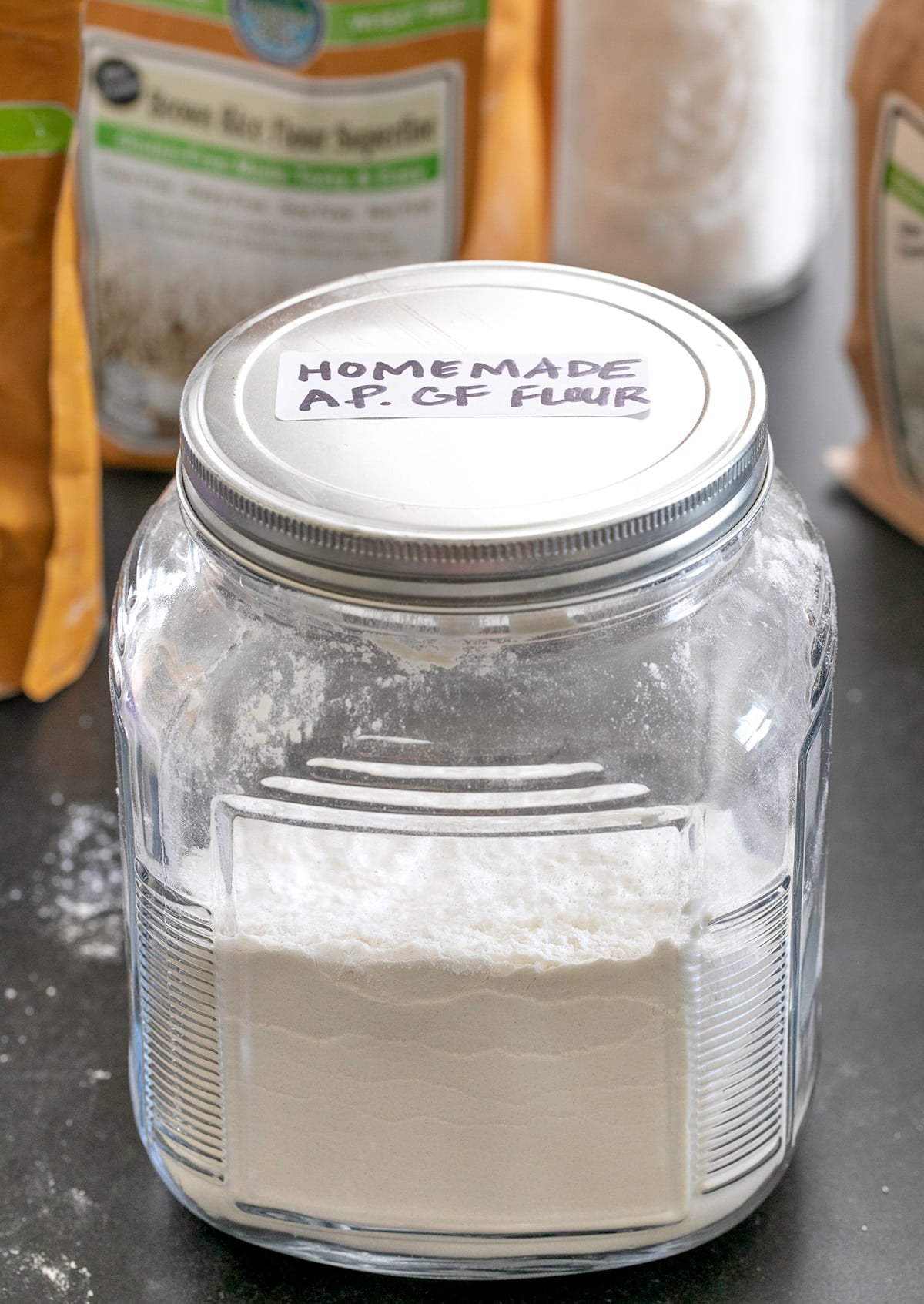
This recipe for mock Better Batter gluten free flour blend works exactly like the original classic blend. If you can’t buy it, you can make your own.
I developed this blend in 2012 for anyone who can’t buy Better Batter’s product online, or doesn’t want to. It’s worked for thousands of bakers since then just like the original!
Nicole’s Recipe Notes
Using Better Batter gluten free flour starting in 2009 revolutionized my gluten free baking. It’s a well-balanced blend of 7 individual components (including xanthan gum for binding), and it remains one of my most recommended all purpose gluten free flour blends nearly 2 decades later.
Since not everyone is able or willing to buy the blend online, I created this blend from brown and white rice flour, tapioca starch/flour, potato starch/flour, xanthan gum, and powdered pectin. It mimics Better Batter’s original blend precisely.
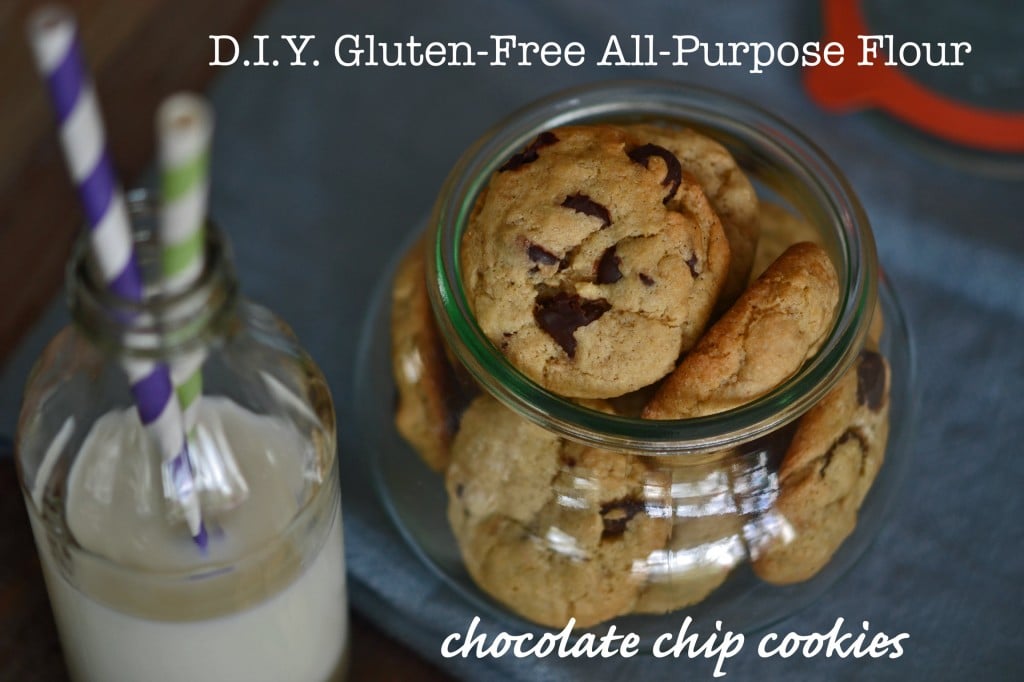
I’ve tested this blend in many of my recipes, like pizza, cookies, and muffins, and haven’t had a single failure. Since I first shared this recipe in 2012, many of you have made this blend your go-to and can use it without worry.
Why most blends fail
The founder of Better Batter has told me that this blend is very, very close to her proprietary blend. However, there is no such thing as a true cup-for-cup replacement for conventional flour in conventional recipes.
I have a gluten free flour blend of my own that I sell online called Nicole’s Best—but I don’t claim that it’s a cup-for-cup gluten free replacement for conventional flour in conventional recipes. That doesn’t exist.
Gluten free baking calls for gluten free recipes: they’re different, they need different ratios of wet to dry ingredients, different binders, and different methods.
I’ve dedicated my working life to making everything as “normal” as possible, but it will never be exactly the same. We took out gluten. It’s just different.
Expert tips
Measure by weight
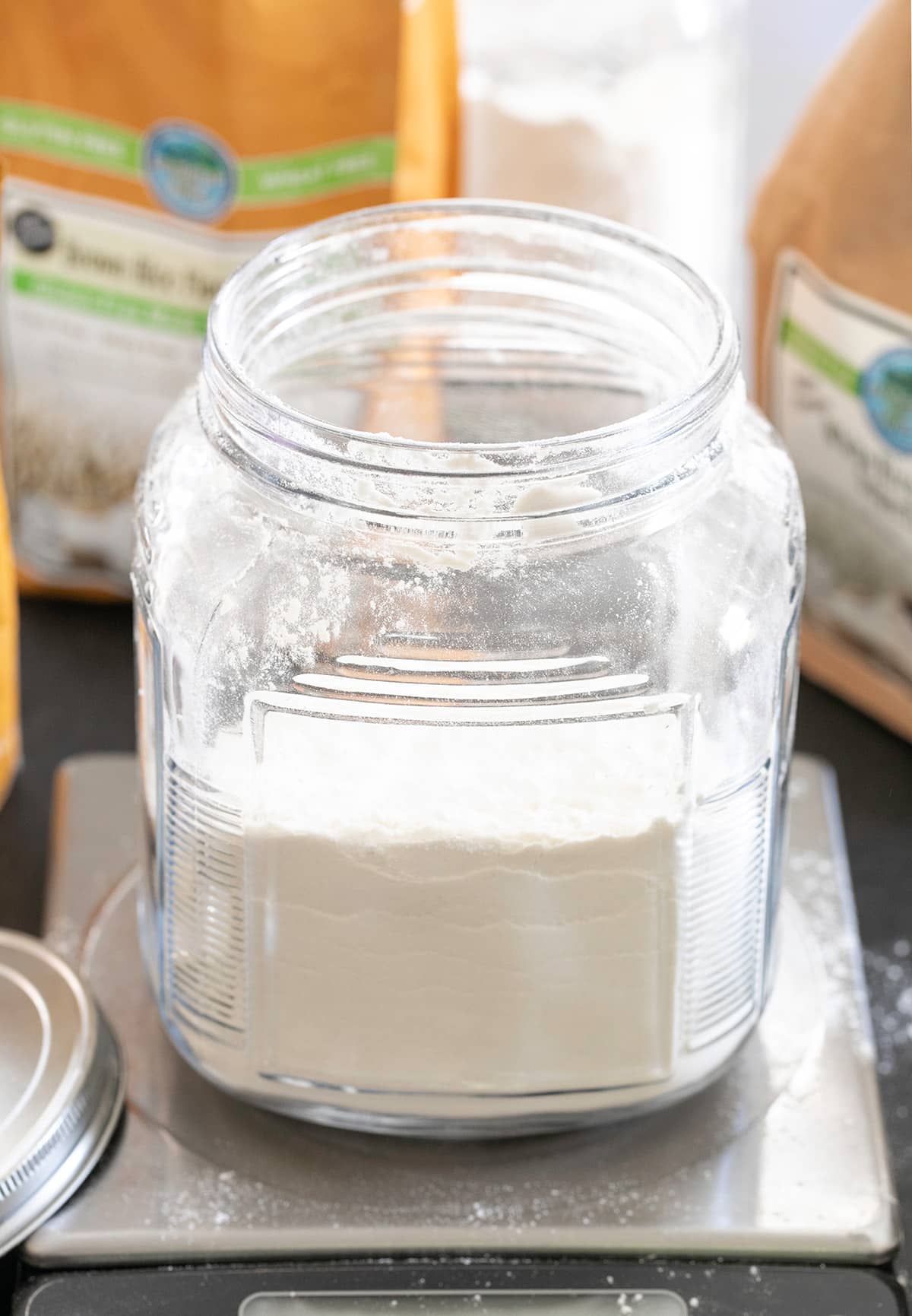
You will need a simple digital kitchen scale. You don’t need anything fancy or expensive. But without the precision of a scale, you simply cannot build a flour blend.
If you find that sometimes your baking is successful and sometimes it isn’t without changing ingredients or recipes, but you’re measuring by volume, the measurement inconsistencies are likely causing your inconsistent results.
I know that many recipe developers direct you to “scoop and sweep” your flours to measure by volume. I promise that your results will still be inconsistent. Dry measurement containers are not standardized, so your “cup” might hold a little bit less, mine more. Plus, human error is unavoidable, no matter how experienced the baker—including me.
These small differences accumulate, especially when building a flour blend where the ratio of one ingredient to another is all that matters. That’s why the ingredients are listed as a percentage of the whole. The individual gram amounts don’t matter. The ratios do.
Don’t make substitutions
This blend is well-calibrated to perform well in all properly developed gluten free baking recipes that can tolerate the amount of xanthan gum in it. If you start making ingredient substitutions, it won’t perform as intended. It’s already free of the top 8 allergens.
How to use the formula
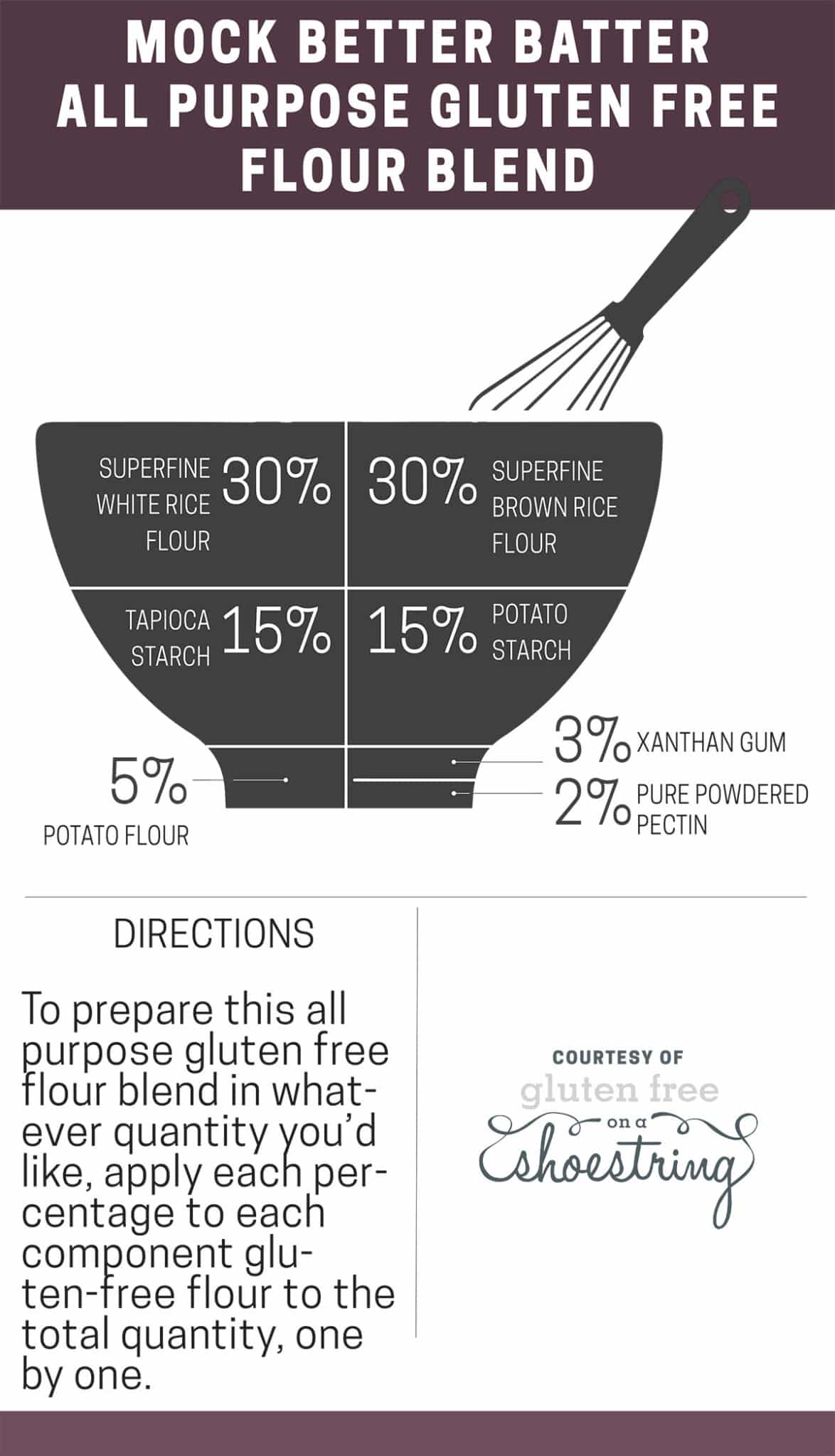
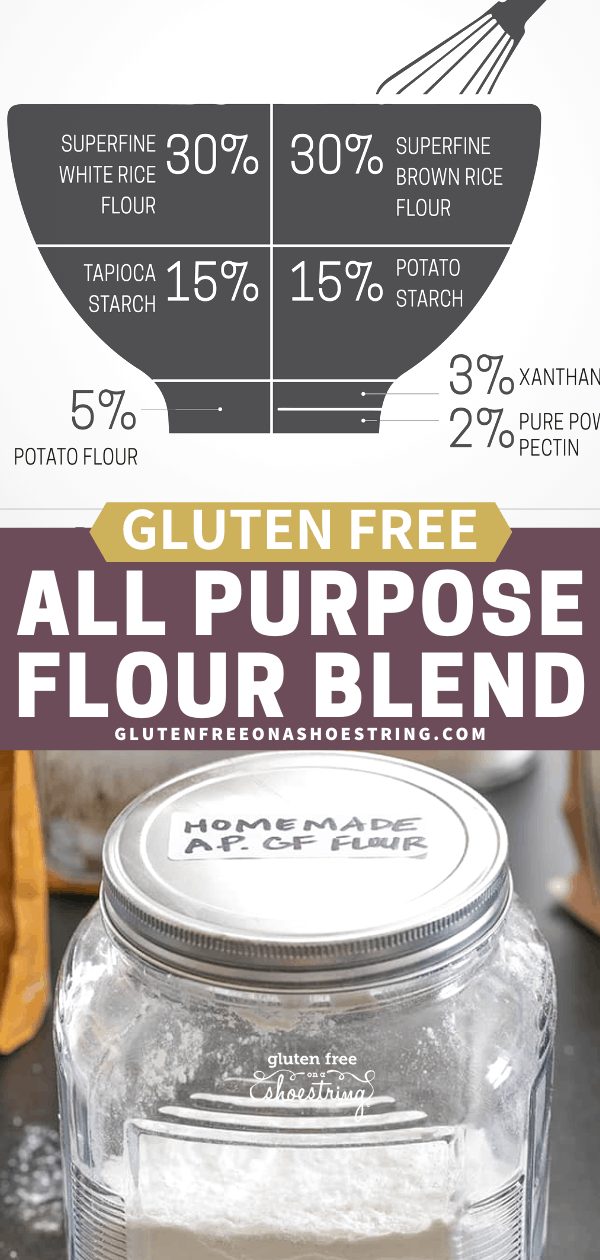
To prepare each all purpose gluten free flour blend below in whatever quantity you’d like, apply each percentage listed for each individual flour to the total quantity (in grams) of flour that you plan to make, one by one. Add the amounts together, and you’ll have the total.
For example, if you wanted to put together 140 grams of flour (which is the proper measurement for “1 cup” of an all-purpose flour blend by volume in my recipes) using the Mock Better Batter Blend, here’s the math:
30% BRF = 30% (or 0.30) x 140 grams = 42 grams superfine brown rice flour
30% WRF = 30% (or 0.30) x 140 grams = 42 grams superfine white rice flour
15% TS/F = 15% (or 0.15) x 140 grams = 21 grams tapioca starch/flour
15% PS = 15% (or 0.15) x 140 grams = 21 grams potato starch
5% PF = 5% (or 0.05) x 140 grams = 7 grams potato flour
3% XG = 3% (or 0.03) x 140 grams = 4 grams xanthan gum
2% PPP = 2% (or 0.02) x 140 grams = 3 grams pure powdered pectin
If you add up all the numbers, it will equal 140 grams (go ahead and check!). So make as much or as little as you like.
Ingredient notes
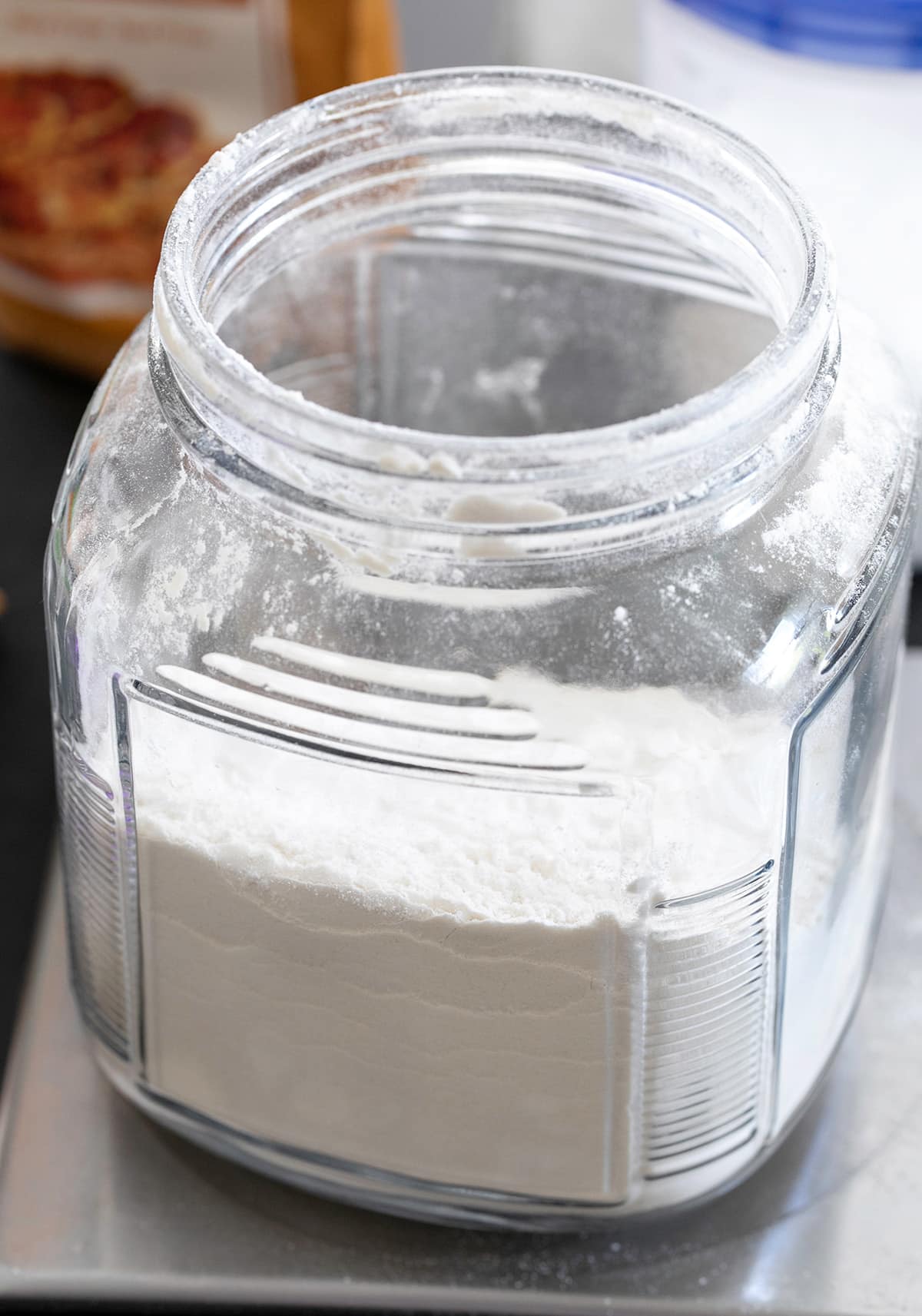
Here are some additional details about each of the ingredients in this blend, including what to look for as you select which brand of each to buy.
Superfine rice flours
We have had a long discussion about superfine rice flour, and even how to blend your own. There is no substitute for rice flour in this blend. Superfine rice flour is essential to the most basic gluten free baking. If your rice flour has a harsher grind, your baked goods will be gritty and often won’t even turn out properly.
Gritty rice flours don’t combine fully with the other ingredients in the recipe, essentially changing the entire character of the recipe formula. I always buy Authentic Foods brand superfine rice flour.
I’m also okay with Vitacost.com brand superfine rice flour. In a pinch, I’ve used rice flour from Nuts.com, and as discussed above, I’ve made my own by grinding it twice.
Tapioca starch/flour
Tapioca starch (also called tapioca flour) is the starch from the cassava root. Cassava flour is made with the whole root. Tapioca starch is only the starch, and it isn’t interchangeable with cassava.
Tapioca starch has a unique quality that creates a lovely stretch and pull in baked goods, and has no exact substitute. I have had some success using superfine glutinous (or short grain, or sweet) white rice flour.
Potato starch and potato flour
Potato flour is a powder made from whole potatoes that have been peeled and ground into a fine powder. Potato starch is simply the pure starch washed out of potatoes and then dried into a fine powder.
Potato starch can be replaced with cornstarch or arrowroot, but potato flour has no substitute. If you can’t have nightshades, I recommend you try my mock Cup4Cup or Better Than Cup4Cup blends, which don’t use potato flour. You can read all about them on the all purpose gluten free flour blends page.
If you can have but can’t find potato flour, you can actually grind potato flakes into a flour and use that. It’s the same thing, just in a slightly different form.
Xanthan gum
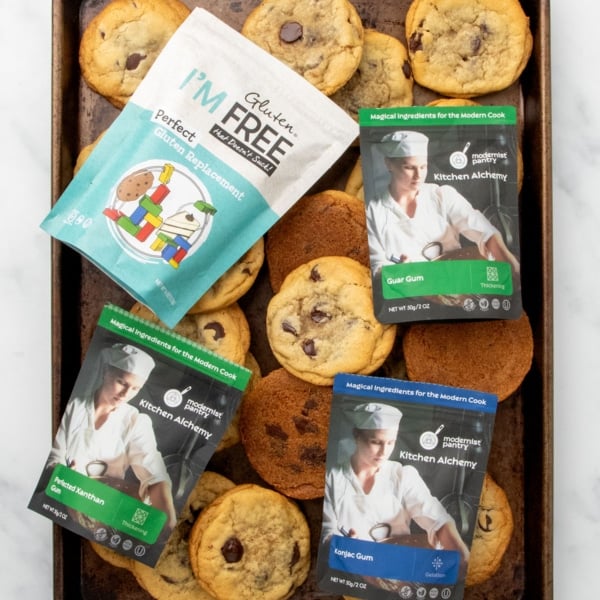
Xanthan gum is a binder that helps replace gluten in this blend. It is often compared to guar gum, which has similar qualities. To vary the amount of xanthan gum you use in different types of recipes, leave this ingredient out of the blend entirely and then add it in individual recipes as appropriate. The Nicole’s Best usage guide can help direct your addition.
For help replacing xanthan gum, please see this post on substitutes for xanthan gum.
Pure powdered pectin
I use Pomona brand pure powdered pectin, which comes with a calcium packet which I just discard. You must use a powder that has a single ingredient: pectin.
Pomona pectin typically is sold in pretty blue boxes with packets in them, which you’ve probably seen in the grocery store. I’ve bought it in bulk directly from the company’s website, and it lasts forever.
You cannot use “Ball” pectin or anything else that has additional ingredients (like sugar) or is in a gel form. Not only do they add ingredients we don’t want, but they have less of what we need: pectin. There is no substitute for this ingredient.
Storage instructions
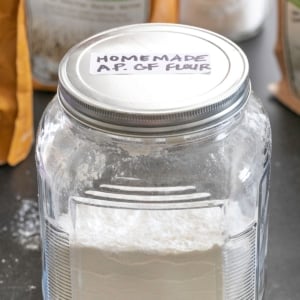
For storage, place the blend in a tightly sealed container in a cool, dark pantry. It will last as long as the earliest expiration date on any of the component ingredients. You can extend its freshness by placing it in the freezer, but be sure to let it come to room temperature before using it in a recipe.
Better Batter Gluten Free Flour Recipe
Tell Google you trust GFOAS!
Equipment
- Digital kitchen scale required
Ingredients
- 126 g superfine brown rice flour, 30% of total
- 126 g superfine white rice flour, 30% of total
- 63 g tapioca starch/flour, 15% of total
- 63 g potato starch, 15% of total
- 21 g potato flour, 5% of total
- 12 g xanthan gum, 3% of total
- 9 g pure powdered pectin, (without the calcium packet) 2% of total
Instructions
- Measure using a digital kitchen scale. There aren’t proper volume equivalents for some of the ingredients.
- Place all ingredients in a large bowl, and whisk to combine well. The pectin should be used without the calcium packet. Store in an airtight container at room temperature until ready to use.
- The recipe can be halved or used in multiples easily. Just be sure to whisk fully in a large enough container.
- Use of lower quality ingredients than those to which I have linked in this post (including the xanthan gum and pectin!) will result in a markedly lower quality product, one that does not behave at all like mine. Proceed at your own risk.
Video
Nutrition
Nutrition information is automatically calculated, so should only be used as an approximation.
FAQs
Discard the calcium packet that comes with Pomona brand pectin. Or use it for another purpose if you have one. Just don’t include it in the blend.
Better Batter’s original blend ingredient label lists: rice flour, brown rice flour, tapioca starch, potato starch, potato flour, pectin (lemon derivative), xanthan gum.
Find good, well-balanced gluten free recipes, measure by weight wherever possible, and follow the recipe faithfully. You’ll find all my recipes do that.











Wil fit lane fruit pectin powder work in this recipe
I’m afraid not, since it has sugar in it. You need only pectin, a single ingredient.
Can you use this mock better batter in bread using the better batter recipe?
Hi, Bonnie, you can use this mock Better Batter blend anywhere you would use Better Batter’s original blend all purpose gluten free flour blend.
can you give the recipe for cake flour in cups?
I’m afraid not, Lillian. You can’t build an effective flour blend without a simple digital kitchen scale. Volume measurements are too imprecise.
Hello, I’m really struggling to find superfine rice flour in the UK. I’ve tried using rice flour in the past but generally avoid it now, as it’s so gritty. I hadn’t heard of superfine rice flour, it sounds great but I can’t find it, other than a few places that will ship it from the US for high prices and two months wait, or one place that sells 25kg and doesn’t even specify if it’s white or brown. I want to get started ASAP. Funnily enough the other, far stranger ingredients for this and the extras for the bread flour have been fairly easy to get on Amazon, coming tomorrow, but superfine rice flour is a different story. I do already have millet flour, oat flour, and glutinous rice flour at home, which I use regularly, none of which are gritty, I don’t know if I could substitute with those? Otherwise do you know where I could get superfine rice flour in the UK in a reasonable timeframe and quantity? Do I need to just bite the bullet and buy the Eurostar Superfine Rice Flour 25kg for about £40 with shipping, at least it comes in 2 to 3 business days, but is it even white or brown?
HI, Johanna, I’m afraid that nothing else can substitute for regular superfine white and brown rice flours, no. I don’t know where to buy superfinely ground rice flour in the UK, but there must be sources. I wish I could help. A Japanese grocery store might be able to help you?
I’ve been able to find some rice flour that claims to be “very fine” so I’m hoping for the best on that. It’s currently on its way. I think it’s white though, at least that’s what I’m assuming, it doesn’t specify but the picture looks white. Should I substitute the brown rice flour with all white, or use a bit more of one of the other flours in the recipe, or I could use some glutinous rice flour, oat flour, or millet flour? The latter two are whole grain. Thank you for your advice of looking for Japanese rice flour, that seems to have worked, let’s just hope it’s as fine as it claims to be!
Hi, Johanna, I’m afraid you need both white and brown rice flours to make this blend. You can’t substitute another flour entirely for the brown rice flour and get the same results.
I’m trying to make the bread flour. Given that I can’t get brown rice flour, should I just use the Make It Simpler blend or should I still use potato flour and pectin powder? I feel like I might as well use them as I have already bought them, or will they not work properly without brown rice flour?
I’m afraid I’ve only tested the flour blends as they’re specifically written, Johanna. I don’t recommend adding potato flour and pectin to the simpler blend.
I’m really interested in your gf flour recipe but I avoid potato. Can I replace potato starch and flour with something else?
Hi, Linda, I’m afraid you can’t make this particular blend without either potato starch or potato flour, no. I discuss that in the text of this post. Maybe try my mock Cup4Cup and try replacing the potato starch with arrowroot.
Hello! What is the purpose of pectin in this recipe? I’ve never seen this in a gf blend before.
Kimberly, pure powdered pectin is in the original Better Batter classic blend recipe, which is why it’s in here. It is essential to the blend’s performance. I believe it helps create structure, and I would not recommend making the blend without it. It is readily available in the U.S. online. For more information, please see the text of the post under the heading “Pure powdered pectin”
I can’t find pectin in store near me, but I have all the other ingredients ready to go. Can I leave out the pectin, or substitute it for Agar? Thank you
There is no substitute for pectin, Ashley, so you can’t make this blend without it. I recommend ordering it online, which is what I do. There are a few brands available online. Please see the discussion in the text of the post under the heading “Pure powdered pectin” If you were able to find all of the other ingredients in the store, I suspect that your rice flour isn’t superfinely ground, as I don’t ever see that for sale in the store and so you’ll need to order that online as well to make this blend the way its intended. Otherwise, I can’t promise results.
I am new to gluten free cooking
Hi Nicole,
First, THANK YOU for all of the information and recipes that you have provided on your website. I have learned so much from you over the past several years! As someone who also prefers to buy Better Batter, I just noticed that they have promulgated a new formula currently for sale on Amazon that is rice, corn, and gum free. I was wondering if you have tried this new blend, and if you have, what is your opinion on it?
Thank you!
Julianna
Hi, Julianna, you’re so welcome, and I’m grateful that you’ve been willing to learn! I have a bunch of that blend, but I’m afraid I haven’t yet even tested it. I am sure it’s high quality and useful, but it’s so unique that if I can’t show readers how to reverse engineer it like I did with their main blend, I’m not sure I’d even be doing many readers much good. I’m hopeful that it would be useful for yeast bread, but I’m having trouble carving out the time to fully test it since, even if I can recommend it, it will only help those who are able and willing to order it online. So…stay tuned?
Where can I buy your gluten free flour mixtures?
Hi, Jessica, I don’t sell any gluten free flour blends. My recipes are offered as a DIY alternative to buying any of my recommended store-bought blends. For completely information on all the flour blends and other info, please see the GF Flour Blends page.