This post may contain affiliate links. Please read our disclosure policy.
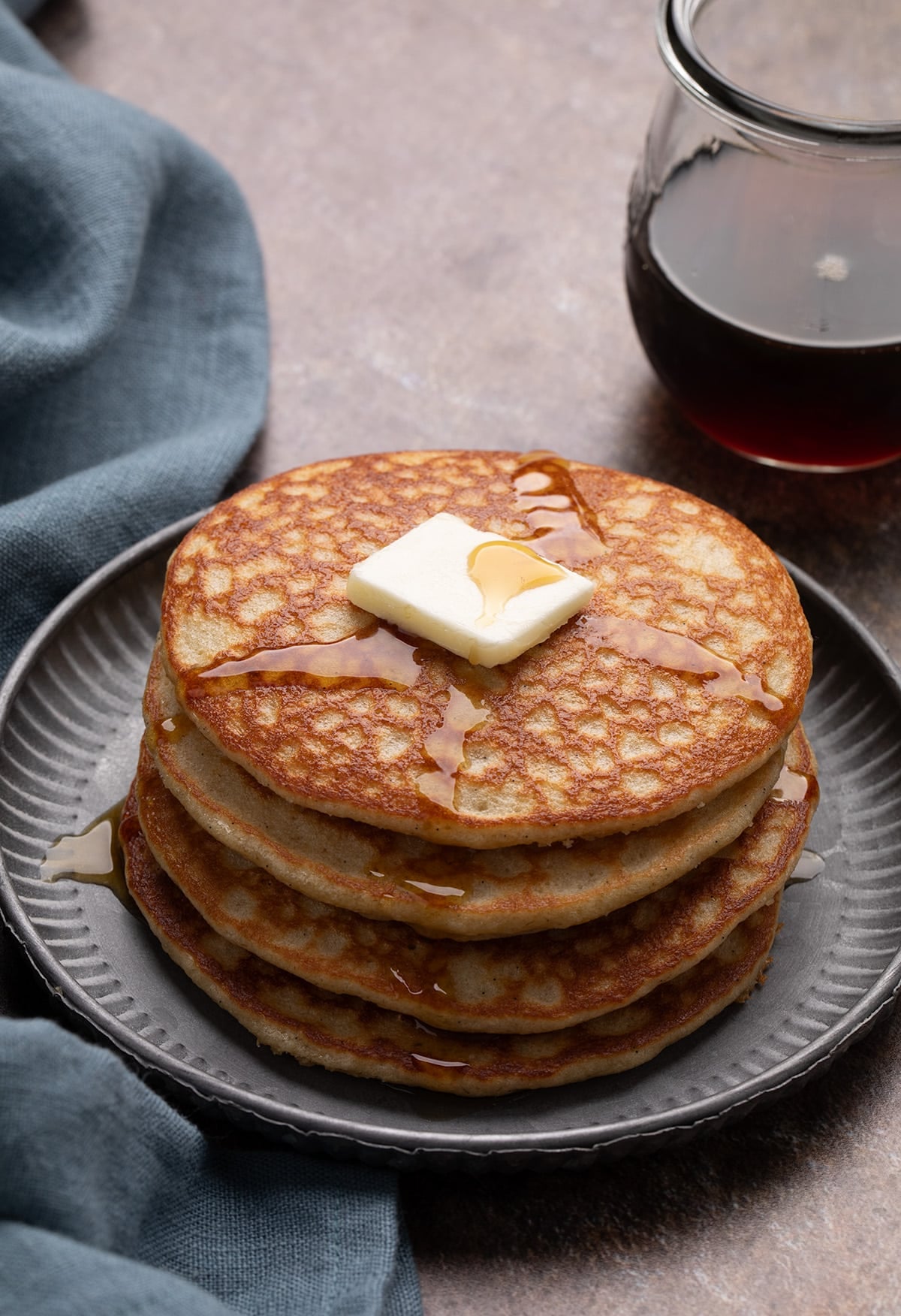
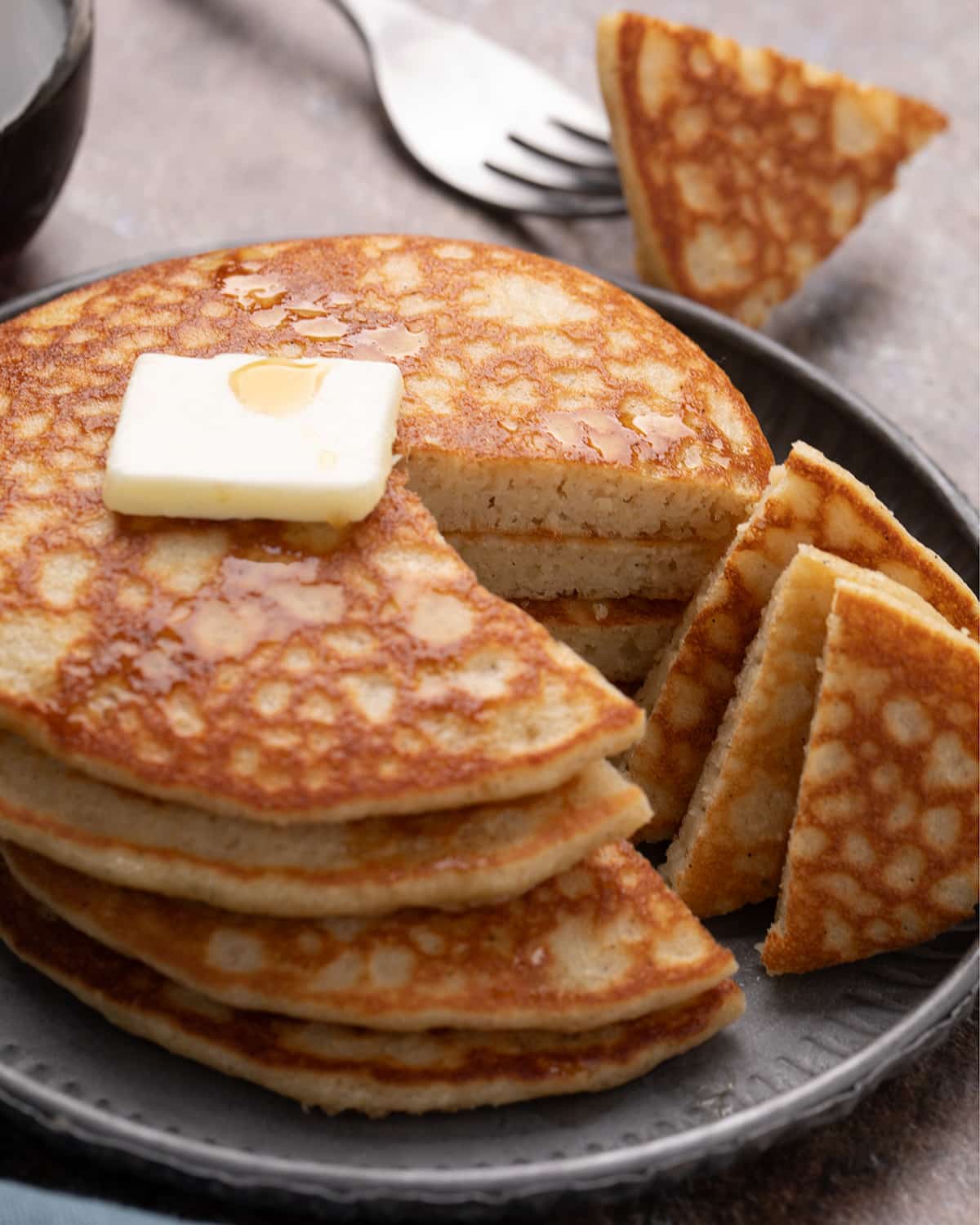
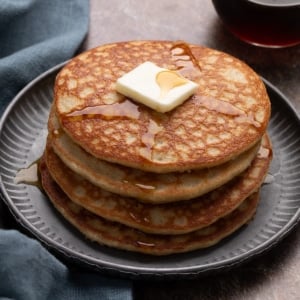
These cottage cheese protein pancakes are tender, golden brown, and lightly sweet, with 20 grams of protein in every 4-pancake serving!
Made with oats, cottage cheese, and eggs, the batter blends smooth in an ordinary blender, without any protein powder.
Why this recipe works
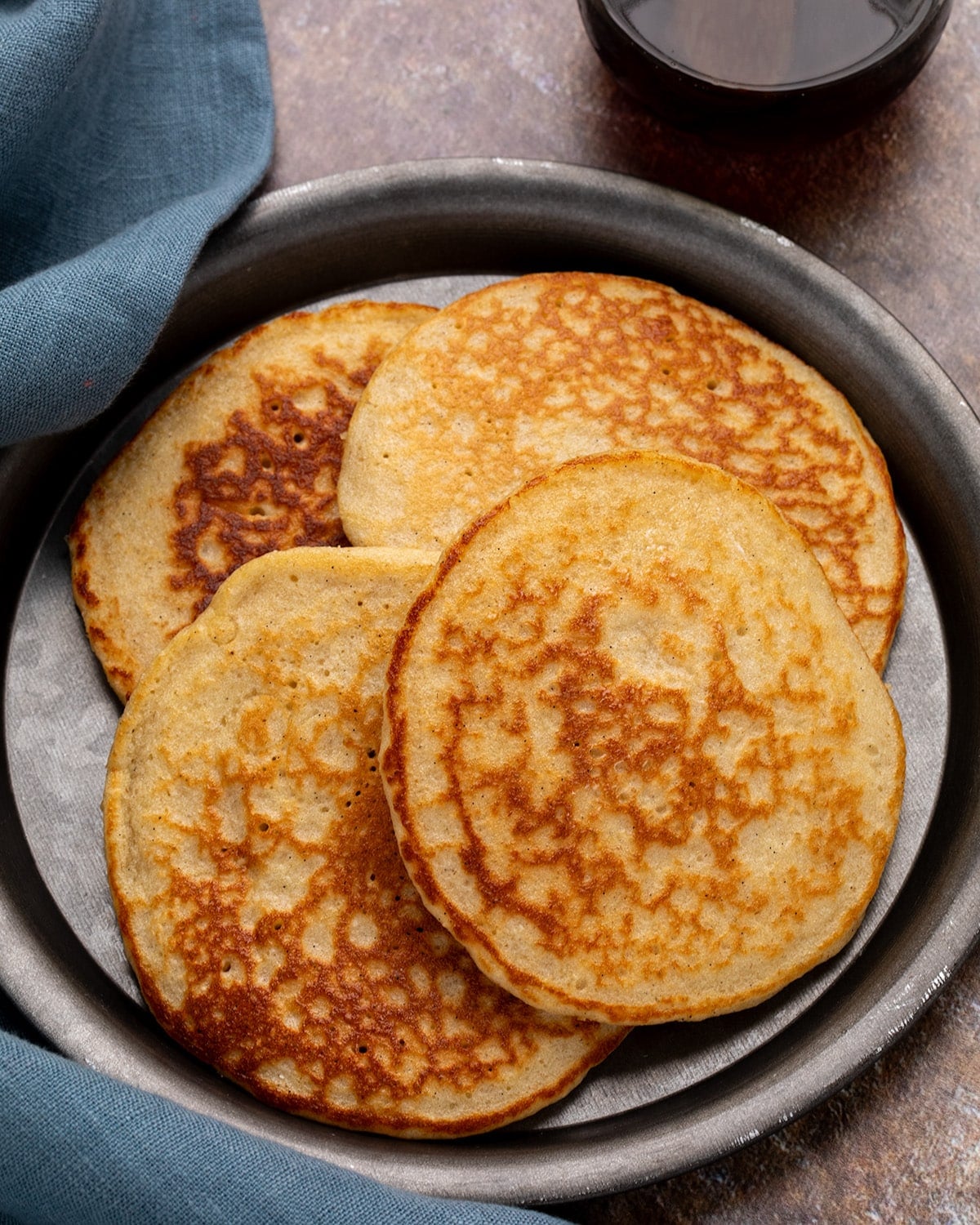
These pancakes are soft and tender without feeling wet or heavy, even when cool. They hold their rise without collapsing, so they’re thicker and more satisfying than many store-bought varieties.
Made with inexpensive, everyday ingredients, they’re ready in minutes. You can also make the batter ahead or cook a big batch for quick breakfasts all week.
If you love Trader Joe’s protein pancakes as much as I do, now you can make your own anytime, for about 1/4 the price. They’re just as high in protein, with even better taste and texture.
For more high-protein ideas, try my protein muffins with 10 grams of protein each, or my protein balls without protein powder, with 6 grams each.
Recipe ingredients
Here’s what you need to make the pancakes, including the role that each ingredient plays in the perfect cottage cheese protein pancakes:
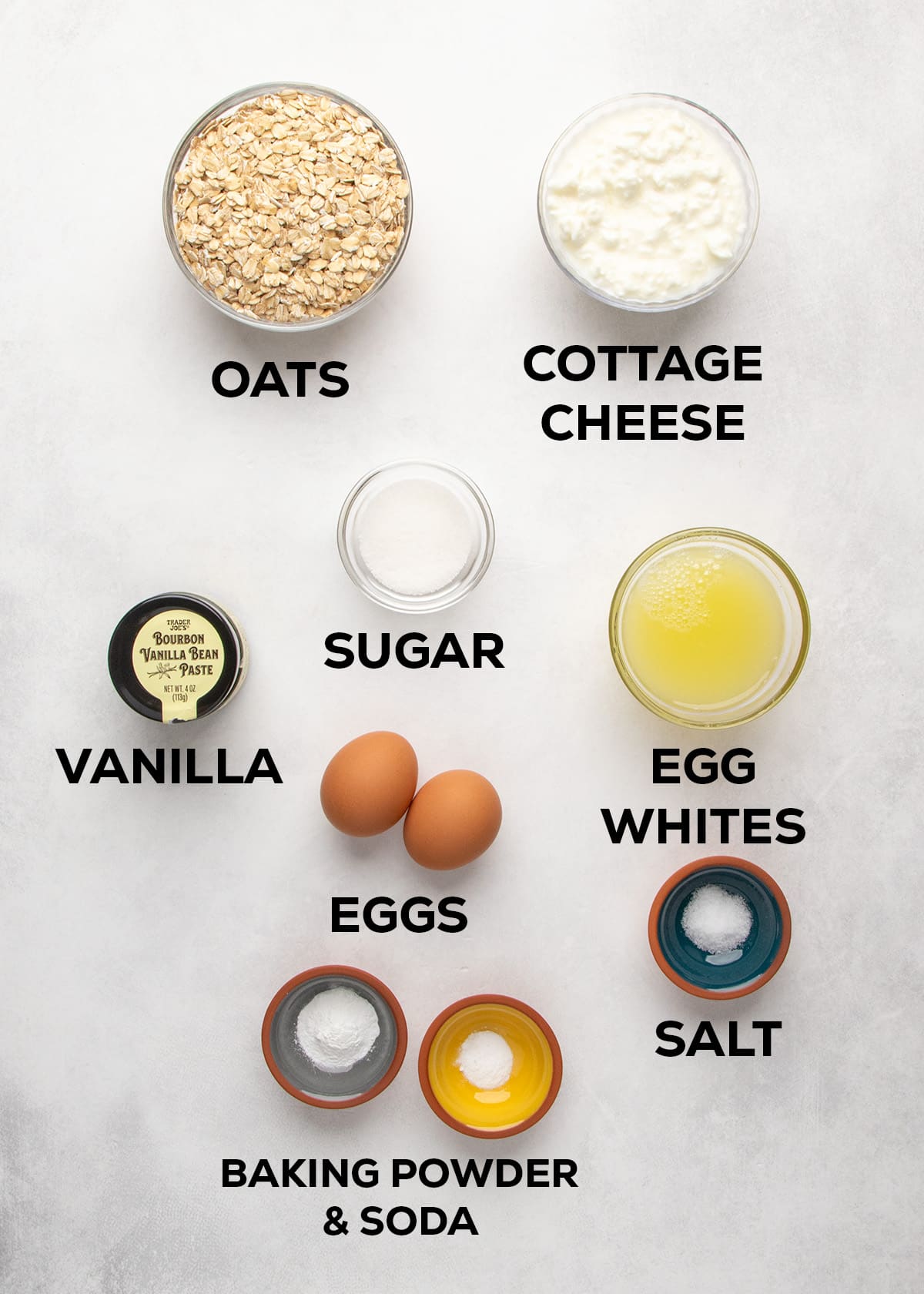
- Cottage cheese: Adds a lot of protein, moisture, and some richness and tangy flavor. Since we blend it smooth, it helps create tender pancakes without any noticeable texture from the curds. Use any cottage cheese you like, but avoid fat free since some fat adds richness.
- Oats: Provide much of the structure of the pancakes in the absence of a traditional flour. I use old fashioned rolled oats since they’re least expensive, but you can also use quick cooking oats or even oat flour. Just be sure to measure by weight for consistent results, since different forms will have different volume. Be sure they’re gluten free if you need the pancakes to be gluten free, like I do.
- Egg whites: Add protein, structure, and plenty of moisture to bring the pancakes together. The egg whites prevent the pancakes from losing their rise as they cool.
- Eggs: The added yolks here provide some richness, and the whites add more protein and structure.
- Sugar: Adds some sweetness and helps to retain moisture. You can use up to 3 times as much sugar without changing anything else, if you’d like added sweetness.
- Vanilla: Adds depth of flavor. I call for 1 teaspoon of vanilla bean paste, but you really can use vanilla extract or paste. And measure with your heart, since it doesn’t change the chemistry much at all.
- Baking powder & soda: The baking powder adds rise, and a touch of baking soda helps the pancakes brown during cooking.
- Salt: Enhances other flavors.
How to make cottage cheese protein pancakes (step by step photos)
Here’s a visual overview of how to make these pancakes, step by step, so you can envision making them in your kitchen. For specific ingredient amounts, please scroll to the recipe card below.
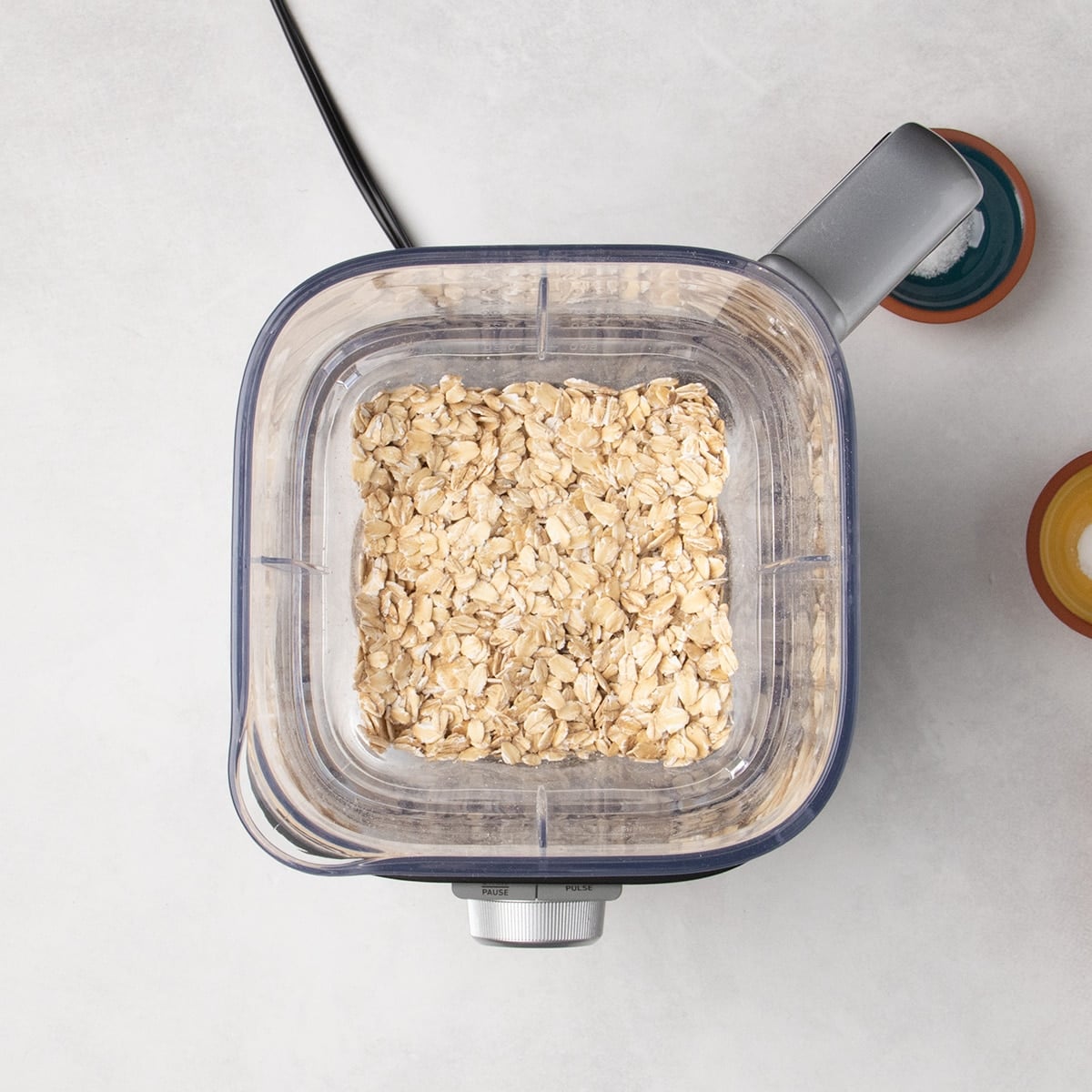
Step 1: Grind the oats
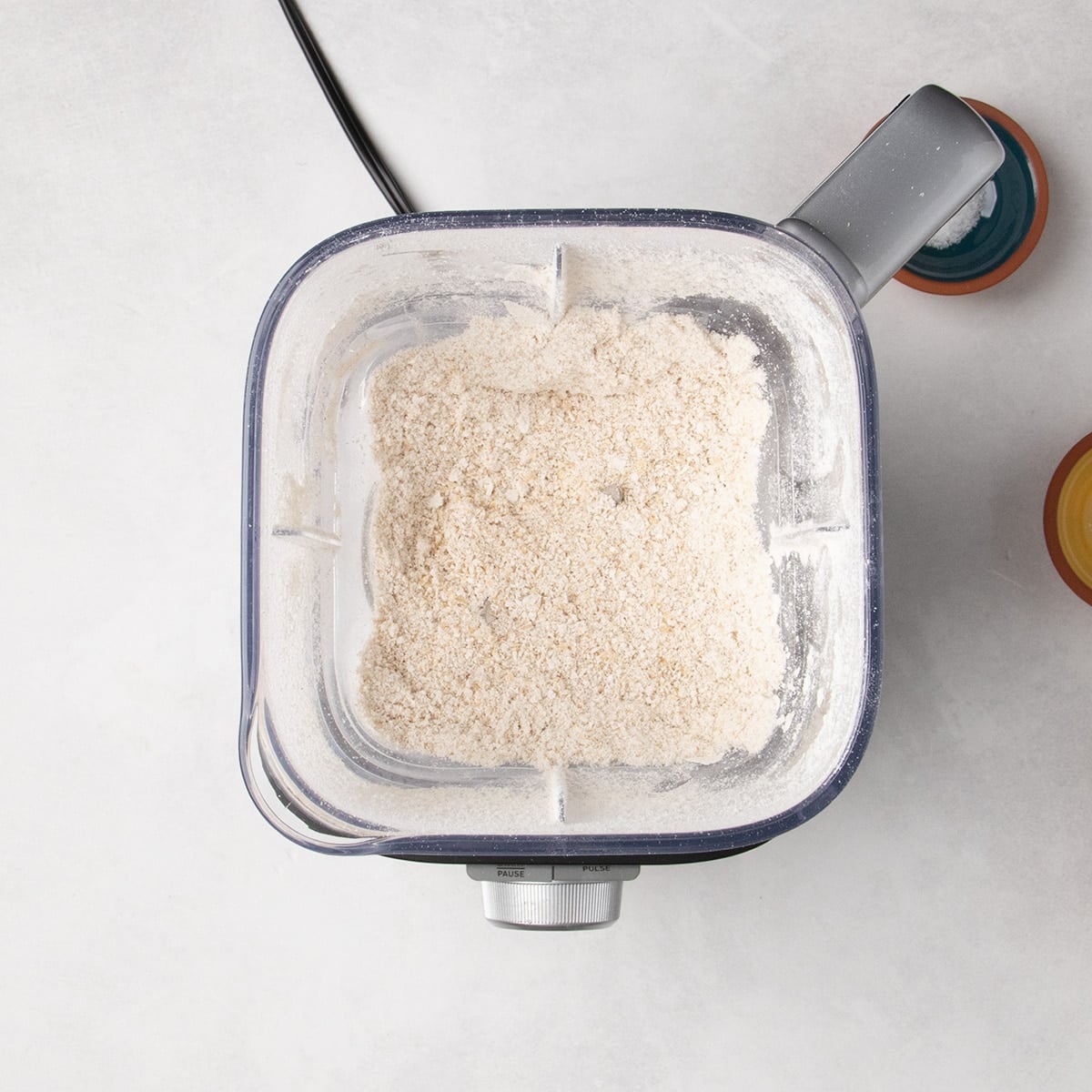
Place old fashioned oats in your blender, cover it, and process or pulse them for about 45 seconds, or until the oats turn into a powder. There will still be some larger pieces, but they will be broken up later.
Step 2: Add the other dry ingredients
Add the baking powder, baking soda, salt and sugar, and pulse just to combine. This will distribute the other dry ingredients evenly without over-processing the oats.
Step 3: Add the wet ingredients
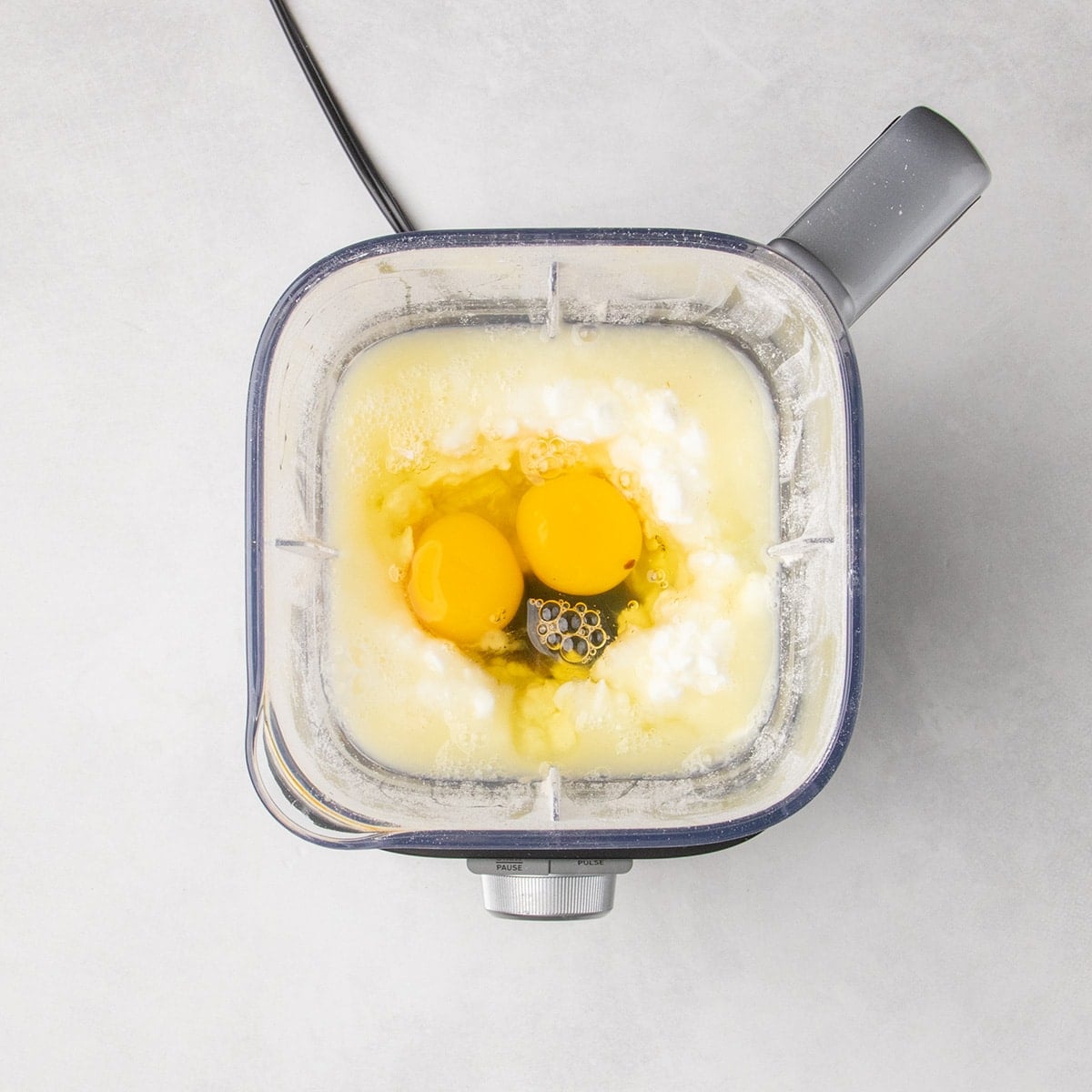
Create a well in the center of the dry ingredients, and add the cottage cheese, eggs, egg whites and vanilla on top. This will make it easier to blend by positioning the wet ingredients closer to the blades.
Step 4: Blend the batter
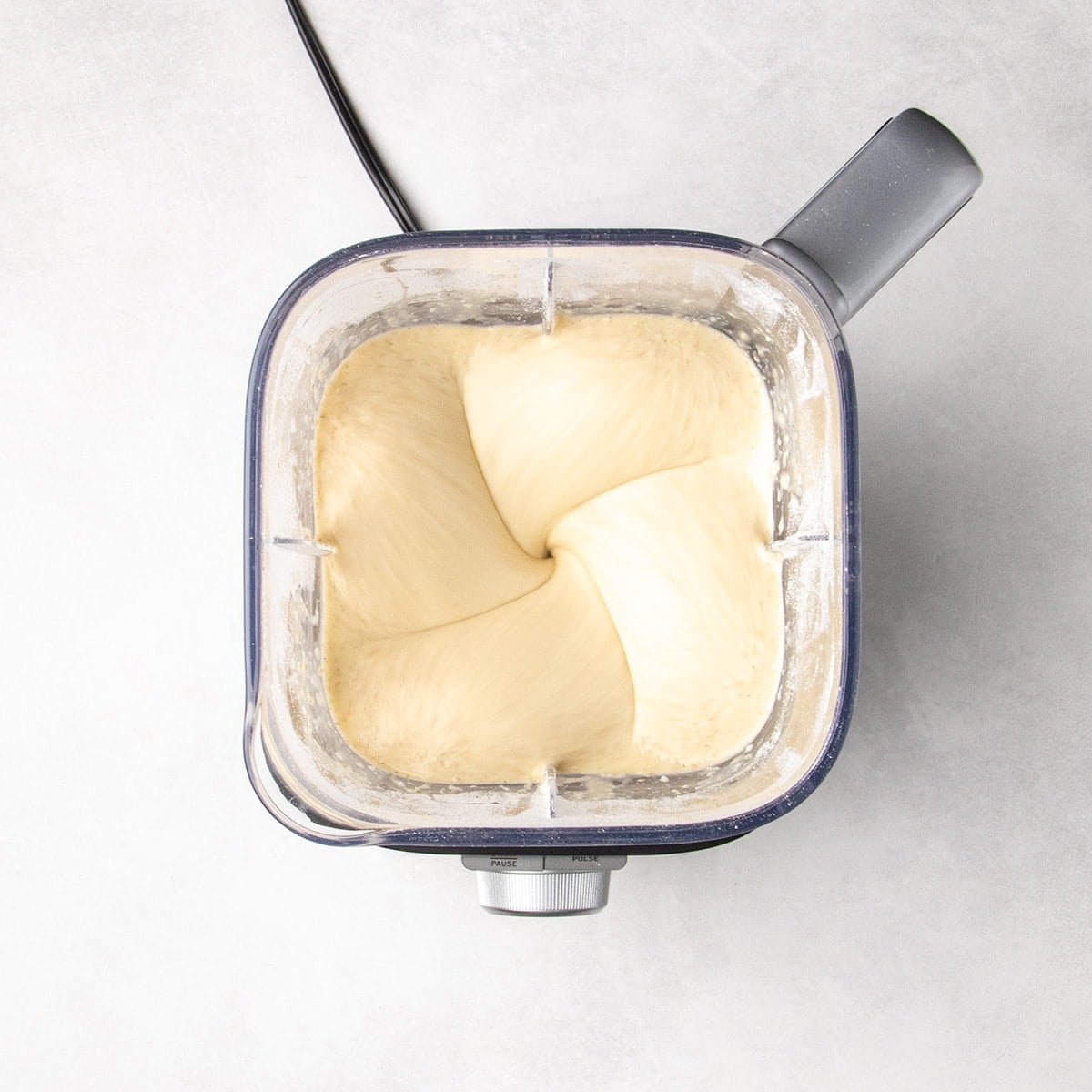
Turn the blender on medium-low speed until all of the dry ingredients are moistened (less than 30 seconds), then increase the speed to medium and blend until mostly smooth (about 2 minutes total). Do not overblend.
Let it rest
Let the batter rest for at least 5 minutes and up to 30 minutes. This will soften any remaining larger bits of oats and thicken the mixture as the oats absorb moisture.
Steps 5: Pour the batter
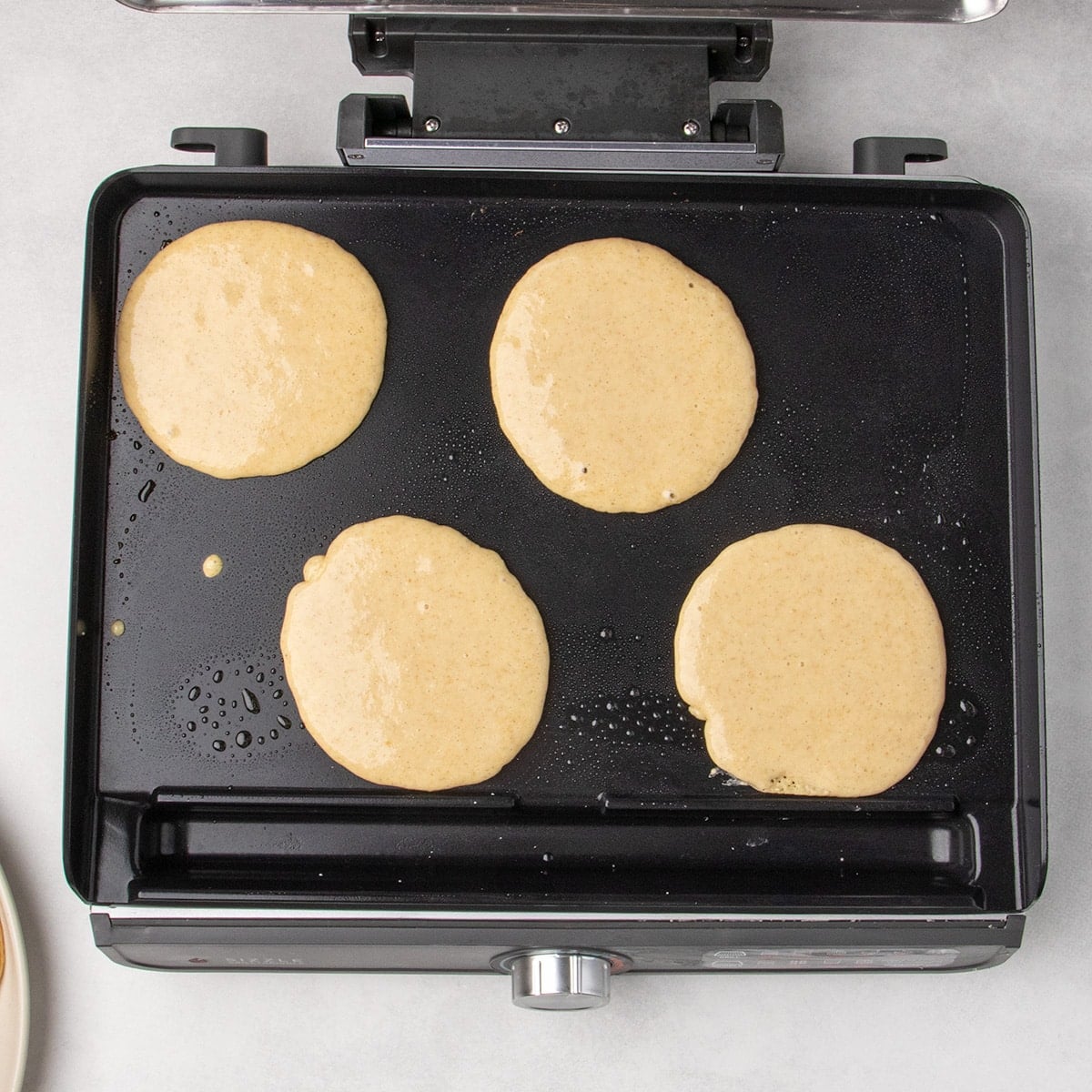
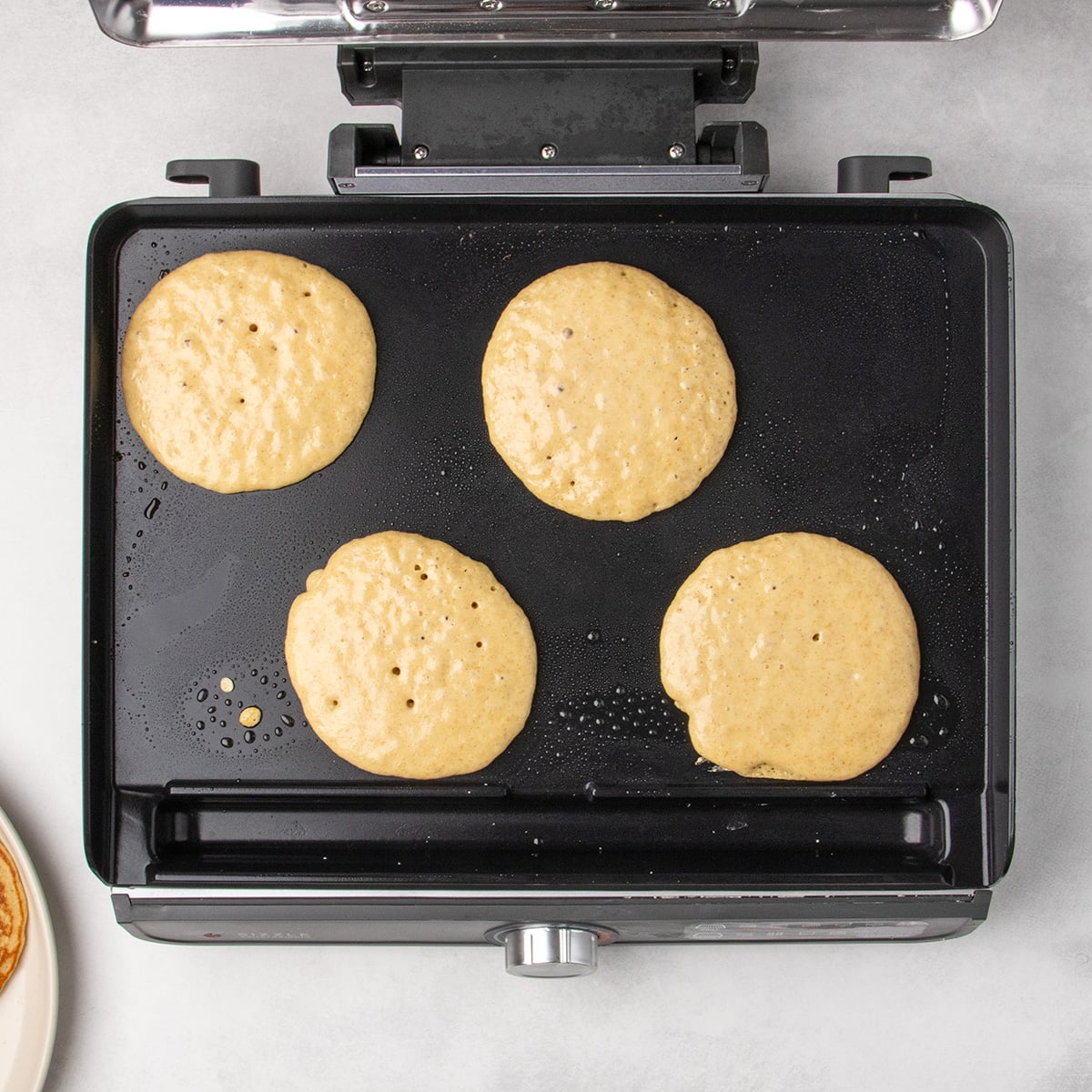
Heat a griddle to about 300°F or a nonstick pan over medium-low heat, and grease it to ensure the pancakes don’t stick and help them brown. Pour the batter in portions of about 3 tablespoons each onto the surface about 1 inch apart, without crowding the skillet.
Step 6: Cook the first side
Allow the pancakes to cook for about 2 minutes or until the edges aren’t glistening, and there are bubbles breaking through all over the tops. If you flip too soon, the batter will leak over the edges, forming a “foot.”
Step 7: Cook the second side
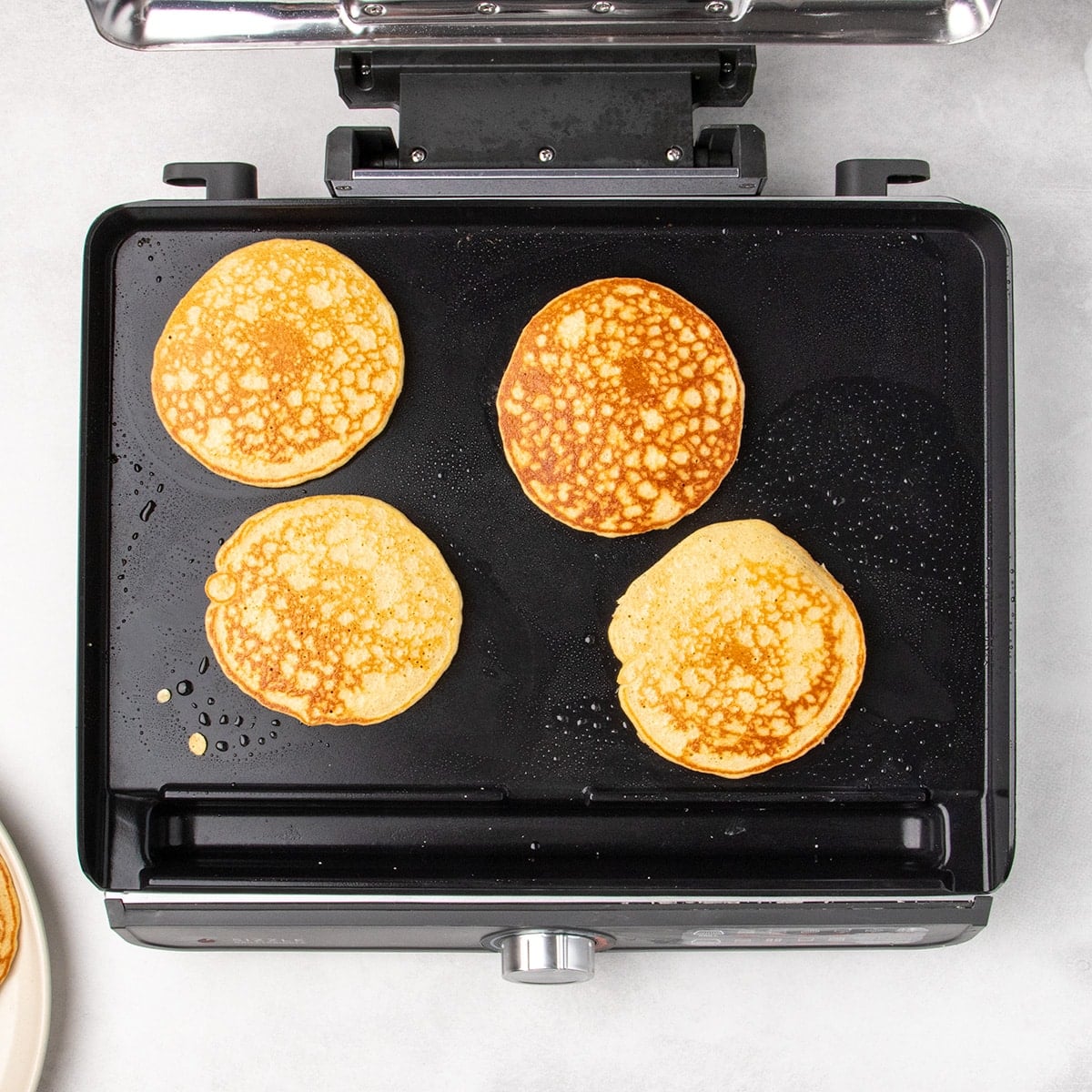
Use a wide spatula suitable for nonstick surfaces to flip each pancake gently, beginning with the one you poured first. Cook the second side until it appears set (about another 90 seconds).
Step 8: Serve
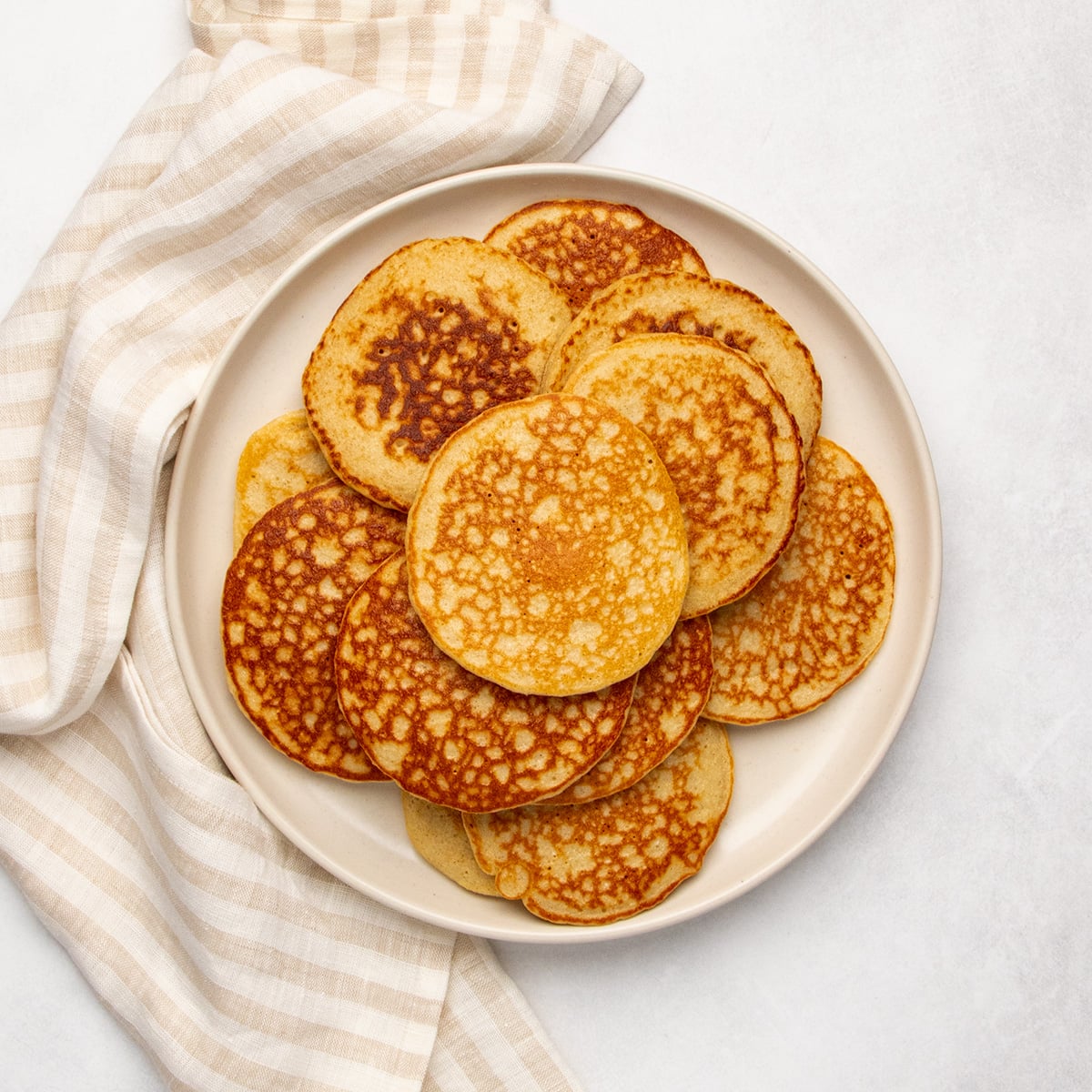
Flip back and forth for more browning on either side. You can keep cooked pancakes warm in a 200°F (maximum temperature) oven on a lined baking tray while you finish cooking. Repeat with the remaining batter, and serve warm.
Expert tips
Rest the batter
The freshly-blended batter will be relatively thin. Letting it sit for at least 5 minutes and up to 30 minutes at room temperature will give the ground oats a chance to absorb moisture. That will make taller pancakes that spread less and have better overall texture.
Don’t overprocess
Overworking mixtures with oats or oat flour tends to make it clump and harden, so be careful not to overblend. Not only don’t you need a high powered blender (I don’t own a Vitamix or equivalent), but using one can easily lead to overworking the batter.
Ingredient substitutions
Egg and dairy free
The eggs and egg whites provide so much of the structure, and the cottage cheese is so important to the protein content and texture, that I can’t make any suggestions for how to make this recipe dairy free or egg free. Instead, try my gluten free protein pancakes recipe, made with protein powder, and follow the suggestions in the “Ingredient substitutions” section of that post.
Oat free
If you’d like to try making these oat free, try using an equal amount, by weight, of quinoa flakes. You can also try using buckwheat flakes, or another substitute for oats.
Storage instructions
You can make the batter and refrigerate it raw in a sealed container for up to 3 days. Let it sit at room temperature just until it’s pourable (no longer than 2 hours) before cooking it. The cooked pancakes can be covered and stored at room temperature for up to 2 hours, or wrapped tightly and refrigerated for up to 4 days. For longer storage, freeze for up to 3 months. Defrost or rewarm in the microwave or toaster oven.
Cottage Cheese Protein Pancakes Recipe
Tell Google you trust GFOAS!
Equipment
- Blender
Ingredients
- 1 ½ cups (150 g) old-fashioned rolled oats, gluten free if necessary
- 2 tablespoons (25 g) granulated sugar
- 1 teaspoon baking powder
- ⅛ teaspoon baking soda
- ¼ teaspoon kosher salt
- 1 cup (225 g) cottage cheese, preferably 2% or 4%, at room temperature
- 2 (100 g out of shell) eggs, at room temperature
- ½ cup (120 g) egg whites, at room temperature (from the carton is fine)
- 1 teaspoon vanilla bean paste, or pure vanilla extract
- Cooking oil spray, for greasing
Instructions
- Place the oats in a blender and process on medium speed until ground into a relatively fine powder. Stop the blender at least once and mix the oats to ensure that all pieces get close to the blade.
- Add the granulated sugar, baking powder, baking soda, and salt, and pulse to combine.
- Add the cottage cheese, eggs, egg whites and vanilla, and blend on medium-high speed until smooth (about 2 minutes).
- Let the batter rest for at least 5 to 30 minutes before cooking pancakes.
- Heat a nonstick pan or griddle over medium-low heat. If using an electric griddle, turn the heat to 300°F. Spray the surface with cooking oil spray.
- Pour the batter about 5 inches apart (leaving about 1 inch between pancakes), using about 3 tablespoons of batter per pancake. Do not crowd the pan or skillet. Each pancake should measure 3.5 to 4 inches in diameter.
- Let the pancakes cook for 2 minutes, or until the edges appear set (they’ll no longer shine) and there are bubbles breaking through all over the tops.
- Use a wide, flat non-metal spatula to flip the pancakes over, and let them continue to cook until lightly golden brown on the underside (another 1.5 minutes or so) and cooked through.
- Flip the pancakes over again if necessary. When done, the pancakes will be lightly golden brown all over and won’t glisten at all.
- Remove the cooked pancakes to a plate or lined baking sheet. Repeat with the remaining batter.
- Serve the pancakes warm, or let them cool, wrap tightly and store in the refrigerator for up to 4 days.
Nutrition
Nutrition information is automatically calculated, so should only be used as an approximation.