

This post may contain affiliate links. Please read our disclosure policy.
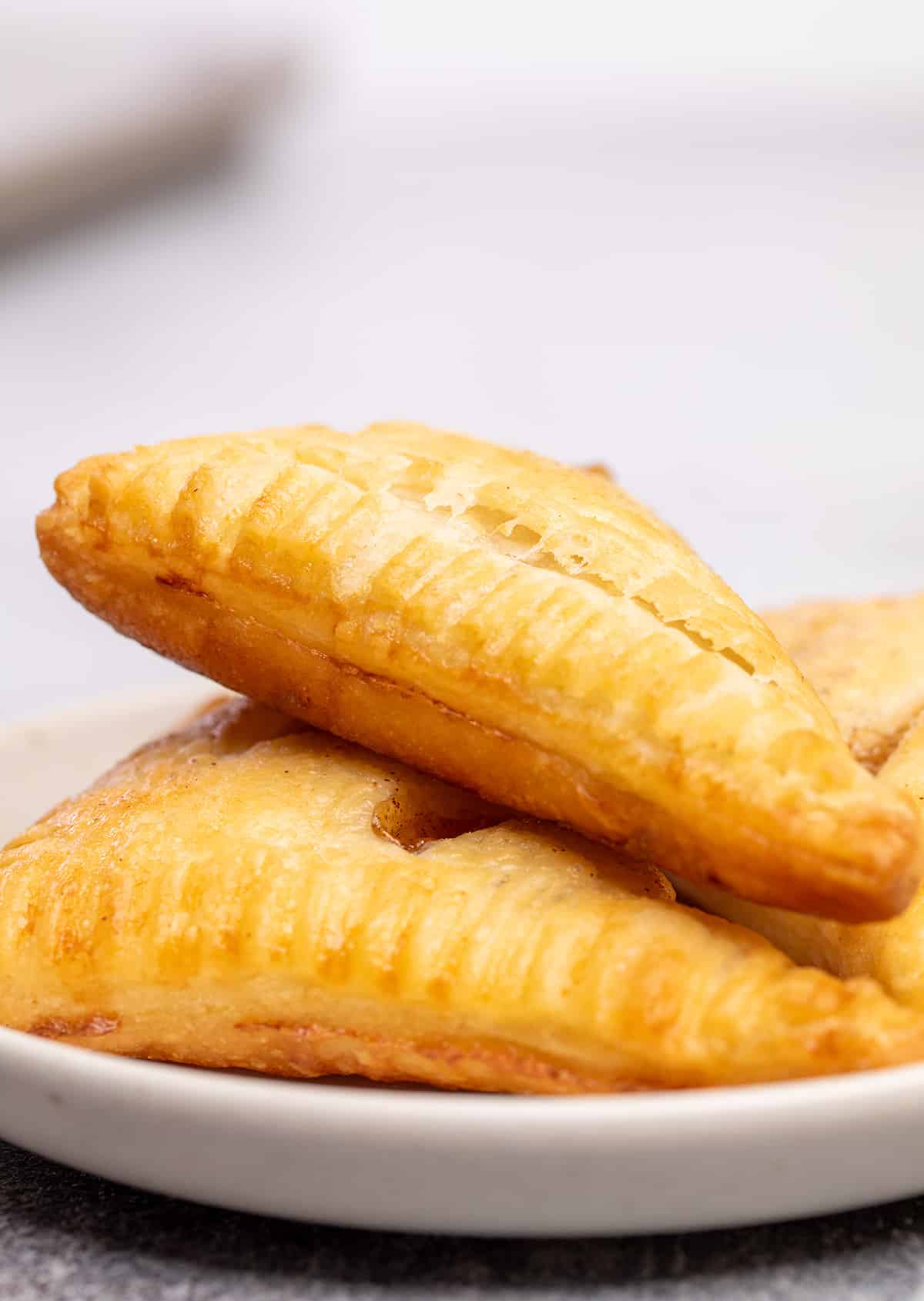
This gluten free puff pastry is light, crisp, and buttery, with layer upon layer of flake. It makes about 3 standard-size sheets—perfect for pies, tarts, turnovers, and more.
I’ll show you exactly how to create those signature layers at home. No fancy tools or guesswork—just cold ingredients, a little technique, and reliable step-by-step guidance.
my take
Why you’ll love this recipe
- Classic taste, crisp texture: Buttery, flaky, golden brown, and rich—just like traditional puff pastry.
- Only 4 ingredients: All you need is gluten free flour blend, butter, cold water, and salt.
- Step-by-step guidance: Learn not just what to do, but why—so you can troubleshoot and succeed every time.
- Use it anywhere: From savory pies to sweet tarts, this dough works anywhere you’d use puff pastry.
How to make gluten free puff pastry
Puff pastry is made in two parts: the base dough and the butter packet. The dough is a simple mix of flour, water, and a bit of butter. The butter packet is really just butter, with a touch of flour.
You’ll prepare each part separately, then combine them into one stackable dough—the foundation for all those flaky layers.
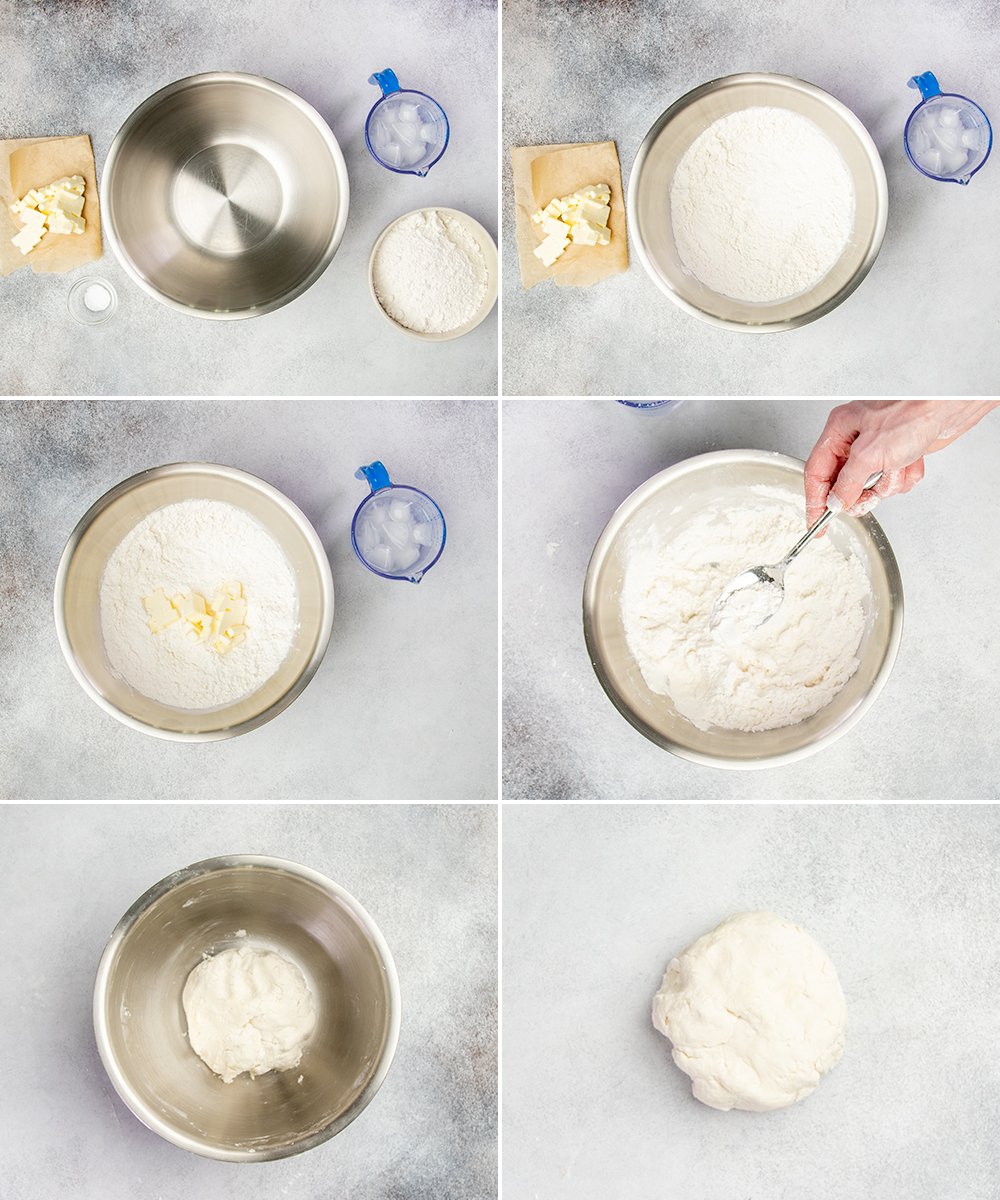
Make the base dough
The base dough surrounds the butter packet and holds the structure—just like gluten free pie crust. Here’s how to make it:
- Whisk the flour blend and salt.
- Toss in cold, chopped butter and press each piece flat between your fingers.
- Add ice water a bit at a time, just until the dough holds together.
- Press into a disk, wrap tightly, and chill.
Make the butter packet
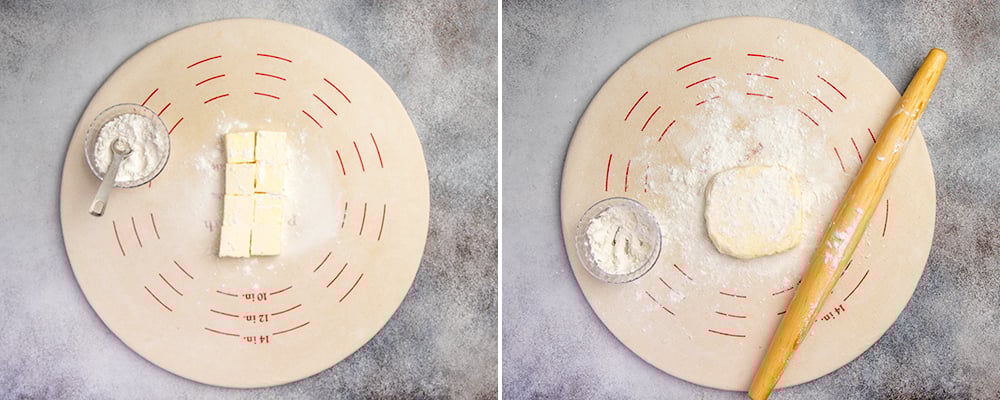
For the butter packet, you’ll shape cold butter into a flat, even square that’s ready to laminate.
- Cut 2 sticks of cold butter into 8 equal chunks.
- Arrange into a 2-by-4 grid on a floured surface. Dust with more flour.
- Pound and roll the butter until the pats press together.
- Fold and roll again until you have a cohesive 4-inch square—cold but pliable.
Combine base dough and butter packet
Time to bring the dough and butter together.
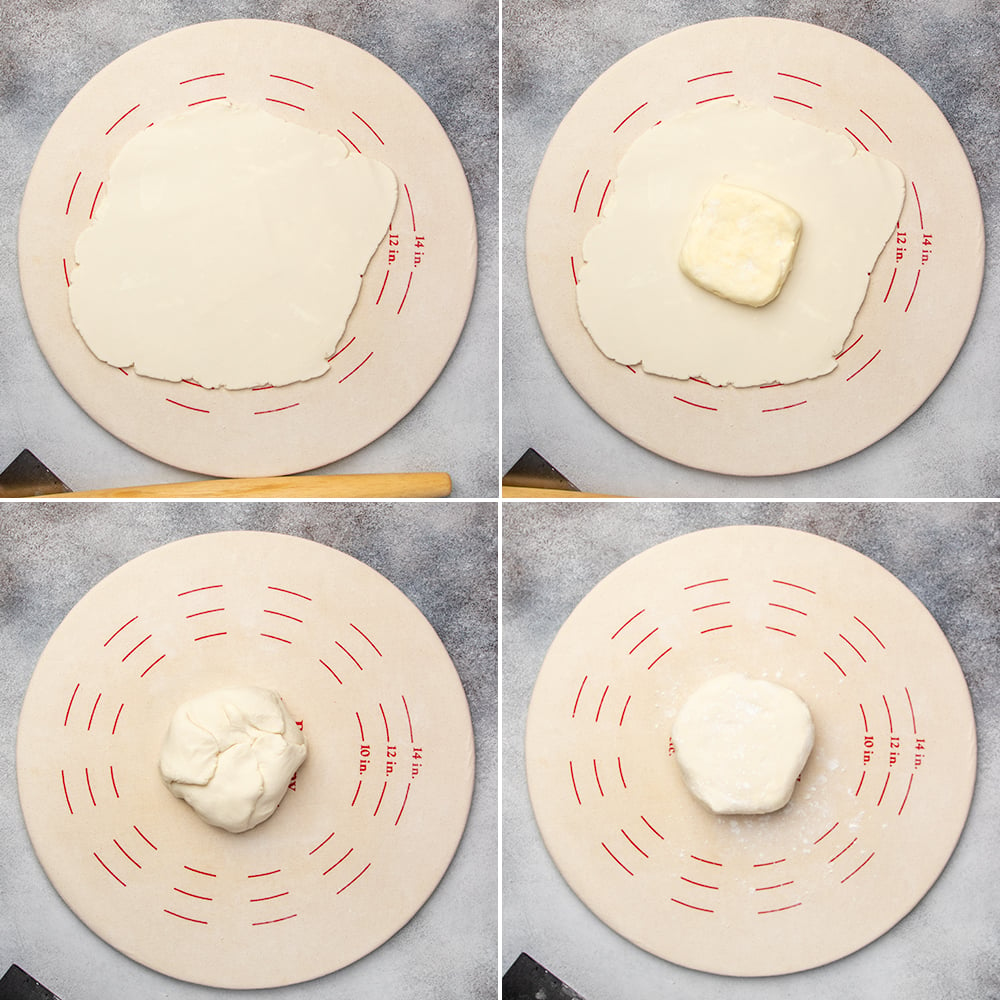
- Roll the base dough into a 6-inch square.
- Place the butter packet in the center, turned 45° like a diamond. Lightly score its outline.
- Set the butter aside.
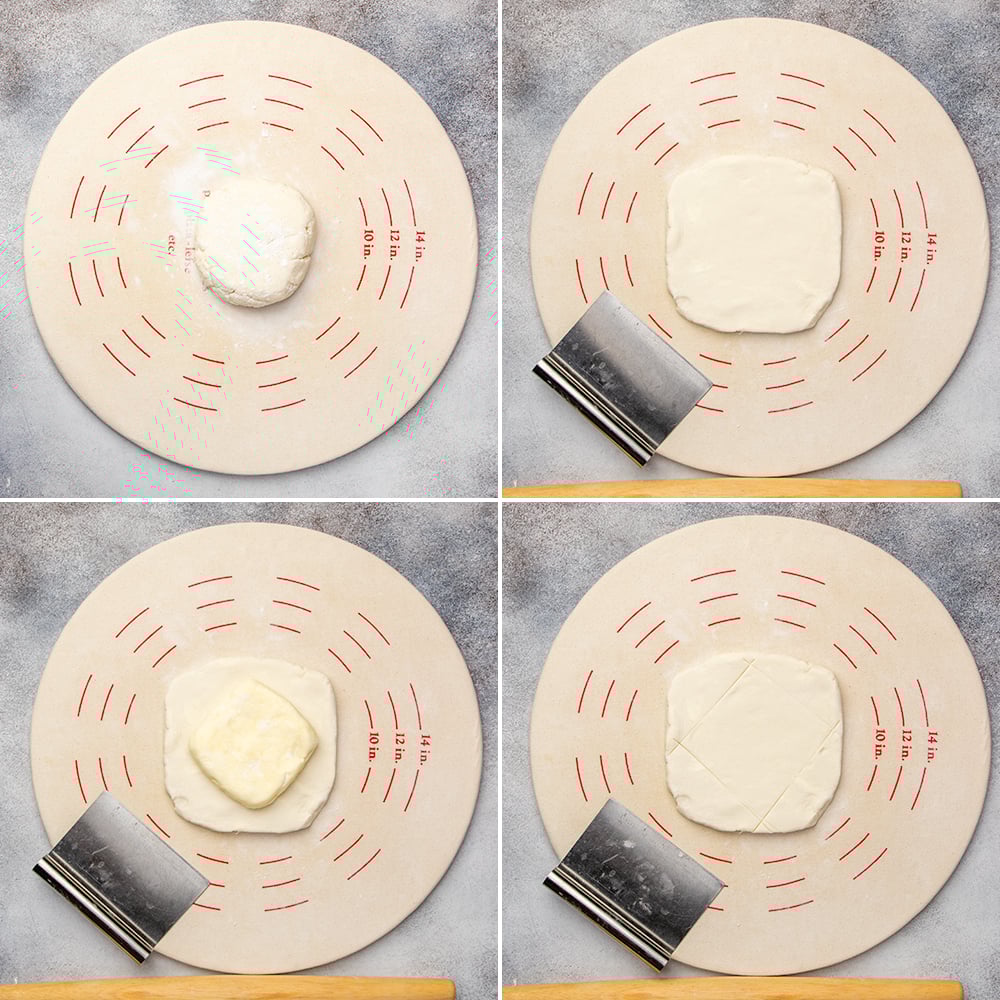
- Roll out the 4 corners of the dough from each scored edge, creating flaps.
- Return the butter packet to the center. Fold the flaps over it to seal, like closing a box.
Roll and fold the dough (lamination)
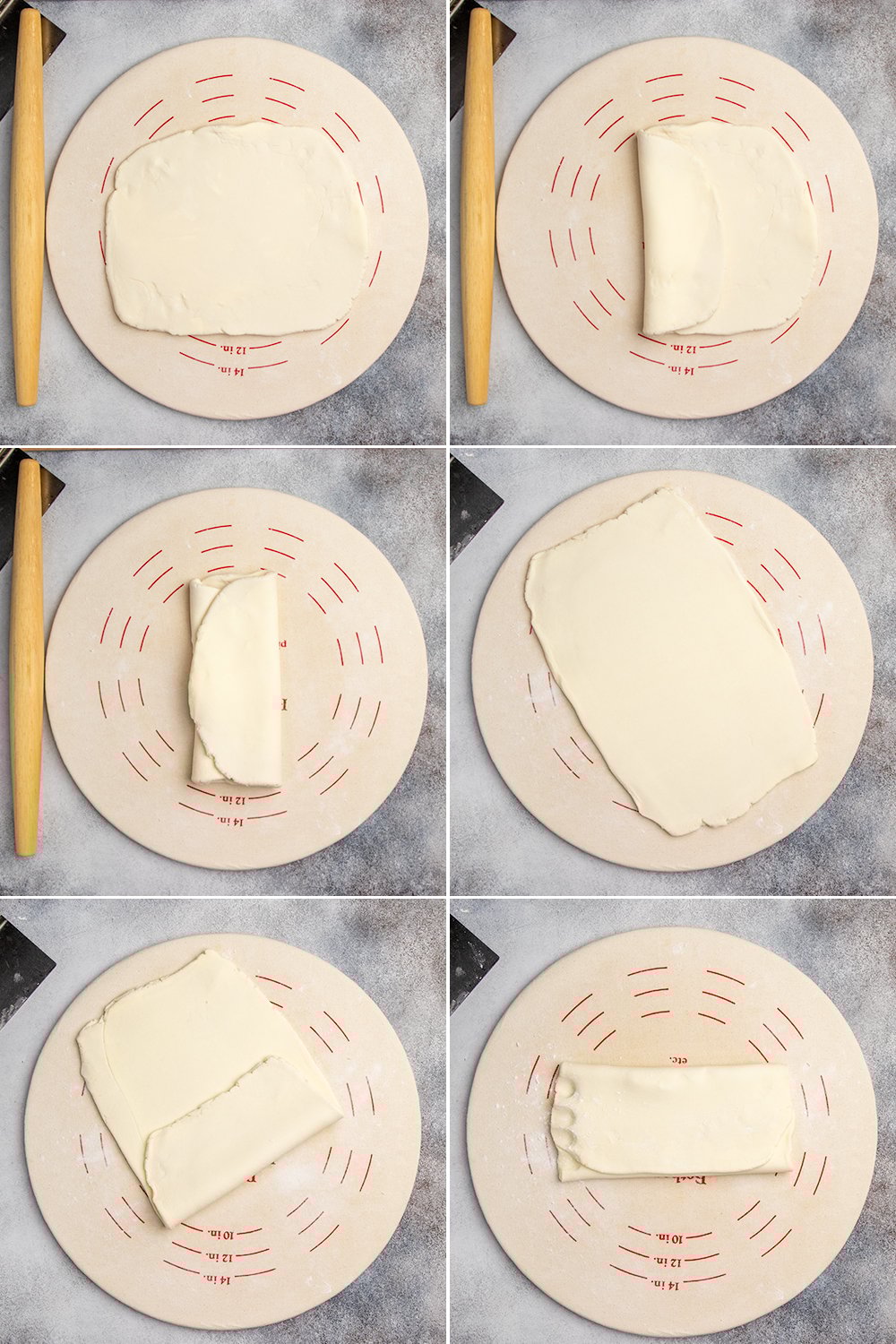
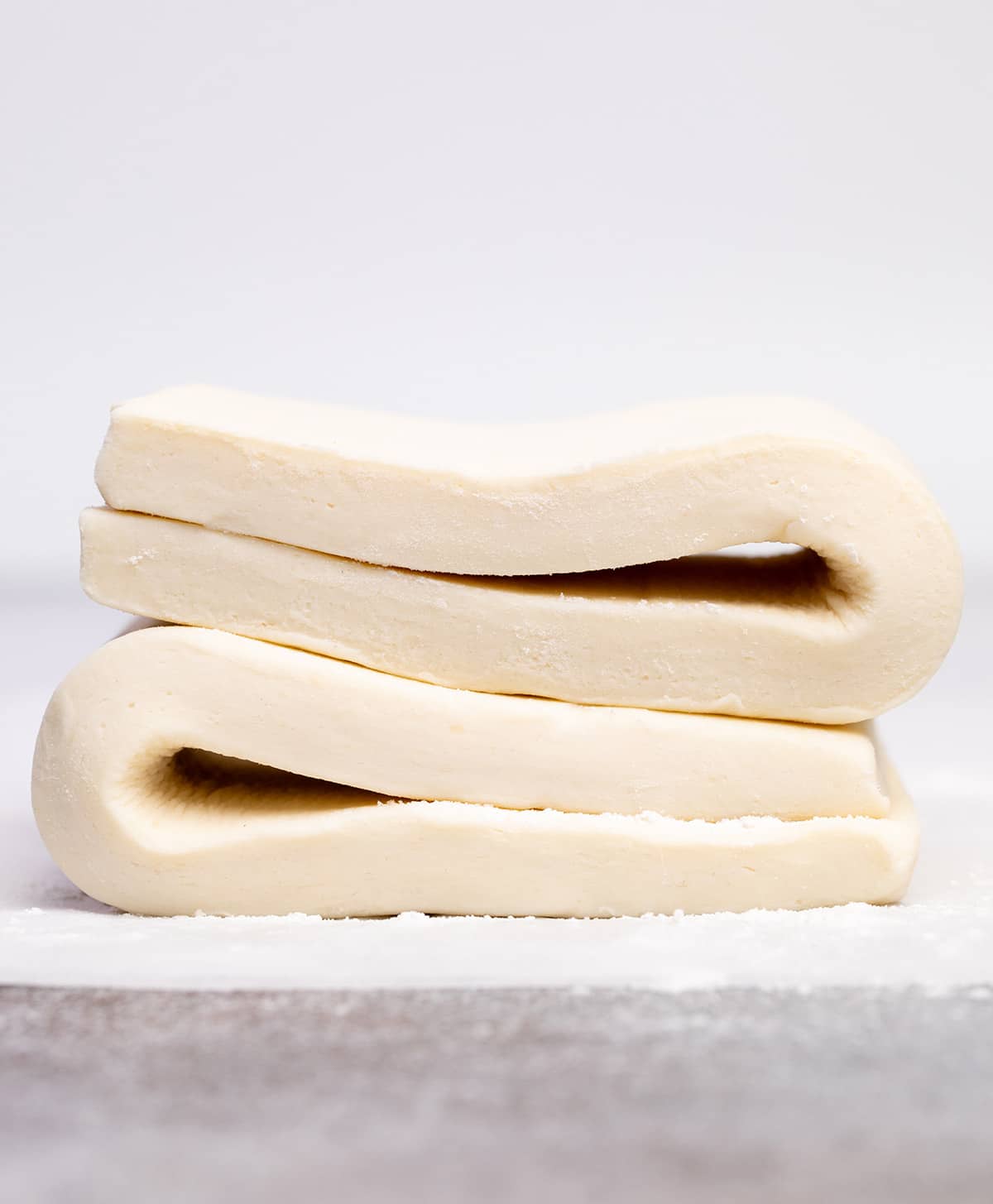
Lamination is what builds puff pastry’s signature layers. With each “turn”—rolling and folding—you multiply those layers exponentially.
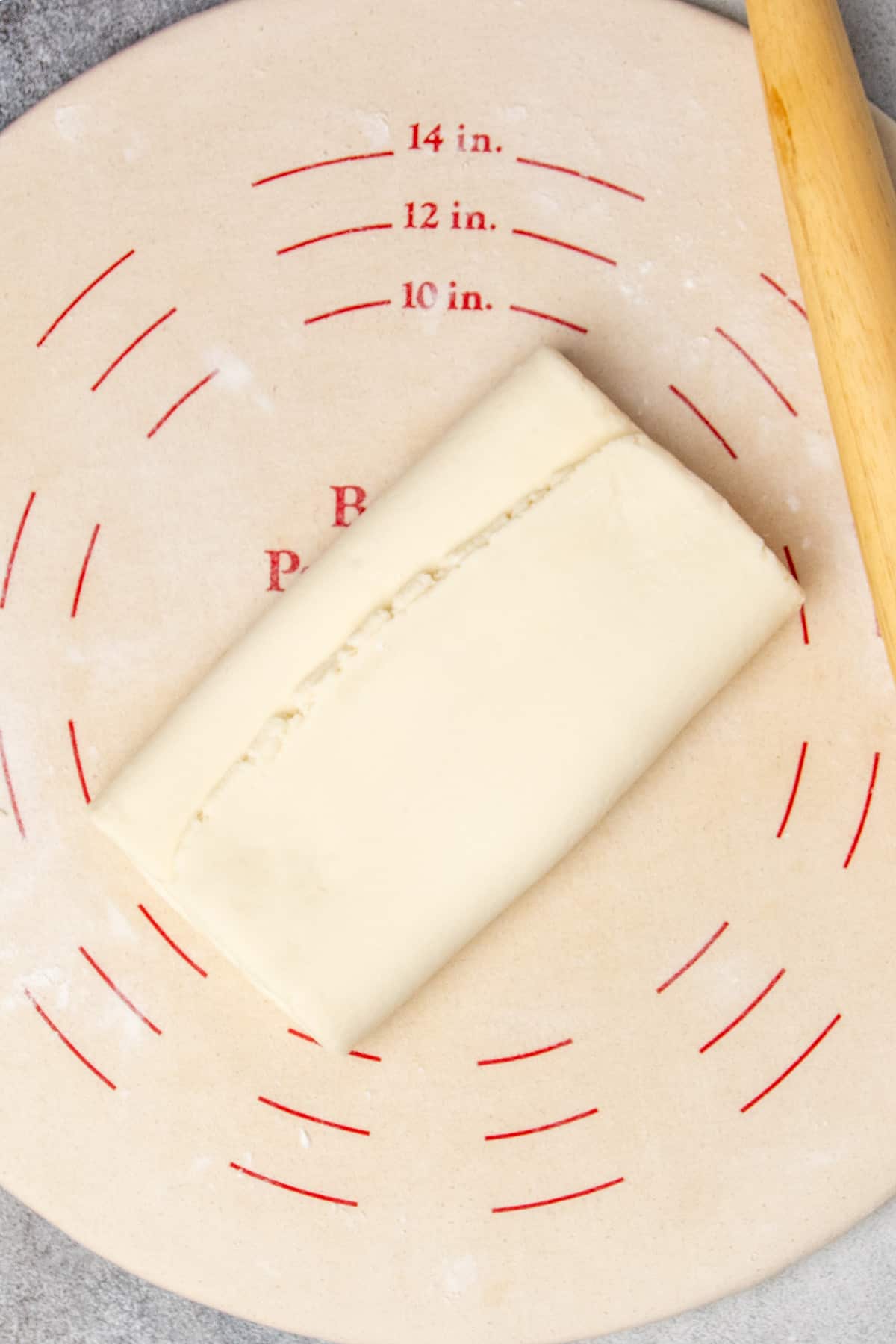
- Each turn: Roll the dough into a rectangle, then fold it in thirds like a business letter. That’s one turn.
- Total turns: Do 6 turns total, chilling the dough for 30 minutes after every 2.
To use right away: Complete all 6 turns, chilling in between. After the final chill, roll the dough out to your desired thickness and use it to make a tart, turnover, or other pastry.
To use later: Complete only 4 turns, wrap tightly, and refrigerate. Later, before baking, let the dough warm just enough to roll smoothly, then finish the last 2 turns and chill once more.
Expert Tips
Keep the butter cold
Cold butter is what creates puff pastry’s flaky layers. As it hits the hot oven, the butter releases steam and lifts each sheet of dough. If it melts too soon, you lose the layers.
But don’t let the dough crack
If your dough breaks as you roll or wrap, it’s likely too cold. Let it warm slightly until pliable—just enough to bend, not melt.
Add water gradually
Start with less and add only as needed. If you go too far, sprinkle in a touch of flour to rebalance.
Track your turns
Lamination requires precision. After every two turns, press a floured knuckle into the dough to mark your place—2 marks for 2 turns, 4 for 4, and so on.
Stop at six turns
More turns don’t mean more flake. After 6, the butter layers get too thin to lift the dough, and you’ll lose that airy texture.
Flour as needed
The dough recipe uses the bare minimum flour for tenderness, so it can handle a sprinkling of flour during shaping. If it gets sticky or the butter starts peeking through, dust lightly and keep rolling.
Ingredient substitutions
To make it dairy free:
Swap the butter for a firm vegan butter like Melt or Miyoko’s Creamery. Just note—they’re softer than dairy butter, so your layers may be a bit less defined. Avoid Cup4Cup flour if you’re dairy free, since it contains milk powder.
For best water:
Use filtered, ice-cold water (measure before adding ice). Avoid spring or sparkling water, which can leave off flavors or impact texture.
How to use this dough
This pastry works beautifully in both sweet and savory recipes:
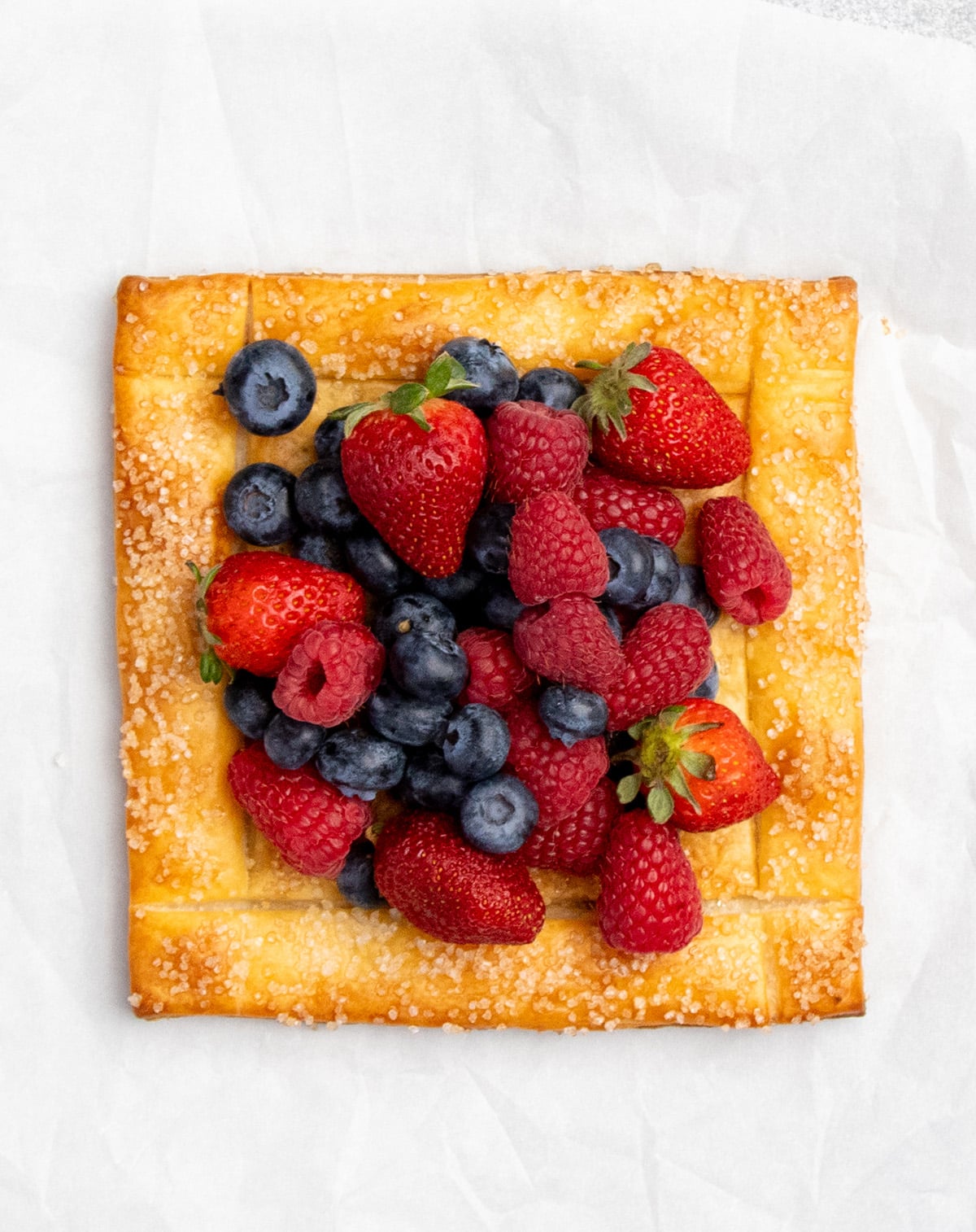
- Make an open-face apple tart or use it as a crust for a rustic gluten free strawberry galette.
- Try it as the base for a gluten free asparagus tart or a golden topper for gluten free chicken pot pie.
- Cut and fill with pastry cream or whipped cream and berries for an elevated gluten free strawberry shortcake.
Gluten Free Puff Pastry Recipe

Tell Google you trust GFOAS!
Equipment
- French rolling pin the kind that tapers on the ends, not the the kind with handles
- Metal bench scraper or knife or other straight edge
Ingredients
For the base dough
- 2 cups (280 g) all purpose gluten free flour blend, plus more for sprinkling (See Recipe Notes)
- 1 teaspoon xanthan gum, omit if your blend already contains it; use a heaping 1 teaspoon
- ¾ teaspoon kosher salt
- 4 tablespoons (56 g) unsalted butter, diced and kept cold
- ½ cup (4 fluid ounces) cold water, iced (ice doesn’t count in volume measurement), plus more as necessary
For the butter packet
- 4 tablespoons (35 g) all purpose gluten free flour blend, plus more for sprinkling (See Recipe Notes)
- 16 tablespoons (224 g) unsalted butter, very cold
Instructions
First, make the base dough.
- In a large bowl, place the 2 cups flour and salt, and mix or whisk to combine well. Add the chopped unsalted butter and toss to combine. Press each chunk of butter flat between your thumb and forefinger.
- Create a well in the dry ingredients, and add 1/2 cup of ice water to the center. Stir the mixture to combine. Add more ice water by the tablespoon until the dough stays together when pressed.
- Press the dough into a ball, place it onto a piece of plastic wrap and wrap tightly. Place in the refrigerator to chill until firm while you make the butter packet.
Make the butter packet.
- Dust a sheet of parchment paper or bare flat surface with 2 tablespoons of flour. Chop the two sticks of butter each by cross-section into 4 equal-sized chunks of 2 tablespoons each. You'll have 8 pats of butter.
- Arrange the pats of butter on top of the flour into 4 groups of 2 pats, touching one another, making a grid 2 wide by 4 tall. Sprinkle the butter with the remaining 2 tablespoons flour.
- Using a French rolling pin, pound the butter to begin to flatten it and to press the pats of butter together. Press and roll the rolling pin until the pats join together and make one butter packet about 1/2-inch thick, sprinkling lightly with extra flour as necessary to prevent sticking.
- If the butter starts to get greasy, sprinkle it lightly with flour, and refrigerate it until it firms up.
- Fold the butter in half, and roll and pound it again until flat, and repeat the process until you have a butter packet that is about 4-inches square.
- Wrap the butter packet tightly in plastic wrap and place it in the freezer to chill for about 5 minutes, or in the refrigerator for about 20 minutes, or until beginning to firm.
Combine base dough and butter packet.
- Remove the chilled base dough from the refrigerator, and place it on a lightly floured surface. Sprinkle lightly with more flour, and press and roll the dough until it is smooth, folding it over on itself as necessary.
- Press it into about a 6-inch round. Unwrap and place the chilled butter packet in the center of the round of dough.
- Lightly score the perimeter of the butter packet, and set the butter packet aside.
- Dust the top of the dough once more with flour, and roll out the dough from the 4 scoring marks and out, away from the center of the dough, to create 4 flaps.
- Dust with more flour as necessary to prevent the rolling pin from sticking to the dough and move the dough frequently.
- Place the butter packet back in the center of the dough, and fold the 4 flaps onto the butter like you would the bottom of a cardboard box. Press the dough around the butter packet to seal it in.
Complete "turns" 1 and 2.
- Sprinkle the top of the dough with flour, and roll the dough away from you into a long rectangle that is about 5-inches wide x 12-inches long.
- Whenever you're handling the raw dough, sprinkle it lightly with flour to prevent sticking, and shift and turn the dough frequently. Starting at a short side, fold the rectangle in thirds as you would a business letter. This is the first "turn."
- You will do two turns at a time, and then wrap and refrigerate the dough in between.
- Turn the dough 90° so the short side of the folded dough is facing you. Roll the dough away from you again into another long rectangle, in approximately the same size and shape as before (5 inches x 12 inches).
- Fold in the same manner, once again, starting at a short side and folding in thirds like you would a business letter
- You have just completed the first two “turns.” With a floured knuckle, make two impressions on the dough, to represent the completion of two turns.
- Cover the dough with plastic wrap tightly and place in the refrigerator for at least 30 minutes.
Complete the 3rd & 4th turns.
- Remove the chilled dough from the refrigerator. Unwrap it, and lightly flour the outside once again.
- With a short side of the folded dough facing you, roll away from you and into a long rectangle the same size as before, about 5 inches wide x 12 inches long. This is turn #3.
- Turn the dough 90° so the short side of the folded dough is facing you. Sprinkle the dough lightly with extra flour if any spots become sticky. Roll the dough away from you again into another long rectangle, in approximately the same size and shape as before (5 inches x 12 inches).
- Fold in the same manner, once again, starting at a short side and folding in thirds like you would a business letter.
- You have just completed the second two “turns” (numbers 3 and 4). With a floured knuckle, make four impressions on the dough, to represent the completion of 4 turns in total so far.
- Cover the dough with plastic wrap tightly and place in the refrigerator for at least 30 minutes.
- If you plan to use the dough today, continue on to the final steps of preparation. If not, keep the dough, wrapped very tightly, in the refrigerator until about 1 hour before you'd like to use it. When you're ready, remove the wrapped dough from the refrigerator, and resume the recipe as instructed below.
Complete the final 2 turns (#5 and #6).
- Remove the chilled dough from the refrigerator. If the dough is too stiff to roll, allow it to sit at room temperature for 15 to 20 minutes. When it's ready, unwrap it, and lightly flour the outside once again.
- Turn the dough 90° so the short side of the folded dough is facing you. Sprinkle the dough lightly with extra flour if any spots become sticky. Roll the dough away from you again into another long rectangle, in approximately the same size and shape as before (5 inches x 12 inches).
- Fold in the same manner as before, starting at a short side and folding in thirds like you would a business letter. This is turn #5.
- One final time, turn the dough 90° so the short side of the folded dough is facing you. Sprinkle the dough lightly with extra flour if any spots become sticky. Roll the dough away from you again into a final long rectangle, in approximately the same size and shape as before (5 inches x 12 inches).
- Fold in the same manner as before, starting at a short side and folding in thirds like you would a business letter. You have completely the final turn.
- Wrap tightly and refrigerate for at least another 30 minutes.
- It is now ready to be rolled out and used in any recipe that you would otherwise use conventional puff pastry. This full recipe makes the equivalent of about 3 sheets of conventional frozen packaged puff pastry.
Using the dough
- Use the fully prepared puff pastry sheet anywhere you would have used a conventional sheet in the past. See recipe notes for suggestions.
Video
Notes
For best results, use Better Batter’s original blend or my Nicole’s Best multipurpose blend. Bob’s Red Mill 1-to-1 should also work—but you’ll need to add at least an extra ½ teaspoon xanthan gum to the base dough. I don’t recommend Cup4Cup anymore, since the new formula doesn’t perform as well. Prefer DIY? Use one of my mock all purpose gluten free flour blends. Yield info
This recipe makes about 2 pounds of dough—enough for 3 sheets of puff pastry, rolled to 10×10-inch squares. One sheet is the serving size used for the nutrition estimate. Uses
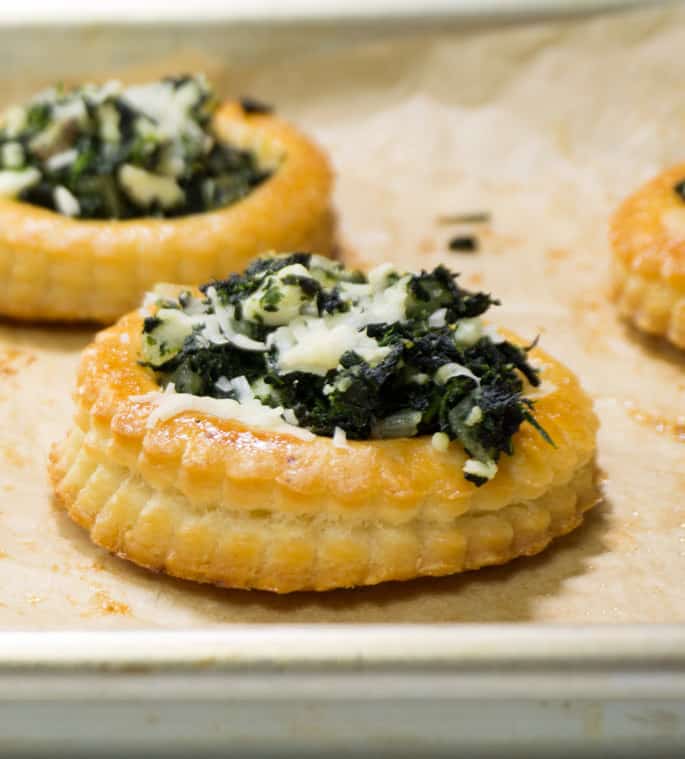
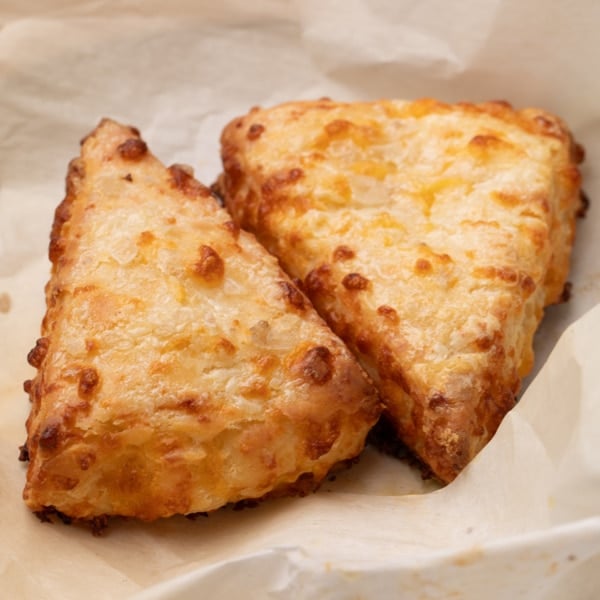
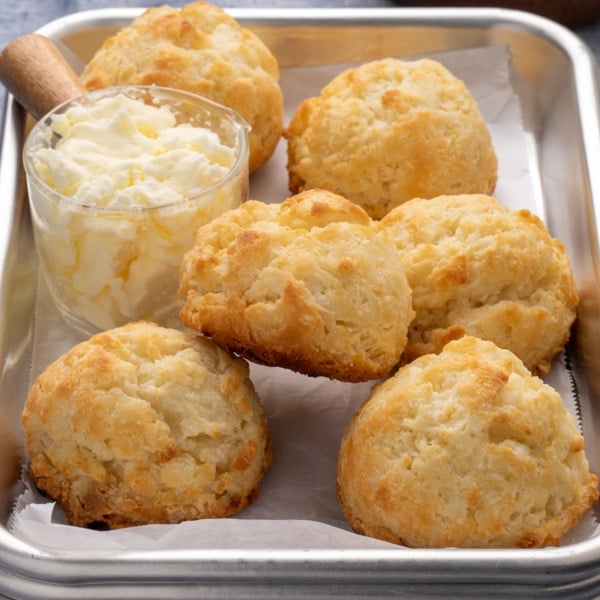
Use in place of pie crust or any other pastry in:
Nutrition
Nutrition information is automatically calculated, so should only be used as an approximation.
make ahead/leftovers
Storage instructions
Baked puff pastry:
Let baked goods cool completely, then wrap tightly. Store at room temperature for up to 2 days, or refrigerate for another 2 days after that.
To refresh: Sprinkle lightly with lukewarm water and warm in a 300°F oven for about 5 minutes.
Unbaked dough:
If shaped and ready to bake, wrap tightly and freeze for up to 3 months. Bake from frozen—just add a few extra minutes to the bake time.
Make-ahead dough:
After 4 turns, wrap tightly and refrigerate for up to 5 days or freeze for 3 months. When ready to use, let the dough warm slightly until rollable, then complete the final 2 turns, chill again, and use.
FAQs
Traditional puff pastry (like this one) uses a cold butter packet folded into a base dough, then laminated with multiple turns and chill periods.
Rough puff, or quick puff, skips the butter packet and mixes chunks of cold butter directly into the dough. It’s faster, but doesn’t have as many distinct layers, more like gluten free biscuits.
You’ll get about 2 pounds of dough—enough for 3 sheets, each around 10×10 inches. That’s about 30% more than a typical 2-sheet box from the store.
Yes—just adjust the “yield” in the recipe card. Keep in mind the step-by-step instructions won’t change, so you’ll need to scale sizes proportionally.
A few brands like Schär and GeeFree make GF pastry, but I haven’t tested them myself—so I can’t say how they compare.
The most common issue is warm butter—it may have melted into the dough instead of staying in distinct layers.
Other possible causes: too many turns (more than 6), or re-rolling after refrigerating or freezing, which can compress the layers.
Warm butter is usually the culprit. If it softens too much during shaping, it melts into the dough and leaks during baking.












This recipe has challenged me and scared me to death since you sent it out. I have read and re-read the directions and watched the video so much I think I may wear it out. Everyday I think I’ll try it today and then I say, no tomorrow but tomorrow never comes. So today I decided that I really don’t like puff pastry that much anyway,ha ha ha! So thanks for ruining my life!
Sorry? ;)
I was really just kidding around and criticizing myself. I certainly didn’t mean to offend you! If I did I’m the one who’s sorry!
Oh no Nancy I just saw this—and responded to your email. You most certainly did not offend me! I took your comment in the manner in which it was offered. My response was kind of like when my kids say #sorrynotsorry. That’s why there’s a winking emoji at the end. See? ;)
Oh, I totally remember sorrynotsorry and what was even more insolent was “whatever”. I have a really good Idea. You manufacture the puff pastry and sell it to the stores. Everyone will buy it, you’ll make a lot of money and I won’t have to suffer over this recipe anymore! Sound good?
Is it possible to make this dairy free as well? Would Earth Balance work?
Hi, Debbi,
Never use Earth Balance for pastry as it has a very high water content, so it won’t hold its shape and puff out. It will just melt. Try using butter-flavored Spectrum nonhydrogenated shortening. When it gets too cold, it is really solid, so you’ll have to be careful with temperature.
I just made a non GF grilled cheese sandwich that uses a croissant and I asked a friend of mine if she had ever made a GF croissant…she sent me here! Love that I’ve found a recipe I can share with my GF friends that haven’t had a croissant in years!
Hi, Barbara,
Thanks for stopping by! Yes, absolutely gluten-free croissants are not only possible, but easy when you have the right flour. Who knew it was National Grilled Cheese Month? Not I. :)
xoxo Nicole
Hey, Jenn!
Thanks for stopping by. :)
Yup. I have a few ideas for sure. And I love how scientific you are about this. That means you’re going to be successful – and it’s going to be fun (well, for me).
First, I’m not sure what flour blend you’re using, but although nearly any blend should be possible if the method is right (since most of the success of puff pastry is architecture more than chemistry), lower starch/higher protein blends will be harder to handle for the baker. Conventional pastry flour is high starch, low protein. So if you have the right gf blend, it should be smooth as silk. But it sounds like you’ve played with the blend a bit, and it hasn’t mattered. So…
Second, since the blend is more about how easy it is to handle (and easier to handle will lead to earlier success), it really comes down to the method – and the environmental conditions. Usually when the butter packet is breaking through, it’s a temperature issue. You want the dough and the butter packet to be at the same temperature as one another, and it’s okay to err on the side of having it be too warm while you’re handling it. You shape it, and then chill it so it doesn’t truly melt. When I shape the butter packet, it’s often soft enough that I could roll it into a ball rather easily. Since the dough will become a bit sticky if it’s warmer, just dust it with some starch (or more flour).
It’s drilled into our heads that pastry elements need to be cold for maximum success, but it’s rare that the problem is actually that the butter has melted into a liquid form (which is the only way that you can’t chill it back to life).
You’re motivated, so you’ll get it right. And you’ll feel like you won the lottery when you do!
How does that sound?
xoxo Nicole
Well I was scared to make sourdough (make that intimidated) and I did it and my family loves your recipe! Now I am intimidated by puff pastry. If I made really great coffee and something yummy for breakfast, could you just come by and lend me a hand? How I would love that!
How about July 2012, in California, my friend? I’ll do a private demo. :) Oh how I would love that, too. Pencil me in?
xoxo Nikki
Done!
Wow! That looks very good! I love how the browning looks very nice and even. The texture looks great. Some GF flours are just too stiff to do something like this puff pastry with. The Better Batter looks pretty good – I’ve never tried it.
Hi, Gina!
Thanks for stopping by. The texture of the finished product is spot on. Wait ’till you see the raw dough in the next one. ;)
xoxo Nicole
Oh, this is AWESOME…I love puff pastry…and this would be fabulous for sweet or savory things, too!!! thanks for the recipe. Love and hugs from the ocean shores of California, Heather :)
It’s perfect for everything, Heather. Indeed. I’m actually thinking about wrapping my children in it. I don’t think they’d mind. :)
xoxo Nicole
That’s funny, because I’ll bet the kids would love to “eat” their way out of that puff pastry :) :)
I remember, ages ago now, when my father took me to Redondo Beach Pier…and there was this one food stand that sold these flaky dough pastries…the same kind of flaky dough used for baklava…but it was with ground beef…so tasty good delicious…and I’m thinking this puff pastry would be awesome to make that!!!
Oh, by the way, do you still have any food struggles while eating gluten free? For me it’s coffee…
Love and hugs from the ocean shores of California, Heather :)
You find that you can’t have coffee while eating gluten-free? I drink coffee all the time…
The dough typically used for baklava is filo dough, which is a bit different than puff pastry since it is typically very thin sheets of dough with butter between the sheets, instead folded into the dough itself like puff pastry, but this would certainly work beautifully!
xoxo Nicole
Yeah, coffee really is hard for me, because I always have to add dairy and sugar…and while those are gluten free, too…I am avoiding them, because they don’t agree with my body. So for me, I have to avoid the coffee all-together, because it’s a trigger food for other culinary indiscretions :)
I hear that, Heather! Today is my first day coffee-free for the same reason!
This looks wonderful (and just the type of nerdly kitchen experiment I love. Pure bliss is an afternoon playing in the kitchen with my equally dorky spouse!) and something I’m going to have to try soon. Thanks for yet another rung on the GF ladder to reach for. I use to use puff pastry all the time (before celiac diagnosis) and I truly miss it’s versatility.
Also? I’m thrilled to see that you are going to put up your own GF-all-purpose hack at long last. 90% of the time, I mix up various versions of my own and I am looking forward to seeing what you use. While I understand the appeal of the purchased mixes… well. Between the price (I’m cheap) and the shock I got when I finally bought BB (Last week was a week of glory AND despair. Bought BB finally to try the doughnut recipe with. Had my first stunning glorious doughnut in 3 1/2 years… quickly followed by an epi-pen inducing despair when I found out that the ‘made on a line with nuts’ thing whacked me but good!) I have had to pretty much swear off buying premade anymore. Really looking forward to seeing what you come up with. No… off to see just HOW much butter I have in the freezer to start working on the Puff!
Hi, Jenna,
I’m really glad you’re excited about making puff pastry!
Are you saying that you had an anaphylactic reaction to Better Batter? They have been tree nut free for a year now, so unless you used an older package somehow, I can’t imagine how Better Batter could have triggered a tree nut allergy. I believe that Naomi Poe herself is tree nut allergic, even, and safely uses the flour. Good thing you had your epi pen ready! Maybe you reacted to one of the other ingredients in the doughnuts?
xoxo Nicole
The older package is highly possible – the local health food store has had issues with rotating their stock. From old packages to “helping” folks by grinding vast amounts of brown rice in store… and leaving it to sit at hot store temps for 6 months. (I’m ‘lucky’, I’m one of the small percentage of folks who can taste grain rancidity. When I called to complain… I got a “Oh, you mean brown rice can go BAD? How were WE to know” and found out quite a few folks have gotten sick. ) I should know better then to shop there. It was either an old package with nut traces, or they have either latex shoots (common with flour plants – and an allergy that makes me crazy. As this is a family site – lets just say I discovered THAT allergy on my wedding night. And my husband and I spent the rest of the week playing video games. Le Sigh) or they randomly have something in the plant with bananas. (Seriously – if I was a building, my parents would never have been given a permit to have me. My genes are frustratingly wacky) It’s kinda been a week of discovering new ‘issues’. First the BB, then my mom accidentally glutened me during a visit, and today… I’m back in a epi-haze because the gelato my husband bought me to cheer me up switched it’s ingredients since the last time we purchased it, and we were both too dim to check a supposed safe… and failed to notice the “Trace tree-nuts” new warning.
Honestly, it’s one of the reasons why I was so happy to see your post for puff pasty this morning. I refuse to get back into the bad headspace of last year and simply stop eating for fear of allergies or gluten. (The first 70 lbs I lost off my 6’2 frame I could use… but simply not eating caused about another 75 to go. Size 8 from 22 sounds great – but not if it’s due to being too scared to eat and you do it in a huge whack!) I just have to accept I’m not going to be buying easy ready made items anymore. Time to stop wasting money, time, and getting really ill by risking it, put that hope aside, and just get my geeky joy at cooking and exploring back. If I HAVE to cook 100% from scratch – then dang it. It’s going to be AWESOME. Not to be too fan-girly gushy at you, but just so you know – you’re making a real difference in my life. It’s been a seriously bad haul, and I’ve been really ill (and, if I’m honest, past the border of real depression because of it for a while now) – and sites like this, and folks like you are helping me climb out. I’m never gonna be ‘normal’ (granted, a Ren Faire costumer/bard who occasionally works security and has had jobs like “Giant Squirrel” isn’t all THAT normal to start!) but I can get my life, my fun, and yeah – my food back. If you ever wonder if what you’re doing is really helping folks? Take it from me – you aren’t ‘just’ a blogger. It’s not ‘just’ cookbooks. You’re giving folks back not only normality but a good dose of hope. (And the occasional kick in the butt to get back into the kitchen!)
Hi, Jenna,
You poor thing. You certainly do have an active immune system! I want you to know that you really can trust Better Batter’s products, if you ever feel like trying it again. But I can also understand wanting to exercise more control over what you eat.
I’m so happy that I’ve been able to help you rediscover a sense of possibility in food. You can and should eat well, and, like you said, it’s going to be “awesome.” Now get back in that kitchen!
xoxo Nicole
P.S. Your husband sounds like a real keeper. :)
Aaahhhhhh!!! There IS a GOD!! Puff Pastry deprivation has been my biggest hurdle to overcome in the gluten-free world…but NO MORE!! Thanks to my beloved Nicole Hunn-ny!! You are my Gluten-free-Goddess!!! I can’t wait to give this a try!! Now…if you could just figure out a way to eliminate the calories, so I can eat two & a half PILES of this stuff, then I’d be even MORE grateful! :)
Hi, Deanne!
No deprivation for you! No way, man. I’m here to say: no way. For the calorie-free version, share with a friend and pin all the calories on her. A really good friend will understand. Tell her that. ;)
xoxo Nicole
Really liking this series. And thanks for the knuckle tip. That’s a good thing for people like me who forget what the heck I was doing or how many times I was doing it… I miss puff pastry. But no more. Thanks!
Every puff pastry recipe I have ever seen suggests marking the dough, but they don’t seem to ever make clear that you have to mark it anew with each turn. In other words, you don’t just mark it once after the first turn, and then mark it just one more time after the second. After the second, you mark it twice, since with each new turn, you’re rolling smooth the previous turn’s markings. Maybe I’m just rather dense, but it took me quite a while to figure that out!
xoxo Nicole