

This post may contain affiliate links. Please read our disclosure policy.
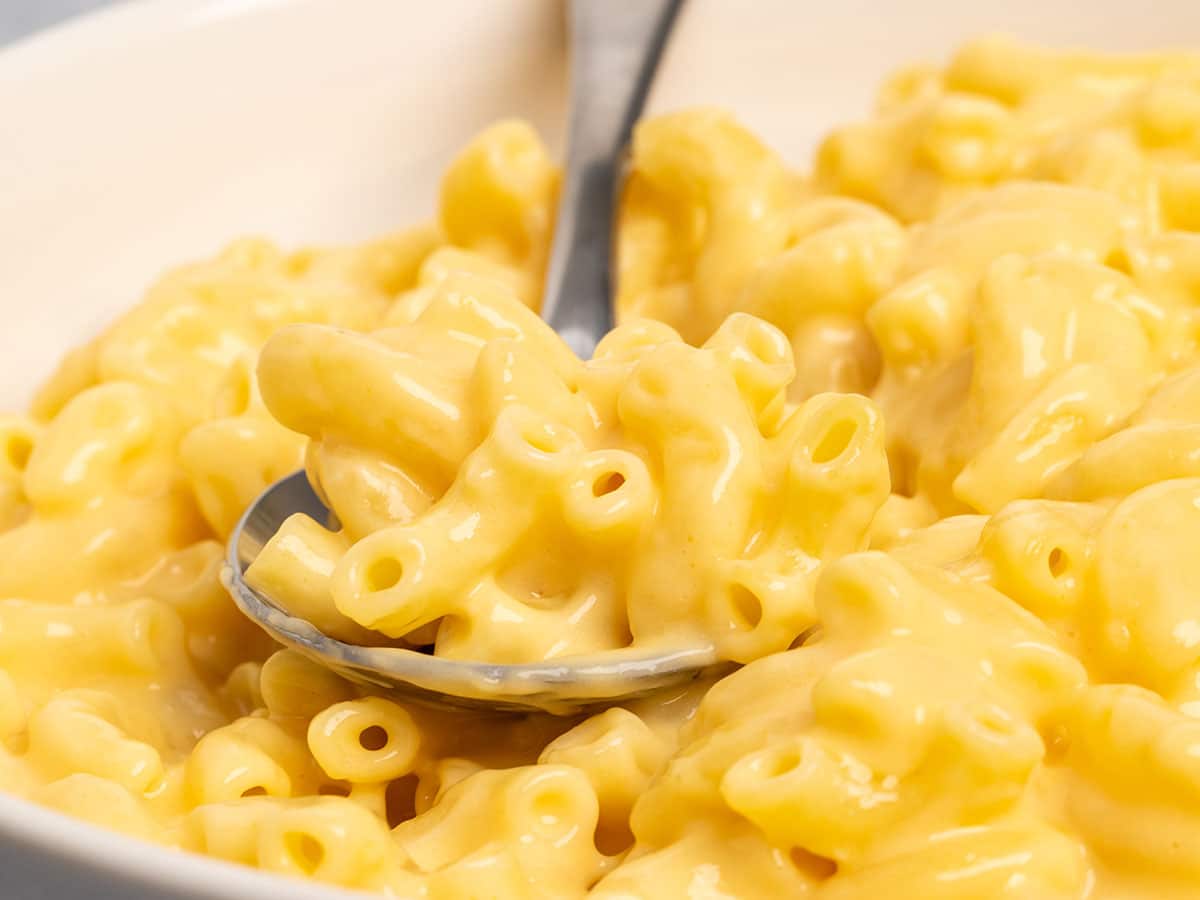
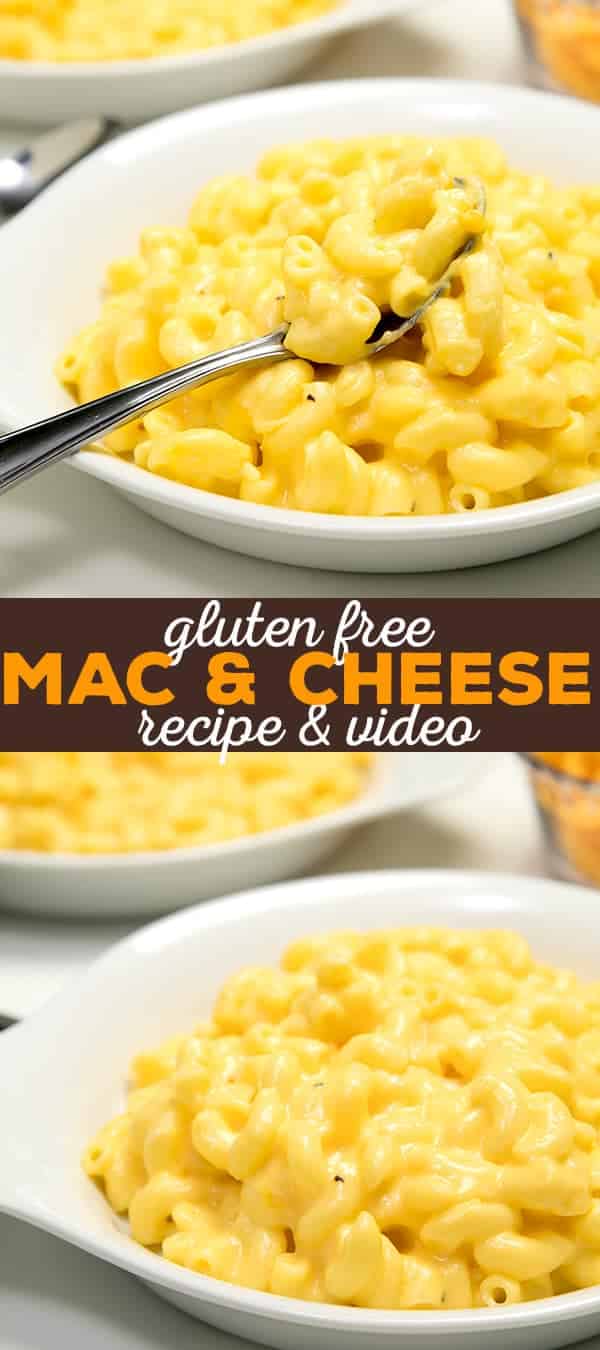
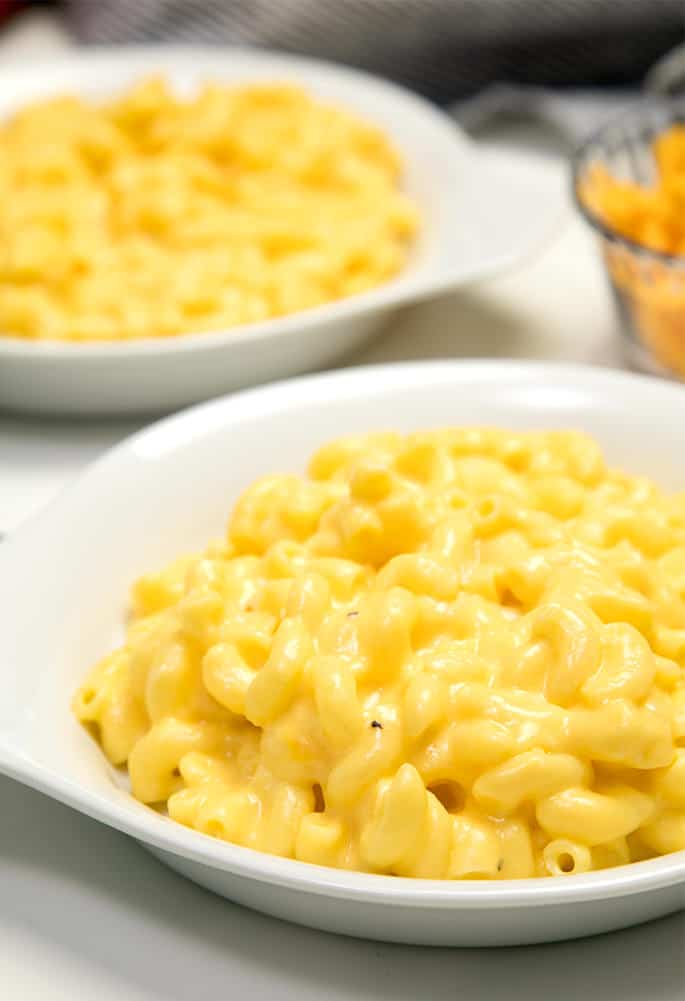
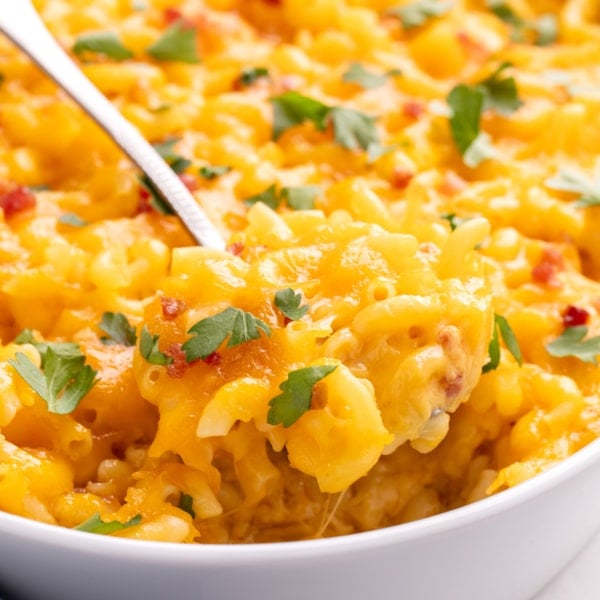
This homemade gluten free mac and cheese recipe has a beautiful, rich cheese sauce. And it's made on the stovetop, so there's no oven required. It only takes about 20 minutes from start to finish!

Why this recipe works
This rich, thick mac and cheese is packed with cheddar cheese flavor and still smooth and creamy. The cheese sauce is made partially with evaporated milk, so it takes much less time to thicken.
Dried gluten free pasta has something of a bad reputation for being soggy and falling apart, but I've found the perfect gluten free elbow noodles that don't get soggy. It's an Italian brand called Rummo.
You can even make the pasta ahead of time and store it at room temperature for a couple of hours. All that's left is to make the quick cheese sauce on the stovetop, and dinner is served!
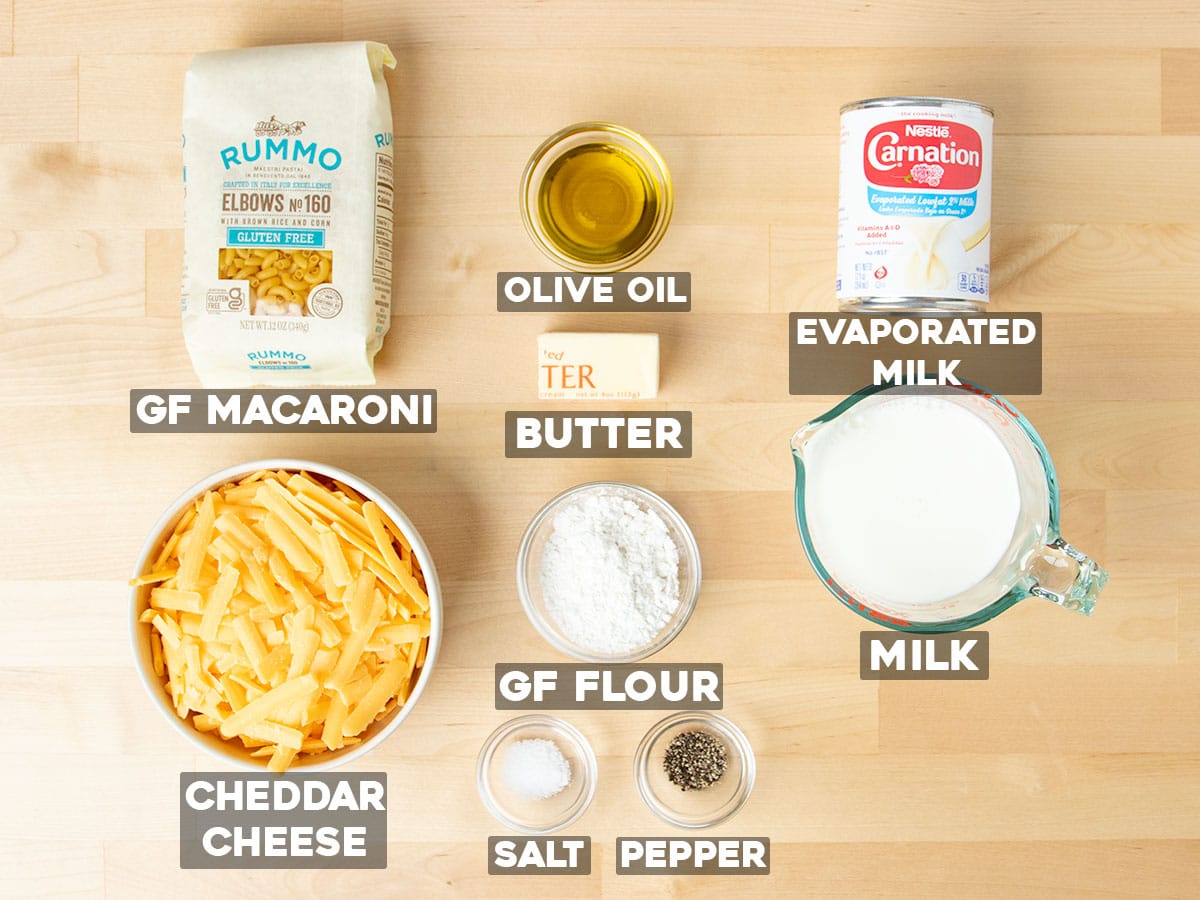
Recipe Ingredients
Here's what you need to make this recipe at home, including the role of each ingredient:
- Gluten fee pasta: Provides the base of the recipe's texture and bulk. You can make this dish with any small dried pasta, but I like macaroni noodles best. My favorite brand of dried pasta is Rummo (make sure you pick up the gluten free package), with Bionaturae is a close second.
- Olive oil: Tossing the cooked pasta with oil keeps it from sticking together before you add the sauce.
- Butter: Melted butter adds flavor and makes the roux mixture smooth.
- Gluten free flour: Thickens the cheese sauce when you cook it with butter. Be sure to use something without any xanthan gum or your sauce will be lumpy and too thick.
- Milk: Adds liquid, flavor and richness to create a flowing cheese sauce that clings to the pasta.
- Evaporated milk: Adds flavor and richness with less moisture than regular milk so the sauce gets thicker faster, with less simmering, requiring less flour in the roux for a richer taste.
- Shredded cheese: Adds tons of savory umami flavor and melts to form a velvety sauce. A semi-hard, tangy cheese like cheddar adds the most prominent flavor so the sauce doesn't just taste overly rich. Pre-shredded cheese is fine but you may need to add more milk or reserved pasta water to thin the sauce since it contains starch to keep it from clumping.
- Salt and pepper: Brings out the other flavors and brightens the dish; add to taste.
How to make gluten free mac and cheese (step by step photos)
Follow along with my easy instructions below to see how to make gluten free mac and cheese in your own kitchen.
Cook the pasta first
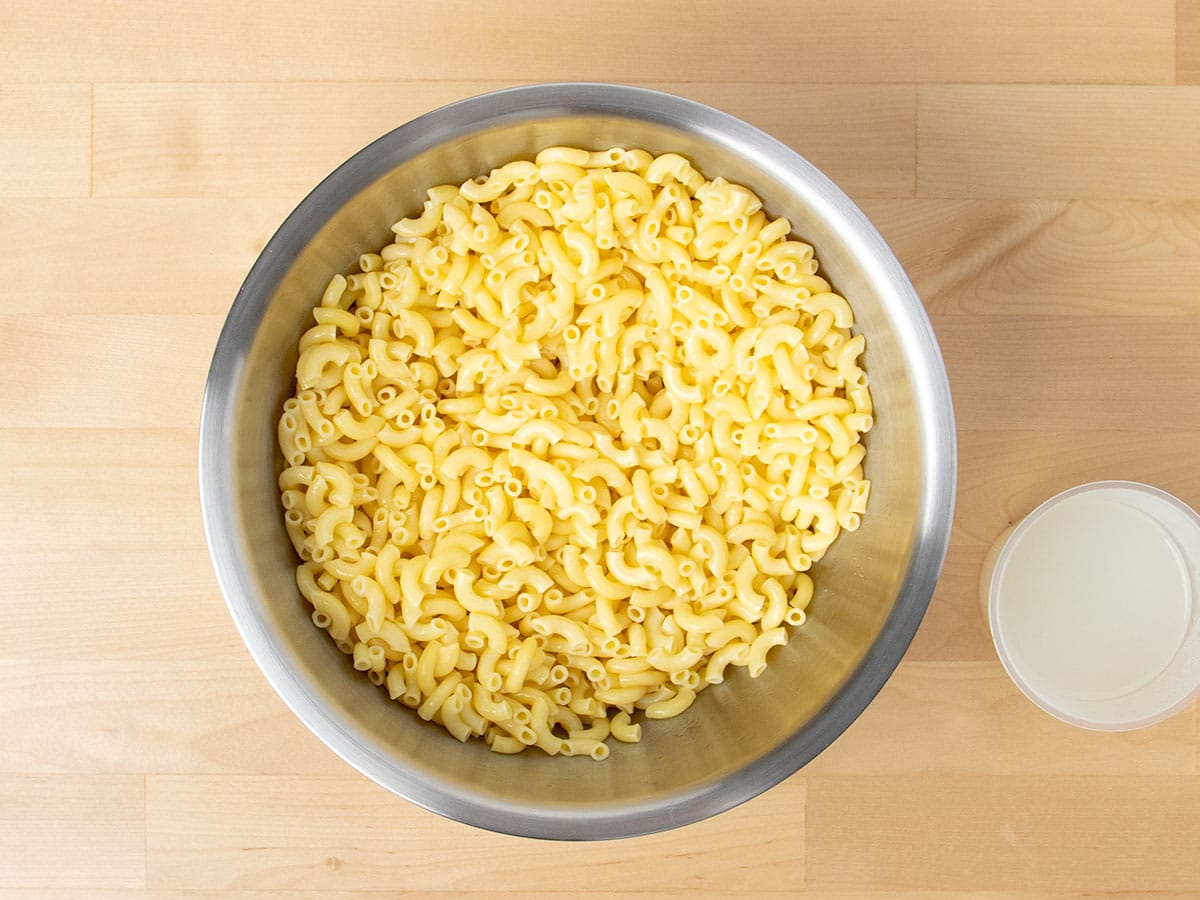
Cook the pasta in a large pot to an “al dente” texture according to the instructions on the package. This prevents the pasta from becoming soggy after adding the cheese sauce. Reserve some pasta water to thin the sauce later without making it watery.
Drain the pasta, then rinse it with lukewarm water to stop the cooking and remove excess starch that gluten free pasta doesn't need. Toss the cooked and drained pasta with olive oil and set it aside.
Make a roux and add milk
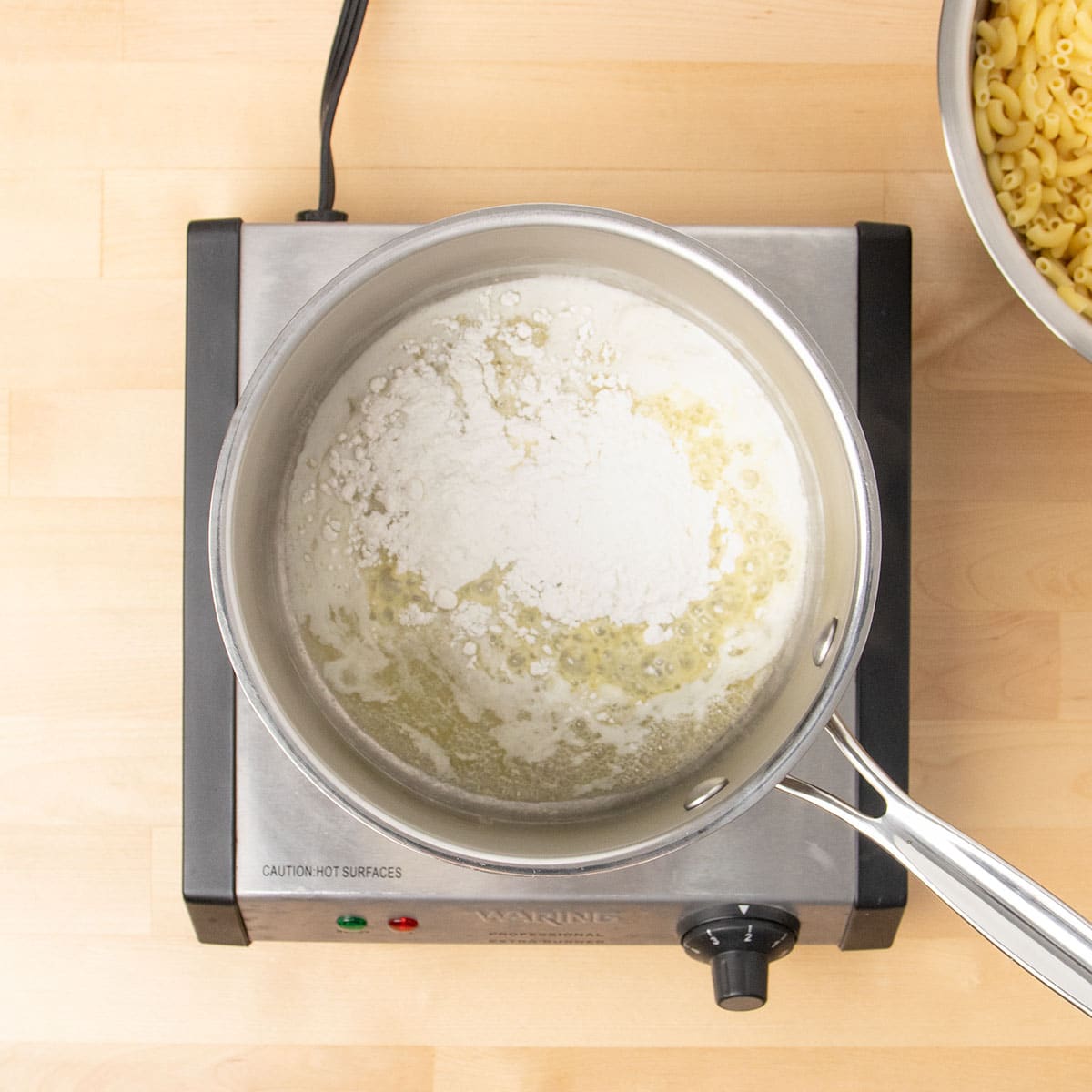
A simple flour and butter roux will thicken the milk enough to help the sauce cling to the pasta without clumping. To make the roux, melt unsalted butter over medium heat, then add gluten free flour, whisk until smooth, and simmer to cook off any raw flour taste.
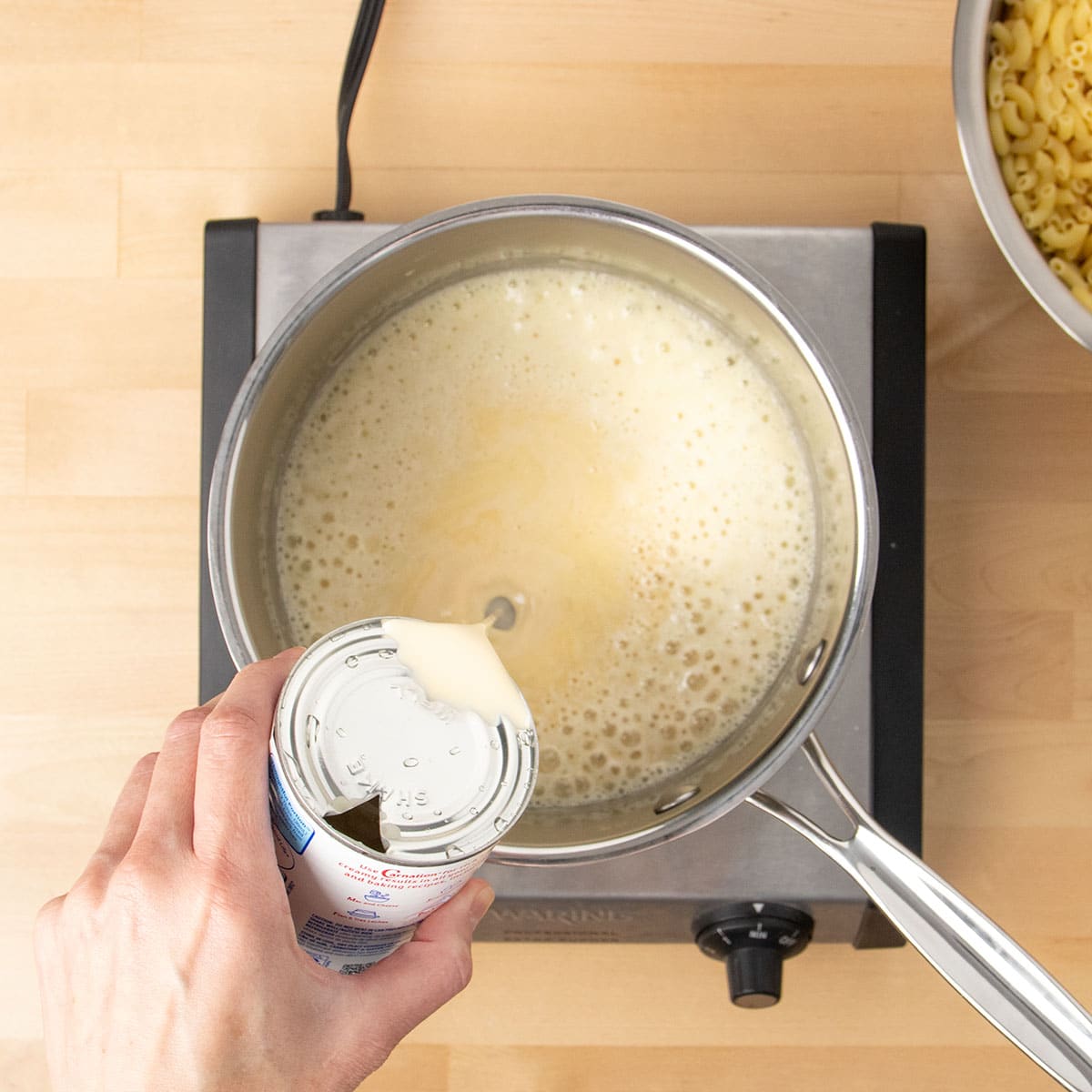
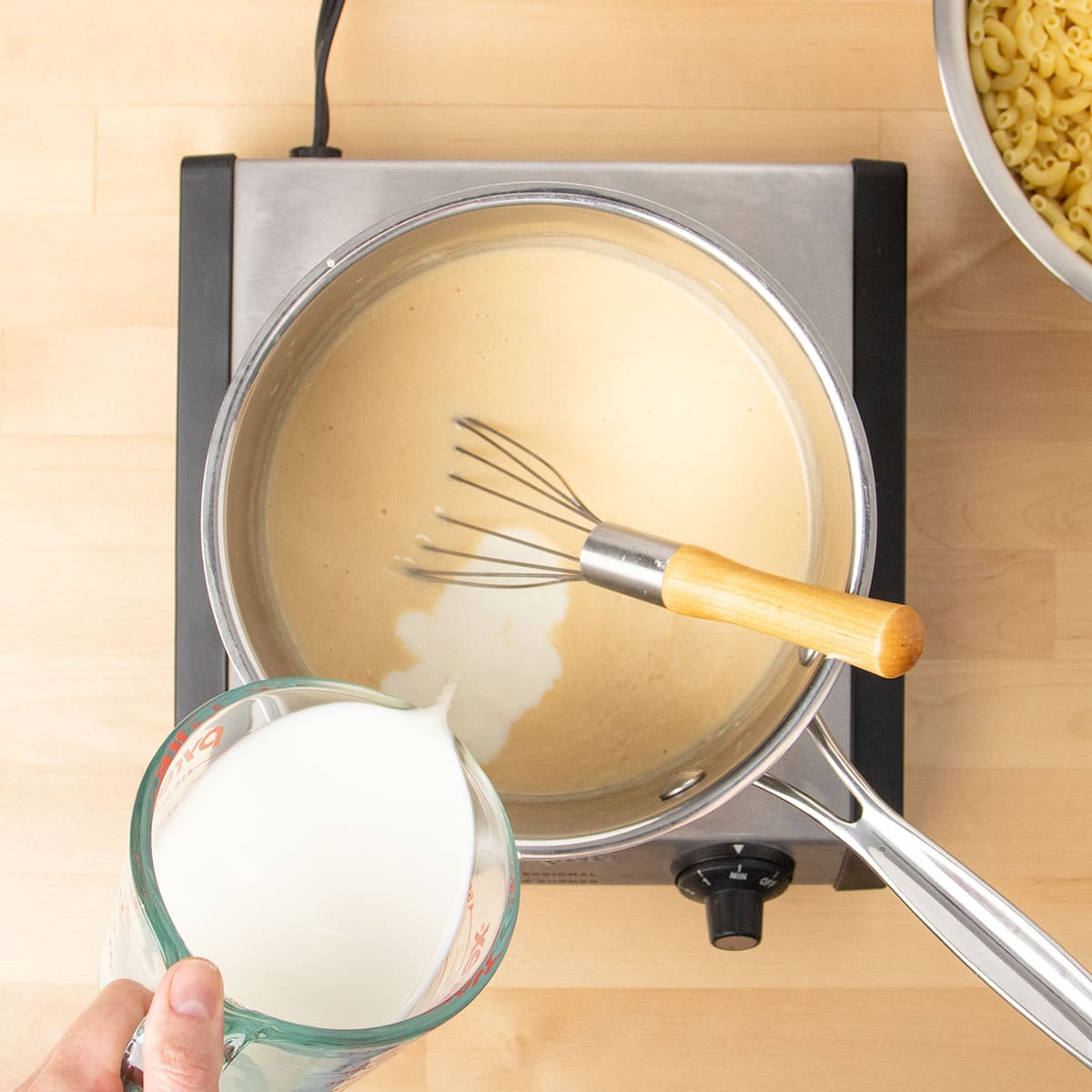
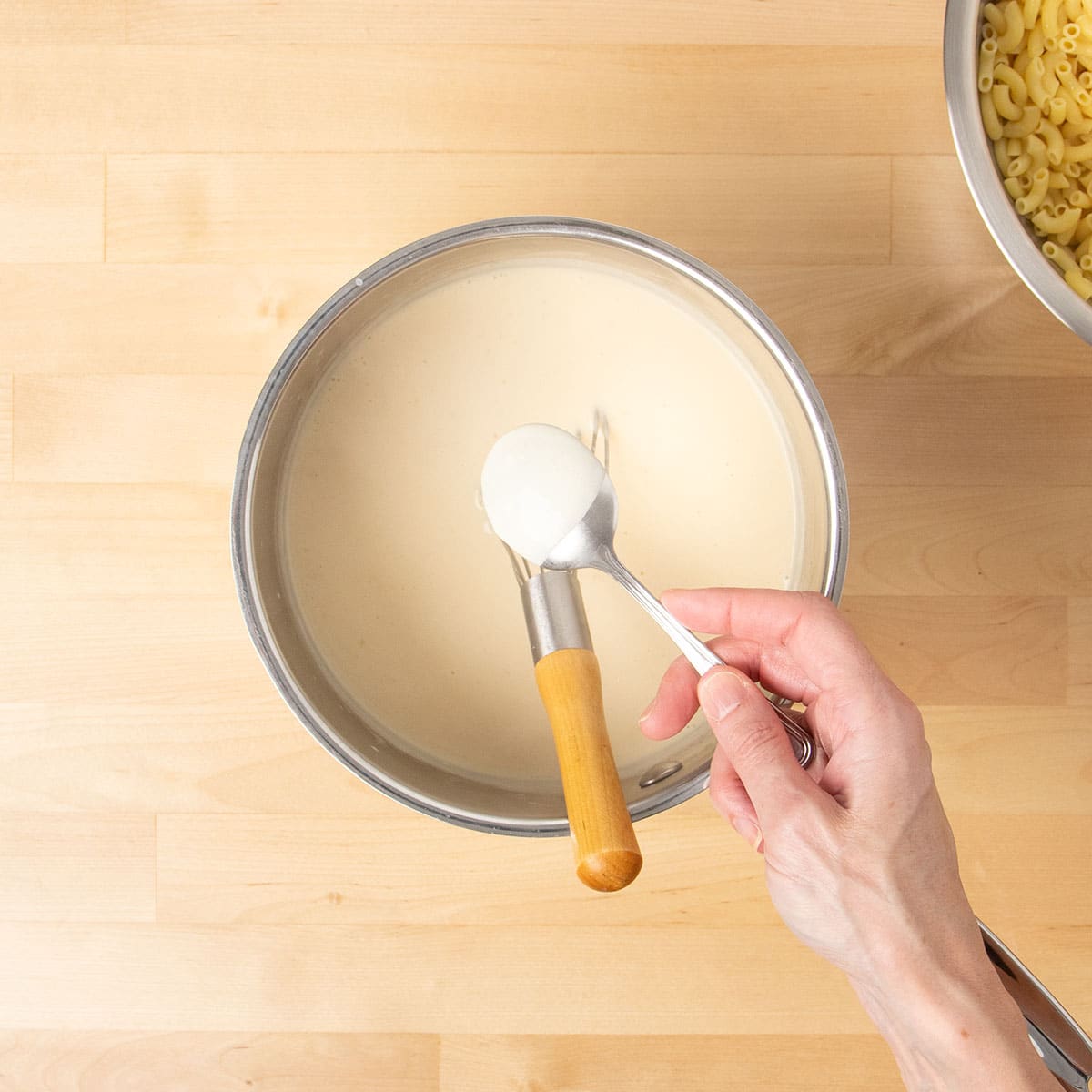
Whisk in evaporated milk and regular milk, then simmer until the sauce thickens and coats the back of a spoon. That's how you know the sauce is thick enough to stick to the pasta but not so thick that it becomes solid when you melt the cheese into it.
Add shredded cheese to complete sauce
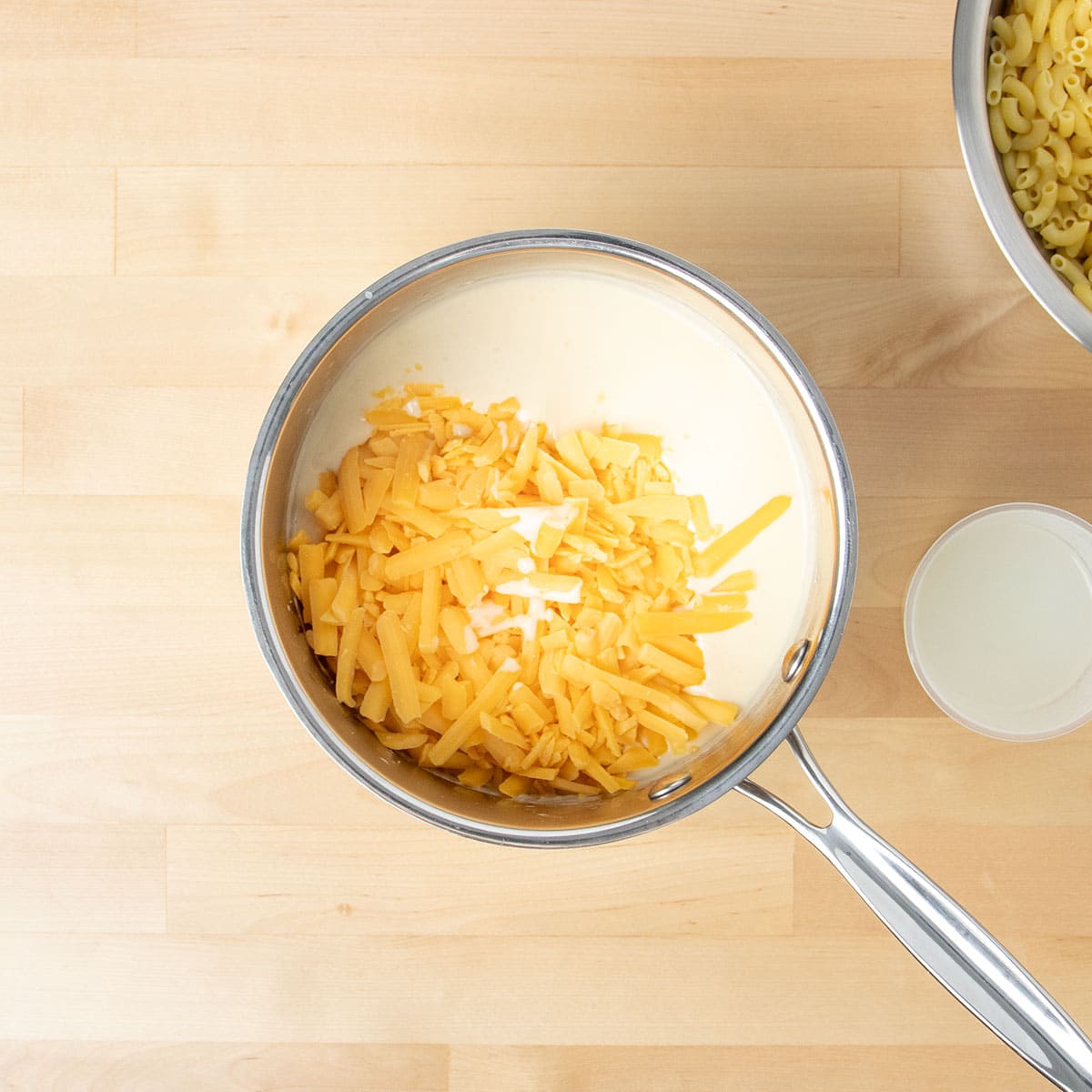
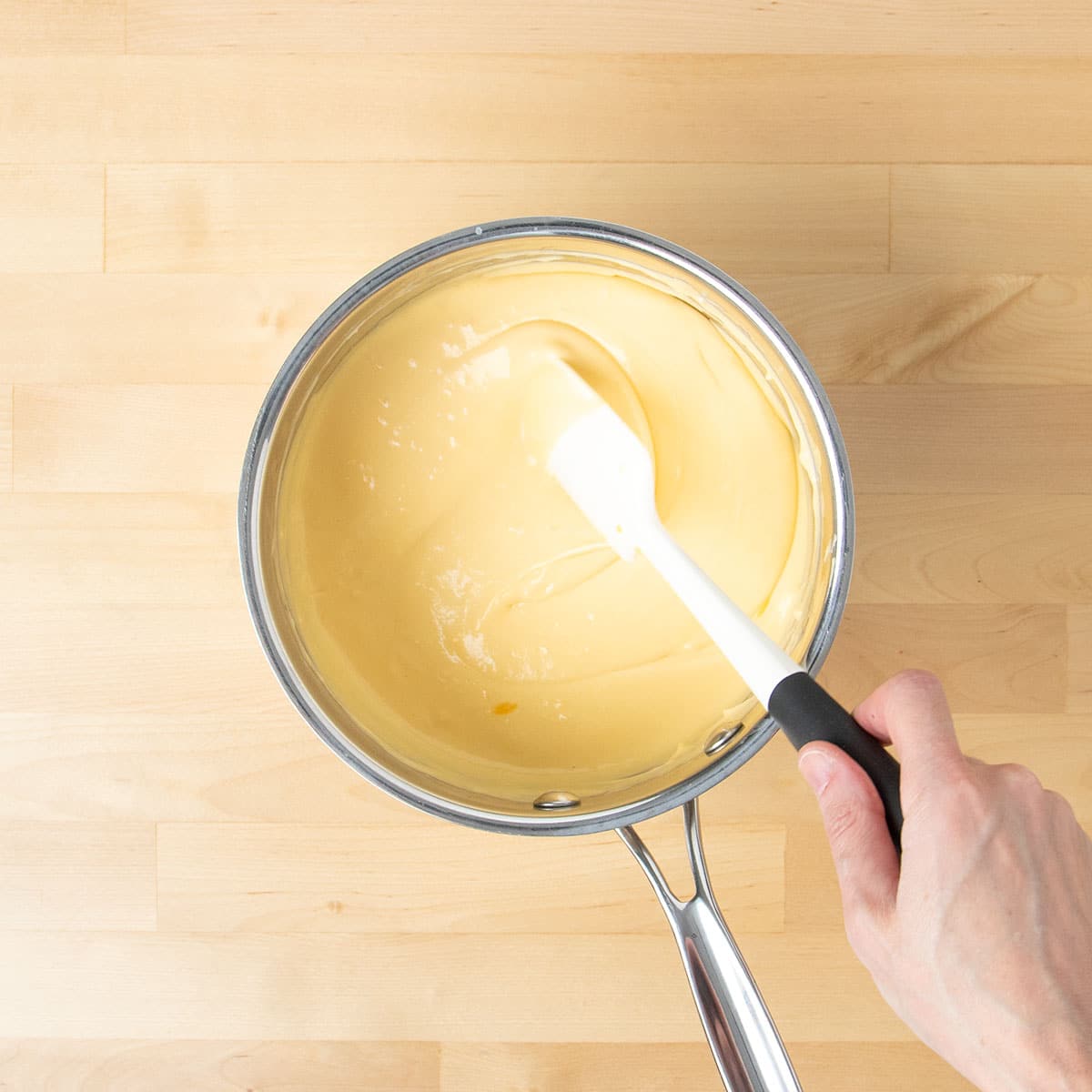
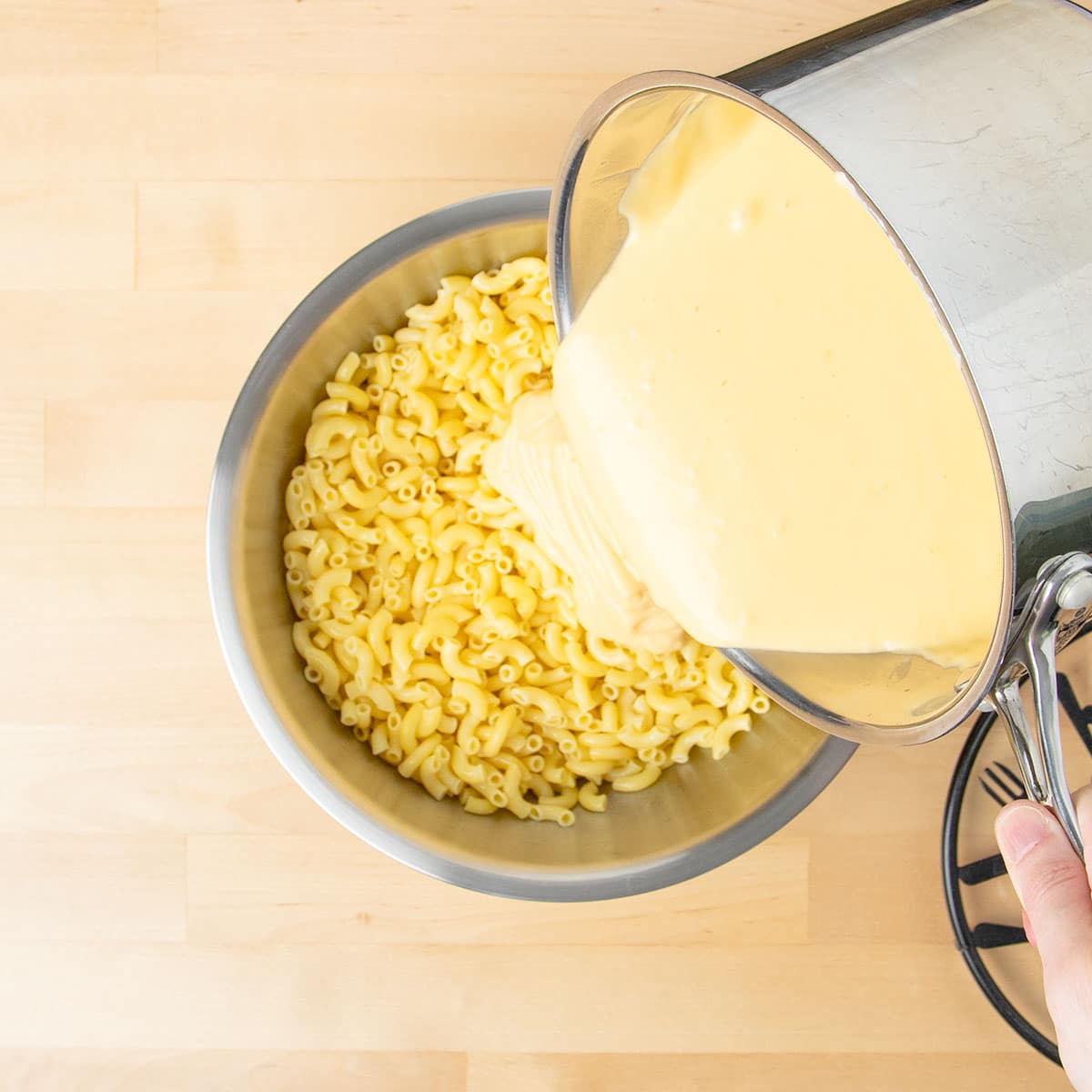
Remove the pan from the heat and mix in shredded cheddar cheese until the cheese melts. Melting the cheese off the heat allows the cheese to melt gently, which prevents it from clumping or becoming grainy.
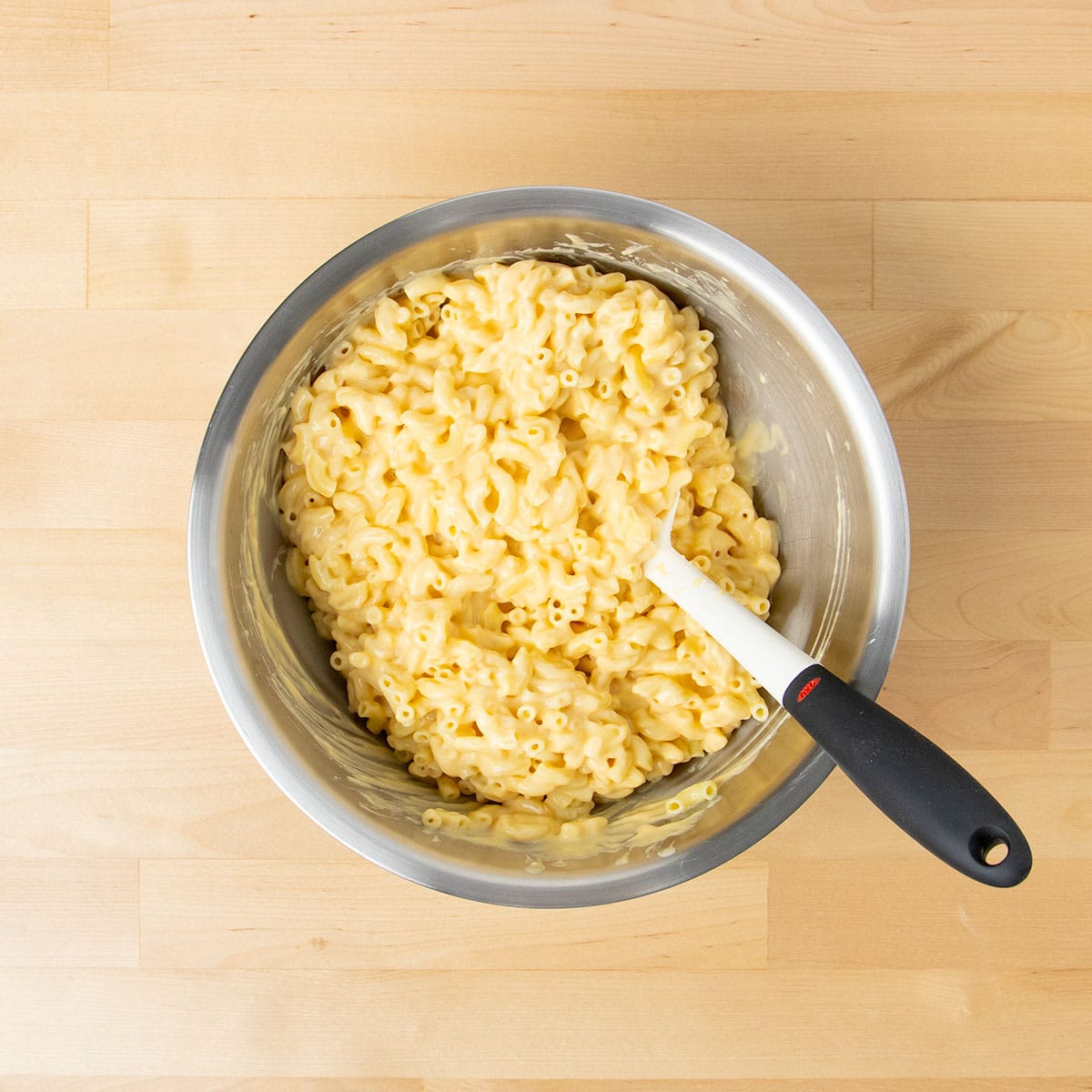
Add more milk or some pasta water to thin the sauce if you prefer it thinner. Pour the cheese sauce over the cooked pasta, and mix gently to combine. Serve warm.
Expert Tips
Choose your pasta carefully
Not all dried pastas are created equal, but so many of them are available today and the best of them really are excellent. My current favorite brand of GF macaroni is Rummo brand, which you can find for sale online. It actually cooks al dente and isn't hard even when it's cold, especially when covered in cheese sauce.
Bionaturae also makes a great gluten free pasta, and its sister brand Jovial gluten free brown rice pasta is good, too. Barilla gluten free macaroni noodles are much more fragile so be sure to cook them very al dente.
Salt the water
If you're the kind of person who tends to salt at the table, skip that step by salting your pot of boiling water instead. The pasta will absorb some of the salt as it cooks, resulting in a more complex flavor.
Tend to the macaroni
Gluten free pasta tends to be sticky, so you have to be diligent while it's boiling to ensure you don't end up with big clumps. As soon as you drop the pasta into the water, start stirring and continue to stir every few seconds to keep those noodles from sticking together or to the bottom of the pot.
Rinse the boiled pasta
Straining gluten free macaroni isn't the last step in the cooking process. If you strain and walk away, trapped heat will continue to cook the pasta. To keep prevent ending up with mushy macaroni, rinse it with lukewarm water, then drain again.

Ingredients and substitutions
Dairy free
I'd recommend trying our recipe for dairy free mac and cheese instead of using this recipe as a base. To make this recipe dairy free, here are the substitutions I would try:
- For the evaporated milk: evaporated unsweetened coconut milk or oat milk; also try dairy-free half and half
- For the milk: unsweetened, unflavored Ripple milk, almond milk or coconut milk (from the carton)
- For the shredded cheese: Violife, Daiya or Miyoko's Creamy shredded dairy free cheddar-style cheese
- For the butter: Miyoko's Creamery or Melt brand vegan butter
Cheddar cheese
I like cheddar cheese best, but you can replace it with any semi-hard cheese with some real flavor. Try Gouda, Muenster, Monterey jack, or a mixture. The Unexpected Cheddar from Trader Joe's is also great, as it's cheddar with some parmesan cheese added for plenty of depth of flavor.
Evaporated milk
If you can have dairy but you don't have evaporated milk, try replacing it with an equal amount of half-and-half. Or, you can make your own half and half by combining 3/4 cup regular milk with 3/4 cup heavy whipping cream.

For an “almost instant” cheese sauce
If you're willing to purchase some dehydrated cheddar cheese, you can also make the cheese sauce with just 3 ingredients. The cheddar cheese powder I really like is called Hoosier Hill Farm brand (that's an Amazon affiliate link, but please shop around).
Simply whisk together milk and the powdered cheese until it's very smooth, add butter, and cook until melted and combined. Here are the ingredients to make enough of this style cheese sauce for 3/4 pound (12 ounces) of cooked pasta:
- 12 ounces gluten free elbow macaroni prepared as described in the recipe card below
- 3/4 cup (6 fluid ounces) milk
- 3/4 cup (84 grams) dehydrated cheddar cheese powder
- 7 tablespoons (98 g) unsalted butter chopped
The milk rehydrates the cheese, and the butter helps the sauce coat the gluten free macaroni. Here are the detailed instructions:
In a small saucepan, place the milk and then the dehydrated cheese. Whisk until very smooth. The powder will resist combining at first, so keep whisking. Next, add the butter, and place the mixture over medium-low heat. Cook, whisking frequently, until the butter is melted.
Cook until the mixture begins to simmer, still whisking frequently. Simmer it briefly, only until the mixture is creamy and slightly thickened.
The sauce should coat the back of a spoon. Add salt and/or pepper to taste. Add the cooked pasta, turn over the mixture gently with a silicone spatula, and serve immediately.
Storage Instructions
Let any leftovers cool completely before transferring to a storage container and refrigerating for up to 3 days.
You can make the prepared cheese sauce ahead of time separate from the macaroni. Place it in a sealed container and refrigerate it to use within 3 days, then reheat as recommended below.
I don't recommend freezing this recipe. The dish doesn't maintain the proper texture and even reheating with some milk doesn't seem to fully restore it.
Reheating instructions
Reheat leftover mac and cheese in a saucepan on the stovetop over low heat, gently stirring in additional milk a few drops at a time until creamy. reheat the cheese sauce separately.
You can also reheat the entire dish in the microwave for about 1 minute at 50% power, whisking in some lukewarm milk after heating.

Gluten Free Mac and Cheese Recipe
Ingredients
- 12 ounces dried gluten free elbow noodles, I like Rummo brand GF elbow macaroni
- 1 ¼ tablespoons (18 g) extra virgin olive oil
- 4 tablespoons (56 g) unsalted butter, chopped
- ¼ cup (35 g) gum free gluten free flour blend, (See Recipe Notes)
- 12 fluid ounces evaporated milk, at room temperature
- 1 ½ cups (12 fluid ounces) (regular) milk, plus more as necessary, at room temperature
- 3 cups (12 ounces) cheddar cheese, shredded
- ½ teaspoon kosher salt, or to taste
- ¼ teaspoon freshly ground black pepper, or to taste
Instructions
Prepare the pasta
- Boil the pasta in a large pasta pot to an al dente texture, according to the package directions.
- Drain the pasta, reserving about 1 cup of the hot pasta water in a heat-safe container.
- Rinse the drained pasta with warm water, and drain it again.
- Return the cooked pasta to the pasta pot or to a large mixing bowl, and toss it with olive oil to prevent it from sticking together.
- Cover the pasta pot or bowl, and set it aside.
Make ahead option
- You can place the cooked pasta in a large bowl, cover it with plastic wrap and leave it out at room temperature for up to 8 hours before proceeding with the recipe.
Make the cheese sauce (see recipe notes for alternative sauce)
- In a medium-sized, heavy-bottom saucepan, place the butter and cook over medium heat until it’s just melted.
- Add the flour blend and whisk to combine well. The mixture will clump at first, and then smooth out.
- Cook the butter and flour mixture over medium heat, stirring constantly, until it has just begun to turn a very light brown color (about 2 minutes).
- Add the evaporated milk to the roux very slowly, stirring constantly to break up any lumps that might form.
- Add 1 1/2 cups of regular milk, and whisk to combine well.
- Bring the mixture to a simmer, still over medium heat.
- Continue to cook, whisking occasionally, until thickened and reduced by about one-quarter (about 7 minutes).
- When it's ready, the sauce should coat the back of a spoon and be thickly pourable. If it seems too thick to pour, whisk in a little bit more milk or some of the reserved pasta water to loosen it up a bit. If it's too thin, allow it simmer for a bit longer.
- Remove the saucepan from the heat and place it on a heat-safe surface.
- Add the grated cheese and mix to combine with a silicone spatula or wooden spoon until the cheese is fully melted.
- Add salt and pepper to taste, and add more milk or reserved pasta water a bit at a time if you prefer a thinner cheese sauce.
Finish the dish
- Pour the hot cheese sauce over the cooked pasta in the pot, and fold the pasta carefully into the sauce using a silicone spatula.
- Turn it over gently, to avoid breaking the pasta, until all of the pasta is coated in the sauce.
- Serve immediately.
Video
Notes
- 12 ounces gluten free elbow macaroni prepared as described above
- 3/4 cup (6 fluid ounces) milk
- 3/4 cup (84 grams) dehydrated cheddar cheese powder
- 7 tablespoons (98 g) unsalted butter chopped
Nutrition
Nutrition information is automatically calculated, so should only be used as an approximation.
FAQs
You can, but you really, really don't have to. I can't explain enough just how creamy and perfect this recipe on the stovetop is.
But you're really set on having baked mac (or you've somehow added too much liquid and ended up with goopy macaroni), you can transfer the mac to a baking dish, add extra cheese, and top with gluten free bread crumbs before baking the dish the oven on 350°F for 15 minutes. Don't cook for much longer or it will dry out. If you'd like gluten free baked mac and cheese, I have a recipe that's designed for that, though!
Yes, you can use packaged shredded cheese, but it has anti-caking agents which make it melt more slowly and cause it to be thicker once melted. You may need to add more milk to thin the sauce to the proper consistency.










Thank you for the nutritional values. Is the 978 calories for the whole dish?
Also, every recipe I make from you works beautifully.
Thank you
Deanna
Hi, Deanna, I’m afraid it’s per serving, assuming 4 servings. Full fat cheddar cheese is not known for being low calorie!